TBI – Survivors, Caregivers, Family, and Friends

Posts tagged ‘caregiver’

SPEAK OUT! . . . . . . . . . . . . . Itty-Bitty GIANT Steps

SPEAK OUT! Itty-Bitty GIANT Steps

presented by

Donna O’Donnell Figurski

Itty-Bitty GIant Steps for BlogSPEAK OUT! Itty-Bitty Giant Steps will provide a venue for brain-injury survivors and caregivers to shout out their accomplishments of the week.

If you have an Itty-Bitty Giant Step and you would like to share it, just send an email to me at neelyf@aol.com.

If you are on Facebook, you can simply send a Private Message to me. It need only be a sentence or two. I’ll gather the accomplishments and post them with your name on my blog approximately once a week. (If you do not want your last name to be posted, please tell me in your email or Private Message.)

I hope we have millions of Itty-Bitty Giant Steps.


Here is this week’s Itty-Bitty GIANT Steps


051916 Roberts, Crystal Caregiver for Son

Ethan – Survivor


Ethan (survivor)…submitted by his mother, Crystal Roberts (caregiver)…My son is

starting to crawl. He suffered a severe TBI (traumatic brain injury) and a stroke in an accident that happened two years ago.

This is my son’s first attempt.


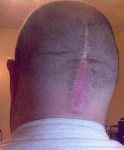
Robert Williams (survivor)…Never thought I would garden again. I had a tumor surgically removed from my brain stem, and I was in a wheelchair for over five years afterwards. The doctors didn’t think I’d ever walk normally again (but God makes the impossible possible).

Pictures of me gardening.

Robert Williams 1

Robert Williams – Survivor

Robert Williams 2

Robert Williams 3

Robert Williams – Survivor


YOU did it!

Congratulations to contributors!

As I say after each post:anim0014-1_e0-1

Please leave a comment by clicking the blue words “Leave a Comment” below this post.

Feel free to follow my blog. Click on “Follow” on the upper right sidebar.

If you like my blog, share it intact with your friends. It’s easy! Click the “Share” buttons below.

If you don’t like my blog, “Share” it intact with your enemies. I don’t care!

Feel free to “Like” my post.


(Clip Art compliments of Bing.)

(Photo compliments of contributors.)

Survivors SPEAK OUT! Sandra Williams

Survivors SPEAK OUT! Sandra Williams

presented

by

Donna O’Donnell Figurski

12200687_895719387130278_18176772_n1. What is your name? (last name optional)

Sandra Williams

2. Where do you live? (city and/or state and/or country) Email (optional)

Athol, Idaho, USA

3. On what date did you have your brain injury? At what age?

My injury was on May 28th, 2012, at 10:00 am. I was 38.

4. How did your brain injury occur?

A drunk driver crossed the center lane as we were turning a corner in our Ford F250 Power Stroke. We were pulling a 26-foot travel trailer. There was a cliff on the other side of us. We should have gone over the cliff, but instead we crossed all lanes of traffic and ended up in a ditch. We should have jackknifed, but we didn’t. The truck that hit us also went through the length of our travel trailer. He ended up in the lane opposite to the one he was traveling in and facing in the opposite direction. We all should have died. The details of the accident are many. It sounds like a made-for-TV movie. We are all alive, but we’re not OK.

5. When did you (or someone) first realize you had a problem?

I first learned of my son’s brain injury when I took him to a neurologist. His primary care physician wanted a follow-up because my son was sleeping so much and his balance was off a bit. We made him rest all summer. When he went back to school, he went from an A-B student to one who got Ds and Fs. I was really focused on my son, but the neurologist diagnosed me too. The diagnosis shocked my primary care provider and me. I didn’t really believe her until I lost my job as a Special Education teacher.

6. What kind of emergency treatment, if any, did you have?

I lost consciousness. I was taken to the Emergency Room. I don’t remember babbling to the sky, but that is what my kids said. They told me this several weeks after the accident. They didn’t know I didn’t know. That’s when my husband knew something wasn’t right. But he thought I would get over it. We all rested that summer. I seemed to be doing well – no headaches, etc. – until I went back to work.

7. Were you in a coma? If so, how long?

No

8. Did you do rehab? What kind of rehab (i.e., inpatient or outpatient and occupational and/or physical and/or speech and/or other)? How long were you in rehab?

I have been to two ten-day sessions of speech therapy, vestibular therapy, cognitive behavioral therapy, and exposure therapy. I also attended Carrick Brain Injury Center, a multidisciplinary brain rehab center.

9. What problems or disabilities, if any, resulted from your brain injury
(e.g., balance, perception, personality, etc.)?

I am still struggling to work. My memory is still affected to the point of frustration for my family members. I struggle with headaches, dizziness, and confusion when people speak to me. I have given up being a youth group-leader. I tried to go back to work, but, due to the fact that educational systems do not accommodate, I cannot work as a teacher – not even online. I really want to run and work out like I used to, but I don’t. That is the biggest change. I never used to drink coffee or alcohol. I don’t abuse either, but now I drink both. I never used to eat chips or anything unhealthy, but I eat those things now. I used to garden, but now I don’t. I do want to return to the way it was with those things, but it is hard while I’m keeping up with my kids and their needs since the accident.

10. How has your life changed? Is it better? Is it worse?

I think my life is worse, but can get better. It is worse because I can’t work in a job where I can get full-time benefits. My health care needs have increased, and my income has decreased. I am trying to help my husband start a new business in construction. He is being patient with me, but it is not easy. Our kids are different, and we really struggled with their behavior until we went to Carrick Brain Injury Center. We still struggle with one kiddo, but I think it is a grief process that he is going through.

11. What do you miss the most from your pre-brain-injury life?

I miss running. (I ran a half marathon and was training for a full marathon when we were hit.) I miss having the energy to do anything I wanted. I miss remembering everything. I miss being able to find a job whenever I wanted. (I have been working since I was eight. I started working for my dad and got my first out-of-family job at the age of fourteen. I paid for the first four years of college by working, and I sent myself to Europe – some people in my church helped me to play basketball internationally.)

12. What do you enjoy most in your post-brain-injury life?

Nothing really. I wish I could say something different. But, my life is so limited from what it once was, and I look so normal. People expect me “to do better,” “to not give up,” or “to stop making excuses.”

13. What do you like least about your brain injury?

I dislike that I cannot be independent and that people expect more from me than I can do. If a person had a broken leg, that person would receive accommodations until it healed. Accommodations are not given when one has an invisible traumatic brain injury (TBI). It doesn’t work that way. But I will not give up.

14. Has anything helped you to accept your brain injury?

I was actually helped by the fact that I can’t work no matter how hard I try. Working came easily to me, just like sports. Now, working and sports are the hardest things for me to do. I will keep trying though. I can’t do them now, but that doesn’t mean I won’t be able to do them forever. I won’t give up. I will do them someday.

15. Has your injury affected your home life and relationships and, if so, how?

Yes, immensely. My kids get really frustrated with me, and so does my husband. I used to be unorganized and forget things, but now it is ten times worse. I really have to rely on notebooks and repeat myself several times. That is what is so frustrating for my family. They also don’t understand my need for rest or my light-sensitivity to the TV. There are many things to list, but I will keep it short!

16. Has your social life been altered or changed and, if so, how?

I don’t visit with anyone anymore. I used to go to bible studies, but they scare me now. (I am afraid I will say the wrong thing.) I can’t go see my mom because I can’t drive that long at one time (it takes two days for me to get there), and it’s just too long to be gone. Plus, I have a huge family, which is hard to be around. My sisters don’t understand my brain injury. I just stay away. It’s better for all of us.

17. Who is your main caregiver? Do you understand what it takes to be a caregiver?12202566_895719670463583_794991146_n

Me. I am my own caregiver. My husband tries, but he is focused on the business. I submit insurance claims and speak to the doctors. I am even filing claims with Disability Rights of Idaho, so I know I can be organized and I can do something!

18. What are your plans? What do you expect/hope to be doing ten years from now?

I plan to be working in construction until I put myself through college again to finish my counseling degree and/or get a certification in TBI so I can educate teachers about it. There is the need for special education to have a different evaluation process. I also plan to use online settings to sell lessons that target students with TBI in the secondary school classroom.

19. Are you able to provide a helpful hint that may have taken you a long time to learn, but which you wished you had known earlier? If so, please state what it is to potentially help other survivors with your specific kind of brain injury.

I wish I knew more about Disability Rights of Idaho and more about the complaint process for educators. (Parents are at such a loss!) The biggest tip I can give other survivors is not to listen to negative comments or to employers who tell you that you can’t do the job. Listen to your heart and your soul. Fight for yourself and others. It will keep you going.

20. What advice would you offer to other brain-injury survivors? Do you have any other comments that you would like to add?

Never, ever give up! If you can’t realize your dream one way, find another way to do it. It may take you longer, but do it. Henry Winkler (the Fonz) applied to sixty-eight different colleges before one accepted him. He was not diagnosed with dyslexia until his son was. He never gave up. We can’t either!

(Disclaimer: The views or opinions in this post are solely that of the interviewee.)

If you would like to be a part of the SPEAK OUT! project, please go to TBI Survivor Interview Questionnaire for a copy of the questions and the release form.

(Clip Art compliments of Bing.)

(Photos compliments of contributor.)

As I say after each post: Please leave a comment by clicking the blue words “Leave a Commentanim0014-1_e0-1 below this post.

Feel free to follow my blog. Click on “Follow” on the upper right sidebar.

If you like my blog, share it with your friends. It’s easy! Click the “Share” buttons below.

If you don’t like my blog, “Share” it with your enemies. I don’t care!

Feel free to “Like” my post.

Caregivers SPEAK OUT! . . . . . Janiece Naber Martindale

Caregivers  SPEAK OUT!  Janiece Naber Martindale

presented by

Donna O’Donnell Figurski

Martindale, Janiece Naber1. What is your name? (last name optional)
Janiece Naber Martindale

2. Where do you live? (city and/or state and/or country) Email? (optional)

Chickasaw, Alabama, USA

3. What is the brain-injury survivor’s relationship to you? How old was the survivor when he/she had the brain injury? What caused your survivor’s brain injury?

My husband, James Martindale, was 61 when he was diagnosed with multiple system atrophy (MSA, a progressive neurodegenerative disorder that affects the brain). In December 2008, my husband and I drove an empty semi-tractor to Calexico, California, to our drop yard. We were to pick up a loaded trailer for our trip home. Because of rain, the drop yard was extremely muddy. The semi got stuck in the mud, so James walked through the muddy yard looking for our loaded trailer, when he fell in the mud. James hurt his back at that time, and he began to complain of dizziness. He also complained of a nasty headache. I believe that that was the beginning of James’ MSA.

4. On what date did you begin care for your brain-injury survivor? Were you the main caregiver? Are you now? How old were you when you began care?

I began my husband’s care in June 2009. I was 45. I was his main caregiver. I am not now because my husband passed away on October 16, 2014.

5. Were you caring for anyone else at that time (e.g., children, parents, etc.)?

No

6. Were you employed at the time of your survivor’s brain injury? If so, were you able to continue working?

Yes, we were working at the time. But, we had to quit.

7. Did you have any help? If so, what kind and for how long?

My husband had hospice care for the two years before he passed away.

8. When did your support of the survivor begin (e.g., immediately – in the hospital; when the survivor returned home; etc.)?

For the first three years, I was the only caregiver, and I didn’t really have any help. But, I had a lot of help in the final two years with hospice care coming into the house.

9. Was your survivor in a coma? If so, what did you do during that time?

No

10. Did your survivor have rehab? If so, what kind of rehab (i.e., inpatient and/or outpatient and occupational, physical, speech, and/or other)? How long was the rehab? Where were you when your survivor was getting therapy?

My husband had no rehab.

11. What problems or disabilities of your brain-injury survivor required your care, if any?

My husband had problems with his balance and his gait. He couldn’t write. He wasn’t able to drive a car. Eventually, he lost all ability to move. He had an upper respiratory infection.

12. How has your life changed since you became a caregiver? Is it better? Is it worse?

My life is better because I now have the knowledge to help other people

13. What do you miss the most from pre-brain-injury life?

I miss being able to go out and ride around the Gulf coast together.

14. What do you enjoy most in post-brain-injury life?

It’s hard to enjoy life, since I have to start over all by myself.

15. What do you like least about brain injury?

My husband died too soon.

16. Has anything helped you to accept your survivor’s brain injury?Martindale, Janiece Naber 2 091515

I just accepted it. It was the way of life.

17. Has your survivor’s injury affected your home life and relationships and, if so, how?

I had to stay at home a lot. I realized that I could change that when I had the help of hospice workers.

18. Has your social life been altered or changed and, if so, how?

My social life was affected at the time. Now I’m trying to put my life back together again with a husband.

19. What are your plans? What do you expect/hope to be doing ten years from now?

I plan to help someone who is living in this situation – I may even start a support-group, so people have a place to go and chat.

20. What advice would you offer other caregivers of brain-injury survivors? Do you have any other comments that you would like to add? 

Keep a positive attitude. Hold your head high. Be patient. Encourage the survivor.

(Disclaimer: The views or opinions in this post are solely that of the interviewee.)

If you would like to be a part of the SPEAK OUT! project, please go to TBI Survivor Interview Questionnaire for a copy of the questions and the release form.

(Clip Art compliments of Bing.)

(Photos compliments of contributor.)

As I say after each post: Please leave a comment by clicking the blue words “Leave a Commentanim0014-1_e0-1 below this post.

Feel free to follow my blog. Click on “Follow” on the upper right sidebar.

If you like my blog, share it with your friends. It’s easy! Click the “Share” buttons below.

If you don’t like my blog, “Share” it with your enemies. I don’t care!

Feel free to “Like” my post.


On the Air . . . . . . . . . . . . . . . . . . . Brain Injury Radio “Another Fork in the Road”  “Where Have All My Friends Gone?”

On The Air: Brain Injury Radio “Another Fork in the Road” 

with

Panelists: Caregiver, Lisabeth Mackall and Survivor Troop, Juliet Madsen

Topic: Where Have All My Friends Gone?

presented

by

Donna O’Donnell Figurski

Mackall, Lisabeth with Book

Lisabeth Mackall joined other caregivers when her husband and police officer, Frank, was in a serious car accident on the way to an emergency call. The accident left him with a brain injury.

Juliet Madsen Uniform

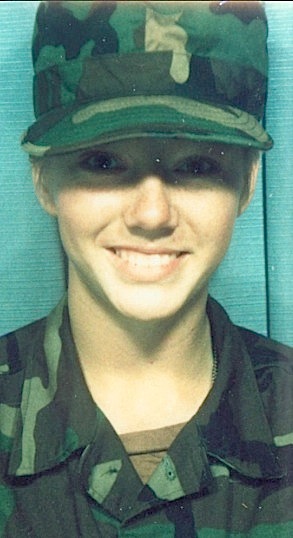
Troop, Juliet Madsen, got her brain injury while serving her country in Iraq. Juliet is a member of the Board of Directors of R4 Alliance and is a master quilter. You can see some of her work at “Stroke of Luck Quilting.”

Losing relationships, both family and friends, is a common result of brain injury and it is devastating to survivors and their caregivers, as well. Troop and survivor, Juliet Madsen, and Lisabeth Mackall, therapist and caregiver for her husband, join me to discuss the topic of “Where Have All My Friends Gone.” We’ll examine the reasons why some people just can’t stick it out and try to shed some light on how folks can keep their relationships alive with their brain-injured friends.

If you missed this show on “Another Fork in the Road” on September6th, 2015, don’t fret. You can listen to the archived show here. Click the link below.

See you “On the Air!”

On The Air: Brain Injury Radio “Another Fork in the Road” Where Did All My Friends Go? with panelists, Caregiver, Lisabeth Mackall and Survivor Troop, Juliet Madsen

(Clip Art compliments of Bing.)

As I say after each post: Please leave a comment by clicking the blue words “Leave a Commentanim0014-1_e0-1 below this post.

Feel free to follow my blog. Click on “Follow” on the upper right sidebar.

If you like my blog, share it with your friends. It’s easy! Click the “Share” buttons below.

If you don’t like my blog, “Share” it with your enemies. I don’t care!

Feel free to “Like” my post.


TBI Tales . . . . . . . . . . . . . . “Surprise” by Miki Mashburn-Bailey

“Surprise!”

by

Miki Mashburn-Bailey

presented by

Donna O’Donnell Figurski

072715 Mashburn-Bailey Miki CaregiverA couple of years after my husband’s accident, I bought flowers for myself and gave them to him to “surprise” me with. I told him that I was going to walk out of the room and come back in and that he needed to say, “Surprise!” and hand them to me.

My husband thought I was weird. Pre TBI, I really couldn’t have cared less about the flowers, but my husband lost his knack for surprising me every once in a while with kisses and hugs, knick-knacks and treats, or flowers. I needed him to see that it was important to me.

I went out of the room and came back in. My husband yelled so loud that it scared my son in the other room. He was very sarcastic, and he gave me the flowers without a smile. But, I smiled and told him, “Thank you!” I said that I loved the flowers.8iAEyGerT

I placed the flowers on the table. Every time I knew that my husband would notice, I would deliberately stop, smell them, and smile. He would always say, “You really like those flowers.” I would correct him and say, “I just like that they’re from you.” My husband became convinced that he bought those flowers for me.

Thus began my husband’s new “routine.” He has done things like this ever since. He likes the idea that he can make me smile. He used to all the time before his TBI, but he doesn’t have it in him post TBI. The thought that my husband can do it had to be placed back into his mind.

(Disclaimer: The views or opinions in this post are solely that of the author.)

If you have a story to share and would like to be a part of the SPEAK OUT! project, please submit your TBI Tale to me at neelyf@aol.com. I will publish as many stories as I can.

As I say after each post:

Please leave a comment by clicking the blue words “Leave a Comment” below this post.anim0014-1_e0-1

Please follow my blog. Click on “Follow” on the top right sidebar. (It’s nice to know there are readers out there.)

If you like my blog, share it with your friends. It’s easy! Click the “Share” buttons below.

If you don’t like my blog, “Share” it with your enemies. I don’t care!

Feel free to “Like” my post.

(Clip Art compliments of Bing.)

“Another Fork in the Road” . . . Brain Injury Radio Network . . . Interview: Lisabeth Mackall

You Are Invited

Lisabeth Mackall: Caregiver, Therapist, Author

putthis_on_calendar_clip_art

When Lisabeth Mackall opened her front door at 2:30am on January 2, 2012, it changed her life forever. She learned that her husband, Police Officer Frank Mackall, had been in a serious motor vehicle accident while on duty, and had been airlifted to a hospital. When Lisabeth opened her front door, she unknowingly entered the world of brain injury. She had to follow “Another Fork in the Road.” Lisabeth will share how she and her family picked up the remnants, pieced them together with patience, persistence, and love, and forged a new life.

Come One! Come ALL! 

What:        Interview with Lisabeth Mackall, caregiver to spouse, Frank Mackall

Why:        Lisabeth will take us on a harrowing journey of how her husband got a brain injury and how her family is coping with this new “normal.”Mackall, Lisabeth with Book

Where:     Brain Injury Radio Network

When:       Sunday, May  3rd, 2015

Time:         5:00p PT (6:00p MT, 7:00p CT, and 8:00p ET) 90 minute show

How:         Click: Brain Injury Radio Network

Call In:    424-243-9540

Call In:     855-473-3711 toll free in USA

Call In:    202-559-7907 free outside USA

or SKYPE

If you miss the show, but would like to still hear the interview, you can access the archive on On Demand listening. The archived show will be available after the show both on the Brain Injury Radio Network site and on my blog in “On the Air.”

(Clip Art compliments of Bing.)

(Photo compliments of Lisabeth Mackall.)

“Another Fork in the Road” . . . Brain Injury Radio Network . . . Interview: Jeannette Davidson-Mayer

putthis_on_calendar_clip_artYOU Are Invited!

When Jeannette Davidson-Mayer’s husband, DeWayne, had five brain injuries – the result of his active duty in Iraq – Jeannette became his caregiver. To combat this 24-hour job, Jeannette redesigned her kitchen to become the family’s ?Central Command Post.” Jeannette will discuss how she, DeWayne, and their daughter make this system work for them.

Come One! Come ALL!

What:        Interview with Jeannette Davidson-Mayer, caregiver to spouse, DeWayne Mayer

Why:        Jeannette will talk about how she and DeWayne and their daughter live on the TBI Trail.

Where:     Brain Injury Radio Network

When:       Sunday, April  19th, 2015

Time:         5:00p PT (6:00p MT, 7:00p CT, and 8:00p ET) 90 minute showjeannette davidson-Mayer 041715

How:         Click: Brain Injury Radio Network

Call In:    424-243-9540

Call In:     855-473-3711 toll free in USA

Call In:    202-559-7907 free outside USA

or SKYPE

If you miss the show, but would like to still hear the interview, you can access the archive on On Demand listening. The archived show will be available after the show both on the Brain Injury Radio Network site and on my blog in “On the Air.”

(Clip Art compliments of Bing.)

(Photo compliments of Jeannette Davidson-Mayer.)

Caregivers SPEAK OUT! . . . . . Jessica Fell

Caregivers SPEAK OUT! – Jessica Fell

by

Donna O’Donnell Figurski


Jessica Fell – Caregiver

1. What is your name? (last name optional)

Jessica Fell

2. Where do you live? (city and/or state and/or country)     Email? (optional)

Mobile, Alabama, USA     chrissmomi05@gmail.com

3. What is the TBI survivor’s relationship to you? How old was the survivor when he/she had the TBI? What caused your survivor’s TBI?

The survivor was my boyfriend of four years, now my husband. We just got married on New Year’s Eve, his birthday.
 Daniel was 29 when he got his TBI. He was driving to work on his motorcycle, and a truck turned into a driveway without yielding. Daniel had no time to stop, slow down, or swerve. He collided with the truck.

4. On what date did you begin care for your TBI survivor? Were you the main caregiver? Are you now? How old were you when you began care?

I never left the hospital. There wasn’t a single day in the two months Daniel was in the hospital that I didn’t stay the night with him. Initially I was waiting for him to “wake up” from his coma. I am, and have been, Daniel’s only caregiver. We lived together with my two little girls. I stopped working to take care of him at home, instead of having him go to a rehab hospital. I was 27 when he was injured. I turned 28 while he was in the hospital.

5. Were you caring for anyone else at that time (e.g., children, parents, etc.)?

I was caring for my two children. I still do now.

6. Were you employed at the time of your survivor’s TBI? If so, were you able to continue working?

I continued to work until a few days before Daniel was released from the hospital. I do not work now.

7. Did you have any help? If so, what kind and for how long?

I had no help at all. Daniel’s family came into town every weekend, but they did not stay at our home.

8. When did your support of the survivor begin (e.g., immediately – in hospital, when the survivor returned home, etc.)?

Immediately

9. Was your survivor in a coma? If so, what did you do at that time?

Daniel was in a coma for nineteen days. I stayed by his side constantly waiting for him to wake up.

10. Did your survivor have rehab? If so, what kind of rehab (i.e., inpatient and/or outpatient and occupational, physical, speech, and/or other)? How long was the rehab? Where were you when this was happening?

Daniel had rehab in the two-month period that he was in the hospital. He only had physical therapy afterwards – once a week. He has not yet started any other therapy.

11. What problems or disabilities of your TBI survivor required your care, if any?

The only thing Daniel needs me for now is driving. I did have to help with his walking, showering, and getting dressed. But, he’s fully capable of those things now.

12. How has your life changed since you became a caregiver? Is it better? Is it worse?

I have had to grow up a lot and learn to be more patient. It’s not better because I would like to be working now and to still be doing outgoing things with him. But, I am hopeful that he’ll get back there soon. It’s not worse because our relationship is so much better than it’s ever been.

13. What do you miss the most from pre-TBI life?

I miss Daniel’s crazy, spontaneous personality. I miss his being so full of life. He’s still very funny, and he loves to laugh. But, he can’t hang for long, and he gets very anxious and worried so easily.

14. What do you enjoy most in post-TBI life?

I enjoy that our loyalty to each other is so much stronger. I am happy that Daniel has calmed down some.

15. What do you like least about TBI?

I dislike the anxiety Daniel has, his memory’s not being as good, and sometimes his temperament.

16. Has anything helped you to accept your survivor’s TBI?

I believe I have come to accept Daniel’s TBI through God and family and by trusting each other. I’ve come a long way.

17. Has your survivor’s injury affected your home life and relationships and, if so, how?

Daniel and my mom no longer speak because she doesn’t understand. It makes it difficult for me to balance their time together and ours.

18. Has your social life been altered or changed and, if so, how?

I can’t leave the house without worrying that Daniel is going to be OK or wants me to come home. I feel guilty that he’s not with me.

19. What are your plans? What do you expect/hope to be doing ten years from now?

I hope that we are both back at work and in our own home, which we hope to purchase one day. I hope we have a child together.

20. What advice would you offer other TBI survivor caregivers? Do you have any other comments that you would like to add? 

Jessica Fell

Jessica Fell – Caregiver

My main advice is to never, ever give up. Don’t let TBI take away your life. Don’t let it destroy your relationship. It shouldn’t just be the survivors who are forced to change. The survivors might not have control, but you can change how you handle yourself when it comes to certain things. We have to adapt to this new person and learn to love him or her again. The survivor deserves love and needs it. Be dedicated. Be a believer in yourself and in your survivor because spirituality does take you a long way in this journey. God puts you in situations for a reason – to learn from them. Find out your reason; learn from it; let go and let God. He will get you through any situation he places you in. Trust and believe in that and in yourself.


Thank you, Jessica, for taking part in this interview. I hope that your experience will offer some hope, comfort, and inspiration to my readers.

If you would like to be a part of this project, please go to TBI Caregiver Interview Questionnaire for a copy of the questions and the release form.

(Photo compliments of Jessica.)

Disclaimer: The views or opinions in this post are solely that of the interviewee.


SPEAK OUT! . . . . . . . . . . . . . . . . . . Guest Blogger: Lee Staniland . . . . What I Can Remember

SPEAK OUT! Guest Blogger: Lee Staniland

What I Can Remember

Girl Blogger cartoon_picture_of_girl_writingIt was June 11, 1978, in Somis, California, so I’ve been told. Because, you see, I have no memory of what happened that day.

I know that I had just gotten back from Arizona, where I became the godparent to my young nephew. I had brought my mother back with me, and for Mother’s Day, I had taken her to Solvang for the day. I also remember taking her to the Burbank Airport for her to go home. I remember all that very clearly, but the actual day of the accident, I remember nothing.

I have been told things so many times that they now have become my memories. I was told that I had been outside washing windows when my husband left to go somewhere. I was probably upset about something or someone because that is the only time I would wash windows.

I put my dogs up in their kennel like I always did when I rode my horse. My husband came home and could not find me anywhere, until he looked out in the pasture, which was in the front of our house. He noticed my horse with her bareback blanket on and a hackamore hanging from her neck.

Our pasture has walnut trees in it, and he found me unconscious under one of the trees. He told everybody that he had always told me not to ride when I was alone.

He gathered me up and took me to Camarillo’s Emergency Room. They sent me to Ventura’s Community Hospital, where I stayed in a coma for six weeks.

I have been told stories of things that happened there, like the time they left me in front of an open window one day. I caught pneumonia as a result. Another time, they kept giving me Dilantin to control seizures, and I was allergic to it. Because of that, I was scratching myself so badly that they tied my hands to the bed so that I could not reach any part of my body.

I guess they must have done most things right, though, because I’m here today to tell you about it.

I came out of the coma six weeks later, and I was sent up to Santa Barbara Rehab, where I spent another 2 or 3 months.

That was where I got my first memory that stuck. I was in a room all by myself, and I could hear people out in the hall. I had no idea where I was or why I was there.

I have memories of little fragments of that time – like being with my family, my sister’s wheeling me around their hotel pool, another sister’s taking me for a car ride around Santa Barbara, and lunch at Micky D’s (MacDonald’s). Funny the things that you remember.

My husband took me out of the hospital to spend the day in Solvang for our first anniversary. That was a super memory. I got to be out of the hospital for a WHOLE day. Wow!

Other memories:

Trying to walk down the hall with a walker, and not doing so well.

The day my brother hid the belt that the nurses had tied around me so that I didn’t fall out of the wheelchair every time I thought that I could stand up on my own.

A great young gal who was supposed to be with me while I cooked a meal that I had chosen.  [There was no way that I could do that yet, so she and her boyfriend cooked and ate a steak dinner (or whatever it was that I had picked out to try to cook). It was so much fun just watching them enjoy it. It still puts a smile on my face whenever I think of it.]

Then there is the memory of crying and pleading with my family to take me home.  They all felt so bad and wanted to do it, but they knew I wasn’t ready, so they would leave and I would just fade out. That is the good thing about not having a good memory. You forget most things that upset you. I remember things a lot better today, but there are times, especially when I am tired, that the old memory just doesn’t work the way it used too.

Well, I finally got to go home. I was so happy.

My parents had moved down from Sacramento to help take care of me. I had to relearn to walk, talk, dress, and feed myself. My old self was a very headstrong person, but I just let everyone help me with life. It’s amazing how your mind protects you from yourself.

After awhile, it was time for my parents to leave. I love them so much, but my parents were smothering me, and I wanted MY house back.

I know my mom was so afraid to leave me to handle things on my own, but it was the best thing for me.

I want to tell all you caregivers a secret. I know that it is a lot easier if you just do everything for us, but please don’t. I believe that is how I got to be as good as I am. After my parents left, I had to do everything myself – from taking care of a big house to caring for cows, chickens, dogs, and cats and helping to run a carpet-supply warehouse. I sold my horse because I could not ride her then. Oh yeah, I just remembered that my rooster would chase me whenever I would go out to collect eggs. They always go after the weakest thing, and that was me.

I forgot to mention that we were also still in the process of finishing the house we were building and living in. Talk about crazy!

I am so thankful that the part of my brain that reasons things out was not damaged completely. Don’t get me wrong. I know that there are times when I get a little crazy about things. Maybe other people who do not have a brain injury would handle the situation a lot differently, but I do the best that I can.

I am now remarried to a man who does pretty well for someone who was not with me from the beginning. I think he has learned a lot from me. I have learned a lot from him.

When someone says to me, “Oh your head injury must not have been very serious,” I would like to shake him or her. I had to work very hard to get where I am. I had Someone looking over me, and He decided that my time was not up yet and that I have something that I’m still supposed to do. I believe my purpose in life is to be with my fellow brain injured and to give them and their families hope.

I am very satisfied with my life right now, and maybe that is because I have been given back most of my old self. And then Staniland, Lee-1maybe it is because I have some of the best people around me. So here is a big Thank You to all those wonderful people who have stuck by me through thick and thin.

I love you!


Thank you, Lee Staniland.

Disclaimer:
Any views and opinions of the Guest Blogger are purely his/her own.

(Clip Art compliments of Bing.)

Brain Injury Resources “You Disappear”

“You Disappear” by Christian Jungersen

(Insight Into the World of Brain Damage)

reviewed by

Donna O’Donnell Figurski

"You_Disappear"_Jungersen-205x300

You Disappear by Christian Jungersen

As anyone who has had a brain injury and his or her caregiver know, life is forever altered. It will never be the same. Christian Jungersen takes his readers on the twisted journey of Frederick, a headmaster at a prestigious school; Mia, his wife and a reputable schoolteacher; and their teenage son, Niklas. Unlike many brain injuries that occur by an impact, an accident, or a hemorrhage, Frederick’s brain “injury” evolved over time, changing his personality bit by bit. Mia slowly noticed inexplicable changes in her husband. Talking too loud and eating too much were just two of the little signs that were manifested as Frederick’s brain changed. While on a vacation in Majorca, Frederick drove unusually erratically and dangerously. His driving caused their rental car to scrape a stone cliff. When Frederick, in a crazed state, jumped from the car, fell down a hillside, and woke in the local hospital, he was forced to seek help, and the mystery of his strange behavior is unveiled.

Once Frederick is diagnosed with a slow-growing brain tumor, his aberrant behavior becomes more understandable, but not excusable. As is the case for many brain-injured persons, Frederick’s behavior hampered his decision–making process. Frederick illegally took large sums of money from his school, causing the school to become bankrupt and Frederick to lose the respect and friendship of many people, including his chairman and close friend, Laust. Eventually Frederick, while seeking help, loses his job and faces a possible prison sentence.

Mia fondly remembers the years before the change in Frederick. She remembers the love they shared. She does what she can to help him, but his deviant and erratic behavior makes living with him difficult. Finally, Mia seeks help and companionship with a local brain-injury support group, where she meets Bernard, who not only becomes Frederick’s attorney, but also a “special” friend to Mia.

As Christian Jungersen so aptly states, “As any family member of someone with brain damage knows, the hard part isn’t the initial shock. The hard part comes when the adrenalin recedes and you have to set out down the endless gray corridor of disheartening days, days that look like they’ll last the rest of your life.”

As the caregiver for my husband, who has a traumatic brain injury, I understand Jungersen’s words completely. The adrenalin gets you through the early surgeries and the beginning days in the hospital. It may even carry you through the weeks in the rehabilitation facility. But the adrenalin-rush ends, and “real life” sets in when the caregiver brings the survivor home. That’s when the realization occurs that life will never be the same as it was. The survivor will never be the same as before, and neither will the caregiver. Brain damage has a way of changing the normal. That’s when the survivor and caregiver realize that the journey through the brain-damage maze has just started. They eventually realize that it has no end. Once brain damage comes to stay, it can tear families apart. But, it can also make families stronger, as they pull together to overcome the trials of brain injury.

In “You Disappear,” Jungersen portrays how one family finds their world breaking up. Will they find enough glue to repair it?


Jungersen 2

Christian Jungersen

As I say after each post:

Feel free to leave a comment by clicking the blue words “Leave a Comment” below this post.

Please follow my blog. Click on “Follow Me Via eMail” on the right sidebar of your screen.anim0014-1_e0-1

If you like my blog, click the “Like” button under this post.

If you REALLY like my blog, share it with your friends. It’s easy! Click the “Share” buttons below.

If you don’t like my blog, “Share” it with your enemies. That works for me too!


(Clip Art compliments of Bing.)

diemodi jewelry

uniquely hand-crafted jewelry by donna

Welcome to Harmony Kent Online

The home of all things books

Pete Springer

Passionate Teacher and Future Children's Author

HOPE TBI

Helping Other People Excel - To Be Independent

For the Love of Books, Old and New

Katie Fischer, Writer and Reader of Stories

Charlie Bown

Children's Author

Jessica Hinrichs

“We write to taste life twice, in the moment and in retrospect.” ― Anais Nin

VIVIAN KIRKFIELD - Writer for Children

Picture Books Help Kids Soar

Mindy’s Writing Wonderland

For authors, parents, teachers & everyone who loves children’s books.

Kaitlyn Leann Sanchez

Literary Agent

Surviving Traumatic Brain Injury

TBI - Survivors, Caregivers, Family, and Friends

The Care Factor

Loving someone with a Traumatic Brain Injury

Brain Injury Support Group of Duluth-Extension

Brain Injury Information and SUPPORT

Brain Aneurysm Global Insight

Brain Aneurysm, cerebral hemorrhaging, hemorrhage stroke