TBI – Survivors, Caregivers, Family, and Friends

Posts tagged ‘Another Fork in the Road’

Survivors SPEAK OUT! . . . . Nolan McDonnell — Survivor of Brain Injury

Survivors SPEAK OUT! Nolan McDonnell

presented by

Donna O’Donnell Figurski
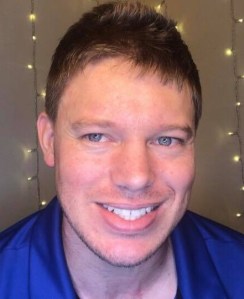
Survivor of Brain Injury – Nolan McDonnell

1. What is your name? (last name optional)

Nolan McDonnell

2. Where do you live? (city and/or state and/or country) Email (optional)

San Jose, California, USA     Nolan@CoachNolan.com

3. On what date did you have your brain injury? At what age?

My traumatic brain injury occurred on April 23, 2017, at the age of 31.

4. How did your brain injury occur?

I was the victim of a robbery. I was held at gunpoint and then shot in the head. My brain injury is bilateral, as the bullet went through both sides of my brain.

5. When did you (or someone) first realize you had a problem?

I was found in my car, which was riddled with bullet holes. I had an entrance wound in my skull from the bullet.

6. What kind of emergency treatment, if any, did you have?

I had seven blood transfusions, a craniotomy, and maybe some other things.

7. Were you in a coma? If so, how long?physical-activity-clipart-10
Yes – fifteen days.

8. Did you do rehab? What kind of rehab (i.e., inpatient or outpatient and occupational and/or physical and/or speech and/or other)? How long were you in rehab?

I have or had speech, occupational, physical, stretch, recreational, massage, and craniosacral therapies and acupuncture. It has been two and a half years now, and I put in eight hours a day, five days a week.

9. What problems or disabilities, if any, resulted from your brain injury
(e.g., balance, perception, personality, etc.)?

I was a paraplegic – I could not move from the neck down. I worked hard to overcome this, however. I still suffer from extreme spasticity, muscle imbalance, and minimal range of motion on the left side of my body, as well as in my legs.

10. How has your life changed? Is it better? Is it worse?

My life is better after my traumatic brain injury. Before the injury, I did not know how short, valuable, and fragile life is.

11. What do you miss the most from your pre-brain-injury life?

I miss skateboarding, making new friends at school, the freedom to get up and do anything I wanted at any given time, athletics, not having a caregiver, living alone, and having guests come over.

12. What do you enjoy most in your post-brain-injury life?

I like my perspective on and my valuing of both life and people. Life is so valuable to me now – more meaningful and beautiful.

13. What do you like least about your brain injury?

I love everything about my brain injury. Life is more important to me now.

14. Has anything helped you to accept your brain injury?

No

15. Has your injury affected your home life and relationships and, if so, how?

Yes. We had to make everything wheelchair-accessible, and someone always needs to be with me. Also, with my injury, I can’t get up and go make myself a sandwich or go to the store and get something that I want. Somebody needs to do those things for me. I am a lot more limited in that aspect, but it’s not a big deal if I plan ahead.

The biggest aspect about this question is addressing the invisible injury. People look at me and see that I’m strong, and they expect that, at any moment, I can just get up and start walking, hiking, or going on dates.

16. Has your social life been altered or changed and, if so, how?

Not really for me. I have always been a very social person, and my wheelchair is a great conversation starter! People come up all the time and ask me what happened. I am always making new friends.

17. Who is your main caregiver? Do you understand what it takes to be a caregiver?

My mother

18. What are your plans? What do you expect/hope to be doing ten years from now?

(not answered)

19. Are you able to provide a helpful hint that may have taken you a long time to learn, but which you wished you had known earlier? If so, please state what it is to potentially help other survivors with your specific kind of brain injury.

This is a tough question because no two injuries are the same, but I will share my input and what worked for me to get my legs strong again.
Learning how to use my legs has been especially difficult. My parents bought an assist-bar at Home Depot and mounted it to the wall, a little below chest height. I can use my wheelchair to wheel up to the bar and practice standing up, do squats, stand up, and let go and learn how to balance.

Another great thing that I would love to share is to go to your local community college and check out adaptive PE (physical education) classes. The community colleges by my house have adaptive PE – they have standing frames and parallel bars, and all of the equipment and workout-machines are wheelchair-accessible. Adaptive PE programs usually have water classes as well.

20. What advice would you offer to other brain-injury survivors? Do you have any other comments that you would like to add?

Nolan McDonnell – Survivor of Brain Injury

I would suggest that other brain injury survivors take initiative and demonstrate that they want to help themselves because that will encourage support from other people. Also, always continue doing exercises and stretching. Try to increase your range of motion, and workout constantly. Fitness creates a mind-body connection and promotes new neurological pathways. Additionally, if you take care of yourself physically, you tend to eat better – and proper nutrition is very important for a healthy brain.


Stay Safe and Healthy!

Clip Art compliments of Bing.)

(Photos compliments of contributor.)

As I say after each post:

Please leave a comment by clicking the blue words “Leave a Comment” below this post.

Feel free to follow my blog. Click on “Follow” on the upper right sidebar.anim0014-1_e0-1

If you like my blog, share it intact with your friends. It’s easy! Click the “Share” buttons below.


COVID-19 – It’s Everywhere . . Will an Early Vaccine for COVID-19 Be Safe?


Will an Early Vaccine for COVID-19 Be Safe?

by

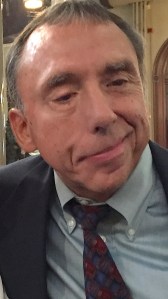
Columbia University Professor Emeritus, Dr. David Figurski

presented by

Donna O’Donnell Figurski

(Disclaimer: The World Health Organization <WHO> has officially named the new coronavirus as SARS-CoV-2 and the disease it causes as COVID-19. Because the majority of people, including much of the press, commonly refer to the virus as “COVID-19,” to avoid confusion I use COVID-19 as the name of the virus in these posts.)


David Figurski

David H. Figurski, Ph.D & Survivor of Brain Injury

There is intense pressure from this Administration for any good news that might bolster its re-election chances. The government’s own FDA (Food and Drug Administration) might shorten the three required clinical trials that are key to proving the safety and efficacy of any vaccine before it’s approved for use by the public.

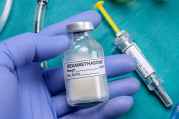
There is good reason to be concerned that government officials from this Administration might approve short-cuts to well-established scientific requirements because they want to speed things up. Both the FDA and the CDC (Centers for Disease Control & Prevention), two government agencies I have always trusted, have already bowed to political pressure from this Administration. The FDA approved hydroxychloroquine use for COVID-19 and later rescinded its approval when the drug was found to be ineffective against COVID-19 and to cause some dangerous side-effects in some people. The CDC, after feeling pressure from the Administration, revamped its back-to-school guidelines.

twiv-300x225

Dr. Vincent Racaniello – Columbia University virologist

Drs. Vincent Racaniello (virologist, Columbia U., host of the TWiV <This Week in Virology> podcasts), Brianne Barker (immunologist, Drew U.), and Rich Condit (retired virologist, Professor Emeritus, U. of Florida) discuss this issue in the TWiV podcast #631 of June 25, 2020. I urge you to listen to minutes 4:00-9:00. These three scientists talk about the importance of impartial and uncorrupted science in driving vaccine development and approval.

Also, an article about this issue can be found in the July 29, 2020, issue of HuffPost.

VaccineA legitimate way for the large Phase III clinical trial to end early is when the benefit is obvious. For example, if a vaccine candidate were given to 20,000 people and a placebo were given to another 20,000 people, the efficacy of the vaccine would be obvious (and statistically sound) if several hundred people in the placebo group became sick, while no person in the vaccine group became sick. Such an obvious result is exceedingly rare, and so, since it normally takes about eight months to do a Phase III clinical trial, if all goes well, we probably won’t have a confidence-inspiring vaccine until 2021.

Stay Safe and Healthy!

Clip Art compliments of Bing.)

(Photos compliments of contributor.)

As I say after each post:

Please leave a comment by clicking the blue words “Leave a Comment” below this post.

Feel free to follow my blog. Click on “Follow” on the upper right sidebar.anim0014-1_e0-1

If you like my blog, share it intact with your friends. It’s easy! Click the “Share” buttons below.

Sneak Peeks for Prisoners – Audio Book Coming Soon

Coming SOON!

Prisoners without Bars: A Caregiver’s Tale – released soon as an audio book.

Prisoners without Bars: A Caregiver’s Tale, a memoir by Donna O’Donnell Figurski, is a heart-wrenching love story that will make readers laugh, cry, and G-A-S-P!

When my husband and best friend, David, had a traumatic brain injury in January 2005, it sent us down the rabbit hole. David’s neurosurgeon gave David a 1/600% chance of survival. David had two more brain surgeries after his first and again, he defied all odds. He lived!

Listen to the excerpt to see how it all started.
You can easily find my book on any of the following places.

Amazon

Barnes and Noble

IndieBound

Goodreads

Just click the links.  You can actually review it and rate it on Goodreads. Did you know that reviews and ratings are the life blood of books? Reviews and ratings help to keep books alive and they may even get to the bestseller list. So, PLEASE write a review and rate Prisoners. It can be short.

Learn more about me at donnafigurski.com

Please leave a comment/question. I will respond.

(Clip Art compliments of Bing.)

As I say after each post: Please leave a comment by clicking the blue words “Leave a Commentanim0014-1_e0-1 below this post.

Please follow my blog. Click on “Follow” on the upper right sidebar.

If you like my blog, share it (intact) with your friends. It’s easy! Click the “Share” buttons below.

If you don’t like my blog, “Share” it (intact) with your enemies. I don’t care!

Please “Like” my post.

New News: . . . . . . . . . . . . . . . . . My New Author Website is Live!

My New Author Website is Live!

by

Donna O’Donnell Figurski

I had the website for “Donna O’Donnell Figurski – Author” reformatted. It’s now live. I love it!

To see it, go to donnafigurski.com.


(Clip Art compliments of Bing.)

(Photos compliments of contributor.)

As I say after each post:

Please leave a comment by clicking the blue words “Leave a Comment” below this post.

Feel free to follow my blog. Click on “Follow” on the upper right sidebar.anim0014-1_e0-1

If you like my blog, share it intact with your friends. It’s easy! Click the “Share” buttons below.

COVID-19 — It’s Everywhere . . . Breakthrough in Basic Research May Defeat COVID-19

Breakthrough in Basic Research May Defeat COVID-19

by

Columbia University Professor Emeritus, Dr. David Figurski

presented by

Donna O’Donnell Figurski


(Disclaimer: The World Health Organization <WHO> has officially named the new coronavirus as SARS-CoV-2 and the disease it causes as COVID-19. Because the majority of people, including much of the press, commonly refers to the virus as “COVID-19,” to avoid confusion I use COVID-19 as the name of the virus in these posts.)

David H. Figurski, Ph.D & Survivor of Brain Injury


Exciting results indicate that a novel idea might bring COVID-19 under control.  The new technology has been shown to work at the lab bench.  Now scientists are doing animal studies and, later, human studies.

Scientists at Boston University (BU) and the University of California at San Diego (UCSD) have made coated nanoparticles that are covered with pieces of lung cell membrane. (About 1000 tiny particles, or “nanoparticles,” can line up in the space equal to the width of a human hair.) The coated nanoparticles mimic the lung cells that normally bind the virus and allow an infection to start.  But, when the virus tries to infect a coated nanoparticle, the virus dies.  Essentially, the coated nanoparticle is a lethal decoy.

Research in the lab indicates that the new technology might be able to end the COVID-19 pandemic. Also, if the technology works in humans, coated nanoparticles will likely be important for inactivating other viruses and for dealing with future pandemics.

Specific nanoparticles can be made to mimic any cell that any virus infects.  So, coated nanoparticles can be made that are specific for any virus (for example, for influenza virus or for Ebola virus).  Also, once the cell normally infected by a previously unknown virus to start an infection has been identified (as it was for COVID-19), the relevant coated nanoparticles can be made. So, a novel virus can be inactivated even though little is known about the molecular details of its biology.

Scientists were surprised to learn that the coated nanoparticles for COVID-19 bind the SARS-2 coronavirus even better than the lung cells normally infected by the virus.  So, this approach for COVID-19 is likely be very efficient.

In COVID-19 infections, sometimes the immune response is too active and causes severe disease or death.  The dexamethasone breakthrough I wrote about earlier works by dampening the immune response.  The scientists surprisingly found that coating another batch of nanoparticles with membrane pieces from cells of the immune system also dampened the immune response.

The scientists envision a protective coated nanoparticle mixture for COVID-19 that has two types of coated nanoparticles (one that mimics the lung cells that are infected and another that dampens the immune response). The mixture would be simply administered as a nasal spray.


Stay Safe and Healthy!

Clip Art compliments of Bing.)

(Photos compliments of contributor.)

As I say after each post:

Please leave a comment by clicking the blue words “Leave a Comment” below this post.

Feel free to follow my blog. Click on “Follow” on the upper right sidebar.anim0014-1_e0-1

If you like my blog, share it intact with your friends. It’s easy! Click the “Share” buttons below.


COVID-19 — It’s Everywhere . . . Drug Breakthrough Significantly Prevents COVID-19 Deaths

Drug Breakthrough Significantly Prevents COVID-19 Deaths

by

Columbia University Professor Emeritus, Dr. David Figurski

presented by

Donna O’Donnell Figurski


(Disclaimer: The World Health Organization <WHO> has officially named the new coronavirus as SARS-CoV-2 and the disease it causes as COVID-19. Because the majority of people, including much of the press, commonly refer to the virus as “COVID-19,” to avoid confusion I use COVID-19 as the name of the virus in these posts.)

COVID-19

David H. Figurski, Ph.D & Survivor of Brain Injury

Research at the University of Oxford in England showed for the first time that a drug prevented a major fraction of deaths in severely sick patients with COVID-19.

Dexamethasone was found in a large clinical trial to cause a significant reduction in deaths. It can be prescribed as pills, and it is a common, readily available, and relatively inexpensive drug

A major problem after infection by COVID-19 is that the immune response of some individuals is too aggressive (often causing what’s called a “cytokine storm”) and can lead to death. Because dexamethasone is a steroid that dampens the immune response, the prediction was that it might help to prevent deaths by COVID-19.

The research showed that it does.

There are about 3 deaths for every 8 patients on ventilators.  Dexamethasone treatment reduced those deaths by one-third.  So, 1 death would be prevented for every 8 patients on ventilators.  About 5 deaths occur in every 25 patients on oxygen only. Dexamethasone treatment reduced those deaths by one-fifth, or about 1 less death for every 25 patients on oxygen only. Dexamethasone treatment had no effect on patients not on ventilators or receiving oxygen only.

Given that a major fraction of the over 118,000 deaths in the US so far (at 6:00 pm ET on June 18, 2020) were on ventilators or oxygen only, dexamethasone treatment is predicted to prevent many deaths.

The UK’s Chief Scientific Adviser, Sir Patrick Vallance, said: “This is a ground-breaking development in our fight against the disease, and the speed at which researchers have progressed finding an effective treatment is truly remarkable.”


Stay Safe and Healthy!

Clip Art compliments of Bing.)

(Photos compliments of contributor.)

As I say after each post:

Please leave a comment by clicking the blue words “Leave a Comment” below this post.

Feel free to follow my blog. Click on “Follow” on the upper right sidebar.anim0014-1_e0-1

If you like my blog, share it intact with your friends. It’s easy! Click the “Share” buttons below.


COVID-19 — It’s Everywhere . . . Progress in Controlling COVID-19

Progress in Controlling COVID-19

by

Columbia University Professor Emeritus, Dr. David Figurski

presented by

Donna O’Donnell Figurski


(Disclaimer: The World Health Organization <WHO> has officially named the new coronavirus as SARS-CoV-2 and the disease it causes as COVID-19. Because the majority of people, including much of the press, commonly refer to the virus as “COVID-19,” to avoid confusion I use COVID-19 as the name of the virus in these posts.)

COVID-19

David H. Figurski, Ph.D & Survivor of Brain Injury


I want to tell you about an amazing podcast, TWiV (This Week in Virology), created and hosted by Dr. Vincent Racaniello, a colleague of mine at Columbia University.

Vincent’s a virologist who has done cutting edge research on the molecular biology of influenza virus, poliovirus, and rhinoviruses (which cause the common cold). His podcasts feature several PhDs in microbiology (virologists, an immunologist, a parasitologist, and a science reporter who earned his PhD with Vincent) discussing the latest research and advances in viruses.

Vincent has been self-quarantining at home. Consequently, since March 13th, he has made more than 30 podcasts, nearly all concerning COVID-19, potential therapies and vaccines, and pandemics. His guests have been infectious disease scientists doing research or physicians in the trenches learning about the clinical manifestations of the virus and how to treat their patients.

Dr. Vincent Racaniello – Columbia University Virologist

Vincent’s podcasts are made for non-scientists to understand, but they are 1-2 hours long. Probably none of you has the time to listen that long. Therefore, I’m trying to listen to them so I can point you to episodes and minutes you may want to hear.

Podcast #622, released June 2, featured Dr. Emmie de Wit of the Rocky Mountain Labs in Montana. She’s a virologist doing drug and vaccine research in monkeys. Because Rocky Mountain Labs is one of the few places in the country with a high-safety-level facility, Dr. de Wit has worked with several dangerous viruses: SARS-1, MERS, pandemic influenza strains, and Ebola. Now she’s working with SARS-2.

I’ve boiled down Episode #622 to four segments totaling ~16 minutes.

  1. 26:05-26:35 – The spike protein of the virus coat initiates infection of a cell by attaching to the ACE2 protein (angiotensin converting enzyme 2) on the cell’s surface. Here Emmie tells how it took only days to identify ACE2 and confirm viral binding. Rich Condit, a virologist, was astonished by the speed. ACE2-binding by spike is a potential drug target.


  1. 37:15-39:44 – The PCR test (polymerase chain reaction), simple enough to be done on a large scale, detects the 30,000-nucleotide (or base) RNA chromosome of the virus. But, PCR is so sensitive that it can detect degradation fragments of the RNA, even though the person is no longer contagious. The only way to tell for sure is to detect viable virus in cell culture. This is hard to do and is only done in virology research labs. As a result, a person is considered infected and contagious if the PCR test is positive.

  1. 43:35-54:05 Remdesivir, an antiviral drug, is a nucleotide-analog that blocks the copying of the RNA chromosome to make more virus. Emmie showed that giving remdesivir to monkeys early (at 12-hours post infection) was very effective. But, humans don’t show symptoms for days, and, because remdesivir must be administered intravenously, patients are only given remdesivir if they are hospitalized. This is very late, and still there is a modest effect. Rich Condit talks about the possibility of producing an oral form of the drug. Then remdesivir could be taken earlier – maybe even at home – and might be very effective in humans.


  1. 58:25-60:40 This segment concerns a vaccine. (I’ll write more on this topic later, but you should know that there are three types of promising technologies: the viral protein-based, the viral gene-based, and the virus vector-based, in which a harmless virus carries a gene from a disease-producing virus for a protein that’s needed to infect cells.)2ff087415a5009984739aa8fde5d5d4a

Emmie tested a harmless chimpanzee adenovirus that was engineered to carry the COVID-19 spike gene. This adenovirus produces the coronavirus spike protein, needed for COVID-19 to infect cells. So, this harmless adenovirus should cause us to make antibodies that will block infection by COVID-19.

In Emmie’s experiment in monkeys, the vaccine worked so well that it allowed clinical trials to proceed in humans.

Stay Safe and Healthy!

Clip Art compliments of Bing.)

(Photos compliments of contributor.)

As I say after each post:

Please leave a comment by clicking the blue words “Leave a Comment” below this post.

Feel free to follow my blog. Click on “Follow” on the upper right sidebar.anim0014-1_e0-1

If you like my blog, share it intact with your friends. It’s easy! Click the “Share” buttons below.

COVID-19 — It’s Everywhere . . . To Open or Not to Open

COVID-19 . . . To Open or Not to Open

by

Columbia University Professor Emeritus, Dr. David Figurski

presented by

Donna O’Donnell Figurski


(Disclaimer: The World Health Organization <WHO> has officially named the new coronavirus as SARS-CoV-2 and the disease it causes as COVID-19.  Because the majority of people, including much of the press, commonly refer to the virus as “COVID-19,” to avoid confusion, I use COVID-19 as the name of the virus in these posts.)

COVID-19

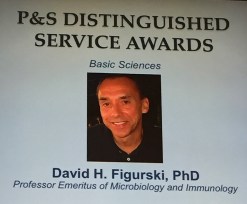
David H. Figurski, PhD — Brain Injury Survivor — Professor Emeritus of Microbiology & Immunology — Columbia University


Some governors say “Open.” Scientists say “Don’t open.” Whom do you believe?

I’m a scientist.  I know where I stand.

Below are some facts to help you decide.

For those of you in the west, the coronavirus infections have just begun.  You can see from the map of May 19 (see below) that infections are still moving westward.

Coronavirus Map – New York Times – 05/19/20

Many people, particularly those in the west, don’t seem to understand that the US is still in the early stages of this pandemic. They are lulled by the low number of cases in their state. The numbers are misleading for two reasons.

(1) Only seriously symptomatic (mostly hospitalized) people and celebrities are being tested because the US is seriously in need of more testing.  (2) The virus has not reached you yet. (That’s the especially true in the western half of the US.)

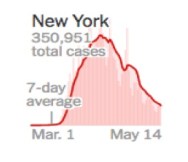
New York City is still very bad, but strict social-distancing guidelines have produced a significant drop in new cases.
Washington State had the potential to become a major hot spot, but they acted quickly and aggressively.

In contrast, several states are opening up and relaxing guidelines, despite a continued rise in new cases.  (That’s the case here in Arizona, where Governor Ducey allowed restaurants to open this week. This decision is particularly horrifying because the pandemic hasn’t really reached us yet.)

Reported cases in the United States

(Every red dot represents a cluster of infections – probably started by an infected asymptomatic traveler.  Right now, most cases are in the east, but every day you see more red dots in the western half of the US.)


David H. Figurski, Ph.D & Survivor of Brain Injury

Stay Safe and Healthy!


Clip Art compliments of Bing.)

(Photos compliments of contributor.)

As I say after each post:

Please leave a comment by clicking the blue words “Leave a Comment” below this post.

Feel free to follow my blog. Click on “Follow” on the upper right sidebar.anim0014-1_e0-1

If you like my blog, share it intact with your friends. It’s easy! Click the “Share” buttons below.

COVID-19 . . . It’s Everywhere! Columbia University Professor Emeritus, Dr. David Figurski Talks about Coronavirus

COVID-19 . . . It’s Everywhere!

Columbia University Professor Emeritus, Dr. David Figurski

Talks about Coronavirus

by David Figurski, Ph.D

presented by

Donna O’Donnell Figurski


(Disclaimer: The World Health Organization <WHO> has officially named the new coronavirus as SARS-CoV-2 and the disease it causes as COVID-19.  Because the majority of people, including much of the press, commonly refer to the virus as “COVID-19,” to avoid confusion, I use COVID-19 as the name of the virus in these posts.)

COVID-19

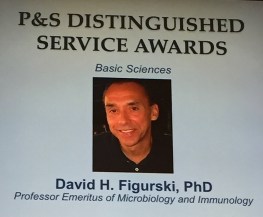
David Columbia Award May 2017Because the COVID-19 pandemic has affected everyone, including the brain injury community, I have added a new category called “COVID-19” to this blog. This category is for posting much-needed information and facts on the new coronavirus and the global pandemic it has caused.
The major reason I added the COVID-19 category is that I have unique access to a survivor of brain injury who is knowledgeable about this pandemic.

For 35 years, my husband, David, was a professor and did research in the Department of Microbiology & Immunology at Columbia University. He retired on September 1, 2013. In January 2005, David had a cerebellar hemorrhage. He survived a three-week

coronavirus-covid-19-design-vector

coma and three brain surgeries in the first two weeks of his coma. Unfortunately, he was left with many physical disabilities, but his cognitive brain was untouched, allowing him to return full-time to the faculty after 19 months. (Those 19 months are described in detail in my book Prisoners without Bars: A Caregiver’s Tale.) For 45 years, David did research on the molecular genetics of various microorganisms, including viruses.

02 Fork Yield Banner copyTo allow you to be introduced to David, I am reposting the link to my radio show of April 19, 2020, on the Brain Injury Radio Network called,  “Another Fork in the Road: BI Survivor/Columbia Prof Dr. David Figurski & Covid19.” (The link first appeared in my post on May 4, 2020.) David was my guest, and I interviewed him about his brain injury and about COVID-19. (Our discussion of COVID-19 begins at 49:50.)

David Figurski

David H. Figurski, Ph.D & Survivor of Brain Injury

Clip Art compliments of Bing.)

(Photos compliments of contributor.)

As I say after each post:

Please leave a comment by clicking the blue words “Leave a Comment” below this post.

Feel free to follow my blog. Click on “Follow” on the upper right sidebar.anim0014-1_e0-1

If you like my blog, share it intact with your friends. It’s easy! Click the “Share” buttons below.


Survivors SPEAK OUT! ………. Mimi Hayes – Survivor, Author, Comedienne

Survivors SPEAK OUT! Mimi Hayes – Survivor, Author, Comedienne

presented by

Donna O’Donnell Figurski

(author of Prisoners without Bars: A Caregiver’s Tale)


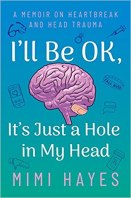
Mimi Hayes – Survivor of Brain Injury Author of “I’ll Be OK, It’s Just a Hole in My Head”

1. What is your name? (last name optional)

Mimi Hayes

2. Where do you live? (city and/or state and/or country) Email (optional)

Brooklyn, New York, USA

3. On what date did you have your brain injury? At what age?

My brain injury happened approximately in late August 2014. I was 22 years old.

4. How did your brain injury occur?

I got a bad migraine while I was on a blind date. After about a week, I’d developed weird symptoms, vision problems, coordination difficulties, etc.

5. When did you (or someone) first realize you had a problem?

My mom knew pretty quickly that something was wrong. It wasn’t until after a few doctor visits

that we got an MRI (magnetic resonance imaging) and it was finally taken seriously.

6. What kind of emergency treatment, if any, did you have?

MRI

7. Were you in a coma? If so, how long?

Nope

8. Did you do rehab? What kind of rehab (i.e., inpatient or outpatient and occupational and/or physical and/or speech and/or other)? How long were you in rehab?

I was in inpatient therapy for two weeks and in outpatient therapy for about three months. I had speech, occupational, and physical therapies.

9. What problems or disabilities, if any, resulted from your brain injury
(e.g., balance, perception, personality, etc.)?

I have some lasting vision issues on the left side, but they’re minimal and happen only when I’m tired. I have issues with concentration, memory, fatigue, coordination, and sensitivity to lights and sounds.

10. How has your life changed? Is it better? Is it worse?

My life changed for the better in every way. Yes, it’s hard to have to adjust to a new brain, but I would never be where I am or who I am without this experience

11. What do you miss the most from your pre-brain-injury life?

Probably just being a bit more fit. I used to play ice hockey, and my brain completely forgot that

muscle-memory. Also, I wasn’t such a scatterbrain, but that’s endearing most of the time.

12. What do you enjoy most in your post-brain-injury life?

Challenging myself to live in New York City, a place where I never imagined I could live with a TBI (traumatic brain injury).

13. What do you like least about your brain injury?

I don’t like that my brain injury has elevated my anxiety, which I had before the injury. It’s probably a low-grade PTSD (post traumatic-stress disorder) tied to all things medical.

14. Has anything helped you to accept your brain injury?

I don’t think I’ve ever not accepted my brain injury. It’s just that I forget it sometimes. I maybe do something I could have done before with no problem, like a concert, but I’m completely exhausted the entire next day.

15. Has your injury affected your home life and relationships and, if so, how?

Sure. My family had to learn about my new challenges. We had to stop eating dinner with the TV on in the background, and we learned that I’m quicker to anger. They never weren’t there for me, and, if anything, my brain injury brought me much closer to them.

16. Has your social life been altered or changed and, if so, how?

I’ve always been very social. It’s just that now I have to power-down more to recharge.

17. Who is your main caregiver? Do you understand what it takes to be a caregiver?

Me. But, I don’t really understand what it takes to be a caregiver. I was a nanny to three small boys for a year, and that was a lot of work! But no, I’ve never been a caregiver.

18. What are your plans? What do you expect/hope to be doing ten years from now?

Hard to say, but I’d like to put out a few more books, do a TED Talk, and continue to travel with my comedy. As soon as theaters are back open, I’d like to put my one-woman show on off-Broadway.

19. Are you able to provide a helpful hint that may have taken you a long time to learn, but which you wished you had known earlier? If so, please state what it is to potentially help other survivors with your specific kind of brain injury.

Just give yourself grace. Don’t compare yourself to other people’s recoveries or even to who you used to be before. Also, it’s OK to change who you are after a near-death situation. It’s OK to change your job, your city, hell, anything you want. You deserve to explore the new you.

20. What advice would you offer to other brain-injury survivors? Do you have any other comments that you would like to add?

There’s a great big community out here. You are not alone. You’d be surprised how many people I’ve met on Instagram and now consider them to be best friends. I would have never met them in real life.

We are strong, and we all want to share our stories with each other and connect. My advice is to get online, start using hashtags, and explore. You will find us. And, we can’t wait to connect with you!

To learn more about Mimi Hayes, visit her website.

Mimi Hayes Website

Mimi Hayes’ book, I’ll Be OK, It’s Just a Hole in My Head


Clip Art compliments of Bing.)

(Photos compliments of contributor.)

As I say after each post:

Please leave a comment by clicking the blue words “Leave a Comment” below this post.

Feel free to follow my blog. Click on “Follow” on the upper right sidebar.anim0014-1_e0-1

If you like my blog, share it intact with your friends. It’s easy! Click the “Share” buttons below.


diemodi jewelry

uniquely hand-crafted jewelry by donna

Welcome to Harmony Kent Online

The home of all things books

Pete Springer

Passionate Teacher and Future Children's Author

HOPE TBI

Helping Other People Excel - To Be Independent

For the Love of Books, Old and New

Katie Fischer, Writer and Reader of Stories

Charlie Bown

Children's Author

Jessica Hinrichs

“We write to taste life twice, in the moment and in retrospect.” ― Anais Nin

VIVIAN KIRKFIELD - Writer for Children

Picture Books Help Kids Soar

Mindy’s Writing Wonderland

For authors, parents, teachers & everyone who loves children’s books.

Kaitlyn Leann Sanchez

Literary Agent

Surviving Traumatic Brain Injury

TBI - Survivors, Caregivers, Family, and Friends

The Care Factor

Loving someone with a Traumatic Brain Injury

Brain Injury Support Group of Duluth-Extension

Brain Injury Information and SUPPORT

Brain Aneurysm Global Insight

Brain Aneurysm, cerebral hemorrhaging, hemorrhage stroke