TBI – Survivors, Caregivers, Family, and Friends

Posts tagged ‘survivingtraumaticbraininjury.com’

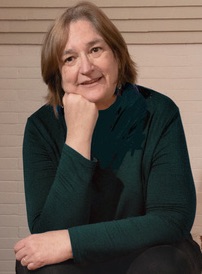
Survivors SPEAK OUT! . . . . . Dawn Wasserman Corbelli

Survivors SPEAK OUT! Dawn Wasserman Corbelli

 presented by

Donna O’Donnell Figurski

1. What is your name? (last name optional)
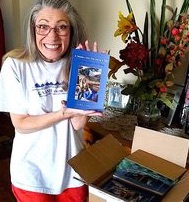
Dawn Wasserman CorbelliDawn Corbelli

2. Where do you live? (city and/or state and/or country) Email (optional)

Colorado Springs, Colorado, USA      corbelli@q.com

3. On what date did you have your brain injury? At what age?

February 13, 2008

At the time of the accident, I was 39 years old, and my daughter, Veronica, was 15 years old.

4. How did your brain injury occur?

Car accident

5. When did you (or someone) first realize you had a problem?

The day of our car accidentR-4

6. What kind of emergency treatment, if any, did you have?

I was hospitalized. There I had X-rays and a CT (computerized tomography) scan. Staples were put in my head, I had to use a catheter, and I was given morphine.

My daughter had exploratory surgery, X-rays, an MRI (magnetic resonance imaging), life-support, and many other things that I do not know because I lost my memory for seven weeks.

7. Were you in a coma? If so, how long?

I was not in a coma.

My daughter was in a coma for two weeks and one day.

8. Did you do rehab? What kind of rehab (i.e., inpatient or outpatient and occupational and/or physical and/or speech and/or other)? How long were you in rehab?

I did speech, occupational, and physical therapies – inpatient for two weeks and outpatient for months.

My daughter was in speech, occupational, and physical therapies – inpatient for six hours/day for 2½ months and outpatient for over a year. She had physical therapy on and off throughout the years since our accident (almost 14 years ago now). She also participated in manual therapy in which specially trained therapists put pressure on muscle tissue and manipulate joints in an attempt to decrease back pain caused by muscle spasm, muscle tension, and joint dysfunction.

9. What problems or disabilities, if any, resulted from your brain injury
(e.g., balance, perception, personality, etc.)?
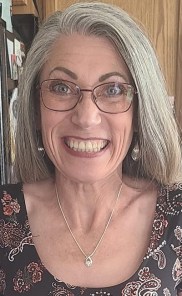
Dawn Wasserman Corbelli 2My disabilities are memory loss, lack of comprehension, decreased cognitive speed, balance difficulty, vertigo, a very short temper, and extreme mood changes. I became more depressed, and I now suffer severe anxiety. I have bipolar disorder that has been exacerbated due to my moderate brain injury. When driving, I would sometimes forget where I was, where I was going, and why. It happens less now, but it still happens. My math skills have become extremely poor. I couldn’t read for years; I read like a five-year-old trying to put words together. I am capable of reading well now.

My daughter has a severe traumatic brain injury (TBI). She has a sheared brain stem that causes trouble with swallowing. (She frequently chokes on her own saliva.) She was paralyzed on her left side, but she now has full use of it. She has severe short-term memory loss, and she also suffers from long-term memory loss. (She has forgotten the three months before our accident and the three months after.) Her cognitive speed and the speed of her speech has been affected, but not to a great extent. She cannot run due to her previously paralyzed left side. She has a great deal of chronic pain. She broke her pelvis in eight places, both of her hips, and her left ankle, all of which cause her pain daily. She cannot stand in one place for more than a few minutes. Her left ankle swells up. She has balance issues.

Because my daughter’s hypothalamus was damaged, she gained 4.5 pounds a week after leaving the hospital until she gained 70 pounds, which she still carries today. Her body thermometer is also broken. She is hot all the time and doesn’t even wear a coat in 30-degree weather. Her personality is sexually perverse. Her mind is frequently on sex and, with very little filter, she speaks frequently in a sexual manner, but it is much better than it used to be. She is quite impulsive, and she has poor decision-making skills, which can sometimes leave her in danger. For years, she would take off her shirt in public to show her breasts. When we are there to guide her, we can keep this from happening. She takes things very literally. If someone makes a suggestion that is inappropriate, she will take it seriously. She does what her friends do (for example, not wearing a seatbelt). She has a severe mood disorder. Sometimes severe anxiety makes her cry for long periods of time. She is on medication. Sometimes it works, and sometimes, not. So we have been going through med changes for the past couple years.

Note: She was very stable pre TBI.

10. How has your life changed? Is it better? Is it worse?Lonely

We are deep believers in the Lord and believe that everything happens for a reason. Now we cannot imagine our life any other way. For many years, we lost all of our friends, and we were very lonely. But we always had each other and became best friends. Life with a brain injury is very difficult. But we have always seen and appreciated our blessings and have learned to find joy in every day again. Our faith brought us through and carried us when we couldn’t carry ourselves.

Veronica believes life is better because many blessings came from our injuries. Our lives are not really “better” or “worse”; it is as God has planned. He gives us the strength to get through any situation, and we do what we have to do even during the difficulties. Veronica believes she is a better person and is much closer to God now. My bipolar episodes are worse now, but, thankfully, I do not have them very often.

11. What do you miss the most from your pre-brain-injury life?

I miss my very sharp thinking. I am slower, and there are many things I just do not understand without them being explained to me in a different way – with the use of different words now.

My daughter misses having stable moods. She does not have the independence she always dreamed of. She lives at home, cannot drive, and cannot work. Since she was 10 years old, she knew she wanted to go to college at ASU (Arizona State University); join the Air Force, like her parents did; and

12. What do you enjoy most in your post-brain-injury life?Dawn Wasserman Corbelli Family
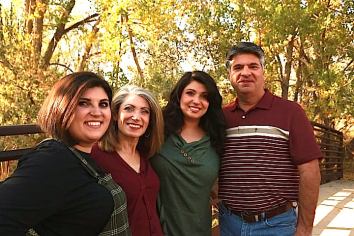
I enjoy my family. I enjoy staying home with Veronica. Who wouldn’t want to raise their child twice if given the blessed chance?

Veronica enjoys spending time with her boyfriend most.

13. What do you like least about your brain injury?

I dislike that I forget so much and that it sometimes frustrates my husband.

Veronica hates her deficits, especially the short-term memory loss, the anger, and her labile moods.

14. Has anything helped you to accept your brain injury?smart-cartoon-clipart-1

After 12 years, I saw a wonderful counselor who taught me that my deficits have nothing to do with my intelligence.

For Veronica, the fact that her family and friends accept her brain injury helps her accept it. Her boyfriend did not know her pre injury and loves her just the way she is. 

15. Has your injury affected your home life and relationships and, if so, how?

Yes. My husband and older daughter are very protective of us now. We all worry that if we can’t get a hold of each other, the one we are trying to get a hold of is on the side of the road dead in a car accident.

Being sexually perverse and very touchy feely, Veronica ended up being raped twice by different people we knew. That ended friendships, of course.

16. Has your social life been altered or changed and, if so, how?

For many years, we had no social life or friends outside of our family. Veronica and I were very lonely for friends and ever so grateful every day that we had each other. We prayed for a very long time – years – for new friends to come into our lives, and they eventually did. A family (the husband is Greg’s best friend); the wife is my best friend, and their grown children and their families are Veronica’s best friends. We spend evenings, a week, and often a day on the weekend with this family. And after eleven lonely years, Veronica has a boyfriend again.  

17. Who is your main caregiver? Do you understand what it takes to be a caregiver?

I am Veronica’s main caregiver, but my husband and I both are co-guardians of Veronica.

18. What are your plans? What do you expect/hope to be doing ten years from now?

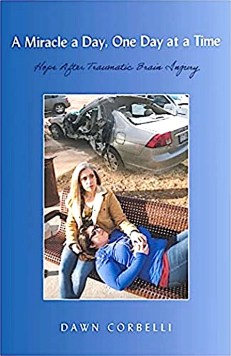
My husband will be retired, and we plan on doing some traveling. I hope to be promoting the book I recently published and maybe another.Dawn Wasserman Corbelli Book
Veronica hopes to be moved out, with a man (maybe this boyfriend), and not be living at home.

19. Are you able to provide a helpful hint that may have taken you a long time to learn, but which you wished you had known earlier? If so, please state what it is to potentially help other survivors with your specific kind of brain injury.

Use Google maps so that if you are driving and you forget where you are, where you are going, and why, at least you will know where you are.

20. What advice would you offer to other brain-injury survivors? Do you have any other comments that you would like to add?

The biggest problem daily is memory loss. I have learned how to manage it pretty well on a daily basis. Write everything down that you want to remember. Keep paper in every room of your house and in the car if you drive. Be responsible for your own notetaking. That way you cannot blame anyone else for your forgetfulness. Put notes anywhere they will help you remember. Put them in the kitchen on the counter, taped to the microwave, in the bathroom, on the toilet seat, or on the steering wheel of the car if it will help.

If a brain injury survivor’s loved ones do not accept the new person he or she has become, neither will the survivor accept himself or herself. So, survivors, allow yourself to grieve, but don’t ever say, “I miss the old you.”

Get Your Copy Now

Read It! Review It! Listen to It!
                                                     

Click Links under Book

  PAPERBACK!   Read it Now!     e-BOOK!   Read it Now!   AUDIO BOOK Listen to it Now!

Stay Safe and Healthy!

Clip Art compliments of Bing.)

(Photos compliments of contributor.)

As I say after each post:

Please leave a comment by clicking the blue words “Leave a Comment” below this post.

anim0014-1_e0-1

Feel free to follow my blog. Click on “Follow” on the upper right sidebar.

If you like my blog, share it intact with your friends. It’s easy! Click the “Share” buttons below.


Indie Spotlight – Donna O’Donnell Figurski

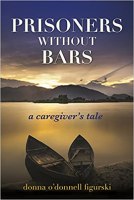
I am so honored to be featured on Sue Bavey’s website, Sue’s Musings – Indie Spotlight. Sue features authors to take a glimpse into their journey to publication. Each story is different and intriguing. I hope you will find my story interesting and that you will take the time to read my book, PRISONERS WITHOUT BARS: A CAREGIVER’S TALE. I’ve been told it will make you laugh, cry, and G-A-S-P! Please let me know if you did any?

donna o’donnell figurski – author

Prisoners (print) Amazon US Paperback
Prisoners (eBook) Amazon US eBook
Prisoners (audiobook) Amazon Audiobook
Prisoners (print) Barnes and Noble Paperback
Prisoners (eBook) Barnes and Noble eBook
Prisoners (print) IndieBound
Prisoners (eBook) Kobo

Covid-19: Vaccines (Part 3 of 3): You’re Safe if You’re Vaccinated

COVID-19: Vaccines (Part 3 of 3): You’re Safe if You’re Vaccinated

by
Columbia University Professor Emeritus, Dr. David Figurski
presented by
Donna O’Donnell Figurski

(Disclaimer: The World Health Organization <WHO> has officially named the new coronavirus as SARS-CoV-2 and the disease it causes as COVID-19.  Because the majority of people, including much of the press, commonly refer to the virus as “COVID-19,” to avoid confusion, I use COVID-19 as the name of the virus.)

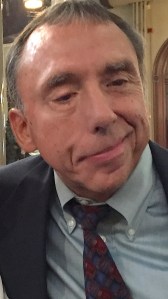
David Figurski

David H. Figurski, Ph.D & Survivor of Brain Injury

     Some things people need to know about vaccination and life after vaccination.

     If you’re healthy, you don’t need a booster, but it won’t hurt to get it. Donna and I will get the booster because we’re in the senior demographic, and our immune systems may have declined somewhat.

     Vaccinated people can get infected, but their disease will be mild or asymptomatic. There is no such thing as a “breakthrough infection.” All vaccines allow infection, but prevent severe disease.

Because vaccination doesn’t prevent infection, we definitely don’t want to infect any of the as-yet-unvaccinated children. We always wear our masks around children and try to keep a distance between them and us.

vaccine Stop Coronavirus, covid – 19 , China, Wuhan, Danger, vector Illustration.

For the reasons I discuss below, virologists in my former department at Columbia say the vaccines will protect you from all the variants we know about – despite all the hysteria.

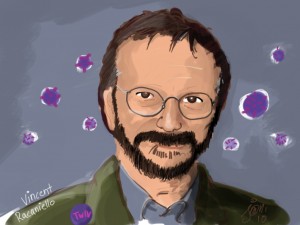
Columbia virologist Vincent Racaniello continues to emphasize that there are no data to support increased transmissibility of any variant. Delta might be widespread for any one of a number of possible reasons.

All the US vaccines are safe. Because of them, my fears of hospitalization and death are gone.

But we still may be susceptible to getting Long COVID (see below). (There aren’t enough data yet on whether vaccinated people can still get Long COVID.) The reason this is an issue is because Long COVID can apparently be brought on by a mild infection.

4i9pkz4ATEven though we’ve been vaccinated, we are still being careful. We try to mix with vaccinated people only. We try to avoid people and places that might be hot spots for infection. We only eat on restaurant patios; we never eat inside. We still practice social-distancing when we can, and we still wash our hands thoroughly and use disinfectant if we can’t wash our hands.

But we have also relaxed several things. Donna now goes into stores, but she always wears her mask. We’ve traveled by car, so we have stayed in motels. Although we don’t eat inside, we have walked through several restaurants with our masks on. Also, we’ve eliminated some precautions with our mail and our food packages.

You can stop here.

If you want more detail, the following is an easily understood explanation of what the vaccines do and why they’re so protective.

All the currently approved US vaccines are directed to one viral protein: the Spike protein. Spike proteins decorate the virus coat. They are responsible for allowing the virus to bind to a protein (ACE2) on the surface of lung cells. Because the viral-encoded Spike protein and the host-encoded ACE2 protein bind to each other, the virus can bind to the lung cell and get inside to start an infection. This means the lung cell will be hijacked and reprogrammed to make more virus particles. Each infected cell will release thousands of new virus particles. They can then attach to more lung cells. And the cycle repeats. You can easily see how a virus can quickly overwhelm its host animal.

(Incidentally, the Spike protein probably got its name because pictures (electron micrographs) of the virus show that it resembles a “mace,” a weapon used in medieval times. The head of the mace had spikes which did the damage. Similarly, the coronavirus particle is coated with “spikes.” They are made from trimers (assemblies of three copies of a single kind of protein) of the Spike protein. Coronavirus definitely got its name from pictures. Several Spike protein trimers on the surface of each virus particle make the virus look like a cartoon-drawing of the sun. The spikes on the virus look like the “corona” of the sun.)

Antibodies work by binding to the Spike protein and preventing the Spike protein from binding the lung cell’s ACE2 protein. As a result, the virus can’t bind a lung cell to start an infection.

All proteins are made up of a series of amino acids linked end to end. The Spike protein has 1273 amino acids. The sequence and types of amino acids (of which there are 20) determine the property and the folding of the Spike protein. The proteins are molecular machines. There are tens of thousands of different proteins in the human body – each one doing a unique job. The virus-encoded Spike protein is the viral machine that makes it possible for the SARS-2 coronavirus to infect lung cells.

Of the 1273-amino acids in Spike protein, only a few amino acids form the binding domain that allows binding of Spike protein to ACE2. Antibodies that bind to this binding domain of Spike protein inactivate the Spike protein and prevent the virus from infecting lung cells. Such antibodies are called “neutralizing antibodies.” The purpose of the vaccines is to stimulate the production of antibodies to the entire Spike protein, some of which will be neutralizing antibodies that can block infection. In other words, the neutralizing antibodies are a subset of all the antibodies produced that bind to the Spike protein. Because the Spike protein has lots of amino acids and lots of domains, it will stimulate lots of different antibodies that will bind the Spike protein, but only those that bind to the Spike domain that binds ACE2 are neutralizing antibodies. Only they will prevent the ability of the virus particles to bind to lung cells and get in.

The sequence of the 1273 amino acids in the Spike protein can also be seen as several smaller sequences of amino acids. Some small sequences of amino acids can fold properly and stimulate the formation of specific antibodies directed against that small domain. So most of the Spike-protein-specific antibodies bind the Spike protein at other places and do not block the ability of the virus to bind to and infect lung cells. The most relevant domain is the sequence of amino acids needed to form and fold properly so that Spike protein (and therefore the virus) can bind the lung cell’s ACE2 protein. Antibodies to that domain prevent binding of the virus to lung cells. These are the antibodies of interest – the so-called “neutralizing” antibodies. In fact, scientists are thinking of using only the amino acids that allow the proper structure of the ACE2-binding domain to form. If a vaccine can be made from the ACE2-binding domain only of the Spike protein, then maybe more neutralizing antibodies would be made, and the vaccine might even be better at preventing disease.

Some variants are known to bind the neutralizing antibodies less well. The virus has “seen” many vaccinated people, so there is “pressure” for the virus to change to ensure its survival. Some altered viruses randomly arise with slight changes, like differences in the amino acid used at a certain position of the Spike protein. (There is a reason why Nature allows DNA and RNA replication to make some random, but very rare, errors.) Some changed (=mutant=variant) viruses are still able to form a domain of Spike protein that can bind ACE2 yet evade some of the neutralizing antibodies that block the original Spike protein. Such changed viruses may do better and eventually become predominant. So random errors in replication can lead to viruses that have some ability to resist neutralizing antibodies, yet still bind to lung cells to start infection. These are what we are calling “variants.” Because the change increased the virus’ chance of escaping neutralizing antibodies, it survives better.  The arising of variants is evolution that we can see happening in real time.

But we got lucky! Some of the variants (like Delta) may escape some neutralizing antibodies. But we are still protected! The Spike protein also stimulates killer T cells, an important arm of the immune system that is usually ignored.

The killer T cell arm of the immune system is as potent as the more commonly known antibody arm. Not every protein has sequences that can instruct killer T cells, but Spike protein does. When a cell makes proteins, a small fraction of each protein being synthesized is chopped up, and small fragments of that protein are displayed on the surface of the cell. The immune system has a way to instruct a killer T cell to kill any cell making a foreign protein (that is, one not made by the human body). A killer T cell that has “learned” to recognize a fragment of Spike protein on a cell’s surface will kill the cell making it because that cell is considered to be making virus.

And that’s not all! The antibody arm of the immune system is less potent in the variants, but the killer T cell arm is completely unaffected. Not only that, but, whereas a variant resistant to the antibodies can affect an entire population, because of mechanism, it is impossible for a variant resistant to killer T cells to spread beyond a couple of individuals in the worst-case scenario.

Bottom line: All the Spike-protein-based vaccines we know about (Pfizer-BioNTech, Moderna, J&J, and the UK’s Oxford-Astra Zeneca) are protective beyond expectations. You’re safe if you’re vaccinated.

Get Your Copy Now

Read It!               Review It!

Click Links under Book

51r7mht63el._sx332_bo1204203200_


  PAPERBACK!        Read it Now!                              e-BOOK!      Read it Now!

Stay Safe and Healthy!

Clip Art compliments of Bing.com.

(Photos compliments of contributor.)

As I say after each post:

Please leave a comment by clicking the blue words “Leave a Comment” below this post.

Feel free to follow my blog. Click on “Follow” on the upper right sidebar.anim0014-1_e0-1

If you like my blog, share it intact with your friends. It’s easy! Click the “Share” buttons below.

Survivors SPEAK OUT! Marcia Pelletiere

Survivors SPEAK OUT! Marcia Pelletiere

 presented by

Donna O’Donnell Figurski

4 Marcia Pelletiere

1. What is your name? (last name optional)

Marcia Pelletiere

2. Where do you live? (city and/or state and/or country) Email (optional)

New Jersey, USA

3. On what date did you have your brain injury?

June 2006

At what age?

52 years old

4. How did your brain injury occur?

I was stopped at a red light in the rain, when I was rear-ended by a Mack truck, since its brakes didn’t work well in the rain.4cf071c5aa7eb3f1cf526f24c8d8cdcf

5. When did you (or someone) first realize you had a problem?

Right away

6. What kind of emergency treatment, if any, did you have?

I went to the Emergency Room. They gave me pain meds and released me – without an MRI (magnetic resonance imaging) or any other scans or tests.

7. Were you in a coma? If so, how long?

No

8. Did you do rehab? What kind of rehab (i.e., inpatient or outpatient and occupational and/or physical and/or speech and/or other)? How long were you in rehab?

Yes. I had physical, visual, and cognitive therapies. (Outpatient only)

9. What problems or disabilities, if any, resulted from your brain injury
(e.g., balance, perception, personality, etc.)?

A balance problem, body pain, vertigo, visual perception issues, short-term memory loss, and many other things.R29bb7d92f62ec64ba9bd5ff941bbb04d

10. How has your life changed? Is it better? Is it worse?

After 15 years, my life is largely repaired. I learned a lot of valuable lessons. I credit some of the people who helped me with making my new life possible.

11. What do you miss the most from your pre-brain-injury life?

I miss being able to trust my brain to be reliable with dates and my eyes, with visual perception … things like that.

12. What do you enjoy most in your post-brain-injury life?

I appreciate what I have so much now. Everything is more precious.

13. What do you like least about your brain injury?

I dislike the way it caused me to spend so many years feeling disoriented and isolated. I was frustrated from not being able to communicate my inner “mess” and distress, from my visual and audio processing problems, and many other issues. Nowadays I live with only a few “leftovers” from the brain injury, and I’ve learned to manage those.

14. Has anything helped you to accept your brain injury?

My cognitive therapist was essential in my recovery. Also, my meeting other TBI (traumatic brain injury) patients was a huge help in accepting the reality of TBI.

15. Has your injury affected your home life and relationships and, if so, how?

Having a TBI is a strain on all relationships. Everything was much more difficult, and that made relaxed relating harder, to say the least!

16. Has your social life been altered or changed and, if so, how?

Now I prioritize my relationships and appreciate the support that family and friends and brain-injury caregivers gave me when I needed it most.

17. Who is your main caregiver? Do you understand what it takes to be a caregiver?

I have been a caregiver, and I have had caregivers, so I understand a lot about caregiving – and about caregiver burnout! I am my own caregiver now, thank goodness! (I function very well these days. I feel very lucky.)

18. What are your plans? What do you expect/hope to be doing ten years from now?

Marcia Pelletiere

Marcia Pelletiere’s books and recordings

I am doing what I want to do right now. I’m doing creative work; I’m also teaching; and I’m spending time with friends and family. In ten years, I hope to have enough health to still be doing creative work, to still be spending time with loved ones, and to be traveling.

19. Are you able to provide a helpful hint that may have taken you a long time to learn, but which you wished you had known earlier? If so, please state what it is to potentially help other survivors with your specific kind of brain injury.3 Marcia Pelletiere Survivor 2 Author 062021

Listen to your body. Make sure to keep trying to communicate what is happening, if you can. Find doctors and other caregivers who know about brain injury and who will listen to you and take your symptoms seriously. Check out problems (vision, balance, nausea, etc.) with neuro-optometrists and ENTs (ear, nose, and throat specialists).

20. What advice would you offer to other brain-injury survivors? Do you have any other comments that you would like to add?

Every brain injury is different. You are the expert on what your brain injury feels like. Don’t devalue your own experience! Your input with doctors and others is important.

Don’t Forget to Get Your Copy of My Book Now!

Read It! Review It! Listen to It!

Click Links under Book

PAPERBACK!   Read it Now!     e-BOOK!   Read it Now!

AUDIO BOOK Listen to it Now!

Stay Safe and Healthy!

As I say after each post:

Please leave a comment by clicking the blue words “Leave a Comment” below this post.

anim0014-1_e0-1

Feel free to follow my blog. Click on “Follow” on the upper right sidebar.

If you like my blog, share it intact with your friends. It’s easy! Click the “Share” buttons below.

Clip Art compliments of Bing.)

(Photos compliments of contributor.)


Another Fork in the Road ~~~ Do You Know Someone with a Brain Injury? I Do!

Do You Know Someone with a Brain Injury? I Do!
presented
by
Donna O’Donnell Figurski 

Chances are you know someone who has suffered a traumatic brain injury (TBI.) More than 1.7 million Americans each year sustain a brain injury.  I personally know five people who are living with some form of TBI. In fact, I’m living with one.

My husband, David, had his brain injury in 2005. A professor friend of ours from Brigham Young University has one. So do my nephew, an actor/director friend from my local community theater, and the husband of my friend, Judy.

A brain injury can occur in the blink of an eye. Brain injury is not discriminating. It cares not about color, race, or creed. It can happen to a child or an octogenarian and everyone in between. A child may fall off his bike or off her swing.  A teenager may meet up with a TBI on the soccer or football field or a gymnastic mat. Car and motorcycle accidents are common causes of traumatic brain injuries. An assault in a dark alley or domestic abuse in your home can result in brain injury too. One can even have a traumatic brain injury while exercising (e.g., while doing chin ups in the wee hours of the morning after doing Tai Chi while listening to Deuter or some other new age CD). David did!

Like snowflakes, no two brain injuries are the same. Each survivor is different too and each method of healing is unique to the person who is struggling to regain his or her former life. With a lot of hard work, patience, and persistence many survivors can enjoy a “new normal” life.

Check out this article, Facts About Traumatic Brain Injury, for more information.

Get Your Copy Now

Read It! Review It! Listen to It!

Click Links under Book

PAPERBACK!   Read it Now!     e-BOOK!   Read it Now!

AUDIO BOOK Listen to it Now!

Stay Safe and Healthy!

Clip Art compliments of Bing.)

(Photos compliments of contributor.)

As I say after each post:

Please leave a comment by clicking the blue words “Leave a Comment” below this post.

anim0014-1_e0-1

Feel free to follow my blog. Click on “Follow” on the upper right sidebar.

If you like my blog, share it intact with your friends. It’s easy! Click the “Share” buttons below.

Brain Injury Resources~Book Review “Now One Foot, Now the Other”

Brain Injury Resources …

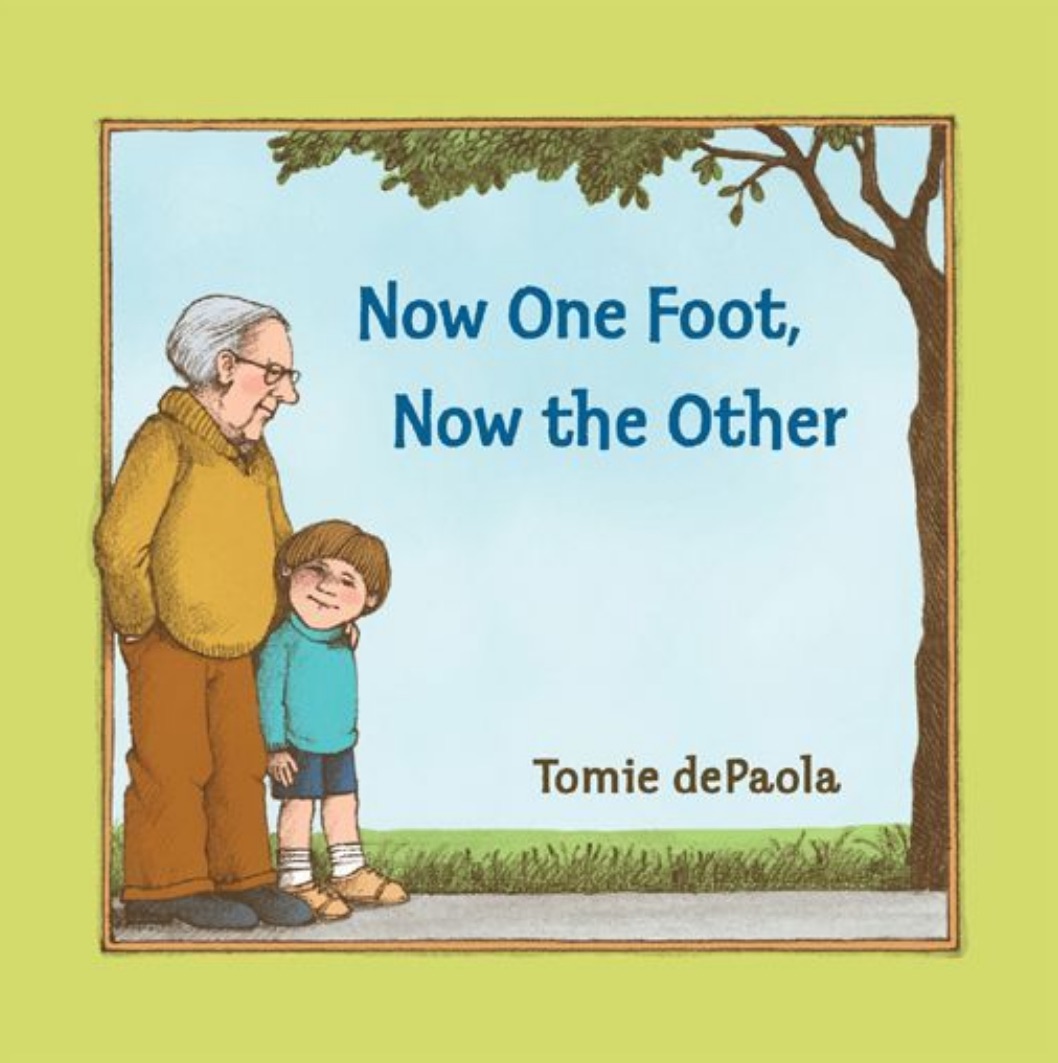
“Now One Foot, Now the Other”

by author/illustrator Tomie dePaola

presented by

Donna O’Donnell Figurski


Now One Foot, Now the Other

Now One Foot, Now the Other by author/illustrator, Tomie dePaola

Now One Foot, Now the Other by Tomie dePaola is one of my favorite books. I love all of Tomie’s books, but this one touches the heart.

My husband, David, had a traumatic brain injury in 2005 and, like Bob, had to relearn to walk. I guess I was my husband’s “Bobby” as I helped David to learn to walk again.

This book is so important in helping a child understand what happened to grandpa (grandma, anyone) when they suffer a debilitating brain injury. It is even an eye-opener for adults.

I highly recommend this book to any audience.

P.S. I once had drinks with Tomie dePaola and my friend, Paula Danziger, (author of the Amber Brown books) at the Roosevelt Hotel in New York City while attending an SCBWI conference. (Society of Children’s Book Writers and Illustrators)

Get Your Copy Now

Read It! Review It! Listen to It!

Click Links under Book

PAPERBACK!   Read it Now!     e-BOOK!   Read it Now!

AUDIO BOOK Listen to it Now!

Stay Safe and Healthy!

Clip Art compliments of Bing.)

(Photos compliments of contributor.)

As I say after each post:

Please leave a comment by clicking the blue words “Leave a Comment” below this post.

anim0014-1_e0-1

Feel free to follow my blog. Click on “Follow” on the upper right sidebar.

If you like my blog, share it intact with your friends. It’s easy! Click the “Share” buttons below.

COVID-19: Love in the Time of a Pandemic

COVID-19: Love in the Time of a Pandemic

by

Columbia University Professor Emeritus, Dr. David Figurski

presented by

Donna O’Donnell Figurski

(Disclaimer: The World Health Organization <WHO> has officially named the new coronavirus as SARS-CoV-2 and the disease it causes as COVID-19.  Because the majority of people, including much of the press, commonly refer to the virus as “COVID-19,” to avoid confusion I use COVID-19 as the name of the virus in these posts.)

David H. Figurski, Ph.D & Survivor of Brain Injury

Donna and I recently celebrated 51 years of marriage.  We chose the beautiful desert scenery around the White Tank Mountains near our home in Arizona.  We returned to the place that Donna proposed to me last year as part of our 50th anniversary celebration.

This year, our anniversary celebration was very different.  We are in the middle of a global pandemic of a new coronavirus.  To slow the spread of this highly contagious virus, most people wear masks, practice social-distancing, and self-quarantine.  (For us, except for monthly food pick-up runs, we have been home over 160 days.)

Desert near the White Tank Mountains

The effect of the pandemic has been horrific and devastating for society, most notably for health-care personnel, blue-collar workers, teachers and school administrators, and middle- and lower-class families, who are struggling with paying bills, having enough food, and eviction.

Donna & David Figurski Wedding Anniversary #51

Globally, there have been over 22.5 million confirmed cases of COVID-19, and over 795,000 people have died. The U.S. has over 5.5 million cases and over 175,000 deaths. Scientists and physicians around the world are racing to understand the virus and its disease.  A viable vaccine is months away.

David & Donna Figurski – so happy together

Everyone is trying to cope as best as he or she can. On a personal level, Donna and I are fortunate to deeply love one another and to have each other in the midst of such chaos.

Love is worth celebrating wherever and whenever you can.

Stay Safe and Healthy!

Clip Art compliments of Bing.)

(Photos compliments of contributor.)

As I say after each post:

Please leave a comment by clicking the blue words “Leave a Comment” below this post.

Feel free to follow my blog. Click on “Follow” on the upper right sidebar.anim0014-1_e0-1

If you like my blog, share it intact with your friends. It’s easy! Click the “Share” buttons below.

COVID-19 – It’s Everywhere . . Will an Early Vaccine for COVID-19 Be Safe?


Will an Early Vaccine for COVID-19 Be Safe?

by

Columbia University Professor Emeritus, Dr. David Figurski

presented by

Donna O’Donnell Figurski

(Disclaimer: The World Health Organization <WHO> has officially named the new coronavirus as SARS-CoV-2 and the disease it causes as COVID-19. Because the majority of people, including much of the press, commonly refer to the virus as “COVID-19,” to avoid confusion I use COVID-19 as the name of the virus in these posts.)


David Figurski

David H. Figurski, Ph.D & Survivor of Brain Injury

There is intense pressure from this Administration for any good news that might bolster its re-election chances. The government’s own FDA (Food and Drug Administration) might shorten the three required clinical trials that are key to proving the safety and efficacy of any vaccine before it’s approved for use by the public.

There is good reason to be concerned that government officials from this Administration might approve short-cuts to well-established scientific requirements because they want to speed things up. Both the FDA and the CDC (Centers for Disease Control & Prevention), two government agencies I have always trusted, have already bowed to political pressure from this Administration. The FDA approved hydroxychloroquine use for COVID-19 and later rescinded its approval when the drug was found to be ineffective against COVID-19 and to cause some dangerous side-effects in some people. The CDC, after feeling pressure from the Administration, revamped its back-to-school guidelines.

twiv-300x225

Dr. Vincent Racaniello – Columbia University virologist

Drs. Vincent Racaniello (virologist, Columbia U., host of the TWiV <This Week in Virology> podcasts), Brianne Barker (immunologist, Drew U.), and Rich Condit (retired virologist, Professor Emeritus, U. of Florida) discuss this issue in the TWiV podcast #631 of June 25, 2020. I urge you to listen to minutes 4:00-9:00. These three scientists talk about the importance of impartial and uncorrupted science in driving vaccine development and approval.

Also, an article about this issue can be found in the July 29, 2020, issue of HuffPost.

VaccineA legitimate way for the large Phase III clinical trial to end early is when the benefit is obvious. For example, if a vaccine candidate were given to 20,000 people and a placebo were given to another 20,000 people, the efficacy of the vaccine would be obvious (and statistically sound) if several hundred people in the placebo group became sick, while no person in the vaccine group became sick. Such an obvious result is exceedingly rare, and so, since it normally takes about eight months to do a Phase III clinical trial, if all goes well, we probably won’t have a confidence-inspiring vaccine until 2021.

Stay Safe and Healthy!

Clip Art compliments of Bing.)

(Photos compliments of contributor.)

As I say after each post:

Please leave a comment by clicking the blue words “Leave a Comment” below this post.

Feel free to follow my blog. Click on “Follow” on the upper right sidebar.anim0014-1_e0-1

If you like my blog, share it intact with your friends. It’s easy! Click the “Share” buttons below.

COVID-19 — It’s Everywhere . . . Vaccine is Possible

COVID-19 . . . Evidence that a Vaccine is Possible

by

Columbia University Professor Emeritus, Dr. David Figurski

presented by

Donna O’Donnell Figurski


(Disclaimer: The World Health Organization <WHO> has officially named the new coronavirus as SARS-CoV-2 and the disease it causes as COVID-19.  Because the majority of people, including much of the press, commonly refer to the virus as “COVID-19,” to avoid confusion, I use COVID-19 as the name of the virus in these posts.)

COVID-19

The 100+ labs trying to develop a vaccine for COVID-19 were delighted with a study showing that COVID-19 stimulates a strong antibody response in humans. Scientists from the University of California at San Diego (UCSD) demonstrated that a vaccine for COVID-19 is definitely possible.

The scientists studied blood from mildly sick individuals who recovered. They found a high level of antibodies to the spike protein, used by COVID-19 to infect.

The strong antibody response suggests that immunity will occur in humans and will last a while, but no one knows for how long – weeks? months? years?

The scientists were surprised by another result. For you also to understand it, I have to give you some background. (Sorry!)

There are seven coronaviruses that infect humans.

Four are common and cause mild, cold-like symptoms.  We’ve all probably had one or more of these.

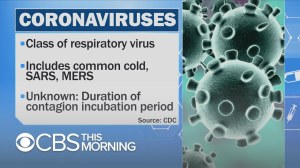
Three coronaviruses (SARS-CoV, SARS-CoV-2 <which causes COVID-19>, and MERS- CoV) cause serious human disease and some fatalities.

Blood taken before COVID-19 even existed in humans nevertheless showed the presence of antibodies that reacted with COVID-19.  Infection with one of the mild coronaviruses may have stimulated the body’s production of some antibodies that cross-react with COVID-19.

Some seemingly healthy individuals have died from COVID-19. In contrast, some people not predicted to do well had mild disease or were asymptomatic. Doctors are perplexed by their inability to predict who will recover.

David H. Figurski, Ph.D & Survivor of Brain Injury

One possibility is that the amount of cross-reactive antibodies arising from previous infection with one or more of the mild coronaviruses may determine how well a COVID-19-infected person will do.


Stay Safe and Healthy!


Clip Art compliments of Bing.)

(Photos compliments of contributor.)

As I say after each post:

Please leave a comment by clicking the blue words “Leave a Comment” below this post.

Feel free to follow my blog. Click on “Follow” on the upper right sidebar.anim0014-1_e0-1

If you like my blog, share it intact with your friends. It’s easy! Click the “Share” buttons below.

COVID-19 — It’s Everywhere . . . To Open or Not to Open

COVID-19 . . . To Open or Not to Open

by

Columbia University Professor Emeritus, Dr. David Figurski

presented by

Donna O’Donnell Figurski


(Disclaimer: The World Health Organization <WHO> has officially named the new coronavirus as SARS-CoV-2 and the disease it causes as COVID-19.  Because the majority of people, including much of the press, commonly refer to the virus as “COVID-19,” to avoid confusion, I use COVID-19 as the name of the virus in these posts.)

COVID-19

David H. Figurski, PhD — Brain Injury Survivor — Professor Emeritus of Microbiology & Immunology — Columbia University


Some governors say “Open.” Scientists say “Don’t open.” Whom do you believe?

I’m a scientist.  I know where I stand.

Below are some facts to help you decide.

For those of you in the west, the coronavirus infections have just begun.  You can see from the map of May 19 (see below) that infections are still moving westward.

Coronavirus Map – New York Times – 05/19/20

Many people, particularly those in the west, don’t seem to understand that the US is still in the early stages of this pandemic. They are lulled by the low number of cases in their state. The numbers are misleading for two reasons.

(1) Only seriously symptomatic (mostly hospitalized) people and celebrities are being tested because the US is seriously in need of more testing.  (2) The virus has not reached you yet. (That’s the especially true in the western half of the US.)

New York City is still very bad, but strict social-distancing guidelines have produced a significant drop in new cases.

Washington State had the potential to become a major hot spot, but they acted quickly and aggressively.

In contrast, several states are opening up and relaxing guidelines, despite a continued rise in new cases.  (That’s the case here in Arizona, where Governor Ducey allowed restaurants to open this week. This decision is particularly horrifying because the pandemic hasn’t really reached us yet.)

Reported cases in the United States

(Every red dot represents a cluster of infections – probably started by an infected asymptomatic traveler.  Right now, most cases are in the east, but every day you see more red dots in the western half of the US.)


David H. Figurski, Ph.D & Survivor of Brain Injury

Stay Safe and Healthy!


Clip Art compliments of Bing.)

(Photos compliments of contributor.)

As I say after each post:

Please leave a comment by clicking the blue words “Leave a Comment” below this post.

Feel free to follow my blog. Click on “Follow” on the upper right sidebar.anim0014-1_e0-1

If you like my blog, share it intact with your friends. It’s easy! Click the “Share” buttons below.

diemodi jewelry

uniquely hand-crafted jewelry by donna

Welcome to Harmony Kent Online

The home of all things books

Pete Springer

Passionate Teacher and Future Children's Author

HOPE TBI

Helping Other People Excel - To Be Independent

For the Love of Books, Old and New

Katie Fischer, Writer and Reader of Stories

Charlie Bown

Children's Author

Jessica Hinrichs

“We write to taste life twice, in the moment and in retrospect.” ― Anais Nin

VIVIAN KIRKFIELD - Writer for Children

Picture Books Help Kids Soar

Mindy’s Writing Wonderland

For authors, parents, teachers & everyone who loves children’s books.

Kaitlyn Leann Sanchez

Literary Agent

Surviving Traumatic Brain Injury

TBI - Survivors, Caregivers, Family, and Friends

The Care Factor

Loving someone with a Traumatic Brain Injury

Brain Injury Support Group of Duluth-Extension

Brain Injury Information and SUPPORT

Brain Aneurysm Global Insight

Brain Aneurysm, cerebral hemorrhaging, hemorrhage stroke