Survivors SPEAK OUT! Kenneth Powell
Survivors SPEAK OUT! Kenneth Powell
presented by
Donna O’Donnell Figurski

Kenneth Powell – Brain Injury Survivor
1. What is your name? (last name optional)
Kenneth Powell
2. Where do you live? (city and/or state and/or country) Email (optional)
Saint Louis, Missouri, USA
3. On what date did you have your brain injury? At what age?
2010 I was 42 years of age.
4. How did your brain injury occur?
I’ve had three hemorrhagic strokes on the lower left side of my brain.
5. When did you (or someone) first realize you had a problem?
I fell out of bed after trying to stand up. My (then) girlfriend found me.
6. What kind of emergency treatment, if any, did you have?
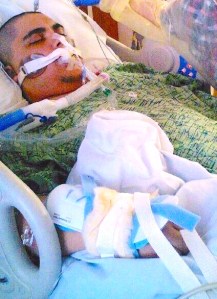
The first stroke occurred on April 30, 2010. I knew my name, where I was, and what I was told had happened. Immediately after sleeping that night, the second stroke occurred. I was put into a coma for the next 30 days.
7. Were you in a coma? If so, how long?
Yes. 30 days
8. Did you do rehab? What kind of rehab (i.e., inpatient or outpatient and occupational and/or physical and/or speech and/or other)?
I had occupational, physical, and speech therapies as an inpatient and an outpatient.
9. How long were you in rehab?
One month
10. What problems or disabilities, if any, resulted from your brain injury (e.g., balance, perception, personality, etc.)?
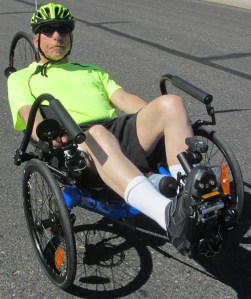
Aphasia, right-side paralysis, complete amnesia

Kenneth Powell – Brain Injury Survivor
11. How has your life changed? Is it better? Is it worse?
My life is challenging.
12. What do you miss the most from your pre-brain-injury life?
I miss running and normal kidney function.
13. What do you enjoy most in your post-brain-injury life?
I enjoy sharing my experience with others and proving mind over matter.
14. What do you like least about your brain injury?
I dislike people’s perceptions of “the disabled.”
15. Has anything helped you to accept your brain injury?
My faith has helped me accept my brain injury.
16. Has your injury affected your home life and relationships and, if so, how?
The perceptions about “disabled” or “handicapped” individuals have been a hindrance. Romantic relationships are nearly nonexistent.
17. Has your social life been altered or changed and, if so, how?
Perceptions about the disabled greatly affect my life.
18. Who is your main caregiver? Do you understand what it takes to be a caregiver?
I am my own main caregiver. I am helped occasionally by my sister.

Kenneth Powell – Brain Injury Survivor
19. What are your plans? What do you expect/hope to be doing ten years from now?
I hope to be back to work.
20. Are you able to provide a helpful hint that may have taken you a long time to learn, but which you wished you had known earlier? If so, please state what it is to potentially help other survivors with your specific kind of brain injury.
Ask as many questions as possible. Know and interact with as many survivors as you can (via websites, support-groups, etc.).
What advice would you offer to other brain-injury survivors? Do you have any other comments that you would like to add?
Personal and spiritual FAITH is essential to the day-to-day survival of this injury.
(Disclaimer: The views or opinions in this post are solely that of the interviewee.)
If you would like to be a part of the SPEAK OUT! project, please go to TBI SPEAK OUT! Caregiver Interview Questionnaire for a copy of the questions and the release form.
(Clip Art compliments of Bing.)
As I say after each post: Please leave a comment by clicking the blue words “Leave a Comment” below this post.
Feel free to follow my blog. Click on “Follow” on the upper right sidebar.
If you like my blog, share it with your friends. It’s easy! Click the “Share” buttons below.
If you don’t like my blog, “Share” it with your enemies. I don’t care!
Feel free to “Like” my post.

 6. What kind of emergency treatment, if any, did you have?
 14. Has anything helped you to accept your brain injury?
 SPEAK OUT! Itty-Bitty Giant Steps will provide a venue for brain-injury survivors and caregivers to shout out their accomplishments of the week.
 This is an incredible finding with strong clinical implications! There already is evidence that transplanted neurons can survive and grow in the brain. The newly introduced neurons can form synapses, and they sometimes improve function by partially compensating for a damaged brain circuit. What was not known was whether the original damage could be repaired. Now scientists have shown in a well-studied mouse model of the brain that transplanted neurons can replace the damaged neurons, make the appropriate connections, and repair the damage.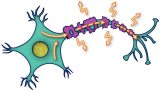





 I mostly have a hard time with my Jesus’ temper. I do not like arguing with my son … but, then again, it is his frustration as well. It tears at my heart. This brain injury really altered my son’s life forever. It is tough on him and on me.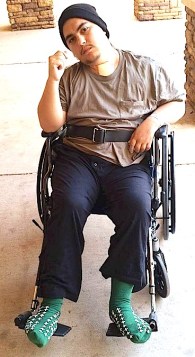
 On March 2nd, 2014, I was involved in a car accident that changed my life forever. My speech was slurred; I couldn’t read; I couldn’t even write my own name.


 As hard as occupational therapy was for me, it was also fun. I gained friendships with my occupational and speech therapists. Even if I couldn’t do their tasks that day, they were still there for me to talk. They comforted me and encouraged me to keep on going. I looked into the OTA (occupational therapy assistant) program and thought Why not see if I can try it? With my disability, there should be some accommodations, and, after what I’ve been through with so many occupational therapy sessions, I thought I might just know a little about it!
 It can happen to anyone, anytime, . . . and anywhere.
 need more times than not. (I try to do things on my own, but I have accepted that I need assistance with some things. I attempt to hide that part of this traumatic change in my “new” life.) I understand life isn’t always pleasant. It’s “a bunch of roses,” and roses have thorns. I get stuck many times, but I simply walk away. This is part of the change. Overall, I’m just me.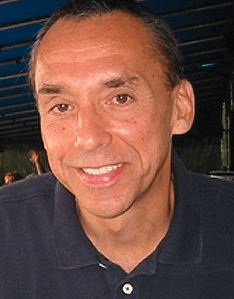


 I have severe PTSD (post-traumatic stress disorder) and cannot be around loud noises or big crowds. I have issues with being in new environments. I tire very easily. I don’t understand people when they talk too quickly. I can’t remember new information very easily. I get lost easily or become disoriented. I have balance issues. I have a bit of anger inside that wasn’t there before … the list goes on and on.


 Raising Awareness of Traumatic Brain Injury - one view at a time. Thanks for visiting my blog
 Surviving Traumatic Brain Injury
Recent Comments