TBI – Survivors, Caregivers, Family, and Friends

Posts tagged ‘Brain Injury’

Another Fork in the Road Holiday Stressors
Fork in the Road copy“Another Fork in the Road”

This category is an extension of my radio show, “Another Fork in the Road,” which airs at 5:30 pm (Pacific Time) on the 1st and 3rd Sundays of each month on the Brain Injury Radio Network. (See the “On The Air Show Menu” category for a list – with links – of all my shows, which are archived and thus always available.)

On the 1st Sunday of each month, I host a panel of brain injury survivors, caregivers, and/or professionals in the field. On these shows, my panelists and I examine topics pertaining to brain injury.

On the 3rd Sunday of each month, I host guests – brain-injury survivors, caregivers, or professionals in the field.

Since I spend countless hours in preparation for each show, I decided to share the knowledge that I gather with my readers.

Another Fork in the Road

Holiday Stressors

by

Donna O’Donnell Figurski

The turkey and stuffing are gone, and the winter holidays are around the corner. For most folks, the holidays bring happiness and cheer. Extra gaiety is seen in office parties and large family-gatherings. Secret Santas are chosen and Hanukkah candles are lit, Menorahbut for many survivors of brain injury, the holidays are a stressful time, leaving them anxiety-ridden, exhausted, and distressed.

Survivors of brain injury may become melancholy as they remember their lost lives – lives in which they weren’t impaired, lives in which their freedom was at their fingertips, lives in which they were independent and didn’t need to rely on others for their every need. This supposedly joyous time may not be so happy for many folks. The holiday stress can be exaggerated for those living with a brain injury, compounding a survivor’s unhappiness and sometimes causing severe depression. The hustle and bustle of the holidays can definitely add disorganization and chaos to anyone’s life, but for those who live on a Sad GIrl 2daily basis with the confusion that often accompanies brain injury, the holiday season can be an utter nightmare.
The holidays bring many additional activities, like baking dozens and dozens of holiday cookies to give as gifts to family and friends. Entertaining friends might be fun, but decorating the house and preparing food and drinks for guests can be a daunting task. Entertaining out-of-town guests complicates that undertaking even further – arranging sleeping areas with sheets and pillows and extra blankets and towels. Then shopping – ah, shopping – braving the malls with their Women Shoppingwide-eyed, crazed shoppers and their cacophonous noise is not for the faint of heart. The uncertainty of whether Great Aunt Sally will love the little pink unicorn that you found in the bargain basement of Marky’s is tying up your brain in knots. For those who live in colder climes, weather may play a role, as blizzards and freezing rain make it difficult to leave the house and add the pressure of when to get the shopping done. The cold, gray skies can make life seem dreary, altering even the best of temperaments. But the holidays can be conquered, and a survivor can have fun if he or she tones it down a little and takes the holidays in itty-bitty steps.

To help ease their holiday doldrums, survivors of brain injury should try staying in the present or looking to the future. Survivors shouldn’t compare themselves and the current holiday to holidays from the past. It’s normal to feel the loss of one’s “old” self. It’s normal for a survivor to feel sadness at what once was and now is no longer. But if this is the “new normal,” then the survivor needs to make the new normal a better place to be.

Little Christmas TreePerhaps the six-foot tree that a survivor trekked out into the woods to cut down can be replaced by a three-foot artificial tree – something that can beFamily Eating assembled in less than an hour, instead of enduring the stress of an all-afternoon trip. Maybe the family-gathering to eat latkes must be limited to the immediate family to minimize the chaos that a large gathering might cause.

The holiday season is a good time for a survivor of brain injury to pull back. The survivor can make the holidays simpler and avoid their commercialism. So how does a survivor of brain injury still accomplish these goals? Here are some suggestions.

 Plan and Organize

ListMake a list of the things you want to do, and prioritize. Choose to do only one activity or job each day. Decide when you are best able to do the job. Are you better in the early morning hours – when you have more energy? Or are you like me – alive at night? That’s when I get more done. Everyone’s different, and only you will know what works best for you.

Pace Yourself

Baking Cookies-819562Don’t set your expectations too high. That is a guarantee for failure. Instead of baking ten dozen cookies in one afternoon, spread out the job by allowing several afternoons to accomplish the task. Or better still, make a smaller portion of the cookies. Set your sights lower. By planning and pacing yourself, you can avoid becoming overwhelmed, depressed, or simply exhausted.

Keep It Simple

Gift Bags 2Instead of wrapping a present the traditional way with giftwrap and ribbons, pop the gift into a pre-decorated box or a gift bag and stuff some colored tissue paper around it. It will be lovely, and it is so much easier! Do you really need to have a twenty-three-pound turkey with stuffing and all the trimmings? Probably not! A simpler meal will taste just as good and will be enjoyed by all simply because you are spending precious time together.

Accept Help

Wrapping Gifts

Usually family and friends like to offer help, especially during the holidays. Let them! Let them help shop for or wrap presents. Let them help cook dinner or bake cookies. It will be a lot more fun and actually make the holiday a more joyous occasion.


Make a change

Try something different. Plan a new routine or create a new ritual.

With some small steps, life during the holidays can be tolerable – maybe even fun. You just have to open your mind, look at life differently, and begin to make “new” traditions.Stress Free Holiday

Click here to listen to my show:

“Holidays – Less Stress – More Fun,” on “Another Fork in the Road,” on the Brain Injury Radio Network.


This article was also published on the following online magazines and journals.

Holiday Stress and Brain Injury” on Lash & Associates Publishing

Brain Injury – Surviving Holiday Stress” on Disabled Magazine

“Holiday Stressors” on TBI – Hope and Inspiration (coming soon – in press)


(Clip Art compliments of Bing.)

As I say after each post: Please leave a comment by clicking the blue words “Leave a Commentanim0014-1_e0-1 below this post.

Feel free to follow my blog. Click on “Follow” on the upper right sidebar.

If you like my blog, share intact it with your friends. It’s easy! Click the “Share” buttons below.

If you don’t like my blog, “Share” it intact with your enemies. I don’t care!

Feel free to “Like” my post

 

SPEAK OUT! NewsBit . . . . . . Frank Gifford’s Brain Showed CTE

Frank Gifford’s Brain Showed CTE

presented

by

Donna O’Donnell Figurski


newsboy-thFrank Gifford died at 84 of natural causes. Because he had always been concerned with player safety and helped to found the National Football League Players Association, his family donated his brain to science for study.

Frank Gifford, a beloved running back in the 1950s and 1960s, played for the New York Giants of the National Football League.  He was inducted into the Hall of Fame, and after he retired, he became a popular and an award-winning sportscaster for Monday Night Football.  Even though Gifford showed no outward signs of neurodegenerative disease, his family said in a released Frank Gifford footballstatement that he experienced symptoms. As a running back, Gifford endured many sub-concussive hits, which many neurologists now believe contribute to neurodegenerative disease. In 1960, Gifford was knocked unconscious by a brutally hard tackle.  That concussion caused the end of his season, and he did not play the next year.

The study of Frank Gifford’s brain revealed that he had chronic traumatic encephalopathy (CTE), a brain disease found in the autopsied brains of people who played contact sports. So far, 88 of 92 brains of professional players of American football have shown CTE (1, 2). Gifford’s brain makes that statistic 89 of 93.

What makes Frank Gifford’s brain special is that Gifford died of natural causes. The other players whose brains tested positive Frank Giffordfor CTE showed symptoms of brain disease. (In fact, some of the deaths were from suicide.) The claim has been made that the group that was almost entirely positive for CTE was biased. But Dr. Ann McKee, a neuropathologist at Boston University’s CTE Center and the person who studied most of the brains, pointed out that, even in a biased sample, the number of brains testing positive for CTE is ridiculously high. Frank Gifford’s brain would not be considered part of the biased sample. (Gifford showed no outward signs of brain disease.) Yet Frank Gifford’s brain tested positive for CTE. This latest result is consistent with Dr. McKee’s worry that CTE is common among players of American football. (Full story)


(Clip Art compliments of Bing.)

As I say after each post: Please leave a comment by clicking the blue words “Leave a Commentanim0014-1_e0-1 below this post.

Feel free to follow my blog. Click on “Follow” on the upper right sidebar.

If you like my blog, share it (intact) with your friends. It’s easy! Click the “Share” buttons below.

If you don’t like my blog, “Share” it (intact) with your enemies. I don’t care!

Feel free to “Like” my post.


SPEAK OUT! Guest Blogger David A. Grant . . . . . . . . . . . . . “Warning: Graphic Content

Warning: Graphic Content

 by

David A. Grant

presented by

Donna O’Donnell Figurski

Boy Blogger thI found myself doing something that I don’t usually do. This morning, I just stared at my keyboard and waited. Most of the time, putting virtual pen to paper is easy. On a good day, I can pour out a thousand words in under an hour.

Not today.

One of the most unexpected by-products of this new life is my PTSD (post traumatic-stress disorder). Since time out of mind, I’ve heard the term PTSD. But like so many, perhaps even you, I mistakenly associated it exclusively with veterans, with those that had seen the unimaginable.

Never did I expect to be walking daily with this newfound friend. Some things you just can’t see coming – like a speeding car driven by a sixteen-year-old driver. Its onset was abrupt. It was unrelenting. It was unexpected.

And it’s more than a bit insidious.

Early on, as my physical injuries began to heal, like a dark flower blooming under a full moon, my PTSD began to blossom. Professional help did little to stem the terror tide.

The nightmares remain the worst part. For a couple of years after my accident, “bad PTSD nights” came anywhere from ten to twenty nights a

month. When I say “bad,” I mean bad. These aren’t your “Boogeyman-under-the-bed” kind of dreams.

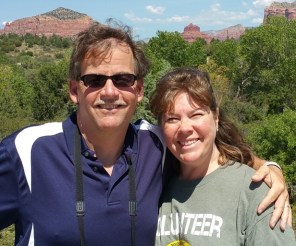
Grant, David and Sarah 111715

David & Sarah Grant

Not even close.

Over the years, I have had most every sort of Stephen King horror inflicted upon me after dark. From being burned alive to drowning after drowning, from severed limbs to vivid dream pain that feels more real than reality, it’s been a real shit storm. My apologies if profanity offends, but better a four-letter word than a vivid description of life after dark.

The sound of an ambulance passing by our home drove me to tears for the better part of a couple of years – stopping me dead in my tracks if happenstance found me working in our yard.

Crowds? No more. Action-packed movies? Maybe for you, but not for us. Sudden or abrupt noises? You’ll find my shoes on the floor and me long gone.

Time does have a way of offering clarity. Today I know that I live with a textbook case of PTSD. Like other challenges I face, it’s invisible. Meeting me today for the first time, you’d never know. “Hey, I see that you live with PTSD,” said no one – ever.

As time passed, Sarah and I developed compensatory strategies to help. It is good for us both.

Known by few is a condition called “Secondary PTSD.” Those close to a trauma survivor, though not physically hurt, carry their own deep and painful scars. Sarah has a pretty classic case of secondary PTSD.

Circumstance, rather than virtue of any kind, has reshaped our lives. Our

12248573_10206516855973739_1693909187_o

the Grant’s Sanctuary

lives together today are smaller, but none less rewarding. We shun most crowds, but do not live reclusively. We spend a lot of time outdoors – crowded music festivals replaced by nature walks. Our yard has been transformed into a sanctuary with waterfalls, birdfeeders and flowers abounding. It’s now a sacred place for us – a place where we both continue to heal.

Life today is more enriching than before. I still startle easily. I cry less often at the sounds of a siren wailing. And we are both cautious about what we allow ourselves to be exposed to.

Eiffel Tower

Eiffel Tower Paris, France

The events that have unfolded in Paris over the last few days are heartbreaking. It’s at times like these that the rubber meets the PTSD road. I need to be careful of getting sucked in to wanting to know too much detail, balancing it with the very human need to know what is happening in the world at large. I watch “just enough” TV to know what’s happening. I read “just enough” of the news online – very often going no further than the headlines.

Just this morning, as I read the USA Today news on my tablet, a content block caught my eye: WARNING: GRAPHIC CONTENT. Suffice to say, I passed that one right by, knowing that honoring my condition is good for me and good for those around me. I am praying for those who are part of the horror. Blasts mean that there are now new members of the TBI club. Hundreds, if not thousands – perhaps an entire nation – will now live with PTSD. My heart weeps for them.

But even with the most dutiful of diligence, I am reminded that I am forever bound to PTSD.

Last Thursday night was our weekly Date Night. Our cinematic choice this past week was the Peanuts Movie. We’ve seen just about every animated flick released in the last few years. It was a smile-filled night out. Just dinner and a movie. Just us two. Hand-holding and quiet whispers – just the way we like it.

At 10:00 PM, I leaned over, gave Sarah her good night kiss and fell quickly asleep. Though I no longer dread bedtime, I live in the reality that any night can be a bad night.

Grant, David and Sarah 2 111715

David & Sarah Grant

At 11:30 PM, Sarah woke me up as I lay next to her crying out in pain, my feet sinking into molten dream lava, being burned off my torso as I looked down in abject horror. I could smell my own flesh burning. Unable to move, I screamed in mortal terror.

“C’mon David, wake up. Wake up, David,” she called out – again coaxing me back to the relative safety of awakeness. We’ve danced this midnight two-step hundreds of times.

And so the rhythm of our new life goes – enjoying those sacred moments between the tougher times, and hunkering down to ride out the occasional PTSD storms.

In the bigger scheme of things, fate could have been much more harsh. I could have died that day – leaving Sarah to walk through the recent five-year anniversary of the day alone, her memory of me beginning to fade.

But we have each other. And in having each other, we have all we need.


About David A. Grant

David A. Grant 2 101115

David A. Grant

David A. Grant is a freelance writer, keynote speaker and traumatic brain injury survivor based out of southern New Hampshire. He is the author of “Metamorphosis, Surviving Brain Injury,” a book that chronicles in exquisite detail the first year-and-a-half of his new life as a brain injury survivor. His newest title, “Slices of Life after Traumatic Brain Injury,” was released in 2015.

David is also a contributing author to “Chicken Soup for the Soul, Recovering from Traumatic Brain Injuries.” As a survivor of a cycling accident in 2010, he shares his experience and hope though advocacy work including a public speaking as well as his weekly brain injury blog.

David is a regular contributing writer to Brainline.org, a PBS sponsored website. He is also a BIANH board member as well as a columnist in HEADWAY, the Brain Injury Association of New Hampshire’s periodic newsletter.

David is the founder of TBI Hope and Inspiration, a Facebook community with over 15,000 members including survivors, family members, caregivers as well as members of the medical and professional community as well as the publisher of “TBI Hope and Inspiration Magazine.”

Thank you, David A. Grant.

Disclaimer:
Any views and opinions of the Guest Blogger are purely his/her own.

(Clip Art compliments of Bing.)

(Photos compliments of David A. Grant)

As I say after each post: Please leave a comment by clicking the blue words “Leave a Commentanim0014-1_e0-1 below this post.

Feel free to follow my blog. Click on “Follow” on the upper right sidebar.

If you like my blog, share it with your friends. It’s easy! Click the “Share” buttons below.

If you don’t like my blog, “Share” it with your enemies. I don’t care!

Feel free to “Like” my post.


Survivors SPEAK OUT! Sandra Williams

Survivors SPEAK OUT! Sandra Williams

presented

by

Donna O’Donnell Figurski

12200687_895719387130278_18176772_n1. What is your name? (last name optional)

Sandra Williams

2. Where do you live? (city and/or state and/or country) Email (optional)

Athol, Idaho, USA

3. On what date did you have your brain injury? At what age?

My injury was on May 28th, 2012, at 10:00 am. I was 38.

4. How did your brain injury occur?

A drunk driver crossed the center lane as we were turning a corner in our Ford F250 Power Stroke. We were pulling a 26-foot travel trailer. There was a cliff on the other side of us. We should have gone over the cliff, but instead we crossed all lanes of traffic and ended up in a ditch. We should have jackknifed, but we didn’t. The truck that hit us also went through the length of our travel trailer. He ended up in the lane opposite to the one he was traveling in and facing in the opposite direction. We all should have died. The details of the accident are many. It sounds like a made-for-TV movie. We are all alive, but we’re not OK.

5. When did you (or someone) first realize you had a problem?

I first learned of my son’s brain injury when I took him to a neurologist. His primary care physician wanted a follow-up because my son was sleeping so much and his balance was off a bit. We made him rest all summer. When he went back to school, he went from an A-B student to one who got Ds and Fs. I was really focused on my son, but the neurologist diagnosed me too. The diagnosis shocked my primary care provider and me. I didn’t really believe her until I lost my job as a Special Education teacher.

6. What kind of emergency treatment, if any, did you have?

I lost consciousness. I was taken to the Emergency Room. I don’t remember babbling to the sky, but that is what my kids said. They told me this several weeks after the accident. They didn’t know I didn’t know. That’s when my husband knew something wasn’t right. But he thought I would get over it. We all rested that summer. I seemed to be doing well – no headaches, etc. – until I went back to work.

7. Were you in a coma? If so, how long?

No

8. Did you do rehab? What kind of rehab (i.e., inpatient or outpatient and occupational and/or physical and/or speech and/or other)? How long were you in rehab?

I have been to two ten-day sessions of speech therapy, vestibular therapy, cognitive behavioral therapy, and exposure therapy. I also attended Carrick Brain Injury Center, a multidisciplinary brain rehab center.

9. What problems or disabilities, if any, resulted from your brain injury
(e.g., balance, perception, personality, etc.)?

I am still struggling to work. My memory is still affected to the point of frustration for my family members. I struggle with headaches, dizziness, and confusion when people speak to me. I have given up being a youth group-leader. I tried to go back to work, but, due to the fact that educational systems do not accommodate, I cannot work as a teacher – not even online. I really want to run and work out like I used to, but I don’t. That is the biggest change. I never used to drink coffee or alcohol. I don’t abuse either, but now I drink both. I never used to eat chips or anything unhealthy, but I eat those things now. I used to garden, but now I don’t. I do want to return to the way it was with those things, but it is hard while I’m keeping up with my kids and their needs since the accident.

10. How has your life changed? Is it better? Is it worse?

I think my life is worse, but can get better. It is worse because I can’t work in a job where I can get full-time benefits. My health care needs have increased, and my income has decreased. I am trying to help my husband start a new business in construction. He is being patient with me, but it is not easy. Our kids are different, and we really struggled with their behavior until we went to Carrick Brain Injury Center. We still struggle with one kiddo, but I think it is a grief process that he is going through.

11. What do you miss the most from your pre-brain-injury life?

I miss running. (I ran a half marathon and was training for a full marathon when we were hit.) I miss having the energy to do anything I wanted. I miss remembering everything. I miss being able to find a job whenever I wanted. (I have been working since I was eight. I started working for my dad and got my first out-of-family job at the age of fourteen. I paid for the first four years of college by working, and I sent myself to Europe – some people in my church helped me to play basketball internationally.)

12. What do you enjoy most in your post-brain-injury life?

Nothing really. I wish I could say something different. But, my life is so limited from what it once was, and I look so normal. People expect me “to do better,” “to not give up,” or “to stop making excuses.”

13. What do you like least about your brain injury?

I dislike that I cannot be independent and that people expect more from me than I can do. If a person had a broken leg, that person would receive accommodations until it healed. Accommodations are not given when one has an invisible traumatic brain injury (TBI). It doesn’t work that way. But I will not give up.

14. Has anything helped you to accept your brain injury?

I was actually helped by the fact that I can’t work no matter how hard I try. Working came easily to me, just like sports. Now, working and sports are the hardest things for me to do. I will keep trying though. I can’t do them now, but that doesn’t mean I won’t be able to do them forever. I won’t give up. I will do them someday.

15. Has your injury affected your home life and relationships and, if so, how?

Yes, immensely. My kids get really frustrated with me, and so does my husband. I used to be unorganized and forget things, but now it is ten times worse. I really have to rely on notebooks and repeat myself several times. That is what is so frustrating for my family. They also don’t understand my need for rest or my light-sensitivity to the TV. There are many things to list, but I will keep it short!

16. Has your social life been altered or changed and, if so, how?

I don’t visit with anyone anymore. I used to go to bible studies, but they scare me now. (I am afraid I will say the wrong thing.) I can’t go see my mom because I can’t drive that long at one time (it takes two days for me to get there), and it’s just too long to be gone. Plus, I have a huge family, which is hard to be around. My sisters don’t understand my brain injury. I just stay away. It’s better for all of us.

17. Who is your main caregiver? Do you understand what it takes to be a caregiver?12202566_895719670463583_794991146_n

Me. I am my own caregiver. My husband tries, but he is focused on the business. I submit insurance claims and speak to the doctors. I am even filing claims with Disability Rights of Idaho, so I know I can be organized and I can do something!

18. What are your plans? What do you expect/hope to be doing ten years from now?

I plan to be working in construction until I put myself through college again to finish my counseling degree and/or get a certification in TBI so I can educate teachers about it. There is the need for special education to have a different evaluation process. I also plan to use online settings to sell lessons that target students with TBI in the secondary school classroom.

19. Are you able to provide a helpful hint that may have taken you a long time to learn, but which you wished you had known earlier? If so, please state what it is to potentially help other survivors with your specific kind of brain injury.

I wish I knew more about Disability Rights of Idaho and more about the complaint process for educators. (Parents are at such a loss!) The biggest tip I can give other survivors is not to listen to negative comments or to employers who tell you that you can’t do the job. Listen to your heart and your soul. Fight for yourself and others. It will keep you going.

20. What advice would you offer to other brain-injury survivors? Do you have any other comments that you would like to add?

Never, ever give up! If you can’t realize your dream one way, find another way to do it. It may take you longer, but do it. Henry Winkler (the Fonz) applied to sixty-eight different colleges before one accepted him. He was not diagnosed with dyslexia until his son was. He never gave up. We can’t either!

(Disclaimer: The views or opinions in this post are solely that of the interviewee.)

If you would like to be a part of the SPEAK OUT! project, please go to TBI Survivor Interview Questionnaire for a copy of the questions and the release form.

(Clip Art compliments of Bing.)

(Photos compliments of contributor.)

As I say after each post: Please leave a comment by clicking the blue words “Leave a Commentanim0014-1_e0-1 below this post.

Feel free to follow my blog. Click on “Follow” on the upper right sidebar.

If you like my blog, share it with your friends. It’s easy! Click the “Share” buttons below.

If you don’t like my blog, “Share” it with your enemies. I don’t care!

Feel free to “Like” my post.

SPEAK OUT! . . . . . . . . . . . . . . . . . . Faces of Brain Injury . . . . . . . Jessica Taylor

SPEAK OUT! Faces of Brain Injury – Jessica Taylor

presented by

Donna O’Donnell Figurski

 Brain Injury is NOT Discriminating!

bigstock-cartoon-face-vector-people-25671746-e1348136261718

It can happen to anyone, anytime, . . . and anywhere.

The Brain Trauma Foundation states that there are 5.3 million people in the United States living with some form of brain injury.

On “Faces of Brain Injury,” you will meet survivors living with brain injury. I hope that their stories will help you to understand the serious implications and complications of brain injury.

The stories on SPEAK OUT! Faces of Brain Injury are published with the permission of the survivor or designated caregiver.

If you would like your story to be published, please send a short account and two photos to me at neelyf@aol.com. I’d love to publish your story and raise awareness for Brain Injury.

Jessica Taylor (survivor)

One day in 1969, I was out on business for my Merle Norman Cosmetic Studio in Toronto, Canada, and I fell headfirst down an unlit flight of stairs. My head hit against a steel-plated door at the bottom. It caused me to become severely concussed, and I was put into a semi-comatose state. I also had a hemorrhage behind my right 581530_373670692710673_622315000_neye and a contusion of my back. My life hung on a thread. Later when I woke up, I did not recognize my husband or my two very young daughters. My personality change distanced me from everyone I previously knew.

Determined to survive, however, I activated my neurons by writing down sentences, as well as short poems, and memorizing them. I also made a journal of everyday events, as my recent recall was totally shot. I began to study various subjects by going to a research room at a library. The subjects Science and The Supernatural fascinated me, so I studied the works of many writers. I read writings of the Greek writers Plato and Aristotle. I also read Galileo, Einstein, and many others. Subsequently, I found myself to be on a different vibration. I now believe that intensive study activates the dormant neurons of brain-injured survivors so that these neurons then take over for the dead or injured ones. The studying, however, may need to be of a long duration for some survivors.

I have since written my life-story, which is entitled “From Tragedy to Triumph: Journey Back From the Edge.” 456164_373685366042539_2053049192_o(The information is on my website.) I have given talks at brain-injury conferences and at social gatherings in Ireland, UK, Canada, and the US. Also, I have been on many radio shows. Recently, I completed a manuscript based on my years of research. I have been told by many readers that, when it is published, the manuscript will go to universities as a teaching book about the science of religion and the supernatural.

I would like brain-injured survivors to know of my achievements, so that they can have hope and encouragement and think positive. It was, after all, positive thinking that got me to where I am today.

Jessica E. Taylor, author and activist

To learn more about Jessica Taylor, click the following links.

Jessica Taylor Website

Jessica Taylor Facebook

Jessica Taylor Twitter

Jessica Taylor LinkedIn

Jessica’s interview with George Lewis on his show, “Spiritual But Not Religious Show

(Clip Art compliments of Bing.)

(Photos compliments of contributor.)

As I say after each post: Please leave a comment by clicking the blue words “Leave a Commentanim0014-1_e0-1 below this post.

Feel free to follow my blog. Click on “Follow” on the upper right sidebar.

If you like my blog, share it with your friends. It’s easy! Click the “Share” buttons below.

If you don’t like my blog, “Share” it with your enemies. I don’t care!

Feel free to “Like” my post.

SPEAK OUT! Guest Blogger … Randy Terry “How To Make Your Life Better”

How To Make Your Life Better

by

Randy Terry

presented by

Donna O’Donnell Figurski

Boy Blogger thSo many times I hear, “I want my life back!” I’ve said it myself and made myself miserable. Now six years post stroke, I see that I will never get my old life back. It’s impossible. But the trials of my stroke and my recovery have changed my life forever – and for the good.

I am a survivor, and the things I have learned about life will Randy Terry 2 102615not allow me to return to the old life. Sure, some of the things I loved to do are no longer possible, but I have adapted to change. It wasn’t easy, but I really had no choice.

For the first few years, I played the “pity game.” I was mad at the world. I lamented, “Why me?” One day, I found that I was tired of this game. I thought that there has to be a better life after stroke. I put the wheelchair in a corner and picked up my walker. I started the hard work. Soon I was on the cane doing the same thing. It is by no means easy. Not only was I walking, but I also felt proud. That’s why you hear me say, “Stand tall and proud!”

Do not waste your time in that “pity place.” It’s very lonely there, Randy Terryand there is nothing to gain but misery. The ability to change your life is not a secret hidden from you. Instead, it’s about working to get what you want out of life.

I’m not smarter than you. You just have to get that brain thinking right, and get up and get it done. It takes time to heal, but time is on your side. You have plenty of it. Don’t think it’s all got to come at once. Work slowly and steadily. It will come.

Thank you, Randy Terry.

Disclaimer:
Any views and opinions of the Guest Blogger are purely his/her own.

(Clip Art compliments of Bing.)

(Photos compliments of Randy Terry.)

As I say after each post: Please leave a comment by clicking the blue words “Leave a Commentanim0014-1_e0-1 below this post.

Feel free to follow my blog. Click on “Follow” on the upper right sidebar.

If you like my blog, share it with your friends. It’s easy! Click the “Share” buttons below.

If you don’t like my blog, “Share” it with your enemies. I don’t care!

Feel free to “Like” my post.

Another Fork in the Road: Depression, Suicidal Thoughts, & Brain Injury

Fork in the Road copy

“Another Fork in the Road”

This category is an extension of my radio show, “Another Fork in the Road,” which airs at 5:30 pm (Pacific Time) on the 1st and 3rd Sundays of each month on the Brain Injury Radio Network. (See the “On The Air Show Menu” category for a list – with links – of all my shows, which are archived and thus always available.)

On the 1st Sunday of each month, I host a panel of brain injury survivors, caregivers, and/or professionals in the field. On these shows, my panelists and I examine topics pertaining to brain injury.

On the 3rd Sunday of each month, I host guests – brain-injury survivors, caregivers, or professionals in the field.

Since I spend countless hours in preparation for each show, I decided to share the knowledge that I gather with my readers.

Another Fork in the Road

Depression, Suicidal Thoughts, & Brain Injury

by

Donna O’Donnell Figurski

canstock16714646Depression is a state of mind that can cause long-term mental mood disorders. Everyone experiences sadness and unhappiness at times. That’s normal. Those feelings happen when something sad enters people’s lives or they experience grave disappointments. Normal life-events, like a pet dying, being passed over for a promotion, going through a divorce, or experiencing money problems, can trigger feelings of sadness. Usually with time, those feelings pass, and people move on.

But when there are unrelenting feelings of despair, usually coupled to at least one of the many telltale signs and symptoms of depression, then drastic measures need to be taken. Depression is devastating and can affect every aspect of daily living. Depression is pure agony resulting from desperation and the need to escape. It is constant; there is no relief. Unlike sadness or unhappiness, depression settles in to stay. It can last weeks, months, or even years. If not treated, depression can be deadly. But if a person seeks treatment, there are ways to diminish, and possibly even cure, depression.

I have never been diagnosed with clinical depression. Technically, I have never been depressed. But I have occasionally complained that I am “depressed” – using that word. I think everybody does. It’s a term we throw around too easily. When I’m feeling blue or down, I might say, “I’m depressed.” But I’m only experiencing a feeling of unrest or unhappiness for a short time. I have learned that there are ways for me to alleviate these uncomfortable and unwanted feelings with a few easy activities. I find if I remove myself from the environment that I am in, I can change my emotions. For example, if I am home when these feelings overwhelm me, I often will go to the store or run errands. Sometimes I will turn on uplifting music or talk to a friend. Exercise can usually jar me out of my doldrums. While I can change my mood when I’m sad, a truly depressed person can do so only with great difficulty.

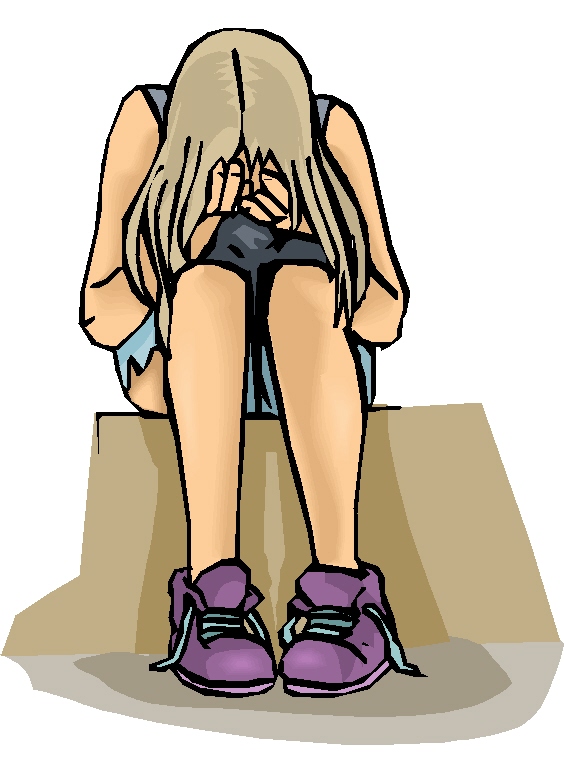
Depressed GirlSome signs and symptoms of depression are very intense feelings of unhappiness, anxiety, worthlessness, helplessness, lack of self-esteem, and/or lack of self-confidence. Depression can seriously impact sleep and eating habits. It can lead to a significant loss of energy, focus, or attention. A prolonged feeling of panic is also a sign of depression. A lack of interest in taking care of health needs may be indicative of depression. A person may start to withdraw from his or her family or friends or from the things he or she once enjoyed – essentially quitting the world. Defying fate (for example, doing things that are risky or death-defying, such as swimming too far out into the ocean or walking too close to the edge of a cliff) is a relatively obvious symptom, but what about overeating,Depressed Man overuse of alcohol, or drug use? If a person is talking about suicide or is making statements, such as “Everyone would be better off, if I weren’t here,” “I can’t take this anymore,” or even more blatantly, “I wish I were dead,” that person may be sending up a red flag. It may be the person’s way of begging for help.

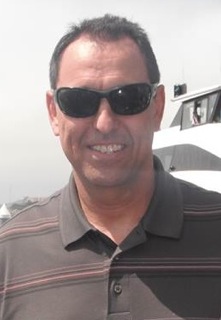
Depression is not discriminating. It can happen to anyone. Actress Winona Ryder, Princess Diana, former Pittsburgh Steelers quarterback and four-time Super Bowl winner, Terry Bradshaw, and Barbara Bush, wife of a former United States President all suffered from depression. And the list goes on and on. Sometimes, people hide their depression, as with actor and comedian Robin Williams. I think we were all broadsided when Robin committed suicide in August 2014. Though Robin’s close friends saw signs of his depression, the rest of the world saw only a very accomplished actor who always had a smile on his face. His great acting skills spilled over into his personal life, and his greatest role was “the great deceiver.” I can’t imagine the pain his smile must have been covering up. Robin sought help and willingly admitted himself to treatment centers, but unfortunately that was not his salvation.th

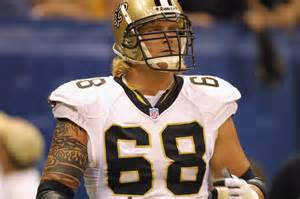
Former San Diego Chargers linebacker and Hall of Fame member, Junior Seau, was deeply affected by depression after years of collisions with other players. Years of playing football ultimately damaged Seau’s brain and led to his suicide in 2012. Chronic traumatic encephalopathy (CTE) was the unequivocal diagnosis by the National Visger, GeorgeInstitutes of Health (NIH) from the study of Seau’s brain. Former San Francisco 49er, George Visger, lives daily with the complications of brain injury. (You can hear George’s story on my August 16, 2015 show. You can also read more about George on this blog.) Another former football player, Kyle Turley, who played for the New Orleans Saints, the St. Louis Rams, and the Kansas City Chiefs is Kyle Turleysuffering the ravages of brain injury and depression. (Kyle will be a guest on my show on October 18, 2015. He will discuss his life with brain injury and how he is redefining his new world.)

Depression is not an unfamiliar state for those who live with brain injury. And it’s not surprising. Brain injury turns lives completely upside down. Usually it’s difficult, sometimes impossible, for survivors to realize the extent of the damage done to their brains. Many times they are not the same person they were before the injury, and they have to face their limitations – cognitive, behavioral, emotional, and/or physical. Thinking back on a pre-brain-injury life and being aware of what was stripped away can easily lead someone to depression – and even to suicidal thoughts.

One way to help deal with depression after brain injury is to accept the “new” person who a brain-injured person has become. I have noticed in the Survivor SPEAK OUT! interviews on this blog that many survivors have stated that, once they accept their “new” persona, they have found more happiness. That isn’t to say that everything is okay. That isn’t to say that the brain-injured persons have given up. It’s just that the survivors have become more accepting of the persons they have become, and they will take those new persons to the limit.

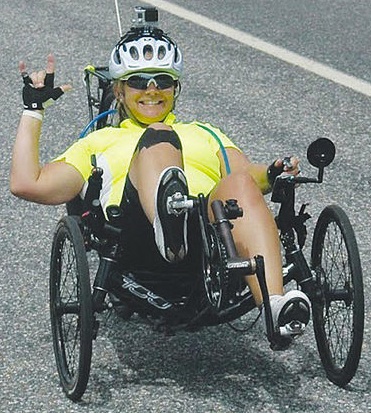
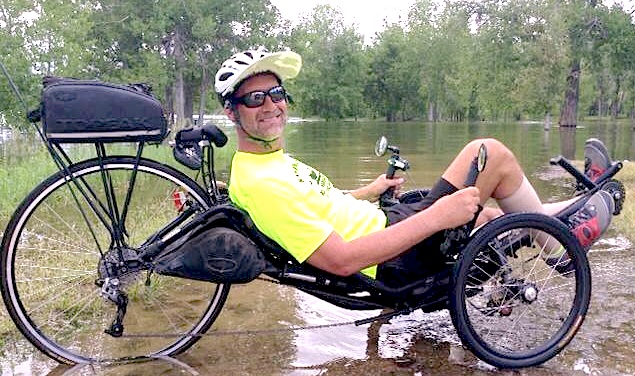
With her permission, I want to share the story of a friend of mine who used an additional method to help with her depression. Cat Brubaker was enjoying life as a young woman. She had completed college, and she was working in a position that she enjoyed. Then she became the victim of two brain injuries. These injuries left Cat feeling helpless and hopeless. With Cat confined to her home, the walls closed in on her, and she felt desperate. Cat’s loss of independence, the decline of her longtime relationships, and finally the death of her mother were too much, and she fell deeply into depression. She eventually entertained thoughts of suicide. But Cat found a way out of her trapped box when she discovered the joys of her recumbent cat-triketrike and met a new friend, Dan Zimmerman, a stroke survivor and also a recumbent trike rider. Cat and Dan set off last summer to cross the USA on their trikes. They rode their trikes from Anacortes, Washington, diagonally across the country to Key West, Florida – a trip that took them five months and was 5,400 miles. I’m not saying that everyone needs to get a trike and travel across the country, but I am pointing out that perhaps finding a new purpose in life can help shove depression into the background. The recumbent trike was the answer for Cat. Zimmerman, Dan Survivor 071015Riding her recumbent trike is something that Cat thoroughly enjoys and relies on for her mental health. Cat has made many new friends by riding her trike. She has even created a foundation, called “Hope for Trauma,” to help other brain-injury survivors. Cat’s story shows that, though people may feel the total helplessness and hopelessness that accompanies depression, it is sometimes possible to find a way to redirect their lives to find happiness.

There are other methods that may help alleviate the feelings of depression. Art Therapy also helps some folks connect with their inner selves. It usually also requires complete concentration, which can take the focus off the unwanted depressive feelings. Animal Therapy guarantees that one is never alone. Pets usually provide unconditional love, which a person suffering from depression could certainly use.

Technically depression is a chemical imbalance in the brain. It is not easy to turn off. So what can be done about depression? Two different types of health-care workers can help immensely: psychologists and psychiatrists.

PsychologistBoth psychologists and psychiatrists use psychotherapy, often referred to as “talk therapy” or “counseling.” Psychotherapy helps patients with mental health issues sort through their feelings, moods, and emotions. Through talk, a mental-health-care provider can guide or retrain a person’s mind to approach existing problems differently. The brain can actually change physically by talking about a problem. Psychotherapy can be effective with many different types of mental-health challenges, including anxiety, personality or mood disorders, problems with eating or sleeping, and various addictions. It can also address coping with life-altering situations, such as the ones that many brain-injury survivors live with daily. Realizing that they are not the persons they were before their brain injury is a major problem for many survivors. Not being able to return to the former life-style and having to redefine oneself can be devastating to a person who survives a brain injury. Often a brain-injured person wonders why he or she was saved. These kinds of thoughts can easily lead to depression.

Psychotherapy does not use medication. Both a psychologist (usually a Ph.D.) and a psychiatrist (an M.D.) use psychotherapy. A psychiatrist has been trained in the biology of the body and in neurochemistry, while psychologists focus more on the behavioral aspects of the person. Some patients may need stronger medical Doctor Womanassistance. Because a psychiatrist is a medical doctor, he or she can prescribe medication. Medications are getting better. The best ones are more targeted and thus have fewer side effects.

Research is very active and is greatly advancing our knowledge of depression. A recent NewsBit on this blog (“Depression Reversed in Mice”) reported that basic research has resulted in the curing of depression in mice. Memories are tagged with positive or negative feelings. Scientists have been able to activate specific neurons to induce a memory with its associated positive feeling to overcome depression. It will probably be a couple of decades before this kind of therapy will be ready for humans.

If you want to learn more about depression, the Internet is a marvelous tool for gathering information. There are countless sites, many very reputable, that examine this topic. Simply Google “brain injury” and “depression.” I can guarantee you will learn more than you could imagine.

Of course, if you or someone you know needs immediate help, don’t waste time on the web. Call 9-1-1 immediately.

There are also many depression and suicide hotlines. Here I name a few in the US that I found on the web. I really do not know anything about them, so I cannot endorse them. But I suggest that, if you have concerns about depression or suicide, you look into them in advance of any crisis.

Hotline-ICON-XS_optiHotlines

National Suicide Prevention Lifeline
800-273-8255
(suggested by the Mayo Clinic)

The Samaritans 24-Hour Crisis Hotline
212-673-3000

Crisis Call Center
775-784-8090

Most states in the US have mental health hotlines. Here is a site that has links to most state hotlines.

Suicide Hotlines

Depression is a common affliction of brain-injured survivors. It needs to be recognized as a serious and devastating illness, not as something one can “work through” himself or herself. The good news is that help is available. If you are suffering from depression or if you know someone showing signs of depression, I urge you to use it.

Listen to the October 4th show on depression.

(Clip Art compliments of Bing.)

As I say after each post: Please leave a comment by clicking the blue words “Leave a Commentanim0014-1_e0-1 below this post.

Feel free to follow my blog. Click on “Follow” on the upper right sidebar.

If you like my blog, share it with your friends. It’s easy! Click the “Share” buttons below.

If you don’t like my blog, “Share” it with your enemies. I don’t care!

Feel free to “Like” my post

SPEAK OUT! Guest Blogger … David Lloyd “What I Gained From My Brain Injury”

What I Gained From My Brain Injury

by

David Lloyd

presented by

Donna O’Donnell Figurski

Boy Blogger thI used to be an intolerant perfectionist before my accident. I did not even realize the extent to which I looked down on others, how prideful I was, and how I put others down without any thought, until an event out of my control took away my ability to meet my own standards.

I had fooled myself into believing I was better than I was. Now I see others with a much humbler and more forgiving attitude. I am much more compassionate and a lot less full of myself.

My change in attitude probably saved my relationships with my David Lloydchildren, whom I had been pushing away by demanding unrealistic standards from them with what were my goals and not theirs. Now I am much more impressed with their strengths and more understanding, and even accepting, of those areas that seemed important to me, but never motivated them. There is a sense that my disability has removed blinders that kept me from seeing the value of letting my children have interests that are different than my own.

Those are good qualities that I intend to hold onto, regardless of how much I recover eventually.

Thank you, David Lloyd.

Disclaimer:
Any views and opinions of the Guest Blogger are purely his/her own.

(Clip Art compliments of Bing.)

(Photos compliments of David Lloyd)

A11998344_873343152701235_1064470731_ns I say after each post: Please leave a comment by clicking the blue words “Leave a Commentanim0014-1_e0-1 below this post.

Feel free to follow my blog. Click on “Follow” on the upper right sidebar.

If you like my blog, share it with your friends. It’s easy! Click the “Share” buttons below.

If you don’t like my blog, “Share” it with your enemies. I don’t care!

Feel free to “Like” my post.

On The Air: Brain Injury Radio “Another Fork in the Road” “Depression and Suicidal Thoughts”

On The Air: Brain Injury Radio “Another Fork in the Road” 

with

Panelists: Survivor, Melissa Cronin and Survivor Troop, Juliet Madsen

Topic: Depression and Suicidal Thoughts

presented

by

Donna O’Donnell Figurski

Depression is a state of mind that can cause mental mood disorders. It is devastating and can affect every aspect of daily living. It can affect people in so many different ways and it is pure agony resulting from desperation and the need to escape. Depression is not an unfamiliar state for those who live with brain injury.

Juliet Madsen and Melissa Cronin, both survivors of brain injury, join me to discuss depression and suicide – two common, yet serious, repercussions of brain injury.

Melissa Cronin Head Shot 2When a car went rogue careening through 2 1/2 blocks of the Santa Monica, California Farmer’s Market it left Melissa Cronin with not only broken bones and a ruptured spleen, but also with a Traumatic Brain Injury. Melissa is the author of “Invisible Bruise” and “Silencing the Boom.” Both stories are published in “Chicken Soup for the Soul” books.

Juliet Madsen Uniform

Troop, Juliet Madsen, got her brain injury while serving her country in Iraq. Juliet is a member of the Board of Directors of R4 Alliance and is a master quilter. You can see some of her work at “Stroke of Luck Quilting.”

If you missed this show on “Another Fork in the Road” on October 4th, 2015, don’t fret. You can listen to the archived show here. Click the link below.

See you “On the Air!”

On The Air: Brain Injury Radio “Another Fork in the Road” Depression and Suicidal Thoughts with panelists, Survivor, Melissa Cronin and Survivor Troop, Juliet Madsen

Sources I used for this show:

  1. Everyday Health – 8 Unconventional Ways to Ease Depression

http://www.everydayhealth.com/depression-pictures/unconventional-ways-to-ease-depression.aspx

  1. Health – 7 Types of Therapy That Can Help Depression

http://www.health.com/health/gallery/0,,20310354,00.html

  1. Mayo Clinic – Psychotherapy

http://www.mayoclinic.org/tests-procedures/psychotherapy/basics/definition/prc-20013335

  1. Mental Health Foundation – Depression

http://www.mentalhealth.org.uk/help-information/mental-health-a-z/D/depression/

  1. The Guardian – Robin Williams, depression and the complex causes of suicide

http://www.theguardian.com/science/blog/2014/aug/18/robin-williams-depression-causes-suicide

  1. WebMD – Psychologist or Psychiatrist: Which Is Right for You?

http://www.webmd.com/mental-health/features/psychologist-or-psychiatrist-which-for-you

  1. WebMD – Symptoms of Depression

http://www.webmd.com/depression/guide/detecting-depression

Hotlines:

If you or someone you know needs immediate help, don’t waste time on the web, call 9-1-1 immediately.

There are many depression and suicide hotlines. Here are some I located. I am NOT endorsing them, but if you have concerns about depression or suicide, I might want to look into them in advance of any crisis.


  1. National Suicide Prevention Lifeline (1-800-273-8255) Suggested by the Mayo Clinic

http://www.suicidepreventionlifeline.org/

  1. Samaritans 24-Hour Crisis Hotline (212) 673-3000

http://samaritansnyc.org/24-hour-crisis-hotline/

  1. 24/7 Crisis Support 775-784-8090  

http://crisiscallcenter.org/crisisservices.html

  1. Most states have mental health hotlines. Here is a site that has links to most states.

Suicide Hotlines

http://www.suicide.org/suicide-hotlines.html

(Clip Art compliments of Bing.)

As I say after each post: Please leave a comment by clicking the blue words “Leave a Commentanim0014-1_e0-1 below this post.

Feel free to follow my blog. Click on “Follow” on the upper right sidebar.

If you like my blog, share it with your friends. It’s easy! Click the “Share” buttons below.

If you don’t like my blog, “Share” it with your enemies. I don’t care!

Feel free to “Like” my post

Survivors SPEAK OUT! . . . . . Pam Richardson

Survivors SPEAK OUT! Pam Richardson

presented

by

Donna O’Donnell Figurski

Richardson, Pam McClurg 11. What is your name? (last name optional)

Pam Richardson

2. Where do you live? (city and/or state and/or country) Email (optional)

Louisville, Kentucky, USA    pamr1672@yahoo.com

3. On what date did you have your brain injury? At what age?

My brain injury happened in 2004. I was 46.

4. How did your brain injury occur?

I had a colloid cyst removed. It’s a benign brain tumor located in the third ventricle of the brain. Not much is known about a colloid cyst. It is thought to be something one is born with, but symptoms occur later in life.

5. When did you (or someone) first realize you had a problem?

I had headaches and dizzy spells for years. I went to all the appropriate doctors. I was diagnosed with sinus headaches and Meniere’s disease (an inner ear disorder causing dizziness).

6. What kind of emergency treatment, if any, did you have?

I was passing out and falling down. A CT scan (computerized tomography, also known as a CAT scan – computerized axial tomography) showed that the tumor was cutting off my CSF (cerebrospinal fluid) in my brain. I was urgently scheduled for removal of the tumor the next day. I had a ten-hour surgery with a craniotomy (surgical opening of the skull) for the complete removal of the tumor.

7. Were you in a coma? If so, how long?

I was not in a coma. However, I had no memory.

8. Did you do rehab? What kind of rehab (i.e., inpatient or outpatient and occupational and/or physical and/or speech and/or other)? How long were you in rehab?

I had no rehab. After a year, I realized there had to be help for people like me, and I started getting on the computer. However, my short-term memory was terrible. I found the Brain Injury Alliance of Kentucky, and they changed my life! But I don’t remember. 😦

9. What problems or disabilities, if any, resulted from your brain injury
(e.g., balance, perception, personality, etc.)?

I have short-term memory loss, although my memory is (thankfully) getting better all the time. I made terrible decisions. I divorced my husband and don’t remember it. When people say, “Live in the moment” – that is what I did. It is a HORRIBLE PLACE TO LIVE! I have no concept of the past to be able to reference, and I have no ability to think of the consequences of my decisions for the future. I bought cars for both of my sons. I bought clothes I would never wear. I couldn’t remember what kind of food I liked to eat … and lots more I can’t think of right now. Oh, I tried to go back to work, but I couldn’t remember what I used to do.

10. How has your life changed? Is it better? Is it worse?

My life is completely turned around. I was married to a physician. We would travel. We had a good time. We had a great life. I screwed everything up. I divorced him – don’t know why. I came to a realization a few years ago that I had to accept the NEW ME because that is the life I have now. No looking back. Accept where I am now. Live forward from today.

11. What do you miss the most from your pre-brain-injury life?

I miss being married. But it’s OK, and I’m still young. 🙂

12. What do you enjoy most in your post-brain-injury life?

I like that I have the ability to relate to others about traumatic brain injury (TBI). I love to help others. I am much more “healed” than I was when I started on this journey. Of course, each year I thought I was feeling much better. What I have learned is that it is a life-long journey.

13. What do you like least about your brain injury?

I dislike my short-term memory issues.

14. Has anything helped you to accept your brain injury?

God – and my family and friends

15. Has your injury affected your home life and relationships and, if so, how?

Yes, as mentioned above. Also, you really learn who your true friends are. People just don’t understand TBI.

16. Has your social life been altered or changed and, if so, how?

My social life has changed completely. When you don’t “remember” to call your friends back time after time, there is a time when they don’t call you back.

17. Who is your main caregiver? Do you understand what it takes to be a caregiver?

At first, my main caregiver was my husband. But after I left, it was my sister. She still is there whenever I need her.

18. What are your plans? What do you expect/hope to be doing ten years from now?

I don’t really know what the future holds for me. I now have grandchildren who are the love of my life. I take one day at a time.Richardson, Pam McClurg 2

19. Are you able to provide a helpful hint that may have taken you a long time to learn, but which you wished you had known earlier? If so, please state what it is to potentially help other survivors with your specific kind of brain injury.

I wish I would have known more about what would really happen AFTER my surgery. I was told I might have a few memory problems – but nothing like what I have experienced. Of course, I had no time to prepare, nor would I have remembered it. Nevertheless, my family would have been more educated and informed. Physicians need to be educated about brain injury!

20. What advice would you offer to other brain-injury survivors? Do you have any other comments that you would like to add?

YOU WILL MAKE IT! Think positive! Have a good support system! Go to support-groups. Get online to support-groups. There are resources in your state and in your community. Never, ever give up. YOU ARE WORTH IT!

(Disclaimer: The views or opinions in this post are solely that of the interviewee.)

If you would like to be a part of the SPEAK OUT! project, please go to TBI Survivor Interview Questionnaire for a copy of the questions and the release form.

(Clip Art compliments of Bing.)

(Photos compliments of contributor.)

As I say after each post: Please leave a comment by clicking the blue words “Leave a Commentanim0014-1_e0-1 below this post.

Feel free to follow my blog. Click on “Follow” on the upper right sidebar.

If you like my blog, share it with your friends. It’s easy! Click the “Share” buttons below.

If you don’t like my blog, “Share” it with your enemies. I don’t care!

Feel free to “Like” my post.

diemodi jewelry

uniquely hand-crafted jewelry by donna

Welcome to Harmony Kent Online

The home of all things books

Pete Springer

Passionate Teacher and Future Children's Author

HOPE TBI

Helping Other People Excel - To Be Independent

For the Love of Books, Old and New

Katie Fischer, Writer and Reader of Stories

Charlie Bown

Children's Author

Jessica Hinrichs

“We write to taste life twice, in the moment and in retrospect.” ― Anais Nin

VIVIAN KIRKFIELD - Writer for Children

Picture Books Help Kids Soar

Mindy’s Writing Wonderland

For authors, parents, teachers & everyone who loves children’s books.

Kaitlyn Leann Sanchez

Literary Agent

Surviving Traumatic Brain Injury

TBI - Survivors, Caregivers, Family, and Friends

The Care Factor

Loving someone with a Traumatic Brain Injury

Brain Injury Support Group of Duluth-Extension

Brain Injury Information and SUPPORT

Brain Aneurysm Global Insight

Brain Aneurysm, cerebral hemorrhaging, hemorrhage stroke