TBI – Survivors, Caregivers, Family, and Friends

Posts tagged ‘blogtalkradio.com/braininjuryradio’

SPEAK OUT! . . . . . . . . . . Itty-Bitty GIANT Step

SPEAK OUT! Itty-Bitty GIANT Steps

presented by

Donna O’Donnell Figurski

Itty-Bitty GIant Steps for BlogSPEAK OUT! Itty-Bitty Giant Steps will provide a venue for brain-injury survivors and caregivers to shout out their accomplishments of the week.

If you have an Itty-Bitty Giant Step and you would like to share it, just send an email to me at neelyf@aol.com.

If you are on Facebook, you can simply send a Private Message to me. It need only be a sentence or two. I’ll gather the accomplishments and post them with your name on my blog approximately once a week. (If you do not want your lastname to be posted, please tell me in your email or Private Message.)

I hope we have millions of Itty-Bitty Giant Steps.

Here is this week’s Itty-Bitty GIANT Step

me


Jennifer Stokley (survivor) … I recently met a stranger at my door who was sent to do bug home care. There was no notice, but I let him in to do his work. I asked questions – I had him explain things I needed to know. I have severe anxiety disorder and huge panic attacks. Strangers are a HUGE trigger; letting them into my home is even bigger. I handled it all – no anxiety, no nothing!

YOU did it!

Congratulations to contributors!

(Clip Art compliments of Bing.)

(Photos compliments of contributors.)

As I say after each post:anim0014-1_e0-1

Please leave a comment by clicking the blue words “Leave a Comment” below this post.

Feel free to follow my blog. Click on “Follow” on the upper right sidebar.

If you like my blog, share it intact with your friends. It’s easy! Click the “Share” buttons below.

If you don’t like my blog, “Share” it intact with your enemies. I don’t care!

Feel free to “Like” my post.


Survivor/Caregiver ………… SPEAK OUT! Cyndy Davy Feasel, wife of Grant Feasel

Survivors/Caregivers  SPEAK OUT! 

Cyndy Davy Feasel, wife of Grant Feasel

presented by

Donna O’Donnell Figurski

Note: This interview is by Cyndy Feasel, the wife of Grant Feasel, who died of brain disease obtained from playing football. Some answers apply to Cyndy, and some, to Grant. I have made it obvious to whom the answer applies.


Cyndy Davy Feasel - spouse of Grant Feasel, a former Seattle Seahawks Center

Cyndy Davy Feasel – spouse of Grant Feasel, a former Seattle Seahawks Center

1. What is your name? (last name optional)

My name is Cyndy Davy Feasel, wife of Grant Feasel, who succumbed to brain disease.

2.Where do you live? (city and/or state and/or country) Email (optional)

Ft. Worth, Texas, USA

3. On what date did you have your brain injury? At what age?

There was no single event that was responsible for Grant’s brain injury. It occurred from years of playing football. Concussions had a role.

4. How did your brain injury occur?

Playing football (See the answer to the previous question.)

5. When did you (or someone) first realize you had a problem?

We knew Grant had a problem about age 40.

6. What kind of emergency treatment, if any, did you have?

Grant Feasel, former Seattle Seahawks Center diagnosed with CTE

Grant Feasel, former Seattle Seahawks Center diagnosed with CTE

None. Grant used drugs and alcohol to numb the pain.

7. Were you in a coma? If so, how long?

Grant was never in a coma.

8. Did you do rehab? What kind of rehab (i.e., inpatient or outpatient and occupational and/or physical and/or speech and/or other)? How long were you in rehab?

No

9. What problems or disabilities, if any, resulted from your brain injury
(e.g., balance, perception, personality, etc.)?

Grant had some speech difficulties. He stuttered often and repeated himself as the CTE (chronic traumatic encephalopathy) worsened. Grant also had problems with his vision and balance. His personality changed over the years. He had difficulty thinking and completing tasks. He showed impulsive behavior, irritability, and aggression towards me!

10. How has your life changed? Is it better? Is it worse?

(No answer)

11. What do you miss the most from your pre-brain-injury life?

Cyndy: I miss my normal family life.

12. What do you enjoy most in your post-brain-injury life?

(No answer)

13. What do you like least about your brain injury?

Cyndy Davy Feasel and spouse, Grant Feasel former Seattle Seahawk

Cyndy Davy Feasel and spouse, Grant Feasel former Seattle Seahawk

Cyndy: Grant died in 2012. I miss who he was when we met in 1982.

14. Has anything helped you to accept your brain injury?

Cyndy: Raising awareness is helping to ease the pain of a lost life.

15. Has your injury affected your home life and relationships and, if so, how?

Cyndy: My family was destroyed.

16. Has your social life been altered or changed and, if so, how?

Cyndy: I was sad for years about the life I lost in the midst of Grant’s brain damage.

17. Who is your main caregiver? Do you understand what it takes to be a caregiver?

(No answer)

18. What are your plans? What do you expect/hope to be doing ten years from now?

Cyndy: I intend to be an advocate who increases awareness about concussions and brain injury.

After the Cheering Stops by Cyndy Davy Feasel

“After the Cheering Stops” by Cyndy Davy Feasel

19. Are you able to provide a helpful hint that may have taken you a long time to learn, but which you wished you had known earlier? If so, please state what it is to potentially help other survivors with your specific kind of brain injury.

Cyndy: Educate yourself! Please ask your doctor for his or her opinion about your child’s safety before your child plays a head-banging sport.

20. What advice would you offer to other brain-injury survivors? Do you have any other comments that you would like to add?

Cyndy: Seek knowledge! Find a group for support.


(Disclaimer: The views or opinions in this post are solely that of the interviewee.)

If you would like to be a part of the SPEAK OUT! project, please go to TBI SPEAK OUT! Caregiver Interview Questionnaire for a copy of the questions and the release form.

(Clip Art compliments of Bing.)


As I say after each post: Please leave a comment by clicking the blue words “Leave a Commentanim0014-1_e0-1 below this post.

Feel free to follow my blog. Click on “Follow” on the upper right sidebar.

If you like my blog, share it with your friends. It’s easy! Click the “Share” buttons below.

If you don’t like my blog, “Share” it with your enemies. I don’t care!

Feel free to “Like” my post.

SPEAK OUT! . . . . . . . . . . . . . Faces of Brain Injury . . . . . . . . . Natalie Collins (survivor)

SPEAK OUT! Faces of Brain Injury – Natalie Collins (survivor)

presented

by

Donna O’Donnell Figurski

Brain Injury is NOT Discriminating!

bigstock-cartoon-face-vector-people-25671746-e1348136261718It can happen to anyone, anytime, . . . and anywhere.

The Brain Trauma Foundation states that there are 5.3 million people in the United States living with some form of brain injury.

On “Faces of Brain Injury,” you will meet survivors living with brain injury. I hope that their stories will help you to understand the serious implications and complications of brain injury.

The stories on SPEAK OUT! Faces of Brain Injury are published with the permission of the survivor or designated caregiver.

If you would like your story to be published, please send a short account and two photos to me at neelyf@aol.com. I’d love to publish your story and raise awareness for Brain Injury.

Natalie Collins - Brain Injury Survivor

Natalie Collins – Brain Injury Survivor

Natalie Collins (survivor)

I am officially two years away from the day of my car wreck. My “new birthday” was a few weeks ago. So much has changed in my life. I see life so differently than most people. I know what it’s like to face death. That changes who you are. Not only do I have memory problems, trip all the time, have constant headaches, and have less proficient reading and comprehension skills, but also emotionally I’m a different person. I’m less tolerant of things that don’t make me happy. There’s a dark side as well. Total recovery isn’t ever expected to happen. I’ve lost many friends, found out who my real friends are, and have been in roseneed more times than not. (I try to do things on my own, but I have accepted that I need assistance with some things. I attempt to hide that part of this traumatic change in my “new” life.) I understand life isn’t always pleasant. It’s “a bunch of roses,” and roses have thorns. I get stuck many times, but I simply walk away. This is part of the change. Overall, I’m just me.

Thank you Natalie Collins for sharing your story.

(Clip Art compliments of Bing.)

(Photos compliments of contributor.)

As I say after each post: Please leave a comment by clicking the blue words “Leave a Commentanim0014-1_e0-1 below this post.

Feel free to follow my blog. Click on “Follow” on the upper right sidebar.

If you like my blog, share it intact with your friends. It’s easy! Click the “Share” buttons below.

If you don’t like my blog, “Share” it intact with your enemies. I don’t care!

Feel free to “Like” my post.


Trike Treks – David Figurski

Trike Treks – David Figurski

presented

by

Donna O’Donnell Figurski

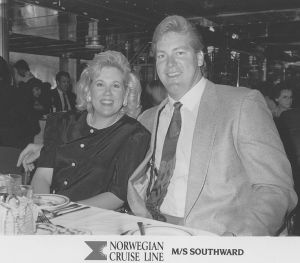
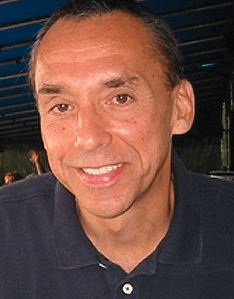
David Figurski 2004 Pre-Brain Injury

David Figurski – pre-brain injury

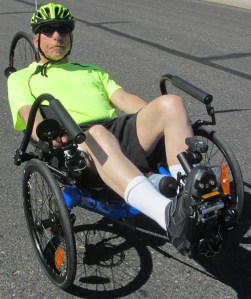
My husband, David, bought a Catrike 700 in April 2015.  He rides three days each week, 15 miles each day. David loves his trike. Despite not being able to walk outside unassisted because of a balance problem, he feels “normal” when he rides. He has found that people have a lot of curiosity about the trike. People have stopped him to ask questions. One woman talked to him from her car when they were at a Stop sign.

David is excited because he just broke 2,500 miles. But he still has a ways to go before he equals the 5,390 miles ridden by Dan Zimmerman and Catherine Brubaker on their cross-country trek.

David’s cumulative mileage as of 10/13/16               2,580 mi

Miles to reach 5,390* miles                                          2,810 mi

UPDATE:

David’s cumulative mileage as of 09/04/117               3,727 mi

Miles to reach 5,390* miles                                          1,663 mi

*done by both Dan Zimmerman and Catherine Brubaker on their cross-country ride

Figurski, David Trike

David Figurski – post-brain injury on his Catrike 700

As I say after each post: Please leave a comment by clicking the blue words “Leave a Commentanim0014-1_e0-1 below this post.

Feel free to follow my blog. Click on “Follow” on the upper right sidebar.

If you like my blog, share it with your friends. It’s easy! Click the “Share” buttons below.

If you don’t like my blog, “Share” it with your enemies. I don’t care!

Feel free to “Like” my post

Caregivers SPEAK OUT! Bob Millsap

Caregivers SPEAK OUT! Bob Millsap

presented

by

Donna O’Donnell Figurski

Bob Millsap - Caregiver

Bob Millsap – Caregiver

1. What is your name? (last name optional)

Bob Millsap

2. Where do you live? (city and/or state and/or country) 

Glendale, Arizona, USA

Email? (optional)

robertemillsap@gmail.com

3. What is the brain-injury survivor’s relationship to you? How old was the survivor when he/she had the brain injury? What caused your survivor’s brain injury?

My wife, Shelly, is the brain-injury survivor. She was 46. It happened because of a freak accident in our home – a bottle of homemade ginger-ale exploded just as Shelly walked by. It broke her nose and bruised her face, but the TBI (traumatic brain injury) symptoms did not become apparent for two weeks.

4. On what date did you begin care for your brain-injury survivor? Were you the main caregiver? Are you now? How old were you when you began care?

I began care on January 17, 2013. I was 45. I was then and am now Shelly’s main caregiver.

5. Were you caring for anyone else at that time (e.g., children, parents, etc.)?

Yes. Our boys were 12 and 18 at the time.

6. Were you employed at the time of your survivor’s brain injury? If so, were you able to continue working?

Yes. I worked many hours. I had an employer who was not very understanding. This was very challenging. It made me re-evaluate things career-wise.

7. Did you have any help? If so, what kind and for how long?

No. We lived at the time in Victor, Idaho (near Jackson Hole, Wyoming). We were in a very rural area. There was no family support near us.

8. When did your support of the survivor begin (e.g., immediately – in the hospital; when the survivor returned home; etc.)?

My support started once my wife’s TBI symptoms became apparent.

9. Was your survivor in a coma? If so, what did you do during that time?

Shelly was unconscious for twenty minutes.

10. Did your survivor have rehab? If so, what kind of rehab (i.e., inpatient and/or outpatient and occupational, physical, speech, and/or other)? How long was the rehab? Where were you when your survivor was getting therapy?

Shelly had to relearn to walk and talk. She worked with a couple of alternative
providers that we will always be thankful for. She continues to do home therapy.

11. What problems or disabilities of your brain-injury survivor required your care, if any?

Shelly has severe PTSD (post-traumatic stress disorder), so I help any way possible for this. I try to keep daily life as simple and consistent as possible, with constant support and advocacy. I do the driving and I manage her medications.

12. How has your life changed since you became a caregiver? Is it better? Is it worse?keep-calm

It hurts so much to witness Shelly live this every day. But I am more patient and understanding as a person. I don’t sweat the small things as I used to.

13. What do you miss the most from pre-brain-injury life?

I miss Shelly’s being able to live life without fear.

14. What do you enjoy most in post-brain-injury life?

I like that the deep bond in our immediate family has strengthened.

15. What do you like least about brain injury?

I dislike knowing that Shelly must face challenges every day.

16. Has anything helped you to accept your survivor’s brain injury?

Dealing with this has been made possible by our faith in God, our love for each other, and Shelly’s AMAZING outlook. I never see her feeling sorry for herself. It’s amazing and inspiring.

17. Has your survivor’s injury affected your home life and relationships and, if so, how?iloveuredflyingheartsgifanimatedimagesfreedownloadbannerlove-gifphotographicclipartmobileiphoneipadscreensaverbackgroundfreeclipartanimationgifmaniahd3diloveyou

Our relationship is stronger than ever. It has really given us perspective on what is important. Our two boys are very compassionate and understanding. I am very proud of how they handle this.

18. Has your social life been altered or changed and, if so, how?

We moved back to Arizona earlier this year, and that has been great for Shelly! It was lonely for her in rural Idaho, even before the accident. Some of her friends have been
GREAT once she got back here. Others … not so much. We try to make
sure to stay out of loud, chaotic, or unpredictable situations. We adjust to our new normal. Shelly’s TBI is truly an invisible injury, so some friends and family understand … some do not.
19. What are your plans? What do you expect/hope to be doing ten years from now?

I would love to see Shelly be able to have a rewarding, peaceful life outside of the home. She is such a kind and helpful person. I always believe there is a way that her experience with TBI and PTSD can greatly help others.

20. What advice would you offer other caregivers of brain-injury survivors? Do you have any other comments that you would like to add?

Shelly Millsap - Brain Injury Survivor Bob Millsap - Caregiver

Shelly Millsap – Brain Injury Survivor
Bob Millsap – Caregiver

Take one day at a time. Be patient. Ask questions of the medical and rehab communities. Search for answers. Try not to ask “Why me?” and feel sorry for yourself. Rid yourself of negative situations and negative people. Be flexible and have thick skin. Find support-groups to become involved with.

(Disclaimer: The views or opinions in this post are solely that of the interviewee.)

If you would like to be a part of the SPEAK OUT! project, please go to TBI SPEAK OUT! Caregiver Interview Questionnaire for a copy of the questions and the release form.

(Clip Art compliments of Bing.)

As I say after each post: Please leave a comment by clicking the blue words “Leave a Commentanim0014-1_e0-1 below this post.

Feel free to follow my blog. Click on “Follow” on the upper right sidebar.

If you like my blog, share it with your friends. It’s easy! Click the “Share” buttons below.

If you don’t like my blog, “Share” it with your enemies. I don’t care!

Feel free to “Like” my post.

Survivors SPEAK OUT! Shelly Millsap

Survivors SPEAK OUT! Shelly Millsap

presented

by

Donna O’Donnell Figurski

Shelly Rupert Millsap - Brain Injury Survivor

Shelly Rupert Millsap – Brain Injury Survivor

1. What is your name? (last name optional)

Shelly Millsap

2. Where do you live? (city and/or state and/or country) Email (optional)

Glendale, Arizona, USA

3. On what date did you have your brain injury? At what age?

My brain injury happened on January 17, 2013. I was 46.

4. How did your brain injury occur?

I was in a freak accident at home – a bottle of homemade ginger ale exploded in my face.dcredykoi

5. When did you (or someone) first realize you had a problem?

I realized I had a problem approximately 1-2 weeks after my accident.

6. What kind of emergency treatment, if any, did you have?

I was taken to the Emergency Room for CT (computerized tomography) scan.

7. Were you in a coma? If so, how long?

I was knocked unconscious for about twenty minutes.

8. Did you do rehab? What kind of rehab (i.e., inpatient or outpatient and occupational and/or physical and/or speech and/or other)?

I had to do rehab to relearn to walk correctly and talk correctly. I still do home therapy – I’m trying to regain abilities for a lot of things that I once could do easily and now cannot.

How long were you in rehab?

A few months

9. What problems or disabilities, if any, resulted from your brain injury (e.g., balance, perception, personality, etc.)?

gg61447820I have severe PTSD (post-traumatic stress disorder) and cannot be around loud noises or big crowds. I have issues with being in new environments. I tire very easily. I don’t understand people when they talk too quickly. I can’t remember new information very easily. I get lost easily or become disoriented. I have balance issues. I have a bit of anger inside that wasn’t there before … the list goes on and on.

10. How has your life changed? Is it better? Is it worse?

I can’t say that my life is better, but I refuse to say that it is worse. It is a work in progress. Life is full of ups and downs. I have always been a person who likes to take care of people. It is hard for me to let anyone take care of me. My life has changed in the mere fact that I need help with certain things … I used to be very independent. I still am, but I know that I have limitations now.

11. What do you miss the most from your pre-brain-injury life?

I miss being out-and-about without worrying that the noise will be too much or that I’ll be in a situation that will mentally paralyze me. I miss the ability to get into my car and know that I can drive myself anywhere I want to go.

12. What do you enjoy most in your post-brain-injury life?

I enjoy seeing the changes that have happened to my immediate family. They have become more compassionate.large_familylovetitle

13. What do you like least about your brain injury?

I dislike my new limitations and the loss of who I once was intellectually.

14. Has anything helped you to accept your brain injury?

God. I’ve always had a strong faith, and I know that God isn’t looking down and laughing at me. This didn’t happen because of some sick joke. God is going to use me and my experience to help someone else. I believe that we all have the choice to have a good day or a bad day. When I wake up, I choose to have a good one. There are things that come into my path at times that aren’t always pleasant, but I try to not focus too much on that and move on.

15. Has your injury affected your home life and relationships and, if so, how?

Yes. I have friends who have a hard time with this and really don’t call or communicate much anymore. I understand. It’s hard for some people. I don’t worry myself too much about what is out of my control with people who don’t understand. I just try to focus on the people who are still around and cherish them.

16. Has your social life been altered or changed and, if so, how?

I can’t go out a lot because of the noise. I don’t handle situations very well when I don’t know what is going to happen. I can’t be spontaneous. I have a hard time going to movies because of the noise. It’s hard going out to eat at times. But I do get together with my good friends a lot.

17. Who is your main caregiver? Do you understand what it takes to be a caregiver?

Shelly Rupert Millsap - Brain Injury Survivor Bob Millsap - Caregiver

Shelly Rupert Millsap – Brain Injury Survivor
Bob Millsap – Caregiver

My main caregiver is ME … with some help from my husband.

18. What are your plans? What do you expect/hope to be doing ten years from now?

I’m not sure. It’s hard for me to look that far into the future. So many things have changed in my life that I kind of take it day to day. My main goal in life is to help people, and I plan on continuing to do that. I think that we should all give more than we take from this world. That is how I live my life. I’m not a “people-pleaser.” I could care less sometimes if I please someone. I hate that term. I do things because they need to be done. I just try to treat people the way that I want to be treated.

19. Are you able to provide a helpful hint that may have taken you a long time to learn, but which you wished you had known earlier? If so, please state what it is to potentially help other survivors with your specific kind of brain injury.

Gosh, that is a hard one. I am tired and can’t think of anything right now.

20. What advice would you offer to other brain-injury survivors? Do you have any other comments that you would like to add?

No matter what your circumstance, there is always someone else out there who probably has it worse. If you are having a bad day and are feeling hopeless, remember that tomorrow is just around the corner and that most likely it will be a better day. You can pick yourself up and make the most out of what you still have. Life is a precious thing. Live it, love it, and be around people who love you as you are.

NOTE:surviving-brain-injury-stories-of-strength-and-inspiration

Shelly is a contributing author on”Surviving Brain Injury: Stories of Strength and Inspiration,” which will be available in mid November 2016. You can order the book by clicking the title. The book includes stories from about 80 brain injury survivors or caregivers.


If you would like to be a part of the SPEAK OUT! project, please go to TBI Survivor Interview Questionnaire for a copy of the questions and the release form.

(Clip Art compliments of Bing.)

(Photos compliments of contributor.)

As I say after each post:

Feel free to leave a comment by clicking the blue words “Leave a Comment” below this post.

Please follow my blog. Click on “Follow Me Via eMail” on the right sidebar of your screen.anim0014-1_e0-1

If you like my blog, click the “Like” button under this post.

If you REALLY like my blog, share it intact with your friends. It’s easy! Click the “Share” buttons below.

If you don’t like my blog, “Share” it intact with your enemies. That works for me too!

SPEAK OUT! . . . . . . . . . . . . . Faces of Brain Injury . . . . . . . . . Terry Davis (survivor)

SPEAK OUT! Faces of Brain Injury –  Terry Davis (survivor)

presented

by

Donna O’Donnell Figurski

Brain Injury is NOT Discriminating!

bigstock-cartoon-face-vector-people-25671746-e1348136261718It can happen to anyone, anytime, . . . and anywhere.

The Brain Trauma Foundation states that there are 5.3 million people in the United States living with some form of brain injury.

On “Faces of Brain Injury,” you will meet survivors living with brain injury. I hope that their stories will help you to understand the serious implications and complications of brain injury.

The stories on SPEAK OUT! Faces of Brain Injury are published with the permission of the survivor or designated caregiver.

If you would like your story to be published, please send a short account and two photos to me at neelyf@aol.com. I’d love to publish your story and raise awareness for Brain Injury.


terry-davis-1

Terry Davis – Brain Injury Survivor

Terry Davis (survivor)

I have a traumatic brain injury from a motorcycle accident back in 2006. I’ve been thinking about what I went through during my recovery. I was taken to the Center for Neuro Skills located in Bakersfield, California for six months. I went through some intense exercises to get back my memory and my cognitive thinking. I was totally delusional and made things up that were total fabrications. Anyway, I finally started coming back to reality, and in recognizing that I had recovered, they released me to back to the world I used to know. It was very hard. It’s been ten years since then, and I can honestly say that I’m doing much better now.

terry-davis

Terry Davis – Brain Injury Survivor

I’m slowly realizing who I used to be and what I agreed with and had opinions about. My psychologist told me to forget the “old” Terry and find out who the “new” Terry is and improve on that. It made life so much easier.


Thank you Terry Davis for sharing your story.

(Clip Art compliments of Bing.)

(Photos compliments of contributor.)

As I say after each post: Please leave a comment by clicking the blue words “Leave a Commentanim0014-1_e0-1 below this post.

Feel free to follow my blog. Click on “Follow” on the upper right sidebar.

If you like my blog, share it intact with your friends. It’s easy! Click the “Share” buttons below.

If you don’t like my blog, “Share” it intact with your enemies. I don’t care!

Feel free to “Like” my post.


Survivors SPEAK OUT! Natalie Collins

Survivors SPEAK OUT! Natalie Collins

presented

by

Donna O’Donnell Figurski


Natalie Collins - Brain Injury Survivor

Natalie Collins – Brain Injury Survivor

1. What is your name? (last name optional)

Natalie Collins

2. Where do you live? (city and/or state and/or country) Email (optional)

Shreveport, Louisiana, USA

3. On what date did you have your brain injury? At what age?

I was 34.

4. How did your brain injury occur?

In a car accident

5. When did you (or someone) first realize you had a problem?

Immediately after the accident

6. What kind of emergency treatment, if any, did you have?

None

7. Were you in a coma? If so, how long?

I wasn’t in one.

8. Did you do rehab? What kind of rehab (i.e., inpatient or outpatient and occupational and/or physical and/or speech and/or other)? How long were you in rehab?

I had outpatient physical therapy for six months.

9. What problems or disabilities, if any, resulted from your brain injury
(e.g., balance, perception, personality, etc.)?

I have problems with balance, perception, and personality, and I suffer from mood changes.

10. How has your life changed? Is it better? Is it worse?

My outlook on life is better, but I still grieve the “old” me. The worst is knowing I will be forever changed.

11. What do you miss the most from your pre-brain-injury life?

I miss being able to read a book.

12. What do you enjoy most in your post-brain-injury life?

I enjoy people more and “stopping to smell the roses,” as that old cliché goes.

13. What do you like least about your brain injury?

I dislike needing constant assistance because of my memory.

14. Has anything helped you to accept your brain injury?

I found it helpful to take Sticky Notes everywhere.

15. Has your injury affected your home life and relationships and, if so, how?

Yes. My current husband didn’t understand how big of a job it is to take care of me. As a result, I hide a lot of my disability. I also have to stay in the kitchen while cooking.

16. Has your social life been altered or changed and, if so, how?

Absolutely. I really don’t have a social life now. Before the accident, I had all sorts of people to hang out with.

17.  Who is your main caregiver? Do you understand what it takes to be a caregiver?

My mom has been a great help teaching me how to do stuff and not doing it all for me.

18. What are your plans? What do you expect/hope to be doing ten years from now?

I honestly don’t know what I’ll be doing in the future. It depends on if this head injury allows me to continue my education in counseling.

Natalie Collins - Brain Injury Survivor

Natalie Collins – Brain Injury Survivor

19. Are you able to provide a helpful hint that may have taken you a long time to learn, but which you wished you had known earlier? If so, please state what it is to potentially help other survivors with your specific kind of brain injury.

My advice is to take notes everywhere, especially doctors’ offices. (I had a friend who made me make a daily list, so I would remember even to take a bath. If you’re like me, you won’t remember why the stove is dinging.) Keep a set routine. Stay in the kitchen when cooking.

20. What advice would you offer to other brain-injury survivors? Do you have any other comments that you would like to add?

All I can say is “Notes everywhere.” Sticky Notes are fairly cheap in comparison to forgetting really important stuff.


If you would like to be a part of the SPEAK OUT! project, please go to TBI Survivor Interview Questionnaire for a copy of the questions and the release form.

(Clip Art compliments of Bing.)

(Photos compliments of contributor.)


As I say after each post:

Feel free to leave a comment by clicking the blue words “Leave a Comment” below this post.

Please follow my blog. Click on “Follow Me Via eMail” on the right sidebar of your screen.anim0014-1_e0-1

If you like my blog, click the “Like” button under this post.

If you REALLY like my blog, share it intact with your friends. It’s easy! Click the “Share” buttons below.

If you don’t like my blog, “Share” it intact with your enemies. That works for me too!

SPEAK OUT! . . . . . . . . . . . . . Faces of Brain Injury . . . . . . . . . Bob Bernardi (survivor)

SPEAK OUT! Faces of Brain Injury –  Bob Bernardi (survivor)

presented

by

Donna O’Donnell Figurski

Brain Injury is NOT Discriminating!

bigstock-cartoon-face-vector-people-25671746-e1348136261718It can happen to anyone, anytime, . . . and anywhere.

The Brain Trauma Foundation states that there are 5.3 million people in the United States living with some form of brain injury.

On “Faces of Brain Injury,” you will meet survivors living with brain injury. I hope that their stories will help you to understand the serious implications and complications of brain injury.

The stories on SPEAK OUT! Faces of Brain Injury are published with the permission of the survivor or designated caregiver.

If you would like your story to be published, please send a short account and two photos to me at neelyf@aol.com. I’d love to publish your story and raise awareness for Brain Injury.


Bob Bernardi - survivor

Bob Bernardi – survivor

Bob Bernardi (survivor)

Recently was an anniversary. It’s been 24 years since that terrible day back in 1992, when I lost control of my car and suffered my traumatic brain injury. Needless to say, I have experienced a lot of life’s lessons – both good and bad. I am still here, and I have accepted my standing in life, but that is not to say that I am not a fighter. If I feel that something is not right with my care or if I have questions, then believe me when I say I am going to express my concerns or ask my questions! I have had the very best in medical care and some of the worst, and, for that reason, I will not just “go with the flow.” I am sure that most of you know that, when the human brain is hurt and damaged, that alteration is an alteration to “us.” Our brain is “us.” Just trying to get back to our original selves is what we strive for. I know I can be a pain to many of my friends outside of the brain-injury community with how I view everyday life. But all that we have shared in the brain-injury community make us friends. I know that I depend on their views. I would be lost without the brain-injury community, and for that I am thankful!


Thank you Bob Bernardi for sharing your story.


(Clip Art compliments of Bing.)

(Photos compliments of contributor.)

As I say after each post: Please leave a comment by clicking the blue words “Leave a Commentanim0014-1_e0-1 below this post.

Feel free to follow my blog. Click on “Follow” on the upper right sidebar.

If you like my blog, share it intact with your friends. It’s easy! Click the “Share” buttons below.

If you don’t like my blog, “Share” it intact with your enemies. I don’t care!

Feel free to “Like” my post.


SPEAK OUT! . . . . . . . . . . Itty-Bitty GIANT Steps

SPEAK OUT! Itty-Bitty GIANT Steps

presented by

Donna O’Donnell Figurski


Itty-Bitty GIant Steps for BlogSPEAK OUT! Itty-Bitty Giant Steps will provide a venue for brain-injury survivors and caregivers to shout out their accomplishments of the week.

If you have an Itty-Bitty Giant Step and you would like to share it, just send an email to me at neelyf@aol.com.

If you are on Facebook, you can simply send a Private Message to me. It need only be a sentence or two. I’ll gather the accomplishments and post them with your name on my blog approximately once a week. (If you do not want your lastname to be posted, please tell me in your email or Private Message.)

I hope we have millions of Itty-Bitty Giant Steps.


Here is this week’s Itty-Bitty GIANT Steps

georgeanna-bell-survivor-091016GeorgeAnna Bell (survivor) … For the first time, I took a shower sanding up! Normally, I use a shower-chair because of dizziness, but I was fine standing. I was supposed to get a Disability Room. I guess what I had was one to some degree. gg57881072I was looking forward to a walk-in shower, so I could place my walker into the shower and use it as a chair, but my room had a tub. I was extremely cautious, but I did it! I am so happy!


cat-brubaker-survivor-090916Cat Brubaker (survivor) … Today I used the oven – TWICE – all by myself! And I didn’t burn anything down. I got a little “fancy” (I added my own thing). I kept the timer with me at ALL TIMES.

cats-quiche

crustless, veggie butternut quicheTIMES.


sallie-stewartSallie Stewart (survivor) … Big win in life for me! (It may sound small and trivial to many.) I have said it before – I have this swallowing challenge. Nerve damage is some of it; synching of the epiglottis and trachea is also a problem. Then there is this crushed-disk issue with my jaw. Orthodontic braces were put on two years ago in hopes that things might change. They did. There are still challenges, but today was a great day! I ate ALL of my Eggs Benedict, ALL of my lunch, and ALL of my dinner. thAnd several snacks in between. I can chew – on BOTH sides of my jaw. It’s a giant win in life for me! I feel strong. It’s been a true challenge to try to find the majority of my nutrition in a blender. It was so nice to really be able to chow-down food. These braces come off soon. And for that, I am happy. But I’m not nearly as grateful for that as I am for being able to chew pain-free. My heart is full! A strong full!


YOU did it!

Congratulations to contributors!

(Clip Art compliments of Bing.)

(Photos compliments of contributors.)


As I say after each post:anim0014-1_e0-1

Please leave a comment by clicking the blue words “Leave a Comment” below this post.

Feel free to follow my blog. Click on “Follow” on the upper right sidebar.

If you like my blog, share it intact with your friends. It’s easy! Click the “Share” buttons below.

If you don’t like my blog, “Share” it intact with your enemies. I don’t care!

Feel free to “Like” my post.

diemodi jewelry

uniquely hand-crafted jewelry by donna

Welcome to Harmony Kent Online

The home of all things books

Pete Springer

Passionate Teacher and Future Children's Author

HOPE TBI

Helping Other People Excel - To Be Independent

For the Love of Books, Old and New

Katie Fischer, Writer and Reader of Stories

Charlie Bown

Children's Author

Jessica Hinrichs

“We write to taste life twice, in the moment and in retrospect.” ― Anais Nin

VIVIAN KIRKFIELD - Writer for Children

Picture Books Help Kids Soar

Mindy’s Writing Wonderland

For authors, parents, teachers & everyone who loves children’s books.

Kaitlyn Leann Sanchez

Literary Agent

Surviving Traumatic Brain Injury

TBI - Survivors, Caregivers, Family, and Friends

The Care Factor

Loving someone with a Traumatic Brain Injury

Brain Injury Support Group of Duluth-Extension

Brain Injury Information and SUPPORT

Brain Aneurysm Global Insight

Brain Aneurysm, cerebral hemorrhaging, hemorrhage stroke