TBI – Survivors, Caregivers, Family, and Friends

Posts tagged ‘blogtalkradio.com/braininjuryradio’

SPEAK OUT! Guest Blogger Karen Dickerson . . . . . . . . . . . . . . I Love the Person I’ve Become

I Love the Person I’ve Become

by

Karen Dickerson

presented

by

Donna O’Donnell Figurski

Girl Blogger cartoon_picture_of_girl_writingI had a somber moment yesterday as I, for the first time, heard my 9-1-1 call and saw photos of the scene of my accident. I didn’t know that on March 2nd, 2014, my life would be changed forever.

As all my friends are aware, I have a traumatic brain injury (TBI), a brain injury that will affect my life forever. I’ll never be the same person I once was. I still struggle daily with cognitive deficits and problems with memory, lights, sounds, fatigue, and headaches. I wrestle with irritability. Also, the left side of my body is weak. I spent the last year angry for what has happened to me. The struggles were so huge that I didn’t know how I’d ever survive daily life as a woman and single mother.

Next week, I have the opportunity to face the driver who caused this injury to my body and my life. I get the chance to tell that person everything I’ve gone through to get to where I am today. In writing my statement, I found it hard to look back and relive the hell I’ve been through and am still going through today.

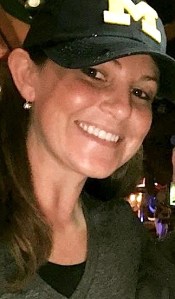
Dickerson, Karen Survivor 2 120315

Karen Dickerson – TBI Survivor

However, in many ways, the accident also brought some positivity – the growth that I’ve had as a person, the strength it has given me, my faith to be stronger, and the opportunities to share my story with so many. Through the use of social media alone, I have shared my triumphs and failures all over the country.

I am trying to bring a voice to the small community in which I live, where there isn’t much help or support for this invisible injury. My brain injury has helped me to choose wisely whom I bring into my life and to let go of negative people, including those in my immediate family who did not understand or did not desire to educate themselves to help me.

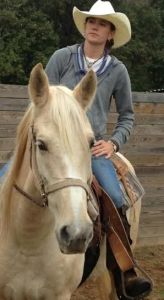
Dickerson, Karen Survivor 120315 1

Karen Dickerson – TBI Survivor

I’ve asked why this had to happen to me. I thought that life was already difficult enough. It was hard to get on my feet after a tough childhood and an abusive marriage. Today, I know why. I am thankful for what I have – as little as it may be. I am especially grateful for all who I’ve worked for and fought for – my children and the loved ones close to my heart.

My accident could have been worse. My children might not have had a mother to take care of them; I would never have made new friendships and grown stronger relationships with the ones I had; and I would never have met my Okie.

I’m blessed to be here today. TBI or not, I love the person I’ve become because I’ve fought to become her.


Thank you, Karen Dickerson.

Disclaimer:
Any views and opinions of the Guest Blogger are purely his/her own.

(Clip Art compliments of Bing.)

(Photos compliments of Karen Dickerson)

As I say after each post: Please leave a comment by clicking the blue words “Leave a Commentanim0014-1_e0-1 below this post.

Feel free to follow my blog. Click on “Follow” on the upper right sidebar.

If you like my blog, share it (intact) with your friends. It’s easy! Click the “Share” buttons below.

If you don’t like my blog, “Share” it (intact) with your enemies. I don’t care!

Feel free to “Like” my post.

SPEAK OUT! . . . . . . . . . . . . . Faces of Brain Injury . . . . . Jen Swartz

SPEAK OUT! Faces of Brain Injury – Jen Swartz

presented by

Donna O’Donnell Figurski

 Brain Injury is NOT Discriminating!

bigstock-cartoon-face-vector-people-25671746-e1348136261718It can happen to anyone, anytime, . . . and anywhere.

The Brain Trauma Foundation states that there are 5.3 million people in the United States living with some form of brain injury.

On “Faces of Brain Injury,” you will meet survivors living with brain injury. I hope that their stories will help you to understand the serious implications and complications of brain injury.

The stories on SPEAK OUT! Faces of Brain Injury are published with the permission of the survivor or designated caregiver.

If you would like your story to be published, please send a short account and two photos to me at neelyf@aol.com. I’d love to publish your story and raise awareness for Brain Injury.

Jen Swartz (survivor)

Jen Swartz Survivor

Jen Swartz

One incredible fact that I have learned after sustaining a traumatic brain injury (TBI) is that really simple things in life bring me happiness. I

Jen Swartz 2

Jen Swartz

don’t require spending tons of money on a house, on a car, or on an extraordinarily expensive vacation to find happiness. Being with my awesome friends or my family or enjoying the smaller things in life really brings so much joy to my heart. Because I survived something that could have easily taken my life, I know I still have purpose. As do all of you!

(Clip Art compliments of Bing.)

(Photos compliments of contributor.)

As I say after each post: Please leave a comment by clicking the blue words “Leave a Commentanim0014-1_e0-1 below this post.

Feel free to follow my blog. Click on “Follow” on the upper right sidebar.

If you like my blog, share it with your friends. It’s easy! Click the “Share” buttons below.

If you don’t like my blog, “Share” it with your enemies. I don’t care!

Feel free to “Like” my post.

Survivors SPEAK OUT! Jennifer Stokley

Survivors SPEAK OUT! Jennifer Stokley

presented

by

Donna O’Donnell Figurski


Jennifer Stokely Survivor 0526151. What is your name? (last name optional)

Jennifer Stokley

2. Where do you live? (city and/or state and/or country) Email (optional)

Kutztown, Pennsylvania, USA

3. On what date did you have your brain injury? At what age?

May 10, 2007, was the day of my traumatic brain injury (TBI). I was 42.

4. How did your brain injury occur?

I fell out of a second story window of my home to the sidewalk below. I did what I now call my “Amazing, Exotic Jeni Bounce.” I was home alone. Please don’t ask me how the fall occurred. I have no clue, other than I know that back then I was a hard-core alcoholic. My TBI cured me of that completely! No withdrawal. I just never desired alcohol again. Odd, but wonderful!

5. When did you (or someone) first realize you had a problem?

My ex found me on the sidewalk. He thought I had fallen outside (no external injuries, strange). I used to have a seizure disorder back then, so my ex and some friends carried me inside, up the stairs, and put me on the bed. Then I started to have trouble breathing. My ex immediately called 9-1-1. The paramedics arrived, took me back downstairs, across the street at night, and worked on me under a streetlight in a public park. They understood something was terribly wrong then.

The thing I find funny about the whole thing, though, is that the emergency folks cut my clothes off right then and there – for the whole city block to see me naked – under lights! I showed my butt to the city! (LOL) Thank goodness I don’t live there anymore.

6. What kind of emergency treatment, if any, did you have?

I had two cardiac arrests during the life-flight to the hospital. I had ruptured my bladder (which they had to stitch back together like a patchwork blanket). I punctured my lung, due to one of my five broken ribs. I had broken my pelvis in three places. I also had broken my neck.

The only things I remember for sure are a breathing tube down my throat, the surgery on my belly to put my bladder back together, and the two times they restarted my heart. The rest is unknown to me. I haven’t asked; they haven’t told. That is my past. I survived. I do not wish to relive the past while I’m so busy living my present and focusing on my future.

7. Were you in a coma? If so, how long?

I was in a full coma for three weeks. My coma was a 3 on the Glasgow Scale. It’s the lowest score before death. (A score of 3 indicates a severe brain injury.) After all my surgeries and the use of all the professional skills to save my life, the surgeon actually came out to my Momma and said, “We’ve done all that we can. Now it’s in God’s hands.” It literally was. One day prior to their disconnecting my life-support, I took my first breath on my own! They were able to take me off of life-support, knowing I was going to survive. To what extent, they still had no clue, but at least I was no longer in a coma on life-support.

8. Did you do rehab? What kind of rehab (i.e., inpatient or outpatient and occupational and/or physical and/or speech and/or other)?

First, I went to inpatient therapy from the Intensive Care Unit for two and a half months. I was taken to a rehab room (by wheelchair with my “fun-catheter” along for the ride) to exercise a bit and then attempt to stand. (They said my standing would never really happen because of my broken neck, but I showed them. I stand just fine now, and when I leave the house, I walk with only a cane.) Later, when I was discharged, I was in outpatient therapy for … I don’t know how long. There, I did physical therapy, speech therapy, and cognitive therapy. (Speech therapy was a hoot. The therapist would hand me things to read out loud. The problem was I couldn’t see! I’m legally blind now. “Come on. Read the medical records already.” LOL Cognitive therapy was just as much fun – pegs in holes I was unable to see. LOL That didn’t last too long.)

How long were you in rehab?

Inpatient, two and a half months; outpatient, more than six months, I think

9. What problems or disabilities, if any, resulted from your brain injury
(e.g., balance, perception, personality, etc.)?

I have a severe anxiety disorder, cerebellar ataxia, aphasia (not much now, but it used to be severe), bladder/bowel control issues, and taste bud issues. I’m legally blind. Memory issues are HUGE. My ability to smell has been affected. I have issues with concentration and making decisions. My personality did a 180 on me, and for that, I am actually grateful. I was not a very nice person prior to my TBI.

10. How has your life changed? Is it better? Is it worse?

My life is harder than it was prior, but it is also so much better than it’s ever been. I will gladly take the difficulties to have such a wonderful life. I had no difficulties prior, and I had such a horrible life. Go figure. I gladly take the trade I’ve been handed.

11. What do you miss the most from your pre-brain-injury life?

I miss the memories. I lost 42 years of my life. All my memories are gone – my childhood, my college, my graduation, everything – poof, gone in a second. When I woke from my coma, I was a stranger even to myself. I was literally reborn. I was no longer “Jennifer.” I was “Jeni,” a child. I didn’t know anyone or anything. I had to be taught how to eat, how to walk, how to talk – like an infant. I was told things about Jennifer, but they were all foreign to me – even to this day. (But I sure don’t miss memories of three ex-hubbies, so I guess it’s cool with me anyway! LOL)

12. What do you enjoy most in your post-brain-injury life?

I enjoy that I am building my life from scratch. I am building it in a way that brings me joy and peace. I have reconnected with my family, which never would have happened if not for my TBI. That I guess is the best part of this all! I have my Momma and my big sister in my life now, and they never were before. Now they love me, look out for me, and help me just because they want to. I love them with all my heart!

13. What do you like least about your brain injury?Stokley, Jennifer Survivor 112815

I dislike my loss of independence and being legally blind. I will never be able to drive again, and, with my anxiety disorder, I can’t go anywhere without my family’s support anyway. So I can’t just get up and go, even if I feel like it. I have accepted it. But it doesn’t mean I always have to like it.

14. Has anything helped you to accept your brain injury?

Time and God have helped. Please let me explain a bit. It took me nearly five years to find my way through my “brain fog” to the light of awareness, where I could even look around and understand what the heck is even going on. When I mention “God,” please know I am not a believer of any formal religion of any kind. I sure wouldn’t understand any of it anyway. Sorry. I am fully a spiritual gal. I know God saved my life. I speak and pray directly to him privately. I believe in angels. I also feel that I am a part of all things of this earth, sky, and everything in-between. I do not, have never, and never will step inside any church. That is not something that my heart desires. My connection is full and complete. I need nothing more and nothing less.

15. Has your injury affected your home life and relationships and, if so, how?

I had a “love of my life” prior to my TBI. He tried – truly he did – post TBI. He stuck it out for three years, but I myself never emotionally reconnected with him. I do know he loved me. He used to come home from the hospital, walk half way up the stairs, and collapse in tears. He became my full-time caregiver and friend, but emotionally I was unable to love him back. So I personally set him free to find love again, and he has – with a baby on the way. YAY!

16. Has your social life been altered or changed and, if so, how?

My social life changed big time, but it improved big time. My social life had been with drunk folks at the bar and such. I never drink at all post TBI. I never miss drinking for some strange reason. So that circle of folks is no longer in my life. At first, my social life consisted of “my dad,” a neighbor who just cared so much that he would spend about an hour every day with me. Sometimes he would take me places. He always made sure I was safe. My social life now consists of wonderful, caring neighbors who accept me knowing my limitations. They help when needed and spend time with me “just because.” My biggest social life consists of my family, who, for 30+ years, really weren’t much of a part of my life at all.

17. Who is your main caregiver? Do you understand what it takes to be a caregiver?

I am and have been my main caregiver for six years now. I had no one after my ex-boyfriend/caregiver left. I was completely alone. I do, however, understand in many ways what it takes. Many of my dear friends who I know so well on the Internet are caregivers of survivors. They fill me in totally and honestly. I also help them to maybe know what their loved one is thinking when a reaction occurs, things that may stimulate the survivor, things that the survivor may enjoy, etc.

18. What are your plans? What do you expect/hope to be doing ten years from now?

My life will be pretty much what I do now – “pay my life forward” to other survivors and caregivers by helping them – sometimes with info or sometimes with laughter, music, inspiration, joy, etc. I am permanently and totally disabled, so I truly believe that “work” is out of my future. That’s okay with me, truly. I love what I do now, and, as my father used to always say, “If it works, don’t fix it.”

19. Are you able to provide a helpful hint that may have taken you a long time to learn, but which you wished you had known earlier? If so, please state what it is to potentially help other survivors with your specific kind of brain injury.

Realize it is what it is!

20. What advice would you offer to other brain-injury survivors? Do you have any other comments that you would like to add?

Please never rush it. You’ll get there when you’re ready to get there – not a second sooner. It may take years and years, but when YOU are ready, you’ll know it.

Tell folks to get over themselves and their ignorance if they ever say, “Just get over it.” It takes a lifetime!

If you’re unable to do something right now, always say, “I can’t do it AS OF YET!” It leaves room for possibility and hope for your future!


(Disclaimer: The views or opinions in this post are solely that of the interviewee.)

If you would like to be a part of the SPEAK OUT! project, please go to TBI Survivor Interview Questionnaire for a copy of the questions and the release form.

(Clip Art compliments of Bing.)

(Photos compliments of contributor.)

As I say after each post: Please leave a comment by clicking the blue words “Leave a Commentanim0014-1_e0-1 below this post.

Feel free to follow my blog. Click on “Follow” on the upper right sidebar.

If you like my blog, share it with your friends. It’s easy! Click the “Share” buttons below.

If you don’t like my blog, “Share” it with your enemies. I don’t care!

Feel free to “Like” my post.


Survivors SPEAK OUT! Alisa Noah


Survivors SPEAK OUT! Alisa Ann Noah

presented

by

Donna O’Donnell Figurski


Noah, Alisa Ann L7l38moCWms-awgtIo9_70iApASPda_FVoPydfH1Eav5cCUnvpSudWfhdApNDrmPOqCkIcYbJLDfkrIxawI0Iu_D3IeGgzKZ1Whh7Lc2pmxdyJbB19_Vw114VdME3ant9vsNlq-qX9SNXn7SApjHhzoVZqU1ToqtwiFTpWcqKJ9lbUSBAV0pVh-fvnXN3tkGrsqt1hPzAODSjNBFrDOOjJ-u_iGQ547W

1. What is your name? (last name optional)

Alisa aka “El Dorado”

2. Where do you live? (city and/or state and/or country) Email (optional)

North Carolina, USA

3. On what date did you have your brain injury? At what age?

February 2012

4. How did your brain injury occur?

My brain injury came from a motor vehicle accident. I wasn’t at fault. My truck was rear-ended at 50+ mph. Because my truck had no headrests, my head hit the back glass.

5. When did you (or someone) first realize you had a problem?

Immediately

6. What kind of emergency treatment, if any, did you have?

I was first treated in the Emergency Room. Scans and X-rays were taken. Later I had a neck brace, cervical epidurals, other cervical injections, and physical therapy.

7. Were you in a coma? If so, how long?

No

8. Did you do rehab? What kind of rehab (i.e., inpatient or outpatient and occupational and/or physical and/or speech and/or other)?

I did physical therapy.

How long were you in rehab?

Three months of 3 days a week

9. What problems or disabilities, if any, resulted from your brain injury
(e.g., balance, perception, personality, etc.)?

I have vision loss; migraines; balance issues; sleep problems; mood problems; memory loss; anxiety; and pain, pain, pain. Unexpected loud noises send me into a panic.

10. How has your life changed? Is it better? Is it worse?

My life got worse for about three years. I have recently started to make progress with happiness and finding new ways to keep busy.

11. What do you miss the most from your pre-brain-injury life?

I miss my career as a horse trainer, and I miss college.

12. What do you enjoy most in your post-brain-injury life?

Retirement (LOL)

13. What do you like least about your brain injury?

I dislike the pain and my physical limitations.

14. Has anything helped you to accept your brain injury?

Friends and new hobbies have helped me accept my brain injury.

15. Has your injury affected your home life and relationships and, if so, how?

Yes. People don’t understand my thought process or mood swings.

16. Has your social life been altered or changed and, if so, how?

Yes. I fear driving. I don’t engage in social activities much anymore.

17. Who is your main caregiver? Do you understand what it takes to be a caregiver?

My mother and my roommate are my main caregivers.

18. What are your plans? What do you expect/hope to be doing ten years from now?

Hmmm, I’m not sure. I take things one day at a time. 🙂

19. Are you able to provide a helpful hint that may have taken you a long time to learn, but which you wished you had known earlier? If so, please state what it is to potentially help other survivors with your specific kind of brain injury.

Don’t let doctors just throw pills at you. After I had been told for almost three years that my condition is permanent, I recently learned that I can heal from it. Do your research. Some doctors are really no help.

20. What advice would you offer to other brain-injury survivors? Do you have any other comments that you would like to add?

NEVER let your “disabilities” define who you are as a person! You are and always will be just as valuable and important as anyone else. Never let anyone tell you otherwise. Stay strong!

(Disclaimer: The views or opinions in this post are solely that of the interviewee.)

If you would like to be a part of the SPEAK OUT! project, please go to TBI Survivor Interview Questionnaire for a copy of the questions and the release form.

(Clip Art compliments of Bing.)

(Photos compliments of contributor.)

As I say after each post: Please leave a comment by clicking the blue words “Leave a Commentanim0014-1_e0-1 below this post.

Feel free to follow my blog. Click on “Follow” on the upper right sidebar.

If you like my blog, share it with your friends. It’s easy! Click the “Share” buttons below.

If you don’t like my blog, “Share” it with your enemies. I don’t care!

Feel free to “Like” my post.


SPEAK OUT! Guest Blogger David A. Grant . . . . . . . . . . . . . “Warning: Graphic Content

Warning: Graphic Content

 by

David A. Grant

presented by

Donna O’Donnell Figurski

Boy Blogger thI found myself doing something that I don’t usually do. This morning, I just stared at my keyboard and waited. Most of the time, putting virtual pen to paper is easy. On a good day, I can pour out a thousand words in under an hour.

Not today.

One of the most unexpected by-products of this new life is my PTSD (post traumatic-stress disorder). Since time out of mind, I’ve heard the term PTSD. But like so many, perhaps even you, I mistakenly associated it exclusively with veterans, with those that had seen the unimaginable.

Never did I expect to be walking daily with this newfound friend. Some things you just can’t see coming – like a speeding car driven by a sixteen-year-old driver. Its onset was abrupt. It was unrelenting. It was unexpected.

And it’s more than a bit insidious.

Early on, as my physical injuries began to heal, like a dark flower blooming under a full moon, my PTSD began to blossom. Professional help did little to stem the terror tide.

The nightmares remain the worst part. For a couple of years after my accident, “bad PTSD nights” came anywhere from ten to twenty nights a

month. When I say “bad,” I mean bad. These aren’t your “Boogeyman-under-the-bed” kind of dreams.

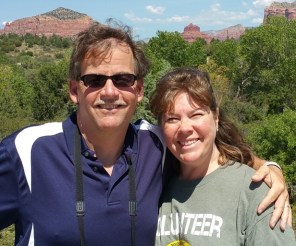
Grant, David and Sarah 111715

David & Sarah Grant

Not even close.

Over the years, I have had most every sort of Stephen King horror inflicted upon me after dark. From being burned alive to drowning after drowning, from severed limbs to vivid dream pain that feels more real than reality, it’s been a real shit storm. My apologies if profanity offends, but better a four-letter word than a vivid description of life after dark.

The sound of an ambulance passing by our home drove me to tears for the better part of a couple of years – stopping me dead in my tracks if happenstance found me working in our yard.

Crowds? No more. Action-packed movies? Maybe for you, but not for us. Sudden or abrupt noises? You’ll find my shoes on the floor and me long gone.

Time does have a way of offering clarity. Today I know that I live with a textbook case of PTSD. Like other challenges I face, it’s invisible. Meeting me today for the first time, you’d never know. “Hey, I see that you live with PTSD,” said no one – ever.

As time passed, Sarah and I developed compensatory strategies to help. It is good for us both.

Known by few is a condition called “Secondary PTSD.” Those close to a trauma survivor, though not physically hurt, carry their own deep and painful scars. Sarah has a pretty classic case of secondary PTSD.

Circumstance, rather than virtue of any kind, has reshaped our lives. Our

12248573_10206516855973739_1693909187_o

the Grant’s Sanctuary

lives together today are smaller, but none less rewarding. We shun most crowds, but do not live reclusively. We spend a lot of time outdoors – crowded music festivals replaced by nature walks. Our yard has been transformed into a sanctuary with waterfalls, birdfeeders and flowers abounding. It’s now a sacred place for us – a place where we both continue to heal.

Life today is more enriching than before. I still startle easily. I cry less often at the sounds of a siren wailing. And we are both cautious about what we allow ourselves to be exposed to.

Eiffel Tower

Eiffel Tower Paris, France

The events that have unfolded in Paris over the last few days are heartbreaking. It’s at times like these that the rubber meets the PTSD road. I need to be careful of getting sucked in to wanting to know too much detail, balancing it with the very human need to know what is happening in the world at large. I watch “just enough” TV to know what’s happening. I read “just enough” of the news online – very often going no further than the headlines.

Just this morning, as I read the USA Today news on my tablet, a content block caught my eye: WARNING: GRAPHIC CONTENT. Suffice to say, I passed that one right by, knowing that honoring my condition is good for me and good for those around me. I am praying for those who are part of the horror. Blasts mean that there are now new members of the TBI club. Hundreds, if not thousands – perhaps an entire nation – will now live with PTSD. My heart weeps for them.

But even with the most dutiful of diligence, I am reminded that I am forever bound to PTSD.

Last Thursday night was our weekly Date Night. Our cinematic choice this past week was the Peanuts Movie. We’ve seen just about every animated flick released in the last few years. It was a smile-filled night out. Just dinner and a movie. Just us two. Hand-holding and quiet whispers – just the way we like it.

At 10:00 PM, I leaned over, gave Sarah her good night kiss and fell quickly asleep. Though I no longer dread bedtime, I live in the reality that any night can be a bad night.

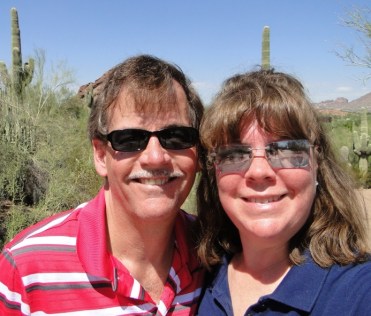
Grant, David and Sarah 2 111715

David & Sarah Grant

At 11:30 PM, Sarah woke me up as I lay next to her crying out in pain, my feet sinking into molten dream lava, being burned off my torso as I looked down in abject horror. I could smell my own flesh burning. Unable to move, I screamed in mortal terror.

“C’mon David, wake up. Wake up, David,” she called out – again coaxing me back to the relative safety of awakeness. We’ve danced this midnight two-step hundreds of times.

And so the rhythm of our new life goes – enjoying those sacred moments between the tougher times, and hunkering down to ride out the occasional PTSD storms.

In the bigger scheme of things, fate could have been much more harsh. I could have died that day – leaving Sarah to walk through the recent five-year anniversary of the day alone, her memory of me beginning to fade.

But we have each other. And in having each other, we have all we need.


About David A. Grant

David A. Grant 2 101115

David A. Grant

David A. Grant is a freelance writer, keynote speaker and traumatic brain injury survivor based out of southern New Hampshire. He is the author of “Metamorphosis, Surviving Brain Injury,” a book that chronicles in exquisite detail the first year-and-a-half of his new life as a brain injury survivor. His newest title, “Slices of Life after Traumatic Brain Injury,” was released in 2015.

David is also a contributing author to “Chicken Soup for the Soul, Recovering from Traumatic Brain Injuries.” As a survivor of a cycling accident in 2010, he shares his experience and hope though advocacy work including a public speaking as well as his weekly brain injury blog.

David is a regular contributing writer to Brainline.org, a PBS sponsored website. He is also a BIANH board member as well as a columnist in HEADWAY, the Brain Injury Association of New Hampshire’s periodic newsletter.

David is the founder of TBI Hope and Inspiration, a Facebook community with over 15,000 members including survivors, family members, caregivers as well as members of the medical and professional community as well as the publisher of “TBI Hope and Inspiration Magazine.”

Thank you, David A. Grant.

Disclaimer:
Any views and opinions of the Guest Blogger are purely his/her own.

(Clip Art compliments of Bing.)

(Photos compliments of David A. Grant)

As I say after each post: Please leave a comment by clicking the blue words “Leave a Commentanim0014-1_e0-1 below this post.

Feel free to follow my blog. Click on “Follow” on the upper right sidebar.

If you like my blog, share it with your friends. It’s easy! Click the “Share” buttons below.

If you don’t like my blog, “Share” it with your enemies. I don’t care!

Feel free to “Like” my post.


On The Air: . . . . . . . . . . . . . . Brain Injury Radio . . . . . . . . “Another Fork in the Road” with Survivor & Caregiver, Sandra WIlliams

On The Air: Brain Injury Radio “Another Fork in the Road” 

with

Guest: Survivor and Caregiver, Sandra Williams

presented

by

Donna O’Donnell Figurski

images-1Sandra William’s was thrust into the role of brain injury survivor and caregiver when her whole family was involved in a motor accident with a drunk driver with multiple DUIs. Sandra spoke about the trials her family endured and still endures because of the negligence of a stranger.

As two teachers, Sandra and I delved into how schools 12200687_895719387130278_18176772_ncan better help students who are identified with brain injury or special needs. Federally mandated, 504 Plans and Individual Education Plans (IEP) were discussed.

If you missed this show with Sandra Williams on “Another Fork in the Road” on November 15th, 2015 don’t fret. You can listen to the archived show here. Click the link below.

See you “On the Air!”

On The Air: Brain Injury Radio “Another Fork in the Road” with Survivor and Caregiver, Sandra Williams

(Clip Art compliments of Bing.)

As I say after each post: Please leave a comment by clicking the blue words “Leave a Commentanim0014-1_e0-1 below this post.

Feel free to follow my blog. Click on “Follow” on the upper right sidebar.

If you like my blog, share it with your friends. It’s easy! Click the “Share” buttons below.

If you don’t like my blog, “Share” it with your enemies. I don’t care!

Feel free to “Like” my post.

Survivors SPEAK OUT! Sandra Williams

Survivors SPEAK OUT! Sandra Williams

presented

by

Donna O’Donnell Figurski

12200687_895719387130278_18176772_n1. What is your name? (last name optional)

Sandra Williams

2. Where do you live? (city and/or state and/or country) Email (optional)

Athol, Idaho, USA

3. On what date did you have your brain injury? At what age?

My injury was on May 28th, 2012, at 10:00 am. I was 38.

4. How did your brain injury occur?

A drunk driver crossed the center lane as we were turning a corner in our Ford F250 Power Stroke. We were pulling a 26-foot travel trailer. There was a cliff on the other side of us. We should have gone over the cliff, but instead we crossed all lanes of traffic and ended up in a ditch. We should have jackknifed, but we didn’t. The truck that hit us also went through the length of our travel trailer. He ended up in the lane opposite to the one he was traveling in and facing in the opposite direction. We all should have died. The details of the accident are many. It sounds like a made-for-TV movie. We are all alive, but we’re not OK.

5. When did you (or someone) first realize you had a problem?

I first learned of my son’s brain injury when I took him to a neurologist. His primary care physician wanted a follow-up because my son was sleeping so much and his balance was off a bit. We made him rest all summer. When he went back to school, he went from an A-B student to one who got Ds and Fs. I was really focused on my son, but the neurologist diagnosed me too. The diagnosis shocked my primary care provider and me. I didn’t really believe her until I lost my job as a Special Education teacher.

6. What kind of emergency treatment, if any, did you have?

I lost consciousness. I was taken to the Emergency Room. I don’t remember babbling to the sky, but that is what my kids said. They told me this several weeks after the accident. They didn’t know I didn’t know. That’s when my husband knew something wasn’t right. But he thought I would get over it. We all rested that summer. I seemed to be doing well – no headaches, etc. – until I went back to work.

7. Were you in a coma? If so, how long?

No

8. Did you do rehab? What kind of rehab (i.e., inpatient or outpatient and occupational and/or physical and/or speech and/or other)? How long were you in rehab?

I have been to two ten-day sessions of speech therapy, vestibular therapy, cognitive behavioral therapy, and exposure therapy. I also attended Carrick Brain Injury Center, a multidisciplinary brain rehab center.

9. What problems or disabilities, if any, resulted from your brain injury
(e.g., balance, perception, personality, etc.)?

I am still struggling to work. My memory is still affected to the point of frustration for my family members. I struggle with headaches, dizziness, and confusion when people speak to me. I have given up being a youth group-leader. I tried to go back to work, but, due to the fact that educational systems do not accommodate, I cannot work as a teacher – not even online. I really want to run and work out like I used to, but I don’t. That is the biggest change. I never used to drink coffee or alcohol. I don’t abuse either, but now I drink both. I never used to eat chips or anything unhealthy, but I eat those things now. I used to garden, but now I don’t. I do want to return to the way it was with those things, but it is hard while I’m keeping up with my kids and their needs since the accident.

10. How has your life changed? Is it better? Is it worse?

I think my life is worse, but can get better. It is worse because I can’t work in a job where I can get full-time benefits. My health care needs have increased, and my income has decreased. I am trying to help my husband start a new business in construction. He is being patient with me, but it is not easy. Our kids are different, and we really struggled with their behavior until we went to Carrick Brain Injury Center. We still struggle with one kiddo, but I think it is a grief process that he is going through.

11. What do you miss the most from your pre-brain-injury life?

I miss running. (I ran a half marathon and was training for a full marathon when we were hit.) I miss having the energy to do anything I wanted. I miss remembering everything. I miss being able to find a job whenever I wanted. (I have been working since I was eight. I started working for my dad and got my first out-of-family job at the age of fourteen. I paid for the first four years of college by working, and I sent myself to Europe – some people in my church helped me to play basketball internationally.)

12. What do you enjoy most in your post-brain-injury life?

Nothing really. I wish I could say something different. But, my life is so limited from what it once was, and I look so normal. People expect me “to do better,” “to not give up,” or “to stop making excuses.”

13. What do you like least about your brain injury?

I dislike that I cannot be independent and that people expect more from me than I can do. If a person had a broken leg, that person would receive accommodations until it healed. Accommodations are not given when one has an invisible traumatic brain injury (TBI). It doesn’t work that way. But I will not give up.

14. Has anything helped you to accept your brain injury?

I was actually helped by the fact that I can’t work no matter how hard I try. Working came easily to me, just like sports. Now, working and sports are the hardest things for me to do. I will keep trying though. I can’t do them now, but that doesn’t mean I won’t be able to do them forever. I won’t give up. I will do them someday.

15. Has your injury affected your home life and relationships and, if so, how?

Yes, immensely. My kids get really frustrated with me, and so does my husband. I used to be unorganized and forget things, but now it is ten times worse. I really have to rely on notebooks and repeat myself several times. That is what is so frustrating for my family. They also don’t understand my need for rest or my light-sensitivity to the TV. There are many things to list, but I will keep it short!

16. Has your social life been altered or changed and, if so, how?

I don’t visit with anyone anymore. I used to go to bible studies, but they scare me now. (I am afraid I will say the wrong thing.) I can’t go see my mom because I can’t drive that long at one time (it takes two days for me to get there), and it’s just too long to be gone. Plus, I have a huge family, which is hard to be around. My sisters don’t understand my brain injury. I just stay away. It’s better for all of us.

17. Who is your main caregiver? Do you understand what it takes to be a caregiver?12202566_895719670463583_794991146_n

Me. I am my own caregiver. My husband tries, but he is focused on the business. I submit insurance claims and speak to the doctors. I am even filing claims with Disability Rights of Idaho, so I know I can be organized and I can do something!

18. What are your plans? What do you expect/hope to be doing ten years from now?

I plan to be working in construction until I put myself through college again to finish my counseling degree and/or get a certification in TBI so I can educate teachers about it. There is the need for special education to have a different evaluation process. I also plan to use online settings to sell lessons that target students with TBI in the secondary school classroom.

19. Are you able to provide a helpful hint that may have taken you a long time to learn, but which you wished you had known earlier? If so, please state what it is to potentially help other survivors with your specific kind of brain injury.

I wish I knew more about Disability Rights of Idaho and more about the complaint process for educators. (Parents are at such a loss!) The biggest tip I can give other survivors is not to listen to negative comments or to employers who tell you that you can’t do the job. Listen to your heart and your soul. Fight for yourself and others. It will keep you going.

20. What advice would you offer to other brain-injury survivors? Do you have any other comments that you would like to add?

Never, ever give up! If you can’t realize your dream one way, find another way to do it. It may take you longer, but do it. Henry Winkler (the Fonz) applied to sixty-eight different colleges before one accepted him. He was not diagnosed with dyslexia until his son was. He never gave up. We can’t either!

(Disclaimer: The views or opinions in this post are solely that of the interviewee.)

If you would like to be a part of the SPEAK OUT! project, please go to TBI Survivor Interview Questionnaire for a copy of the questions and the release form.

(Clip Art compliments of Bing.)

(Photos compliments of contributor.)

As I say after each post: Please leave a comment by clicking the blue words “Leave a Commentanim0014-1_e0-1 below this post.

Feel free to follow my blog. Click on “Follow” on the upper right sidebar.

If you like my blog, share it with your friends. It’s easy! Click the “Share” buttons below.

If you don’t like my blog, “Share” it with your enemies. I don’t care!

Feel free to “Like” my post.

SPEAK OUT! . . . . . . . . . . . . . . . . . Faces of Brain Injury Melanie Goodman

SPEAK OUT! Faces of Brain Injury – Melanie Goodman

presented by

Donna O’Donnell Figurski

 Brain Injury is NOT Discriminating!

bigstock-cartoon-face-vector-people-25671746-e1348136261718

It can happen to anyone, anytime, . . . and anywhere.

The Brain Trauma Foundation states that there are 5.3 million people in the United States living with some form of brain injury.

On “Faces of Brain Injury,” you will meet survivors living with brain injury. I hope that their stories will help you to understand the serious implications and complications of brain injury.

The stories on SPEAK OUT! Faces of Brain Injury are published with the permission of the survivor or designated caregiver.

If you would like your story to be published, please send a short account and two photos to me at neelyf@aol.com. I’d love to publish your story and raise awareness for Brain Injury.

Melanie Goodman (survivor)

I had an AVM (arteriovenous malformation), a birth defect. No one knows he or she has one until it ruptures. Mine was about having weak veins where an artery was supposed to be. The weak veins were under constant high pressure. AVMThe AVM finally exploded at home one night. My love and best friend rushed me to the hospital, where they life-flighted me to Missoula, Montana. They said to let her die because she’s just going to be a vegetable for the rest of her life. My boyfriend fought them to get me to the best hospital on the West Coast, which was all the way in Seattle, Washington. Harborview Medical Center saved my life.

(Clip Art compliments of Bing.)

(Photos compliments of contributor.)

As I say after each post: Please leave a comment by clicking the blue words “Leave a Commentanim0014-1_e0-1 below this post.

Feel free to follow my blog. Click on “Follow” on the upper right sidebar.

If you like my blog, share it with your friends. It’s easy! Click the “Share” buttons below.

If you don’t like my blog, “Share” it with your enemies. I don’t care!

Feel free to “Like” my post.

SPEAK OUT! Guest Blogger … David Lloyd “What I Gained From My Brain Injury”

What I Gained From My Brain Injury

by

David Lloyd

presented by

Donna O’Donnell Figurski

Boy Blogger thI used to be an intolerant perfectionist before my accident. I did not even realize the extent to which I looked down on others, how prideful I was, and how I put others down without any thought, until an event out of my control took away my ability to meet my own standards.

I had fooled myself into believing I was better than I was. Now I see others with a much humbler and more forgiving attitude. I am much more compassionate and a lot less full of myself.

My change in attitude probably saved my relationships with my David Lloydchildren, whom I had been pushing away by demanding unrealistic standards from them with what were my goals and not theirs. Now I am much more impressed with their strengths and more understanding, and even accepting, of those areas that seemed important to me, but never motivated them. There is a sense that my disability has removed blinders that kept me from seeing the value of letting my children have interests that are different than my own.

Those are good qualities that I intend to hold onto, regardless of how much I recover eventually.

Thank you, David Lloyd.

Disclaimer:
Any views and opinions of the Guest Blogger are purely his/her own.

(Clip Art compliments of Bing.)

(Photos compliments of David Lloyd)

A11998344_873343152701235_1064470731_ns I say after each post: Please leave a comment by clicking the blue words “Leave a Commentanim0014-1_e0-1 below this post.

Feel free to follow my blog. Click on “Follow” on the upper right sidebar.

If you like my blog, share it with your friends. It’s easy! Click the “Share” buttons below.

If you don’t like my blog, “Share” it with your enemies. I don’t care!

Feel free to “Like” my post.

On The Air: Brain Injury Radio “Another Fork in the Road” “Depression and Suicidal Thoughts”

On The Air: Brain Injury Radio “Another Fork in the Road” 

with

Panelists: Survivor, Melissa Cronin and Survivor Troop, Juliet Madsen

Topic: Depression and Suicidal Thoughts

presented

by

Donna O’Donnell Figurski

Depression is a state of mind that can cause mental mood disorders. It is devastating and can affect every aspect of daily living. It can affect people in so many different ways and it is pure agony resulting from desperation and the need to escape. Depression is not an unfamiliar state for those who live with brain injury.

Juliet Madsen and Melissa Cronin, both survivors of brain injury, join me to discuss depression and suicide – two common, yet serious, repercussions of brain injury.

Melissa Cronin Head Shot 2When a car went rogue careening through 2 1/2 blocks of the Santa Monica, California Farmer’s Market it left Melissa Cronin with not only broken bones and a ruptured spleen, but also with a Traumatic Brain Injury. Melissa is the author of “Invisible Bruise” and “Silencing the Boom.” Both stories are published in “Chicken Soup for the Soul” books.

Juliet Madsen Uniform

Troop, Juliet Madsen, got her brain injury while serving her country in Iraq. Juliet is a member of the Board of Directors of R4 Alliance and is a master quilter. You can see some of her work at “Stroke of Luck Quilting.”

If you missed this show on “Another Fork in the Road” on October 4th, 2015, don’t fret. You can listen to the archived show here. Click the link below.

See you “On the Air!”

On The Air: Brain Injury Radio “Another Fork in the Road” Depression and Suicidal Thoughts with panelists, Survivor, Melissa Cronin and Survivor Troop, Juliet Madsen

Sources I used for this show:

  1. Everyday Health – 8 Unconventional Ways to Ease Depression

http://www.everydayhealth.com/depression-pictures/unconventional-ways-to-ease-depression.aspx

  1. Health – 7 Types of Therapy That Can Help Depression

http://www.health.com/health/gallery/0,,20310354,00.html

  1. Mayo Clinic – Psychotherapy

http://www.mayoclinic.org/tests-procedures/psychotherapy/basics/definition/prc-20013335

  1. Mental Health Foundation – Depression

http://www.mentalhealth.org.uk/help-information/mental-health-a-z/D/depression/

  1. The Guardian – Robin Williams, depression and the complex causes of suicide

http://www.theguardian.com/science/blog/2014/aug/18/robin-williams-depression-causes-suicide

  1. WebMD – Psychologist or Psychiatrist: Which Is Right for You?

http://www.webmd.com/mental-health/features/psychologist-or-psychiatrist-which-for-you

  1. WebMD – Symptoms of Depression

http://www.webmd.com/depression/guide/detecting-depression

Hotlines:

If you or someone you know needs immediate help, don’t waste time on the web, call 9-1-1 immediately.

There are many depression and suicide hotlines. Here are some I located. I am NOT endorsing them, but if you have concerns about depression or suicide, I might want to look into them in advance of any crisis.


  1. National Suicide Prevention Lifeline (1-800-273-8255) Suggested by the Mayo Clinic

http://www.suicidepreventionlifeline.org/

  1. Samaritans 24-Hour Crisis Hotline (212) 673-3000

http://samaritansnyc.org/24-hour-crisis-hotline/

  1. 24/7 Crisis Support 775-784-8090  

http://crisiscallcenter.org/crisisservices.html

  1. Most states have mental health hotlines. Here is a site that has links to most states.

Suicide Hotlines

http://www.suicide.org/suicide-hotlines.html

(Clip Art compliments of Bing.)

As I say after each post: Please leave a comment by clicking the blue words “Leave a Commentanim0014-1_e0-1 below this post.

Feel free to follow my blog. Click on “Follow” on the upper right sidebar.

If you like my blog, share it with your friends. It’s easy! Click the “Share” buttons below.

If you don’t like my blog, “Share” it with your enemies. I don’t care!

Feel free to “Like” my post

diemodi jewelry

uniquely hand-crafted jewelry by donna

Welcome to Harmony Kent Online

The home of all things books

Pete Springer

Passionate Teacher and Future Children's Author

HOPE TBI

Helping Other People Excel - To Be Independent

For the Love of Books, Old and New

Katie Fischer, Writer and Reader of Stories

Charlie Bown

Children's Author

Jessica Hinrichs

“We write to taste life twice, in the moment and in retrospect.” ― Anais Nin

VIVIAN KIRKFIELD - Writer for Children

Picture Books Help Kids Soar

Mindy’s Writing Wonderland

For authors, parents, teachers & everyone who loves children’s books.

Kaitlyn Leann Sanchez

Literary Agent

Surviving Traumatic Brain Injury

TBI - Survivors, Caregivers, Family, and Friends

The Care Factor

Loving someone with a Traumatic Brain Injury

Brain Injury Support Group of Duluth-Extension

Brain Injury Information and SUPPORT

Brain Aneurysm Global Insight

Brain Aneurysm, cerebral hemorrhaging, hemorrhage stroke