TBI – Survivors, Caregivers, Family, and Friends

Posts tagged ‘brain injury survivor’

SPEAK OUT! . . . . . . . . . . . . . . . . Faces of Brain Injury Charles Ross

SPEAK OUT! Faces of Brain Injury Charles Ross  (survivor)

presented by

Donna O’Donnell Figurski

 Brain Injury is NOT Discriminating!

bigstock-cartoon-face-vector-people-25671746-e1348136261718It can happen to anyone, anytime, . . . and anywhere.

The Brain Trauma Foundation states that there are 5.3 million people in the United States living with some form of brain injury.

On “Faces of Brain Injury,” you will meet survivors living with brain injury. I hope that their stories will help you to understand the serious implications and complications of brain injury.

The stories on SPEAK OUT! Faces of Brain Injury are published with the permission of the survivor or designated caregiver.

If you would like your story to be published, please send a short account and two photos to me at neelyf@aol.com. I’d love to publish your story and raise awareness for Brain Injury.


Charles Ross (survivor)
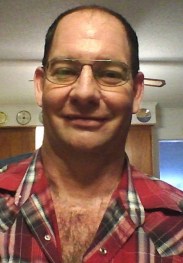
Ross Jr., Charles Survivor 112415 copy

Charles Ross Jr. – Brain Injury Survivor

It has been just over thirty years since I had my traumatic brain injury (TBI) in November 1985. I remember nothing of the accident at all. What I say of the accident is what I learned after the fact. I had the paddles put on me before I got on the helicopter to fly to the larger hospital in St. Louis. The doctors even told my parents they were removing me from Intensive Care to make room for someone who might live. I was in a coma for fifty days. I spent over ten months in the hospital. I was in a wheelchair for one and a half years. And, I had seven summers of surgery to make it to where I can now walk with a cane.

I have severe memory problems. My short-term memory was, and still is, bad. I had been having what I called “spells,” during which I would get a feeling like a chill in my spine. My parents noticed the staring while I was in the hospital. The doctors took me off seizure medicine because they did not believe I was having seizures. I know those spells increased in frequency after that. I could go days with no spells, but other days, I could have hundreds. They usually seemed to last a few seconds, but Mom thought they sometimes lasted longer.

As the spells increased, the feelings I had changed too. I began to notice a feeling like I needed to have a bowel movement, but I never did that, I remember. I would get extremely hot, and sometimes the sweat would just pour out of me for a few seconds. Mainly at night, I would wake with a spell and have a horrible taste in my mouth. After I got my license back, I sometimes had these spells while I was driving. I could have them in class or while I was watching TV or walking or sleeping – it did not matter. I never noticed anything that triggered them. Four years after the accident, in my sleep on New Year’s Eve night 1989, I had a tonic-clonic (grand mal) seizure. It was determined that the “spells” were petit mal seizures. Treatments finally began for traumatically incurred epilepsy, which the doctor finally said I had.

OLYMPUS DIGITAL CAMERA

After I started on medication, the spells decreased dramatically. I would still have one, and my neurologist would increase my dose. That helped for some time, but the spells never stopped completely. Even though I had severe memory and physical problems along with the seizures, I managed to get two Associate Degrees over nine years. However, because of my memory problems, I failed to get my Bachelor’s Degree. I started working with my last degree, but the stress was too powerful to maintain the job. I had many jobs though, mainly contract jobs without benefits.

I began to have blank spells. Maybe I had them before, but I never remembered them or realized it. Why I knew I had them was because I was driving again and I would have an accident in which I hit someone in the back end. I would come out of any blank spell immediately, but I never remembered what had happened, other than that I hit someone. I figured that they hit the brakes quickly in rush-hour traffic and I could not stop.

Over the years, I would have an accident every year or two. Finally, I realized that, before each accident, I had that strange feeling also. So, then I knew what the real cause of the accidents was. After fifteen years of work, I lost my job. I moved in with my parents again. The new neurologist started me on a second medication, and that helped. It did not stop the spells though.

Ross, Charles Survivor

Charles Ross Jr. – Brain Injury Survivor

I moved again and got another neurologist. She put me on two more medicines. One was the same brand, just a different strength. That medicine with such a heavy dosage made me have mood swings sometimes. Altogether, it was over twenty-two years after treatment began and twenty-seven years after the accident before the right mixture was found and I felt in control again. I moved back in with my parents again in late 2014. I helped my parents the best I could with my three hospital stays and two operations. I drove my dad for cancer treatments before his death in September 2015. I am with my mom now. We help each other during the grieving process.

I hope my story serves as a source of strength, encouragement, and determination for others with TBIs to never give up. I was never supposed to live! If I did, they said I would be no more than a being in a chair, unable to do anything for myself.

Never Give UpI am writing my story, I drive, I went to college, I got two Associate degrees, and I worked for fifteen years. There is so much more, but anyone who reads this story should know that anything is possible. You may not accomplish as much as I did, or you may accomplish more. Just know that you should never give up on yourself. Feel proud of your body. If they had been in your shoes, they could never have done what you did, and that is to survive! Be proud!


(Clip Art compliments of Bing.)

(Photos compliments of contributor.)

As I say after each post: Please leave a comment by clicking the blue words “Leave a Commentanim0014-1_e0-1 below this post.

Feel free to follow my blog. Click on “Follow” on the upper right sidebar.

If you like my blog, share it intact with your friends. It’s easy! Click the “Share” buttons below.

If you don’t like my blog, “Share” it intact with your enemies. I don’t care!

Feel free to “Like” my post.


SPEAK OUT! . . . . . . . . . . . . . . . Faces of Brain Injury . . . . . . . . . . James Thomas (survivor)

SPEAK OUT! Faces of Brain Injury James Thomas  (survivor)

presented by

Donna O’Donnell Figurski

 Brain Injury is NOT Discriminating!

bigstock-cartoon-face-vector-people-25671746-e1348136261718It can happen to anyone, anytime, . . . and anywhere.

The Brain Trauma Foundation states that there are 5.3 million people in the United States living with some form of brain injury.

On “Faces of Brain Injury,” you will meet survivors living with brain injury. I hope that their stories will help you to understand the serious implications and complications of brain injury.

The stories on SPEAK OUT! Faces of Brain Injury are published with the permission of the survivor or designated caregiver.

If you would like your story to be published, please send a short account and two photos to me at neelyf@aol.com. I’d love to publish your story and raise awareness for Brain Injury.

Thomas, James survivor 111115James Thomas  (survivor)…I’m a traumatic-brain-injury (TBI) success story. I had three brain surgeries to remove three blood clots in my head. After the third surgery, I fell into a coma for three days. When I woke up, I lost the ability to walk and talk, and I wasn’t able to take care of myself. I had to learn every life-skill again, including how to write. I had to wear a diaper for seven months.

I was in the hospital for a month. When I was released, I went to one of best rehab centers in the state of New Jersey. There I had occupational, physical, and speech therapies twice a week. I was able to go home after three months, and my ex-girlfriend nursed me back to good health. I improved 150% in two years. I work now as a teacher assistant with Special Needs students.


(Clip Art compliments of Bing.)

(Photos compliments of contributor.)

As I say after each post: Please leave a comment by clicking the blue words “Leave a Commentanim0014-1_e0-1 below this post.

Feel free to follow my blog. Click on “Follow” on the upper right sidebar.

If you like my blog, share it intact with your friends. It’s easy! Click the “Share” buttons below.

If you don’t like my blog, “Share” it intact with your enemies. I don’t care!

Feel free to “Like” my post.

TBI Tales . . . . . . . . . . . . . . . . . Don’t Let What You Survived Bring You Down by Karen Bradley Williams

Don’t Let What You Survived Bring You Down

by

Karen Bradley Williams

presented

by

Donna O’Donnell Figurski


Williams, Karen Bradley SurvivorI am a three-time traumatic brain injury (TBI) survivor (2007, 2010, and 2011). After my first one, I lost everything, including my husband, but I always had my mom. Now nine years post my first TBI, I am remarried to a wonderful man. He loves me, knows and understands my limitations, and treats me like a queen. I have gone back to college, and I am a nationwide certified pharmacy tech. I have real friends and a great life.

Don’t let what you have survived bring you down. Look at what you have made it through. Do not give up now. Your miracle is just around the corner.


(Disclaimer: The views or opinions in this post are solely that of the author.)

If you have a story to share and would like to be a part of the SPEAK OUT! project, please submit your TBI Tale to me at neelyf@aol.com. I will publish as many stories as I can.

As I say after each post:

Please leave a comment by clicking the blue words “Leave a Comment” below this post.anim0014-1_e0-1

Please follow my blog. Click on “Follow” on the top right sidebar. (It’s nice to know there are readers out there.)

If you like my blog, share it with your friends. It’s easy! Click the “Share” buttons below.

If you don’t like my blog, “Share” it with your enemies. I don’t care!

Feel free to “Like” my post.

(Clip Art compliments of Bing.)


So, Whaddya Think . . . . . . . . Should We Let Children Play Tackle Football?

So, Whaddya Think?

 Should We Let Children Play Tackle Football?

by

David Figurski and Donna O’Donnell Figurski


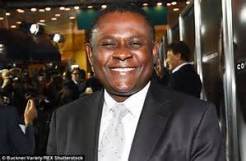
So Whaddya Think Brain th-4Dr. Bennet Omalu, the Nigerian pathologist who discovered the neurodegenerative disease chronic traumatic encephalopathy (CTE) by his study of the brain of Hall-of-Fame center Mike Webster, is making news again with an Op-Ed published in The New York Times. Dr. Omalu’s essay is entitled Don’t Let Kids Play Football. He says that our society has laws forbidding the sale of tobacco and alcohol to minors. There is legislation that mandates bicycle helmets for children. Football Player HurtWhy not protect children’s brains by prohibiting children from playing American-style tackle football? Dr. Omalu writes in his essay, “The risk of permanent impairment is heightened by the fact that the brain, unlike most other organs, does not have the capacity to cure itself ….”

Omalu & Will Smith

(Dr. Omalu’s CTE-discovery story and its impact on American football is told in the much-anticipated movie, Concussion, which will be in theaters on Christmas Day. Dr. Omalu is played by actor Will Smith. As grippingly shown in the Frontline documentary, League of Denial: The NFL’s Concussion Crisis, which is online and free, the National Football League – NFL – immediately attacked Dr. Omalu and tried to get him to retract the published paper.)league-of-denial-raster-br10-81-550x377

There is strong evidence that not only concussions, but also the large number of sub-concussive hits common to players of American football can lead to CTE, whose symptoms may appear as early as in the late teens. The symptoms of CTE include memory loss, reduced intelligence, depression, aggressive behavior, dementia, and suicidal thoughts. Both a college football player and a young professional player committed suicide, and they were found to have CTE. A high-school football player committed suicide. CTE has also been detected in the brains of players of high-school football.

NFLlogoThe NFL is concerned with the growing awareness of brain injuries in players of American football. If players, their families, fans, coaches, and/or parents think that CTE is common among players, a seemingly sacrosanct part of American culture and a multibillion-dollar industry would be put into jeopardy.

To get in front of the concussion issue, the NFL has aggressively promoted its image as a forward-thinking and safety-conscious league. The NFL has donated large sums of money for concussion research. The league has changed the rules of the game to discourage a player from using his helmet to make tackle or to prevent a tackle. It has established a “concussion protocol” to keep a concussed player from practice and/or games until he has been approved to return to play. The NFL has concussion-spotters present at every game and this year has empowered them to stop a game. (However, that protocol failed shamefully and dramatically in the recent instance of quarterback Case Keenum near the end of a tie game.) The rule changes are good progress, but can the NFL actually prevent brain injuries and save the game?

Current and former players have been affected by the brain-injury issue. Some players have had to retire early and fear imminent brain disease. A rookie linebacker for the San Francisco 49ers quit after one year of a four-year contract. (He is returning the signing bonus for the remaining three years.) He said that playing professional football, with all its potential for wealth, is not worth the risk of brain injury. football-brain-injuryLegendary former quarterback Joe Namath has said that, if he knew then what he knows now, he wouldn’t have played. Keith McCants, former NFL linebacker said, “We were paid to give concussions. If we knew that we were killing people, I would have never put on the jersey.”

The brains of several former players, including Hall-of-Fame linebacker

junior-seau-1024x682

Junior Seau

Junior Seau and four-time-Pro-Bowl safety Dave Duerson – both of whom committed suicide, were found to have CTE.

duerson

Dave Duerson

Boston University’s CTE Center has found CTE in 88 of 92 (1, 2) autopsied brains of former NFL players. (Dr. Ann McKee of Boston University says that this is a ridiculously high rate even for a sample of brains in which the individuals showed some signs of brain disease. DOF has written about a simple fix for the claim of bias. In the meantime, there was a report that was consistent with Dr. McKee’s fear that CTE is common among football players. Frank Gifford, Hall-of-Fame running back, apparently died of natural causes, but his brain showed CTE.)

Frank Gifford football

Frank Gifford

Should children play American football with all that is known? Obviously there is much more to be learned, but should society wait to protect the children? Children trust their parents and coaches. Dr. Omalu only wants society to protect the brains of young children until those children are able to understand the risks to the brain from playing Brain in football helmetfootball and to make their own decision of whether or not to play. Boston University’s Dr. Robert Cantu said that a child’s brain is developing until age 14. Should children be subjecting their developing brains to high impact hits? One study showed that sometimes the force of a young child’s hit can reach that of a college football player.

football player catching ball

One argument for safety in American football is that the equipment, especially the helmet, is much improved. The helmet does a very good job of protecting the skull, but does nothing to protect the brain. There is no helmet that can prevent a concussion.Concussions-sports-concussion-crisis

As you might imagine, Dr. Omalu’s position is highly unpopular. Danny Kanell, former NFL quarterback and now ESPN commentator, claims that Dr. Omalu is waging a “War on Football.” Many fans and parents agree with Kanell because they believe that CTE is not common among football players. (DOF has written how this issue can be resolved simply. Dr. Omalu is an author on a paper reporting the accurate detection of CTE in a living person using a special PET – positron emission tomography – scan. The NFL needs to have all of its players scanned.) If Dr. Omalu’s suggestion about not letting kids play tackle football were adopted, one effect would be immediately obvious. The NFL would see its pool of young players dry up, so the talent we now see in the NFL would no longer be seen.

Bennet Omalu

Dr. Bennet Omalu at screening of “Concussion”

It is unlikely that Dr. Omalu’s suggestion would ever come true. But he has the stature to get people talking, and the discussion has already changed. More people are becoming aware of the danger to the brain of playing tackle football. The NFL is concerned with the movie Concussion because it will increase society’s awareness of the danger. (In an article about an early showing of Concussion to former players and their families, the Huffington Post writes “… the wife of former tight end Taz Anderson, said the movie made her question whether her grandchild should continue to play the sport.”) Recently Bob Costas, a renowned sports commentator, said that American football is based on violence. The league has no way of fixing its problem with head trauma.

If you’ve ever seen young children playing tackle football, you will realize that society must do something to protect its children.

So, Whaddya Think?

Let’s get a dialogue going. Post your comments in the Comment Section. Directions are below.

So . . . what do you think? Is there something you are passionate about in this Brain Injury (BI) world? Do you want to be heard? Your opinion matters! You can SPEAK OUT! on “So Whaddya Think?”

Simply send me your opinion, and I will format it for publication. Posts may be short, but please send no more than 500 words. Send to Neelyf@aol.com

I hope to HEAR from you soon.

As I say after each post:

Feel free to leave a comment by clicking the blue words “Leave a Comment” below this post.

Please follow my blog. Click on “Follow Me Via eMail” on the right sidebar of your screen.anim0014-1_e0-1

If you like my blog, click the “Like” button under this post.

If you REALLY like my blog, share it intact with your friends. It’s easy! Click the “Share” buttons below.

If you don’t like my blog, “Share” it intact with your enemies. That works for me too!

(Clip Art compliments of Bing.)


Survivors SPEAK OUT! Jenn Von Hatten

Survivors SPEAK OUT! Jenn Von Hatten

presented

by

Donna O’Donnell Figurski


Von Hatten, Jenn Survivor & Hanna 121315

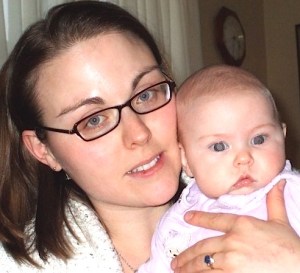
Jenn Von Hatten – survivor and daughter, Hanna

1. What is your name? (last name optional)

Jenn Von Hatten

2. Where do you live? (city and/or state and/or country) Email (optional)

Trenton, Nova Scotia, Canada     jlvonhatten@gmail.com

3. On what date did you have your brain injury? At what age?

My brain injury happened on Valentine’s Day 2011. I was 35 years old.

4. How did your brain injury occur?

My brain injury resulted from a motor vehicle accident caused by freezing rain.

5. When did you (or someone) first realize you had a problem?

The paramedics found me clinically dead at the scene. The doctors wanted to airlift me to the Queen Elizabeth II (QEII) Health Sciences Centre in Halifax, which is the biggest hospital in Nova Scotia. But the freezing rain affected the rotors on the helicopter, so I had to be taken by road ambulance.

6. What kind of emergency treatment, if any, did you have?

The pressure in my brain needed to be monitored to see if I needed surgery. I also lacerated my liver. Fortunately, I did not need surgery for either. I also fractured a rib and three vertebrae.

7. Were you in a coma? If so, how long?

I was in a coma for seven weeks. First, I was in a coma from the accident. Then I was in a medically induced coma because of my fractured rib and vertebrae. I managed to develop pneumonia, and I had a tracheotomy.

8. Did you do rehab? What kind of rehab (i.e., inpatient or outpatient and occupational and/or physical and/or speech and/or other)? How long were you in rehab?

I was transferred to the Rehab Centre in Halifax around Easter 2011, and I was discharged in July 2011. Besides being a patient at the Rehab Centre, I’ve had to go to physiotherapy and occupational therapy. My spastic muscles affected my speech, so I also went to speech therapy.

9. What problems or disabilities, if any, resulted from your brain injury
(e.g., balance, perception, personality, etc.)?

Von Hatten, Jenn survivor Son Liam 121315

Jenn Von Hatten – survivor and son, Liam

My balance has been severely affected. I used to be in a wheelchair, due to fractured vertebrae. I’ve since “graduated” to a walker, a quad cane, and a mini-quad cane. I’m a Fall Risk, and I get the Disability Pension.

10. How has your life changed? Is it better? Is it worse?

I have joint custody of my seven-year-old daughter, Hanna. I am no longer able to work as a nurse. My life has definitely changed, but I can’t say if it is better or worse. All I can say with certainty is that my life is DIFFERENT.

11. What do you miss the most from your pre-brain-injury life?

I miss being able to work as a nurse the most. As much as I would like to a work as a nurse, I know I would NOT be safe – mentally, in terms of remembering if I gave a client medication or treatments, or physically.

12. What do you enjoy most in your post-brain-injury life?

I enjoy my time with Hanna. It is her time, as I don’t work anymore. I now have a cat, Spunkster, which I got from the local SPCA. When Hanna’s not with me, I hang out with Spunkster.

13. What do you like least about your brain injury?

I had graduated as a nurse only seven months before my traumatic brain injury (TBI). I had wanted to be a nurse for over fifteen years. At least I can say I turned that dream into reality! I sometimes miss being able to drive. My rehabilitation doctor says I still cannot drive, as my reflexes are not up to snuff. However, I can say that my driver’s license has NOT been revoked!

14. Has anything helped you to accept your brain injury?

Becoming a nurse was my dream. I finally realized that, just because I am no longer able to work as a nurse, I STILL AM A NURSE! Being a nurse is STILL a part of me.

15. Has your injury affected your home life and relationships and, if so, how?

My youngest daughter’s father threw me out, as he said he was not happy. I remind myself that not many relationships survive a TBI.

16. Has your social life been altered or changed and, if so, how?

I don’t really have a social life, except maybe for going grocery shopping. I go by cab, so I interact with the cab divers, who are husband and wife. They own the cab company, and they are now good friends of mine. I prefer to interact with people in small groups.

17. Who is your main caregiver? Do you understand what it takes to be a caregiver?

Von Hatten, Jenn survivor daughters Emma and Hanna 121315

Jenn Von Hatten – survivor and daughters Emma and Hanna

I am my own caregiver now. Yes, I do understand what it takes to be a caregiver, as I used to be one. When I was in school to become a nurse, I worked as a CCA (Certified Care Assistant). A CCA can also be called PCA (Personal Care Assistant) or PCW (Personal Care Worker).

18. What are your plans? What do you expect/hope to be doing ten years from now?

My plan is to be helping others who are TBI survivors or caregivers. I can provide info and support.

19. Are you able to provide a helpful hint that may have taken you a long time to learn, but which you wished you had known earlier? If so, please state what it is to potentially help other survivors with your specific kind of brain injury.

Understand that a person does not need to be working (and therefore getting paid) to be fulfilling whatever he or she was meant to be. Find other ways – perhaps volunteering.

20. What advice would you offer to other brain-injury survivors? Do you have any other comments that you would like to add?

Figure out what you like doing and makes you happy. If you can’t remember, that’s OK – find out. (It’s what I wish I knew back in the beginning when I was first dealing with this.) Find out what you like and makes you happy RIGHT NOW! Everybody, brain injury or not, is constantly evolving.


(Disclaimer: The views or opinions in this post are solely that of the interviewee.)

If you would like to be a part of the SPEAK OUT! project, please go to TBI Survivor Interview Questionnaire for a copy of the questions and the release form.

(Clip Art compliments of Bing.)

(Photos compliments of contributor.)

As I say after each post: Please leave a comment by clicking the blue words “Leave a Commentanim0014-1_e0-1 below this post.

Feel free to follow my blog. Click on “Follow” on the upper right sidebar.

If you like my blog, share it intact with your friends. It’s easy! Click the “Share” buttons below.

If you don’t like my blog, “Share” it intact with your enemies. I don’t care!

Feel free to “Like” my post.


Survivors SPEAK OUT! Alisa Noah


Survivors SPEAK OUT! Alisa Ann Noah

presented

by

Donna O’Donnell Figurski


Noah, Alisa Ann L7l38moCWms-awgtIo9_70iApASPda_FVoPydfH1Eav5cCUnvpSudWfhdApNDrmPOqCkIcYbJLDfkrIxawI0Iu_D3IeGgzKZ1Whh7Lc2pmxdyJbB19_Vw114VdME3ant9vsNlq-qX9SNXn7SApjHhzoVZqU1ToqtwiFTpWcqKJ9lbUSBAV0pVh-fvnXN3tkGrsqt1hPzAODSjNBFrDOOjJ-u_iGQ547W

1. What is your name? (last name optional)

Alisa aka “El Dorado”

2. Where do you live? (city and/or state and/or country) Email (optional)

North Carolina, USA

3. On what date did you have your brain injury? At what age?

February 2012

4. How did your brain injury occur?

My brain injury came from a motor vehicle accident. I wasn’t at fault. My truck was rear-ended at 50+ mph. Because my truck had no headrests, my head hit the back glass.

5. When did you (or someone) first realize you had a problem?

Immediately

6. What kind of emergency treatment, if any, did you have?

I was first treated in the Emergency Room. Scans and X-rays were taken. Later I had a neck brace, cervical epidurals, other cervical injections, and physical therapy.

7. Were you in a coma? If so, how long?

No

8. Did you do rehab? What kind of rehab (i.e., inpatient or outpatient and occupational and/or physical and/or speech and/or other)?

I did physical therapy.

How long were you in rehab?

Three months of 3 days a week

9. What problems or disabilities, if any, resulted from your brain injury
(e.g., balance, perception, personality, etc.)?

I have vision loss; migraines; balance issues; sleep problems; mood problems; memory loss; anxiety; and pain, pain, pain. Unexpected loud noises send me into a panic.

10. How has your life changed? Is it better? Is it worse?

My life got worse for about three years. I have recently started to make progress with happiness and finding new ways to keep busy.

11. What do you miss the most from your pre-brain-injury life?

I miss my career as a horse trainer, and I miss college.

12. What do you enjoy most in your post-brain-injury life?

Retirement (LOL)

13. What do you like least about your brain injury?

I dislike the pain and my physical limitations.

14. Has anything helped you to accept your brain injury?

Friends and new hobbies have helped me accept my brain injury.

15. Has your injury affected your home life and relationships and, if so, how?

Yes. People don’t understand my thought process or mood swings.

16. Has your social life been altered or changed and, if so, how?

Yes. I fear driving. I don’t engage in social activities much anymore.

17. Who is your main caregiver? Do you understand what it takes to be a caregiver?

My mother and my roommate are my main caregivers.

18. What are your plans? What do you expect/hope to be doing ten years from now?

Hmmm, I’m not sure. I take things one day at a time. 🙂

19. Are you able to provide a helpful hint that may have taken you a long time to learn, but which you wished you had known earlier? If so, please state what it is to potentially help other survivors with your specific kind of brain injury.

Don’t let doctors just throw pills at you. After I had been told for almost three years that my condition is permanent, I recently learned that I can heal from it. Do your research. Some doctors are really no help.

20. What advice would you offer to other brain-injury survivors? Do you have any other comments that you would like to add?

NEVER let your “disabilities” define who you are as a person! You are and always will be just as valuable and important as anyone else. Never let anyone tell you otherwise. Stay strong!

(Disclaimer: The views or opinions in this post are solely that of the interviewee.)

If you would like to be a part of the SPEAK OUT! project, please go to TBI Survivor Interview Questionnaire for a copy of the questions and the release form.

(Clip Art compliments of Bing.)

(Photos compliments of contributor.)

As I say after each post: Please leave a comment by clicking the blue words “Leave a Commentanim0014-1_e0-1 below this post.

Feel free to follow my blog. Click on “Follow” on the upper right sidebar.

If you like my blog, share it with your friends. It’s easy! Click the “Share” buttons below.

If you don’t like my blog, “Share” it with your enemies. I don’t care!

Feel free to “Like” my post.


Survivors SPEAK OUT! Sandra Williams

Survivors SPEAK OUT! Sandra Williams

presented

by

Donna O’Donnell Figurski

12200687_895719387130278_18176772_n1. What is your name? (last name optional)

Sandra Williams

2. Where do you live? (city and/or state and/or country) Email (optional)

Athol, Idaho, USA

3. On what date did you have your brain injury? At what age?

My injury was on May 28th, 2012, at 10:00 am. I was 38.

4. How did your brain injury occur?

A drunk driver crossed the center lane as we were turning a corner in our Ford F250 Power Stroke. We were pulling a 26-foot travel trailer. There was a cliff on the other side of us. We should have gone over the cliff, but instead we crossed all lanes of traffic and ended up in a ditch. We should have jackknifed, but we didn’t. The truck that hit us also went through the length of our travel trailer. He ended up in the lane opposite to the one he was traveling in and facing in the opposite direction. We all should have died. The details of the accident are many. It sounds like a made-for-TV movie. We are all alive, but we’re not OK.

5. When did you (or someone) first realize you had a problem?

I first learned of my son’s brain injury when I took him to a neurologist. His primary care physician wanted a follow-up because my son was sleeping so much and his balance was off a bit. We made him rest all summer. When he went back to school, he went from an A-B student to one who got Ds and Fs. I was really focused on my son, but the neurologist diagnosed me too. The diagnosis shocked my primary care provider and me. I didn’t really believe her until I lost my job as a Special Education teacher.

6. What kind of emergency treatment, if any, did you have?

I lost consciousness. I was taken to the Emergency Room. I don’t remember babbling to the sky, but that is what my kids said. They told me this several weeks after the accident. They didn’t know I didn’t know. That’s when my husband knew something wasn’t right. But he thought I would get over it. We all rested that summer. I seemed to be doing well – no headaches, etc. – until I went back to work.

7. Were you in a coma? If so, how long?

No

8. Did you do rehab? What kind of rehab (i.e., inpatient or outpatient and occupational and/or physical and/or speech and/or other)? How long were you in rehab?

I have been to two ten-day sessions of speech therapy, vestibular therapy, cognitive behavioral therapy, and exposure therapy. I also attended Carrick Brain Injury Center, a multidisciplinary brain rehab center.

9. What problems or disabilities, if any, resulted from your brain injury
(e.g., balance, perception, personality, etc.)?

I am still struggling to work. My memory is still affected to the point of frustration for my family members. I struggle with headaches, dizziness, and confusion when people speak to me. I have given up being a youth group-leader. I tried to go back to work, but, due to the fact that educational systems do not accommodate, I cannot work as a teacher – not even online. I really want to run and work out like I used to, but I don’t. That is the biggest change. I never used to drink coffee or alcohol. I don’t abuse either, but now I drink both. I never used to eat chips or anything unhealthy, but I eat those things now. I used to garden, but now I don’t. I do want to return to the way it was with those things, but it is hard while I’m keeping up with my kids and their needs since the accident.

10. How has your life changed? Is it better? Is it worse?

I think my life is worse, but can get better. It is worse because I can’t work in a job where I can get full-time benefits. My health care needs have increased, and my income has decreased. I am trying to help my husband start a new business in construction. He is being patient with me, but it is not easy. Our kids are different, and we really struggled with their behavior until we went to Carrick Brain Injury Center. We still struggle with one kiddo, but I think it is a grief process that he is going through.

11. What do you miss the most from your pre-brain-injury life?

I miss running. (I ran a half marathon and was training for a full marathon when we were hit.) I miss having the energy to do anything I wanted. I miss remembering everything. I miss being able to find a job whenever I wanted. (I have been working since I was eight. I started working for my dad and got my first out-of-family job at the age of fourteen. I paid for the first four years of college by working, and I sent myself to Europe – some people in my church helped me to play basketball internationally.)

12. What do you enjoy most in your post-brain-injury life?

Nothing really. I wish I could say something different. But, my life is so limited from what it once was, and I look so normal. People expect me “to do better,” “to not give up,” or “to stop making excuses.”

13. What do you like least about your brain injury?

I dislike that I cannot be independent and that people expect more from me than I can do. If a person had a broken leg, that person would receive accommodations until it healed. Accommodations are not given when one has an invisible traumatic brain injury (TBI). It doesn’t work that way. But I will not give up.

14. Has anything helped you to accept your brain injury?

I was actually helped by the fact that I can’t work no matter how hard I try. Working came easily to me, just like sports. Now, working and sports are the hardest things for me to do. I will keep trying though. I can’t do them now, but that doesn’t mean I won’t be able to do them forever. I won’t give up. I will do them someday.

15. Has your injury affected your home life and relationships and, if so, how?

Yes, immensely. My kids get really frustrated with me, and so does my husband. I used to be unorganized and forget things, but now it is ten times worse. I really have to rely on notebooks and repeat myself several times. That is what is so frustrating for my family. They also don’t understand my need for rest or my light-sensitivity to the TV. There are many things to list, but I will keep it short!

16. Has your social life been altered or changed and, if so, how?

I don’t visit with anyone anymore. I used to go to bible studies, but they scare me now. (I am afraid I will say the wrong thing.) I can’t go see my mom because I can’t drive that long at one time (it takes two days for me to get there), and it’s just too long to be gone. Plus, I have a huge family, which is hard to be around. My sisters don’t understand my brain injury. I just stay away. It’s better for all of us.

17. Who is your main caregiver? Do you understand what it takes to be a caregiver?12202566_895719670463583_794991146_n

Me. I am my own caregiver. My husband tries, but he is focused on the business. I submit insurance claims and speak to the doctors. I am even filing claims with Disability Rights of Idaho, so I know I can be organized and I can do something!

18. What are your plans? What do you expect/hope to be doing ten years from now?

I plan to be working in construction until I put myself through college again to finish my counseling degree and/or get a certification in TBI so I can educate teachers about it. There is the need for special education to have a different evaluation process. I also plan to use online settings to sell lessons that target students with TBI in the secondary school classroom.

19. Are you able to provide a helpful hint that may have taken you a long time to learn, but which you wished you had known earlier? If so, please state what it is to potentially help other survivors with your specific kind of brain injury.

I wish I knew more about Disability Rights of Idaho and more about the complaint process for educators. (Parents are at such a loss!) The biggest tip I can give other survivors is not to listen to negative comments or to employers who tell you that you can’t do the job. Listen to your heart and your soul. Fight for yourself and others. It will keep you going.

20. What advice would you offer to other brain-injury survivors? Do you have any other comments that you would like to add?

Never, ever give up! If you can’t realize your dream one way, find another way to do it. It may take you longer, but do it. Henry Winkler (the Fonz) applied to sixty-eight different colleges before one accepted him. He was not diagnosed with dyslexia until his son was. He never gave up. We can’t either!

(Disclaimer: The views or opinions in this post are solely that of the interviewee.)

If you would like to be a part of the SPEAK OUT! project, please go to TBI Survivor Interview Questionnaire for a copy of the questions and the release form.

(Clip Art compliments of Bing.)

(Photos compliments of contributor.)

As I say after each post: Please leave a comment by clicking the blue words “Leave a Commentanim0014-1_e0-1 below this post.

Feel free to follow my blog. Click on “Follow” on the upper right sidebar.

If you like my blog, share it with your friends. It’s easy! Click the “Share” buttons below.

If you don’t like my blog, “Share” it with your enemies. I don’t care!

Feel free to “Like” my post.

SPEAK OUT! . . . . . . . . . . . . . . . . . . Faces of Brain Injury . . . . . . . Jessica Taylor

SPEAK OUT! Faces of Brain Injury – Jessica Taylor

presented by

Donna O’Donnell Figurski

 Brain Injury is NOT Discriminating!

bigstock-cartoon-face-vector-people-25671746-e1348136261718

It can happen to anyone, anytime, . . . and anywhere.

The Brain Trauma Foundation states that there are 5.3 million people in the United States living with some form of brain injury.

On “Faces of Brain Injury,” you will meet survivors living with brain injury. I hope that their stories will help you to understand the serious implications and complications of brain injury.

The stories on SPEAK OUT! Faces of Brain Injury are published with the permission of the survivor or designated caregiver.

If you would like your story to be published, please send a short account and two photos to me at neelyf@aol.com. I’d love to publish your story and raise awareness for Brain Injury.

Jessica Taylor (survivor)

One day in 1969, I was out on business for my Merle Norman Cosmetic Studio in Toronto, Canada, and I fell headfirst down an unlit flight of stairs. My head hit against a steel-plated door at the bottom. It caused me to become severely concussed, and I was put into a semi-comatose state. I also had a hemorrhage behind my right 581530_373670692710673_622315000_neye and a contusion of my back. My life hung on a thread. Later when I woke up, I did not recognize my husband or my two very young daughters. My personality change distanced me from everyone I previously knew.

Determined to survive, however, I activated my neurons by writing down sentences, as well as short poems, and memorizing them. I also made a journal of everyday events, as my recent recall was totally shot. I began to study various subjects by going to a research room at a library. The subjects Science and The Supernatural fascinated me, so I studied the works of many writers. I read writings of the Greek writers Plato and Aristotle. I also read Galileo, Einstein, and many others. Subsequently, I found myself to be on a different vibration. I now believe that intensive study activates the dormant neurons of brain-injured survivors so that these neurons then take over for the dead or injured ones. The studying, however, may need to be of a long duration for some survivors.

I have since written my life-story, which is entitled “From Tragedy to Triumph: Journey Back From the Edge.” 456164_373685366042539_2053049192_o(The information is on my website.) I have given talks at brain-injury conferences and at social gatherings in Ireland, UK, Canada, and the US. Also, I have been on many radio shows. Recently, I completed a manuscript based on my years of research. I have been told by many readers that, when it is published, the manuscript will go to universities as a teaching book about the science of religion and the supernatural.

I would like brain-injured survivors to know of my achievements, so that they can have hope and encouragement and think positive. It was, after all, positive thinking that got me to where I am today.

Jessica E. Taylor, author and activist

To learn more about Jessica Taylor, click the following links.

Jessica Taylor Website

Jessica Taylor Facebook

Jessica Taylor Twitter

Jessica Taylor LinkedIn

Jessica’s interview with George Lewis on his show, “Spiritual But Not Religious Show

(Clip Art compliments of Bing.)

(Photos compliments of contributor.)

As I say after each post: Please leave a comment by clicking the blue words “Leave a Commentanim0014-1_e0-1 below this post.

Feel free to follow my blog. Click on “Follow” on the upper right sidebar.

If you like my blog, share it with your friends. It’s easy! Click the “Share” buttons below.

If you don’t like my blog, “Share” it with your enemies. I don’t care!

Feel free to “Like” my post.

SPEAK OUT! . . . . . . . . . . . . . . . . . Faces of Brain Injury Melanie Goodman

SPEAK OUT! Faces of Brain Injury – Melanie Goodman

presented by

Donna O’Donnell Figurski

 Brain Injury is NOT Discriminating!

bigstock-cartoon-face-vector-people-25671746-e1348136261718

It can happen to anyone, anytime, . . . and anywhere.

The Brain Trauma Foundation states that there are 5.3 million people in the United States living with some form of brain injury.

On “Faces of Brain Injury,” you will meet survivors living with brain injury. I hope that their stories will help you to understand the serious implications and complications of brain injury.

The stories on SPEAK OUT! Faces of Brain Injury are published with the permission of the survivor or designated caregiver.

If you would like your story to be published, please send a short account and two photos to me at neelyf@aol.com. I’d love to publish your story and raise awareness for Brain Injury.

Melanie Goodman (survivor)

I had an AVM (arteriovenous malformation), a birth defect. No one knows he or she has one until it ruptures. Mine was about having weak veins where an artery was supposed to be. The weak veins were under constant high pressure. AVMThe AVM finally exploded at home one night. My love and best friend rushed me to the hospital, where they life-flighted me to Missoula, Montana. They said to let her die because she’s just going to be a vegetable for the rest of her life. My boyfriend fought them to get me to the best hospital on the West Coast, which was all the way in Seattle, Washington. Harborview Medical Center saved my life.

(Clip Art compliments of Bing.)

(Photos compliments of contributor.)

As I say after each post: Please leave a comment by clicking the blue words “Leave a Commentanim0014-1_e0-1 below this post.

Feel free to follow my blog. Click on “Follow” on the upper right sidebar.

If you like my blog, share it with your friends. It’s easy! Click the “Share” buttons below.

If you don’t like my blog, “Share” it with your enemies. I don’t care!

Feel free to “Like” my post.

SPEAK OUT! Guest Blogger … Randy Terry “How To Make Your Life Better”

How To Make Your Life Better

by

Randy Terry

presented by

Donna O’Donnell Figurski

Boy Blogger thSo many times I hear, “I want my life back!” I’ve said it myself and made myself miserable. Now six years post stroke, I see that I will never get my old life back. It’s impossible. But the trials of my stroke and my recovery have changed my life forever – and for the good.

I am a survivor, and the things I have learned about life will Randy Terry 2 102615not allow me to return to the old life. Sure, some of the things I loved to do are no longer possible, but I have adapted to change. It wasn’t easy, but I really had no choice.

For the first few years, I played the “pity game.” I was mad at the world. I lamented, “Why me?” One day, I found that I was tired of this game. I thought that there has to be a better life after stroke. I put the wheelchair in a corner and picked up my walker. I started the hard work. Soon I was on the cane doing the same thing. It is by no means easy. Not only was I walking, but I also felt proud. That’s why you hear me say, “Stand tall and proud!”

Do not waste your time in that “pity place.” It’s very lonely there, Randy Terryand there is nothing to gain but misery. The ability to change your life is not a secret hidden from you. Instead, it’s about working to get what you want out of life.

I’m not smarter than you. You just have to get that brain thinking right, and get up and get it done. It takes time to heal, but time is on your side. You have plenty of it. Don’t think it’s all got to come at once. Work slowly and steadily. It will come.

Thank you, Randy Terry.

Disclaimer:
Any views and opinions of the Guest Blogger are purely his/her own.

(Clip Art compliments of Bing.)

(Photos compliments of Randy Terry.)

As I say after each post: Please leave a comment by clicking the blue words “Leave a Commentanim0014-1_e0-1 below this post.

Feel free to follow my blog. Click on “Follow” on the upper right sidebar.

If you like my blog, share it with your friends. It’s easy! Click the “Share” buttons below.

If you don’t like my blog, “Share” it with your enemies. I don’t care!

Feel free to “Like” my post.

diemodi jewelry

uniquely hand-crafted jewelry by donna

Welcome to Harmony Kent Online

The home of all things books

Pete Springer

Passionate Teacher and Future Children's Author

HOPE TBI

Helping Other People Excel - To Be Independent

For the Love of Books, Old and New

Katie Fischer, Writer and Reader of Stories

Charlie Bown

Children's Author

Jessica Hinrichs

“We write to taste life twice, in the moment and in retrospect.” ― Anais Nin

VIVIAN KIRKFIELD - Writer for Children

Picture Books Help Kids Soar

Mindy’s Writing Wonderland

For authors, parents, teachers & everyone who loves children’s books.

Kaitlyn Leann Sanchez

Literary Agent

Surviving Traumatic Brain Injury

TBI - Survivors, Caregivers, Family, and Friends

The Care Factor

Loving someone with a Traumatic Brain Injury

Brain Injury Support Group of Duluth-Extension

Brain Injury Information and SUPPORT

Brain Aneurysm Global Insight

Brain Aneurysm, cerebral hemorrhaging, hemorrhage stroke