TBI – Survivors, Caregivers, Family, and Friends

Posts tagged ‘TBI Caregiver’

TBI Tales: . . . . . . . . . . . . . . . . . . . A Messy Kitchen & Fruit Salad


A Messy Kitchen
by
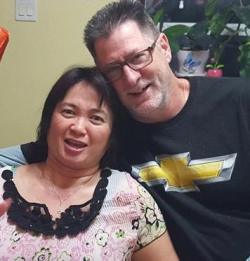
Michael Puffer (caregiver for his wife, Maria)
presented by
Donna O’Donnell Figurski


Puffer. Michael & Mari a

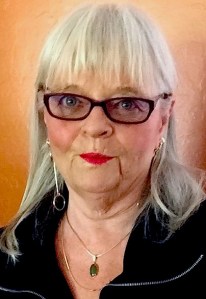
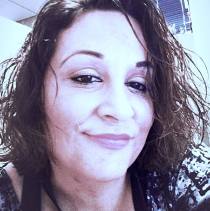
Maria Puffer – Brain Injury Survivor Michael Puffer – Caregiver for Maria

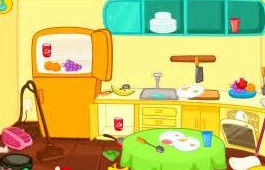
I came home after a long day and found what looked like a mess in the kitchen. I sat down and put my face in my hands and cried. I couldn’t believe what I came home to. I wasn’t angry, but I couldn’t stop the tears.

Twenty-three months ago, the state of the kitchen would not have been a remarkable finding. Tonight, it was truly unbelievable, and I was blown away!Messy Kitchen

Just under two years ago, I thought I had lost the most important person in my life. My loving wife, Maria Puffer, was in a horrific car accident. She suffered a severe traumatic brain injury and a spinal cord contusion, and she was in a coma at North Memorial Hospital near Minneapolis.

Ever since that day, Maria has fought to show us she is still with us and she is ever-determined to recover and get her life back. Week by week, day by day, hour by hour – she never quits, complains, or feels sorry for herself. Maria practices walking with a walker an hour a day, sometimes nearly falling asleep because she always wants to push herself. She thanks me every night for taking care of her. She shows all of us what true grit and love is.

Fruit_salad_clipartMaria asked me a few days ago where the Kitchen Aid mixer was. I told her it was in the pantry. The next day – there it was on the counter. Maria asked daughter Samantha to pick up the ingredients to make fruit salad. I told her we would make fruit salad over the weekend, but there never was time to do it.

Maria didn’t wait. She made the fruit salad by herself.

My tears were tears of joy and wonder. When she came into the kitchen, I reached out, gave her a huge hug, and said, “You are awesome!” (Maria is absolutely the strongest person I’ll ever know. I can’t believe how lucky I am to be in her life!)Man & Woman Hugging

We had dinner together and enjoyed the very best fruit salad in the world for desert.

I will try forever to be the best husband that I can be. I know I have the best wife, and she deserves the best from me.

14449717_1157500687641271_6923286480652057034_n


14358883_1157501060974567_1502463441729171801_n


14344307_1157501104307896_5377028616340304482_n


As I say after each post: Please leave a comment by clicking the blue words “Leave a Commentanim0014-1_e0-1 below this post.

Feel free to follow my blog. Click on “Follow” on the upper right sidebar.

If you like my blog, share intact it with your friends. It’s easy! Click the “Share” buttons below.

If you don’t like my blog, “Share” it intact with your enemies. I don’t care!

Feel free to “Like” my post

TBI Tales: . . . . . . . . . . . . . . . . . . . . I Tripped & Stumbled, but Did Not Fall by Donna O’Donnell Figurski

I Tripped & Stumbled, but Did Not Fall

by

Donna O’Donnell Figurski

Donna O’Donnell Figurski

Recently, as I got out of my car, I stumbled on the curb. Somehow in the darkness, I did not see it. Though the event took less than a second, one thought ran through my head. It was not, “Oh, no! I am going to break a bone or scrape my knee.” It was not, “What a klutz! I’ll ruin my clothes.” And it was not about how embarrassed I would be. All of those possibilities probably would have been my first thoughts – before brain injury entered my life when my husband had a traumatic brain injury in 2005.

Now my mind is only a thought away from brain injury. So, as I tripped and stumbled, but did not fall, my mind raced to, “Please don’t let me hit my head.” I didn’t care how silly I looked or about my clothes being ripped or about getting any broken bones (they would heal). I worried about getting a brain injury. I worried about how a brain injury could change my life forever. I worried that if I were hurt, I could not sufficiently care for my husband, who needs my daily attention. Yes, those thoughts did race through my head in that fleeting second.

It only takes a second for a brain injury to occur. Most brain injuries occur because of an accident. Though we may be aware of the possibility of accidents, they cannot all be avoided. Fortunately, my accident was avoided – just barely. I can only hope that my potential accidents will be few and far apart in the future. I hope yours will be too.

As I say after each post: Please leave a comment by clicking the blue words “Leave a Commentanim0014-1_e0-1 below this post.

Feel free to follow my blog. Click on “Follow” on the upper right sidebar.

If you like my blog, share intact it with your friends. It’s easy! Click the “Share” buttons below.

If you don’t like my blog, “Share” it intact with your enemies. I don’t care!

Feel free to “Like” my post

SPEAK OUT! . . . . . . . . . . . . . Itty-Bitty GIANT Steps!

SPEAK OUT! Itty-Bitty Giant Steps

presented by

Donna O’Donnell Figurski

Itty-Bitty GIant Steps for BlogSPEAK OUT! Itty-Bitty Giant Steps will provide a venue for brain-injury survivors and caregivers to shout out their accomplishments of the week.

If you have an Itty-Bitty Giant Step and you would like to share it, just send an email to me at neelyf@aol.com.

If you are on Facebook, you can simply send a Private Message to me. It need only be a sentence or two. I’ll gather the accomplishments and post them with your name on my blog approximately once a week. (If you do not want your last name to be posted, please tell me in your email or Private Message.)

I hope we have millions of Itty-Bitty Giant Steps.

Donna-David-1 copy

David Figurski – Brain Injury Survivor & Donna O’Donnell Figurski

Trash

Donna O’Donnell Figurski (caregiver)I came home from Drama Club ready to take the garbage out.  I was shocked to find that it had already been taken out.  David had done it!  First time since his TBI (traumatic brain injury) twelve years ago! YAY! Can you see my happy dance?Happy Dance

David Grant

David A. Grant – Brain Injury Survivor

David Grant (survivor) It was around two years ago this month that my ability to read returned. Last night, I again fell asleep with a book in my hands. Sure,Mann Reading in Bed my pace is a bit slower, but I’m doing it. Just passed the 300-page mark in an awesome book. (Thanks again, Nick!) I marvel at the fact that I can actually remember a long and complicated plot line, something I was incapable of for years after my accident. How can I not be profoundly grateful?

Note: David is the editor for the e-zine, “TBI Hope & Inspiration.” He is also the author of several books about brain injury. “Metamorphosis, Surviving Brain Injury” and “Slices of Life after Brain Injury

Metamorphosis

Metamorphosis, Surviving Brain Injury

Slices of Life

Slices of Life after Brain Injury

YOU did it!

Congratulations to contributors!

(Clip Art compliments of Bing.)

(Photos compliments of contributors.)

As I say after each post:anim0014-1_e0-1

Please leave a comment by clicking the blue words “Leave a Comment” below this post.

Feel free to follow my blog. Click on “Follow” on the upper right sidebar.

If you like my blog, share it intact with your friends. It’s easy! Click the “Share” buttons below.

If you don’t like my blog, “Share” it intact with your enemies. I don’t care!

Feel free to “Like” my post.

TBI Tales: Inspiration . . . . . . . . by Bonni Villarreal (caregiver)

Inspiration

by

Bonni Villarreal (caregiver)

presented by

Donna O’Donnell Figurski

Bonni Villarreal – Caregiver

March 21, 2012, is a day that changed my life forever. It started off like any average day. I got up and went to work. Mike was asleep when I left. I called him around 8:30 that morning to let him know I wouldn’t be at my desk, in case he tried to call me. He sounded fine. Then, just by chance, I happened to be at my desk at 10 am when my phone rang. It was Mike … telling me he was having a stroke.

By the time I got to the house, the ambulance was there. Mike was awake and reaching for me. I didn’t think it was too serious because Mike was alert and talking. But, by the time we got to the hospital, that had changed. The doctor informed me that Mike had a huge blood clot near his cerebellum, and he had to be life-flighted to another hospital because he was too critical to stay at the one he was at.


I had to sign papers for life-saving brain surgery. Mike was in a coma for ten days. We didn’t know if he would wake up, and, if he did, what condition he would be in. When he “woke up,” Mike wasn’t anything like the man I married. He stayed in the hospital for another month, and then he was transferred to a nursing home.

Those days were some of the darkest in my life. They treated Mike as if he were a hopeless case. I wonder what would’ve happened to him if I hadn’t been around.

Mike Villarreal – TBI Survivor

He was tube-fed, couldn’t speak (he wrote instead), and couldn’t walk. He was totally helpless. Plus, he was battling infection after infection. I didn’t think things would ever return to normal.

Fast forward to January 2017 – almost five years post stroke. Mike passed his barium swallow test, and he is having his G-tube removed! He is walking almost unassisted! He is talking! I told Mike, “You are an inspiration. You give hope to people who have lost it, you have renewed hope for people who are about to give up, and you keep hope alive for people who are just starting this long journey.”

Mike wants everyone to know – DON’T EVER, EVER, EVER GIVE UP. No matter if it’s been five, ten, or fifteen years. Keep hope alive! Mike did, and look how far he has come!

As I say after each post: Please leave a comment by clicking the blue words “Leave a Commentanim0014-1_e0-1 below this post.

Feel free to follow my blog. Click on “Follow” on the upper right sidebar.

If you like my blog, share intact it with your friends. It’s easy! Click the “Share” buttons below.

If you don’t like my blog, “Share” it intact with your enemies. I don’t care!

Feel free to “Like” my post

Caregivers SPEAK OUT! . . . . . Lori Strauss Heckman

Caregivers  SPEAK OUT!  Lori Strauss Heckman

(caregiver for her son, Bartholomew Wayne Nathaniel),

presented by

Donna O’Donnell Figurski

lori-strauss-heckman-caregiver-012017Three years ago, our lives were turned upside down when my then 21-year-old son had his accident. It has been a long road with many hurdles to overcome, but I am so proud of him. He is my hero and my greatest blessing. And, proof to never give up. We were told that he would probably not make it that night. We were also informed that, if he did, he would not have any quality of life. But, he proved everyone wrong! Many prayers were prayed and many tears were shed, and my son is still with us – and doing very well. The first and second photos are of my son after the accident; the third is him wearing a helmet in recovery; and the fourth photo is of him with his car. (Yes, my son is driving, and his seizures are under control.)

Meet Bartholomew Wayne Nathaniel

bartholomew-wayne-nathaniel-survivor-hospitalbartholomew-wayne-nathaniel-survivor-012017

16143907_1195056253863255_689473837_n

bartholmew-wayne-nathaniel-survivor-car

(Disclaimer: The views or opinions in this post are solely that of the interviewee.)

If you would like to be a part of the SPEAK OUT! project, please go to TBI SPEAK OUT! Caregiver Interview Questionnaire for a copy of the questions and the release form.

(Clip Art compliments of Bing.)

As I say after each post: Please leave a comment by clicking the blue words “Leave a Commentanim0014-1_e0-1 below this post.

Feel free to follow my blog. Click on “Follow” on the upper right sidebar.

If you like my blog, share it with your friends. It’s easy! Click the “Share” buttons below.

If you don’t like my blog, “Share” it with your enemies. I don’t care!

Feel free to “Like” my post.

SPEAK OUT! . . . . . . . . . . . . . Faces of Brain Injury . . . . . . . . . Carol Starke-Pyle (caregiver of her son, Thomas)

SPEAK OUT! Faces of Brain Injury – Carol Starke-Pyle

(caregiver of her son, Thomas)

presented

by

Donna O’Donnell Figurski

Brain Injury is NOT Discriminating!

bigstock-cartoon-face-vector-people-25671746-e1348136261718It can happen to anyone, anytime, . . . and anywhere.

The Brain Trauma Foundation states that there are 5.3 million people in the United States living with some form of brain injury.

On “Faces of Brain Injury,” you will meet survivors living with brain injury. I hope that their stories will help you to understand the serious implications and complications of brain injury.

The stories on SPEAK OUT! Faces of Brain Injury are published with the permission of the survivor or designated caregiver.

If you would like your story to be published, please send a short account and two photos to me at neelyf@aol.com. I’d love to publish your story and raise awareness for Brain Injury.

Carol Starke-Pyle (caregiver of her son, Thomas)

carol-starke-pyle-1

Carolyn Starke-Pyle – Caregiver for Brain Injury Survivor


This is my son’s story. Thomas was 43. He trained/rode horses for a living. He was very athletic, vivacious, funny, etc. He came to visit me one Sunday, and, as the day wore on, he became more and more delusional. I called an ambulance. My son knew his name, knew where he was, and walked to the ambulance. I followed to the Emergency Room. I was able to see Thomas twenty minutes later, as he was waiting in the cubicle. He could not talk – he babbled incoherently. He could not sit up or walk. He didn’t know me. He was admitted and was given many tests: a CT (computerized tomography) scan, an MRI (magnetic resonance imaging), and a spinal tap. The CDC (Centers for Disease Control) was called in. It was concluded that Thomas had brain damage. After two weeks, Thomas was transferred to a neurological center. He didn’t know how to swallow, he knew NO ONE, he was in a huge crib, and he was in diapers. More the-brain-hispinal taps and more MRIs. I was told his frontal lobe looked as if a bag of M&Ms had been tossed into it. Infectious/viral disease had been ruled out. It was determined that, due to numerous concussions from falls off horses, his brain had suffered too much damage – which was IRREVERSIBLE! I collapsed when his doctor said, “The Thomas you knew a month ago is no longer with us.” He continued to tell me that my vibrant son would need a nursing home for the rest of his life.

I went onto Facebook and shared my anguish and pleaded for prayers. A prayer chain encircled the globe. Meanwhile, I attended TBI (traumatic brain injury) seminars and met with social workers and more doctors to find a special nursing home for Thomas. Two months later, on my visit, his nurse grinned and said she had a surprise. Thomas was standing up! The next week, he was walking, then talking (he made little sense, but … !), then recognizing us, and then eating by himself. As I was a teacher, I chose to stick up all sorts of stimuli – photos of family, friends, pets, and horses. horse_adoptable_bay_animated_by_hikari_yumi-d5hrf17Thomas slowly improved (contrary to the opinions of ALL specialists). After four months, with short-term memory loss and some loss of intelligence, Thomas was released. I asked his doctor to explain. He looked at me and quietly said, “It is a miracle!”

My son is back to work with horses, has absolutely NO memory of the hospital, has a touch believe-clip-art-at-clker-com-vector-clip-art-online-royalty-free-qep8hi-clipartof short-term memory loss, and is as bright as he always was. BELIEVE IN MIRACLES! I am praying for YOU ALL!


(Disclaimer: The views or opinions in this post are solely that of the interviewee.)

If you would like to be a part of the SPEAK OUT! project, please go to TBI SPEAK OUT! Caregiver Interview Questionnaire for a copy of the questions and the release form.

(Clip Art compliments of Bing.)

As I say after each post: Please leave a comment by clicking the blue words “Leave a Commentanim0014-1_e0-1 below this post.

Feel free to follow my blog. Click on “Follow” on the upper right sidebar.

If you like my blog, share it with your friends. It’s easy! Click the “Share” buttons below.

If you don’t like my blog, “Share” it with your enemies. I don’t care!

Feel free to “Like” my post.

Survivor/Caregiver ………… SPEAK OUT! Cyndy Davy Feasel, wife of Grant Feasel

Survivors/Caregivers  SPEAK OUT! 

Cyndy Davy Feasel, wife of Grant Feasel

presented by

Donna O’Donnell Figurski

Note: This interview is by Cyndy Feasel, the wife of Grant Feasel, who died of brain disease obtained from playing football. Some answers apply to Cyndy, and some, to Grant. I have made it obvious to whom the answer applies.


Cyndy Davy Feasel - spouse of Grant Feasel, a former Seattle Seahawks Center

Cyndy Davy Feasel – spouse of Grant Feasel, a former Seattle Seahawks Center

1. What is your name? (last name optional)

My name is Cyndy Davy Feasel, wife of Grant Feasel, who succumbed to brain disease.

2.Where do you live? (city and/or state and/or country) Email (optional)

Ft. Worth, Texas, USA

3. On what date did you have your brain injury? At what age?

There was no single event that was responsible for Grant’s brain injury. It occurred from years of playing football. Concussions had a role.

4. How did your brain injury occur?

Playing football (See the answer to the previous question.)

5. When did you (or someone) first realize you had a problem?

We knew Grant had a problem about age 40.

6. What kind of emergency treatment, if any, did you have?

Grant Feasel, former Seattle Seahawks Center diagnosed with CTE

Grant Feasel, former Seattle Seahawks Center diagnosed with CTE

None. Grant used drugs and alcohol to numb the pain.

7. Were you in a coma? If so, how long?

Grant was never in a coma.

8. Did you do rehab? What kind of rehab (i.e., inpatient or outpatient and occupational and/or physical and/or speech and/or other)? How long were you in rehab?

No

9. What problems or disabilities, if any, resulted from your brain injury
(e.g., balance, perception, personality, etc.)?

Grant had some speech difficulties. He stuttered often and repeated himself as the CTE (chronic traumatic encephalopathy) worsened. Grant also had problems with his vision and balance. His personality changed over the years. He had difficulty thinking and completing tasks. He showed impulsive behavior, irritability, and aggression towards me!

10. How has your life changed? Is it better? Is it worse?

(No answer)

11. What do you miss the most from your pre-brain-injury life?

Cyndy: I miss my normal family life.

12. What do you enjoy most in your post-brain-injury life?

(No answer)

13. What do you like least about your brain injury?

Cyndy Davy Feasel and spouse, Grant Feasel former Seattle Seahawk

Cyndy Davy Feasel and spouse, Grant Feasel former Seattle Seahawk

Cyndy: Grant died in 2012. I miss who he was when we met in 1982.

14. Has anything helped you to accept your brain injury?

Cyndy: Raising awareness is helping to ease the pain of a lost life.

15. Has your injury affected your home life and relationships and, if so, how?

Cyndy: My family was destroyed.

16. Has your social life been altered or changed and, if so, how?

Cyndy: I was sad for years about the life I lost in the midst of Grant’s brain damage.

17. Who is your main caregiver? Do you understand what it takes to be a caregiver?

(No answer)

18. What are your plans? What do you expect/hope to be doing ten years from now?

Cyndy: I intend to be an advocate who increases awareness about concussions and brain injury.

After the Cheering Stops by Cyndy Davy Feasel

“After the Cheering Stops” by Cyndy Davy Feasel

19. Are you able to provide a helpful hint that may have taken you a long time to learn, but which you wished you had known earlier? If so, please state what it is to potentially help other survivors with your specific kind of brain injury.

Cyndy: Educate yourself! Please ask your doctor for his or her opinion about your child’s safety before your child plays a head-banging sport.

20. What advice would you offer to other brain-injury survivors? Do you have any other comments that you would like to add?

Cyndy: Seek knowledge! Find a group for support.


(Disclaimer: The views or opinions in this post are solely that of the interviewee.)

If you would like to be a part of the SPEAK OUT! project, please go to TBI SPEAK OUT! Caregiver Interview Questionnaire for a copy of the questions and the release form.

(Clip Art compliments of Bing.)


As I say after each post: Please leave a comment by clicking the blue words “Leave a Commentanim0014-1_e0-1 below this post.

Feel free to follow my blog. Click on “Follow” on the upper right sidebar.

If you like my blog, share it with your friends. It’s easy! Click the “Share” buttons below.

If you don’t like my blog, “Share” it with your enemies. I don’t care!

Feel free to “Like” my post.

Caregivers SPEAK OUT! Bob Millsap

Caregivers SPEAK OUT! Bob Millsap

presented

by

Donna O’Donnell Figurski

Bob Millsap - Caregiver

Bob Millsap – Caregiver

1. What is your name? (last name optional)

Bob Millsap

2. Where do you live? (city and/or state and/or country) 

Glendale, Arizona, USA

Email? (optional)

robertemillsap@gmail.com

3. What is the brain-injury survivor’s relationship to you? How old was the survivor when he/she had the brain injury? What caused your survivor’s brain injury?

My wife, Shelly, is the brain-injury survivor. She was 46. It happened because of a freak accident in our home – a bottle of homemade ginger-ale exploded just as Shelly walked by. It broke her nose and bruised her face, but the TBI (traumatic brain injury) symptoms did not become apparent for two weeks.

4. On what date did you begin care for your brain-injury survivor? Were you the main caregiver? Are you now? How old were you when you began care?

I began care on January 17, 2013. I was 45. I was then and am now Shelly’s main caregiver.

5. Were you caring for anyone else at that time (e.g., children, parents, etc.)?

Yes. Our boys were 12 and 18 at the time.

6. Were you employed at the time of your survivor’s brain injury? If so, were you able to continue working?

Yes. I worked many hours. I had an employer who was not very understanding. This was very challenging. It made me re-evaluate things career-wise.

7. Did you have any help? If so, what kind and for how long?

No. We lived at the time in Victor, Idaho (near Jackson Hole, Wyoming). We were in a very rural area. There was no family support near us.

8. When did your support of the survivor begin (e.g., immediately – in the hospital; when the survivor returned home; etc.)?

My support started once my wife’s TBI symptoms became apparent.

9. Was your survivor in a coma? If so, what did you do during that time?

Shelly was unconscious for twenty minutes.

10. Did your survivor have rehab? If so, what kind of rehab (i.e., inpatient and/or outpatient and occupational, physical, speech, and/or other)? How long was the rehab? Where were you when your survivor was getting therapy?

Shelly had to relearn to walk and talk. She worked with a couple of alternative
providers that we will always be thankful for. She continues to do home therapy.

11. What problems or disabilities of your brain-injury survivor required your care, if any?

Shelly has severe PTSD (post-traumatic stress disorder), so I help any way possible for this. I try to keep daily life as simple and consistent as possible, with constant support and advocacy. I do the driving and I manage her medications.

12. How has your life changed since you became a caregiver? Is it better? Is it worse?keep-calm

It hurts so much to witness Shelly live this every day. But I am more patient and understanding as a person. I don’t sweat the small things as I used to.

13. What do you miss the most from pre-brain-injury life?

I miss Shelly’s being able to live life without fear.

14. What do you enjoy most in post-brain-injury life?

I like that the deep bond in our immediate family has strengthened.

15. What do you like least about brain injury?

I dislike knowing that Shelly must face challenges every day.

16. Has anything helped you to accept your survivor’s brain injury?

Dealing with this has been made possible by our faith in God, our love for each other, and Shelly’s AMAZING outlook. I never see her feeling sorry for herself. It’s amazing and inspiring.

17. Has your survivor’s injury affected your home life and relationships and, if so, how?iloveuredflyingheartsgifanimatedimagesfreedownloadbannerlove-gifphotographicclipartmobileiphoneipadscreensaverbackgroundfreeclipartanimationgifmaniahd3diloveyou

Our relationship is stronger than ever. It has really given us perspective on what is important. Our two boys are very compassionate and understanding. I am very proud of how they handle this.

18. Has your social life been altered or changed and, if so, how?

We moved back to Arizona earlier this year, and that has been great for Shelly! It was lonely for her in rural Idaho, even before the accident. Some of her friends have been
GREAT once she got back here. Others … not so much. We try to make
sure to stay out of loud, chaotic, or unpredictable situations. We adjust to our new normal. Shelly’s TBI is truly an invisible injury, so some friends and family understand … some do not.
19. What are your plans? What do you expect/hope to be doing ten years from now?

I would love to see Shelly be able to have a rewarding, peaceful life outside of the home. She is such a kind and helpful person. I always believe there is a way that her experience with TBI and PTSD can greatly help others.

20. What advice would you offer other caregivers of brain-injury survivors? Do you have any other comments that you would like to add?

Shelly Millsap - Brain Injury Survivor Bob Millsap - Caregiver

Shelly Millsap – Brain Injury Survivor
Bob Millsap – Caregiver

Take one day at a time. Be patient. Ask questions of the medical and rehab communities. Search for answers. Try not to ask “Why me?” and feel sorry for yourself. Rid yourself of negative situations and negative people. Be flexible and have thick skin. Find support-groups to become involved with.

(Disclaimer: The views or opinions in this post are solely that of the interviewee.)

If you would like to be a part of the SPEAK OUT! project, please go to TBI SPEAK OUT! Caregiver Interview Questionnaire for a copy of the questions and the release form.

(Clip Art compliments of Bing.)

As I say after each post: Please leave a comment by clicking the blue words “Leave a Commentanim0014-1_e0-1 below this post.

Feel free to follow my blog. Click on “Follow” on the upper right sidebar.

If you like my blog, share it with your friends. It’s easy! Click the “Share” buttons below.

If you don’t like my blog, “Share” it with your enemies. I don’t care!

Feel free to “Like” my post.

Caregivers SPEAK OUT! . . . Lynn Sandoval

Caregivers  SPEAK OUT!  Lynn Sandoval

presented by

Donna O’Donnell Figurski


Lynn Sandoval - Caregiver

Lynn Sandoval – Caregiver

1. What is your name? (last name optional)

Lynn Sandoval

2. Where do you live? (city and/or state and/or country) Email? (optional)

Brady, Texas, USA

3. What is the brain-injury survivor’s relationship to you? How old was the survivor when he/she had the brain injury? What caused your survivor’s brain injury?

The brain-injury survivor is my husband. He was 39 years old when he had the brain injury. He was in an automobile accident. His car was hit twice, once head-on. The first car hit my husband’s car at ~95 mph. This hit spun my husband’s car around, and a second car, following the first car, hit my husband’s car in the rear at ~85 mph. My husband’s car was spun back around and finally came to a rest in the middle of the road.

4. On what date did you begin care for your brain-injury survivor?

I began care the day after my husband’s accident – when I was able to get to the hospital where he had been flown.

Were you the main caregiver?

In the beginning, my husband had hospital care in addition to mine.

Are you now?

I have been my husband’s only caregiver since he came home from the hospital.

How old were you when you began care?

I was 52.

5. Were you caring for anyone else at that time (e.g., children, parents, etc.)?

No

6. Were you employed at the time of your survivor’s brain injury? If so, were you able to continue working?

Yes, I was employed. I have been able to utilize FMLA (Family and Medical Leave Act) and sick leave. I have continued working whenever I am able to.

7. Did you have any help? If so, what kind and for how long?

I have not had any help at home caring for my husband.

8. When did your support of the survivor begin (e.g., immediately – in the hospital; when the survivor returned home; etc.)?

My support began in the hospital, and it continues to this day.

9. Was your survivor in a coma? If so, what did you do during that time?

My husband was in a coma the first few days. While he was in a coma, I stayed by his bedside and talked to him. I touched him on the areas that weren’t bandaged to let him know I was there.

10. Did your survivor have rehab? If so, what kind of rehab (i.e., inpatient and/or outpatient and occupational, physical, speech, and/or other)?

My husband had physical, speech, and occupational therapies in the hospital. They continued when we got home, once I got him set up for evaluations.

How long was the rehab?

k20116138My husband is still in physical therapy, and he recently started occupational therapy again. (He had “graduated” from occupational therapy about a year ago, but his neurologist requested that he do it again.)

Where were you when your survivor was getting therapy?

I was there with my husband during the beginning therapies, but after some time, he went to the therapies alone. Now we work together on exercises at home.

 11. What problems or disabilities of your brain-injury survivor required your care, if any?

Now my husband is able to do things for himself, but I still have to get his medications together for him every day because he doesn’t remember if he’s taken them or not.diabetes_medications

12. How has your life changed since you became a caregiver? Is it better? Is it worse?

Since I’ve become a caregiver, I have discovered that people will withdraw from situations because they don’t understand TBI (traumatic brain injury). It has its ups and downs, but we are now seeing more positive steps and are hopeful for the future. I have found that I am more depressed and feel alone because I am more involved with making sure everything is OK for my husband, but I am learning to take time for me.

13. What do you miss the most from pre-brain-injury life?

Life before my husband’s TBI was a lot less stressful – being able to leave the house and not worry if he is OK. Now I keep my phone with me continuously so that, if he needs something, he can call and I’ll be there for him.

14. What do you enjoy most in post-brain-injury life?

I am grateful that I still have my husband with me.

15. What do you like least about brain injury?

I dislike the frustration and confusion that my husband feels when he is trying to remember something and he can’t.

16. Has anything helped you to accept your survivor’s brain injury?

Yes – support-groups and reading – and more reading – on anything and everything I can find about TBI and about what can and can’t be beneficial – not only for him, but for us and our relationship.

17. Has your survivor’s injury affected your home life and relationships and, if so, how?

Yes. I find I am hyper-aware of anything and everything my husband does in an effort to keep him safe. The relationships with his family and friends have become nonexistent. It hurts my husband so much to feel that no one cares about him.

18. Has your social life been altered or changed and, if so, how?

Yes. We don’t go out much anymore because my husband doesn’t like being in large, noisy crowds and because it is difficult for him to stand or walk for extended periods of time.

19. What are your plans? What do you expect/hope to be doing ten years from now?

My husband’s plans are to hopefully get approved for disability insurance and then to return to his job (that they are holding for him) part-time so that he can financially contribute to our family. My plans, if we are able to get some additional income instead of just mine (which has been our income for almost the last two years), would be to find a job to use my Master’s Degree. I just completed my degree program this past year in psychology. I’d like to work with other traumatic-brain-injury survivors and help advocate for them. Here in our small town, nothing is available.
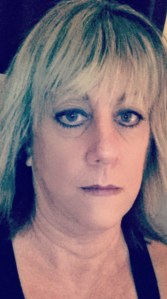
Lynn Sandoval - Caregiver

Lynn Sandoval – Caregiver

20. What advice would you offer other caregivers of brain-injury survivors? Do you have any other comments that you would like to add? 

I would say that, despite the difficulties in being a caregiver, caregiving can be rewarding – when together you see the progress your survivor is making because of his or her drive and determination and because of the support and love that you give him or her. It is tiring, it can be frustrating, and you may feel like screaming – these are all normal responses. The key is to remember to take a moment, to try to take care of yourself (this is the hardest thing), and to believe in each other.


(Disclaimer: The views or opinions in this post are solely that of the interviewee.)

If you would like to be a part of the SPEAK OUT! project, please go to TBI SPEAK OUT! Caregiver Interview Questionnaire for a copy of the questions and the release form.

(Clip Art compliments of Bing.)


As I say after each post: Please leave a comment by clicking the blue words “Leave a Commentanim0014-1_e0-1 below this post.

Feel free to follow my blog. Click on “Follow” on the upper right sidebar.

If you like my blog, share it with your friends. It’s easy! Click the “Share” buttons below.

If you don’t like my blog, “Share” it with your enemies. I don’t care!

Feel free to “Like” my post.
SPEAK OUT! Are You Kidding Me?

SPEAK OUT! Are You Kidding Me?

“The Resilient Soul”

presented

 by

Donna O’Donnell Figurski


"The Resilient Soul" by Karen Leavitt (My story, "A Living Nightmare" - page 132)

The Resilient Soul” by Karen Leavitt (My story, “A Living Nightmare” – page 132)

I recently submitted a story to David Grant, editor of Karen Leavitt’s book, “The Resilient Soul.”

With crossed fingers – well, all appendages were crossed actually – I waited to hear whether my story, “A Living Nightmare,” would be accepted.

When I saw David Grant’s post on Facebook, I jumped for joy, which made my tears of joy fly off my face in every direction – a funny sight!


David’s comment:

David A. Grant - Brain Injury Survivor & Author

David A. Grant – Brain Injury Survivor & Author

BOOK PROJECT UPDATE…

Working on wrapping up book production for author and international radio personality Karen Leavitt.

Karen’s new book, The Resilient Soul, will be available on Amazon later this month.

Think of her upcoming title as a bit like a Chicken Soup for the Soul book – only on steroids. I marvel at the stories of humanity as seemingly insurmountable odds are beaten – again and again.

Today I wrapped up a few edits for a story contributed by Donna ODonnell Figurski. Until today, I never knew the depth of Donna’s struggle to regain a new footing in life.

Like Sarah, Donna has a David of her own, one she has stuck by though the toughest of times. I was moved to tears. Such amazing courage!

How blessed am I to play a small part in bringing such amazing stories of hope and perseverance to humanity?

~David


I hope you will find my story of value. I am so humbled and elated to be included in this volume. The stories are by amazing people who are facing all odds.

Click to see  Karen Leavitt’s book, “The Resilient Soul.” My story, “A Living Nightmare” is on page 132. But read the whole book. It’s great!


(Clip Art compliments of Bing.)

(Photos compliments of the contributors.)


As I say after each post: Please leave a comment by clicking the blue words “Leave a Commentanim0014-1_e0-1 below this post.

Feel free to follow my blog. Click on “Follow” on the upper right sidebar.

If you like my blog, share it with your friends. It’s easy! Click the “Share” buttons below.

If you don’t like my blog, “Share” it with your enemies. I don’t care!

Feel free to “Like” my post.
diemodi jewelry

uniquely hand-crafted jewelry by donna

Welcome to Harmony Kent Online

The home of all things books

Pete Springer

Passionate Teacher and Future Children's Author

HOPE TBI

Helping Other People Excel - To Be Independent

For the Love of Books, Old and New

Katie Fischer, Writer and Reader of Stories

Charlie Bown

Children's Author

Jessica Hinrichs

“We write to taste life twice, in the moment and in retrospect.” ― Anais Nin

VIVIAN KIRKFIELD - Writer for Children

Picture Books Help Kids Soar

Mindy’s Writing Wonderland

For authors, parents, teachers & everyone who loves children’s books.

Kaitlyn Leann Sanchez

Literary Agent

Surviving Traumatic Brain Injury

TBI - Survivors, Caregivers, Family, and Friends

The Care Factor

Loving someone with a Traumatic Brain Injury

Brain Injury Support Group of Duluth-Extension

Brain Injury Information and SUPPORT

Brain Aneurysm Global Insight

Brain Aneurysm, cerebral hemorrhaging, hemorrhage stroke