TBI – Survivors, Caregivers, Family, and Friends

Posts tagged ‘Survivng Traumatic Brain Injury’

SPEAK OUT! . . . . . . . . . . . . . Itty-Bitty GIANT Steps

SPEAK OUT! Itty-Bitty GIANT Steps

presented by

Donna O’Donnell Figurski


Itty-Bitty GIant Steps for BlogSPEAK OUT! Itty-Bitty Giant Steps will provide a venue for brain-injury survivors and caregivers to shout out their accomplishments of the week.

If you have an Itty-Bitty Giant Step and you would like to share it, just send an email to me at neelyf@aol.com.

If you are on Facebook, you can simply send a Private Message to me. It need only be a sentence or two. I’ll gather the accomplishments and post them with your name on my blog approximately once a week. (If you do not want your last name to be posted, please tell me in your email or Private Message.)

I hope we have millions of Itty-Bitty Giant Steps.


Here is this week’s Itty-Bitty GIANT Steps

Jump for JoyKaren Dickerson (survivor)…OMG! I was crying and jumping up and down (LOL). I passed my college entrance exam! Even better: 93% in English/Writing! Here I come, Baker College of Michigan, to become an Occupational Therapist Assistant. There is hope!Bakers College

Two years ago, after my motor vehicle accident, I couldn’t even process what I was reading, and I had to learn how to write my name again. I’ve worked very hard to get that comprehension back. I had over two years of speech and occupational therapies. Math is still a problem, just like it was twenty-one years ago. But I’m so proud. I didn’t think that I would ever reach this point after my TBI (traumatic brain injury).


writing pencil animated

Ric Johnson (survivor)…Well, it took me two months, but I was able to write an article concerning the importance of support-groups for the recovery and healing of TBI survivors. I have it published in the TBI Hope TBI Hope & INspiration& Inspiration magazine, June 2016 edition.


FamilyElizabeth Leonard Lawrence (survivor)…I am twelve years post TBI from an accident I got while serving in the military. I was told by doctors that I would never have a family, that I would never drive a car, and that I would take multiple pills a day for the rest of my life. Well guess what! I have a wonderful husband of three years, a three-year-old little boy, and I only take one medication now. So overall, I’d say it’s a huge accomplishment in my life!


Jennifer Stokley (survivor)…I had the most amazing day. I actually went out without any fear with a friend who has been coming over for a while to do “talk therapy” with me. She asked me if I wanted to go over to her farm, and I immediately said, “Yes!” Farm

Out the door I went – no cane, just my coffee in hand and a smile on my face. I totally trust this person; I’ve gotten to know her well. In the car we went. Away… to a place I’ve never been to before. A real farm! WOW! We spent hours there. She cleaned out the stalls, while I sat on the grass watching the cows in the field near the pond. It was beautiful.Cow Then she came, and together, while sitting and lying on the grass, we spent the longest time just talking about anything and everything. It was absolutely the best time. I loved every second of it. I didn’t have a moment of anxiety pop up. I can’t wait to do it again. We intend to real soon.


YOU did it!

Congratulations to contributors!

(Clip Art compliments of Bing.)

As I say after each post:anim0014-1_e0-1

Please leave a comment by clicking the blue words “Leave a Comment” below this post.

Feel free to follow my blog. Click on “Follow” on the upper right sidebar.

If you like my blog, share it intact with your friends. It’s easy! Click the “Share” buttons below.

If you don’t like my blog, “Share” it intact with your enemies. I don’t care!

Feel free to “Like” my post.

Survivors SPEAK OUT! . . . . . . Jamie Crane-Mauzy

Survivors SPEAK OUT! Jamie Crane-Mauzy

presented

by

Donna O’Donnell Figurski
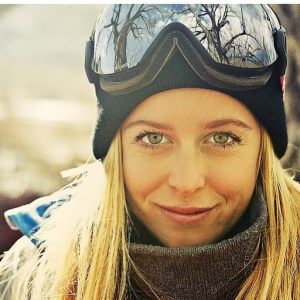


#1 Jamie 5

Jamie Crane-Mauzy – Brain Injury Survivor & Professional Skier

1. What is your name? (last name optional)

Jamie Crane-Mauzy

2. Where do you live? (city and/or state and/or country) Email (optional)

Park City, Utah, USA

3. On what date did you have your brain injury? At what age?

I had a traumatic brain injury (TBI) on April 11, 2015. I was 22 years old.

4. How did your brain injury occur?

I was competing at the world-tour finals in Whistler, Canada. I got 4th first run, and I wanted to upgrade my off-axis backflip to an off-axis double backflip. I under-rotated, caught the edge of my ski, and whiplashed my head into the snow. My brain started bleeding in eight spots. I hurt my right brainstem, so my right side was paralyzed. I started convulsing and slipped into a coma.
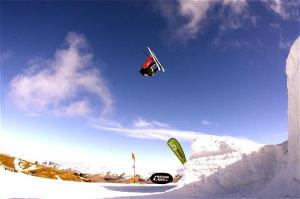
#4 Jamie Crane-Mauzy In Air

Jamie Crane-Mauzy – Brain Injury Survivor & Professional Skier

5. When did you (or someone) first realize you had a problem?

Immediately. I started convulsing on the snow. First Response came, and it was obvious at the moment that I was in serious trouble. I was convulsing in a way that usually only happens on the verge of death. After I left in the helicopter, my First Response wrote up my fatality report. They though I had a “one in a miracle” chance of surviving. For the first few days, the doctors didn’t know if I was going to survive. After it became clear I was going to survive, they weren’t sure if I would ever walk or drive. They didn’t think I would be able to go back to sporting activities, accomplish anything, or live a normal life.

6. What kind of emergency treatment, if any, did you have?

I became the first person in all of North America (I was in Canada at the time) to be treated with an oxygen-analyzing brain bolt. I didn’t have to have any of my skull removed because I had extra space for my brain to swell into. (See, I am a certified airhead. ;)) I didn’t break any bones or tear any ligaments.

7. Were you in a coma? If so, how long?

I was in a coma for around ten days. I was aware for seconds, when I was flying from Vancouver to Salt Lake City, but I then slipped back into the coma.
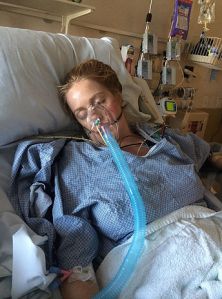
#3 Jamie 7

Jamie Crane-Mauzy – Brain Injury Survivor & Professional Skier

8. Did you do rehab? What kind of rehab (i.e., inpatient or outpatient and occupational and/or physical and/or speech and/or other)? How long were you in rehab?

I did two weeks of inpatient therapy. Then I left the hospital and did two months of five-days-a-week therapy. Each day, I did three hours of therapy – one hour each of occupational therapy, physical therapy, and speech therapy. Then I always say I did about five hours of my mom’s therapy. I had to relearn Rosetta Stone in English; I had to use a hand-strengthener; and I had to do Algebra 1, read, write, and do Lumosity. And then, outside of my regular physical therapy, I would do light workouts with a physical trainer three times a week. I would also do modest activities, like go for a one-quarter-mile hike.

9. What problems or disabilities, if any, resulted from your brain injury
(e.g., balance, perception, personality, etc.)?

I have no permanent damage. The emotional damage took the longest to heal.

10. How has your life changed? Is it better? Is it worse?

I am more aware about life. I used to be a “park rat,” just interested in skiing. I never really thought past a year, so I was very focused just on the next year of skiing. Now I am aware of my future. I feel it’s important to relax and have fun and not want to make my life in one year. I want to develop a career as a motivational speaker. I now know what I am looking for out of life, and I believe it’s moving positively. I have an incredible story to tell, so I am doing media conventions and television interviews. For the first year, I did lots of healing. Now I am sharing my story. I believe sometimes my  TBI was the best thing that ever happened to me because now I have a way to share a motivational story.

11. What do you miss the most from your pre-brain-injury life?

I honestly don’t miss much. I can ski, flip, and spin again. I had a lot of emotional issues, but I worked through them all. So now I am just a 23-year-old girl. I don’t know how my life will turn out, but I am accomplishing as many goals as I can.

12. What do you enjoy most in your post-brain-injury life?

I enjoy several things: the opportunities presented to me to be able to showcase an inspiring motivational story, how happy relearning everything has made me, and how much I have grown up and evolved in one year.

13. What do you like least about your brain injury?sport-graphics-skiing-020331
I dislike never being able to compete and go to Dew Tour and X-Games again. A TBI is not like tearing your knee, which sucks, but has an eight-month recovery. It’s a fact that TBI changes your life. You can make it as beneficial of a change as you can. But it did change, and there is no going back to being the exact person you were before the accident.

14. Has anything helped you to accept your brain injury?

A lot. My family has supported and helped me in a way I will owe them for life. The ski industry has kept me relevant. (For example, I was a guest athlete-announcer at the winter Dew Tour.) Since my accident, everyone has wanted to help me, which has been crazy. Now I am going to the University at Westminster College. I am working at the National Ability Center and setting goals and having accomplishments. Doing flips and spins on the water ramps again has made me so happy. The hardest part for me is dealing with all the emotions – knowing that, once you hit your head, you physically change your emotions and knowing that I was a competitive freestyle skier whose life was competing on the world tour. It’s important to remember every time it’s hard that there are still doors – grab the handles and walk through. I am only 23 and still have an incredible life to live! No one knows where this life will go. (Maybe someone reading this will recommend me to those in charge of their corporate special events who want to hire a public speaker.)

15. Has your injury affected your home life and relationships and, if so, how?

My home life and my family have been fabulous. It has changed every week, but it is solid now and has been good for a while. What hit me the most was boys. I usually don’t fall for a boy very easily, but all of a sudden I became obsessed and needy. I wanted someone to save me. I wanted to find the man of my dreams, have him save me, and get married in the future, but fall in love right now. Then I realized that’s not me. I have opportunities, standards, and my own life. I never before wanted to find the one, and I don’t now. I have so much going in my life. I am back to being busy, and it will all work out. When I’m not looking in the future, I might find someone I want to be with. Now I’m my own best friend, and I need no one else to save me.

16. Has your social life been altered or changed and, if so, how?

#2 Jamie 6.jpg

Jamie Crane-Mauzy – Brain Injury Survivor & Professional Skier

Going back to what I wrote before, I fell for a lot of boys I was friends with. Because everyone was so happy I was alive, no one told me “no.” They would say, “Yes, let’s hang out” and then blow me off. Now I won’t even approach them to give them the time of day. If someone generally wants to spend time with me, they have to reach out and contact me. If someone doesn’t say what’s on his mind, we can never have a genuine friendship. Many were egotistical, but it made them feel better to always agree with me because I was alive and had almost died. People are beginning to treat me normally again. I really missed how everyone would be overly nice and how no one would tease me, make jokes, or “pull my leg.” I never realized I would miss it so.

17. Who is your main caregiver? Do you understand what it takes to be a caregiver?

My main caregiver is my mom. She doesn’t have to take care of me now, but, yes, I do understand how I will owe her for the rest of my life. My mom is the reason I fully recovered. Back when I did three hours of outpatient therapy every weekday, I did five hours of my mom’s therapy. She made me learn Rosetta Stone in English, squeeze a hand-strengthener, do Algebra 1 again, read, write, do Lumosity every day, go for a quarter-mile “hike,” do yoga – three poses and a half hour of Shavasana (the Corpse Pose in yoga, which rejuvenates body, mind, and spirit), and more. I will owe her for more than I can ever repay. There are no words to say how much I owe her for taking care of me and allowing me to heal back to who I was before.

18. What are your plans? What do you expect/hope to be doing ten years from now?

Well, I have decided I don’t focus on long-term goals. I focus on making sure that every day I set one little goal I can accomplish and take baby steps in the direction I want to go. I went to the American Academy of Dramatic Arts in Hollywood. I have already done television interviews, and I have media conferences scheduled. I would love to move in the film direction, be on the Ellen Show, do a TED talk, be on talk shows, and spread the message that you can be and accomplish what you want if you focus on taking baby steps and not get stressed out about how far it is to go. I would also love to start getting paid for public-speaking gigs, start filming and tell a motivational story for my segments in ski films, and find someone who sets and accomplishes his own goals (someone who feels our happiness coincides; who loves the mountains, skateboarding, surfing, and being active; who believes our lives just fit in together; and who has the capabilities to go on adventures around the world with me). I want to stay as content as possible and strong and healthy. My future life has so many possibilities. My number one goal is to stay alive and strong and live out my life.
ski-clip-art-ski-clip-art-619. Are you able to provide a helpful hint that may have taken you a long time to learn, but which you wished you had known earlier? If so, please state what it is to potentially help other survivors with your specific kind of brain injury.

My biggest hints are the following:

Believe in yourself. Your doctor might not; your boss might not; your CEO might not; but, if deep, deep down you believe you are going to be OK, it will happen. There are many different levels that are “OK,” but you will be content with yourself.

It’s scary to think how far you have to go and to wonder why this happened to you. So focus on just the short-term. Set one short-term goal you actually can accomplish, and take baby steps in the direction you want to go.

What advice would you offer to other brain-injury survivors? Do you have any other comments that you would like to add?

Find something that makes you happy. Then go and do it. (For me, it was getting busy, accomplishing goals, and doing sports.) And smile as big as you can.


For motivational speaking gigs and media please reach out! MoCrazyStrong@gmail.com


If you would like to be a part of the SPEAK OUT! project, please go to TBI Survivor Interview Questionnaire for a copy of the questions and the release form.

(Clip Art compliments of Bing.)

(Photos compliments of contributor.)


As I say after each post:

Feel free to leave a comment by clicking the blue words “Leave a Comment” below this post.

Please follow my blog. Click on “Follow Me Via eMail” on the right sidebar of your screen.anim0014-1_e0-1

If you like my blog, click the “Like” button under this post.

If you REALLY like my blog, share it intact with your friends. It’s easy! Click the “Share” buttons below.

If you don’t like my blog, “Share” it intact with your enemies. That works for me too!


Survivors SPEAK OUT! . . . Abi

Survivors SPEAK OUT! Abi

presented

by

Donna O’Donnell Figurski


Abigail

Abi – brain injury survivor

1. What is your name? (last name optional)

Abi

2. Where do you live? (city and/or state and/or country) Email (optional)

Columbia City, Indiana, USA

3. On what date did you have your brain injury? At what age?

I had my TBI (traumatic brain injury) at age 20.

4. How did your brain injury occur?

I was hit by a freight train in a suicide attempt.

5. When did you (or someone) first realize you had a problem?

I knew I had a problem when I started speaking, as my voice pitch changed quite a bit. Also, when I was asked to remember things from the day before, I had trouble doing so.

6. What kind of emergency treatment, if any, did you have?

I was taken to a hospital right away. In addition to the problems noted above, I also had a messed up back and an amputated right arm, so those were tended to right away. I was also immediately given stitches to close up a wound on my head.

7. Were you in a coma? If so, how long?

I don’t think I was in a coma, but I don’t recall very well the two days after my incident.

8. Did you do rehab? What kind of rehab (i.e., inpatient or outpatient and occupational and/or physical and/or speech and/or other)? How long were you in rehab?

I had occupational therapy, physical therapy, and speech therapy both as an inpatient and as an outpatient. I was in the rehab inpatient therapy for at least six weeks. I was in outpatient therapy even longer, but the outpatient therapy focused more on my missing arm. I also had in-home therapy.

9.What problems or disabilities, if any, resulted from your brain injury
(e.g., balance, perception, personality, etc.)?

I have poor balance and slurred speech. I experience personality changes.

10. How has your life changed? Is it better? Is it worse?

I believe my life has changed for the better, as I’ve met so many who are worse off than me.

11. What do you miss the most from your pre-brain-injury life?

I miss nothing from my pre-brain-injury life, as my personality changed for the good. But I do miss people understanding me.

12. What do you enjoy most in your post-brain-injury life?

Abigail 2

Abi – brain injury survivor

I like to meet others with a TBI and other disabilities.

13. What do you like least about your brain injury?

I dislike my slurred speech and sounding different than I used to.

14. Has anything helped you to accept your brain injury?

Yeah – meeting those worse off

15. Has your injury affected your home life and relationships and, if so, how?

I’m much better, as I’m more social.

16. Has your social life been altered or changed and, if so, how?

Yeah. I went from being deathly shy to a social butterfly.

17. Who is your main caregiver? Do you understand what it takes to be a caregiver?

My mother is my main caregiver. Yeah, I do understand what it takes. It’s hard work.

18. What are your plans? What do you expect/hope to be doing ten years from now?

I plan to have a family and to be a counselor helping suicidal people.

19. Are you able to provide a helpful hint that may have taken you a long time to learn, but which you wished you had known earlier? If so, please state what it is to potentially help other survivors with your specific kind of brain injury.

Don’t give up.Don't Give Up

20. What advice would you offer to other brain-injury survivors? Do you have any other comments that you would like to add?

My advice is Don’t give up, and be you.
(Disclaimer: The views or opinions in this post are solely that of the interviewee.)

If you would like to be a part of the SPEAK OUT! project, please go to TBI Survivor Interview Questionnaire for a copy of the questions and the release form.

(Clip Art compliments of Bing.)

(Photos compliments of contributor.)


As I say after each post:

Feel free to leave a comment by clicking the blue words “Leave a Comment” below this post.

Please follow my blog. Click on “Follow Me Via eMail” on the right sidebar of your screen.anim0014-1_e0-1

If you like my blog, click the “Like” button under this post.

If you REALLY like my blog, share it intact with your friends. It’s easy! Click the “Share” buttons below.

If you don’t like my blog, “Share” it intact with your enemies. That works for me too!

On the Air: . . . . . . . . . . . . “Another Fork in the Road” Guests: Joel (caregiver) and Bart (survivor) Goldstein . . . . . . . . . . Topic: Father and Son Tackle Brain Injury

On the Air: “Another Fork in the Road”

Guests: Joel (caregiver) and Bart (survivor) Goldstein

Topic: Father and Son Tackle Brain Injury

presented

by

Donna O’Donnell Figurski


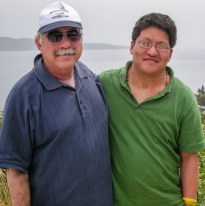
images-1What better day than Father’s Day to meet, father and son, Joel and Bart Goldstein! Joel has been fighting and advocating for his son, Bart, ever since Bart was in a motor vehicle accident when he was sixteen-years-old. That accident caused Bart’s brain injury.

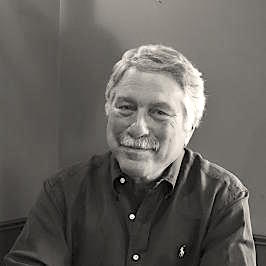
14 Joel Goldstein Speaker's photo

Joel Goldstein – caregiver & author of “No Stone Unturned”


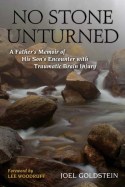
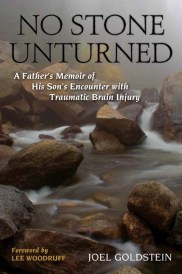
Joel is the author of “No Stone Unturned: A Father’s Memoir of His Son’s Encounter with Traumatic Brain Injury.” Both Joel and Bart shared their ups and downs as they continue to traverse the maze of brain injury.

Bart Goldstein 2

Bart Goldstein – brain injury survivor

Both father and son offered some good information about Hyperbaric Oxygen Therapy (HBOT), Omega-3 vitamins, cranial sacral therapy, and Reiki, an Eastern practice used for healing.

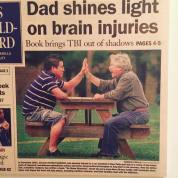
03 Joel and Bart Newspaper


You can learn more about Joel and Bart on Facebook at NS Unturned and at brainline.org. Read his article, “When the Dust Finally Settles: Strategies for the Long-Term Caregiver.”

11 Cover Photo No Stone Unturned

“No Stone Unturned” by Joel Goldstein


See you “On the Air!”

On the Air: “Another Fork in the Road”

Guests: Joel (caregiver) and Bart (survivor) Goldstein

Topic: Father and Son Tackle Brain Injury

(Clip Art compliments of Bing.)

(Photos compliments of guests.)

As I say after each post: Please leave a comment by clicking the blue words “Leave a Commentanim0014-1_e0-1 below this post.

Feel free to follow my blog. Click on “Follow” on the upper right sidebar.

If you like my blog, share it intact with your friends. It’s easy! Click the “Share” buttons below.

If you don’t like my blog, “Share” it intact with your enemies. I don’t care!

Feel free to “Like” my post.

SPEAK OUT! . . . . . . . . . . . . . Itty-Bitty GIANT Steps

SPEAK OUT! Itty-Bitty GIANT Steps

presented by

Donna O’Donnell Figurski

Itty-Bitty GIant Steps for BlogSPEAK OUT! Itty-Bitty Giant Steps will provide a venue for brain-injury survivors and caregivers to shout out their accomplishments of the week.

If you have an Itty-Bitty Giant Step and you would like to share it, just send an email to me at neelyf@aol.com.

If you are on Facebook, you can simply send a Private Message to me. It need only be a sentence or two. I’ll gather the accomplishments and post them with your name on my blog approximately once a week. (If you do not want your last name to be posted, please tell me in your email or Private Message.)

I hope we have millions of Itty-Bitty Giant Steps.


Here is this week’s Itty-Bitty GIANT Steps

Sherrie Crusha son

Sherri Crusha

Sherrie Crusha – Survivor


Sherrie Crusha (survivor)…My biggest accomplishment is raising a young man who will be a Marine in a few days. 🙂

Marine Corp Emblem


graduation02


Rayne Patterson (survivor)…In early April, I graduated high school at age 30.


YOU did it!

Congratulations to contributors!

As I say after each post:anim0014-1_e0-1

Please leave a comment by clicking the blue words “Leave a Comment” below this post.

Feel free to follow my blog. Click on “Follow” on the upper right sidebar.

If you like my blog, share it intact with your friends. It’s easy! Click the “Share” buttons below.

If you don’t like my blog, “Share” it intact with your enemies. I don’t care!

Feel free to “Like” my post.


(Clip Art compliments of Bing.)

(Photo compliments of contributors.)

Caregivers SPEAK OUT! . . . . . . Joel Goldstein

Caregivers  SPEAK OUT!  Joel Goldstein,

(father of survivor, Bart Goldstein, and author of “No Stone Unturned”)

presented by

Donna O’Donnell Figurski


14 Joel Goldstein Speaker's photo

Joel Goldstein – Caregiver of son, Bart & author of “No Stone Unturned”

1. What is your name? (last name optional)

Joel Goldstein

2. Where do you live? (city and/or state and/or country) Email? (optional)

New Paltz, New York, USA

3. What is the brain-injury survivor’s relationship to you? How old was the survivor when he/she had the brain injury? What caused your survivor’s brain injury?

Our son Bart was sixteen when he suffered a severe TBI (traumatic brain injury). He was a passenger in an auto accident.

4. On what date did you begin care for your brain-injury survivor? Were you the main caregiver? Are you now? How old were you when you began care?

I became Bart’s caregiver on January 29, 2001, the day of his accident. My wife, Dayle, and I were and remain Bart’s main caregivers. We remain involved in Bart’s life, but he has now progressed to semi-independence. He resides in his own apartment an hour and half away. We visit and break bread with him every Sunday and on holidays. We participate actively with his “team,” made up of a Benefit Coordinator (a certified specialist or a social worker who is an advocate for the survivor, a CIC (Community Integration Counseling) counselor, and an ILS (Independent Life Skills) trainer.

5. Were you caring for anyone else at that time (e.g., children, parents, etc.)?

My wife and I were responsible for our eleven-year-old daughter, Cassidy.

6. Were you employed at the time of your survivor’s brain injury? If so, were you able to continue working?

I was Director of Human Resources at a medium-sized company. I was lucky enough to be able to take whatever time was needed to care for Bart, especially while he was in the acute phase. My wife, Dayle, worked at home as a Reiki Master. She stopped most work to care for Bart.

Joel Goldstein & Son, Bart

Joel Goldstein – Caregiver for Survivor son, Bart

7. Did you have any help? If so, what kind and for how long?

Friends and family helped look after our daughter while Bart was an inpatient (four months). Close friends and a wider “conspiracy of decency” in our community helped for several years, post-injury. Here is a short YouTube video, “No Stone Unturned: Traumatic Brain Injury and the Conspiracy of Decency,” that addresses that issue:

8. When did your support of the survivor begin (e.g., immediately – in the hospital; when the survivor returned home; etc.)?

My and my wife’s support began immediately in the hospital.

9. Was your survivor in a coma? If so, what did you do during that time?

Yes. Bart was in a coma for 30 days. Dayle and I were at his bedside.

10. Did your survivor have rehab? If so, what kind of rehab (i.e., inpatient and/or outpatient and occupational, physical, speech, and/or other)? How long was the rehab? Where were you when your survivor was getting therapy?

Bart had all the standard therapies, plus many unconventional ones. Here is an article, “Fighting the “TBI Wars”: New Alternatives for TBI Survivors,”published by Brainline, that addresses this question succinctly:

11. What problems or disabilities of your brain-injury survivor required your care, if any?

03 Joel and Bart Newspaper

Joel Goldstein (caregiver) and son, Bart – brain injury survivor

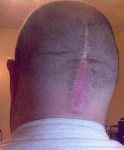
Bart’s injury was very severe – 30-day coma, nine-month rehab, and then years at home reintegrating. He struggled with the full gamut of intellectual, physical, and emotional deficits that come with a severe TBI. Gradually, with time and alternative therapies, these struggles have eased very considerably. Today Bart lives semi-independently, in his own place, with a part-time job, and with new fiends. He is moving on with his life.

12. How has your life changed since you became a caregiver? Is it better? Is it worse?

Our focus for over a decade was almost entirely Bart-centric. Pastimes were eliminated (e.g., Taekwondo) and volunteer activities were diminished. (I was president of our local branch Y at the time of his accident, but I resigned shortly after.) People we were accustomed to seeing regularly (especially Bart’s friends and their families) dropped away. We were angry about the friends moving on with their lives, but eventually we forgave and moved on too. Life is both better and worse, in different respects.

13. What do you miss the most from pre-brain-injury life?

I miss old hobbies, sports, travel, and activities that have been shelved in order to be more focused on essentials.

14. What do you enjoy most in post-brain-injury life?

My life is more simplified and focused. I have a new sense of mission and compassion. We have founded the BART Foundation (Brain Alternative Rehabilitative Therapies) – a 501(c)(3).

15. What do you like least about brain injury?

I dislike the timeline – Bart’s recovery from his TBI will be a lifelong challenge. Some issues, like perseveration, are terribly stubborn.

16. Has anything helped you to accept your survivor’s brain injury?

18 Joel Goldstein & Bart

Bart Goldstein – Survivor with Father, Joel Goldstein (author of “No Stone Unturned”)

I have been helped by the usual suspects: faith, hope, love, humor, music, family, friends, and fun.

17. Has your survivor’s injury affected your home life and relationships and, if so, how?

We’re all walking-wounded in some ways – reminiscent of PTSD (post-traumatic stress disorder).

18. Has your social life been altered or changed and, if so, how?

The caregiving life can often be isolating.

19. What are your plans? What do you expect/hope to be doing ten years from now?

We have formed the BART Foundation (Brain Injury Rehabilitative Therapies), a 501(c)(3) educational charity. The mission of The BART Foundation is to promote better outcomes for brain-injury survivors by answering three questions – which alternative therapies are likely to work, where can they be found, and how can they be afforded?

20. What advice would you offer other caregivers of brain-injury survivors? Do you have any other comments that you would like to add?

Our best advice to caregivers is succinctly summarized in this article. “When the Dust Finally Settles: Strategies for the Long-Term Caregiver,” published by Brainline.

11 Cover Photo No Stone Unturned

“No Stone Unturned: A Father’s Memoir of His Son’s Encounter with Traumatic Brain Injury,” by Joel Goldstein


To learn more about Joel Goldstein and his son, Bart, read, “No Stone Unturned – A Father’s Memoir of His Son’s Encounter with Traumatic Brain Injury.”


(Disclaimer: The views or opinions in this post are solely that of the interviewee.)

If you would like to be a part of the SPEAK OUT! project, please go to TBI SPEAK OUT! Caregiver Interview Questionnaire for a copy of the questions and the release form.

(Clip Art compliments of Bing.)

(Photos compliments of contributor.)

As I say after each post: Please leave a comment by clicking the blue words “Leave a Commentanim0014-1_e0-1 below this post.

Feel free to follow my blog. Click on “Follow” on the upper right sidebar.

If you like my blog, share it with your friends. It’s easy! Click the “Share” buttons below.

If you don’t like my blog, “Share” it with your enemies. I don’t care!

Feel free to “Like” my post.


On the Air: . . . . . . . . . . . . “Another Fork in the Road” Panel: Cognitive & Memory Deficits After Brain Injury

On the Air: “Another Fork in the Road”

Panel: Lisabeth Mackall and GeorgeAnna Bell

Cognitive & Memory Deficits After Brain Injury

presented

by

Donna O’Donnell Figurski

images-1Memory loss and cognitive deficits are both prevalent for many survivors after brain injury. Memory loss literally leaves many folks feeling a loss of control over their lives. Cognitive deficits can leave one feeling less than whole.

Lisabeth Mackall Book 061215

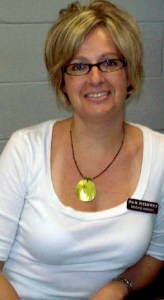
Lisabeth Mackall – Caregiver, Author, Speech Therapist


My panel, caregiver, Lisabeth Mackall and survivor, GeorgeAnna Bell joined me to discuss how memory loss and cognitive deficits affect them personally and how the deficits hinder their family dynamics. They offered suggestions that have worked for them.

Click on the link below to listen to the show.

GeorgeAnna Bell - Survivor

GeorgeAnna Bell – Survivor


See you “On the Air!”

On the Air: “Another Fork in the Road”

Cognitive & Memory Deficits After Brain Injury

(Clip Art compliments of Bing.)

(Photos compliments of panelists.)

As I say after each post: Please leave a comment by clicking the blue words “Leave a Commentanim0014-1_e0-1 below this post.

Feel free to follow my blog. Click on “Follow” on the upper right sidebar.

If you like my blog, share it intact with your friends. It’s easy! Click the “Share” buttons below.

If you don’t like my blog, “Share” it intact with your enemies. I don’t care!

Feel free to “Like” my post.

SPEAK OUT! . . . . . . . . . . . . . Itty-Bitty GIANT Steps

SPEAK OUT! Itty-Bitty GIANT Steps

presented by

Donna O’Donnell Figurski

Itty-Bitty GIant Steps for BlogSPEAK OUT! Itty-Bitty Giant Steps will provide a venue for brain-injury survivors and caregivers to shout out their accomplishments of the week.

If you have an Itty-Bitty Giant Step and you would like to share it, just send an email to me at neelyf@aol.com.

If you are on Facebook, you can simply send a Private Message to me. It need only be a sentence or two. I’ll gather the accomplishments and post them with your name on my blog approximately once a week. (If you do not want your last name to be posted, please tell me in your email or Private Message.)

I hope we have millions of Itty-Bitty Giant Steps.


Here is this week’s Itty-Bitty GIANT Steps


051916 Roberts, Crystal Caregiver for Son

Ethan – Survivor


Ethan (survivor)…submitted by his mother, Crystal Roberts (caregiver)…My son is

starting to crawl. He suffered a severe TBI (traumatic brain injury) and a stroke in an accident that happened two years ago.

This is my son’s first attempt.


Robert Williams (survivor)…Never thought I would garden again. I had a tumor surgically removed from my brain stem, and I was in a wheelchair for over five years afterwards. The doctors didn’t think I’d ever walk normally again (but God makes the impossible possible).

Pictures of me gardening.

Robert Williams 1

Robert Williams – Survivor

Robert Williams 2

Robert Williams 3

Robert Williams – Survivor


YOU did it!

Congratulations to contributors!

As I say after each post:anim0014-1_e0-1

Please leave a comment by clicking the blue words “Leave a Comment” below this post.

Feel free to follow my blog. Click on “Follow” on the upper right sidebar.

If you like my blog, share it intact with your friends. It’s easy! Click the “Share” buttons below.

If you don’t like my blog, “Share” it intact with your enemies. I don’t care!

Feel free to “Like” my post.


(Clip Art compliments of Bing.)

(Photo compliments of contributors.)

Survivors SPEAK OUT! . . . . . . Ina M. Dutkiewicz

Survivors SPEAK OUT! Ina M. Dutkiewicz

presented

by

Donna O’Donnell Figurski


Dutkiewicz, Ina M. Survivor 041316

Ina M. Dutkiewicz – Survivor


1. What is your name? (last name optional)

Ina M. Dutkiewicz, pronounced “Ena”

2. Where do you live? (city and/or state and/or country) Email (optional)

Milford, Michigan, USA     inadutkiewicz@gmail.com

3. On what date did you have your brain injury? At what age?

I had my brain injury on February 3, 2010. I was 43 years old.

4. How did your brain injury occur?

While driving to work, I slid through a stop sign because of black ice. I was hit by a pickup truck.

5. When did you (or someone) first realize you had a problem?

I was immediately put into a coma.

6. What kind of emergency treatment, if any, did you have?

I was in the Neuro-Intensive Care Unit for three weeks. A feeding tube was in my belly, and an incision was made in my forehead (to relieve the pressure on my brain from bleeding, I think).

7. Were you in a coma? If so, how long?

Yes. I was in a coma for a total of four and a half weeks. My coma was not medically induced.

8. Did you do rehab? What kind of rehab (i.e., inpatient or outpatient and occupational and/or physical and/or speech and/or other)?

I started inpatient rehab for six weeks at a head injury place where I had to live (Origami in Mason, Michigan). Then I was able to transition to outpatient rehab. I still have to return daily for therapies and doctor appointments. I have done physical therapy, occupational, speech, and language therapies, driving therapy, and vocational therapy

How long were you in rehab?

I did rehab for a total of five years. I still do counseling every other week.

9. What problems or disabilities, if any, resulted from your brain injury
(e.g., balance, perception, personality, etc.)?

I have gait issues, memory problems, and word-finding difficulty. My personality changed. (I’m more docile – easy going – now.) My pelvis was broken on both sides from my seat belt, which means I have daily pelvis/hip pain. I have also had a headache every day since my car accident. Some days, they’re only pressure; others, pounding.

10. How has your life changed? Is it better? Is it worse?

My life has changed 100%. My husband divorced me a year after my car accident, so now I live with my mom. I do not work. I am on disability, which is barely enough to live on.

11. What do you miss the most from your pre-brain-injury life?Dutkiewicz, Ina M.car

I miss my friends.

12. What do you enjoy most in your post-brain-injury life?

I like that I am more laid back and not as serious.

13. What do you like least about your brain injury?

I dislike that I feel lost some days. I’m not working, and I don’t have anything worthy to put my hand to. My kids are now grown and living on their own. They have their own families. Also, my ex-husband has moved on to a girlfriend. It’s like I was left behind. 😦

14. Has anything helped you to accept your brain injury?

My Christian faith has been a HUGE help to me.

15. Has your injury affected your home life and relationships and, if so, how?

I have no friends from my past (pre-TBI) life. It is sad.

16. Has your social life been altered or changed and, if so, how?

My life has totally changed. I now spend my days with my mom – going to things she enjoys at the Senior Center. I am not really with people my age. While I enjoy the time with her, I long for age-appropriate friends.

17. Who is your main caregiver? Do you understand what it takes to be a caregiver?

My mom is my main caregiver. Yes, I realize how my TBI has changed her life. I know that she has had to give up things to support me.

18. What are your plans? What do you expect/hope to be doing ten years from now?

I really would like to get a part-time job in the future. My experience is with office work. I was an Executive Assistant before my car accident, helping with payroll and AP/AR (accounts payable/accounts receivable) on top of taking care of all correspondence that left the car dealership I worked at.

Dutkiewicz, Ina M. Survivor 2 041316

Ina M. Dutkiewicz – Survivor

I19. Are you able to provide a helpful hint that may have taken you a long time to learn, but which you wished you had known earlier? If so, please state what it is to potentially help other survivors with your specific kind of brain injury.

My helpful hint is that it is okay to be different. In a lot of cases, brain injury truly is an invisible disability. In outward appearance, we look “normal” (whatever that is). That means that we can easily blend in, but oftentimes it is hard to keep up. We need to find our own group of people to hang out with who understand where we are coming from and what we deal with on a daily basis. A support-group is a good place to start.

20. What advice would you offer to other brain-injury survivors? Do you have any other comments that you would like to add?

Don’t give up on yourself. Others can turn away and leave you, but your strength comes from you – no one can ever take that away from you. AND, you can rely on yourself to struggle through your low days and celebrate your victories!


(Disclaimer: The views or opinions in this post are solely that of the interviewee.)

If you would like to be a part of the SPEAK OUT! project, please go to TBI Survivor Interview Questionnaire for a copy of the questions and the release form.

(Clip Art compliments of Bing.)

(Photos compliments of contributor.)


As I say after each post:

Feel free to leave a comment by clicking the blue words “Leave a Comment” below this post.

Please follow my blog. Click on “Follow Me Via eMail” on the right sidebar of your screen.anim0014-1_e0-1

If you like my blog, click the “Like” button under this post.

If you REALLY like my blog, share it intact with your friends. It’s easy! Click the “Share” buttons below.

If you don’t like my blog, “Share” it intact with your enemies. That works for me too!

On The Air: . . . . . . . . . . . . . “Another Fork in the Road:” . . . . Substitute Hosts, Lisa Dryer & Cam Compton – M.S. Meets Stroke

On The Air: “Another Fork in the Road:” with substitute hosts, Lisa Dryer & Cam Compton “M.S. Meets Stroke”

presented

by

Donna O’Donnell Figurski


images-1

Brain Injury Radio Network (BIRN) hosts, Lisa Dryer of “Mess with M.S.” (Multiple Sclerosis) and Cam Compton of “Cam’s Corner” step up to the mic on “Another Fork in the Road” while I, (Donna O’Donnell Figurski) traveled to Michigan for my nephew’s wedding. Party Time!

Lisa and Cam discussed the similarities and differences of each of their brain injuries and how they approach life from slightly different angles. Both hosts emphasized how each brain injury is different and how each survivor responds to the difficulties presented to him or her.

18 Lisa Dryer copy

Lisa Dryer – Survivor – Host of “Mess with M.S.”

03 Cam Compton Photo for Banner copy

Cam Compton – Survivor – Host of “Cam’s Corner”


See you “On the Air!”

On The Air: “Another Fork in the Road:” with substitute hosts, Lisa Dryer & Cam Compton “M.S. Meets Stroke”


(Clip Art compliments of Bing.)

As I say after each post: Please leave a comment by clicking the blue words “Leave a Commentanim0014-1_e0-1 below this post.

Feel free to follow my blog. Click on “Follow” on the upper right sidebar.

If you like my blog, share it intact with your friends. It’s easy! Click the “Share” buttons below.

If you don’t like my blog, “Share” it intact with your enemies. I don’t care!

Feel free to “Like” my post.


diemodi jewelry

uniquely hand-crafted jewelry by donna

Welcome to Harmony Kent Online

The home of all things books

Pete Springer

Passionate Teacher and Future Children's Author

HOPE TBI

Helping Other People Excel - To Be Independent

For the Love of Books, Old and New

Katie Fischer, Writer and Reader of Stories

Charlie Bown

Children's Author

Jessica Hinrichs

“We write to taste life twice, in the moment and in retrospect.” ― Anais Nin

VIVIAN KIRKFIELD - Writer for Children

Picture Books Help Kids Soar

Mindy’s Writing Wonderland

For authors, parents, teachers & everyone who loves children’s books.

Kaitlyn Leann Sanchez

Literary Agent

Surviving Traumatic Brain Injury

TBI - Survivors, Caregivers, Family, and Friends

The Care Factor

Loving someone with a Traumatic Brain Injury

Brain Injury Support Group of Duluth-Extension

Brain Injury Information and SUPPORT

Brain Aneurysm Global Insight

Brain Aneurysm, cerebral hemorrhaging, hemorrhage stroke