Survivors SPEAK OUT! . . . . Nolan McDonnell — Survivor of Brain Injury
Survivors SPEAK OUT! Nolan McDonnell
presented by
Donna O’Donnell Figurski

Survivor of Brain Injury – Nolan McDonnell
1. What is your name? (last name optional)
Nolan McDonnell
2. Where do you live? (city and/or state and/or country) Email (optional)
San Jose, California, USA Nolan@CoachNolan.com
3. On what date did you have your brain injury? At what age?
My traumatic brain injury occurred on April 23, 2017, at the age of 31.
4. How did your brain injury occur?
I was the victim of a robbery. I was held at gunpoint and then shot in the head. My brain injury is bilateral, as the bullet went through both sides of my brain.
5. When did you (or someone) first realize you had a problem?
I was found in my car, which was riddled with bullet holes. I had an entrance wound in my skull from the bullet.
6. What kind of emergency treatment, if any, did you have?
I had seven blood transfusions, a craniotomy, and maybe some other things.
7. Were you in a coma? If so, how long?
Yes – fifteen days.
8. Did you do rehab? What kind of rehab (i.e., inpatient or outpatient and occupational and/or physical and/or speech and/or other)? How long were you in rehab?
I have or had speech, occupational, physical, stretch, recreational, massage, and craniosacral therapies and acupuncture. It has been two and a half years now, and I put in eight hours a day, five days a week.
9. What problems or disabilities, if any, resulted from your brain injury (e.g., balance, perception, personality, etc.)?
I was a paraplegic – I could not move from the neck down. I worked hard to overcome this, however. I still suffer from extreme spasticity, muscle imbalance, and minimal range of motion on the left side of my body, as well as in my legs.
10. How has your life changed? Is it better? Is it worse?
My life is better after my traumatic brain injury. Before the injury, I did not know how short, valuable, and fragile life is.
11. What do you miss the most from your pre-brain-injury life?
I miss skateboarding, making new friends at school, the freedom to get up and do anything I wanted at any given time, athletics, not having a caregiver, living alone, and having guests come over.
12. What do you enjoy most in your post-brain-injury life?
I like my perspective on and my valuing of both life and people. Life is so valuable to me now – more meaningful and beautiful.
13. What do you like least about your brain injury?
I love everything about my brain injury. Life is more important to me now.
14. Has anything helped you to accept your brain injury?
No
15. Has your injury affected your home life and relationships and, if so, how?
Yes. We had to make everything wheelchair-accessible, and someone always needs to be with me. Also, with my injury, I can’t get up and go make myself a sandwich or go to the store and get something that I want. Somebody needs to do those things for me. I am a lot more limited in that aspect, but it’s not a big deal if I plan ahead.
The biggest aspect about this question is addressing the invisible injury. People look at me and see that I’m strong, and they expect that, at any moment, I can just get up and start walking, hiking, or going on dates.
 16. Has your social life been altered or changed and, if so, how?
Not really for me. I have always been a very social person, and my wheelchair is a great conversation starter! People come up all the time and ask me what happened. I am always making new friends.
17. Who is your main caregiver? Do you understand what it takes to be a caregiver?
My mother
18. What are your plans? What do you expect/hope to be doing ten years from now?
(not answered)
19. Are you able to provide a helpful hint that may have taken you a long time to learn, but which you wished you had known earlier? If so, please state what it is to potentially help other survivors with your specific kind of brain injury.
This is a tough question because no two injuries are the same, but I will share my input and what worked for me to get my legs strong again.
 Learning how to use my legs has been especially difficult. My parents bought an assist-bar at Home Depot and mounted it to the wall, a little below chest height. I can use my wheelchair to wheel up to the bar and practice standing up, do squats, stand up, and let go and learn how to balance.
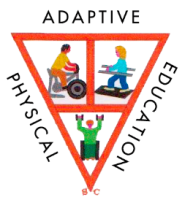
Another great thing that I would love to share is to go to your local community college and check out adaptive PE (physical education) classes. The community colleges by my house have adaptive PE – they have standing frames and parallel bars, and all of the equipment and workout-machines are wheelchair-accessible. Adaptive PE programs usually have water classes as well.
20. What advice would you offer to other brain-injury survivors? Do you have any other comments that you would like to add?

Nolan McDonnell – Survivor of Brain Injury
I would suggest that other brain injury survivors take initiative and demonstrate that they want to help themselves because that will encourage support from other people. Also, always continue doing exercises and stretching. Try to increase your range of motion, and workout constantly. Fitness creates a mind-body connection and promotes new neurological pathways. Additionally, if you take care of yourself physically, you tend to eat better – and proper nutrition is very important for a healthy brain.
Stay Safe and Healthy!
Clip Art compliments of Bing.)
(Photos compliments of contributor.)
As I say after each post:
Please leave a comment by clicking the blue words “Leave a Comment” below this post.
Feel free to follow my blog. Click on “Follow” on the upper right sidebar.
If you like my blog, share it intact with your friends. It’s easy! Click the “Share” buttons below.


 No! With a huge grin, I answered, “Yes!”
 A high school football team from Moncton, New Brunswick, Canada, forfeited its game after nine players left the game with possible head injuries. The coach took the precaution of having all players checked at the hospital. Before going to hospital, four players had already displayed symptoms of having a serious concussion (nausea, vomiting), and they still showed symptoms two days later when the article was written.
 It is now known that players of US and Canadian football have a
 Is American football a dying sport? With football’s prominence in American culture, it seems safe to assume no one would predict that its days are numbered. But, there is a growing undercurrent that may eventually lead to the demise of football as we know it. There is more and more evidence that the constant subconcussive hits experienced by football players lead to a high risk of the brain disease
  depression, suicidal thoughts, or problems with cognition, memory, or impulsive behavior.
 The results have important implications for players. Many players feel they’ve been left ignorant of the risks of brain injury by the NFL, or worse, assured by the league that there is minimal risk. [Some players have quit or retired early (
 famous Pittsburgh Steeler Center, wrote an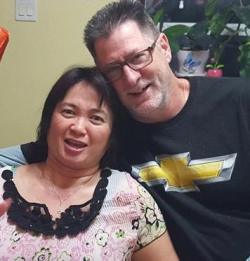
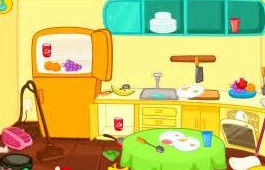
 Maria asked me a few days ago where the Kitchen Aid mixer was. I told her it was in the pantry. The next day – there it was on the counter. Maria asked daughter Samantha to pick up the ingredients to make fruit salad. I told her we would make fruit salad over the weekend, but there never was time to do it.


 SPEAK OUT! Itty-Bitty Giant Steps will provide a venue for brain-injury survivors and caregivers to shout out their accomplishments of the week.

 the entire house, etc. Yesterday, I began painting a bedroom, and I plan to finish this morning. I went to a TBI (traumatic brain injury) workshop – an art-therapy group. I also went to a “celebrate-recovery” group – I’ve been trying to help a friend.
 I have difficulty staying focused on these accomplishments and others, since I woke out of a coma eight months ago. I’m glad that I can do these things.
 I had a month to get ready. Yet mentally, it seemed a short time to prepare, but I would have gone immediately if it were possible. It had been such a long time coming, honestly. I was sitting around being idle for way too long. To be completely honest, this was one of the bravest things I chose to do, so I had to be strong. It was like getting the courage up to jump into the deep end, while uncertain about how cold or how deep the water is.
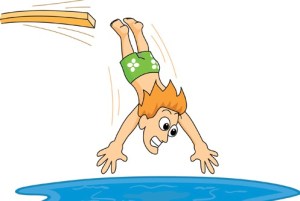 For the very first time in well over five years, I felt that the choice was completely up to me. I wondered if I should just consider playing it safe – dip a toe in and try to slowly get into the water, all the time staying at the edge of the pool. Or, if I should take the chance – go for the adrenaline rush.
 So, off on my trip I went, with no end in sight, with no final destination set, but I knew I would figure it all out. I wanted to begin to live my life without all of the restrictions. Did I feel I was ready for that?

 day, I was able to push down and move it! I know I’m being so emotional over something so small, but it’s HUGE TO ME! Maybe I am getting better. Maybe.

 It can happen to anyone, anytime, . . . and anywhere.
 spinal taps and more MRIs. I was told his frontal lobe looked as if a bag of M&Ms had been tossed into it. Infectious/viral disease had been ruled out. It was determined that, due to numerous concussions from falls off horses, his brain had suffered too much damage – which was IRREVERSIBLE! I collapsed when his doctor said, “The Thomas you knew a month ago is no longer with us.” He continued to tell me that my vibrant son would need a nursing home for the rest of his life.
 Thomas slowly improved (contrary to the opinions of ALL specialists). After four months, with short-term memory loss and some loss of intelligence, Thomas was released. I asked his doctor to explain. He looked at me and quietly said, “It is a miracle!”
 of short-term memory loss, and is as bright as he always was. BELIEVE IN MIRACLES! I am praying for YOU ALL!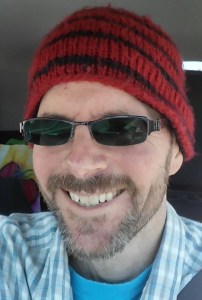



 Raising Awareness of Traumatic Brain Injury - one view at a time. Thanks for visiting my blog
 Surviving Traumatic Brain Injury
Recent Comments