TBI – Survivors, Caregivers, Family, and Friends

Posts tagged ‘caregiver’

Caregivers SPEAK OUT! . . . . Malissa Mallett (caregiver for her son)

Caregivers SPEAK OUT!

Malissa Mallett (caregiver for her son)

presented by

Donna O’Donnell Figurski

“Malissa Mallett will be my guest tomorrow (Sunday, February 17) on my radio show (Another Fork in the Road) on the Brain Injury Radio Network. She has been caregiver for her son, who had an anoxic brain injury, since 1997, when he was an infant. Malissa is Program Director for the Brain Injury Alliance of Arizona (BIAAZ). We will discuss caring for her son and the effect of her expertise (opioid use on the brain.) My show broadcasts live at 5:30 PT (blogtalkradio.com/braininjuryradio), or it can be heard as a podcast anytime (https://survivingtraumaticbraininjury.com/category/on-the-air-show-menu/).”
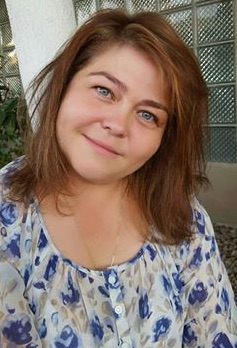
Malissa Mallett

1. What is your name? (last name optional)

Malissa Mallett

2. Where do you live? (city and/or state and/or country) Email? (optional)

Laveen, Arizona, USA     Program@biaaz.org

3. What is the brain-injury survivor’s relationship to you? How old was the survivor when he/she had the brain injury? What caused your survivor’s brain injury?

The survivor is my son. He was 2 months old. His brain injury was caused by aspiration, causing him to stop breathing (anoxic brain injury).

4. On what date did you begin care for your brain-injury survivor? Were you the main caregiver? Are you now? How old were you when you began care?

My care began in April 1997. I was 22 years old. I was my son’s main caregiver then, but I’m not now.

th

Babies get brain injury too

5. Were you caring for anyone else at that time (e.g., children, parents, etc.)?

No

6. Were you employed at the time of your survivor’s brain injury? If so, were you able to continue working?

I had just returned to work after giving birth. I was not able to continue working, since my son required 24-hour supervision for his heart and lung monitor.

7. Did you have any help? If so, what kind and for how long?

Occasionally. My family, who were trained in CPR, would care for my son to give me a break or a night out.

cartoon-hospital8. When did your support of the survivor begin (e.g., immediately – in the hospital; when the survivor returned home; etc.)?

In the hospital

9. Was your survivor in a coma? If so, what did you do during that time?

No

10. Did your survivor have rehab? If so, what kind of rehab (i.e., inpatient and/or outpatient and occupational, physical, speech, and/or other)? How long was the rehab? Where were you when your survivor was getting therapy?

No

11. What problems or disabilities of your brain-injury survivor required your care, if any?

This is difficult to answer given my son’s age at the time of his brain injury.

12. How has your life changed since you became a caregiver? Is it better? Is it worse?

My life was challenging all throughout my son’s life.

13. What do you miss the most from pre-brain-injury life?

I will never know what could have been.

14. What do you enjoy most in post-brain-injury life?

Does not apply

15. What do you like least about brain injury?

shakilaramanwordpresscom

Learn about brain injury

The lack of understanding in the community

16. Has anything helped you to accept your survivor’s brain injury?

Yes. Education.

17. Has your survivor’s injury affected your home life and relationships and, if so, how?

Yes, it has. We can discuss this on your radio show. It’s too much to explain here.

18. Has your social life been altered or changed and, if so, how?

Not anymore

19. What are your plans? What do you expect/hope to be doing ten years from now?

I would love for my son to be successful and independent.

20. What advice would you offer other caregivers of brain-injury survivors? Do you have any other comments that you would like to add?

supportTake care of yourself.

Be surrounded by supportive people.

Educate yourself.


(Clip Art compliments of Bing.)

As I say after each post: Please leave a comment by clicking the blue words “Leave a Commentanim0014-1_e0-1 below this post.

Feel free to follow my blog. Click on “Follow” on the upper right sidebar.

If you like my blog, share it (intact) with your friends. It’s easy! Click the “Share” buttons below.

If you don’t like my blog, “Share” it (intact) with your enemies. I don’t care!

Feel free to “Like” my post.


TBI Tales . . . . . . . . . . . . . . . . . . This Song Could Be a Caregiver’s Anthem

This Song Could Be a Caregiver’s Anthem

by

Donna O’Donnell Figurski

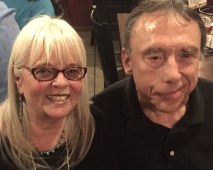
David & Donna Aunt Irene's Funeral 060718


I happened to hear this old hit song (“Lean on Me”) a couple of days ago. After listening to the lyrics, I realized it reflects what we caregivers do. We just want to help.

a0379e35efb379c624212808302a9194

We don’t look this bad.

As the song implies, we give much-needed help. “Lean on Me” could be our anthem. Give it a listen.

PS. I just had to dance with this man to that song and we each did a bit of “leaning on.”


(Disclaimer: The views or opinions in this post are solely that of the author.)

If you have a story to share and would like to be a part of the SPEAK OUT! project, please submit your TBI Tale to me at neelyf@aol.com. I will publish as many stories as I can.

As I say after each post:

Please leave a comment by clicking the blue words “Leave a Comment” below this post.anim0014-1_e0-1

Please follow my blog. Click on “Follow” on the top right sidebar. (It’s nice to know there are readers out there.)

If you like my blog, share it with your friends. It’s easy! Click the “Share” buttons below.

If you don’t like my blog, “Share” it with your enemies. I don’t care!

Feel free to “Like” my post.
(Clip Art compliments of Bing.)


Caregivers SPEAK OUT! . . . . . Charity Hamilton (caregiver for momma)

Caregivers  SPEAK OUT!  Charity Hamilton

(caregiver for her momma)

presented by

Donna O’Donnell Figurski


Charity Hamilton – Caregiver for her Momma

1. What is your name? (last name optional)

Charity Hamilton

2. Where do you live? (city and/or state and/or country) Email? (optional)

Shippensburg, Pennsylvania, USA

3. What is the brain-injury survivor’s relationship to you?

The survivor is my momma. 🙂

How old was the survivor when he/she had the brain injury? What caused your survivor’s brain injury?

My mother’s affliction is brain cancer and seizures. It was diagnosed in 2012 when she was seen after a car accident. (She didn’t remember what happened.) The hospital was going to let her leave, but we demanded a CT (computerized tomography) scan and an MRI (magnetic resonance imaging), as her husband (now deceased) knew something was wrong. That’s when the cancer was found. It had apparently started as a child!

4. On what date did you begin care for your brain-injury survivor? Were you the main caregiver? Are you now? How old were you when you began care?

I became my mother’s only caregiver in 2016, as her husband helped care for her, but he recently passed due to bad health. I am now her full-time caregiver. I am 24.

5. Were you caring for anyone else at that time (e.g., children, parents, etc.)?

I have three beautiful children of my own, whom I care for.

6. Were you employed at the time of your survivor’s brain injury? If so, were you able to continue working?

I was then and am now a full-time employee.

7. Did you have any help? If so, what kind and for how long?

I had no help after my mother’s husband passed.

8. When did your support of the survivor begin (e.g., immediately – in the hospital; when the survivor returned home; etc.)?

I began care immediately after my mother was diagnosed.

9. Was your survivor in a coma? If so, what did you do during that time?

No

10. Did your survivor have rehab? If so, what kind of rehab (i.e., inpatient and/or outpatient and occupational, physical, speech, and/or other)? How long was the rehab? Where were you when your survivor was getting therapy?

My mother had no rehab.

11. What problems or disabilities of your brain-injury survivor required your care, if any?

My care was needed whenever my mother had seizures. I also helped her deal with memory loss. I assisted her with medications, and I helped her with showers.

12. How has your life changed since you became a caregiver? Is it better? Is it worse?

With everything I have on my plate, my life is complicated and very busy. Only brain-injury-caregivers truly understand.

13. What do you miss the most from pre-brain-injury life?

I miss not being so busy!

14. What do you enjoy most in p

Charity Hamilton – Caregiver for Mom, Jean Jones

ost-brain-injury life?

I enjoy talking to mom and going out and about with her.

15. What do you like least about brain injury?

I don’t like the tons of errands and feeling like the parent.

16. Has anything helped you to accept your survivor’s brain injury?

Caregiving came naturally because she’s my mother and I would never let her be alone.

17. Has your survivor’s injury affected your home life and relationships and, if so, how?

Yes. My mother’s brain injury has made home-life and relationships tough and stressful sometimes, as they don’t understand I HAVE to care for my mother – no one else will.

18. Has your social life been altered or changed and, if so, how?

Not really. I didn’t have a social life before my mother’s diagnosis.

19. What are your plans? What do you expect/hope to be doing ten years from now?

My future is nursing.

20. What advice would you offer other caregivers of brain-injury survivors? Do you have any other comments that you would like to add?

Have patience!!


(Disclaimer: The views or opinions in this post are solely that of the interviewee.)

If you would like to be a part of the SPEAK OUT! project, please go to TBI SPEAK OUT! Caregiver Interview Questionnaire for a copy of the questions and the release form.

(Clip Art compliments of Bing.)

As I say after each post: Please leave a comment by clicking the blue words “Leave a Commentanim0014-1_e0-1 below this post.

Feel free to follow my blog. Click on “Follow” on the upper right sidebar.

If you like my blog, share it with your friends. It’s easy! Click the “Share” buttons below.

If you don’t like my blog, “Share” it with your enemies. I don’t care!

Feel free to “Like” my post.

Brain Injury Resources . . . . . Brain Injury Journey Bulletin by Lash & Associates Publishing

Brain Injury Journey Bulletin by Lash & Associates Publishing

presented by

Donna O’Donnell Figurski


Lash & Associates

Lash and Associates Publishing/Training, Inc. introduces its newest brainchild. The Brain Injury Journey BULLETIN is a compilation of brain-injury resources on a variety of topics of interest to those who live in the world of brain injury. Caregiving, memory issues, and grief and loss are some of the interest areas presented in the bulletin.

Lash and Associates Publishing/Training, Inc. is the leading publisher of brain-injury-related books and resources. They are in the know!

The bulletin is published free of charge each month. You only need to sign up for your subscription. Follow this link to get your free subscription, and YOU can be in the know too. Brain Injury Journey BULLETIN


July 2017
Brain Injury Journey BULLETIN: GRIEF and LOSS

June 2017
Brain Injury Journey BULLETIN: Executive Functions Critical and Vital to Organization, Prioritizing, and Behaviors

May 2017
Brain Injury Journey BULLETIN: “Caregivers – The Visible/Invisible TBI Support Network”

April 2017
Brain Injury Journey BULLETIN: Memory


To locate additional books pertaining to brain injury, please check out Lash & Associates Publishing/Training Inc.


(Clip Art compliments of Bing.)

As I say after each post:

Feel free to leave a comment by clicking the blue words “Leave a Comment” below this post.

Please follow my blog. Click on “Follow Me Via eMail” on the right sidebar of your screen.anim0014-1_e0-1

If you like my blog, click the “Like” button under this post.

If you REALLY like my blog, share it with your friends. It’s easy! Click the “Share” buttons below.

If you don’t like my blog, “Share” it with your enemies. That works for me too!


TBI Tales: . . . . . . . . . . . . . . . . . . . . I Tripped & Stumbled, but Did Not Fall by Donna O’Donnell Figurski

I Tripped & Stumbled, but Did Not Fall

by

Donna O’Donnell Figurski

Donna O’Donnell Figurski

Recently, as I got out of my car, I stumbled on the curb. Somehow in the darkness, I did not see it. Though the event took less than a second, one thought ran through my head. It was not, “Oh, no! I am going to break a bone or scrape my knee.” It was not, “What a klutz! I’ll ruin my clothes.” And it was not about how embarrassed I would be. All of those possibilities probably would have been my first thoughts – before brain injury entered my life when my husband had a traumatic brain injury in 2005.

Now my mind is only a thought away from brain injury. So, as I tripped and stumbled, but did not fall, my mind raced to, “Please don’t let me hit my head.” I didn’t care how silly I looked or about my clothes being ripped or about getting any broken bones (they would heal). I worried about getting a brain injury. I worried about how a brain injury could change my life forever. I worried that if I were hurt, I could not sufficiently care for my husband, who needs my daily attention. Yes, those thoughts did race through my head in that fleeting second.

It only takes a second for a brain injury to occur. Most brain injuries occur because of an accident. Though we may be aware of the possibility of accidents, they cannot all be avoided. Fortunately, my accident was avoided – just barely. I can only hope that my potential accidents will be few and far apart in the future. I hope yours will be too.

As I say after each post: Please leave a comment by clicking the blue words “Leave a Commentanim0014-1_e0-1 below this post.

Feel free to follow my blog. Click on “Follow” on the upper right sidebar.

If you like my blog, share intact it with your friends. It’s easy! Click the “Share” buttons below.

If you don’t like my blog, “Share” it intact with your enemies. I don’t care!

Feel free to “Like” my post

TBI Tales: Inspiration . . . . . . . . by Bonni Villarreal (caregiver)

Inspiration

by

Bonni Villarreal (caregiver)

presented by

Donna O’Donnell Figurski

Bonni Villarreal – Caregiver

March 21, 2012, is a day that changed my life forever. It started off like any average day. I got up and went to work. Mike was asleep when I left. I called him around 8:30 that morning to let him know I wouldn’t be at my desk, in case he tried to call me. He sounded fine. Then, just by chance, I happened to be at my desk at 10 am when my phone rang. It was Mike … telling me he was having a stroke.

By the time I got to the house, the ambulance was there. Mike was awake and reaching for me. I didn’t think it was too serious because Mike was alert and talking. But, by the time we got to the hospital, that had changed. The doctor informed me that Mike had a huge blood clot near his cerebellum, and he had to be life-flighted to another hospital because he was too critical to stay at the one he was at.


I had to sign papers for life-saving brain surgery. Mike was in a coma for ten days. We didn’t know if he would wake up, and, if he did, what condition he would be in. When he “woke up,” Mike wasn’t anything like the man I married. He stayed in the hospital for another month, and then he was transferred to a nursing home.

Those days were some of the darkest in my life. They treated Mike as if he were a hopeless case. I wonder what would’ve happened to him if I hadn’t been around.

Mike Villarreal – TBI Survivor

He was tube-fed, couldn’t speak (he wrote instead), and couldn’t walk. He was totally helpless. Plus, he was battling infection after infection. I didn’t think things would ever return to normal.

Fast forward to January 2017 – almost five years post stroke. Mike passed his barium swallow test, and he is having his G-tube removed! He is walking almost unassisted! He is talking! I told Mike, “You are an inspiration. You give hope to people who have lost it, you have renewed hope for people who are about to give up, and you keep hope alive for people who are just starting this long journey.”

Mike wants everyone to know – DON’T EVER, EVER, EVER GIVE UP. No matter if it’s been five, ten, or fifteen years. Keep hope alive! Mike did, and look how far he has come!

As I say after each post: Please leave a comment by clicking the blue words “Leave a Commentanim0014-1_e0-1 below this post.

Feel free to follow my blog. Click on “Follow” on the upper right sidebar.

If you like my blog, share intact it with your friends. It’s easy! Click the “Share” buttons below.

If you don’t like my blog, “Share” it intact with your enemies. I don’t care!

Feel free to “Like” my post

SPEAK OUT! . . . . . . . . . . . . . Itty-Bitty Giant Steps

SPEAK OUT! Itty-Bitty Giant Steps

presented by

Donna O’Donnell Figurski

Itty-Bitty GIant Steps for BlogSPEAK OUT! Itty-Bitty Giant Steps will provide a venue for brain-injury survivors and caregivers to shout out their accomplishments of the week.

If you have an Itty-Bitty Giant Step and you would like to share it, just send an email to me at neelyf@aol.com.

If you are on Facebook, you can simply send a Private Message to me. It need only be a sentence or two. I’ll gather the accomplishments and post them with your name on my blog approximately once a week. (If you do not want your last name to be posted, please tell me in your email or Private Message.)

I hope we have millions of Itty-Bitty Giant Steps.

16358690_1201798153189065_1370881325_n

David Smith – Brain Injury Survivor

David Smith (survivor) … Today’s Itty-Bitty Giant Step is going to be to just get out of bed and to stay up.

bed


bonni-villarreal-1

Bonni Villarreal – Caregiver for Husband

Bonni Villarreal (caregiver) … My husband had a stroke in 2012, so he has an acquired brain injury (ABI). It has been a long, hard road as is most of what you post about. But, I do have wonderful news to report. After almost five years of having a G-Tube (gastrostomy a332i0_185tube), Mike is now able to drink fluids! (He’s been eating for a long time, but we didn’t think he would ever get back the ability to swallow liquids.) So, DON’T EVER GIVE UP! It’s almost five years later, and Mike is proving doctors wrong every day. He is going for a swallow test, so the tube can come out for good … best present ever!

YOU did it!

Congratulations to contributors!

(Clip Art compliments of Bing.)

(Photos compliments of contributors.)

As I say after each post:anim0014-1_e0-1

Please leave a comment by clicking the blue words “Leave a Comment” below this post.

Feel free to follow my blog. Click on “Follow” on the upper right sidebar.

If you like my blog, share it intact with your friends. It’s easy! Click the “Share” buttons below.

If you don’t like my blog, “Share” it intact with your enemies. I don’t care!

Feel free to “Like” my post.

SPEAK OUT! . . . . . . . . . . . . . Faces of Brain Injury . . . . . . . . . Carol Starke-Pyle (caregiver of her son, Thomas)

SPEAK OUT! Faces of Brain Injury – Carol Starke-Pyle

(caregiver of her son, Thomas)

presented

by

Donna O’Donnell Figurski

Brain Injury is NOT Discriminating!

bigstock-cartoon-face-vector-people-25671746-e1348136261718It can happen to anyone, anytime, . . . and anywhere.

The Brain Trauma Foundation states that there are 5.3 million people in the United States living with some form of brain injury.

On “Faces of Brain Injury,” you will meet survivors living with brain injury. I hope that their stories will help you to understand the serious implications and complications of brain injury.

The stories on SPEAK OUT! Faces of Brain Injury are published with the permission of the survivor or designated caregiver.

If you would like your story to be published, please send a short account and two photos to me at neelyf@aol.com. I’d love to publish your story and raise awareness for Brain Injury.

Carol Starke-Pyle (caregiver of her son, Thomas)

carol-starke-pyle-1

Carolyn Starke-Pyle – Caregiver for Brain Injury Survivor


This is my son’s story. Thomas was 43. He trained/rode horses for a living. He was very athletic, vivacious, funny, etc. He came to visit me one Sunday, and, as the day wore on, he became more and more delusional. I called an ambulance. My son knew his name, knew where he was, and walked to the ambulance. I followed to the Emergency Room. I was able to see Thomas twenty minutes later, as he was waiting in the cubicle. He could not talk – he babbled incoherently. He could not sit up or walk. He didn’t know me. He was admitted and was given many tests: a CT (computerized tomography) scan, an MRI (magnetic resonance imaging), and a spinal tap. The CDC (Centers for Disease Control) was called in. It was concluded that Thomas had brain damage. After two weeks, Thomas was transferred to a neurological center. He didn’t know how to swallow, he knew NO ONE, he was in a huge crib, and he was in diapers. More the-brain-hispinal taps and more MRIs. I was told his frontal lobe looked as if a bag of M&Ms had been tossed into it. Infectious/viral disease had been ruled out. It was determined that, due to numerous concussions from falls off horses, his brain had suffered too much damage – which was IRREVERSIBLE! I collapsed when his doctor said, “The Thomas you knew a month ago is no longer with us.” He continued to tell me that my vibrant son would need a nursing home for the rest of his life.

I went onto Facebook and shared my anguish and pleaded for prayers. A prayer chain encircled the globe. Meanwhile, I attended TBI (traumatic brain injury) seminars and met with social workers and more doctors to find a special nursing home for Thomas. Two months later, on my visit, his nurse grinned and said she had a surprise. Thomas was standing up! The next week, he was walking, then talking (he made little sense, but … !), then recognizing us, and then eating by himself. As I was a teacher, I chose to stick up all sorts of stimuli – photos of family, friends, pets, and horses. horse_adoptable_bay_animated_by_hikari_yumi-d5hrf17Thomas slowly improved (contrary to the opinions of ALL specialists). After four months, with short-term memory loss and some loss of intelligence, Thomas was released. I asked his doctor to explain. He looked at me and quietly said, “It is a miracle!”

My son is back to work with horses, has absolutely NO memory of the hospital, has a touch believe-clip-art-at-clker-com-vector-clip-art-online-royalty-free-qep8hi-clipartof short-term memory loss, and is as bright as he always was. BELIEVE IN MIRACLES! I am praying for YOU ALL!


(Disclaimer: The views or opinions in this post are solely that of the interviewee.)

If you would like to be a part of the SPEAK OUT! project, please go to TBI SPEAK OUT! Caregiver Interview Questionnaire for a copy of the questions and the release form.

(Clip Art compliments of Bing.)

As I say after each post: Please leave a comment by clicking the blue words “Leave a Commentanim0014-1_e0-1 below this post.

Feel free to follow my blog. Click on “Follow” on the upper right sidebar.

If you like my blog, share it with your friends. It’s easy! Click the “Share” buttons below.

If you don’t like my blog, “Share” it with your enemies. I don’t care!

Feel free to “Like” my post.

Caregivers SPEAK OUT! Bob Millsap

Caregivers SPEAK OUT! Bob Millsap

presented

by

Donna O’Donnell Figurski

Bob Millsap - Caregiver

Bob Millsap – Caregiver

1. What is your name? (last name optional)

Bob Millsap

2. Where do you live? (city and/or state and/or country) 

Glendale, Arizona, USA

Email? (optional)

robertemillsap@gmail.com

3. What is the brain-injury survivor’s relationship to you? How old was the survivor when he/she had the brain injury? What caused your survivor’s brain injury?

My wife, Shelly, is the brain-injury survivor. She was 46. It happened because of a freak accident in our home – a bottle of homemade ginger-ale exploded just as Shelly walked by. It broke her nose and bruised her face, but the TBI (traumatic brain injury) symptoms did not become apparent for two weeks.

4. On what date did you begin care for your brain-injury survivor? Were you the main caregiver? Are you now? How old were you when you began care?

I began care on January 17, 2013. I was 45. I was then and am now Shelly’s main caregiver.

5. Were you caring for anyone else at that time (e.g., children, parents, etc.)?

Yes. Our boys were 12 and 18 at the time.

6. Were you employed at the time of your survivor’s brain injury? If so, were you able to continue working?

Yes. I worked many hours. I had an employer who was not very understanding. This was very challenging. It made me re-evaluate things career-wise.

7. Did you have any help? If so, what kind and for how long?

No. We lived at the time in Victor, Idaho (near Jackson Hole, Wyoming). We were in a very rural area. There was no family support near us.

8. When did your support of the survivor begin (e.g., immediately – in the hospital; when the survivor returned home; etc.)?

My support started once my wife’s TBI symptoms became apparent.

9. Was your survivor in a coma? If so, what did you do during that time?

Shelly was unconscious for twenty minutes.

10. Did your survivor have rehab? If so, what kind of rehab (i.e., inpatient and/or outpatient and occupational, physical, speech, and/or other)? How long was the rehab? Where were you when your survivor was getting therapy?

Shelly had to relearn to walk and talk. She worked with a couple of alternative
providers that we will always be thankful for. She continues to do home therapy.

11. What problems or disabilities of your brain-injury survivor required your care, if any?

Shelly has severe PTSD (post-traumatic stress disorder), so I help any way possible for this. I try to keep daily life as simple and consistent as possible, with constant support and advocacy. I do the driving and I manage her medications.

12. How has your life changed since you became a caregiver? Is it better? Is it worse?keep-calm

It hurts so much to witness Shelly live this every day. But I am more patient and understanding as a person. I don’t sweat the small things as I used to.

13. What do you miss the most from pre-brain-injury life?

I miss Shelly’s being able to live life without fear.

14. What do you enjoy most in post-brain-injury life?

I like that the deep bond in our immediate family has strengthened.

15. What do you like least about brain injury?

I dislike knowing that Shelly must face challenges every day.

16. Has anything helped you to accept your survivor’s brain injury?

Dealing with this has been made possible by our faith in God, our love for each other, and Shelly’s AMAZING outlook. I never see her feeling sorry for herself. It’s amazing and inspiring.

17. Has your survivor’s injury affected your home life and relationships and, if so, how?iloveuredflyingheartsgifanimatedimagesfreedownloadbannerlove-gifphotographicclipartmobileiphoneipadscreensaverbackgroundfreeclipartanimationgifmaniahd3diloveyou

Our relationship is stronger than ever. It has really given us perspective on what is important. Our two boys are very compassionate and understanding. I am very proud of how they handle this.

18. Has your social life been altered or changed and, if so, how?

We moved back to Arizona earlier this year, and that has been great for Shelly! It was lonely for her in rural Idaho, even before the accident. Some of her friends have been
GREAT once she got back here. Others … not so much. We try to make
sure to stay out of loud, chaotic, or unpredictable situations. We adjust to our new normal. Shelly’s TBI is truly an invisible injury, so some friends and family understand … some do not.
19. What are your plans? What do you expect/hope to be doing ten years from now?

I would love to see Shelly be able to have a rewarding, peaceful life outside of the home. She is such a kind and helpful person. I always believe there is a way that her experience with TBI and PTSD can greatly help others.

20. What advice would you offer other caregivers of brain-injury survivors? Do you have any other comments that you would like to add?

Shelly Millsap - Brain Injury Survivor Bob Millsap - Caregiver

Shelly Millsap – Brain Injury Survivor
Bob Millsap – Caregiver

Take one day at a time. Be patient. Ask questions of the medical and rehab communities. Search for answers. Try not to ask “Why me?” and feel sorry for yourself. Rid yourself of negative situations and negative people. Be flexible and have thick skin. Find support-groups to become involved with.

(Disclaimer: The views or opinions in this post are solely that of the interviewee.)

If you would like to be a part of the SPEAK OUT! project, please go to TBI SPEAK OUT! Caregiver Interview Questionnaire for a copy of the questions and the release form.

(Clip Art compliments of Bing.)

As I say after each post: Please leave a comment by clicking the blue words “Leave a Commentanim0014-1_e0-1 below this post.

Feel free to follow my blog. Click on “Follow” on the upper right sidebar.

If you like my blog, share it with your friends. It’s easy! Click the “Share” buttons below.

If you don’t like my blog, “Share” it with your enemies. I don’t care!

Feel free to “Like” my post.

Caregivers SPEAK OUT! . . . . . Ian Lees

Caregivers  SPEAK OUT!  Ian Lees

presented by

Donna O’Donnell Figurski


1. What is your name? (last name optional)

Ian Lees

2. Where do you live? (city and/or state and/or country) Email? (optional)

Tipp City, Ohio, USA

e99290a9147c6b8d6ef54bc0694e98853. What is the brain-injury survivor’s relationship to you? How old was the survivor when he/she had the brain injury? What caused your survivor’s brain injury?

The survivor is my wife. Her brain injury happened on July 5, 2005, the date of the accident. We were rear-ended in a motor vehicle accident.

4. On what date did you begin care for your brain-injury survivor? Were you the main caregiver? Are you now? How old were you when you began care?

My care began on July 5, 2005. Yes, I am the main caregiver. I have been since the accident.

5. Were you caring for anyone else at that time (e.g., children, parents, etc.)?

No

6. Were you employed at the time of your survivor’s brain injury? If so, were you able to continue working?

Yes, and I still work.

7. Did you have any help? If so, what kind and for how long?

I had no help really from anyone who lives close by.

husband-and-wife-hi8. When did your support of the survivor begin (e.g., immediately – in the hospital; when the survivor returned home; etc.)?

My support began the day of the accident.

9. Was your survivor in a coma? If so, what did you do during that time?

No

10. Did your survivor have rehab? If so, what kind of rehab (i.e., inpatient and/or outpatient and occupational, physical, speech, and/or other)? How long was the rehab? Where were you when your survivor was getting therapy?k20116138

Yes, my wife did rehab for a while. She did occupational, speech, and physical therapies. I took her to rehab twice a week.

11. What problems or disabilities of your brain-injury survivor required your care, if any?

I take her for everything. She hasn’t worked or driven a car since 2005, contrary to the doctor’s point of view.

12. How has your life changed since you became a caregiver? Is it better? Is it worse?

My life hasn’t gotten worse. My wife has no real social life outside of me or unless she visits her family. She has depression and other issues.

13. What do you miss the most from pre-brain-injury life?

I miss lots of things. The list is long.check-list-hi

14. What do you enjoy most in post-brain-injury life?

I am in school for neuroscience and psychology because the doctors don’t have answers or don’t have the honesty to tell the truth. I read lots. I have spent most of my time reading books and studying. I am always looking for answers. My wife and I do cook together and have outings.

15. What do you like least about brain injury?

I don’t like how the brain injury has left my wife mentally. She is not on most medications because they have side effects we don’t care for.

16. Has anything helped you to accept your survivor’s brain injury?

My reading and going to school have helped. It was either divorce or find ways to take care of my wife. So, why not make a life and career out of this – and take care of her?

17. Has your survivor’s injury affected your home life and relationships and, if so, how?

Yes. In many ways

18. Has your social life been altered or changed and, if so, how?

(No answer)

19. What are your plans? What do you expect/hope to be doing ten years from now?

My plans are to get a degree and hopefully to help others get a better understanding of what to expect and what not to expect. There are dos and don’ts. I am a veteran and would like to help them, as well as others.

th-120. What advice would you offer other caregivers of brain-injury survivors? Do you have any other comments that you would like to add?

Suggestions: educate yourself as much as you can, and don’t always believe what you hear or read without checking other resources. There is a long road ahead, and it will keep you busy. For me, the more I read, the better I understand. It has cut down on arguments and fights. When you live with TBI (traumatic brain injury) and PTSD (post-traumatic stress disorder), you see life from a whole different perspective.caring-for-the-caregiver


(Disclaimer: The views or opinions in this post are solely that of the interviewee.)

If you would like to be a part of the SPEAK OUT! project, please go to TBI SPEAK OUT! Caregiver Interview Questionnaire for a copy of the questions and the release form.

(Clip Art compliments of Bing.)


As I say after each post: Please leave a comment by clicking the blue words “Leave a Commentanim0014-1_e0-1 below this post.

Feel free to follow my blog. Click on “Follow” on the upper right sidebar.

If you like my blog, share it with your friends. It’s easy! Click the “Share” buttons below.

If you don’t like my blog, “Share” it with your enemies. I don’t care!

Feel free to “Like” my post.
diemodi jewelry

uniquely hand-crafted jewelry by donna

Welcome to Harmony Kent Online

The home of all things books

Pete Springer

Passionate Teacher and Future Children's Author

HOPE TBI

Helping Other People Excel - To Be Independent

For the Love of Books, Old and New

Katie Fischer, Writer and Reader of Stories

Charlie Bown

Children's Author

Jessica Hinrichs

“We write to taste life twice, in the moment and in retrospect.” ― Anais Nin

VIVIAN KIRKFIELD - Writer for Children

Picture Books Help Kids Soar

Mindy’s Writing Wonderland

For authors, parents, teachers & everyone who loves children’s books.

Kaitlyn Leann Sanchez

Literary Agent

Surviving Traumatic Brain Injury

TBI - Survivors, Caregivers, Family, and Friends

The Care Factor

Loving someone with a Traumatic Brain Injury

Brain Injury Support Group of Duluth-Extension

Brain Injury Information and SUPPORT

Brain Aneurysm Global Insight

Brain Aneurysm, cerebral hemorrhaging, hemorrhage stroke