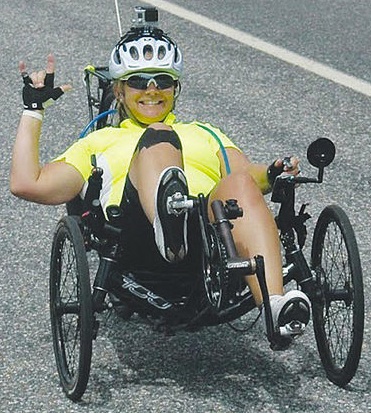
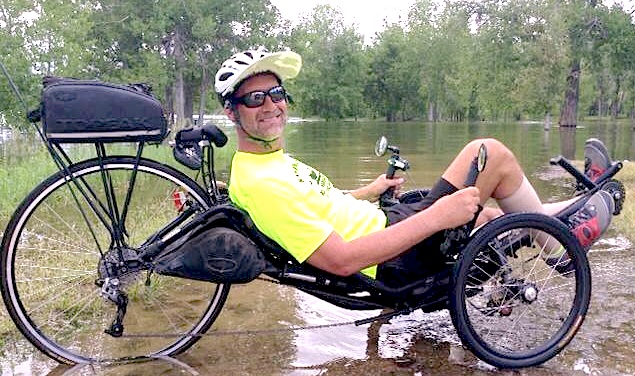
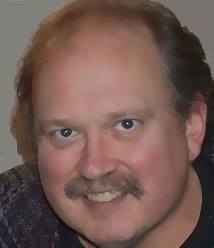
TBI – Survivors, Caregivers, Family, and Friends

Posts tagged ‘Brain Awareness’

SPEAK OUT! . . . . . . . . . . . . . . . . Faces of Brain Injury Charles Ross

SPEAK OUT! Faces of Brain Injury Charles Ross  (survivor)

presented by

Donna O’Donnell Figurski

 Brain Injury is NOT Discriminating!

bigstock-cartoon-face-vector-people-25671746-e1348136261718It can happen to anyone, anytime, . . . and anywhere.

The Brain Trauma Foundation states that there are 5.3 million people in the United States living with some form of brain injury.

On “Faces of Brain Injury,” you will meet survivors living with brain injury. I hope that their stories will help you to understand the serious implications and complications of brain injury.

The stories on SPEAK OUT! Faces of Brain Injury are published with the permission of the survivor or designated caregiver.

If you would like your story to be published, please send a short account and two photos to me at neelyf@aol.com. I’d love to publish your story and raise awareness for Brain Injury.


Charles Ross (survivor)
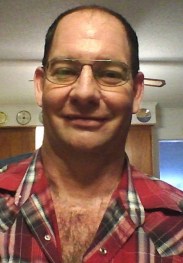
Ross Jr., Charles Survivor 112415 copy

Charles Ross Jr. – Brain Injury Survivor

It has been just over thirty years since I had my traumatic brain injury (TBI) in November 1985. I remember nothing of the accident at all. What I say of the accident is what I learned after the fact. I had the paddles put on me before I got on the helicopter to fly to the larger hospital in St. Louis. The doctors even told my parents they were removing me from Intensive Care to make room for someone who might live. I was in a coma for fifty days. I spent over ten months in the hospital. I was in a wheelchair for one and a half years. And, I had seven summers of surgery to make it to where I can now walk with a cane.

I have severe memory problems. My short-term memory was, and still is, bad. I had been having what I called “spells,” during which I would get a feeling like a chill in my spine. My parents noticed the staring while I was in the hospital. The doctors took me off seizure medicine because they did not believe I was having seizures. I know those spells increased in frequency after that. I could go days with no spells, but other days, I could have hundreds. They usually seemed to last a few seconds, but Mom thought they sometimes lasted longer.

As the spells increased, the feelings I had changed too. I began to notice a feeling like I needed to have a bowel movement, but I never did that, I remember. I would get extremely hot, and sometimes the sweat would just pour out of me for a few seconds. Mainly at night, I would wake with a spell and have a horrible taste in my mouth. After I got my license back, I sometimes had these spells while I was driving. I could have them in class or while I was watching TV or walking or sleeping – it did not matter. I never noticed anything that triggered them. Four years after the accident, in my sleep on New Year’s Eve night 1989, I had a tonic-clonic (grand mal) seizure. It was determined that the “spells” were petit mal seizures. Treatments finally began for traumatically incurred epilepsy, which the doctor finally said I had.

OLYMPUS DIGITAL CAMERA

After I started on medication, the spells decreased dramatically. I would still have one, and my neurologist would increase my dose. That helped for some time, but the spells never stopped completely. Even though I had severe memory and physical problems along with the seizures, I managed to get two Associate Degrees over nine years. However, because of my memory problems, I failed to get my Bachelor’s Degree. I started working with my last degree, but the stress was too powerful to maintain the job. I had many jobs though, mainly contract jobs without benefits.

I began to have blank spells. Maybe I had them before, but I never remembered them or realized it. Why I knew I had them was because I was driving again and I would have an accident in which I hit someone in the back end. I would come out of any blank spell immediately, but I never remembered what had happened, other than that I hit someone. I figured that they hit the brakes quickly in rush-hour traffic and I could not stop.

Over the years, I would have an accident every year or two. Finally, I realized that, before each accident, I had that strange feeling also. So, then I knew what the real cause of the accidents was. After fifteen years of work, I lost my job. I moved in with my parents again. The new neurologist started me on a second medication, and that helped. It did not stop the spells though.

Ross, Charles Survivor

Charles Ross Jr. – Brain Injury Survivor

I moved again and got another neurologist. She put me on two more medicines. One was the same brand, just a different strength. That medicine with such a heavy dosage made me have mood swings sometimes. Altogether, it was over twenty-two years after treatment began and twenty-seven years after the accident before the right mixture was found and I felt in control again. I moved back in with my parents again in late 2014. I helped my parents the best I could with my three hospital stays and two operations. I drove my dad for cancer treatments before his death in September 2015. I am with my mom now. We help each other during the grieving process.

I hope my story serves as a source of strength, encouragement, and determination for others with TBIs to never give up. I was never supposed to live! If I did, they said I would be no more than a being in a chair, unable to do anything for myself.

Never Give UpI am writing my story, I drive, I went to college, I got two Associate degrees, and I worked for fifteen years. There is so much more, but anyone who reads this story should know that anything is possible. You may not accomplish as much as I did, or you may accomplish more. Just know that you should never give up on yourself. Feel proud of your body. If they had been in your shoes, they could never have done what you did, and that is to survive! Be proud!


(Clip Art compliments of Bing.)

(Photos compliments of contributor.)

As I say after each post: Please leave a comment by clicking the blue words “Leave a Commentanim0014-1_e0-1 below this post.

Feel free to follow my blog. Click on “Follow” on the upper right sidebar.

If you like my blog, share it intact with your friends. It’s easy! Click the “Share” buttons below.

If you don’t like my blog, “Share” it intact with your enemies. I don’t care!

Feel free to “Like” my post.


On The Air: Brain Injury Radio “Another Fork in the Road” Panel: Living and Coping with PTSD

On The Air: Brain Injury Radio “Another Fork in the Road”

Panel: Lisa Dryer and Julie Kintz

Living and Coping with PTSD

presented

by

Donna O’Donnell Figurski

images-1

Post Traumatic Stress Disorder (PTSD) is a condition that many people experience who are involved in traumatic events, such as physical or sexual assaults, traffic accidents, or any life-threatening traumas. PTSD is also often experienced by those who may witness a traumatic event. For Folks living with brain injury are often affected with PTSD.  PTSD is also common among troops returning from war with what was once called battle-fatigue or shell-shock.


Julie Kintz Survivor Panel 070515

Julie Kintz – Survivor

Dryer, Lisa Survivor

Lisa Dryer – Survivor

My panel, Lisa Dryer and Julie Kintz, both who live and cope with PTSD, joined me to discuss this topic. We hope to shed some light on what PTSD is and how survivors can cope with it. They each offer suggestions that work for them.


Several Facebook friends contributed comments and their thoughts about their experiences with PTSD. I want to thank Beth, Melissa, Sherrie, Firefighter JD (John Doe anonymous), Katey, Tara, JD2 (John Doe 2 anonymous), Jen, Alan, and Judi for their courage in sharing some very personal stories.

See you “On the Air!”

On The Air: Brain Injury Radio “Another Fork in the Road” Living and Coping with PTSD


(Clip Art compliments of Bing.)

As I say after each post: Please leave a comment by clicking the blue words “Leave a Commentanim0014-1_e0-1 below this post.

Feel free to follow my blog. Click on “Follow” on the upper right sidebar.

If you like my blog, share it intact with your friends. It’s easy! Click the “Share” buttons below.

If you don’t like my blog, “Share” it intact with your enemies. I don’t care!

Feel free to “Like” my post.


SPEAK OUT! NewsBit: . . . . . . Wanting A “Sound Mind,” 30-Year-Old Football Player Retires

Wanting A “Sound Mind,” 30-Year-Old Football Player Retires

presented

by

Donna O’Donnell Figurski


husain_abdullah

Husain Abdullah – NFL Player

For seven years, Husain Abdullah played football in the National Football League (NFL), the premier professional football league in the United States. For four years, Abdullah, a safety, played with the Minnesota Vikings, and, for three years, he played with the Kansas City Chiefs. He graciously thanked both teams for allowing him to play. In the 2015 season, he had the fifth concussion of his career. While he was recovering, he thought about his many life-goals. Husain realized that he would need a “sound mind” to achieve his goals.

The research showing a link between the head trauma of football and the neurodegenerative disease CTE (chronic traumatic encephalopathy) is thought-provoking, and it has several players concerned. Even the NFL has admitted that there is a link between playing football and CTE, although the league later tried to downplay its comment. (CTE, originally known as “dementia pugilistica,” had only been seen in the brains of some boxers.

Dr. Bennet Omalu -

Dr. Bennet Omalu –

Dr. Bennet Omalu was the first to find the disease elsewhere – in a football player. Dr. Omalu renamed the disease “CTE.” Dr. Omalu’s discovery is the subject of the December 2015 movie Concussion, starring Will Smith. The real-life story is told in the PBS Frontline documentary, League of Denial: The NFL’s Concussion Crisis – available free online.)

Abdullah’s retirement follows other early retirements, most notably that of San Francisco 49er star rookie linebacker, Chris Borland, who cited the high risk of brain disease as his reason for retiring after playing only one year. Another rookie, Green Bay Packer wide receiver Adrian Coxson, retired after getting a severe concussion in practice and being told that the next hit might seriously affect his brain function or kill him.

Abdullah Husain - NFL Player

Abdullah Husain – NFL Player

It remains to be seen if Husain Abdullah’s retirement will be the last early retirement in the NFL due to football’s risk to the brain. (Full story)


(Clip Art compliments of Bing.)

As I say after each post: Please leave a comment by clicking the blue words “Leave a Commentanim0014-1_e0-1 below this post.

Feel free to follow my blog. Click on “Follow” on the upper right sidebar.

If you like my blog, share it (intact) with your friends. It’s easy! Click the “Share” buttons below.

If you don’t like my blog, “Share” it (intact) with your enemies. I don’t care!

Feel free to “Like” my post.


Another Fork in the Road Reasonable, Responsible, & Realistic Resolutions

“Another Fork in the Road”

Fork in the Road copyThis category is an extension of my radio show, “Another Fork in the Road,” which airs at 5:30 pm (Pacific Time) on the 1st and 3rd Sundays of each month on the Brain Injury Radio Network. (See the “On The Air Show Menu” category for a list – with links – of all my shows, which are archived and thus always available.)

On the 1st Sunday of each month, I host a panel of brain injury survivors, caregivers, and/or professionals in the field. On these shows, my panelists and I examine topics pertaining to brain injury.

On the 3rd Sunday of each month, I host guests – brain-injury survivors, caregivers, or professionals in the field.

Since I spend countless hours in preparation for each show, I decided to share the knowledge that I gather with my readers.


Reasonable, Responsible, & Realistic Resolutions

by

Donna O’Donnell Figurski


blank list of resolutions on blackboard

New Year’s Day has passed. A new year is always a time of renewal – a time to look back on the past year and make positive commitments for the upcoming year. As humans, we seem to strive to improve, to make life better. The new year is a good time to correct old mistakes and to look to the future and make new plans.

I think this topic is appropriate now, as we look back on the past two months to determine if we are honoring our New Year’s resolutions. Did we, in fact, make reasonable, responsible, and realistic resolutions?

 It feels like the whirlwind of the holidays happened eons ago, and yet it’s just been two months. If you are like most of the population, you probably made resolutions on New Year’s Day – promises to yourselves that you would do something in your life to better it. In the days after the New Year’s celebration, you will see more people in the gym or running through the streets – maybe decked out in new running clothes to increase their motivation. You might hear folks talking about the new diet they are going to try to lose those unwanted pounds. Some folks vow to stop smoking or drinking, or at least they intend to cut down. Folks promise to take more time for family or friends, save money, travel more. new-years-resolutionsThe list goes on and on. Usually these resolutions are good intentions for the year that last maybe a week or two – perhaps even a month – but for whatever reason or reasons – time, lack of interest or motivation – many of these good intentions fall by the wayside.

Each new year, I usually make the resolution to exercise more. I start off okay, but not long after New Year’s Day is past, the motivation walking_girlstarts to wane. Lack of time, or more like “inability to properly manage time,” is a big factor for me. I seem to be always too busy with tons of projects, most of them involving writing. I work daily on my blog. I spend hours preparing my radio show. I’m writing articles for publication, and, of course, I have to write a lot of query letters to agents and publishers as I try to sell my book, “Prisoners Without Bars: A Caregiver’s Story.” It seems that the only things that ever get any exercise are my brain … and my fingers as they fly over the keyboard. Uh, did I say “fly”? I meant more like “stumble.” Most of my projects have deadlines – if not actual ones, then at least self-imposed ones. So, due to my over-commitments, this year I chose not to make any resolutions that I know I will not keep. Not keeping my resolutions only makes me feel like a failure, and that is not productive. I bet a lot of people fall into this category.

Folks with a brain injury are continually working to improve their lives, and New Year’s resolutions may seem even more important. Brain-injured people are used to taking small steps, but the temptation for New Year’s resolutions may be to try to do too much.

I’m going to discuss how to keep interest up and to make it possible to reach the goal of a reasonable, responsible, and realistic resolution.

DO YOU ENJOY YOUR GOAL?

Don’t have a goal you will never want to do. That’s a recipe for disaster. Is your resolution such a chore that you can easily find any excuse to NOT do it? If you’d rather clean toilets than complete your resolution, then perhaps you should reassess your resolution. toilet1I can pretty much guarantee that you will not be successful and that lack of success is certainly going to instill feelings of failure. I think a big part of being successful in keeping a resolution is to give the goal some thought first.

DECIDE HOW YOU WILL IMPLEMENT YOUR GOAL

If you want to get more sleep and go to bed earlier, then set an alarm for 30 minutes before your desired bedtime so you can start your sleep in bedbedtime preparations. If you want to always remember where your keys are, put a hook on the wall and ALWAYS hang your keys there. You will never have to search your home again for keys. Following a routine makes life easier. That goes for anything. Also, use available tools (calendar, Post-It notes, smart phone, etc.) to help you keep organized.

KEEP A TRACK RECORD

By keeping a record of your accomplishments, you are setting yourself up for success. You could keep a record in a journal-like notebook. journalSimply write the date at the top of the page, and write what you accomplished that day (e.g., Sit-ups – 5 minutes; Meditated – 10 minutes). You could also simply use a calendar dedicated just to your resolution and write your activity under each day that you do it. If you are computer savvy, you could keep a spreadsheet. Place the days in the left column; list the activities across the top. Then just put a checkmark in the box corresponding to day and activity. That would be the way I would do it.

I like to see my progress. It motivates me. I enjoy seeing how well I am doing – or NOT doing, so that I can readjust and improve. It may work for you too.

BE PATIENT – YOUR GOAL WILL NOT BE ACCOMPLISHED OVERNIGHT

Your success will not happen overnight. It will take time. You may even become lax at times, but don’t worry. The record keeping that we spoke of above will help to get you back on track.

Before his brain injury in 2005, my husband, David, used to do a half hour of his version of Tai Chi every morning. He’d run twenty miles each week, and he’d regularly lift small weights to strengthen weight_lifting_13his arms. He was fit and healthy. He exercised not only for his health, but also to leave the stress of his laboratory behind. David’s disabilities are all physical, including severely compromised balance, which makes him unable to run. He regrets this, but he has turned his attention to the treadmill – with its handrails – for exercise. He has also recently acquired a recumbent trike, which allows him to pedal away on his own with no danger of falling. None of this was possible when David first arrived home from the hospital. He was confined to wheelchair and bed. He could not even stand unassisted. It was a slow process – one that he has worked on over the past eleven years, but with small steps and small increments of exercise, he is gaining his strength and his independence.

So, no matter what your goal is, BE PATIENT. Reach for the stars, but remember, it will take time.

BE FLEXIBLE

If you choose a goal that you find is not appropriate – it’s too hard, it’s too easy, or you are not enjoying it – QUIT IT!

?????????????????????????????

It’s your life, and you can make the choices. Because you are a brain-injury survivor, I am sure there are many goals you would like to accomplish. Make new resolutions. (It doesn’t have to be a new year.) And, mix it up.

If you are not seeing the progress you want – for whatever reason, choose something else to work on. You can always come back and try again later. That’s why I encourage you to make reasonable and realistic resolutions. You want success to be imminent.

Once David tried a form of therapy on the recommendation of a friend who insisted that it helped her greatly, and, in fact, it did help her. David tried it for quite a long time and dedicated himself to it, but found it tedious and boring. He soon quit and set his sights on something more enjoyable that was not going to make him miserable. That’s where the flexibility comes in. Do what works for you.

TRY SOMETHING NEW

I mentioned earlier to “mix it up.” That’s not a bad idea for anyone. If boredom sets in, your chance of success will fall greatly. You won’t reach your proposed goal, and you will become disenchanted with the activity. The feelings of failure are right behind. So, don’t put yourself in that position. Make a new resolution, and try something different. It can be something different that is still familiar, or it can be something so different that you have never done it before.David on Recumbent Trike

I want to go back to the story of David’s recumbent trike. In his adult life, he never rode a bicycle. As I mentioned, his preferred method of exercise was to run. When that was no longer a viable exercise mode, he turned to a recumbent trike. That has changed his post-brain-injury life. Before the trike, David was unable to leave the house alone. Now he can leave whenever he wants to. He is able to go to the garage, get on his trike, ride for several hours, and return. (The only thing he cannot do is get off the trike anywhere else because his balance issues do not allow him to walk freely outdoors.) So, try something you have never done before. Maybe you always wanted to draw or paint. Do it.

HAVE A BUDDY FOR SUPPORT

You may want to exercise with a buddy. Exercise can be much easier with a friend. I much prefer walking and talking or treading water in the deep end of a pool and talking or rotating through the machines in the gym and talking. Are you seeing a pattern here? I find exercising with a friend much more enjoyable than exercising alone. No matter what your goal is, if you can do it with someone else, it makes the exercise easier. It also adds an element of accountability. If you have made plans with a friend, you are more likely to meet your goal.swimming

For most survivors with brain injury, life has drastically changed. The kinds of resolutions that you may have made before your brain injury are now more than likely impossible to attain. But, that doesn’t mean that you can’t set goals that you can successfully achieve. The gym may be out of the question, but you can set aside some moments at home for leg lifts, small weights, push-ups, stepping-in-place, etc. You can do anything to keep your body fit.

Each brain injury is different. The disabilities that accompany each brain injury are wide and varied. For some folks, the injury entails only cognitive/learning disabilities or emotional issues. For others, the brain injury might include physical disabilities.

So basically, you want to assess what you can do to improve your life while not being miserable. You want to make resolutions that can fit into your lifestyle. You don’t want to set your goals so high that they cannot be achieved. But, if you set your goals too high, change them. Make your resolutions reasonable, responsible, and realistic. Most of all, make them FUN.

have_fun


Click here to listen to my show:

“Responsible Resolutions” on “Another Fork in the Road,” on the Brain Injury Radio Network.”

(Clip Art compliments of Bing.)

As I say after each post: Please leave a comment by clicking the blue words “Leave a Commentanim0014-1_e0-1 below this post.

Feel free to follow my blog. Click on “Follow” on the upper right sidebar.

If you like my blog, share intact it with your friends. It’s easy! Click the “Share” buttons below.

If you don’t like my blog, “Share” it intact with your enemies. I don’t care!

Feel free to “Like” my post


Survivors SPEAK OUT! Jessica Taylor

Survivors SPEAK OUT! Jessica Taylor

presented

by

Donna O’Donnell Figurski


03 Taylor, Jessica 1 copy

Jessica Taylor – Brain Injury Survivor and Author

1. What is your name? (last name optional)

Jessica Elizabeth Taylor

2. Where do you live? (city and/or state and/or country) Email (optional)

Vancouver Island, British Columbia, Canada

3. On what date did you have your brain injury? At what age?

Age 31

4. How did your brain injury occur?

A fall down a steep staircase head first into a steel-plated door

5. When did you (or someone) first realize you had a problem?

My husband knew I was sick, but he did not know I had a brain injury. (I was not told that I had brain injury until six years after the injury!) I didn’t know who I was, who my husband was, and who my children were. I became a child again. I had to relearn everything. My personality was greatly changed. My balance was off for some time. My left hand curled inwards, but I trained it to straighten. I also had contusion of the back, a hemorrhage behind my right eye, and scalp laceration.

6. What kind of emergency treatment, if any, did you have?

Intensive care

7. Were you in a coma? If so, how long?

I was in a semi-coma for several weeks.

8. Did you do rehab? What kind of rehab (i.e., inpatient or outpatient and occupational and/or physical and/or speech and/or other)?

I had rehab only in a psychiatric ward as a day patient for some months at a time in two different countries. I trained myself by learning again and also by becoming positive and never giving in to depression or my disabilities.

How long were you in rehab?

I had no proper rehab. I was just given many IQ tests and psychiatric care. This did not help matters!

9. What problems or disabilities, if any, resulted from your brain injury
(e.g., balance, perception, personality, etc.)?

Recent recall was and still is a problem. I cannot take on too may projects at a time. I have to avoid stress at all times.

10. How has your life changed? Is it better? Is it worse?

My life has been enhanced through training my dormant brain neurons myself and by having spiritual knowledge. As a result, I am a happier person.

06 Taylor, Jessica 2 copy

Jessica Taylor – Brain Injury Survivor and Author

11. What do you miss the most from your pre-brain-injury life?

I do not look back.

12. What do you enjoy most in your post-brain-injury life?

I enjoy being who I am.

13. What do you like least about your brain injury?

I don’t think about the past. I just put up with my disability as a part of my life.

14. Has anything helped you to accept your brain injury?

No

15. Has your injury affected your home life and relationships and, if so, how?

I had distant relationships with my husband and my children, as well as with all who knew me.

16. Has your social life been altered or changed and, if so, how?

My new and holistic view of life has changed all that I do and think.

17. Who is your main caregiver?

ME

Do you understand what it takes to be a caregiver?

I know what caregivers should be aware of with regards to brain injury.

18. What are your plans? What do you expect/hope to be doing ten years from now?

I hope to keep sharing my knowledge through the publication of my books and by giving talks.

19. Are you able to provide a helpful hint that may have taken you a long time to learn, but which you wished you had known earlier?

11 Taylor, Jessica Book Cover copy

From Tragedy to Triumph: Journey Back From the Edge by Jessica Taylor

I only wish that I had been taught by specialists how to retrain my brain in the early years, as opposed to doing so later.

If so, please state what it is to potentially help other survivors with your specific kind of brain injury.

Know that we can train and activate dormant neurons through studying a subject that is of interest. This has to be done frequently.

20. What advice would you offer to other brain-injury survivors? Do you have any other comments that you would like to add?

My advice is to study spirituality and to read as much as possible about the subject. I do not mean in the religious sense – study people like Deepak Chopra and watch Super Soul Sunday on TV. Stay positive and learn not to give in to negative thoughts. Try hard to rise above fear, jealousy, hatred, greed, envy, etc., and your vibration will increase in frequency. All this happened to me through my self-rehab.

To learn more about Jessica Taylor, click on the following links.

Jessica Elizabeth Taylor website
Jessica E. Taylor Facebook
Jessica E. Taylor Twitter
Jessica Elizabeth Taylor Linked in

Jessica’s book

“From Tragedy to Triumph: Journey Back From the Edge”


(Disclaimer: The views or opinions in this post are solely that of the interviewee.)

If you would like to be a part of the SPEAK OUT! project, please go to TBI Survivor Interview Questionnaire for a copy of the questions and the release form.

(Clip Art compliments of Bing.)

(Photos compliments of contributor.)


As I say after each post:

Feel free to leave a comment by clicking the blue words “Leave a Comment” below this post.

Please follow my blog. Click on “Follow Me Via eMail” on the right sidebar of your screen.anim0014-1_e0-1

If you like my blog, click the “Like” button under this post.

If you REALLY like my blog, share it intact with your friends. It’s easy! Click the “Share” buttons below.

If you don’t like my blog, “Share” it intact with your enemies. That works for me too!

SPEAK OUT! . . . . . . . . . . . . . Faces of Brain Injury – Amy Zellmer

SPEAK OUT! Faces of Brain Injury – Amy Zellmer

presented by

Donna O’Donnell Figurski

 Brain Injury is NOT Discriminating!

bigstock-cartoon-face-vector-people-25671746-e1348136261718It can happen to anyone, anytime, . . . and anywhere.

The Brain Trauma Foundation states that there are 5.3 million people in the United States living with some form of brain injury.

On “Faces of Brain Injury,” you will meet survivors living with brain injury. I hope that their stories will help you to understand the serious implications and complications of brain injury.

The stories on SPEAK OUT! Faces of Brain Injury are published with the permission of the survivor or designated caregiver.

If you would like your story to be published, please send a short account and two photos to me at neelyf@aol.com. I’d love to publish your story and raise awareness for Brain Injury.

Amy Zellmer (survivor)

Amy Zellmer 3 Survivor 101015They say a picture says a thousand words. It’s been nineteen months since I fell on a patch of ice and landed full-force on the back of my skull. I suffered a traumatic brain injury (TBI) plus whiplash, torn muscles in my neck, shoulder, and chest, and I also dislocated my sternum. What the photo doesn’t show is how I wasn’t able to do any exercise – even mild – for the first year. Just walking around the grocery store was enough to leave me spent for the rest of the day – let alone carrying in the bags of groceries. I am not exaggerating when I tell you that I lived pretty much in my bed or on the couch for over a year. I would do photography sessions a few times a week (because that’s my only form of income, and I had bills to pay) and pay the price for two days – icing my body and popping ibuprofen like it was candy. Even just six months ago, I couldn’t properly stand up straight – let alone do strength training. And let’s not forget about the horrible vertigo and balance issues that came with the TBI. But I finally decided that ENOUGH IS ENOUGH! It was time to DO SOMETHING – anything! So I started doing yoga for 10-15 minutes a day. At first it was hard – really hard. I could do only very basic, simple stretching poses. I would hold onto a chair for any pose that required standing so that I didn’t lose my balance. But you know what? IT HELPED! It started me on a path to gaining back my strength and endurance.Amy Zellmer Survivor 1 101015

AND NOW LOOK AT ME! I am working with a fab trainer. We are using weights and resistance to get my body back to pre-injury status. It feels so good to be able to walk standing fully upright, and have the strength to carry my groceries into the house. I feel absolutely amazing, and my symptoms are subsiding (the physical ones; Amy Zellmer 2 Survivor 101015the neurological ones are still present). I know it seems impossible when you’re in the darkest days after a TBI. I’ve completely been there. But, man, you take back control of your life when you finally start to step out of it and say, “F… Y.., TBI!” If I can do this, I know you can too!

(Clip Art compliments of Bing.)

(Photos compliments of contributor.)

As I say after each post: Please leave a comment by clicking the blue words “Leave a Commentanim0014-1_e0-1 below this post.

Feel free to follow my blog. Click on “Follow” on the upper right sidebar.

If you like my blog, share it intact with your friends. It’s easy! Click the “Share” buttons below.

If you don’t like my blog, “Share” it intact with your enemies. I don’t care!

Feel free to “Like” my post.

SPEAK OUT! . . . . . . . . . . . . Itty-Bitty Giant Steps

SPEAK OUT! Itty-Bitty GIANT Steps

presented by

Donna O’Donnell Figurski

Itty-Bitty GIant Steps for BlogSPEAK OUT! Itty-Bitty Giant Steps will provide a venue for brain-injury survivors and caregivers to shout out their accomplishments of the week.

If you have an Itty-Bitty Giant Step and you would like to share it, just send an email to me at neelyf@aol.com.

If you are on Facebook, you can simply send a Private Message to me. It need only be a sentence or two. I’ll gather the accomplishments and post them with your name on my blog approximately once a week. (If you do not want your last name to be posted, please tell me in your email or Private Message.)

I hope we have millions of Itty-Bitty Giant Steps.

Here is this week’s Itty-Bitty GIANT Step

Otto Rodriguez (survivor) (submitted with permission by Otto’s sister, Sylvia Rodriguez Witt)…

Rodriguez, Otto Survivor 121115

Otto Rodriguez, Survivor

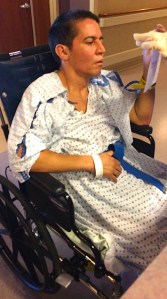
Otto sustained a diffuse axonal traumatic brain injury on February 28, 2015, due to an assault. Otto had to relearn to walk and talk, and he continues to learn independence. Before his injury, my brother was a marathon runner. Recently he and I completed a 5K together. Otto completed the 5K in an hour.

Rodriguez, Otto Survivor & sister Sylvia Witt

Otto Rodriguez, Survivor & sister, Sylvia Rodriguez Witt

I write this to offer hope to those in the early stages of this journey. Each day, my brother continues to heal. It is slow and requires patience. But with love, support, and patience, it is possible to loosen the grip of this awful beast, otherwise known as “TBI.” This holiday season, I am thankful for resilience, patience, and perseverance. Stay strong survivors!

YOU did it!

Congratulations to contributors!

(Clip Art compliments of Bing.)

As I say after each post:anim0014-1_e0-1

Please leave a comment by clicking the blue words “Leave a Comment” below this post.

Feel free to follow my blog. Click on “Follow” on the upper right sidebar.

If you like my blog, share it intact with your friends. It’s easy! Click the “Share” buttons below.

If you don’t like my blog, “Share” it intact with your enemies. I don’t care!

Feel free to “Like” my post.


Another Fork in the Road . . . . . . NFL Player, Kyle Turley, Brain Injury, Football, and Music

YOU ARE INVITED!

NFL Player, Kyle Turley, Brain Injury, Football, and Music

with host Donna O’Donnell Figurski

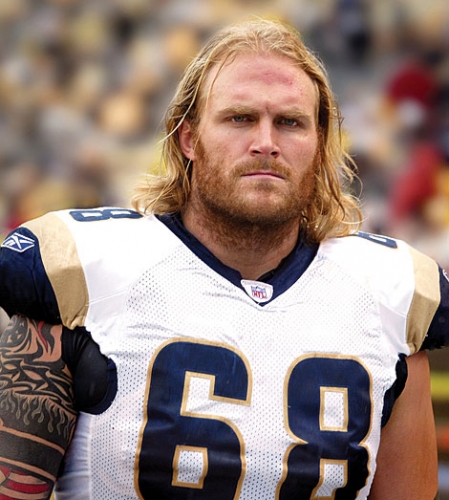
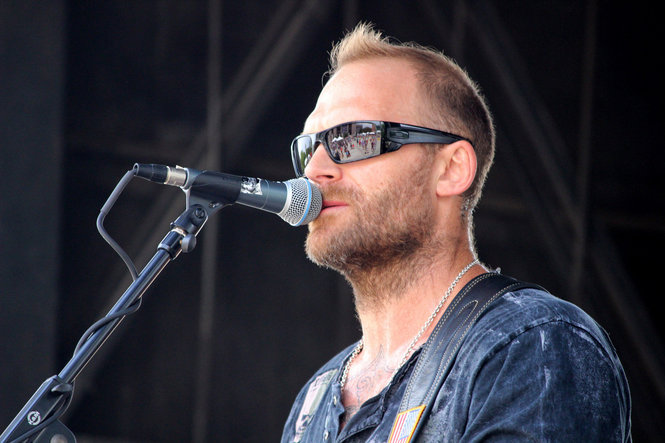
putthis_on_calendar_clip_artKyle Turley, former football player for the New Orleans Saints, the Saint Louis Rams, and the Kansas City Chiefs, will join me to discuss life after football while living with brain injury. As an offensive tackle, Kyle has had more than his share of concussions – leading to seizures and various Kyle-Turleybrain-injury complications, which have adversely affected his life. Kyle is picking up the pieces and assembling his life-puzzle by speaking out about brain injury. He does this through his music, The Kyle Turley Band, and his recent documentary, “The United States of Football.”12821083-standard

You can hear one of Kyle’s songs here. “Fortune and Pain.” It’s powerful!

Come One! Come ALL! 

What:        NFL Player, Kyle Turley, Brain Injury, Football, and Music

Why:        Kyle Turley SPEAKS OUT! about how brain injury affects his life.

Where:     Click: Brain Injury Radio Network

When:       Sunday, October 18th, 2015

Time:         5:30p PT (6:30p MT, 7:30p CT, and 8:30p ET) 80 minute show

How:         Click: Brain Injury Radio Network

Call In:    424-243-9540

Call In:     855-473-3711 toll free in USA

Call In:    202-559-7907 free outside USA

or SKYPE

If you miss the show, but would like to still hear the interview, you can access the archive on On Demand listening. The archived show will be available after the show both on the Brain Injury Radio Network site and on my blog in “On the Air” Show Menu.

(Clip Art compliments of Bing.)

Another Fork in the Road: Depression, Suicidal Thoughts, & Brain Injury

Fork in the Road copy

“Another Fork in the Road”

This category is an extension of my radio show, “Another Fork in the Road,” which airs at 5:30 pm (Pacific Time) on the 1st and 3rd Sundays of each month on the Brain Injury Radio Network. (See the “On The Air Show Menu” category for a list – with links – of all my shows, which are archived and thus always available.)

On the 1st Sunday of each month, I host a panel of brain injury survivors, caregivers, and/or professionals in the field. On these shows, my panelists and I examine topics pertaining to brain injury.

On the 3rd Sunday of each month, I host guests – brain-injury survivors, caregivers, or professionals in the field.

Since I spend countless hours in preparation for each show, I decided to share the knowledge that I gather with my readers.

Another Fork in the Road

Depression, Suicidal Thoughts, & Brain Injury

by

Donna O’Donnell Figurski

canstock16714646Depression is a state of mind that can cause long-term mental mood disorders. Everyone experiences sadness and unhappiness at times. That’s normal. Those feelings happen when something sad enters people’s lives or they experience grave disappointments. Normal life-events, like a pet dying, being passed over for a promotion, going through a divorce, or experiencing money problems, can trigger feelings of sadness. Usually with time, those feelings pass, and people move on.

But when there are unrelenting feelings of despair, usually coupled to at least one of the many telltale signs and symptoms of depression, then drastic measures need to be taken. Depression is devastating and can affect every aspect of daily living. Depression is pure agony resulting from desperation and the need to escape. It is constant; there is no relief. Unlike sadness or unhappiness, depression settles in to stay. It can last weeks, months, or even years. If not treated, depression can be deadly. But if a person seeks treatment, there are ways to diminish, and possibly even cure, depression.

I have never been diagnosed with clinical depression. Technically, I have never been depressed. But I have occasionally complained that I am “depressed” – using that word. I think everybody does. It’s a term we throw around too easily. When I’m feeling blue or down, I might say, “I’m depressed.” But I’m only experiencing a feeling of unrest or unhappiness for a short time. I have learned that there are ways for me to alleviate these uncomfortable and unwanted feelings with a few easy activities. I find if I remove myself from the environment that I am in, I can change my emotions. For example, if I am home when these feelings overwhelm me, I often will go to the store or run errands. Sometimes I will turn on uplifting music or talk to a friend. Exercise can usually jar me out of my doldrums. While I can change my mood when I’m sad, a truly depressed person can do so only with great difficulty.

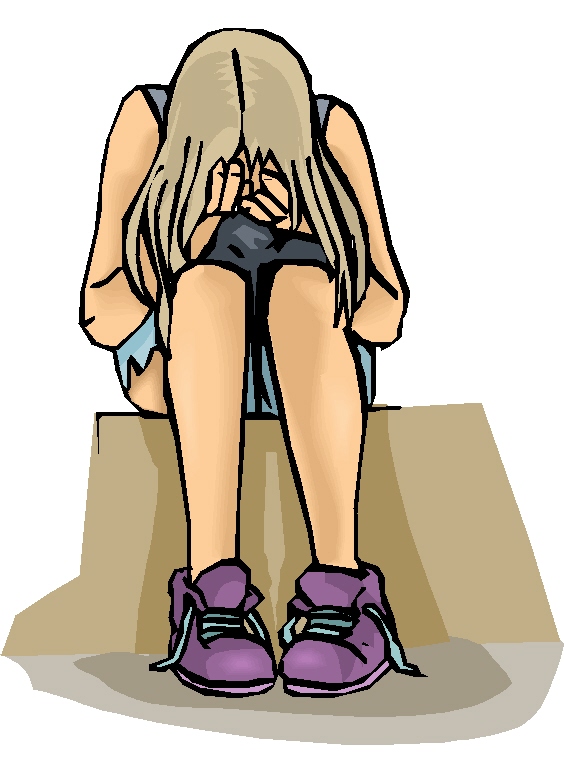
Depressed GirlSome signs and symptoms of depression are very intense feelings of unhappiness, anxiety, worthlessness, helplessness, lack of self-esteem, and/or lack of self-confidence. Depression can seriously impact sleep and eating habits. It can lead to a significant loss of energy, focus, or attention. A prolonged feeling of panic is also a sign of depression. A lack of interest in taking care of health needs may be indicative of depression. A person may start to withdraw from his or her family or friends or from the things he or she once enjoyed – essentially quitting the world. Defying fate (for example, doing things that are risky or death-defying, such as swimming too far out into the ocean or walking too close to the edge of a cliff) is a relatively obvious symptom, but what about overeating,Depressed Man overuse of alcohol, or drug use? If a person is talking about suicide or is making statements, such as “Everyone would be better off, if I weren’t here,” “I can’t take this anymore,” or even more blatantly, “I wish I were dead,” that person may be sending up a red flag. It may be the person’s way of begging for help.

Depression is not discriminating. It can happen to anyone. Actress Winona Ryder, Princess Diana, former Pittsburgh Steelers quarterback and four-time Super Bowl winner, Terry Bradshaw, and Barbara Bush, wife of a former United States President all suffered from depression. And the list goes on and on. Sometimes, people hide their depression, as with actor and comedian Robin Williams. I think we were all broadsided when Robin committed suicide in August 2014. Though Robin’s close friends saw signs of his depression, the rest of the world saw only a very accomplished actor who always had a smile on his face. His great acting skills spilled over into his personal life, and his greatest role was “the great deceiver.” I can’t imagine the pain his smile must have been covering up. Robin sought help and willingly admitted himself to treatment centers, but unfortunately that was not his salvation.th

Former San Diego Chargers linebacker and Hall of Fame member, Junior Seau, was deeply affected by depression after years of collisions with other players. Years of playing football ultimately damaged Seau’s brain and led to his suicide in 2012. Chronic traumatic encephalopathy (CTE) was the unequivocal diagnosis by the National Visger, GeorgeInstitutes of Health (NIH) from the study of Seau’s brain. Former San Francisco 49er, George Visger, lives daily with the complications of brain injury. (You can hear George’s story on my August 16, 2015 show. You can also read more about George on this blog.) Another former football player, Kyle Turley, who played for the New Orleans Saints, the St. Louis Rams, and the Kansas City Chiefs is Kyle Turleysuffering the ravages of brain injury and depression. (Kyle will be a guest on my show on October 18, 2015. He will discuss his life with brain injury and how he is redefining his new world.)

Depression is not an unfamiliar state for those who live with brain injury. And it’s not surprising. Brain injury turns lives completely upside down. Usually it’s difficult, sometimes impossible, for survivors to realize the extent of the damage done to their brains. Many times they are not the same person they were before the injury, and they have to face their limitations – cognitive, behavioral, emotional, and/or physical. Thinking back on a pre-brain-injury life and being aware of what was stripped away can easily lead someone to depression – and even to suicidal thoughts.

One way to help deal with depression after brain injury is to accept the “new” person who a brain-injured person has become. I have noticed in the Survivor SPEAK OUT! interviews on this blog that many survivors have stated that, once they accept their “new” persona, they have found more happiness. That isn’t to say that everything is okay. That isn’t to say that the brain-injured persons have given up. It’s just that the survivors have become more accepting of the persons they have become, and they will take those new persons to the limit.

With her permission, I want to share the story of a friend of mine who used an additional method to help with her depression. Cat Brubaker was enjoying life as a young woman. She had completed college, and she was working in a position that she enjoyed. Then she became the victim of two brain injuries. These injuries left Cat feeling helpless and hopeless. With Cat confined to her home, the walls closed in on her, and she felt desperate. Cat’s loss of independence, the decline of her longtime relationships, and finally the death of her mother were too much, and she fell deeply into depression. She eventually entertained thoughts of suicide. But Cat found a way out of her trapped box when she discovered the joys of her recumbent cat-triketrike and met a new friend, Dan Zimmerman, a stroke survivor and also a recumbent trike rider. Cat and Dan set off last summer to cross the USA on their trikes. They rode their trikes from Anacortes, Washington, diagonally across the country to Key West, Florida – a trip that took them five months and was 5,400 miles. I’m not saying that everyone needs to get a trike and travel across the country, but I am pointing out that perhaps finding a new purpose in life can help shove depression into the background. The recumbent trike was the answer for Cat. Zimmerman, Dan Survivor 071015Riding her recumbent trike is something that Cat thoroughly enjoys and relies on for her mental health. Cat has made many new friends by riding her trike. She has even created a foundation, called “Hope for Trauma,” to help other brain-injury survivors. Cat’s story shows that, though people may feel the total helplessness and hopelessness that accompanies depression, it is sometimes possible to find a way to redirect their lives to find happiness.

There are other methods that may help alleviate the feelings of depression. Art Therapy also helps some folks connect with their inner selves. It usually also requires complete concentration, which can take the focus off the unwanted depressive feelings. Animal Therapy guarantees that one is never alone. Pets usually provide unconditional love, which a person suffering from depression could certainly use.

Technically depression is a chemical imbalance in the brain. It is not easy to turn off. So what can be done about depression? Two different types of health-care workers can help immensely: psychologists and psychiatrists.

PsychologistBoth psychologists and psychiatrists use psychotherapy, often referred to as “talk therapy” or “counseling.” Psychotherapy helps patients with mental health issues sort through their feelings, moods, and emotions. Through talk, a mental-health-care provider can guide or retrain a person’s mind to approach existing problems differently. The brain can actually change physically by talking about a problem. Psychotherapy can be effective with many different types of mental-health challenges, including anxiety, personality or mood disorders, problems with eating or sleeping, and various addictions. It can also address coping with life-altering situations, such as the ones that many brain-injury survivors live with daily. Realizing that they are not the persons they were before their brain injury is a major problem for many survivors. Not being able to return to the former life-style and having to redefine oneself can be devastating to a person who survives a brain injury. Often a brain-injured person wonders why he or she was saved. These kinds of thoughts can easily lead to depression.

Psychotherapy does not use medication. Both a psychologist (usually a Ph.D.) and a psychiatrist (an M.D.) use psychotherapy. A psychiatrist has been trained in the biology of the body and in neurochemistry, while psychologists focus more on the behavioral aspects of the person. Some patients may need stronger medical Doctor Womanassistance. Because a psychiatrist is a medical doctor, he or she can prescribe medication. Medications are getting better. The best ones are more targeted and thus have fewer side effects.

Research is very active and is greatly advancing our knowledge of depression. A recent NewsBit on this blog (“Depression Reversed in Mice”) reported that basic research has resulted in the curing of depression in mice. Memories are tagged with positive or negative feelings. Scientists have been able to activate specific neurons to induce a memory with its associated positive feeling to overcome depression. It will probably be a couple of decades before this kind of therapy will be ready for humans.

If you want to learn more about depression, the Internet is a marvelous tool for gathering information. There are countless sites, many very reputable, that examine this topic. Simply Google “brain injury” and “depression.” I can guarantee you will learn more than you could imagine.

Of course, if you or someone you know needs immediate help, don’t waste time on the web. Call 9-1-1 immediately.

There are also many depression and suicide hotlines. Here I name a few in the US that I found on the web. I really do not know anything about them, so I cannot endorse them. But I suggest that, if you have concerns about depression or suicide, you look into them in advance of any crisis.

Hotline-ICON-XS_optiHotlines

National Suicide Prevention Lifeline
800-273-8255
(suggested by the Mayo Clinic)

The Samaritans 24-Hour Crisis Hotline
212-673-3000

Crisis Call Center
775-784-8090

Most states in the US have mental health hotlines. Here is a site that has links to most state hotlines.

Suicide Hotlines

Depression is a common affliction of brain-injured survivors. It needs to be recognized as a serious and devastating illness, not as something one can “work through” himself or herself. The good news is that help is available. If you are suffering from depression or if you know someone showing signs of depression, I urge you to use it.

Listen to the October 4th show on depression.

(Clip Art compliments of Bing.)

As I say after each post: Please leave a comment by clicking the blue words “Leave a Commentanim0014-1_e0-1 below this post.

Feel free to follow my blog. Click on “Follow” on the upper right sidebar.

If you like my blog, share it with your friends. It’s easy! Click the “Share” buttons below.

If you don’t like my blog, “Share” it with your enemies. I don’t care!

Feel free to “Like” my post

SPEAK OUT! Guest Blogger … David Lloyd “What I Gained From My Brain Injury”

What I Gained From My Brain Injury

by

David Lloyd

presented by

Donna O’Donnell Figurski

Boy Blogger thI used to be an intolerant perfectionist before my accident. I did not even realize the extent to which I looked down on others, how prideful I was, and how I put others down without any thought, until an event out of my control took away my ability to meet my own standards.

I had fooled myself into believing I was better than I was. Now I see others with a much humbler and more forgiving attitude. I am much more compassionate and a lot less full of myself.

My change in attitude probably saved my relationships with my David Lloydchildren, whom I had been pushing away by demanding unrealistic standards from them with what were my goals and not theirs. Now I am much more impressed with their strengths and more understanding, and even accepting, of those areas that seemed important to me, but never motivated them. There is a sense that my disability has removed blinders that kept me from seeing the value of letting my children have interests that are different than my own.

Those are good qualities that I intend to hold onto, regardless of how much I recover eventually.

Thank you, David Lloyd.

Disclaimer:
Any views and opinions of the Guest Blogger are purely his/her own.

(Clip Art compliments of Bing.)

(Photos compliments of David Lloyd)

A11998344_873343152701235_1064470731_ns I say after each post: Please leave a comment by clicking the blue words “Leave a Commentanim0014-1_e0-1 below this post.

Feel free to follow my blog. Click on “Follow” on the upper right sidebar.

If you like my blog, share it with your friends. It’s easy! Click the “Share” buttons below.

If you don’t like my blog, “Share” it with your enemies. I don’t care!

Feel free to “Like” my post.

diemodi jewelry

uniquely hand-crafted jewelry by donna

Welcome to Harmony Kent Online

The home of all things books

Pete Springer

Passionate Teacher and Future Children's Author

HOPE TBI

Helping Other People Excel - To Be Independent

For the Love of Books, Old and New

Katie Fischer, Writer and Reader of Stories

Charlie Bown

Children's Author

Jessica Hinrichs

“We write to taste life twice, in the moment and in retrospect.” ― Anais Nin

VIVIAN KIRKFIELD - Writer for Children

Picture Books Help Kids Soar

Mindy’s Writing Wonderland

For authors, parents, teachers & everyone who loves children’s books.

Kaitlyn Leann Sanchez

Literary Agent

Surviving Traumatic Brain Injury

TBI - Survivors, Caregivers, Family, and Friends

The Care Factor

Loving someone with a Traumatic Brain Injury

Brain Injury Support Group of Duluth-Extension

Brain Injury Information and SUPPORT

Brain Aneurysm Global Insight

Brain Aneurysm, cerebral hemorrhaging, hemorrhage stroke