So, Whaddya Think? . . . . . Football Puts Children’s Brains at Risk
So, Whaddya Think?
Football Puts Children’s Brains at Risk
by
David Figurski and Donna O’Donnell Figurski
(Note: This is our third opinion essay on brain trauma and American football. The first and second were published on this blog on December 17th and December 26th, respectively.)
 Lack of awareness of new knowledge has allowed society to continue what some of us now know to be dangerous practices with respect to children. To understand what we mean, watch these short videos of children practicing or playing American football (1, 2, 3, 4, 5).
The danger to the brains of children in the videos is readily apparent to us (video, story). Parents often believe a brain injury is rare. But the evidence indicates otherwise. The hundreds of sub-concussive hits that a player of American football receives each season can result in the degenerative brain disease, chronic traumatic encephalopathy (CTE). CTE can lead to loss of memory, loss of cognitive ability, dementia, post-traumatic stress disorder (PTSD), aggressive behavior, depression, and suicidal thoughts. It has been seen in the brains of high school football players. In fact, individuals who started playing organized American football at a young age seem to have a higher rate of CTE.
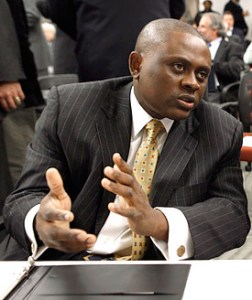
Dr. Bennet Omalu – neuropathologist – discovered CTE
Recently, Dr. Bennet Omalu, who discovered CTE in an American football player by studying the brain of Hall-of-Fame center Mike Webster, was the author of a recent New York Times Op-Ed entitled Don’t Let Kids Play Football. In an interview for zap2it.com, Dr. Omalu said, “As a modern society it’s our duty to protect our most vulnerable, most precious gifts of life: our children. This is where I stand.”
(We highly recommend your seeing the newly released movie Concussion, which will bring about more awareness of the danger to the brain from playing American football. The movie tells the true story of how the National Football League – NFL – tried to dismiss Dr. Bennet Omalu’s discovery of the connection of brain disease and the playing of American football. Former players are suing the NFL, claiming that the NFL knew of the dangers, but did not inform the players.)
In the documentary Head Games (online and free), we are reminded that children are not miniature adults. A child’s head is larger than an adult’s in proportion to his or her body. The neck muscles are not proportionately stronger, so a child’s head is more vulnerable than is an adult’s head. Brain development continues until at least age 14. (Some neurologists think brain development may continue longer.) In addition, the neurons in a developing brain are not yet fully myelinated. Recent research has shown that a concussion in a child impairs brain function for two years. The risk to the brain is the major reason why US Soccer banned heading for children 10 and under.
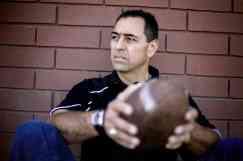
Former San Francisco 49er – George Visger – TBI Survivor
On August 16th, Donna conducted a radio interview with George Visger, a former defensive lineman for the NFL’s San Francisco 49ers on her radio show, “Another Fork in the Road,” on the Brain Injury Radio Network. Visger stated that youth football might ultimately end because of the eventual high cost of liability insurance (minutes 30:25-33:45; we think you will also find the intervals 5:40-15:55 and 39:40-42:25 interesting because of their contents – children and football). Dr. Omalu, the discoverer of CTE in an American football player, says in Frontline’s documentary The League of Denial: The NFL’s Concussion Crisis that he was told if 10% of mothers think playing football is too dangerous, it will mean the end of football.
The consequences of a brain injury can be especially devastating, even fatal, to a young player (video 1, video 2, story of the suicide of a teenage football player). The risk of brain injury from high-impact sports, especially American football, is significant even for adults, but an adult can make his or her own decision to play. In contrast, children rely on parents and  coaches. No parent would deliberately put a child’s life-trajectory at risk, but what if the parent lacks awareness? The good news is that apparently society’s awareness is growing quickly. Peter Landesman, the director of Concussion, said that Pop Warner football enrollment is down by more than 30%. (Pop Warner football is for children aged 5 to 16.) The movie Concussion will further increase society’s awareness of the danger of concussions and sub-concussive hits, show what CTE is, tell Dr. Bennet Omalu’s story of his discovery of the relationship of CTE and American football, and show Dr. Omalu’s struggle with the NFL.

Left – Healthy Brain — Right – Brain with CTE
It is also the brain-injury community’s responsibility to speak out to show society how life-altering a brain injury is.
So, Whaddya Think?
Let’s get a dialogue going. Post your comments in the Comment Section. Directions are below.
So . . . what do you think? Is there something you are passionate about in this Brain Injury (BI) world? Do you want to be heard? Your opinion matters! You can SPEAK OUT! on “So Whaddya Think?”
Simply send me your opinion, and I will format it for publication. Posts may be short, but please send no more than 500 words. Send to Neelyf@aol.com
I hope to HEAR from you soon.
As I say after each post:
Feel free to leave a comment by clicking the blue words “Leave a Comment” below this post.
Please follow my blog. Click on “Follow Me Via eMail” on the right sidebar of your screen.
If you like my blog, click the “Like” button under this post.
If you REALLY like my blog, share it intact with your friends. It’s easy! Click the “Share” buttons below.
If you don’t like my blog, “Share” it intact with your enemies. That works for me too!
(Clip Art compliments of Bing.)
 It can happen to anyone, anytime, . . . and anywhere.
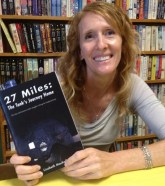
 They say a picture says a thousand words. It’s been nineteen months since I fell on a patch of ice and landed full-force on the back of my skull. I suffered a traumatic brain injury (TBI) plus whiplash, torn muscles in my neck, shoulder, and chest, and I also dislocated my sternum. What the photo doesn’t show is how I wasn’t able to do any exercise – even mild – for the first year. Just walking around the grocery store was enough to leave me spent for the rest of the day – let alone carrying in the bags of groceries. I am not exaggerating when I tell you that I lived pretty much in my bed or on the couch for over a year. I would do photography sessions a few times a week (because that’s my only form of income, and I had bills to pay) and pay the price for two days – icing my body and popping ibuprofen like it was candy. Even just six months ago, I couldn’t properly stand up straight – let alone do strength training. And let’s not forget about the horrible vertigo and balance issues that came with the TBI. But I finally decided that ENOUGH IS ENOUGH! It was time to DO SOMETHING – anything! So I started doing yoga for 10-15 minutes a day. At first it was hard – really hard. I could do only very basic, simple stretching poses. I would hold onto a chair for any pose that required standing so that I didn’t lose my balance. But you know what? IT HELPED! It started me on a path to gaining back my strength and endurance.
 the neurological ones are still present). I know it seems impossible when you’re in the darkest days after a TBI. I’ve completely been there. But, man, you take back control of your life when you finally start to step out of it and say, “F… Y.., TBI!” If I can do this, I know you can too!
 The much-anticipated movie,
  nature of the brain and the ramifications of brain damage. The movie was released on Christmas Day, but it has made much news before its release.


 Dr. Bennet Omalu, the Nigerian pathologist who discovered the neurodegenerative disease chronic traumatic encephalopathy (CTE) by his study of the brain of Hall-of-Fame center Mike Webster, is making news again with an Op-Ed published in The New York Times. Dr. Omalu’s essay is entitled
  Why not protect children’s brains by prohibiting children from playing American-style tackle football? Dr. Omalu writes in his essay, “The risk of permanent impairment is heightened by the fact that the brain, unlike most other organs, does not have the capacity to cure itself ….”

 The NFL is concerned with the growing awareness of brain injuries in players of American football. If players, their families, fans, coaches, and/or parents think that CTE is common among players, a seemingly sacrosanct part of American culture and a multibillion-dollar industry would be put into jeopardy.
 Legendary former quarterback


 football and to make their own decision of whether or not to play. Boston University’s Dr. Robert Cantu said that a child’s brain is developing until age 14. Should children be subjecting their developing brains to high impact hits? One study showed that sometimes the force of a young child’s hit can reach that of a college football player.




 SPEAK OUT! Itty-Bitty Giant Steps will provide a venue for brain-injury survivors and caregivers to shout out their accomplishments of the week.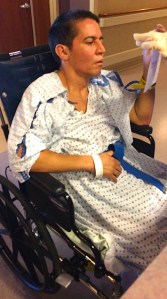

 but for many survivors of brain injury, the holidays are a stressful time, leaving them anxiety-ridden, exhausted, and distressed.
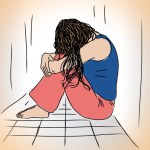 daily basis with the confusion that often accompanies brain injury, the holiday season can be an utter nightmare.
 wide-eyed, crazed shoppers and their cacophonous noise is not for the faint of heart. The uncertainty of whether Great Aunt Sally will love the little pink unicorn that you found in the bargain basement of Marky’s is tying up your brain in knots. For those who live in colder climes, weather may play a role, as blizzards and freezing rain make it difficult to leave the house and add the pressure of when to get the shopping done. The cold, gray skies can make life seem dreary, altering even the best of temperaments. But the holidays can be conquered, and a survivor can have fun if he or she tones it down a little and takes the holidays in itty-bitty steps.
 Perhaps the six-foot tree that a survivor trekked out into the woods to cut down can be replaced by a three-foot artificial tree – something that can be
 assembled in less than an hour, instead of enduring the stress of an all-afternoon trip. Maybe the family-gathering to eat latkes must be limited to the immediate family to minimize the chaos that a large gathering might cause.
 Make a list of the things you want to do, and prioritize. Choose to do only one activity or job each day. Decide when you are best able to do the job. Are you better in the early morning hours – when you have more energy? Or are you like me – alive at night? That’s when I get more done. Everyone’s different, and only you will know what works best for you.
 Don’t set your expectations too high. That is a guarantee for failure. Instead of baking ten dozen cookies in one afternoon, spread out the job by allowing several afternoons to accomplish the task. Or better still, make a smaller portion of the cookies. Set your sights lower. By planning and pacing yourself, you can avoid becoming overwhelmed, depressed, or simply exhausted.
 Instead of wrapping a present the traditional way with giftwrap and ribbons, pop the gift into a pre-decorated box or a gift bag and stuff some colored tissue paper around it. It will be lovely, and it is so much easier! Do you really need to have a twenty-three-pound turkey with stuffing and all the trimmings? Probably not! A simpler meal will taste just as good and will be enjoyed by all simply because you are spending precious time together.

 The holidays are just around the corner. Though they can be fun for many, for others this time of year is filled with extra stress. There are ways to lessen the anxiety and make the holidays more enjoyable by changing some of your old holiday traditions. My panelists, survivor, Lisa Dryer, and caregiver, Lisabeth Mackall, and I are going to discuss different ways that we make the holidays more fun with less stress.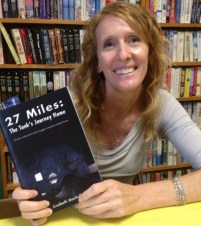

 Frank Gifford died at 84 of natural causes. Because he had always been concerned with player safety and helped to found the National Football League Players Association, his family donated his brain to science for study.
 statement that he experienced symptoms. As a running back, Gifford endured many sub-concussive hits, which many neurologists now believe contribute to neurodegenerative disease. In 1960, Gifford was knocked unconscious by a brutally hard tackle. That concussion caused the end of his season, and he did not play the next year.
 for CTE showed symptoms of brain disease. (In fact, some of the deaths were from suicide.) The claim has been made that the group that was almost entirely positive for CTE was biased. But Dr. Ann McKee, a neuropathologist at Boston University’s CTE Center and the person who studied most of the brains, pointed out that, even in a biased sample, the number of brains testing positive for CTE is ridiculously high. Frank Gifford’s brain would not be considered part of the biased sample. (Gifford showed no outward signs of brain disease.) Yet Frank Gifford’s brain tested positive for CTE. This latest result is consistent with Dr. McKee’s worry that CTE is common among players of American football. (


 Raising Awareness of Traumatic Brain Injury - one view at a time. Thanks for visiting my blog
 Surviving Traumatic Brain Injury
Recent Comments