COVID-19: Vaccines Part 1 of 3: If Enough Get Vaccinated, Society Can Return to Normal
by
Columbia University Professor Emeritus, Dr. David Figurski
presented by
Donna O’Donnell Figurski
(Disclaimer: The World Health Organization <WHO> has officially named the new coronavirus as SARS-CoV-2 and the disease it causes as COVID-19. Because the majority of people, including much of the press, commonly refer to the virus as “COVID-19,” to avoid confusion, I use COVID-19 as the name of the virus in this post.)

David H. Figurski, Ph.D & Survivor of Brain Injury
Vaccination is happening on a large scale in the US. President Biden has said that all adults can be vaccinated by the end of May.
Amazingly, in one year, three vaccines have been approved by the FDA (Food and Drug Administration). A fourth is ready, and more are close to finishing their clinical trials.
Why get vaccinated?
Everybody knows that you will protect yourself from serious disease, so there will no longer be the risk of hospitalization and/or death.
The amount of virus in the body will be lower (and sooner at zero), so you are less likely to infect a sensitive person.
And there is a major benefit to everyone – most people don’t consider this.
Some people are irrationally worried about the vaccines and will not get vaccinated. This is a problem because vaccination is not just a personal decision. The entire population – vaccinated and unvaccinated – is adversely affected. Let me explain.
When 70-80% of the people become immune, the pandemic will be defeated. (The virus will still be around because the 20-30% who are not immune will allow the virus to stay with us – but in lower amounts. The 70-80% number comes from virologists (including Dr. Fauci) who understand that the population achieves “herd immunity” at that level. Herd immunity will allow us to get back to normal – no lockdowns or self-quarantining, no avoiding contact with other people, no social-distancing, and no masks.
So if we want to get back to normal, we need to achieve herd immunity. 
There are two ways to become immune – (1) infection with the virus and (2) vaccination. Infection is iffy and dangerous. Vaccination is guaranteed.
The former President was sometimes influenced by Scott Atlas – a notoriously incompetent COVID-19 Task Force member. Atlas was convinced that the best way to achieve herd immunity was to let everybody get infected. The first problem is the number of deaths that policy would cause. (At a death rate of 1%, infection of the 330 million people in the American population would lead to 3.3 million deaths.) The second problem is that some infections (probably some of the asymptomatic infections) lead to poor immunity that’s not protective. We know that some individuals who have recovered from COVID-19 have no antibodies to the virus. (The “innate” immune system – our first line of defense – was probably good enough.)
Vaccination is guaranteed to provide protective immunity. FDA approval is based on a vaccine’s protective effect in the clinical trial. (The Phase III clinical trial involves ~30,000 people.)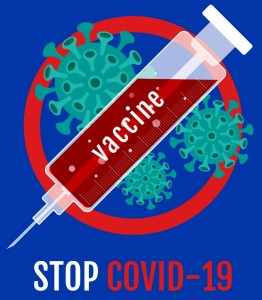
A decision to be vaccinated benefits not only you, but also everyone.
(Clip Art compliments of Bing.)
(Photos compliments of contributor.)
Prisoners without Bars: A Caregiver’s Tale

As I say after each post: Please leave a comment by clicking the blue words “Leave a Comment” below this post.
Feel free to follow my blog. Click on “Follow” on the upper right sidebar.
If you like my blog, share it intact with your friends. It’s easy! Click the “Share” buttons below.
If you don’t like my blog, “Share” it intact with your enemies. I don’t care!
Feel free to “Like” my post.











 Is the President contagious? We can’t say without knowing his test results. Dr. Griffin considers a patient virus-free if that person has two negative tests on two consecutive days. Otherwise, a person is considered to be potentially contagious for 20 days. Since the doctors are permitting the President to hold rallies, I assume he is not thought to be contagious.
 best when given early in the infection when most viral multiplication takes place. This is impractical in humans because they don’t have symptoms for several days following infection.
 antibody response is said to be “polyclonal.” In 1984, César Milstein was awarded a Nobel Prize for developing a way to isolate a single-antibody-producing cell. As expected, its clone only produced one type of antibody. The antibody produced by such a cell line is a “monoclonal antibody.”
 Zinc is also thought to prevent infection, but there are no convincing studies on zinc. Melatonin was given as a sleep aid.
 Cytokines are molecules released by some cells that cause an action by other cells. When certain immune system cells sense a problem (like a virus-infected cell), they release cytokines to get other immune cells to multiply, to make attack molecules, or to come and help eliminate the cause of the problem. Normally, the immune system works well, but sometimes the immune system overreacts and causes severe problems or even death. “Cytokine storm” refers to an overreaction by the immune system. A steroid (for example,
  dexamethasone, which the President was given) is effective because it will dampen the immune response, a potentially beneficial effect when the immune system is overreacting. But, dexamethasone is considered harmful if the drug is not needed. (For example, dexamethasone is not given in Week 1 <the viral phase> because a normally functioning immune system is needed to reduce the amount of virus in the body.)
 dexamethasone should only be given to patients with moderately severe or serious COVID-19 disease. The White House acknowledged that the President received oxygen before he was taken to Walter Reed. Supplemental oxygen is consistent with the President’s being given dexamethasone. Dr. Griffin said that oxygen, if needed, is usually given in Week 2, further indicating that the President’s infection may have started several days before Friday. October 2nd.
 Doctors have found that COVID-19 has a third phase – a “clotting phase,” which starts at the end of Week 2 and extends at least through Week 3. COVID-19 infection can trigger clots, which can sometimes (albeit rarely) lead to strokes. Aspirin is routinely given at the end of Week 2 because it helps prevent clotting. Some patients had already been discharged from the hospital (having had two negative COVID-19 tests over two consecutive days and having agreed to self-quarantine for 14 days as a precaution) when a problem-clot occurred.


 Raising Awareness of Traumatic Brain Injury - one view at a time. Thanks for visiting my blog
 Surviving Traumatic Brain Injury
Recent Comments