SPEAK OUT! NewsBit . . . . . . . Brain Research in Mice May Lead to the Treatment of PTSD and Depression in Humans
Brain Research in Mice May Lead to the Treatment of PTSD and Depression in Humans
presented by
Donna O’Donnell Figurski
A young Boston University professor, Steve Ramirez, a neuroscientist, has identified cells of a mouse brain that enhance the positive or negative  feelings of a memory.
Stimulating cells that enhance positive feelings can suppress or deaden the trauma associated with a bad memory. In contrast, stimulating cells that enhance negative feelings makes a bad memory feel worse.
The hippocampus in both the mouse brain and the human brain is the region of the brain responsible for storing memories, including all the details and emotions associated with them. Each memory activates a unique combination of cells of the hippocampus. Some of the cells affect emotion and behavior.
 Ramirez and his collaborators (including first author Briana Chen of Columbia University) used genetically engineered mice whose neurons glow when they’re activated. Those cells can later be artificially activated with laser light. The team found that a negative memory (like getting a mild electric shock to the feet) activates cells at the bottom of the hippocampus. A positive memory (like being in the presence of a female mouse) activates cells at the top of the hippocampus.
They then were able to stimulate those same cells with a laser. When the bottom cells of the hippocampus were activated, the mouse behaved (freezing and/or avoidance behavior) as if it were recalling the negative memory of the shock. Stimulation of the cells in the top region of the hippocampus reduced the avoidance response.
This is basic research, but it is a significant first step in the eventual development of treatments for PTSD (post-traumatic stress disorder), anxiety, and depression. (Full story)
(Clip Art compliments of Bing.)
As I say after each post: Please leave a comment by clicking the blue words “Leave a Comment” below this post.
Feel free to follow my blog. Click on “Follow” on the upper right sidebar.
If you like my blog, share it (intact) with your friends. It’s easy! Click the “Share” buttons below.
If you don’t like my blog, “Share” it (intact) with your enemies. I don’t care!
Feel free to “Like” my post.
 caregivers who stand out in their caregiver world. Now frankly, I think all caregivers deserve this award, but, alas, only five will be chosen, and I hope I am one of them. David thinks I should be too. He nominated me.

 The Ivy League colleges have done an experiment that dramatically reduced the number of concussions during a kickoff, considered to be the most dangerous play in American football. The results were reported in the Journal of the American Medical Association. The results were so dramatic that the NCAA (National Collegiate Athletic Association) changed kickoff rules for its college games in 2018 after considering the Ivy League data. It is likely to be considering adopting the Ivy League rule change for all NCAA college football.
 and the defensive teams often have the time and space to build up speed before a tackle is made. Kickoffs account for about 6% of the plays in a football season, but they are responsible for 21% of the concussions. The NFL (National Football league), which sanctions the most prominent professional football, considered doing away with the kickoff altogether. In 2016, the coaches of the Ivy League college teams agreed to an experiment that minimized the runback by moving up the kickoff line 5 yards from the 35-yard line to the 40-yard line. This change led to more touchbacks, where the ball is kicked into or beyond the end zone. As a result, there were fewer runbacks.
 The Centers for Disease Control has reported that traumatic brain injury (TBI) accounts for more than 2.5 million visits to emergency rooms (ERs) in the US every year. Many people with a concussion do not even go to the ER because they have no symptoms and don’t believe that the ER can diagnose a brain injury if it’s not serious enough to be detected by a number of indirect tests. A CT (“cat”; computerized tomography) scan is usually ordered if a brain injury is suspected, but only 10% of CT scans detect a brain injury in people with a mild head injury.
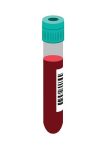 A quick, sensitive, and accurate blood test will soon be available for ERs
  to know if the brain has been injured. Some people will be negative. They will not need a CT scan and can go home with no worries. Others who are asymptomatic may actually discover that they’re positive for a brain injury. The ER doctor can then take appropriate action.

 Costas said “The reality is that this game destroys people’s brains.” Concern is growing. Some players have retired early. Participation in youth tackle football leagues is declining, as parents struggle with the rapidly emerging and compelling evidence. Costas also said “… if I had an athletically gifted 12- or 13-year-old son, I would not let him play football.” Costas’ comments were supported
  by those of ESPN’s Tony Kornheiser, who said that football is going the way of boxing. (
 A high school football team from Moncton, New Brunswick, Canada, forfeited its game after nine players left the game with possible head injuries. The coach took the precaution of having all players checked at the hospital. Before going to hospital, four players had already displayed symptoms of having a serious concussion (nausea, vomiting), and they still showed symptoms two days later when the article was written.
 It is now known that players of US and Canadian football have a


 After other drugs failed on a colleague who was found to have a minor brain injury, Dr. Hammond tried Amantadine. Dr. Hammond’s colleague said, “The effects were immediate and just amazing. … It calms down part of your brain and gives you a moment to pause and reflect.” Dr. Hammond has used Amantadine on other patients with success. She says, “It helps you reclaim your identity a bit. … And to get that back helps you get your quality of life back too.” (
 Clemson Safety Jadar Johnson was undrafted in the 2017 draft. As a Free Agent, though, he was signed by the New York Giants of the NFL (National Football League). Many thought he was a diamond-in-the-rough.
  Jadar himself was excited and said he would do “whatever” it takes to become part of the team that the Giants field on Sundays. But, before he played a single regular-season game,
  Journal of the American Medical Association.
  Is American football a dying sport? With football’s prominence in American culture, it seems safe to assume no one would predict that its days are numbered. But, there is a growing undercurrent that may eventually lead to the demise of football as we know it. There is more and more evidence that the constant subconcussive hits experienced by football players lead to a high risk of the brain disease
 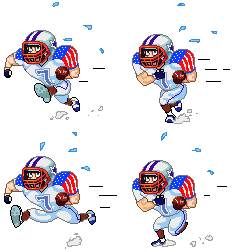 depression, suicidal thoughts, or problems with cognition, memory, or impulsive behavior.
 The results have important implications for players. Many players feel they’ve been left ignorant of the risks of brain injury by the NFL, or worse, assured by the league that there is minimal risk. [Some players have quit or retired early (
 famous Pittsburgh Steeler Center, wrote an
  This is an incredible finding with strong clinical implications! There already is evidence that transplanted neurons can survive and grow in the brain. The newly introduced neurons can form synapses, and they sometimes improve function by partially compensating for a damaged brain circuit. What was not known was whether the original damage could be repaired. Now scientists have shown in a well-studied mouse model of the brain that transplanted neurons can replace the damaged neurons, make the appropriate connections, and repair the damage.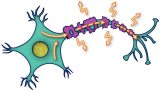


 Raising Awareness of Traumatic Brain Injury - one view at a time. Thanks for visiting my blog
 Surviving Traumatic Brain Injury
Recent Comments