TBI – Survivors, Caregivers, Family, and Friends

Posts tagged ‘TBI Survivor’

COVID-19 — It’s Everywhere . . . To Open or Not to Open

COVID-19 . . . To Open or Not to Open

by

Columbia University Professor Emeritus, Dr. David Figurski

presented by

Donna O’Donnell Figurski


(Disclaimer: The World Health Organization <WHO> has officially named the new coronavirus as SARS-CoV-2 and the disease it causes as COVID-19.  Because the majority of people, including much of the press, commonly refer to the virus as “COVID-19,” to avoid confusion, I use COVID-19 as the name of the virus in these posts.)

COVID-19

David H. Figurski, PhD — Brain Injury Survivor — Professor Emeritus of Microbiology & Immunology — Columbia University


Some governors say “Open.” Scientists say “Don’t open.” Whom do you believe?

I’m a scientist.  I know where I stand.

Below are some facts to help you decide.

For those of you in the west, the coronavirus infections have just begun.  You can see from the map of May 19 (see below) that infections are still moving westward.

Coronavirus Map – New York Times – 05/19/20

Many people, particularly those in the west, don’t seem to understand that the US is still in the early stages of this pandemic. They are lulled by the low number of cases in their state. The numbers are misleading for two reasons.

(1) Only seriously symptomatic (mostly hospitalized) people and celebrities are being tested because the US is seriously in need of more testing.  (2) The virus has not reached you yet. (That’s the especially true in the western half of the US.)

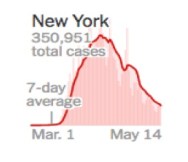
New York City is still very bad, but strict social-distancing guidelines have produced a significant drop in new cases.

Washington State had the potential to become a major hot spot, but they acted quickly and aggressively.

In contrast, several states are opening up and relaxing guidelines, despite a continued rise in new cases.  (That’s the case here in Arizona, where Governor Ducey allowed restaurants to open this week. This decision is particularly horrifying because the pandemic hasn’t really reached us yet.)

Reported cases in the United States

(Every red dot represents a cluster of infections – probably started by an infected asymptomatic traveler.  Right now, most cases are in the east, but every day you see more red dots in the western half of the US.)


David H. Figurski, Ph.D & Survivor of Brain Injury

Stay Safe and Healthy!


Clip Art compliments of Bing.)

(Photos compliments of contributor.)

As I say after each post:

Please leave a comment by clicking the blue words “Leave a Comment” below this post.

Feel free to follow my blog. Click on “Follow” on the upper right sidebar.anim0014-1_e0-1

If you like my blog, share it intact with your friends. It’s easy! Click the “Share” buttons below.

COVID-19 . . . It’s Everywhere! Columbia University Professor Emeritus, Dr. David Figurski Talks about Coronavirus

COVID-19 . . . It’s Everywhere!

Columbia University Professor Emeritus, Dr. David Figurski

Talks about Coronavirus

by David Figurski, Ph.D

presented by

Donna O’Donnell Figurski


(Disclaimer: The World Health Organization <WHO> has officially named the new coronavirus as SARS-CoV-2 and the disease it causes as COVID-19.  Because the majority of people, including much of the press, commonly refer to the virus as “COVID-19,” to avoid confusion, I use COVID-19 as the name of the virus in these posts.)

COVID-19

David Columbia Award May 2017Because the COVID-19 pandemic has affected everyone, including the brain injury community, I have added a new category called “COVID-19” to this blog. This category is for posting much-needed information and facts on the new coronavirus and the global pandemic it has caused.

The major reason I added the COVID-19 category is that I have unique access to a survivor of brain injury who is knowledgeable about this pandemic.

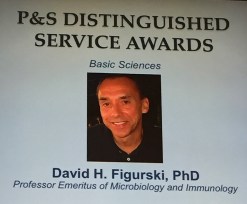
For 35 years, my husband, David, was a professor and did research in the Department of Microbiology & Immunology at Columbia University. He retired on September 1, 2013. In January 2005, David had a cerebellar hemorrhage. He survived a three-week

coronavirus-covid-19-design-vector

coma and three brain surgeries in the first two weeks of his coma. Unfortunately, he was left with many physical disabilities, but his cognitive brain was untouched, allowing him to return full-time to the faculty after 19 months. (Those 19 months are described in detail in my book Prisoners without Bars: A Caregiver’s Tale.) For 45 years, David did research on the molecular genetics of various microorganisms, including viruses.

02 Fork Yield Banner copyTo allow you to be introduced to David, I am reposting the link to my radio show of April 19, 2020, on the Brain Injury Radio Network called,  “Another Fork in the Road: BI Survivor/Columbia Prof Dr. David Figurski & Covid19.” (The link first appeared in my post on May 4, 2020.) David was my guest, and I interviewed him about his brain injury and about COVID-19. (Our discussion of COVID-19 begins at 49:50.)

David Figurski

David H. Figurski, Ph.D & Survivor of Brain Injury

Clip Art compliments of Bing.)

(Photos compliments of contributor.)

As I say after each post:

Please leave a comment by clicking the blue words “Leave a Comment” below this post.

Feel free to follow my blog. Click on “Follow” on the upper right sidebar.anim0014-1_e0-1

If you like my blog, share it intact with your friends. It’s easy! Click the “Share” buttons below.


Survivors SPEAK OUT! ………. Mimi Hayes – Survivor, Author, Comedienne

Survivors SPEAK OUT! Mimi Hayes – Survivor, Author, Comedienne

presented by

Donna O’Donnell Figurski

(author of Prisoners without Bars: A Caregiver’s Tale)


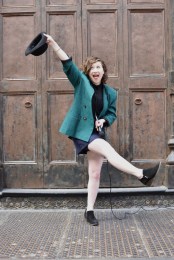
Mimi Hayes – Survivor of Brain Injury Author of “I’ll Be OK, It’s Just a Hole in My Head”

1. What is your name? (last name optional)

Mimi Hayes

2. Where do you live? (city and/or state and/or country) Email (optional)

Brooklyn, New York, USA

3. On what date did you have your brain injury? At what age?

My brain injury happened approximately in late August 2014. I was 22 years old.

4. How did your brain injury occur?

I got a bad migraine while I was on a blind date. After about a week, I’d developed weird symptoms, vision problems, coordination difficulties, etc.

5. When did you (or someone) first realize you had a problem?

My mom knew pretty quickly that something was wrong. It wasn’t until after a few doctor visits

that we got an MRI (magnetic resonance imaging) and it was finally taken seriously.

6. What kind of emergency treatment, if any, did you have?

MRI

7. Were you in a coma? If so, how long?

Nope

8. Did you do rehab? What kind of rehab (i.e., inpatient or outpatient and occupational and/or physical and/or speech and/or other)? How long were you in rehab?

I was in inpatient therapy for two weeks and in outpatient therapy for about three months. I had speech, occupational, and physical therapies.

9. What problems or disabilities, if any, resulted from your brain injury
(e.g., balance, perception, personality, etc.)?

I have some lasting vision issues on the left side, but they’re minimal and happen only when I’m tired. I have issues with concentration, memory, fatigue, coordination, and sensitivity to lights and sounds.

10. How has your life changed? Is it better? Is it worse?

My life changed for the better in every way. Yes, it’s hard to have to adjust to a new brain, but I would never be where I am or who I am without this experience

11. What do you miss the most from your pre-brain-injury life?

Probably just being a bit more fit. I used to play ice hockey, and my brain completely forgot that

muscle-memory. Also, I wasn’t such a scatterbrain, but that’s endearing most of the time.

12. What do you enjoy most in your post-brain-injury life?

Challenging myself to live in New York City, a place where I never imagined I could live with a TBI (traumatic brain injury).

13. What do you like least about your brain injury?

I don’t like that my brain injury has elevated my anxiety, which I had before the injury. It’s probably a low-grade PTSD (post traumatic-stress disorder) tied to all things medical.

14. Has anything helped you to accept your brain injury?

I don’t think I’ve ever not accepted my brain injury. It’s just that I forget it sometimes. I maybe do something I could have done before with no problem, like a concert, but I’m completely exhausted the entire next day.

15. Has your injury affected your home life and relationships and, if so, how?

Sure. My family had to learn about my new challenges. We had to stop eating dinner with the TV on in the background, and we learned that I’m quicker to anger. They never weren’t there for me, and, if anything, my brain injury brought me much closer to them.

16. Has your social life been altered or changed and, if so, how?

I’ve always been very social. It’s just that now I have to power-down more to recharge.

17. Who is your main caregiver? Do you understand what it takes to be a caregiver?

Me. But, I don’t really understand what it takes to be a caregiver. I was a nanny to three small boys for a year, and that was a lot of work! But no, I’ve never been a caregiver.

18. What are your plans? What do you expect/hope to be doing ten years from now?

Hard to say, but I’d like to put out a few more books, do a TED Talk, and continue to travel with my comedy. As soon as theaters are back open, I’d like to put my one-woman show on off-Broadway.

19. Are you able to provide a helpful hint that may have taken you a long time to learn, but which you wished you had known earlier? If so, please state what it is to potentially help other survivors with your specific kind of brain injury.

Just give yourself grace. Don’t compare yourself to other people’s recoveries or even to who you used to be before. Also, it’s OK to change who you are after a near-death situation. It’s OK to change your job, your city, hell, anything you want. You deserve to explore the new you.

20. What advice would you offer to other brain-injury survivors? Do you have any other comments that you would like to add?

There’s a great big community out here. You are not alone. You’d be surprised how many people I’ve met on Instagram and now consider them to be best friends. I would have never met them in real life.

We are strong, and we all want to share our stories with each other and connect. My advice is to get online, start using hashtags, and explore. You will find us. And, we can’t wait to connect with you!

To learn more about Mimi Hayes, visit her website.

Mimi Hayes Website

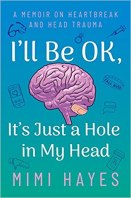
Mimi Hayes’ book, I’ll Be OK, It’s Just a Hole in My Head


Clip Art compliments of Bing.)

(Photos compliments of contributor.)

As I say after each post:

Please leave a comment by clicking the blue words “Leave a Comment” below this post.

Feel free to follow my blog. Click on “Follow” on the upper right sidebar.anim0014-1_e0-1

If you like my blog, share it intact with your friends. It’s easy! Click the “Share” buttons below.


TBI Tales . . . . . . . . . . . . Overcoming Obstacles while Getting On with Life

Overcoming Obstacles while Getting On with Life
by
Chelsea Rolph

presented by


Donna O’Donnell Figurski
(author – Prisoners without Bars: A Caregiver’s Tale)


chelsea rolph

Chelsea Rolph – Survivor of Brain Injury

This has been one heck of a decade! When I think back to how it all began, I would have never seen myself where I am now.

I began this decade healing from a concussion and graduating high school. I chose to do a “Victory Lap” so I could have the time to figure out what I wanted to do with my future.

As the school year began in September 2010, I returned back to varsity sports to continue to do what I loved … play.

Unfortunately, as most people know, it did not end well. I was knocked out during a basketball game in the last 4 seconds, leaving me with the concussion of all concussions.

I remember sitting in accounting, music, and business classes and crying to myself because it hurt too much to read the text. I also remember going home and breaking down because I no longer had the sports to turn to as a stress relief. I was frustrated with the amount of exhaustion I was feeling at the end of the day.

I was sent to a concussion rehab clinic for a few months, and this was the first time I felt like I finally had some answers. At the beginning of this decade, my parents would take me to the hospital every week to get tests done on both my heart and my brain. These tests concluded with doctors suggesting that my “new normal” was going to be a long transition with no end in sight.

Although all of my friends were applying to colleges and universities, I was told that I should not consider post-secondary education at that time. Despite this, I still applied to colleges and universities to keep my options open.

After being accepted to all of my options, I decided to go to McMaster University (MAC), so I had family support close by if I were really struggling. After accepting MAC, I met with a counselor to discuss what the rehab clinic had said I should have for accommodations.

After the guidance counselor at MAC agreed to all of the accommodations that were recommended for me, she suggested that I should take two classes a semester and take ten years to complete my undergrad.

Fast-forward to the end of the decade – most people know that not only did I choose to take a full course load, but I also chose to try to accomplish it without the accommodations recommended. The counselors did not believe I would be successful even with the accommodations and tried to talk me out of it. Not only did I take a full course load, but I was also working close to full-time hours at the same time.

Get-a-Bachelors-Degree-Online-Step-15Four years later, in May of 2015, I graduated with a Bachelor of Arts degree. In August 2015, I was hired in my first full-time job! After three months, I received a promotion, and then, ten months after that, I was promoted again to the position I am currently in. Over the last 4.5 years, I have had the amazing opportunity to work with so many amazing students and colleagues who have helped shape me into the person I am today. Unfortunately, I have chosen to leave my current position to pursue other opportunities.

As this decade ends, a new and exciting chapter begins! Today I find myself writing this from the comforts of my home as I begin my journey as an entrepreneur. My business partner and I are so excited to have the opportunity to quit our full-time jobs to focus on running our own business.

Along with reminiscing about my professional career over the past ten years, I also think about the personal experiences. Many have been positive, but I also had my share of sorrows. I have lost so many amazing people in my life, including both of my grandmas, my uncle, and a friend. I have lost a pet and nearly lost two more. I struggled with immigration. And, my mom was diagnosed with breast cancer.

I am very happy to say that I have also had the opportunity to see my mom defeat cancer and ring that victory bell. I am also happy that Rod and I no longer need to worry about immigration or travelling out of the country together for events. I also have a long list of amazing other things that have happened over the past decade: graduating, falling in love, buying a car, travelling to many cities and countries (for example, Las Vegas, New York City, Ecuador, the east coast of Canada, mainland Europe, and the UK), attending a conference in the United Nations headquarters, fundraising around $150,000 for both OIPlocal and global organizations, making so many amazing new friends, experiencing weddings, getting over my fear of babies, having nieces and nephews, getting a kitten, and going back to school to study French as a second language.

Here’s to hoping that the next decade will bring less of the sadness and more of the happiness and excitement that I have been lucky enough/privileged to experience.

Cheers to 2020!

Clip Art compliments of Bing.)

(Photos compliments of contributor.)

As I say after each post:

Please leave a comment by clicking the blue words “Leave a Comment” below this post.

Feel free to follow my blog. Click on “Follow” on the upper right sidebar.anim0014-1_e0-1

If you like my blog, share it intact with your friends. It’s easy! Click the “Share” buttons below.


On the Air: . . . . . . . . . . . . . . . Guest: Dr. David Figurski

On the Air: Guest: Dr. David Figurski

presented by

Donna O’Donnell Figurski

David Figurski

David H. Figurski, Ph.D & Survivor of Brain Injury


Dr. David Figurski, retired professor of microbiology, talks about his brain injury and COVID-19

I don’t often publicize my radio show on the Brain Injury Radio Network, but one of our brain injury survivors is knowledgeable about the COVID-19 pandemic, which I’m sure is on your mind.  Like me, you probably have lots of questions.

My guest on the April 19th show was my husband, Dr. David Figurski.  David has been living with several physical disabilities since January 2005, when he had a brain hemorrhage, but, fortunately, after three brain surgeries in two weeks, he was unaffected cognitively.  For 35 years, including eight years after his traumatic brain injury, David was a professor in the Department of Microbiology & Immunology at Columbia University, where he also had a research lab.  David has done research on bacteria and viruses for 45 years.  Unsurprisingly, he has been very interested in the new human coronavirus and the global pandemic it has caused.news-clipart-news-anchor-4

My 80-minute show was live on April 19th, but it was recorded and can now be listened to at any time as a podcast.  My interview of David has two parts.  From 9:30 to 49:50, David and I talk about life with his brain injury.  From 49:50 to the end, David and I discuss the COVID-19 pandemic.

To Listen Go To:

SPEAK OUT! On the Air with . . . Brain Injury Radio Show Menu “Another Fork in the Road”

blogtalkradio.com/braininjuryradio/2020/04/20/another-fork-in-the-road-bi-survivorcolumbia-prof-dr-david-figurski-covid19


(Clip Art compliments of Bing.)

(Photos compliments of guests.)

As I say after each post: Please leave a comment by clicking the blue words “Leave a Commentanim0014-1_e0-1 below this post.

Feel free to follow my blog. Click on “Follow” on the upper right sidebar.

If you like my blog, share it intact with your friends. It’s easy! Click the “Share” buttons below.

If you don’t like my blog, “Share” it intact with your enemies. I don’t care!

Feel free to “Like” my post.

Survivors SPEAK OUT! . . . Thomas Hopkins, Jr (Tommy)

Survivors SPEAK OUT! . . . Thomas Hopkins, Jr (Tommy)

presented

by Donna O’Donnell Figurski

Tommy Hopkins, Jr Survivor of Brain Injury


1. What is your name? (last name optional)

Thomas Hopkins, Jr.

2. Where do you live? (city and/or state and/or country) Email (optional)

Mountain Home, Idaho, USA (originally from Wisconsin)

3. On what date did you have your brain injury? At what age?

I was 19 years old.

4. How did your brain injury occur?

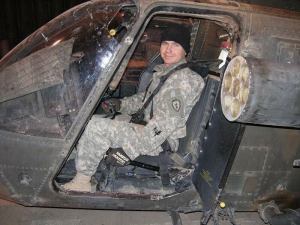
I have had several head traumas that led to my brain injuries. I’ll discuss the main ones. I have two injuries from February 2003. The first was due to a JDAM bomb (Joint Direct Attack Munition – a guidance kit that converts unguided bombs into all-weather precision-guided munitions). The second was from an explosion in a unit I was working with. In 2006, on my 4th tour, I had gotten a hammer to the head. I do not recall this incident at all. My fourth injury was in May 2007. I was still on my 4th tour. Our camp got morning RPG/mortar hits. The shop I was working in had one hit close by that shook the shop. The 40-lb. equipment I was working on fell over and hit me in the back of the head.

5. When did you (or someone) first realize you had a problem?

I started noticing issues after my first injury back in 2003 – daily headaches, ringing in my ears, light sensitivity, plus I would invert numbers.

6. What kind of emergency treatment, if any, did you have?

Due to the units I was in, I did not get treatment. I’ll rephrase that – due to the units I was part of, unless you lost a limb, your sight, etc. or your life was in danger, you were not allowed to seek medical treatment.

7. Were you in a coma? If so, how long?

No coma

8. Did you do rehab? What kind of rehab (i.e., inpatient or outpatient and occupational and/or physical and/or speech and/or other)? How long were you in rehab?

I started seeking help once I got out of the army. I started at the VA (medical care at hospitals of the Veterans Administration). It was not the best outcome.

9. What problems or disabilities, if any, resulted from your brain injury
(e.g., balance, perception, personality, etc.)?

I have convergence insufficiency (a condition in which your eyes are unable to work together when looking at nearby objects, creating double or blurred vision),

photophobia, daily headaches that turn into migraines, and constant tinnitus. One doctor said I have damage to the autonomic and limbic systems in my brain. Other doctors have said that I don’t even have a brain injury! (LOL) I have no concept of time; I experience jerks (involuntary muscle movements); I search for words; my speech is slurred; my brain often won’t let me get my words out; and I have a poor memory. I do not feel 60+% of my body, and my lower limbs do not work a lot of the time. “Partial Para” is what they call it. At times, I need to be in a wheelchair.

10. How has your life changed? Is it better? Is it worse?

Worse

11. What do you miss the most from your pre-brain-injury life?

I miss my memory. It used to be photographic.

12. What do you enjoy most in your post-brain-injury life?

Retirement (LOL) … Driving my wife nuts (LOL) … Um, working my brain in different ways to work on problems and situations that come up in my hobbies

13. What do you like least about your brain injury?

I’m not Johnny-on-the-spot anymore. I miss my memory. My body is going to shit.

14. Has anything helped you to accept your brain injury?

MY WIFE. Even though most of my injury is “invisible,” she showed me that I also have physical scars that I and others can see.

15. Has your injury affected your home life and relationships and, if so, how?

Yup. That’s a very long answer.

16. Has your social life been altered or changed and, if so, how?

Yup. We lost a lot of friends and family because I was not the same Tommy I was before I was brain-injured in the war.

17. Who is your main caregiver? Do you understand what it takes to be a caregiver?

Tommy Hopkins, Jr. Brain Injury Survivor
Caregiver – Kristina Hopkins

MY WIFE! I have a rough idea of some of what she does for me, but I have no clue of what all she does.

18. What are your plans? What do you expect/hope to be doing ten years from now?

My “plan” is to maintain what I have and live each day as if it is my last.

19. Are you able to provide a helpful hint that may have taken you a long time to learn, but which you wished you had known earlier? If so, please state what it is to potentially help other survivors with your specific kind of brain injury.

Yes. You have to adapt to your new self. That old person is gone. I had to realize I will never be as I once was, BUT I am still able to do most things with adaptation.

20. What advice would you offer to other brain-injury survivors? Do you have any other comments that you would like to add?

My advice: Good days come and go. Work with the day you have because you don’t know what tomorrow will bring.

(Clip Art compliments of Bing.)

(Photos compliments of contributor.)

As I say after each post:

Please leave a comment by clicking the blue words “Leave a Comment” below this post.

anim0014-1_e0-1

Feel free to follow my blog. Click on “Follow” on the upper right sidebar.

If you like my blog, share it intact with your friends. It’s easy! Click the “Share” buttons below.

Past Blast – “Guest Blogger … Ken Collins – 38 Tips for Living with a Brain Injury”

Past Blast  (originally published December 29, 2014)

SPEAK OUT! Guest Blogger: Ken Collins

(Host on the Brain Injury Radio Network)

offers

38 Tips for Living With a Brain Injury


Boy Blogger thOn December 31st, I will have lived with a traumatic brain injury for 38 years. I have used several strategies for co-existing with and minimizing the effects of my TBI. I know now that the brain-injury recovery process is ongoing and that there are four major areas to work on during recovery: (1) Getting Organized, (2) Being Responsible, (3) Following Through, and (4) Moving On. I learned a lot over the years, and I want to share my experiences. I have listed 38 tips (one for each year) that could be helpful to you.


1. Regain trust in yourself and in others.

2. Try not to be critical of mistakes you make. In the early years of your recovery, there will be too many of them to count. Learn from these mistakes and move on.

3. Find purpose and meaning in your life again. This will make it easier to get out of bed in the morning. Having a sense of purpose and meaning will give you something to live for and will help you feel worthwhile, help motivate you, and improve your recovery process. You will start feeling better about yourself.

4. Keep stress and anxiety to a minimum every day. Reducing stress and anxiety will Stress free zoneincrease your self-esteem and make life easier. Stress and anxiety trigger the fight-or-flight response in the mid-brain. You don’t have any control over this response because it is part of the Emotional Nervous System. When the fight-or-flight response is activated, it increases confusion and makes it harder to process information.

5. Regain your self-confidence and self-respect.

6.Be proactive.

7. Stay focused, calm, and relaxed as much as possible. This will make it easier to think, and you become less dependent on others to remind you. Becoming more responsible for yourself will build good habits on your part and will improve your self-esteem and self-confidence in the long run.

8. Get a large calendar. Put it up on your wall and use it. Make sure it’s in a location where you will always see it. An iPad (or clone), a smart phone, or a note pad with a calendar and alarm does the same thing. A calendar will also relieve stress and anxiety by helping you stay on task and not forget.

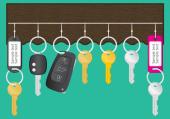
Key rack9. Get a key-holder and put it by your door to put your keys on when you come home. Do this every night so you won’t have to look for your keys in the morning. Starting your day off on the right foot will make your day easier and help to relieve stress and anxiety.

10. Make a “To Do” list to help you stay organized. iPads, iPhones or other smart phones, and note pads work wonders with this. The list will help you and make you feel good about yourself.

11. Making a list before you go shopping will save you money by cutting down on impulse-buying. It will also help you become more responsible and less dependent on others. Being less dependent on others improves your self-esteem.

12. Get lots of rest, and slow down. Many times we try to do too many things at once, and nothing gets done. Sleeping on an issue or concern can be the best way to help you figure it out. Getting enough rest will give you valuable energy to think better and solve difficult situations. Sufficient rest will also relieve stress and anxiety.

13. Set up a routine and stick to it. A routine will make it easier for you to follow through with what you have planned for the day. By doing the same thing every day, you will start building trust in your capabilities again.

14. Eat healthy foods, and get lots of exercise. Doing these things will help you get the blood with its oxygen circulating to your brain.Healthy Foods

15. Get a dog and take it for walks. In my case, I have nine dogs, and they take me for a walk every morning and night! They also give me the unconditional love and companionship I need to feel good about myself and be happy.

16. Find ways to relax that aren’t counterproductive to your well-being. Abusing alcohol and drugs to “relax” is counterproductive. Long walks, yoga, and Tai Chi are much better for you and will make processing and problem-solving much easier. Stress and anxiety will be reduced.

17. Be patient.

18. Pay attention and become an active listener. Actively “hearing” what people have to say is more important than passively “listening” to what they say. Watch their body language. When I get distracted, sometimes it is harder to understand what a person is saying. Stay relaxed and focus. Take deep breaths – nothing works better than getting oxygen-filled blood to your brain.

19. Be around positive people and people who care about you. Nothing is more depressing than listening to someone who’s always complaining about his or her life or about what is going wrong in the world. Become active. Don’t just sit around hoping things will get better. Quit talking about a problem, and do something about it instead.

20. Don’t take criticism personally. When people don’t understand things, they criticize them. Constructive criticism can make you a better person in the long run.

21. Keep an open mind. Remember that your family and friends want to help, but sometimes they don’t know how. Many people don’t understand what you are going through, so don’t hold them responsible for this.Breathe

22. Stay calm; stay relaxed; take deep breaths; and move on!

23. Be careful of those you hang out with because they will set the stage for how you act. Friends who judge others and criticize you aren’t “friends.”

24. Grudges will only hold you back. They will be like anchors and keep you from being able to move on.

25. Lighten up on yourself, your family, and friends who want to help you.

26. Worry less and smile more.

27. Be content with what you have. Others have it much worse than you.

28. Find ways to stay active and be less isolated. Get out of your head and into the outside world.

Never Give Up29. Don’t give up – embrace adversity. Have adversity give you the resolve it will take to get better and improve your life. This will be up to you and no one else. People will be there to help you, but all of the work will be up to you. Use it or lose it!

30. Take ownership of your recovery. Remove the word “can’t” from your vocabulary.

31. Life is hard for most people. Life after a brain injury will definitely be hard, but not impossible. It will get easier over time – be patient! Make the best of every day and move on.

32. Thinking too much about a problem or issue can cause depression. This will trigger the fight-or-flight response, and you will be like a dog chasing its tail.

33. Be good to yourself.

34. Don’t take life too seriously.

Ken Collins for Blog

35. Don’t let the little things get you down. When you think about them too long, they seem bigger than they really are.

36. Don’t beat yourself up over things you can’t control. This will only increase your stress and anxiety and trigger the fight-or-flight response.

37. Be happy with yourself and don’t try to live up to others’ expectations.

38. Most importantly – don’t set unrealistic expectations for yourself. Be strong. Find hope – because with hope, anything is possible!

Stop by the Brain Injury Radio Network to hear Ken. His show airs every 1st Thursday of each month from 5:00p to 6:30p Pacific Time.

Thank you, Ken Collins.

Disclaimer:
Any views and opinions of the Guest Blogger are purely his/her own.

(Clip Art compliments of Bing.)

(Photos compliments of contributor.)

As I say after each post:

Please leave a comment by clicking the blue words “Leave a Comment” below this post.

anim0014-1_e0-1

Feel free to follow my blog. Click on “Follow” on the upper right sidebar.

If you like my blog, share it intact with your friends. It’s easy! Click the “Share” buttons below.


Survivors SPEAK OUT! . . . John Bradshaw

Survivors SPEAK OUT! . . . John Bradshaw

presented

by Donna O’Donnell Figurski


1. What is your name? (last name optional)

John Bradshaw

2. Where do you live? (city and/or state and/or country) Email (optional)

Apple Valley, California, USA

3. On what date did you have your brain injury? At what age?

July 4, 2012     Age 56

4. How did your brain injury occur?

Car accident

5. When did you (or someone) first realize you had a problem?

The impact was immediately known to be serious. I was in a coma at the scene of the accident.

6. What kind of emergency treatment, if any, did you have?

I was air-lifted from the scene of the accident. My condition was assessed. I had CT (computerized tomography) and MRI (magnetic resonance imaging) scans, and I was put on a respirator.

7. Were you in a coma?

Yes

If so, how long?

Deep coma: 1 week; sleep coma: 3 weeks

8. Did you do rehab?

Yes

What kind of rehab (i.e., inpatient or outpatient and occupational and/or physical and/or speech and/or other)?

I had my therapies – occupational, physical, and speech – both as an inpatient and as an outpatient.

How long were you in rehab?

My therapies basically lasted 1+ years. I still do physical therapy every year to help with balance and strengthening.

9. What problems or disabilities, if any, resulted from your brain injury
(e.g., balance, perception, personality, etc.)?

I have problems with balance and perception. I have a personality disorder, a mood disorder, memory-loss, and nervousness, to name a few issues.

10. How has your life changed?

There is no normal. Every day is different.

Is it better?

No

Is it worse?

Yes

11. What do you miss the most from your pre-brain-injury life?

In general, I miss knowing where I am, my quick train-of-thought, and my memory.

12. What do you enjoy most in your post-brain-injury life?

I enjoy the people I have connected with through support groups and rehab.

13. What do you like least about your brain injury?

I dislike not knowing things in general and not understanding why I am like this.

14. Has anything helped you to accept your brain injury?

Yes. Jesus sent me back to let everyone know he and his father are alive. They love us, so it doesn’t matter what church you go to. They want to see us come home.

15. Has your injury affected your home life and relationships and, if so, how?

Yes

16. Has your social life been altered or changed and, if so, how?

Yes. I find it very difficult to interact with others now.

17. Who is your main caregiver?

My wife

Do you understand what it takes to be a caregiver?

No

18. What are your plans? What do you expect/hope to be doing ten years from now?

I have no plans for the future. I take it one day at a time.

19. Are you able to provide a helpful hint that may have taken you a long time to learn, but which you wished you had known earlier? If so, please state what it is to potentially help other survivors with your specific kind of brain injury.

(No answer)

20. What advice would you offer to other brain-injury survivors? Do you have any other comments that you would like to add?

Life will never be the same. Take it one day at a time, and believe it does get better with time. My wife’s favorite reminder motto is: “I am not what has happened to me … I am what I choose to become.”


(Photos compliments of contributor.)

As I say after each post:

Please leave a comment by clicking the blue words “Leave a Comment” below this post.

anim0014-1_e0-1

Feel free to follow my blog. Click on “Follow” on the upper right sidebar.

If you like my blog, share it intact with your friends. It’s easy! Click the “Share” buttons below.


Past Blast: Survivors SPEAK OUT! George Visger (former NFL player)

SPEAK OUT! George Visger (former player for the San Francisco 49ers)

Survivors SPEAK OUT! George Visger

(former NFL San Francisco 49ers player)

(originally published July 7, 2014)

presented by

Donna O’Donnell Figurski


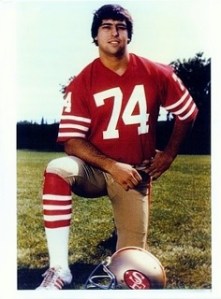
#74 NFL San Francisco 49er, George Visger @ 1981

1. What is your name? (last name optional)

George Visger

2. Where do you live? (city and/or state and/or country) Email (optional)

Cypress, California, USA     visgergeorge@gmail.com

3. When did you have your TBI? At what age?

I was first injured – had surgery – at age 22 during the 1981 Super Bowl season with the San Francisco 49ers.

4. How did your TBI occur?

I had a number of concussions throughout my 12 years of playing organized football. My first serious concussion occurred at age 13, during my third year of Pop Warner. I was hospitalized on that one. My final, and most severe, concussion occurred in 1980 against the Dallas Cowboys. I suffered a major TBI in the first quarter, yet I never missed a play by the use of over 20 smelling salts during the game (or so I was told later in the week when my memory returned). I also never missed a practice. Several months later, early in the ‘81 season, I developed hydrocephalus (water on the brain) and underwent emergency VP (ventriculoperitoneal) shunt brain surgery at Stanford. I have since survived nine emergency VP shunt brain surgeries, including five in a nine-month period in ‘86-‘87 while completing my Biology degree. I have also had several gran mal seizures, and I have been on anti-seizure meds for over 30 years.

5. When did you (or someone) first realize you had a problem?

I realized I had a problem during the ‘81 season. I developed major headaches and projectile vomiting. I saw balls of light in front of each eye each night. The team doctors diagnosed me with high blood pressure and prescribed diuretics for over two weeks, until I suffered focal point paralysis of my right arm. The team doc diagnosed me in the locker room with a brain hemorrhage. I drove myself to the hospital, where I underwent emergency VP shunt brain surgery.

6. What kind of emergency treatment, if any, did you have (e.g., surgery,

tracheotomy, G-peg)?

I have had nine emergency VP shunt brain surgeries since then. They drilled a hole in my skull and installed a permanent drain tube, which runs to a pressure valve in the back of my head. They plumbed that to drain into my abdomen. I am also on Lamictil for seizures.

7. Were you in a coma? If so, how long?

Nine months after my first shunt surgery, the shunt failed while I was fishing in Mexico with my brother. It took him a day to get me home, and I was in a coma from the pressure on my brain. I had two more brain surgeries ten hours apart and was given last rites. I was 23 at the time.

8. Did you do rehab? What kind of rehab (i.e., In-patient or Out-patient and Occupational, Physical, Speech, Other)?

I was never offered rehab. In fact, I was forced to sue the 49ers for Work Compensation just to get my second and third brain surgeries paid for. Until now, it was brain surgery, out the door, and “See you next shunt failure.” I did use Vocational Rehabilitation Services when I returned to school in ‘86 to complete my Biology degree. But, I was on my own to rehab after each of the five brain surgeries that I had while finishing my degree. I discovered B.R.A.I.N. (Brain Rehabilitation And Injury Network) founded by Sue Rueb in Cypress, CA, last year while speaking at a TBI conference. I literally moved there last August to get daily treatments – first treatments I have ever had. I do neurocognitive therapy and Yoga therapy, and I counsel other TBI survivors, which helps me as well.

How long were you in rehab?

I’ve been rehabbing since August 2013.

9. What problems or disabilities, if any, resulted from your TBI (e.g., balance, perception, personality, etc.)?

I have gran mal seizures, MAJOR short-term memory issues, poor judgment, anger-management issues, loss of direction, poor concentration, problems getting my words out or thinking of the right word, numbness in extremities, constant headaches, vision problems when my shunt goes out, diminished hearing, personality changes, problems handling finances, and brain seizures from alcohol, to name a few.

10. How has your life changed? Is it better? Is it worse?

I completed a Biology degree in 1990 at age 32 after eight brain surgeries, and I followed my second dream to be a wildlife biologist. I have never let my injury define me, and I thank God for it. I wouldn’t be where I am now had I not been injured. But recently, things have begun to spiral out of control. I lost my environmental consulting business (Visger & Associates, Inc.) in 2009, and I lost our house in 2011. My wife of nearly 19 years, and the mother of my children, and I are going through a divorce. It’s been too much for her.

Visger, George  2008-06-15 21.03.51

11. What do you miss the most from your pre-TBI life?

I miss my family. I miss being The Giant – the guy who “could do anything,” as my wife used to say. I miss being able to remember things. I literally do not remember numerous out-of-state bow-hunts, months of my life, kids’ activities, etc.

12. What do you enjoy most in your post-TBI life?

I enjoy being able to use my injuries to help others. I feel it is my God given mission in life now.

13. What do you like least about your TBI?

Loss of my marriage

14. Has anything helped you to accept your TBI?

I’ve been helped by my belief that God has a plan for me and that “something good comes out of everything.”

15. Has your injury affected your home life and relationships and, if so, how?

It has destroyed my marriage, and I lost my ability to provide for my family.

16. Has your social life been altered or changed and, if so, how?

Social activities were impacted, as I liked to drink back in the day. Now the only impact is that I will forget to attend a social outing. I have never been embarrassed about my injuries. I’m just as goofy now as I was before my injury.

17. Who is your main caregiver?

I was single until my late 30’s, and I have been my main caregiver ever since. My mom stepped in for a few days during surgeries, and my older brother, whom I worked with, kept an eye on me. My wife has done what she could over the years, but she has never been through a surgery with me.

Do you understand what it takes to be a caregiver?

I understand better than most what it takes to be a caregiver. I also understand what caregivers go through. I call it the “Ripple Effect.” My family members and caregivers have taken a worse beating from my TBI than I have. It is much harder on our loved ones than it is on ourselves.

18. What are your future plans? What do you expect/hope to be doing ten years from now?

I founded The Visger Group – Traumatic Brain Injury Consulting in 2010, and I have spoken all over the country. I coordinate directly with the NFL on rule changes to reduce TBIs in football at all levels. I have spoken at congressional hearings, conduct motivational talks at schools and businesses, and currently am working with our veterans suffering from TBI. I am also suffering from frontal lobe dementia, and I hope to kick a few butts and rattle a few cages while I can, in hopes of changing the way the medical field treats TBI survivors and families. In ten years, I expect to be working with government agencies, our military, academics, and sports leagues. I plan to be leading and speaking at TBI-recovery groups.

19. Are you able to provide a helpful hint that may have taken you a long time to learn, but which you wished you had known earlier? If so, please state what it is to potentially help other TBI survivors with your specific kind of TBI.

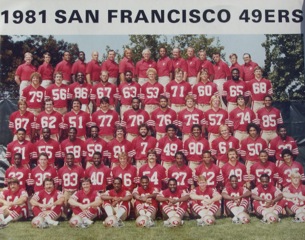
George Visger #74  4th row from bottom, 2nd from right  @ 1981

George Visger #74
4th row from bottom, 2nd from right
@ 1981

In football, there is a saying: “Short, Choppy Steps.” If you over-stride, it’s easy for someone to knock you on your butt. You want to keep your butt down, your head up, and take short, powerful 12-inch strides. Forget about breaking long touchdown runs. Get the little things done each day, and you will reach your goals. If a football team only got four yards each play – no more, no less – they would never lose a game. Think about it. They would get a first down every three plays, and they would score every time they had the ball. Life is no different. You need long-term goals for sure: score a touchdown, win the game, win the Super Bowl. But, you will NEVER get there if you don’t get your four yards a carry. We sell wrist bands on our website (www.thevisgergroup) that say “Short, Choppy Steps” and another one we give to coaches and players that says “Use your head, DON’T use your head.” Focus on small daily victories, and you’ll win the game.

20. What advice would you offer to other TBI survivors? Do you have any other comments that you would like to add?

Keep in mind everyone has a cross to bear. Carry your cross; don’t let it carry you. All of us TBI survivors have a lot to give to everyone. Turn your negative into a positive and touch people’s lives. Focus on your positives. Work hard, and put it in God’s hands. It will all work out.

That’s all anyone can do.

You can learn more about George Visger on his blog and these YouTube videos.

George Visger Blog – Life Before and After Football

George Visger talks about his life in these videos:

The Damage Done — George Visger’s Concussions

Battle Scars: Stagg High Alum, Former 49er Fights on Despite Brain Injuries

George Visger addresses specific topics in these very short videos:

Visger-275x300

Do Helmets Give Football Players a False Sense of Safety?

Would This Retired NFL Player Do It Again?

Thank you, George, for taking part in this interview. I hope that your experience will offer some hope, comfort, and inspiration to my readers.

(Disclaimer: The views or opinions in this post are solely that of the interviewee.)

(Photo compliments of George.)

If you would like to be a part of this project, please go to TBI Survivor Interview Questionnaire for a copy of the questions and the release form.


(Clip Art compliments of Bing.)

(Photos compliments of contributor.)

As I say after each post:

Please leave a comment by clicking the blue words “Leave a Comment” below this post.

anim0014-1_e0-1

Feel free to follow my blog. Click on “Follow” on the upper right sidebar.

If you like my blog, share it intact with your friends. It’s easy! Click the “Share” buttons below.


Survivors SPEAK OUT! . . . . . Steven A. Marderosian

Survivors SPEAK OUT! Steven A. Marderosian

presented by

Donna O’Donnell Figurski


Steven A. Marderosian Before TBI 20190429_120335

Survivor – Steven A. Marderosian Pre-TBI

1. What is your name? (last name optional)

Steven A. Marderosian

2. Where do you live? (city and/or state and/or country) Email (optional)

Barrington, Illinois, USA; E-mail: steven@marderosianlaw.com

3. On what date did you have your brain injury? At what age?

February 28, 2018; I was 49 years old.

4. How did your brain injury occur?

AVM (arteriovenous malformation) rupture – hemorrhagic stroke

5. When did you (or someone) first realize you had a problem?

My wife heard me sounding confused while talking to someone on my phone. Later she saw me looking at my phone as if I didn’t know what it was or how it worked. Then I started to notice my left arm going numb, and then, my left leg. I tried to “walk it off,” but I crashed to the floor.

6. What kind of emergency treatment, if any, did you have?EmergencyRoom

My wife raced me to the Emergency Room, where I triggered a “stroke alert” response. I recall only the very start of it. My wife was kept outside a curtain, so I don’t know any of the details before I stabilized.

7. Were you in a coma? If so, how long?

By the grace of God, no

8. Did you do rehab? What kind of rehab (i.e., inpatient or outpatient and occupational and/or physical and/or speech and/or other)? How long were you in rehab?

Towards end of two weeks in the Intensive Care Unit/neurology (and removal of my AVM by rare cross-craniotomy brain surgery), I had physical therapy, occupational therapy, and speech therapy evaluations in the regular hospital. I spent two more weeks in a rehab hospital for physical, occupational, and speech therapies. I then moved home with six more weeks of physical therapy and occupational therapy in a partial admission “day rehab” at the same rehab hospital. My total was more than two months of rehab.

9. What problems or disabilities, if any, resulted from your brain injury
(e.g., balance, perception, personality, etc.)?

My left side was paralyzed from the shoulders down – it was near total from the ribcage down. (I had no balance – I couldn’t stay up on all fours.) My left shoulder/arm/hand was moderately impaired. I have no real cognitive deficits per se, but my mental processing is disabled in high-level speed and volume capacity. My AVM was at the border of the frontal and parietal lobes, bleeding into the frontal lobe in the right hemisphere. It fractured me emotionally.

10. How has your life changed? Is it better? Is it worse?

surfer-boy-clipart-1It’s a mixed bag. I got up on a board and surfed just three months “post op” (against a “no contact sports” order). I’m physically stronger and even faster than I was pre TBI. But, my mental processing speed and capacity are still disabled. A bipolar diagnosis a few years pre TBI (likely due to progressive blood flow abnormality) appears to have been rectified by the AVM removal. But, while my mood is more stable, I still struggle to figure out my new personality. My general emotional state is different and strange.

11. What do you miss the most from your pre-brain-injury life?

I miss the lightning-fast mental processing and the seemingly limitless volume capacity. I miss not having to relearn every maneuver in black belt karate and fighting, downhill (telemark) skiing, and all other physically demanding things I’d been doing. I miss the 6-6.5 hours of sleep per night without ever napping or feeling tired.

12. What do you enjoy most in your post-brain-injury life?

I like that I care about the real suffering in the world (i.e., not my own, by comparison), in the midst of which I lived and rehabbed. I like having a far more stable mood and seemingly being cured of bipolar disorder. I’m looking forward to this second chance to fix past mistakes and live as God wants me to. And to never, ever, fear anything in the world again – other than God.

13. What do you like least about your brain injury?

I dislike needing way too much sleep and always being tired no matter what I do or don’t tired-clipart-they-7do. I don’t like figuring out my new altered personality, my future career, and even my likes and dislikes. I don’t like having to relearn every advanced physical maneuver and regaining my previous mental processing speed and volume capacity.

14. Has anything helped you to accept your brain injury?

I have been greatly helped by my undying (and now bulletproof) faith in Jesus Christ; by my eldest son, who is bipolar (now I want him scanned for an AVM too) and is the only one in my family who understands my continuing emotional turmoil; and by the support of my close friends in Christ and by my BFF of 45 years.

15. Has your injury affected your home life and relationships and, if so, how?

I look, speak, and act “fine,” so family (except my eldest son) and others don’t really understand my continuing emotional turmoil and new personality. So, I keep my inner feelings mostly to myself (and to my BFF, to my eldest son, to my bible study group, and to my therapist).

16. Has your social life been altered or changed and, if so, how?

I was kind of a homebody before, so my social life is not much different. But, busy, noisyno-noise-clipart-1 places, like crowded restaurants, create a sensory overload that can become overwhelming, especially after high-stress or high-volume days. It’s like I can hear every individual sound of 100 people, intercoms, TVs, and devices all blaring at once. I just want to scream, “Will everyone please just shut the f#@k up!?”
17. Who is your main caregiver? Do you understand what it takes to be a caregiver?

I’m so undeservedly blessed that I don’t have or need a caregiver anymore. My wife had to do it for the first few months after I moved back home, but I’ve been mostly on my own since then. My “emotional caregivers” are probably my BFF, my eldest son, my bible study group, and my therapist.

18. What are your plans? What do you expect/hope to be doing ten years from now?

I can’t tolerate the blatant dishonesty and BS involved in practicing law anymore (especially litigation, where it’s the worst) – not my own, but that of others who simply “double down” when I catch them and call them out. Far too many “judges” seem even worse than the lawyers. My BFF and I have done construction rehab work, and we just launched a demolition and construction company. In ten years, I hope it will be my main source of income, with my eldest son working with us and me taking only select legal work “on the side” (which sounds like Heaven). I wrote a book on God’s miracles in m

Steven A. Marderosian After TBI 20190429_113920

Survivor – Steven A. Marderosian Post-TBI

y experience. I hope to write more and to speak to inspire and help others overcome their crises and follow Jesus Christ.

19. Are you able to provide a helpful hint that may have taken you a long time to learn, but which you wished you had known earlier? If so, please state what it is to potentially help other survivors with your specific kind of brain injury.

Don’t try to force yourself back into who you were; you simply aren’t that person anymore and never will be again. I always say that as well as I’m doing now, “everything is different” somehow. Embrace who you’ve become and the power your experience and resilience have given you to overcome any obstacle. And, help others do the same.

20. What advice would you offer to other brain-injury survivors? Do you have any other comments that you would like to add?

Thank God constantly for every breath you take; every blessing you have; and even every challenge, setback, and outright sorrow you experience. All these things work together to achieve God’s will to make you stronger and better as the person He wants you to be. And never, ever, sweat the “small stuff” again – life’s just too short.

With all God’s blessings to all survivors everywhere,

Steven A. Marderosian

(Clip Art compliments of Bing.)

(Photos compliments of contributor)

As I say after each post:

Feel free to leave a comment by clicking the blue words “Leave a Comment” below this post.

Please follow my blog. Click on “Follow Me Via eMail” on the right sidebar of your screen.anim0014-1_e0-1

If you like my blog, click the “Like” button under this post.

If you REALLY like my blog, share it intact with your friends. It’s easy! Click the “Share” buttons below.

If you don’t like my blog, “Share” it intact with your enemies. That works for me too!


What is your name? (last name optional)

Steven A. Marderosian

Where do you live? (city and/or state and/or country) Email (optional)

Barrington, Illinois, USA; E-mail: steven@marderosianlaw.com

On what date did you have your brain injury? At what age?

February 28, 2018; I was 49 years old.

How did your brain injury occur?

AVM (arteriovenous malformation) rupture – hemorrhagic stroke

When did you (or someone) first realize you had a problem?

My wife heard me sounding confused while talking to someone on my phone. Later she saw me looking at my phone as if I didn’t know what it was or how it worked. Then I started to notice my left arm going numb, and then, my left leg. I tried to “walk it off,” but I crashed to the floor.

What kind of emergency treatment, if any, did you have?

My wife raced me to the Emergency Room, where I triggered a “stroke alert” response. I recall only the very start of it. My wife was kept outside a curtain, so I don’t know any of the details before I stabilized.

Were you in a coma? If so, how long?

By the grace of God, no

Did you do rehab? What kind of rehab (i.e., inpatient or outpatient and occupational and/or physical and/or speech and/or other)? How long were you in rehab?

Towards end of two weeks in the Intensive Care Unit/neurology (and removal of my AVM by rare cross-craniotomy brain surgery), I had physical therapy, occupational therapy, and speech therapy evaluations in the regular hospital. I spent two more weeks in a rehab hospital for physical, occupational, and speech therapies. I then moved home with six more weeks of physical therapy and occupational therapy in a partial admission “day rehab” at the same rehab hospital. My total was more than two months of rehab.

What problems or disabilities, if any, resulted from your brain injury
(e.g., balance, perception, personality, etc.)?

My left side was paralyzed from the shoulders down – it was near total from the ribcage down. (I had no balance – I couldn’t stay up on all fours.) My left shoulder/arm/hand was moderately impaired. I have no real cognitive deficits per se, but my mental processing is disabled in high-level speed and volume capacity. My AVM was at the border of the frontal and parietal lobes, bleeding into the frontal lobe in the right hemisphere. It fractured me emotionally.

How has your life changed? Is it better? Is it worse?

It’s a mixed bag. I got up on a board and surfed just three months “post op” (against a “no contact sports” order). I’m physically stronger and even faster than I was pre TBI. But, my mental processing speed and capacity are still disabled. A bipolar diagnosis a few years pre TBI (likely due to progressive blood flow abnormality) appears to have been rectified by the AVM removal. But, while my mood is more stable, I still struggle to figure out my new personality. My general emotional state is different and strange.

What do you miss the most from your pre-brain-injury life?

I miss the lightning-fast mental processing and the seemingly limitless volume capacity. I miss not having to relearn every maneuver in black belt karate and fighting, downhill (telemark) skiing, and all other physically demanding things I’d been doing. I miss the 6-6.5 hours of sleep per night without ever napping or feeling tired.

What do you enjoy most in your post-brain-injury life?

I like that I care about the real suffering in the world (i.e., not my own, by comparison), in the midst of which I lived and rehabbed. I like having a far more stable mood and seemingly being cured of bipolar disorder. I’m looking forward to this second chance to fix past mistakes and live as God wants me to. And to never, ever, fear anything in the world again – other than God.

What do you like least about your brain injury?

I dislike needing way too much sleep and always being tired no matter what I do or don’t do. I don’t like figuring out my new altered personality, my future career, and even my likes and dislikes. I don’t like having to relearn every advanced physical maneuver and regaining my previous mental processing speed and volume capacity.

Has anything helped you to accept your brain injury?

I have been greatly helped by my undying (and now bulletproof) faith in Jesus Christ; by my eldest son, who is bipolar (now I want him scanned for an AVM too) and is the only one in my family who understands my continuing emotional turmoil; and by the support of my close friends in Christ and by my BFF of 45 years.

Has your injury affected your home life and relationships and, if so, how?

I look, speak, and act “fine,” so family (except my eldest son) and others don’t really understand my continuing emotional turmoil and new personality. So, I keep my inner feelings mostly to myself (and to my BFF, to my eldest son, to my bible study group, and to my therapist).

Has your social life been altered or changed and, if so, how?

I was kind of a homebody before, so my social life is not much different. But, busy, noisy places, like crowded restaurants, create a sensory overload that can become overwhelming, especially after high-stress or high-volume days. It’s like I can hear every individual sound of 100 people, intercoms, TVs, and devices all blaring at once. I just want to scream, “Will everyone please just shut the f#@k up!?”

Who is your main caregiver? Do you understand what it takes to be a caregiver?

I’m so undeservedly blessed that I don’t have or need a caregiver anymore. My wife had to do it for the first few months after I moved back home, but I’ve been mostly on my own since then. My “emotional caregivers” are probably my BFF, my eldest son, my bible study group, and my therapist.

What are your plans? What do you expect/hope to be doing ten years from now?

I can’t tolerate the blatant dishonesty and BS involved in practicing law anymore (especially litigation, where it’s the worst) – not my own, but that of others who simply “double down” when I catch them and call them out. Far too many “judges” seem even worse than the lawyers. My BFF and I have done construction rehab work, and we just launched a demolition and construction company. In ten years, I hope it will be my main source of oncome, with my eldest son working with us and me taking only select legal work “on the side” (which sounds like Heaven). I wrote a book on God’s miracles in my experience. I hope to write more and to speak to inspire and help others overcome their crises and follow Jesus Christ.

Are you able to provide a helpful hint that may have taken you a long time to learn, but which you wished you had known earlier? If so, please state what it is to potentially help other survivors with your specific kind of brain injury.

Don’t try to force yourself back into who you were; you simply aren’t that person anymore and never will be again. I always say that as well as I’m doing now, “everything is different” somehow. Embrace who you’ve become and the power your experience and resilience have given you to overcome any obstacle. And, help others do the same.

What advice would you offer to other brain-injury survivors? Do you have any other comments that you would like to add?

Thank God constantly for every breath you take; every blessing you have; and even every challenge, setback, and outright sorrow you experience. All these things work together to achieve God’s will to make you stronger and better as the person He wants you to be. And never, ever, sweat the “small stuff” again – life’s just too short.


With all God’s blessings to all survivors everywhere,

Steven A. Marderosian
 

diemodi jewelry

uniquely hand-crafted jewelry by donna

Welcome to Harmony Kent Online

The home of all things books

Pete Springer

Passionate Teacher and Future Children's Author

HOPE TBI

Helping Other People Excel - To Be Independent

For the Love of Books, Old and New

Katie Fischer, Writer and Reader of Stories

Charlie Bown

Children's Author

Jessica Hinrichs

“We write to taste life twice, in the moment and in retrospect.” ― Anais Nin

VIVIAN KIRKFIELD - Writer for Children

Picture Books Help Kids Soar

Mindy’s Writing Wonderland

For authors, parents, teachers & everyone who loves children’s books.

Kaitlyn Leann Sanchez

Literary Agent

Surviving Traumatic Brain Injury

TBI - Survivors, Caregivers, Family, and Friends

The Care Factor

Loving someone with a Traumatic Brain Injury

Brain Injury Support Group of Duluth-Extension

Brain Injury Information and SUPPORT

Brain Aneurysm Global Insight

Brain Aneurysm, cerebral hemorrhaging, hemorrhage stroke