TBI – Survivors, Caregivers, Family, and Friends

Posts tagged ‘survivingtraumaticbraininjury.com’

Caregivers SPEAK OUT! . . . . . Charity Hamilton (caregiver for momma)

Caregivers  SPEAK OUT!  Charity Hamilton

(caregiver for her momma)

presented by

Donna O’Donnell Figurski

 

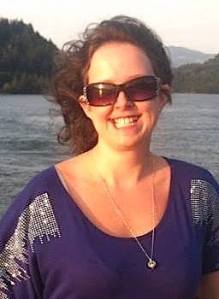
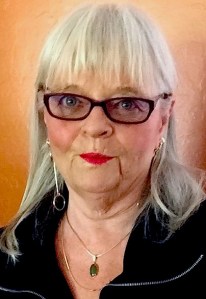
Charity Hamilton – Caregiver for her Momma

1. What is your name? (last name optional)

Charity Hamilton

2. Where do you live? (city and/or state and/or country) Email? (optional)

Shippensburg, Pennsylvania, USA

3. What is the brain-injury survivor’s relationship to you?

The survivor is my momma. 🙂

How old was the survivor when he/she had the brain injury? What caused your survivor’s brain injury?

My mother’s affliction is brain cancer and seizures. It was diagnosed in 2012 when she was seen after a car accident. (She didn’t remember what happened.) The hospital was going to let her leave, but we demanded a CT (computerized tomography) scan and an MRI (magnetic resonance imaging), as her husband (now deceased) knew something was wrong. That’s when the cancer was found. It had apparently started as a child!

4. On what date did you begin care for your brain-injury survivor? Were you the main caregiver? Are you now? How old were you when you began care?

I became my mother’s only caregiver in 2016, as her husband helped care for her, but he recently passed due to bad health. I am now her full-time caregiver. I am 24.

5. Were you caring for anyone else at that time (e.g., children, parents, etc.)?

I have three beautiful children of my own, whom I care for.

6. Were you employed at the time of your survivor’s brain injury? If so, were you able to continue working?

I was then and am now a full-time employee.

7. Did you have any help? If so, what kind and for how long?

I had no help after my mother’s husband passed.

8. When did your support of the survivor begin (e.g., immediately – in the hospital; when the survivor returned home; etc.)?

I began care immediately after my mother was diagnosed.

9. Was your survivor in a coma? If so, what did you do during that time?

No

10. Did your survivor have rehab? If so, what kind of rehab (i.e., inpatient and/or outpatient and occupational, physical, speech, and/or other)? How long was the rehab? Where were you when your survivor was getting therapy?

My mother had no rehab.

11. What problems or disabilities of your brain-injury survivor required your care, if any?

My care was needed whenever my mother had seizures. I also helped her deal with memory loss. I assisted her with medications, and I helped her with showers.

12. How has your life changed since you became a caregiver? Is it better? Is it worse?

With everything I have on my plate, my life is complicated and very busy. Only brain-injury-caregivers truly understand.

13. What do you miss the most from pre-brain-injury life?

I miss not being so busy!

14. What do you enjoy most in p
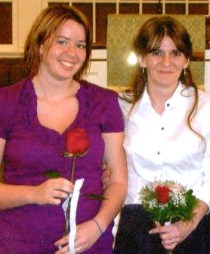
Charity Hamilton – Caregiver for Mom, Jean Jones

ost-brain-injury life?

I enjoy talking to mom and going out and about with her.

15. What do you like least about brain injury?

I don’t like the tons of errands and feeling like the parent.

16. Has anything helped you to accept your survivor’s brain injury?

Caregiving came naturally because she’s my mother and I would never let her be alone.

17. Has your survivor’s injury affected your home life and relationships and, if so, how?

Yes. My mother’s brain injury has made home-life and relationships tough and stressful sometimes, as they don’t understand I HAVE to care for my mother – no one else will.

18. Has your social life been altered or changed and, if so, how?

Not really. I didn’t have a social life before my mother’s diagnosis.

19. What are your plans? What do you expect/hope to be doing ten years from now?

My future is nursing.

20. What advice would you offer other caregivers of brain-injury survivors? Do you have any other comments that you would like to add?

Have patience!!


(Disclaimer: The views or opinions in this post are solely that of the interviewee.)

If you would like to be a part of the SPEAK OUT! project, please go to TBI SPEAK OUT! Caregiver Interview Questionnaire for a copy of the questions and the release form.

(Clip Art compliments of Bing.)

As I say after each post: Please leave a comment by clicking the blue words “Leave a Commentanim0014-1_e0-1 below this post.

Feel free to follow my blog. Click on “Follow” on the upper right sidebar.

If you like my blog, share it with your friends. It’s easy! Click the “Share” buttons below.

If you don’t like my blog, “Share” it with your enemies. I don’t care!

Feel free to “Like” my post.

Brain Injury Resources . . . . . Brain Injury Journey Bulletin by Lash & Associates Publishing

Brain Injury Journey Bulletin by Lash & Associates Publishing

presented by

Donna O’Donnell Figurski


Lash & Associates

Lash and Associates Publishing/Training, Inc. introduces its newest brainchild. The Brain Injury Journey BULLETIN is a compilation of brain-injury resources on a variety of topics of interest to those who live in the world of brain injury. Caregiving, memory issues, and grief and loss are some of the interest areas presented in the bulletin.

Lash and Associates Publishing/Training, Inc. is the leading publisher of brain-injury-related books and resources. They are in the know!

The bulletin is published free of charge each month. You only need to sign up for your subscription. Follow this link to get your free subscription, and YOU can be in the know too. Brain Injury Journey BULLETIN


July 2017
Brain Injury Journey BULLETIN: GRIEF and LOSS

June 2017
Brain Injury Journey BULLETIN: Executive Functions Critical and Vital to Organization, Prioritizing, and Behaviors

May 2017
Brain Injury Journey BULLETIN: “Caregivers – The Visible/Invisible TBI Support Network”

April 2017
Brain Injury Journey BULLETIN: Memory


To locate additional books pertaining to brain injury, please check out Lash & Associates Publishing/Training Inc.


(Clip Art compliments of Bing.)

As I say after each post:

Feel free to leave a comment by clicking the blue words “Leave a Comment” below this post.

Please follow my blog. Click on “Follow Me Via eMail” on the right sidebar of your screen.anim0014-1_e0-1

If you like my blog, click the “Like” button under this post.

If you REALLY like my blog, share it with your friends. It’s easy! Click the “Share” buttons below.

If you don’t like my blog, “Share” it with your enemies. That works for me too!


TBI Tales: . . . . . . . . . . . . . . . . . . . A Messy Kitchen & Fruit Salad


A Messy Kitchen
by
Michael Puffer (caregiver for his wife, Maria)
presented by
Donna O’Donnell Figurski


Puffer. Michael & Mari a

Maria Puffer – Brain Injury Survivor Michael Puffer – Caregiver for Maria

I came home after a long day and found what looked like a mess in the kitchen. I sat down and put my face in my hands and cried. I couldn’t believe what I came home to. I wasn’t angry, but I couldn’t stop the tears.

Twenty-three months ago, the state of the kitchen would not have been a remarkable finding. Tonight, it was truly unbelievable, and I was blown away!Messy Kitchen

Just under two years ago, I thought I had lost the most important person in my life. My loving wife, Maria Puffer, was in a horrific car accident. She suffered a severe traumatic brain injury and a spinal cord contusion, and she was in a coma at North Memorial Hospital near Minneapolis.

Ever since that day, Maria has fought to show us she is still with us and she is ever-determined to recover and get her life back. Week by week, day by day, hour by hour – she never quits, complains, or feels sorry for herself. Maria practices walking with a walker an hour a day, sometimes nearly falling asleep because she always wants to push herself. She thanks me every night for taking care of her. She shows all of us what true grit and love is.

Fruit_salad_clipartMaria asked me a few days ago where the Kitchen Aid mixer was. I told her it was in the pantry. The next day – there it was on the counter. Maria asked daughter Samantha to pick up the ingredients to make fruit salad. I told her we would make fruit salad over the weekend, but there never was time to do it.

Maria didn’t wait. She made the fruit salad by herself.

My tears were tears of joy and wonder. When she came into the kitchen, I reached out, gave her a huge hug, and said, “You are awesome!” (Maria is absolutely the strongest person I’ll ever know. I can’t believe how lucky I am to be in her life!)Man & Woman Hugging

We had dinner together and enjoyed the very best fruit salad in the world for desert.

I will try forever to be the best husband that I can be. I know I have the best wife, and she deserves the best from me.

14449717_1157500687641271_6923286480652057034_n


14358883_1157501060974567_1502463441729171801_n


14344307_1157501104307896_5377028616340304482_n


As I say after each post: Please leave a comment by clicking the blue words “Leave a Commentanim0014-1_e0-1 below this post.

Feel free to follow my blog. Click on “Follow” on the upper right sidebar.

If you like my blog, share intact it with your friends. It’s easy! Click the “Share” buttons below.

If you don’t like my blog, “Share” it intact with your enemies. I don’t care!

Feel free to “Like” my post

Survivors SPEAK OUT! Shauna Farmer

Survivors SPEAK OUT! Shauna Farmer

presented 

by

Donna O’Donnell Figurski

Shauna Farmer – Brain Injury Survivor

1. What is your name? (last name optional)

Shauna Farmer

2. Where do you live? (city and/or state and/or country)

I currently live in Thermopolis, Wyoming, USA, with my family. I’m originally from Portland, Oregon.

Email (optional)

sfarme0@yahoo.com

3. On what date did you have your brain injury?

August 8, 2015

At what age? 37 years old

4. How did your brain injury occur?

While not wearing a helmet, I rolled an ATV. My head hit a tree or a pile of rocks. I continued to roll, crushing more bones. Then I stopped unconscious.

5. When did you (or someone) first realize you had a problem?

I didn’t return to camp, and, after twenty minutes, my sister came looking for me.

6. What kind of emergency treatment, if any, did you have?

I was taken to the hospital by ambulance. Then I was life-flighted to a larger hospital. I spent three weeks in the ICU (intensive care unit). I had surgery to reinflate my lung, and I had a drain tube put in. Then I was sent back to the ICU.

7. Were you in a coma? If so, how long?

Shauna Farmer – Brain Injury Survivor

For roughly two weeks, I was in and out. They needed me to be awake, but when I woke up, I was lashing out at the nurses, doctors, and my family. I pulled out my tubes and detached monitors. I climbed onto a wheelchair with my head bandaged. I tried to persuade the other patients to get out of there.

8. Did you do rehab? What kind of rehab (i.e., inpatient or outpatient and occupational and/or physical and/or speech and/or other)? How long were you in rehab?

Yes. I was in an inpatient rehab facility for two weeks. I had speech, occupational, and physical therapies and some cognitive therapy. Now I do most things at home, and I go to the gym three days a week.

9. What problems or disabilities, if any, resulted from your brain injury
(e.g., balance, perception, personality, etc.)?

I have a diffuse axonal injury (DAI, shaken-baby syndrome). I have chronic back pain from the crushed vertebrae. I suffer from fatigue, dizziness, and vertigo. My personality has been affected. I sometimes misconstrue what others say. Also, my temper is not what it was, nor is my patience.

10. How has your life changed?

I live with family now, which I don’t like. I love my family, but I don’t love when others have to do things for me that I can no longer do. For example, I depend on others to drive me to the store, as I’m not allowed to drive yet. I have to limit my exercise routine because of injury – no running, no jogging, no skydiving, no heavy lifting. My balance is off due to BPPV (benign paroxysmal positional vertigo; one of the most common causes of vertigo; will cause brief episodes of mild to intense dizziness), so I have to be careful with quick movements, stairs, heights, and foreign places.

Is it better? Is it worse?

No answer

11. What do you miss the most from your pre-brain-injury life?

I miss living close to the beach in my own home and being so damn independent.

12. What do you enjoy most in your post-brain-injury life?

I enjoy the sunny weather.

Shauna Farmer – Brain Injury Survivor

13. What do you like least about your brain injury?

I dislike not being able to go hiking in the forest or to go on the beach.

14. Has anything helped you to accept your brain injury?

I became editor of three Facebook online support-groups for TBI (traumatic brain injury). That helps me a lot. I feel I can give something of value to others living the same journey I am. I’m also in the works to create my own Facebook support-group, specifically for DAI (diffuse axonal injury), the injury I have. DAI is the most common and also the most devastating brain injury out there.

15. Has your injury affected your home life and relationships and, if so, how?

Yes! I lost my home, my job, and my independence. I live with family now. I do have my own room with space, but I’m not used to cooking for others or depending on others to provide for me when I did everything before. I feel like my family tiptoes around me and treats me like a fragile bird. I’m not! I can still do most things. Let me prove myself. If I don’t succeed, then maybe you can help me the next time.

16. Has your social life been altered or changed and, if so, how?

I have no friends here. The few I have are 1400 miles away, and they haven’t seen me since before the accident. I don’t know how they will feel or react when they see I’m still pretty much the same person, just a little slower when running.

17. Who is your main caregiver?

My sister was my caregiver, but after a week, she knew I could take care of myself, and I do.

Do you understand what it takes to be a caregiver?

Yes, I know it’s hard, especially if the survivor is family.

18. What are your plans?

I plan to move back to Oregon and return to school.

What do you expect/hope to be doing ten years from now?

I aspire to become a paralegal, or maybe I’ll become something with occupational therapy and assist those with brain injury.

19. Are you able to provide a helpful hint that may have taken you a long time to learn, but which you wished you had known earlier? If so, please state what it is to potentially help other survivors with your specific kind of brain injury.

My advice: (1) Water is so important, and being tired is your new normal. (2) Find something positive that you like to do, and stick with it so you can move forward.

20. What advice would you offer to other brain-injury survivors? Do you have any other comments that you would like to add?

positive-thinking-clipart-positive-thinking-world-Ng196D-clipartIt will take time to accept the new you. Find something you like, and keep doing it. Or, try something you’ve never done before, like work out regularly. I was not a fan of the gym, but I made myself go three days a week. After a month, it became routine, and now I look forward to it. My personal trainer pushes me, and I find myself looking for ways to improve to show her the next time. I have more energy, and I am happy when I accomplish things I couldn’t do six weeks ago. That’s a great feeling! Even if it takes me longer to do it, the satisfaction is still there.


If you would like to be a part of the SPEAK OUT! project, please go to TBI SPEAK OUT! Survivors Interview Questionnaire for a copy of the questions and the release form.

(Clip Art compliments of Bing.)

As I say after each post: Please leave a comment by clicking the blue words “Leave a Commentanim0014-1_e0-1 below this post.

Feel free to follow my blog. Click on “Follow” on the upper right sidebar.

If you like my blog, share it with your friends. It’s easy! Click the “Share” buttons below.

If you don’t like my blog, “Share” it with your enemies. I don’t care!

Feel free to “Like” my post.


Survivors SPEAK OUT! Taylor Trammell

Survivors SPEAK OUT! Taylor Trammell

presented 

by

Donna O’Donnell Figurski

Taylor Trammell – Brain Injury Survivor

1. What is your name? (last name optional)

Taylor Trammell

2. Where do you live? (city and/or state and/or country) Email (optional)

Grand Prairie, Texas, USA     taylor.dot24@gmail.com

3. On what date did you have your brain injury? At what age?

I had my brain injury on February 14th, 2010, at age 13.

4. How did your brain injury occur?

Carbon monoxide poisoning

(Donna’s note: The story of the poisoning of Taylor and her mother, Shelley Taylor, will be published later on this blog under “Faces of Brain Injury.”)

5. When did you (or someone) first realize you had a problem?

The problem was apparent the night we were poisoned.

6. What kind of emergency treatment, if any, did you have?

I was put into a hyperbaric chamber.

7. Were you in a coma? If so, how long?

No

8. Did you do rehab? What kind of rehab (i.e., inpatient or outpatient and occupational and/or physical and/or speech and/or other)? How long were you in rehab?

No

9. What problems or disabilities, if any, resulted from your brain injury
(e.g., balance, perception, personality, etc.)?

Afterward, I started to sleep poorly or not to sleep any at night. I also suffer from horrible migraines. Sometimes, when I hold on to something, I just drop it. But overall, it’s a mystery because every day could be something different.

10. How has your life changed? Is it better? Is it worse?

Now I have sleeping problems, and I get horrible migraines. But, I can’t really say if my life is better or worse. I mean, it’s not fun on some days, but at least I have a life to live.

11. What do you miss the most from your pre-brain-injury life?

I miss being able to go to a concert or an event and not having to turn away from the stage or to have my boyfriend hold my head in his chest to block the light. I miss being able to talk normally and not forget what I was saying. Most of all, I miss not being able to sleep.

12. What do you enjoy most in your post-brain-injury life?

I enjoy just living in general. I mean that because it was such a close call to be living. God saved me, so I will live my life to the fullest and not let my TBI (traumatic brain injury) hold me back.

13. What do you like least about your brain injury?

Not sleeping and my migraines

14. Has anything helped you to accept your brain injury?

Yes. I’ve been helped by knowing that God saved me and that He is always right beside me.

15. Has your injury affected your home life and relationships and, if so, how?

I’m not sure. Sometimes it’s hard for people to understand my migraines or that I’m grumpy from not sleeping.

16. Has your social life been altered or changed and, if so, how?

Yes, it has. I realize that life is short, so I try to do everything I want to do. I have fun. I love music and going to concerts, but that has changed due to the lights.

17. Who is your main caregiver? Do you understand what it takes to be a caregiver?

N/A

18. What are your plans? What do you expect/hope to be doing ten years from now?

I am graduating in a few weeks with my degree in ASL (American Sign Language) Interpreting. I plan to become an interpreter and to be married next year and start our lives.

19. Are you able to provide a helpful hint that may have taken you a long time to learn, but which you wished you had known earlier? If so, please state what it is to potentially help other survivors with your specific kind of brain injury.

No matter what has become the new you, you have to remember that there is a you because God saved you. I had to accept who the new me was and just roll with it. I mean, there wouldn’t be a you if you were not saved. SO, accept it, and learn what you need to do to live your life every day.

Taylor Trammell – Brain Injury Survivor

20. What advice would you offer to other brain-injury survivors? Do you have any other comments that you would like to add?

Just remember to be thankful, even in the hardest times. Life isn’t easy, and it never will be. Be strong and be supportive to everyone because you never know what the other person is going through. I know a lot of people in my life who have no idea what I go through every day, so just be strong and remember God is with you.


Surviving Brain Injury - Stories of Strength & Inspiration

Surviving Brain Injury: Stories of Strength and Inspiration

NOTE 1:

Taylor Trammell and her mother, Shelley Taylor, are contributing authors in “Surviving Brain Injury: Stories of Strength & Inspiration,” edited by Amy Zellmer. Shelley and Taylor’s story is titled, “Our Story of Poisoning — and of Grace.” It can be found in Chapter 75 on page 299.

NOTE 2:

My story, “Nightmare in the Disability Lane,” can be found in Chapter 29 on page 114 of the same book, “Surviving Brain Injury: Stories of Strength & Inspiration,” edited by Amy Zellmer.


If you would like to be a part of the SPEAK OUT! project, please go to TBI SPEAK OUT! Survivors Interview Questionnaire for a copy of the questions and the release form.

(Clip Art compliments of Bing.)

As I say after each post: Please leave a comment by clicking the blue words “Leave a Commentanim0014-1_e0-1 below this post.

Feel free to follow my blog. Click on “Follow” on the upper right sidebar.

If you like my blog, share it with your friends. It’s easy! Click the “Share” buttons below.

If you don’t like my blog, “Share” it with your enemies. I don’t care!

Feel free to “Like” my post.

Survivors SPEAK OUT! Barbara Asby

Survivors SPEAK OUT!  Barbara Asby

presented by

Donna O’Donnell Figurski

Barbara Wilson Asby

Barbara Wilson Asby – TBI Survivor


1. What is your name? (last name optional)

Barbara Asby

2. Where do you live? (city and/or state and/or country) Email (optional)

Norfolk, Virginia, USA

3. On what date did you have your brain injury? At what age?

My brain injury happened over seven years ago. I was 41 years old.

4. How did your brain injury occur?

Pesticide Toxic Exposure

5. When did you (or someone) first realize you had a problem?

Some symptoms occurred during the first couple of days during the exposure. Symptoms gradually got worse after the following two weeks and beyond.

6. What kind of emergency treatment, if any, did you have?

hospital5I went to the Emergency Room after a week, because of shortness of breath and cognitive issues. They found an enlarged lymph node in my lung. This finding was followed up by other specialists. I had MRIs (magnetic resonance imaging), an EEG (electroencephalogram), a SPECT (single-photon emission computed tomography) scan (a test that uses a radioactive substance and a special camera to determine how an organ is functioning), and other tests, to name a few.

6. Were you in a coma? If so, how long?

No

7. Did you do rehab? What kind of rehab (i.e., inpatient or outpatient and occupational and/or physical and/or speech and/or other)?

Yes. I had occupational, speech, and vestibular therapies.

How long were you in rehab?

My therapy has been on and off from 2010 to the present.

8. What problems or disabilities, if any, resulted from your brain injury
(e.g., balance, perception, personality, etc.)?

I have problems with balance, perception, cognitive abilities, memory, organizational skills, and word retrieval. I am plagued with fatigue, headaches, and partial seizures.tired-woman

9. How has your life changed? Is it better? Is it worse?

I am now disabled and unable to work in my former job as an IRS (Internal Revenue Service) agent.  (This injury happened on the job.) My life is better because I realize how important life really is. It’s worse because I realize what I took for granted.

10. What do you miss the most from your pre-brain-injury life?

I miss the ability to work and have a career. I really miss not having a better memory, more energy, and the organizational and multitasking skills that I once had.

11. What do you enjoy most in your post-brain-injury life?

I am aware of the beauty that life has to offer. I see the good in life and in people.

12. What do you like least about your brain injury?

I dislike the fact that others aren’t willing to educate themselves about TBI (traumatic brain injury) or try to understand what others go through. People lose interest over time – they do not want to hear about your problems or your pain anymore. I think this is the greatest suffering from my TBI.education-clipart-9c4y5zycE-1

13. Has anything helped you to accept your brain injury?

It’s been over seven years, and I am still trying to accept my brain injury. It still changes – it’s hard to accept when it does not stay stable. Therefore, I can’t accept something when each day is different.

14. Has your injury affected your home life and relationships and, if so, how?

Yes. It has ended my marriage.

15. Has your social life been altered or changed and, if so, how?

Yes. Due to the balance and sensory issues, my social life has been greatly affected.

16. Who is your main caregiver? Do you understand what it takes to be a caregiver?

I am my caregiver.

17. What are your plans? What do you expect/hope to be doing ten years from now?

My future plan is to write a memoir. I also want to volunteer to help others who have a brain injury.

18. Are you able to provide a helpful hint that may have taken you a long time HistoryMissionusewhereveriStock_000017322294Smallto learn, but which you wished you had known earlier? If so, please state what it is to potentially help other survivors with your specific kind of brain injury.

My advice is to look for support-groups and to try to reach out to others. Also, educate yourself with brain injury material.

20. What advice would you offer to other brain-injury survivors? Do you have any other comments that you would like to add?

Just reach out to other survivors – we are a big family. We understand – when others do not. TBI survivors – like other survivors – are strong. God kept you on this earth for a reason. Keep your chin up. Look to others for strength, and give others strength when it’s needed. BIG HUGS.

If you would like to be a part of the SPEAK OUT! project, please go to TBI SPEAK OUT! Survivors Interview Questionnaire for a copy of the questions and the release form.

(Clip Art compliments of Bing.)

As I say after each post: Please leave a comment by clicking the blue words “Leave a Commentanim0014-1_e0-1 below this post.

Feel free to follow my blog. Click on “Follow” on the upper right sidebar.

If you like my blog, share it with your friends. It’s easy! Click the “Share” buttons below.

If you don’t like my blog, “Share” it with your enemies. I don’t care!

Feel free to “Like” my post.
Survivors SPEAK OUT! Shelley Taylor

Survivors SPEAK OUT!  Shelley Taylor

presented by

Donna O’Donnell Figurski


Taylor, Shelley Survivor 3 050417

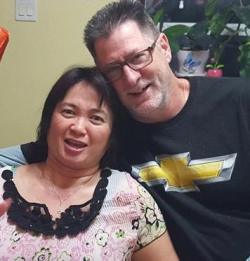
Shelley Taylor – Brain Injury Survivor


1. What is your name? (last name optional)

Shelley Taylor

2. Where do you live? (city and/or state and/or country) Email (optional)

Grand Prairie, Texas, USA     shelley@shelleytaylor.net

3. On what date did you have your brain injury? At what age?

I had my brain injury on Valentine’s Day seven years ago. I was 45 years old.

4. How did your brain injury occur?

Both I and my daughter, Taylor, were poisoned one night by carbon monoxide gas coming from an outside generator. We were fortunate to awaken and survive. Both of us have a brain injury as a result. (Donna’s note: Their horrific story will be published later on this blog under “Faces of Brain Injury.”)

5. When did you (or someone) first realize you had a problem?

The likelihood of carbon monoxide poisoning was first evident to the Fire Chief when the detector showed very high levels of carbon monoxide near the house. I was treated for carbon monoxide poisoning at Methodist Dallas Medical Center. Eventually it was discovered that I have a traumatic brain injury (TBI).

6. What kind of emergency treatment, if any, did you have?

I was taken to the Emergency Room at Methodist Hospital in Mansfield. I had stitches for a head wound (see story), and I was given a CT (computerized tomography) scan. A hyperbaric chamber at Methodist Dallas Medical Center was used to treat me for carbon monoxide poisoning.

7. Were you in a coma? If so, how long?

No

8. Did you do rehab? What kind of rehab (i.e., inpatient or outpatient and occupational and/or physical and/or speech and/or other)? How long were you in rehab?

Yes. I had occupational therapy.

9. What problems or disabilities, if any, resulted from your brain injury
(e.g., balance, perception, personality, etc.)?

I have a problem breathing. I also have problems with balance, depth perception, and memory. I am plagued with migraines, vertigo, and light-sensitivity.

10. How has your life changed? Is it better? Is it worse?

My daily life has changed, with issues in breathing, balance, light-sensitivity, depth perception, noise-sensitivity, and memory. Now I also have daily headaches. (I got a migraine on February 4th, and I have not gone a day pain-free.) Life is just different. I am who I am for a reason. I’m living God’s plan for me.

11. What do you miss the most from your pre-brain-injury life?

I miss being able to remember, wearing high heels, and pain-free days.

12. What do you enjoy most in your post-brain-injury life?

Taylor, Shelley survivor

Shelley Taylor – Brain Injury Survivor

I try to live every day with a positive attitude. My daughter and I live with gratitude. We are very thankful that God saved us.

13. What do you like least about your brain injury?

I dislike coughing, falling, the light-sensitivity, the noise-sensitivity, and the memory issues. Many doctors don’t have experience with our type of injury. It’s frustrating.

14. Has anything helped you to accept your brain injury?

Yes. My relationship with Christ.

15. Has your injury affected your home life and relationships and, if so, how?

I think my family offers me an abundant amount of grace on days when my head is killing me and I’m extremely nauseous. They know I need to rest my brain a lot in the calm and quiet.

16. Has your social life been altered or changed and, if so, how?

Yes. I was an extrovert pre brain injury. Post brain injury, I’ve become an introvert. I love calm and quiet now.

17. Who is your main caregiver? Do you understand what it takes to be a caregiver?

N\A

18. What are your plans? What do you expect/hope to be doing ten years from now?

I just finished writing a book, “With My Last Breath, I’d Say I Love You” – when your faith and hope slip, grace wins every time. I hope to find a publisher soon. Also, I’d love to speak and encourage others. book

19. Are you able to provide a helpful hint that may have taken you a long time to learn, but which you wished you had known earlier? If so, please state what it is to potentially help other survivors with your specific kind of brain injury.

Early on, realize that you are here for a reason and make the most of each day. Our struggles are what make us stronger. Reach out to others and ask for help when necessary. Love yourself for who you are, not for what you aren’t.

20. What advice would you offer to other brain-injury survivors? Do you have any other comments that you would like to add?

See my comments in the preceding question.

NOTE 1:

Surviving Brain Injury - Stories of Strength & Inspiration

“Surviving Brain Injury: Stories of Strength & Inspiration”

Shelley Taylor and her daughter, Taylor Trammell, are contributing authors in “Surviving Brain Injury: Stories of Strength & Inspiration,” edited by Amy Zellmer. Shelley and Taylor’s story is titled, “Our Story of Poisoning — and of Grace.” It can be found in Chapter 75 on page 299.

NOTE 2:

My story, “Nightmare in the Disability Lane,” can be found in Chapter 29 on page 114 of the same book, “Surviving Brain Injury: Stories of Strength & Inspiration,” edited by Amy Zellmer.


If you would like to be a part of the SPEAK OUT! project, please go to TBI SPEAK OUT! Survivors Interview Questionnaire for a copy of the questions and the release form.

(Clip Art compliments of Bing.)

As I say after each post: Please leave a comment by clicking the blue words “Leave a Commentanim0014-1_e0-1 below this post.

Feel free to follow my blog. Click on “Follow” on the upper right sidebar.

If you like my blog, share it with your friends. It’s easy! Click the “Share” buttons below.

If you don’t like my blog, “Share” it with your enemies. I don’t care!

Feel free to “Like” my post.
Brain Injury Resources . . . . . “Explaining Brain Injury, Blast Injury and PTSD to Children and Teens “

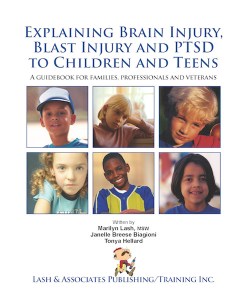
Explaining Brain Injury, Blast Injury and PTSD to Children and Teens

by
Marilyn Lash, M.S.W., Janelle Breese Biagioni and Tonya Hellard 
(offered by Lash & Associates Publishers)

presented by
Donna O’Donnell Figurski

EBIB Cover copy

When a parent is injured, sons and daughters often feel confused, scared, anxious, and angry. This guide helps parents explain the physical, cognitive, behavioral, social, and communicative changes that can follow a brain injury, blast injury, or PTSD. Using examples from children of all ages, it helps children understand their emotional reactions to a parent’s injury or PTSD. Each chapter has an exercise for children and practical tips for children, parents, and professionals.

To locate additional books pertaining to brain injury, please check out Lash & Associates Publishing/Training Inc.

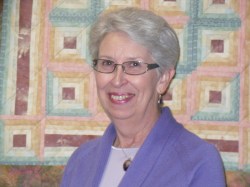
Marilyn Lash – Author – President of Lash & Associates Publishing

Tonya Hellard – Author (no photo available)

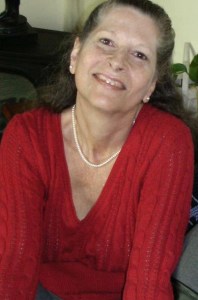
Janelle Breese Biagioni – Author


(Clip Art compliments of Bing.)

As I say after each post:

Feel free to leave a comment by clicking the blue words “Leave a Comment” below this post.

Please follow my blog. Click on “Follow Me Via eMail” on the right sidebar of your screen.anim0014-1_e0-1

If you like my blog, click the “Like” button under this post.

If you REALLY like my blog, share it with your friends. It’s easy! Click the “Share” buttons below.

If you don’t like my blog, “Share” it with your enemies. That works for me too!

SPEAK OUT! . . . . . . . . . . . . . . . Faces of Brain Injury . . . . . . . . Jennifer Stokley (survivor)

SPEAK OUT! Faces of Brain Injury Jennifer Stokley (survivor)

presented by

Donna O’Donnell Figurski

Brain Injury is NOT Discriminating!

bigstock-cartoon-face-vector-people-25671746-e1348136261718It can happen to anyone, anytime, . . . and anywhere.

The Brain Trauma Foundation states that there are 5.3 million people in the United States living with some form of brain injury.

On “Faces of Brain Injury,” you will meet survivors living with brain injury. I hope that their stories will help you to understand the serious implications and complications of brain injury.

The stories on SPEAK OUT! Faces of Brain Injury are published with the permission of the survivor or designated caregiver.

If you would like your story to be published, please send a short account and two photos to me at neelyf@aol.com. I’d love to publish your story and raise awareness for Brain Injury.

Jennifer Stokley – Brain Injury Survivor

Jennifer Stokley (survivor)

On May 10, 2007, I fell out of a second story window of my home to the sidewalk below. I broke nine major bones (including my neck), I ruptured my bladder, I punctured my lung, I went into two cardiac arrests, and I had a severe TBI (traumatic brain injury) that sent me into a three-week coma. And yet I survived! They didn’t think I would. Then they didn’t think I would have any cognitive abilities at all. Then they thought I would be paralyzed from the neck down.

I now live independently on my own. I take care of everything except driving. I walk with a cane only when I leave the house. The rest of the time, I am mobile just fine. It’s been nine years of “Think I can’t? I know I can. Just watch me!” Don’t get me wrong -these have been the hardest years I’ve ever experienced. But, they were totally worth every moment!

Making MemoriesI did lose my pre-TBI long-term memory, but that’s all in the past anyway. I’m not going backward – I’m only going forward. I’m making new memories – I’m not worried about lost memories.


Thank you, Jennifer Stokley, for sharing your story.

(Clip Art compliments of Bing.)

(Photos compliments of contributor.)

As I say after each post: Please leave a comment by clicking the blue words “Leave a Commentanim0014-1_e0-1 below this post.

Feel free to follow my blog. Click on “Follow” on the upper right sidebar.

If you like my blog, share it intact with your friends. It’s easy! Click the “Share” buttons below.

If you don’t like my blog, “Share” it intact with your enemies. I don’t care!

Feel free to “Like” my post.

TBI Tales: . . . . . . . . . . . . . . . . . . . . I Tripped & Stumbled, but Did Not Fall by Donna O’Donnell Figurski

I Tripped & Stumbled, but Did Not Fall

by

Donna O’Donnell Figurski

Donna O’Donnell Figurski

Recently, as I got out of my car, I stumbled on the curb. Somehow in the darkness, I did not see it. Though the event took less than a second, one thought ran through my head. It was not, “Oh, no! I am going to break a bone or scrape my knee.” It was not, “What a klutz! I’ll ruin my clothes.” And it was not about how embarrassed I would be. All of those possibilities probably would have been my first thoughts – before brain injury entered my life when my husband had a traumatic brain injury in 2005.

Now my mind is only a thought away from brain injury. So, as I tripped and stumbled, but did not fall, my mind raced to, “Please don’t let me hit my head.” I didn’t care how silly I looked or about my clothes being ripped or about getting any broken bones (they would heal). I worried about getting a brain injury. I worried about how a brain injury could change my life forever. I worried that if I were hurt, I could not sufficiently care for my husband, who needs my daily attention. Yes, those thoughts did race through my head in that fleeting second.

It only takes a second for a brain injury to occur. Most brain injuries occur because of an accident. Though we may be aware of the possibility of accidents, they cannot all be avoided. Fortunately, my accident was avoided – just barely. I can only hope that my potential accidents will be few and far apart in the future. I hope yours will be too.

As I say after each post: Please leave a comment by clicking the blue words “Leave a Commentanim0014-1_e0-1 below this post.

Feel free to follow my blog. Click on “Follow” on the upper right sidebar.

If you like my blog, share intact it with your friends. It’s easy! Click the “Share” buttons below.

If you don’t like my blog, “Share” it intact with your enemies. I don’t care!

Feel free to “Like” my post

diemodi jewelry

uniquely hand-crafted jewelry by donna

Welcome to Harmony Kent Online

The home of all things books

Pete Springer

Passionate Teacher and Future Children's Author

HOPE TBI

Helping Other People Excel - To Be Independent

For the Love of Books, Old and New

Katie Fischer, Writer and Reader of Stories

Charlie Bown

Children's Author

Jessica Hinrichs

“We write to taste life twice, in the moment and in retrospect.” ― Anais Nin

VIVIAN KIRKFIELD - Writer for Children

Picture Books Help Kids Soar

Mindy’s Writing Wonderland

For authors, parents, teachers & everyone who loves children’s books.

Kaitlyn Leann Sanchez

Literary Agent

Surviving Traumatic Brain Injury

TBI - Survivors, Caregivers, Family, and Friends

The Care Factor

Loving someone with a Traumatic Brain Injury

Brain Injury Support Group of Duluth-Extension

Brain Injury Information and SUPPORT

Brain Aneurysm Global Insight

Brain Aneurysm, cerebral hemorrhaging, hemorrhage stroke