TBI – Survivors, Caregivers, Family, and Friends

Posts tagged ‘survivingtraumaticbraininjury.com’

SPEAK OUT! NewsBit NFL Quarterback With Concussion Stays In Game

NFL Quarterback With Concussion Stays In Game

presented

by

Donna O’Donnell Figurski


newsboy-thThe National Football League (NFL) governs most of professional American football, and it is proud of its “concussion protocol” to protect its players. That system shamefully failed Sunday with 1:04 left in a 13-13 game between the St. Louis Rams and the Baltimore Ravens.

St. Louis quarterback, Case Keenum, had taken his team close to Baltimore territory and was trying to drive for a score. Then Keenum was

Case Keenum 1

Case Keenum Quarterback St. Louis Rams

sacked (tackled for a loss). His head hit the turf hard. Keenum couldn’t get up without assistance, and even when he did, he seemed to be staggering. He showed at least three of the signs of a possible concussion, as defined by the concussion protocol of the NFL. (A concussion was confirmed after the game. It wasn’t a surprise. Fans at the stadium and watching on TV could see Keenum was in trouble.)

Case Keenum 2

Keenum holding head after tackle

The NFL this year empowered the neurotrauma consultants, who are in the broadcast booths for all games, to stop games if necessary. Yet the St. Louis-Baltimore game continued, and Case Keenum remained in it. He fumbled after two plays. Baltimore recovered, which set up a field goal to win the game.

Case Keenum 3

Keenum struggling to return to game

This case seems to show more concern with winning than with Keenum’s health and safety. Both the NFL and the NFL Player’s Association (NFLPA) are investigating. It’s not clear if anyone – the coach, the trainer,

Concussed Brain

Concussed Brain

or the neurotrauma consultant – was at fault. But whatever happened, the system totally failed. (Full story with video)


(Clip Art compliments of Bing.)

As I say after each post:

Please leave a comment by clicking the blue words “Leave a Comment” below this post.anim0014-1_e0-1

Feel free to follow my blog. Click on “Follow” on the upper right sidebar.

If you like my blog, share it with your friends. It’s easy! Click the “Share” buttons below.

If you don’t like my blog, “Share” it with your enemies. I don’t care!

Feel free to “Like” my post.


SPEAK OUT! . . . . . . . . . . . . . Faces of Brain Injury Sarah Robinson

SPEAK OUT! Faces of Brain Injury – Sarah Robinson

presented by

Donna O’Donnell Figurski

 Brain Injury is NOT Discriminating!

bigstock-cartoon-face-vector-people-25671746-e1348136261718It can happen to anyone, anytime, . . . and anywhere.

The Brain Trauma Foundation states that there are 5.3 million people in the United States living with some form of brain injury.

On “Faces of Brain Injury,” you will meet survivors living with brain injury. I hope that their stories will help you to understand the serious implications and complications of brain injury.

The stories on SPEAK OUT! Faces of Brain Injury are published with the permission of the survivor or designated caregiver.

If you would like your story to be published, please send a short account and two photos to me at neelyf@aol.com. I’d love to publish your story and raise awareness for Brain Injury.

Sarah Robinson (survivor)

Robinson, Sarah Survivor

Sarah Robinson – I’m proud of how far I’ve come.

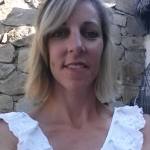
I sustained a traumatic brain injury (TBI) when I was a teenager. It drastically changed my personality as well as my life. I experienced rejection from people in my family because of my condition, and it is devastating. I have an important message for people who have a survivor in their family. Please never give up on him or her. My mother selflessly gave me so much of her time in order to help me recover. Her belief in me saw me through my traumatic experience and into adulthood, where I recovered dramatically. I have a brain injury, but it is my little secret. People don’t know if I don’t want them to. I want to share my story because I am proud of how far I have come, and I also want to inspire others.

(Clip Art compliments of Bing.)

(Photos compliments of contributor.)

As I say after each post: Please leave a comment by clicking the blue words “Leave a Commentanim0014-1_e0-1 below this post.

Feel free to follow my blog. Click on “Follow” on the upper right sidebar.

If you like my blog, share it with your friends. It’s easy! Click the “Share” buttons below.

If you don’t like my blog, “Share” it with your enemies. I don’t care!

Feel free to “Like” my post.


Survivors SPEAK OUT! Alisa Noah


Survivors SPEAK OUT! Alisa Ann Noah

presented

by

Donna O’Donnell Figurski


Noah, Alisa Ann L7l38moCWms-awgtIo9_70iApASPda_FVoPydfH1Eav5cCUnvpSudWfhdApNDrmPOqCkIcYbJLDfkrIxawI0Iu_D3IeGgzKZ1Whh7Lc2pmxdyJbB19_Vw114VdME3ant9vsNlq-qX9SNXn7SApjHhzoVZqU1ToqtwiFTpWcqKJ9lbUSBAV0pVh-fvnXN3tkGrsqt1hPzAODSjNBFrDOOjJ-u_iGQ547W

1. What is your name? (last name optional)

Alisa aka “El Dorado”

2. Where do you live? (city and/or state and/or country) Email (optional)

North Carolina, USA

3. On what date did you have your brain injury? At what age?

February 2012

4. How did your brain injury occur?

My brain injury came from a motor vehicle accident. I wasn’t at fault. My truck was rear-ended at 50+ mph. Because my truck had no headrests, my head hit the back glass.

5. When did you (or someone) first realize you had a problem?

Immediately

6. What kind of emergency treatment, if any, did you have?

I was first treated in the Emergency Room. Scans and X-rays were taken. Later I had a neck brace, cervical epidurals, other cervical injections, and physical therapy.

7. Were you in a coma? If so, how long?

No

8. Did you do rehab? What kind of rehab (i.e., inpatient or outpatient and occupational and/or physical and/or speech and/or other)?

I did physical therapy.

How long were you in rehab?

Three months of 3 days a week

9. What problems or disabilities, if any, resulted from your brain injury
(e.g., balance, perception, personality, etc.)?

I have vision loss; migraines; balance issues; sleep problems; mood problems; memory loss; anxiety; and pain, pain, pain. Unexpected loud noises send me into a panic.

10. How has your life changed? Is it better? Is it worse?

My life got worse for about three years. I have recently started to make progress with happiness and finding new ways to keep busy.

11. What do you miss the most from your pre-brain-injury life?

I miss my career as a horse trainer, and I miss college.

12. What do you enjoy most in your post-brain-injury life?

Retirement (LOL)

13. What do you like least about your brain injury?

I dislike the pain and my physical limitations.

14. Has anything helped you to accept your brain injury?

Friends and new hobbies have helped me accept my brain injury.

15. Has your injury affected your home life and relationships and, if so, how?

Yes. People don’t understand my thought process or mood swings.

16. Has your social life been altered or changed and, if so, how?

Yes. I fear driving. I don’t engage in social activities much anymore.

17. Who is your main caregiver? Do you understand what it takes to be a caregiver?

My mother and my roommate are my main caregivers.

18. What are your plans? What do you expect/hope to be doing ten years from now?

Hmmm, I’m not sure. I take things one day at a time. 🙂

19. Are you able to provide a helpful hint that may have taken you a long time to learn, but which you wished you had known earlier? If so, please state what it is to potentially help other survivors with your specific kind of brain injury.

Don’t let doctors just throw pills at you. After I had been told for almost three years that my condition is permanent, I recently learned that I can heal from it. Do your research. Some doctors are really no help.

20. What advice would you offer to other brain-injury survivors? Do you have any other comments that you would like to add?

NEVER let your “disabilities” define who you are as a person! You are and always will be just as valuable and important as anyone else. Never let anyone tell you otherwise. Stay strong!

(Disclaimer: The views or opinions in this post are solely that of the interviewee.)

If you would like to be a part of the SPEAK OUT! project, please go to TBI Survivor Interview Questionnaire for a copy of the questions and the release form.

(Clip Art compliments of Bing.)

(Photos compliments of contributor.)

As I say after each post: Please leave a comment by clicking the blue words “Leave a Commentanim0014-1_e0-1 below this post.

Feel free to follow my blog. Click on “Follow” on the upper right sidebar.

If you like my blog, share it with your friends. It’s easy! Click the “Share” buttons below.

If you don’t like my blog, “Share” it with your enemies. I don’t care!

Feel free to “Like” my post.


SPEAK OUT! NewsBit . . . . . . U.S. Soccer Bans Heading for Players Age 10 and Under

U.S. Soccer Bans Heading for Players Age 10 and Under

presented

by

Donna O’Donnell Figurski

newsboy-thConcussions from playing soccer rank second to football in boys’ sports, but they are first in girls’ sports and second among all sports. Of the more than 3 million youths playing soccer in the U.S., 50,000 concussions were reported among high-school soccer players in 2010, more than the number from wrestling, basketball, baseball, and softball combined.  Parents and players brought a lawsuit accusing U.S. Soccer and other U.S. youth soccer organizations of negligence. As a result, U.S. Soccer established new rules that prevent heading by players age 10 and under and prohibits heading by 11- to 13-year-olds in practice. There are also new guidelines for soccer-trophy-clipart-soccer-team-clipartsoccer-team-with-trophy-clip-art-soccer-team-with-trophy-image-efwxwwe3substitution. For example, a player who replaces another player who has to leave the game because of a suspected concussion does not count as a substation.

U.S. Soccer governs only a fraction of youth soccer teams in the U.S., so they are recommending strongly that other leagues follow suit.  Dr. Cantu, a neurologist and a concussion specialist at Boston University, said that children’s brains are crucially developing and that the ages of 10 to 14 are especially critical in brain development. He also maintains that children’s neck muscles are not strong enough to support the head, making the risk of injury even greater. Safer Soccer, an organization that seeks a ban on 131181714310586452912266140-vector-illustration-for-a-anatomy-brain-in-separate-color-mdheading for players 14 and under, applauds the new rules. (The advisory board of Safer Soccer includes Brandi Chastain, Cindy Parlow Cone, and Joy Fawcett – former players of the women’s U.S. national soccer team, which has won four Olympic gold medals since 1996.) (Full story with video)

(Clip Art compliments of Bing.)

As I say after each post:

Please leave a comment by clicking the blue words “Leave a Comment” below this post.anim0014-1_e0-1

Feel free to follow my blog. Click on “Follow” on the upper right sidebar.

If you like my blog, share it with your friends. It’s easy! Click the “Share” buttons below.

If you don’t like my blog, “Share” it with your enemies. I don’t care!

Feel free to “Like” my post.


SPEAK OUT! . . . . . . . . . . . . Itty-Bitty GIANT Steps

SPEAK OUT! Itty-Bitty GIANT Steps

presented by

Donna O’Donnell Figurski

Itty-Bitty GIant Steps for BlogSPEAK OUT! Itty-Bitty Giant Steps will provide a venue for brain-injury survivors and caregivers to shout out their accomplishments of the week.

If you have an Itty-Bitty Giant Step and you would like to share it, just send an email to me at neelyf@aol.com.

If you are on Facebook, you can simply send a Private Message to me. It need only be a sentence or two. I’ll gather the accomplishments and post them with your name on my blog approximately once a week. (If you do not want your last name to be posted, please tell me in your email or Private Message.)

I hope we have millions of Itty-Bitty Giant Steps.

Here is this week’s Itty-Bitty GIANT Step

volunteerLessia Ferrell Malloy (survivor)I’m now an official volunteer for our district schools. I was fingerprinted, and background checks were done. I got my badge. It’s a foot in the door for being a substitute teacher.delivery-van-clip-art-136684

Janiece Naber Martindale (caregiver)I’m now an official truck driver again doing local deliveries.

Angela Perilli (survivor)…I’m not sure if this is an accomplishment, but I did go to therapy to work on it. gg58995503When I came out of my coma, my right eye was turned out to the right. I had “TBI eye.” My TBI/accident/coma happened in June of 2014. My eyes returned to normal on October 7, 2014. It was a huuuuuge relief! My vision is still not the way it was before my accident. Besides fighting to be alive and learning how to walk again, that’s my success.

YOU did it!

Congratulations to contributors!

(Clip Art compliments of Bing.)

As I say after each post:anim0014-1_e0-1

Please leave a comment by clicking the blue words “Leave a Comment” below this post.

Feel free to follow my blog. Click on “Follow” on the upper right sidebar.

If you like my blog, share it with your friends. It’s easy! Click the “Share” buttons below.

If you don’t like my blog, “Share” it with your enemies. I don’t care!

Feel free to “Like” my post.


SPEAK OUT! Guest Blogger David A. Grant . . . . . . . . . . . . . “Warning: Graphic Content

Warning: Graphic Content

 by

David A. Grant

presented by

Donna O’Donnell Figurski

Boy Blogger thI found myself doing something that I don’t usually do. This morning, I just stared at my keyboard and waited. Most of the time, putting virtual pen to paper is easy. On a good day, I can pour out a thousand words in under an hour.

Not today.

One of the most unexpected by-products of this new life is my PTSD (post traumatic-stress disorder). Since time out of mind, I’ve heard the term PTSD. But like so many, perhaps even you, I mistakenly associated it exclusively with veterans, with those that had seen the unimaginable.

Never did I expect to be walking daily with this newfound friend. Some things you just can’t see coming – like a speeding car driven by a sixteen-year-old driver. Its onset was abrupt. It was unrelenting. It was unexpected.

And it’s more than a bit insidious.

Early on, as my physical injuries began to heal, like a dark flower blooming under a full moon, my PTSD began to blossom. Professional help did little to stem the terror tide.

The nightmares remain the worst part. For a couple of years after my accident, “bad PTSD nights” came anywhere from ten to twenty nights a

month. When I say “bad,” I mean bad. These aren’t your “Boogeyman-under-the-bed” kind of dreams.
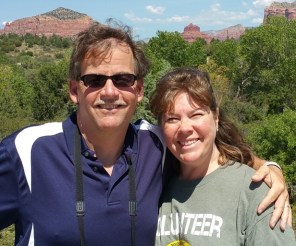
Grant, David and Sarah 111715

David & Sarah Grant

Not even close.

Over the years, I have had most every sort of Stephen King horror inflicted upon me after dark. From being burned alive to drowning after drowning, from severed limbs to vivid dream pain that feels more real than reality, it’s been a real shit storm. My apologies if profanity offends, but better a four-letter word than a vivid description of life after dark.

The sound of an ambulance passing by our home drove me to tears for the better part of a couple of years – stopping me dead in my tracks if happenstance found me working in our yard.

Crowds? No more. Action-packed movies? Maybe for you, but not for us. Sudden or abrupt noises? You’ll find my shoes on the floor and me long gone.

Time does have a way of offering clarity. Today I know that I live with a textbook case of PTSD. Like other challenges I face, it’s invisible. Meeting me today for the first time, you’d never know. “Hey, I see that you live with PTSD,” said no one – ever.

As time passed, Sarah and I developed compensatory strategies to help. It is good for us both.

Known by few is a condition called “Secondary PTSD.” Those close to a trauma survivor, though not physically hurt, carry their own deep and painful scars. Sarah has a pretty classic case of secondary PTSD.

Circumstance, rather than virtue of any kind, has reshaped our lives. Our

12248573_10206516855973739_1693909187_o

the Grant’s Sanctuary

lives together today are smaller, but none less rewarding. We shun most crowds, but do not live reclusively. We spend a lot of time outdoors – crowded music festivals replaced by nature walks. Our yard has been transformed into a sanctuary with waterfalls, birdfeeders and flowers abounding. It’s now a sacred place for us – a place where we both continue to heal.

Life today is more enriching than before. I still startle easily. I cry less often at the sounds of a siren wailing. And we are both cautious about what we allow ourselves to be exposed to.

Eiffel Tower

Eiffel Tower Paris, France

The events that have unfolded in Paris over the last few days are heartbreaking. It’s at times like these that the rubber meets the PTSD road. I need to be careful of getting sucked in to wanting to know too much detail, balancing it with the very human need to know what is happening in the world at large. I watch “just enough” TV to know what’s happening. I read “just enough” of the news online – very often going no further than the headlines.

Just this morning, as I read the USA Today news on my tablet, a content block caught my eye: WARNING: GRAPHIC CONTENT. Suffice to say, I passed that one right by, knowing that honoring my condition is good for me and good for those around me. I am praying for those who are part of the horror. Blasts mean that there are now new members of the TBI club. Hundreds, if not thousands – perhaps an entire nation – will now live with PTSD. My heart weeps for them.

But even with the most dutiful of diligence, I am reminded that I am forever bound to PTSD.

Last Thursday night was our weekly Date Night. Our cinematic choice this past week was the Peanuts Movie. We’ve seen just about every animated flick released in the last few years. It was a smile-filled night out. Just dinner and a movie. Just us two. Hand-holding and quiet whispers – just the way we like it.

At 10:00 PM, I leaned over, gave Sarah her good night kiss and fell quickly asleep. Though I no longer dread bedtime, I live in the reality that any night can be a bad night.
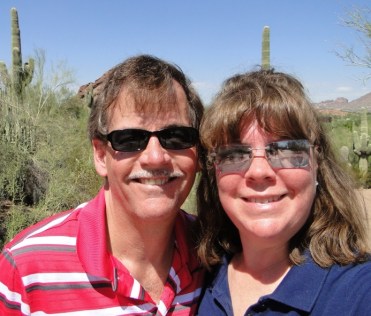
Grant, David and Sarah 2 111715

David & Sarah Grant

At 11:30 PM, Sarah woke me up as I lay next to her crying out in pain, my feet sinking into molten dream lava, being burned off my torso as I looked down in abject horror. I could smell my own flesh burning. Unable to move, I screamed in mortal terror.

“C’mon David, wake up. Wake up, David,” she called out – again coaxing me back to the relative safety of awakeness. We’ve danced this midnight two-step hundreds of times.

And so the rhythm of our new life goes – enjoying those sacred moments between the tougher times, and hunkering down to ride out the occasional PTSD storms.

In the bigger scheme of things, fate could have been much more harsh. I could have died that day – leaving Sarah to walk through the recent five-year anniversary of the day alone, her memory of me beginning to fade.

But we have each other. And in having each other, we have all we need.


About David A. Grant

David A. Grant 2 101115

David A. Grant

David A. Grant is a freelance writer, keynote speaker and traumatic brain injury survivor based out of southern New Hampshire. He is the author of “Metamorphosis, Surviving Brain Injury,” a book that chronicles in exquisite detail the first year-and-a-half of his new life as a brain injury survivor. His newest title, “Slices of Life after Traumatic Brain Injury,” was released in 2015.

David is also a contributing author to “Chicken Soup for the Soul, Recovering from Traumatic Brain Injuries.” As a survivor of a cycling accident in 2010, he shares his experience and hope though advocacy work including a public speaking as well as his weekly brain injury blog.

David is a regular contributing writer to Brainline.org, a PBS sponsored website. He is also a BIANH board member as well as a columnist in HEADWAY, the Brain Injury Association of New Hampshire’s periodic newsletter.

David is the founder of TBI Hope and Inspiration, a Facebook community with over 15,000 members including survivors, family members, caregivers as well as members of the medical and professional community as well as the publisher of “TBI Hope and Inspiration Magazine.”

Thank you, David A. Grant.

Disclaimer:
Any views and opinions of the Guest Blogger are purely his/her own.

(Clip Art compliments of Bing.)

(Photos compliments of David A. Grant)

As I say after each post: Please leave a comment by clicking the blue words “Leave a Commentanim0014-1_e0-1 below this post.

Feel free to follow my blog. Click on “Follow” on the upper right sidebar.

If you like my blog, share it with your friends. It’s easy! Click the “Share” buttons below.

If you don’t like my blog, “Share” it with your enemies. I don’t care!

Feel free to “Like” my post.

 

On The Air: . . . . . . . . . . . . . . Brain Injury Radio . . . . . . . . “Another Fork in the Road” with Survivor & Caregiver, Sandra WIlliams

On The Air: Brain Injury Radio “Another Fork in the Road” 

with

Guest: Survivor and Caregiver, Sandra Williams

presented

by

Donna O’Donnell Figurski

images-1Sandra William’s was thrust into the role of brain injury survivor and caregiver when her whole family was involved in a motor accident with a drunk driver with multiple DUIs. Sandra spoke about the trials her family endured and still endures because of the negligence of a stranger.

As two teachers, Sandra and I delved into how schools 12200687_895719387130278_18176772_ncan better help students who are identified with brain injury or special needs. Federally mandated, 504 Plans and Individual Education Plans (IEP) were discussed.

If you missed this show with Sandra Williams on “Another Fork in the Road” on November 15th, 2015 don’t fret. You can listen to the archived show here. Click the link below.

See you “On the Air!”

On The Air: Brain Injury Radio “Another Fork in the Road” with Survivor and Caregiver, Sandra Williams

(Clip Art compliments of Bing.)

As I say after each post: Please leave a comment by clicking the blue words “Leave a Commentanim0014-1_e0-1 below this post.

Feel free to follow my blog. Click on “Follow” on the upper right sidebar.

If you like my blog, share it with your friends. It’s easy! Click the “Share” buttons below.

If you don’t like my blog, “Share” it with your enemies. I don’t care!

Feel free to “Like” my post.

On The Air: . . . . . . . . . . . . . . Brain Injury Radio “Another Fork in the Road” Daily Living & Organizational Skills

On The Air: Brain Injury Radio “Another Fork in the Road” 

with

Panelists: Survivor, Lisa Dryer and Caregiver, Jeannette Davidson-Mayer

Topic: Daily Living & Organizational Skills

presented

by

Donna O’Donnell Figurski

images-1Living day by day with a brain injury can be an utmost challenge. Juggling fatigue, memory loss, or dealing with concentration issues, to name just a few, can be extremely overwhelming. So how does one overcome these problems while trying to get through the day? These are some of the topics that Lisa Dryer, Jeannette Davidson-Mayer, and I discussed. Some really good ideas came out of the discussion. Tips that be easily utilized to help folks make their lives a bit more simple and controlled. I hope you will listen to the show to find out.

Dryer, Lisa SurvivorPanelist and survivor, Lisa Dryer, talked about having structure in her life, which helps her to stay more organized. Structure adds a balance that helps to make things more predictable. A predictable life is easier to maneuver through.

03 Jeannette Davidson-Mayer 110115Panelist and caregiver, Jeannette Davidson-Mayer, elaborated on her “Central Command Center,” which is located in her kitchen. She said this method worked best for her husband, DeWayne, who received five brain injuries while serving in Iraq. Post-It notes and whiteboards help to keep Jeannette’s family more organized.

If you missed this show, “Daily Living & Organizational Skills” on “Another Fork in the Road” with Lisa Dryer and caregiver, Jeannette Davidson-Mayer on November 1, 2015 don’t fret. You can listen to the archived show here. Click the link below.

See you “On the Air!”

On The Air: Brain Injury Radio “Another Fork in the Road” with panelists: survivor, Lisa Dryer and caregiver, Jeannette Davidson-Mayer on “Daily Living & Organizational Skills”

(Clip Art compliments of Bing.)

As I say after each post: Please leave a comment by clicking the blue words “Leave a Commentanim0014-1_e0-1 below this post.

Feel free to follow my blog. Click on “Follow” on the upper right sidebar.

If you like my blog, share it with your friends. It’s easy! Click the “Share” buttons below.

If you don’t like my blog, “Share” it with your enemies. I don’t care!

Feel free to “Like” my post.

SPEAK OUT! . . . . . . . . . . . . . . . . . . Faces of Brain Injury . . . . . . . Jessica Taylor

SPEAK OUT! Faces of Brain Injury – Jessica Taylor

presented by

Donna O’Donnell Figurski

 Brain Injury is NOT Discriminating!

bigstock-cartoon-face-vector-people-25671746-e1348136261718

It can happen to anyone, anytime, . . . and anywhere.
The Brain Trauma Foundation states that there are 5.3 million people in the United States living with some form of brain injury.

On “Faces of Brain Injury,” you will meet survivors living with brain injury. I hope that their stories will help you to understand the serious implications and complications of brain injury.

The stories on SPEAK OUT! Faces of Brain Injury are published with the permission of the survivor or designated caregiver.

If you would like your story to be published, please send a short account and two photos to me at neelyf@aol.com. I’d love to publish your story and raise awareness for Brain Injury.

Jessica Taylor (survivor)

One day in 1969, I was out on business for my Merle Norman Cosmetic Studio in Toronto, Canada, and I fell headfirst down an unlit flight of stairs. My head hit against a steel-plated door at the bottom. It caused me to become severely concussed, and I was put into a semi-comatose state. I also had a hemorrhage behind my right 581530_373670692710673_622315000_neye and a contusion of my back. My life hung on a thread. Later when I woke up, I did not recognize my husband or my two very young daughters. My personality change distanced me from everyone I previously knew.

Determined to survive, however, I activated my neurons by writing down sentences, as well as short poems, and memorizing them. I also made a journal of everyday events, as my recent recall was totally shot. I began to study various subjects by going to a research room at a library. The subjects Science and The Supernatural fascinated me, so I studied the works of many writers. I read writings of the Greek writers Plato and Aristotle. I also read Galileo, Einstein, and many others. Subsequently, I found myself to be on a different vibration. I now believe that intensive study activates the dormant neurons of brain-injured survivors so that these neurons then take over for the dead or injured ones. The studying, however, may need to be of a long duration for some survivors.

I have since written my life-story, which is entitled “From Tragedy to Triumph: Journey Back From the Edge.” 456164_373685366042539_2053049192_o(The information is on my website.) I have given talks at brain-injury conferences and at social gatherings in Ireland, UK, Canada, and the US. Also, I have been on many radio shows. Recently, I completed a manuscript based on my years of research. I have been told by many readers that, when it is published, the manuscript will go to universities as a teaching book about the science of religion and the supernatural.

I would like brain-injured survivors to know of my achievements, so that they can have hope and encouragement and think positive. It was, after all, positive thinking that got me to where I am today.

Jessica E. Taylor, author and activist

To learn more about Jessica Taylor, click the following links.

Jessica Taylor Website

Jessica Taylor Facebook

Jessica Taylor Twitter

Jessica Taylor LinkedIn

Jessica’s interview with George Lewis on his show, “Spiritual But Not Religious Show

(Clip Art compliments of Bing.)

(Photos compliments of contributor.)

As I say after each post: Please leave a comment by clicking the blue words “Leave a Commentanim0014-1_e0-1 below this post.

Feel free to follow my blog. Click on “Follow” on the upper right sidebar.

If you like my blog, share it with your friends. It’s easy! Click the “Share” buttons below.

If you don’t like my blog, “Share” it with your enemies. I don’t care!

Feel free to “Like” my post.

SPEAK OUT! Guest Blogger … Randy Terry “How To Make Your Life Better”

How To Make Your Life Better

by

Randy Terry

presented by

Donna O’Donnell Figurski

Boy Blogger thSo many times I hear, “I want my life back!” I’ve said it myself and made myself miserable. Now six years post stroke, I see that I will never get my old life back. It’s impossible. But the trials of my stroke and my recovery have changed my life forever – and for the good.

I am a survivor, and the things I have learned about life will Randy Terry 2 102615not allow me to return to the old life. Sure, some of the things I loved to do are no longer possible, but I have adapted to change. It wasn’t easy, but I really had no choice.

For the first few years, I played the “pity game.” I was mad at the world. I lamented, “Why me?” One day, I found that I was tired of this game. I thought that there has to be a better life after stroke. I put the wheelchair in a corner and picked up my walker. I started the hard work. Soon I was on the cane doing the same thing. It is by no means easy. Not only was I walking, but I also felt proud. That’s why you hear me say, “Stand tall and proud!”

Do not waste your time in that “pity place.” It’s very lonely there, Randy Terryand there is nothing to gain but misery. The ability to change your life is not a secret hidden from you. Instead, it’s about working to get what you want out of life.

I’m not smarter than you. You just have to get that brain thinking right, and get up and get it done. It takes time to heal, but time is on your side. You have plenty of it. Don’t think it’s all got to come at once. Work slowly and steadily. It will come.

Thank you, Randy Terry.

Disclaimer:
Any views and opinions of the Guest Blogger are purely his/her own.

(Clip Art compliments of Bing.)

(Photos compliments of Randy Terry.)

As I say after each post: Please leave a comment by clicking the blue words “Leave a Commentanim0014-1_e0-1 below this post.

Feel free to follow my blog. Click on “Follow” on the upper right sidebar.

If you like my blog, share it with your friends. It’s easy! Click the “Share” buttons below.

If you don’t like my blog, “Share” it with your enemies. I don’t care!

Feel free to “Like” my post.

diemodi jewelry

uniquely hand-crafted jewelry by donna

Welcome to Harmony Kent Online

The home of all things books

Pete Springer

Passionate Teacher and Future Children's Author

HOPE TBI

Helping Other People Excel - To Be Independent

For the Love of Books, Old and New

Katie Fischer, Writer and Reader of Stories

Charlie Bown

Children's Author

Jessica Hinrichs

“We write to taste life twice, in the moment and in retrospect.” ― Anais Nin

VIVIAN KIRKFIELD - Writer for Children

Picture Books Help Kids Soar

Mindy’s Writing Wonderland

For authors, parents, teachers & everyone who loves children’s books.

Kaitlyn Leann Sanchez

Literary Agent

Surviving Traumatic Brain Injury

TBI - Survivors, Caregivers, Family, and Friends

The Care Factor

Loving someone with a Traumatic Brain Injury

Brain Injury Support Group of Duluth-Extension

Brain Injury Information and SUPPORT

Brain Aneurysm Global Insight

Brain Aneurysm, cerebral hemorrhaging, hemorrhage stroke