TBI – Survivors, Caregivers, Family, and Friends

Posts tagged ‘Stroke’

On The Air: . . . . . . . . . . . . . “Another Fork in the Road:” . . . . Substitute Hosts, Lisa Dryer & Cam Compton – M.S. Meets Stroke

On The Air: “Another Fork in the Road:” with substitute hosts, Lisa Dryer & Cam Compton “M.S. Meets Stroke”

presented

by

Donna O’Donnell Figurski


images-1

Brain Injury Radio Network (BIRN) hosts, Lisa Dryer of “Mess with M.S.” (Multiple Sclerosis) and Cam Compton of “Cam’s Corner” step up to the mic on “Another Fork in the Road” while I, (Donna O’Donnell Figurski) traveled to Michigan for my nephew’s wedding. Party Time!

Lisa and Cam discussed the similarities and differences of each of their brain injuries and how they approach life from slightly different angles. Both hosts emphasized how each brain injury is different and how each survivor responds to the difficulties presented to him or her.

18 Lisa Dryer copy

Lisa Dryer – Survivor – Host of “Mess with M.S.”

03 Cam Compton Photo for Banner copy

Cam Compton – Survivor – Host of “Cam’s Corner”


See you “On the Air!”

On The Air: “Another Fork in the Road:” with substitute hosts, Lisa Dryer & Cam Compton “M.S. Meets Stroke”


(Clip Art compliments of Bing.)

As I say after each post: Please leave a comment by clicking the blue words “Leave a Commentanim0014-1_e0-1 below this post.

Feel free to follow my blog. Click on “Follow” on the upper right sidebar.

If you like my blog, share it intact with your friends. It’s easy! Click the “Share” buttons below.

If you don’t like my blog, “Share” it intact with your enemies. I don’t care!

Feel free to “Like” my post.


SPEAK OUT! Guest Blogger … Randy Terry “How To Make Your Life Better”

How To Make Your Life Better

by

Randy Terry

presented by

Donna O’Donnell Figurski

Boy Blogger thSo many times I hear, “I want my life back!” I’ve said it myself and made myself miserable. Now six years post stroke, I see that I will never get my old life back. It’s impossible. But the trials of my stroke and my recovery have changed my life forever – and for the good.

I am a survivor, and the things I have learned about life will Randy Terry 2 102615not allow me to return to the old life. Sure, some of the things I loved to do are no longer possible, but I have adapted to change. It wasn’t easy, but I really had no choice.

For the first few years, I played the “pity game.” I was mad at the world. I lamented, “Why me?” One day, I found that I was tired of this game. I thought that there has to be a better life after stroke. I put the wheelchair in a corner and picked up my walker. I started the hard work. Soon I was on the cane doing the same thing. It is by no means easy. Not only was I walking, but I also felt proud. That’s why you hear me say, “Stand tall and proud!”

Do not waste your time in that “pity place.” It’s very lonely there, Randy Terryand there is nothing to gain but misery. The ability to change your life is not a secret hidden from you. Instead, it’s about working to get what you want out of life.

I’m not smarter than you. You just have to get that brain thinking right, and get up and get it done. It takes time to heal, but time is on your side. You have plenty of it. Don’t think it’s all got to come at once. Work slowly and steadily. It will come.

Thank you, Randy Terry.

Disclaimer:
Any views and opinions of the Guest Blogger are purely his/her own.

(Clip Art compliments of Bing.)

(Photos compliments of Randy Terry.)

As I say after each post: Please leave a comment by clicking the blue words “Leave a Commentanim0014-1_e0-1 below this post.

Feel free to follow my blog. Click on “Follow” on the upper right sidebar.

If you like my blog, share it with your friends. It’s easy! Click the “Share” buttons below.

If you don’t like my blog, “Share” it with your enemies. I don’t care!

Feel free to “Like” my post.

SPEAK OUT! Faces of Brain Injury Dan Zimmerman – the Trike Man

SPEAK OUT! Faces of Brain Injury Dan Zimmerman – the Trike Man

presented by

Donna O’Donnell Figurski

 Brain Injury is NOT Discriminating!

bigstock-cartoon-face-vector-people-25671746-e1348136261718

It can happen to anyone, anytime, . . . and anywhere.

The Brain Trauma Foundation states that there are 5.3 million people in the United States living with some form of brain injury.

On “Faces of Brain Injury,” you will meet survivors living with brain injury. I hope that their stories will help you to understand the serious implications and complications of brain injury.

The stories on SPEAK OUT! Faces of Brain Injury are published with the permission of the survivor or designated caregiver.

If you would like your story to be published, please send a short account and two photos to me at neelyf@aol.com. I’d love to publish your story and raise awareness for Brain Injury.

I am 50 yrs. (Proud of it!) 6’-4” tall, 203-208 weight
I don’t drink, smoke.
I have 2 sons -14, almost 18. They live with their mother. I have them 25% time. Nice. Young man, well-mannered.
I am neat-freak.
I don’t procrastinate.
I hate: lazy, smokers, dirty, rude people.
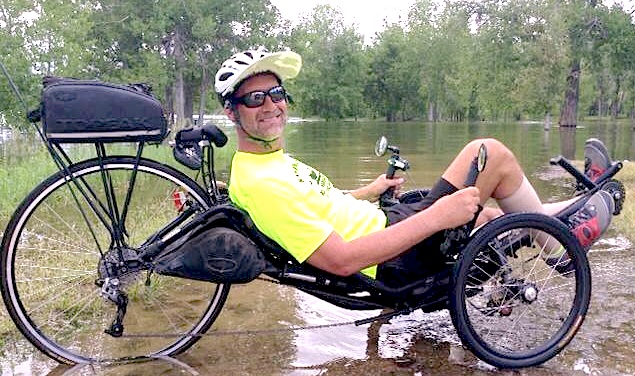
I can’t stand being still. I am always planning trip, ride.11695319_10205618433474274_6308388584089389432_n
I am project-man around the house, trailer, trike – anything.
Every year, I leave June-September. Summertime too hot ride trike in AZ. I have 30-foot RV trailer. Nice one. Home away from home.

I like going to movies, coffee, cooking and grilling, talking to people and people-watching, traveling, concerts. I like all music!
I am touchy and feely person. Hold hand and cuddling.

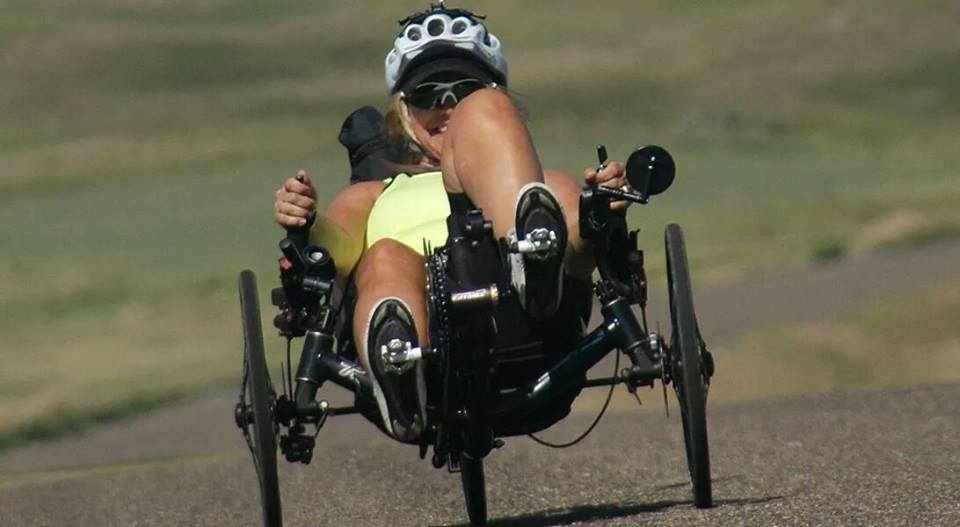
My passion is riding trike 170-220 miles each week.
I love to ride triking! My trike Catrike 700. Last year my tour – 5380 miles – started June 29 at WA State, ended Key West, FL, Nov. 29, 2014.

I am on tour now – “Rails to Trails” started June 1 to Oct. 1.

www.spokesfightingstrokes.org

Watch my video, please. Filmed two years ago. I am talking much better now.

Zimmerman, Dan Survivor 071015

I had stroke 9 3/4 yrs ago. Dr told me that I’d be in wheelchair for life and no talking.
They were wrong. I am walking and talking. Although, my writing and spelling is affected a little, so patience would be appreciated in that area. I have taught myself how to spell again.
DanTrikeMan

To learn more about Dan, please click on the link.

On the Air: Brain Injury Radio Interview with Catherine (Cat) Brubaker and Dan Zimmerman Another Fork in the Road: Catherine and Dan’s Reflections – Triking Across America

Disclaimer: Any views and opinions of the Contributor are purely his/her own.

(Clip Art compliments of Bing.)

(Photos compliments of contributor.)

As I say after each post: Please leave a comment by clicking the blue words “Leave a Commentanim0014-1_e0-1 below this post.

Feel free to follow my blog. Click on “Follow” on the upper right sidebar.

If you like my blog, share it with your friends. It’s easy! Click the “Share” buttons below.

If you don’t like my blog, “Share” it with your enemies. I don’t care!

Feel free to “Like” my post.

SPEAK OUT! Faces of Brain Injury Nicole Wall

SPEAK OUT! Faces of Brain Injury – Nicole Wall

(family member of brain-injury survivors)

presented by

Donna O’Donnell Figurski

 Brain Injury is NOT Discriminating!

bigstock-cartoon-face-vector-people-25671746-e1348136261718My name is Nicole Wall. I am a 25-year-old resident of Regina, Saskatchewan, Canada. Brain injury has significantly affected my life four times. My journey with brain injury began in 1999. My grandma had a stroke and spent the next six years in a rehabilitation facility. She then passed away from a brain-bleed in the summer of 2006. My grandma was the first family member I had lost, and it impacted me quite a bit. In December 2002, I was singing Christmas carols in my school’s gym and got pulled into the office by the principal, who said my dad was on the phone. I thought that was odd. My dad had never called me at school before. He told me that my mom had been taken to the hospital and that my cousin was coming to pick us up. He said he loved us, and then he hung up. My brother and I found out late that night that my mom had had a brain aneurysm rupture and required emergency Nicole Wall Family Memeber of Survivors 061315brain surgery. My mom spent the next year in the ICU (intensive care unit), the hospital, and then Wascana Rehab Centre before she came home. It is eleven years later, and my mom still attends weekly support-group meetings and has never driven again or gone back to work.

My entire family changed that day. We still continue to deal with my mom’s injury every day. Brain injuries are life-long. In 2007, I had just graduated grade 12 and had a scholarship, and the most-unfair thing that has ever happened to me – happened. My high-school sweetheart was severely injured in highway auto collision. He ended up unconscious in the ICU with a brain injury. He died eight days later as a result of the injuries he incurred in the accident. My family and I were finally starting to settle and move forward, and then in 2010, like déjà vu, we got a call about my dad. He had been found dazed and barely conscious outside Regina and was being driven to the hospital. My family rushed to be with him. My dad needed a special type of brain surgery – coiling. He had to be transported by air-ambulance to Saskatoon, Saskatchewan, for surgery. My dad spent several weeks in Saskatoon and more weeks in a Regina Hospital recovering before he went home. Long-term my dad has been able to return to work almost full-time, and he has gone on to compete in mountain-bike races and championships.

Nicole Wall Family Member of Survivor 061315

Nicole’s Family 2011

Throughout the last sixteen years, brain injury has taken many things from me – my mom’s ability to be the same mom she was before (she stopped driving and she was not as involved with my activities as she had been), my high-school sweetheart, and my naiveté. I realize my dad’s daily struggles are much more than mine. I have become somewhat of a realist. However, brain injury has also given me many things, especially a unique perspective on life. I realize nothing is permanent – no matter how many plans we may make. Through my encounters with brain injury, I have learnt to be independent, considerate, and selfless. I’ve always put my family and others first. I now work at a child-development center and sit on the Board of Directors for the Saskatchewan Brain Injury Association. I encourage everyone to get involved in supporting brain-injury awareness and prevention (www.sbia.ca – check out events like the “Brain Boogie” in Saskatchewan).

Nicole Wall 2 Family Member of Survivor 061315“Never doubt that a small group of thoughtful, committed citizens can change the world; indeed, it’s the only thing that ever has”

Margaret Mead

Disclaimer: Any views and opinions of the Contributor are purely his/her own.

(Clip Art compliments of Bing.)

(Photos compliments of contributor.)

As I say after each post: Please leave a comment by clicking the blue words “Leave a Commentanim0014-1_e0-1 below this post.

Feel free to follow my blog. Click on “Follow” on the upper right sidebar.

If you like my blog, share it with your friends. It’s easy! Click the “Share” buttons below.

If you don’t like my blog, “Share” it with your enemies. I don’t care!

Feel free to “Like” my post

SPEAK OUT! . . . . . . . . . . . . . . . . . . Guest Blogger: Ermira Mitre . . . Dream of an Earthquake

The Dream of an Earthquake

by

Ermira Mitre

presented by

Donna O’Donnell Figurski

Girl Blogger cartoon_picture_of_girl_writingOne night, after I came home from a long day of work, I noticed that my friend Eileen had called me twice during the day. I love talking to Eileen. Although it was 9:30, I decided to call her back and chit-chat a little bit to update each other on our everyday lives.

During our conversation, Eileen said, “Mira, you know what? I dreamed about an earthquake last night. The shaking was so hard that I got up and went to the computer to see if any earthquake had happened nearby. I didn’t find anything. So, I realized that the earthquake was a dream. And what a dream!”

Her dream instantly brought up the experience of my having had a similar dream while I was living in Albania with my family. I said, “You know, Eileen, years ago, I had a dream of an earthquake too.” I continued, “I dreamed an earthquake was happening, and it threw me from the balcony of my third-floor apartment. I fell onto the ground – but standing up.”

Eileen’s dream was frightening, but I told her about my positive symbol of “standing up” after “falling down.” So, I said, “The dream is telling you that, whatever happens, you will be fine.” My own experiences have shown that this indeed can be true.

My earthquake dream first occurred in March 1991 – a time of turmoil in Albania. Many young people had Ermira Mitre 2left the country. Two days after I had the dream, I got a phone call from my uncle. He said that my brother (who lived with my parents and my stepbrother) got onto a ship and escaped to Italy. He left behind my paralyzed mom, my dad, who was still recovering from a stroke, and my stepbrother, who had been diagnosed with a severe disease.

The news was a total shock. I felt divided. One part of me cared about my immediate family, and another part worried about my parents and my brothers. Psychologically, I was struggling to find a solution to the situation, while in my heart, I remained calm and at peace. My heart didn’t allow me to hurt myself with feelings of anger, anguish, or bitterness toward the decision of my twenty-two-year-old brother.

Although I was still picking up the pieces of the shattered glass I had become after the accidental death of my almost three-year-old son and having two little kids, a paralyzed mom, a half-paralyzed dad, and a brother with an incurable disease and also working as a teacher, I didn’t think of myself. The positive symbol of my earthquake-dream supported my actions. I was “standing up” when I needed it most.

Situations like these made me grow as a person and reach the deeper core of myself as a human being. By acknowledging peace within terrible storms, I have been able to extend my heart and actions to those who needed me.

Ermira Mitre copyMy peace allowed me to place my thoughts into a higher level of understanding. I can accept life as it comes by using exuberant, and often hidden, strength, courage, love, care, generosity, kindness, gentleness, and loyalty.

After I got off the phone with Eileen, I went to sleep. The next morning I had this poem within myself. It is about our existence and our strength. I hope you enjoy it.

THE EXISTENCE

Opening the eyelids and waking up by touching the dawn,
While the eyeballs kissing the vastness of the light,
Waking and feeling the joy of being alive,
Living through the day and experience,
The joy of living, the thunders, the storms,
And earthquakes that bring shakiness,
And awakens as much as the labor of a new baby born,
Still standing up and building up being grabbed,
And infused by the strength that lies beneath and beyond,
Sleeping is falling in quietness and stillness,
And darkness of the other side of our existence,
Being born thus waking up,
Living through the experience,
And dying thus sleeping in stillness,
Are the matching pieces of a puzzle,
Named as “our known but unknown existence.

Thank you, Ermira Mitre.

Disclaimer:
Any views and opinions of the Guest Blogger are purely his/her own.

(Clip Art compliments of Bing.)

(Photos compliments of Ermira Mitre.)

anim0014-1_e0-1

As I say after each post:

Please leave a comment by clicking the blue words “Leave a Comment” below this post.

Feel free to follow my blog. Click on “Follow” on the lower right corner of your screen.

If you like my blog, share it with your friends. It’s easy! Click the “Share” buttons below.

If you don’t like my blog, “Share” it with your enemies. I don’t care!

Feel free to “Like” my post.

Survivors SPEAK OUT! Juliet Madsen

Survivors  SPEAK OUT!  Juliet Madsen

presented by

Donna O’Donnell Figurski

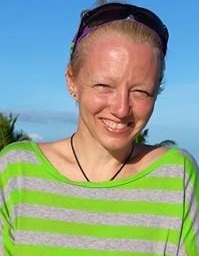
#4 Juliet Madsen 21. What is your name? (last name optional)

Juliet Madsen

2. Where do you live? (city and/or state and/or country) Email (optional)

Parker, Colorado, USA     juliet@strokeofluckquilting.com

3. On what date did you have your brain injury? At what age?

I had three strokes (2004, 2009, and 2010), and I have a traumatic brain injury (TBI). I was 33 in 2004.

4. How did your brain injury occur?

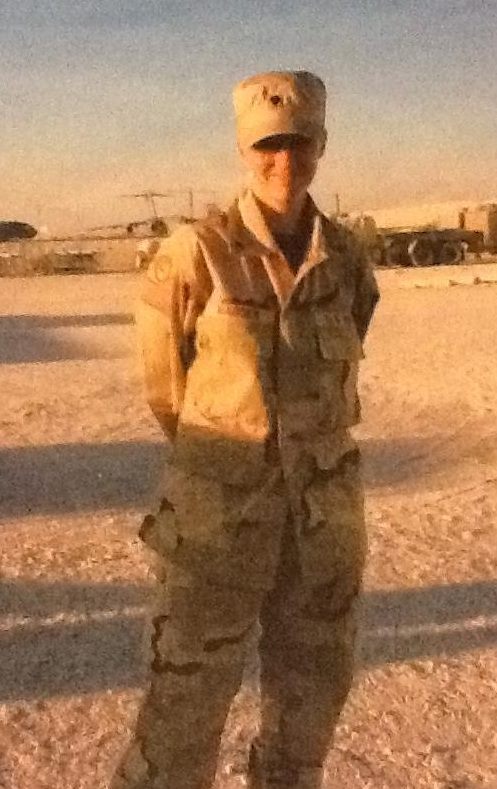
My brain injuries are complex: heat strokes complicated by a traumatic brain injury in Iraq in 2004. I was being moved to a secondary location because of a heat injury, when there was a series of explosions on the highway. So, I have the illustrious honor of having both a brain injury as a result of heat injury and then a traumatic brain injury. This creates a problem for the doctors because I do not fall into any one category. I have very complicated neurological issues.

5. When did you (or someone) first realize you had a problem?

My family and the people I was stationed with in Iraq realized there was a problem. I was not making much sense when I wrote patient notes and when I wrote letters home. Then my speech was becoming garbled. I exhibited a halting speech pattern, in which I had trouble “spitting out” words. I also had tremors, which made even the simplest tasks difficult. #3 1454864_10200875275550279_968652467_n Manual dexterity issues, massive migraines, and balance problems caused my unit to put me on night shift and to adjust how and where I was living in Iraq. Then I was being transferred north where I could work in a more controlled environment when we were involved in a series of vehicle explosions. After that event, I was sitting with a few of the guys at the chow hall, and I said that “I didn’t feel well.” I suffered a seizure in the chow hall, and that started my slow trip home.

6. What kind of emergency treatment, if any, did you have?

I had emergency care to stabilize me in Iraq, then in a C-130 flying from Iraq to Kuwait, then again from Kuwait to Germany, and again to Walter Reed, and then to Ft. Bragg.  Although I know I had care to treat seizures and stroke, I only have very few bits and pieces of my memory from that time.

7. Were you in a coma? If so, how long?

No, I was not.

8. Did you do rehab? What kind of rehab (i.e., inpatient or outpatient and occupational and/or physical and/or speech and/or other)? How long were you in rehab?

I have had rehab both as an inpatient and as an outpatient. I am in and out of occupational, speech, physical, and recreational therapies even today. I have gone in and out of these therapies, as my TBI symptoms change over the years. I have often described my TBI as causing “rolling blackouts.” The polytrauma team that treats me has been really good about getting me in to see the appropriate team.

9. What problems or disabilities, if any, resulted from your brain injury
(e.g., balance, perception, personality, etc.)?

That is such a loaded question…. Initially I had left-sided weakness from the stroke, difficulty talking, balance issues, drop foot, short-term memory loss, major time perception problems, migraines all the time, and ringing in my ears. I was sound-sensitive. I have constant neck and head pain. I have hearing and vision changes (which the doctors tell me are a direct result of the TBI). I absolutely have personality changes. I was someone who always got along with people, worked as a paramedic, and did research. Now I have no concentration, I am angry with everyone, I am short with people, I cry easily, and I feel very defeated. Even with all of the incredible accomplishments in my life, I am disappointed in the perceived failures in my day-to-day life. I have had times since my brain injury when it is like I forgot who I was or what I have always stood for, and I hurt the ones who have always cared for me. I have major learning disabilities. I can’t do anything with numbers or time, and learning new information is extremely difficult – this from someone who graduated from college with honors. Concentration and accomplishing simple tasks are often very difficult.

10. How has your life changed? Is it better? Is it worse?

My life has changed 100%, but I can’t say that it is worse because I am still here. So, that is a good thing, but it is very different. I was a paramedic in the United States Army. I was always busy working, and now I am retired. I become tired and overwhelmed far too easily. I quilt for a living, and I make quilts for programs across the country. I am on the Board of Directors of a national non-profit organization that works with programs for the families of military and veteran personnel with TBI/PTSD (post-traumatic stress disorder). The organization provides other programs through recreational and activity-based services. This is a very different place from being a paramedic and saving lives.

11. What do you miss the most from your pre-brain-injury life?

I admit that I miss who I was before I was hurt. I miss being able to go to the store alone. I miss being able to be trusted with my own finances or being able to read a recipe and understand it the first time I read it. I had a very definite plan for my life, and my injuries changed all of those plans. I miss feeling like I really contribute to my family and to the world around me.

12. What do you enjoy most in your post-brain-injury life?

I try to enjoy simple things: butterflies, the pure joy of my dogs lying with me, my kids telling me that they love me, etc. I like learning new recipes, listening to music, or holding hands with my husband in case I can’t tomorrow. Basically, I try to enjoy this moment because I know that tomorrow isn’t promised.

13. What do you like least about your brain injury?

I would give anything to trust my memory and my body again. But, if I could have one wish, it would be to have my memory back. I have no memory of any of my kid’s proms, their birthdays, their graduations, etc. I wish I could just remember these events for their sakes.

14. Has anything helped you to accept your brain injury?
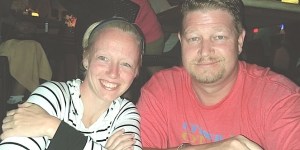
#8 Juliet & Peter MadsenMy family has helped me to accept my injuries because, although we joke around, they accept me for all that has happened. I was so angry and really emotionally crushed when I first came home. The only thing that I can always count on is my family, no matter what. The only other thing that has probably helped is time.

15. Has your injury affected your home life and relationships and, if so, how?

My husband, Peter, and I are so lucky to have each other. After twenty-three years together, I am thankful that this injury has not torn us apart, but it came very close. A TBI is exhausting for everyone involved, and I think that the first few years are spent in emergency mode – performing triage. Then as we started to get comfortable with how things were going, my brain “kicked us” – I suffered another stroke. We had a whole new series of issues and rules to learn. Peter and the kids have been incredible at supporting me. Although it has been a really rough road, we have been through it together. We are stronger because we are always together, and that part I am thankful for.

16. Has your social life been altered or changed and, if so, how?

Yes, I have actually lost friendships because of my TBI. I describe myself as a “golden retriever.” (I am excited to see you, but if you leave the room and come back in, I don’t know how long you were gone, but I am still really excited to see you.) It is because of this lack of the concept of time that I have lost friends. Also I wasn’t good enough at keeping in contact. I had a friend call me and tell me that I wasn’t an attentive enough friend. So now, I tell every potential friend this cautionary story. But to be honest, I don’t really try to make friends any more. Most people don’t understand me – or our family. Because of that, we are very private people. We don’t do a whole lot with others. It’s just easier that way. We would prefer to have lots of friends, but it just isn’t that easy.

17. Who is your main caregiver? Do you understand what it takes to be a caregiver?

My husband, Peter, is my main caregiver. I am so very thankful to him, in love with him, indebted to him, sorry, and every other adjective I can think of. I have moments of clarity when I see how terribly hard all of this is. It kills me that I have become a burden, and yet I am still his wife. I’d also like to say that I have had to watch my kids become my caregivers. They have taken care of me on too many occasions to count. It is incredibly hard on the entire family. They all suffer from PTSD as we go through this process. They all deserve so much more credit than they get for surviving this experience.

18. What are your plans? What do you expect/hope to be doing ten years from now?

I am ten years out from my injuries, but I am light years from my initial injuries. I hope to continue my physical improvements, and I would like to recover better in terms of my learning disabilities and mental health. I would like to go back to school and get a degree in Art Therapy to help other veterans and their families with TBI and PTSD. In ten years, I would really like to be working with military families through art in my own program. I would also like to have published my own quilting book.

19. Are you able to provide a helpful hint that may have taken you a long time to learn, but which you wished you had known earlier? If so, please state what it is to potentially help other survivors with your specific kind of brain injury.

There are so many setbacks during the recovery process. I never seem to be where I am supposed to be. But, I never stop because there are no set rules and no one is saying where you have to be. So, just keep going – never give up.

20. What advice would you offer to other brain-injury survivors? Do you have any other comments that you would like to add?

I think the worst thing I do to myself is to constantly beat myself up about what I could have or should have done to either prevent this or to change it now. It kills me to know where my family is and how my family has been changed forever because of all of the things that happened since 2004. I would give anything to change it, but I can’t. On good days, I can accept it and move past it, but on bad days, I can’t. It hangs over me and suffocates me. It is my wish that others out there like me hold on and cherish the life you have because no one can live it like you can.

Thank you, Juliet, for taking part in this interview. I hope that your experience will offer some hope, comfort, and #6 Juliet Madsen Snowinspiration to my readers.

(Disclaimer: The views or opinions in this post are solely that of the interviewee.)

If you would like to be a part of the SPEAK OUT! project, please go to TBI Survivor Interview Questionnaire for a copy of the questions and the release form.

(Photos compliments of Juliet.)

As I say after each post:

Please leave a comment by clicking the blue words “Leave a Comment” below this post.

Feel free to follow my blog. Click on “Follow” on the lower right corner of your screen.

If you like my blog, share it with your friends. It’s easy! Click the “Share” buttons below.

If you don’t like my blog, “Share” it with your enemies. I don’t care!

Feel free to “Like” my post.

 

SPEAK OUT! Faces of Brain Injury Aaron Avila

Brain Injury is NOT Discriminating!


bigstock-cartoon-face-vector-people-25671746-e1348136261718It can happen to anyone, anytime, . . . and anywhere.

The Brain Trauma Foundation states that there are 5.3 million people in the United States living with some form of brain injury.

On “Faces of Brain Injury,” you will meet survivors living with brain injury. I hope that their stories will help you to understand the serious implications and complications of brain injury.

The stories on SPEAK OUT! Faces of Brain Injury are published with the permission of the survivor or designated caregiver.

If you would like your story to be published, please send a short account and two photos to me at neelyf@aol.com. I’d love to publish your story and raise awareness for Brain Injury – one view at a time.

Aaron Avila (survivor)

Avila, Aaron SurvivorFive years ago, at age 47, I had a major stroke. I had been the type of guy who could do about anything he set his mind to. Cutting down an 80-foot tree…no problem! Designing a rain harvesting system…no problem! Building a 100,000-gallon water storage tank…no problem! Running and owning my own companies (National Storage Tank and Rain Harvesting Solutions, Inc.) for over twelve years…done! Then the course of my life changed forever. I was doing the day-to-day grind. I truly believe that there was only one thing that could stop me dead in my tracks – my stroke and near-death experience. This event in my life forced me to fully re-evaluate all the things that I, like most everyone, took for granted – life itself, walking, talking, feeling one with my body, family, friends, etc.

I truly believe that the stroke has given me a SECOND CHANCE. I would come to believe Avila, Aaron 2wholeheartedly that this was a type of gift. Yes, this stroke is the hardest thing I would ever face. But, I was alive! I was given a gift that the majority of people on this planet don’t have – the chance to live two lives in this one. I was given a second chance to learn not to take it all for granted. In the beginning, part of me was angry and suicidal. I felt ripped off, but what I have learned since my stroke makes it all worth it. I should have a big sign on my forehead – “Under Major Reconstruction.” I would have to say, and I know with all my heart, that if it were not for my incredible family and friends anthis_body_is_under_going_major_re_construction_tshirt-p235029087676528180yenb_400d their support, I’d be in a much different place. Tears of thankfulness run down my face. Go stroke survivors!

WE’RE NOT VICTIMS; WE’RE SURVIVORS!

Disclaimer:
Any views and opinions of the Contributor are purely his/her own.

(Clip Art compliments of Bing.)

(Photos compliments of contributor.)

As I say after each post:

Please leave a comment by clicking the blue words “Leave a Comment” below this post.

Feel free to follow my blog. Click on “Follow” on the upper right sidebar.

If you like my blog, share it with your friends. It’s easy! Click the “Share” buttons below.

If you don’t like my blog, “Share” it with your enemies. I don’t care!

Feel free to “Like” my post.

Survivors SPEAK OUT! Peter Corfield

Survivors  SPEAK OUT!  Peter Corfield

by

Donna O’Donnell Figurski

Peter Corfield - Brain Injury Survivor - 2010

Peter Corfield – Brain Injury Survivor – 2010

1. What is your name? (last name optional)

Peter Corfield

2. Where do you live? (city and/or state and/or country) Email (optional)

Marcilly En Bassigny, France      petercorfield3@gmail.com

3. When did you have your brain injury? At what age?

My brain injury happened on June 1, 2010. I was 55 years old.

4. How did your brain injury occur?

I had a stroke caused by bleeding of an AVM (arteriovenous malformation).

5. When did you (or someone) first realize you had a problem?

After returning from an art course, my wife found me on the floor.

6. What kind of emergency treatment, if any, did you have?

I was stabilized, and then I was helicoptered to Dijon Hospital. There they did a craniotomy and repaired the vein.

Peter Corfield - Brain Injury Survivor 2010

Peter Corfield – Brain Injury Survivor – 2010

7. Were you in a coma? If so, how long?

Yes. I was put into a coma for about two and a half weeks.

8. Did you do rehab? What kind of rehab (i.e., inpatient or outpatient and occupational and/or physical and/or speech and/or other)? How long were you in rehab?

I was sent to a rehab centre. There I had rehab for five and a half months.

9. What problems or disabilities, if any, resulted from your brain injury
(e.g., balance, perception, personality, etc.)?

I was hemiplegic (paralysis of one side of the body) with left-side paralysis, and I had an anxiety problem in the form of overactive bladder.

10. How has your life changed? Is it better? Is it worse?

My life has changed a great deal. In some ways, it is better; in others, much worse.

11. What do you miss the most from your pre-brain-injury life?

I miss being able to sleep in a normal bed with my wife. I also miss playing my guitar and driving.

12. What do you enjoy most in your post-brain-injury life?

I like being able to help others who have had the same experience.

13. What do you like least about your brain injury?

I dislike the lack of normality.

14. Has anything helped you to accept your brain injury?

My wife’s support has helped. Also my writing has been important.

15. Has your injury affected your home life and relationships and, if so, how?

It has. My wife and I sleep apart. But, my stroke has made me more thoughtful towards others. I think I am a better person.

16. Has your social life been altered or changed and, if so, how?

Yes. My anxiety affects our going out in the dark. The anxiety also makes it awkward to sit on chairs with no arms.

17. Who is your main caregiver? Do you understand what it takes to be a caregiver?

My wife is my caregiver. I fully understand how hard it is for her. It drives me on to recovery.

18. What are your future plans? What do you expect/hope to be doing ten years from now?

I am determined to be recovered enough to look after my wife and to be helping other stroke survivors

19. Are you able to provide a helpful hint that may have taken you a long time to learn, but which you wished you had known earlier? If so, please state what it is to potentially help other survivors with your specific kind of injury.

Keep a diary to realise just how much you have improved, as recovery is slow.

Corfield, Peter  Leg Push

Peter Corfield – Brain Injury Survivor – 2010

20. What advice would you offer to other survivors? Do you have any other comments that you would like to add?

I have written Kindle stroke-experience books. I donate all royalties to The ARNI (Action for Rehabilitation from Neurological Injury) Institute (http://www.arni.uk.com) to try to help other stroke-affected people.


Thank you, Peter, for taking part in this interview. I hope that your experience will offer some hope, comfort, and inspiration to my readers.

(Disclaimer: The views or opinions in this post are solely that of the interviewee.)

If you would like to be a part of the SPEAK OUT! project, please go to TBI Survivor Interview Questionnaire for a copy of the questions and the release form.

(Photos compliments of Peter.)


Catherine Brubaker’s . . . . . . . . Photo Journal – (Part 1) Washington to Florida

Triking Across America – diagonally –

Photo Journal Part 1

Washington to Florida


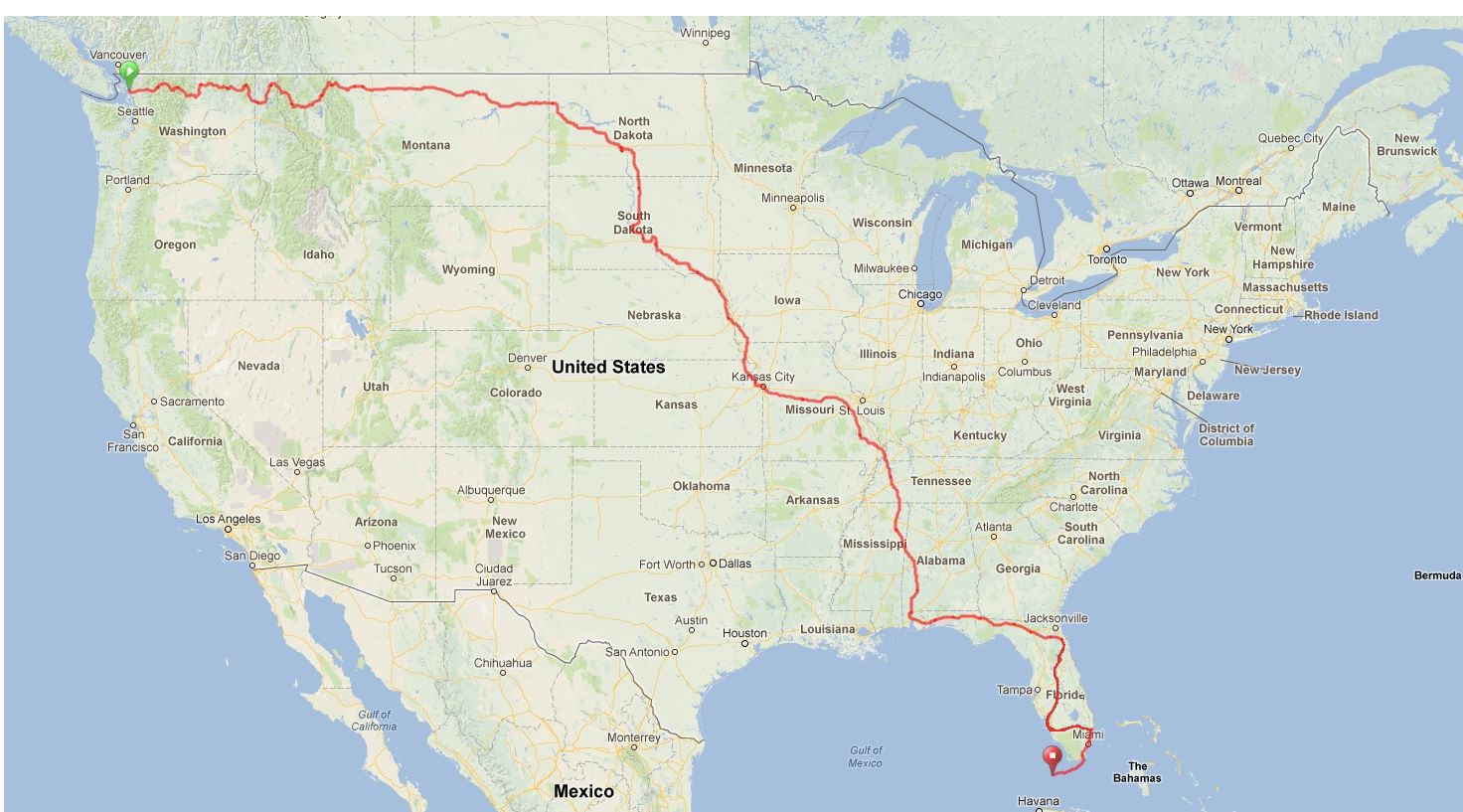
On June 29, 2014, Catherine (Cat) Brubaker and Dan Zimmerman set off from Anacortes, Washington on their recumbent trikes to trike across America – diagonally. Their destination – Key West, Florida – a trip of 5,200 miles.

I can’t even wrap my head around driving 5,200 miles in a car, let alone covering that distance under pedal-power. (I made up that word.)

Here's what 5,200 miles looks like.

Here’s what 5,200 miles looks like.


01 Cat on Trike 10350428_10204753083335148_667202674095765199_n

Cat, who survived two brain injuries triked to raise awareness for Traumatic Brain Injury (TBI) on “Cat’s Ride for Life.”

02 Dan on Trike 1069184_441000132665517_2000066735_n

Dan, a stroke survivor, pedaled for awareness for stroke prevention with “Spokes Fighting Strokes.”

This is the van loaded down with equipment that will be traveling with Cat and Dan

This is the van loaded down with equipment, supplies, and food that will be traveling with Cat and Dan.


Oops! A blowout before the trip even begins.

Oops! A blowout before the trip even begins

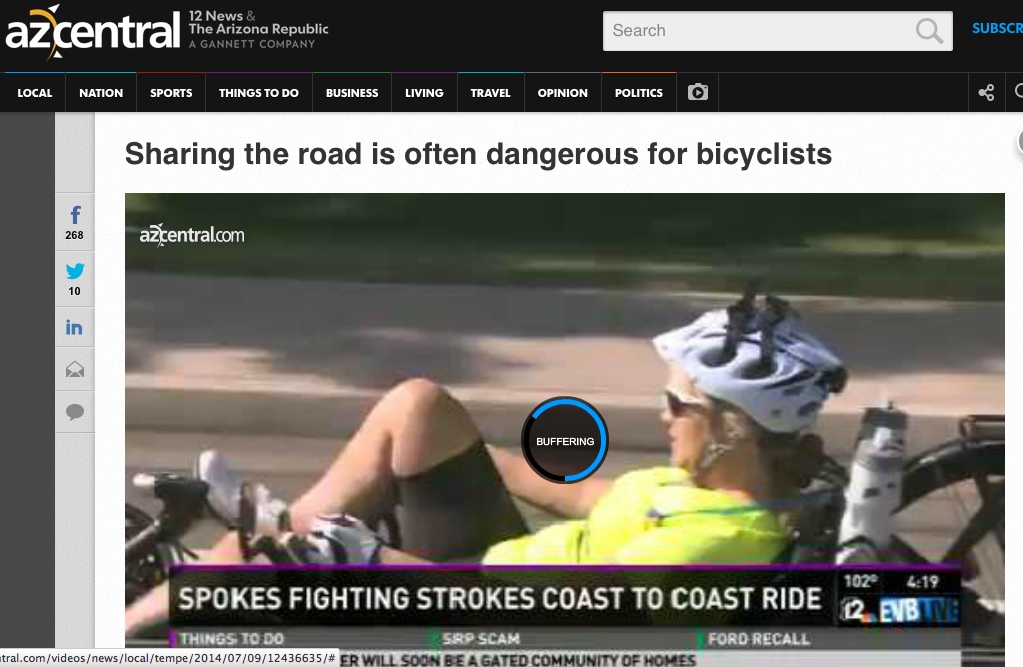
Cat is interviewed by  AZCentral - 12 News - The Arizona Republic

Cat is interviewed by AZCentral – 12 News – The Arizona Republic

Cat and Dan ride under "Spokes Fighting Strokes."

Cat and Dan ride under “Spokes Fighting Strokes.”


Cat and Dan ride about 50 miles per day and their average speed is about 13mph. They’ve seen a wolf, wild turkeys, and even “giant” crickets in Washington. Here are some of the beautiful sites Cat has encountered along the way. (More to come.)

 10420010_10204564402018233_4022721289719272020_n

Check out the Ascent and Elevation on this Garmin.

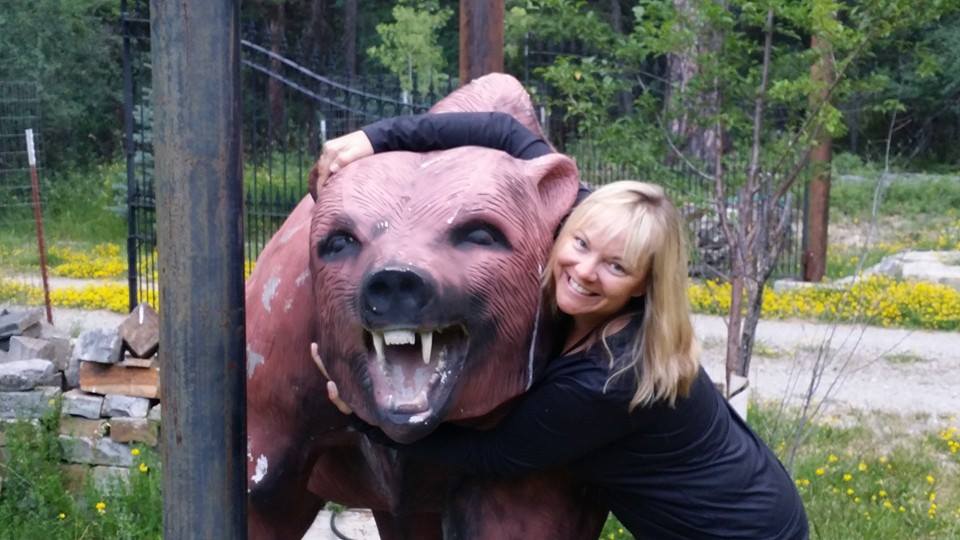
Cat and Bear sharing a little love.

Cat and Bear sharing a little love.

Washington sites

Washington sites

 M10338763_10204580536701590_2716290322768561350_n

Lake McDonald in National Glacier Park

Purple wild flowers along the highway

Purple wild flowers along the highway

Hmm, wondering if this will be Cat's new wheels for another Trip Across America.

Hmm, wondering if this will be Cat’s new wheels for another Trip Across America.

Pure bliss

Pure bliss

Brain Injury Resources . . . . . . . . . My Stroke of Insight: A Brain Scientist’s Personal Journey

My Stroke of Insight th


My Stroke of Insight: A Brain Scientist’s Personal Journey
by
Jill Bolte-Taylor, Ph.D


There are several books published about Traumatic Brain Injury (TBI). Of course there is Jill Bolte-Taylor’s book, “My Stroke of Insight: A Brain Scientist’s Personal Journey,” which is amazing. It took Jill nearly eight years to regain her near-normal self after suffering a stroke. She has been a speaker about this subject for TED talks. Her talk, called How It Feels to Have a Stroke, is worth every second of the nearly twenty minutes. Dr. Taylor is a neuroanatomist, a scientist, who studies the nervous system of the brain. Her book will help you to understand the differences between the right hemisphere and the left hemisphere of your brain.


anim0014-1_e0-1

As I say after each post:

Feel free to leave a comment by clicking the blue words “Leave a Comment” below this post.
Please follow my blog. Click on “Follow Me Via eMail” on the right sidebar of your screen.

If you like my blog, click the “Like” button under this post.

If you REALLY like my blog, share it with your friends. It’s easy! Click the “Share” buttons below.

If you don’t like my blog, “Share” it with your enemies. That works for me too!


(Clip Art compliments of Bing.)

diemodi jewelry

uniquely hand-crafted jewelry by donna

Welcome to Harmony Kent Online

The home of all things books

Pete Springer

Passionate Teacher and Future Children's Author

HOPE TBI

Helping Other People Excel - To Be Independent

For the Love of Books, Old and New

Katie Fischer, Writer and Reader of Stories

Charlie Bown

Children's Author

Jessica Hinrichs

“We write to taste life twice, in the moment and in retrospect.” ― Anais Nin

VIVIAN KIRKFIELD - Writer for Children

Picture Books Help Kids Soar

Mindy’s Writing Wonderland

For authors, parents, teachers & everyone who loves children’s books.

Kaitlyn Leann Sanchez

Literary Agent

Surviving Traumatic Brain Injury

TBI - Survivors, Caregivers, Family, and Friends

The Care Factor

Loving someone with a Traumatic Brain Injury

Brain Injury Support Group of Duluth-Extension

Brain Injury Information and SUPPORT

Brain Aneurysm Global Insight

Brain Aneurysm, cerebral hemorrhaging, hemorrhage stroke