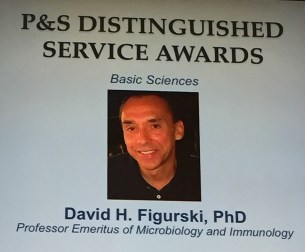
David H. Figurski, Ph.D & Survivor of Brain Injury
Dr. David Figurski, retired professor of microbiology, talks about his brain injury and COVID-19
I don’t often publicize my radio show on the Brain Injury Radio Network, but one of our brain injury survivors is knowledgeable about the COVID-19 pandemic, which I’m sure is on your mind. Like me, you probably have lots of questions.
My guest on the April 19th show was my husband, Dr. David Figurski. David has been living with several physical disabilities since January 2005, when he had a brain hemorrhage, but, fortunately, after three brain surgeries in two weeks, he was unaffected cognitively. For 35 years, including eight years after his traumatic brain injury, David was a professor in the Department of Microbiology & Immunology at Columbia University, where he also had a research lab. David has done research on bacteria and viruses for 45 years. Unsurprisingly, he has been very interested in the new human coronavirus and the global pandemic it has caused.
My 80-minute show was live on April 19th, but it was recorded and can now be listened to at any time as a podcast. My interview of David has two parts. From 9:30 to 49:50, David and I talk about life with his brain injury. From 49:50 to the end, David and I discuss the COVID-19 pandemic.
3. What is the brain-injury survivor’s relationship to you? How old was the survivor when he/she had the brain injury? What caused your survivor’s brain injury?
I cared for my mother, who had been a brilliant woman before her Vascular Dementia. At the time, nobody knew mini-strokes continued to spread.
4. When did you begin care for your brain-injury survivor? Were you the main caregiver? Are you now? How old were you when you began care?
I started caring for my mother after she was found wandering in a department store. Interestingly, my mother called from Florida to tell me this story. “The clerk told me cars are parked outside the store.” In my fifties, I moved my mother from Melbourne, Florida, to Rochester, Minnesota, to care for her.
5. Were you caring for anyone else at that time (e.g., children, parents, etc.)?
I wasn’t caring for anyone else at the time.
6. Were you employed at the time of your survivor’s brain injury? If so, were you able to continue working?
Yes. I was a freelance writer. Continuing to write was difficult. My mother lived with us for a month, while her apartment in an assisted living community was being readied for her. If I sat down at the computer, she stood behind me and literally breathed down my neck.
7. Did you have any help? If so, what kind and for how long?
I moved my mother into an assisted living community. Also developed a weekly schedule of care: shopping day, medical/dental day, errand day, out to lunch day, etc.
8. When did your support of the survivor begin (e.g., immediately – in the hospital; when the survivor returned home; etc.)?
On a frigid night, when the temperature was 35-below and the wind chill was 50-below, my mother called and said she was going back to Long Island to be with friends. All of the people she mentioned were deceased. I called her physician, and he wrote orders sending her to nursing care, a locked ward.
9. Was your survivor in a coma? If so, what did you do during that time?
No coma. Profound confusion.
10. Did your survivor have rehab? If so, what kind of rehab (i.e., inpatient and/or outpatient and occupational, physical, speech, and/or other)? How long was the rehab? Where were you when your survivor was getting therapy?
No rehab. There was no way to fix my mother’s mind.
11. What problems or disabilities of your brain-injury survivor required your care, if any?
Complained to management. Social services came and evaluated her. Mom couldn’t answer any of the questions on the Mini Mental Status Exam. Worse, she said, “My daughter put me in here.”
12. How has your life changed since you became a caregiver? Is it better? Is it worse?
Years later (maybe ten), caregiving took over my life. I’ve cared for three generations of family members: my mother, my orphaned twin grandchildren, and now my husband, who has a spinal cord injury. This prompted me to write a series of books for family caregivers.
13. What do you miss the most from pre-brain-injury life?
I miss the freedom of my old life and being able to do what I want. Am also physically and emotionally tired.
14. What do you enjoy most in post-brain-injury life?
Being even closer to my husband. We are devoted to each other.
15. What do you like least about brain injury?
I hate the unpredictability of brain injury. For example, my mother would call my phone number repeatedly and hang up repeatedly because she didn’t recognize my voice.
16. Has anything helped you to accept your survivor’s brain injury?
Learning about Vascular Dementia and writing have helped.
17. Has your survivor’s injury affected your home life and relationships and, if so, how?
Eventually my mother’s brain shut down. She couldn’t read, couldn’t speak (grunts), didn’t recognize me, and thought I had come to harm her. This was heartbreaking.
Harriet Hodgson – Caregiver and Author; Dr. John Hodgson
18. Has your social life been altered or changed and, if so, how?
I don’t really have a social life.
19. What are your plans? What do you expect/hope to be doing ten years from now?
My plans are to care for my husband until one of us dies. Both of us are 84 years old.
20. What advice would you offer other caregivers of brain-injury survivors? Do you have any other comments that you would like to add?
Be kind to yourself, and be on the lookout for Compassion Fatigue.
If you would like to learn more about Harriet, please visit her website;
Professor David Figurski Columbia University College of Physicians &Surgeons
“In graduate school, I worked with a virus that infects bacterial cells (bacteriophage T1). One T1 virus particle takes about 10-12 minutes to break open the E. coli cell and release over 100 new virus particles. Each new particle can infect a cell and produce over a hundred new virus particles. So, 10-12 minutes later, there are 10,000 viruses. I could do some experiments in the morning and have the results that afternoon.
Random Petri Plate
To make stocks of the virus, we would infect a late culture of bacteria. A couple of hours later, all the bacterial cells were broken open, leaving only virus.
Coronavirus
Animal viruses, like coronavirus, probably take hours to reproduce, but each infected cell produces at least a thousand new virus particles.
Consequently, I have a healthy respect for viruses.”
Survivors SPEAK OUT! . . . Thomas Hopkins, Jr (Tommy)
presented
by Donna O’Donnell Figurski
Tommy Hopkins, Jr Survivor of Brain Injury
1. What is your name? (last name optional)
Thomas Hopkins, Jr.
2. Where do you live? (city and/or state and/or country) Email (optional)
Mountain Home, Idaho, USA (originally from Wisconsin)
3. On what date did you have your brain injury? At what age?
I was 19 years old.
4. How did your brain injury occur?
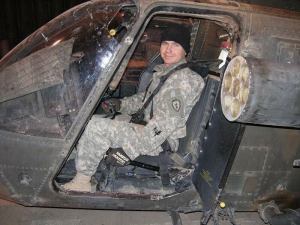
I have had several head traumas that led to my brain injuries. I’ll discuss the main ones. I have two injuries from February 2003. The first was due to a JDAM bomb (Joint Direct Attack Munition – a guidance kit that converts unguided bombs into all-weather precision-guided munitions). The second was from an explosion in a unit I was working with. In 2006, on my 4th tour, I had gotten a hammer to the head. I do not recall this incident at all. My fourth injury was in May 2007. I was still on my 4th tour. Our camp got morning RPG/mortar hits. The shop I was working in had one hit close by that shook the shop. The 40-lb. equipment I was working on fell over and hit me in the back of the head.
5. When did you (or someone) first realize you had a problem?
I started noticing issues after my first injury back in 2003 – daily headaches, ringing in my ears, light sensitivity, plus I would invert numbers.
6. What kind of emergency treatment, if any, did you have?
Due to the units I was in, I did not get treatment. I’ll rephrase that – due to the units I was part of, unless you lost a limb, your sight, etc. or your life was in danger, you were not allowed to seek medical treatment.
7. Were you in a coma? If so, how long?
No coma
8. Did you do rehab? What kind of rehab (i.e., inpatient or outpatient and occupational and/or physical and/or speech and/or other)? How long were you in rehab?
I started seeking help once I got out of the army. I started at the VA (medical care at hospitals of the Veterans Administration). It was not the best outcome.
9. What problems or disabilities, if any, resulted from your brain injury (e.g., balance, perception, personality, etc.)?
I have convergence insufficiency (a condition in which your eyes are unable to work together when looking at nearby objects, creating double or blurred vision),
photophobia, daily headaches that turn into migraines, and constant tinnitus. One doctor said I have damage to the autonomic and limbic systems in my brain. Other doctors have said that I don’t even have a brain injury! (LOL) I have no concept of time; I experience jerks (involuntary muscle movements); I search for words; my speech is slurred; my brain often won’t let me get my words out; and I have a poor memory. I do not feel 60+% of my body, and my lower limbs do not work a lot of the time. “Partial Para” is what they call it. At times, I need to be in a wheelchair.
10. How has your life changed? Is it better? Is it worse?
Worse
11. What do you miss the most from your pre-brain-injury life?
I miss my memory. It used to be photographic.
12. What do you enjoy most in your post-brain-injury life?
Retirement (LOL) … Driving my wife nuts (LOL) … Um, working my brain in different ways to work on problems and situations that come up in my hobbies
13. What do you like least about your brain injury?
I’m not Johnny-on-the-spot anymore. I miss my memory. My body is going to shit.
14. Has anything helped you to accept your brain injury?
MY WIFE. Even though most of my injury is “invisible,” she showed me that I also have physical scars that I and others can see.
15. Has your injury affected your home life and relationships and, if so, how?
Yup. That’s a very long answer.
16. Has your social life been altered or changed and, if so, how?
Yup. We lost a lot of friends and family because I was not the same Tommy I was before I was brain-injured in the war.
17. Who is your main caregiver? Do you understand what it takes to be a caregiver?
Tommy Hopkins, Jr. Brain Injury Survivor Caregiver – Kristina Hopkins
MY WIFE! I have a rough idea of some of what she does for me, but I have no clue of what all she does.
18. What are your plans? What do you expect/hope to be doing ten years from now?
My “plan” is to maintain what I have and live each day as if it is my last.
19. Are you able to provide a helpful hint that may have taken you a long time to learn, but which you wished you had known earlier? If so, please state what it is to potentially help other survivors with your specific kind of brain injury.
Yes. You have to adapt to your new self. That old person is gone. I had to realize I will never be as I once was, BUT I am still able to do most things with adaptation.
20. What advice would you offer to other brain-injury survivors? Do you have any other comments that you would like to add?
My advice: Good days come and go. Work with the day you have because you don’t know what tomorrow will bring.
Last year on February 13, my husband, Wyatt, took me out for a Valentine’s Day dinner. He and the kids gave me cards that morning. I was on cloud nine. Who would have thought that five days later my husband would be fighting for his life and our families would be turned upside down?
God has taught me many lessons this year. Most of all, I’ve learned that earthly possessions mean nothing. Sure, they make one happy for a while. But no gift, flower bouquet, or box of chocolates could take the place of what I have today. My husband is still here! Oh, how happy it makes me to be able to say that!
He may not realize that it’s even Valentine’s Day. Nor will he walk through the door with a gift, BUT I still get to hug him. The kids and I still get to tell him how much we love him. That, my friends, is irreplaceable. Don’t just sign that sweet card or have those beautiful flowers delivered. Show that person how much he or she means…not just today, but every day!
(Disclaimer: The views or opinions in this post are solely that of the author.)
If you have a story to share and would like to be a part of the SPEAK OUT! project, please submit your TBI Tale to me at donnaodonnellfigurski@gmail.com. I will publish as many stories as I can.
As I say after each post:
Please leave a comment by clicking the blue words “Leave a Comment” below this post.
Please follow my blog. Click on “Follow” on the top right sidebar. (It’s nice to know there are readers out there.)
If you like my blog, share it with your friends. It’s easy! Click the “Share” buttons below.
If you don’t like my blog, “Share” it with your enemies. I don’t care!
This is an amazing piece of piano music composed and played with breathtaking emotion by the young and upcoming (some say “genius”) pianist Elijah Bossenbroek. It’s a very moving piece, about which commenters have written “sad,” “uplifting,” and “inspiring.” I can only assume that Bossenbroek has “triumphed” over an extremely sad part of his own life.
It is an appropriate piece for survivors of brain injury, who usually experience these emotions at one time or another. Listening to this piece gave me chills.
Never Give Up!
Scream!
Yell!
Breathe. Breathe. Breathe.
Move on…
(Clip Art compliments of Bing.)
As I say after each post:
Feel free to leave a comment by clicking the blue words “Leave a Comment” below this post.
Please follow my blog. Click on “Follow Me Via eMail” on the right sidebar of your screen.
If you like my blog, click the “Like” button under this post.
If you REALLY like my blog, share it with your friends. It’s easy! Click the “Share” buttons below.
If you don’t like my blog, “Share” it with your enemies. That works for me too!
On December 31st, I will have lived with a traumatic brain injury for 38 years. I have used several strategies for co-existing with and minimizing the effects of my TBI. I know now that the brain-injury recovery process is ongoing and that there are four major areas to work on during recovery: (1) Getting Organized, (2) Being Responsible, (3) Following Through, and (4) Moving On. I learned a lot over the years, and I want to share my experiences. I have listed 38 tips (one for each year) that could be helpful to you.
1. Regain trust in yourself and in others.
2. Try not to be critical of mistakes you make. In the early years of your recovery, there will be too many of them to count. Learn from these mistakes and move on.
3. Find purpose and meaning in your life again. This will make it easier to get out of bed in the morning. Having a sense of purpose and meaning will give you something to live for and will help you feel worthwhile, help motivate you, and improve your recovery process. You will start feeling better about yourself.
4. Keep stress and anxiety to a minimum every day. Reducing stress and anxiety will increase your self-esteem and make life easier. Stress and anxiety trigger the fight-or-flight response in the mid-brain. You don’t have any control over this response because it is part of the Emotional Nervous System. When the fight-or-flight response is activated, it increases confusion and makes it harder to process information.
5. Regain your self-confidence and self-respect.
6.Be proactive.
7. Stay focused, calm, and relaxed as much as possible. This will make it easier to think, and you become less dependent on others to remind you. Becoming more responsible for yourself will build good habits on your part and will improve your self-esteem and self-confidence in the long run.
8. Get a large calendar. Put it up on your wall and use it. Make sure it’s in a location where you will always see it. An iPad (or clone), a smart phone, or a note pad with a calendar and alarm does the same thing. A calendar will also relieve stress and anxiety by helping you stay on task and not forget.
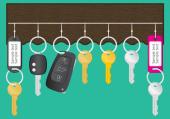
9. Get a key-holder and put it by your door to put your keys on when you come home. Do this every night so you won’t have to look for your keys in the morning. Starting your day off on the right foot will make your day easier and help to relieve stress and anxiety.
10. Make a “To Do” list to help you stay organized. iPads, iPhones or other smart phones, and note pads work wonders with this. The list will help you and make you feel good about yourself.
11. Making a list before you go shopping will save you money by cutting down on impulse-buying. It will also help you become more responsible and less dependent on others. Being less dependent on others improves your self-esteem.
12. Get lots of rest, and slow down. Many times we try to do too many things at once, and nothing gets done. Sleeping on an issue or concern can be the best way to help you figure it out. Getting enough rest will give you valuable energy to think better and solve difficult situations. Sufficient rest will also relieve stress and anxiety.
13. Set up a routine and stick to it. A routine will make it easier for you to follow through with what you have planned for the day. By doing the same thing every day, you will start building trust in your capabilities again.
14. Eat healthy foods, and get lots of exercise. Doing these things will help you get the blood with its oxygen circulating to your brain.
15. Get a dog and take it for walks. In my case, I have nine dogs, and they take me for a walk every morning and night! They also give me the unconditional love and companionship I need to feel good about myself and be happy.
16. Find ways to relax that aren’t counterproductive to your well-being. Abusing alcohol and drugs to “relax” is counterproductive. Long walks, yoga, and Tai Chi are much better for you and will make processing and problem-solving much easier. Stress and anxiety will be reduced.
17. Be patient.
18. Pay attention and become an active listener. Actively “hearing” what people have to say is more important than passively “listening” to what they say. Watch their body language. When I get distracted, sometimes it is harder to understand what a person is saying. Stay relaxed and focus. Take deep breaths – nothing works better than getting oxygen-filled blood to your brain.
19. Be around positive people and people who care about you. Nothing is more depressing than listening to someone who’s always complaining about his or her life or about what is going wrong in the world. Become active. Don’t just sit around hoping things will get better. Quit talking about a problem, and do something about it instead.
20. Don’t take criticism personally. When people don’t understand things, they criticize them. Constructive criticism can make you a better person in the long run.
21. Keep an open mind. Remember that your family and friends want to help, but sometimes they don’t know how. Many people don’t understand what you are going through, so don’t hold them responsible for this.
22. Stay calm; stay relaxed; take deep breaths; and move on!
23. Be careful of those you hang out with because they will set the stage for how you act. Friends who judge others and criticize you aren’t “friends.”
24. Grudges will only hold you back. They will be like anchors and keep you from being able to move on.
25. Lighten up on yourself, your family, and friends who want to help you.
26. Worry less and smile more.
27. Be content with what you have. Others have it much worse than you.
28. Find ways to stay active and be less isolated. Get out of your head and into the outside world.
29. Don’t give up – embrace adversity. Have adversity give you the resolve it will take to get better and improve your life. This will be up to you and no one else. People will be there to help you, but all of the work will be up to you. Use it or lose it!
30. Take ownership of your recovery. Remove the word “can’t” from your vocabulary.
31. Life is hard for most people. Life after a brain injury will definitely be hard, but not impossible. It will get easier over time – be patient! Make the best of every day and move on.
32. Thinking too much about a problem or issue can cause depression. This will trigger the fight-or-flight response, and you will be like a dog chasing its tail.
33. Be good to yourself.
34. Don’t take life too seriously.
35. Don’t let the little things get you down. When you think about them too long, they seem bigger than they really are.
36. Don’t beat yourself up over things you can’t control. This will only increase your stress and anxiety and trigger the fight-or-flight response.
37. Be happy with yourself and don’t try to live up to others’ expectations.
38. Most importantly – don’t set unrealistic expectations for yourself. Be strong. Find hope – because with hope, anything is possible!
Stop by the Brain Injury Radio Network to hear Ken. His show airs every 1st Thursday of each month from 5:00p to 6:30p Pacific Time.
Thank you, Ken Collins.
Disclaimer:
Any views and opinions of the Guest Blogger are purely his/her own.
2.Where do you live? (city and/or state and/or country) Email (optional)
New
Hampshire, USA
Truecolorsartist@gmail.com
3. On what date did you have your brain injury? At what age?
October
and November 2012
But, my very first concussion was in 1998. I was 30 years old.
4. How did your brain injury occur?
The event in October
2012 was a fall caused by vertigo. In November 2012, I was cleaning under
the pool deck. I went to get up and banged my head, causing me to be knocked
out. I don’t remember what happened in 1998.
5. When did you (or someone) first realize you had a problem?
My boyfriend
at the time found me unconscious under the pool deck.
6. What kind of emergency treatment, if any, did you have?
I was taken to
the Emergency Room, and I had rehab. I had to live with my parents for a while
because they had to take care of me. I thought it was the year 2005 and my
children were 5 and 10, but it was 2012 and they were 13 and 18. Also, I was
going through a divorce, and my house was in foreclosure.
7. Were you in a coma? If so, how long?
No
8.Did you do rehab? What kind of rehab (i.e., inpatient or outpatient and occupational and/or physical and/or speech and/or other)?
I had occupational
and physical therapies as an outpatient and speech therapy both as an
outpatient and as an inpatient.
–
How long were you in rehab?
I’m not sure
because I’ve been in a lot of rehabs for head injuries. I was in three in 2015.
My last rehab was in 2018, as my last concussion was in 2017. (I slipped on clothes
on my floor because my perception was off.)
9.What problems or disabilities, if any, resulted from your brain injury(e.g., balance, perception, personality, etc.)?
I struggle with many issues: balance, perception, personality, cognitive and executive functioning, memory, staying on task, aphasia, and impulsivity. It’s hard to make decisions and hard to be organized. I lost my independence. I lost my license for cognitive reasons back in December 2013.
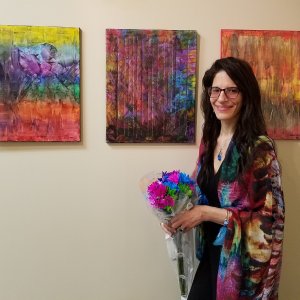
Alisa Marie – Brain Injury Survivor
10.How has your life changed? Is it better? Is it worse?
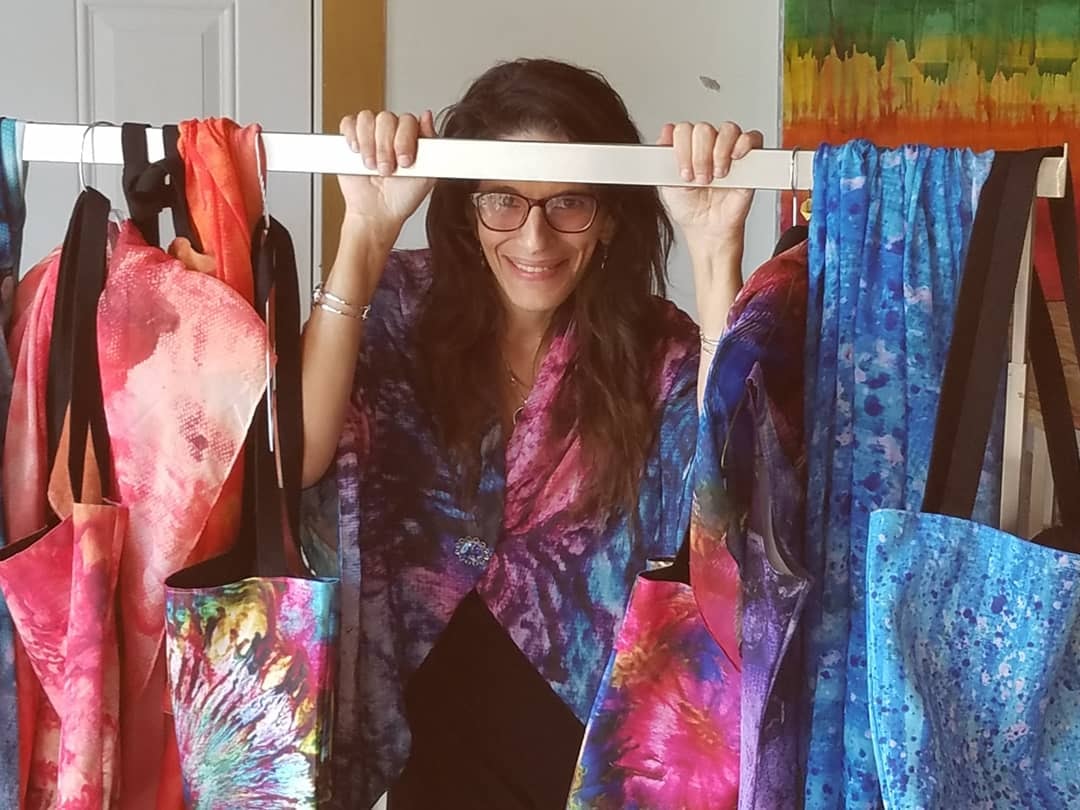
I’m an artist, designer, and poet. I am also trying to have my own business, Alisa’s True Colors. I began melting Crayola crayons in 2013 when Emily, my younger daughter, showed me how to apply wax to canvas using a blow dryer and a fork.
This was helping
me as art therapy, where I could take physical and emotional pain and turn it
into something colorful and bright. It was all I could focus on for a while. I
didn’t know it then, but the seeds of Alisa’s True Colors were being planted.
It helped me learn and adapt to the new me. I was creating my ability out
of my disability.
11.What do you miss the most from your pre-brain-injury life?
Freedom
and independence
12.What do you enjoy most in your post-brain-injury life?
I have come to
realize that we hold within ourselves the power to heal. I have learned we
don’t need a superhero to save us; we need to be our own hero in our own story.
We need not to be afraid to chase after our dreams. And, if one door closes
keep looking for the open ones.
I am learning
happiness, calmness, and patience. I am accepting the new me, and, with my
limitations, I am finding new ways to adapt. I have let go of the past and my
old ways of thinking of what I believed of myself.
I have gained
wisdom, knowledge, self-confidence, and the courage to look fear in the eyes – to
truly know that being a survivor means being a fighter and not to give up no
matter how dark my world gets.
I want to awaken others to their true colors by helping them accept their new life after trauma – to help them heal through art.
13. What do you like least about your brain injury?
I dislike that
I can’t stay on task or stay organized. I am forgetful, and I talk strange
sometimes because I can’t remember the right word. I regret the loss of
close family and friends who don’t understand.
14. Has anything helped you to accept your brain injury?
Art and poetry
🙂
15. Has your injury affected your home life and relationships and, if so, how?
For a few years, I lost what empathy was. My emotions were all over the place. I had a lot of anger and resentment in me. You find your own “True Colors” with a brain injury or from a trauma where it can get very confusing when you are trying to find your true self. Unfortunately, the sad truth is that sometimes you see the “True Colors” of your loved ones. We can look fine on the outside, but no one can see our brain on the inside all messed up trying to find a new way of living.
16. Has your social life been altered or changed and, if so, how?
Yes. I have
social anxiety at times, and I’m embarrassed when I talk and can’t find the
words or when I can’t stay on task.
17. Who is your main caregiver? Do you understand what it takes to be a caregiver?
Me,
myself. and I
18. What are your plans? What do you expect/hope to be doing ten years from now?
I hope to travel around the world with my story and products and to teach my art. And, I hope to also donate money to the Brain Injury Association of New Hampshire and other non-profit organizations.
I had to lose
everything from suffering traumatic brain injuries due to repeated head
injuries. I also had to deal with being diagnosed with viral meningitis in
March 2015. Then in the year 2016, I lost my home, and all my personal
belongings were discarded because of toxic environmental illnesses. I’m
surviving by designing.
19. Are you able to provide a helpful hint that may have taken you a long time to learn, but which you wished you had known earlier? If so, please state what it is to potentially help other survivors with your specific kind of brain injury.
This isn’t the
ending to your life; it’s a new beginning. We all are creative. So, you just
must keep trying new things, whether it be writing, poetry, drawing, photography,
ceramics, embroidery, knitting, singing, or dancing. There is so much you can
do – you are not your disability or a diagnosis a doctor gives you. I never
gave up hope. I kept learning and reaching for my dreams when all I saw was
darkness
20. What advice would you offer to other brain-injury survivors? Do you have any other comments that you would like to add?
Every struggle,
every life-lesson is a gift because it makes you go deeper into yourself to
find your “true colors” – your inner strength, courage, wisdom, and
confidence.
I want others to
see and know that there is beauty in the darkness, that there is beauty in your
pain and tears and heartache. There is beauty in the ashes. There is a rainbow
after the storm. I hope people see my True Colors as a message of hope and
faith and love, to give them the hope and courage and strength to show it is
possible to overcome the battles we endure in this lifetime.
I never
went to art school. I have no degree – just education from repeated concussions
and my life-situations. My art saved my life and is continuing to do. It helps
with built-up resentment, emotions, grief, and physical pain. Art teaches that you
are a new person after your injury, and it teaches how to adapt to your new
life. Art is my therapy. I take the physical and emotional pain I feel and I
turn it into something beautiful and bright on the canvas.
Never give up!
To learn more about Alisa Marie, check out her website at Alisa’s True Colors.
Excerpt from Prisoners without Bars: A Caregiver’s Tale in Sanctuary Magazine
presented by
Donna O’Donnell Figurski
Sanctuary is a magazine that seeks to be a catalyst for the inspiration and motivation of women. In their words, “Sanctuary is a community of like-minded women. We have evolved into a destination where our readers can find enrichment for body, mind and soul and where we can share the best of ourselves in order to inspire others.” I am proud to announce that Sanctuary Magazine has published an excerpt from my book, Prisoners without Bars: A Caregiver’s Tale by Donna O’Donnell Figurski.
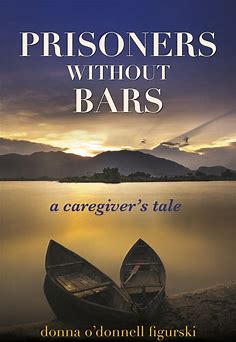
Prisoner without Bars: A Caregiver’s Tale (a heart-wrenching, yet sometimes, hilarious love story)
presented by
Donna O’Donnell Figurski
I am incredibly excited to announce that I have been recognized as a Book Excellence Award Finalist for my book, Prisoners without Bars: A Caregiver’s Tale in the Caregiving Category.
Out of hundreds of books that were entered into the Book Excellence Awards competition, my book was selected for its high quality writing, design and overall market appeal. (Click Book Excellence Awards link above and scroll to page 21.)
Out of hundreds of books that were entered into the Book Excellence Awards competition, my book was selected for its high quality writing, design and overall market appeal.
The book was released in 2018 and is about me, a “forever” caregiver for David, my high school sweetheart, best friend, and spouse after he had a traumatic brain injury. David was not expected to survive his three brain surgeries in January 2005, but he DID! Triple YAY!
Prisoners without Bars: A Caregiver’s Tale is perfect for survivors of brain injury and their family and friends. It will also appeal to anyone who wants to curl up and read a heart-wrenching, yet sometimes hilarious love story.


 below this post.

 survivor returned home; etc.)?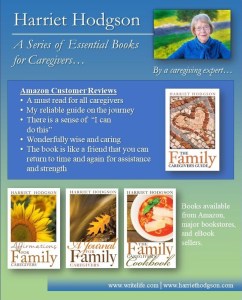




 14. Has anything helped you to accept your brain injury?







 increase your self-esteem and make life easier. Stress and anxiety trigger the fight-or-flight response in the mid-brain. You don’t have any control over this response because it is part of the Emotional Nervous System. When the fight-or-flight response is activated, it increases confusion and makes it harder to process information.
 9. Get a key-holder and put it by your door to put your keys on when you come home. Do this every night so you won’t have to look for your keys in the morning. Starting your day off on the right foot will make your day easier and help to relieve stress and anxiety.

 29. Don’t give up – embrace adversity. Have adversity give you the resolve it will take to get better and improve your life. This will be up to you and no one else. People will be there to help you, but all of the work will be up to you. Use it or lose it!





 I am incredibly excited to announce that I have been recognized as a Book Excellence Award Finalist for my book,
 The book was released in 2018 and is about me, a “forever” caregiver for David, my high school sweetheart, best friend, and spouse after he had a traumatic brain injury. David was not expected to survive his three brain surgeries in January 2005, but he DID! Triple YAY!


 Raising Awareness of Traumatic Brain Injury - one view at a time. Thanks for visiting my blog
 Surviving Traumatic Brain Injury
Recent Comments