Survivors SPEAK OUT! . . . Gretchen
Survivors SPEAK OUT! Gretchen
presented
by
Donna O’Donnell Figurski

Gretchen – Brain Injury Survivor
1. What is your name? (last name optional)
Gretchen
2. Where do you live? (city and/or state and/or country) Email (optional)
Louisiana, USA
3. On what date did you have your brain injury? At what age?
I had just turned 20.
4. How did your brain injury occur?
My brain injury is from a car accident. My best friend was driving. I was sitting on the console and flew into the backseat. The driver was ejected, and she was killed instantly. Another friend with us, who was sitting in passenger’s seat, just had stitches.
5. When did you (or someone) first realize you had a problem?
I was medevacked to a hospital right away and stabilized. I was then flown to a larger hospital. I knew one of the emergency responders, and he said he recognized my brain injury from the way I was breathing. I was also erratic and trying to move and fight and get up, but I had a head injury. Another responder told me that he had to almost lie on me to keep me still.
6. What kind of emergency treatment, if any, did you have?
I had a PEG (percutaneous endoscopic gastrostomy) tube (to add nutrition directly into the stomach), a halo brace (a metal ring attached to the head and shoulders to immobilize the spine) because I had a broken neck (fracture of the C2 vertebra), a tracheotomy, and the usual IVs and ports.

Gretchen with Halo Brace
7. Were you in a coma? If so, how long?
Yes. I was in a coma for three and a half weeks.
8. Did you do rehab? What kind of rehab (i.e., inpatient or outpatient and occupational and/or physical and/or speech and/or other)?
Yes. I had some physical therapy, but mostly I had cognitive therapy. I had both inpatient and outpatient rehab.
How long were you in rehab?
Inpatient rehab was about a week. Outpatient rehab was for several weeks (a couple of times a week).
9. What problems or disabilities, if any, resulted from your brain injury (e.g., balance, perception, personality, etc.)?
I have no physical problems; they’re mostly cognitive. I have some personality changes. My family has voiced this to me. I have no control over it, but I do feel it, and I feel so uncomfortable with it. I’m not happy and confident and wonderful. That doesn’t come naturally to me anymore.
10. How has your life changed? Is it better? Is it worse?
Worse. I am almost always anxious and uncomfortable.
11. What do you miss the most from your pre-brain-injury life?
I miss my friend and my carefree and happy self.
12. What do you enjoy most in your post-brain-injury life?
I guess I just have to enjoy living life. That’s all I have. I take it one day at a time.
13. What do you like least about your brain injury?
My brain injury took a part of me that I was happy with – my confidence and my peace. I hate that about it.
14. Has anything helped you to accept your brain injury?
I just do. I have to accept it.
15. Has your injury affected your home life and relationships and, if so, how?
My relationships have definitely been affected – both romantic and friendship. I fought the change with my boyfriend at the time, but he recognized it. We ended up breaking up after several years. My friendships are also different. I find it difficult to talk and keep in conversation. It’s hard to find stuff to say to people I was so close to before. It makes me so uncomfortable, although it could also be from our drifting apart naturally. It’s like I feel cold to them, but I don’t intentionally try to act that way.
16. Has your social life been altered or changed and, if so, how?
Yes. I’m so anxious all the time. I’m very uncomfortable with myself.
17. Who is your main caregiver? Do you understand what it takes to be a caregiver?
My aunt was my caregiver right after I got out of the coma. I am my own caregiver now. I live on my own. My dad has to work, and my mom didn’t feel comfortable doing it. We live right next door to each other, though.
18. What are your plans? What do you expect/hope to be doing ten years from now?
I want to be happy. I have a degree in English. I hope to write more. I have been published twice, but I haven’t gotten back an email or a response. I was a French major, but I lost it all after the accident. I was heartbroken.

Gretchen – Brain Injury Survivor
19. Are you able to provide a helpful hint that may have taken you a long time to learn, but which you wished you had known earlier? If so, please state what it is to potentially help other survivors with your specific kind of brain injury.
Nothing I can think of
20. What advice would you offer to other brain-injury survivors? Do you have any other comments that you would like to add?
Take it one day at a time, and don’t be hard on yourself. Love yourself. Again – don’t be hard on yourself!
If you would like to be a part of the SPEAK OUT! project, please go to TBI Survivor Interview Questionnaire for a copy of the questions and the release form.
(Clip Art compliments of Bing.)
(Photos compliments of contributor.)
As I say after each post:
Feel free to leave a comment by clicking the blue words “Leave a Comment” below this post.
Please follow my blog. Click on “Follow Me Via eMail” on the right sidebar of your screen.
If you like my blog, click the “Like” button under this post.
If you REALLY like my blog, share it intact with your friends. It’s easy! Click the “Share” buttons below.
If you don’t like my blog, “Share” it intact with your enemies. That works for me too!
 It can happen to anyone, anytime, . . . and anywhere.


 SPEAK OUT! Itty-Bitty Giant Steps will provide a venue for brain-injury survivors and caregivers to shout out their accomplishments of the week.
 GeorgeAnna Bell (survivor) …
  I was looking forward to a walk-in shower, so I could place my walker into the shower and use it as a chair, but my room had a tub. I was extremely cautious, but I did it! I am so happy!
 Cat Brubaker (survivor) …
 Sallie Stewart (survivor) …
  And several snacks in between. I can chew – on BOTH sides of my jaw. It’s a giant win in life for me! I feel strong. It’s been a true challenge to try to find the majority of my nutrition in a blender. It was so nice to really be able to chow-down food. These braces come off soon. And for that, I am happy. But I’m not nearly as grateful for that as I am for being able to chew pain-free. My heart is full! A strong full!
 The regular season of the NFL (National Football League) begins this week. Although American football can be exciting, we in the brain-injury community are very aware of the havoc that both concussive and sub-concussive head impacts play not only on the brain health of the pros, but also on the brain health of college and high school players (
 head and lead to “memory loss, confusion, impaired judgement, impulse control problems, aggression, depression and progressive dementia.” Some players have retired early (
 Basic research on the repair of damaged mouse brains has again produced a potential breakthrough for human therapy. The research may accelerate our ability to repair damaged human brains. A trial study for using this therapy in humans is now being designed.
 Scientists had previously shown that an FDA (Food and Drug Administration)-approved reagent, the engineered protein 3K3A-APC, caused stem cells in culture to become neurons. The USC scientists wanted to see if 3K3A-APC would help the recovery of a brain-injured animal. The model used for brain damage was mice that were induced to have a stroke. The scientists implanted human stem cells and then treated the mice with 3K3A-APC or a placebo (mock-3K3A-APC). Mice that were treated with stem cells + 3K3A-APC did markedly better (some were almost normal) in tests of sensory perception and motor skills than did mice that were treated with stem cells + the placebo. Unlike the earlier study in which the added stem cells did not become neurons, these stem cells did become neurons if the mouse had been treated with 3K3A-APC.
 The human stem cells not only became neurons, but they also formed normal connections with mouse neurons. Because the implanted cells were human, the scientists were able to use a human-specific toxin to kill only the implanted cells (the mouse cells were resistant to the toxin). When scientists killed the new neurons, the mice lost the signs of recovery. The scientists concluded that 3K3A-APC caused the cells to develop into neurons that then formed functional neural circuits, ultimately leading to recovery.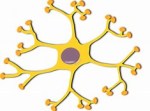







 Of course, these studies need to be done with human cells. But, because the mouse is similar enough to humans genetically, new neurons are likely to be made from human cells. If so, cell therapy to treat brain injury will become common in the foreseeable future. One benefit is that therapy can be personalized. It’s not practical to get your neurons from a brain biopsy, but your easy-to-get fibroblasts can be converted to neurons. Those neurons can then be tested with therapeutic drugs to see what works best with your genetic background. Also, the implanted cells would not be rejected by your body (prevention of rejection is the reason for immunosuppressive drugs today) because the neurons would be made from cells of your own body. (


 Raising Awareness of Traumatic Brain Injury - one view at a time. Thanks for visiting my blog
 Surviving Traumatic Brain Injury
Recent Comments