TBI – Survivors, Caregivers, Family, and Friends

Posts tagged ‘“Prisoner Without Bars: A Caregiver’s Story”’

Caregivers SPEAK OUT! Tatiana Puckett

Caregivers SPEAK OUT! – Tatiana Puckett

presented

by

Donna O’Donnell Figurski
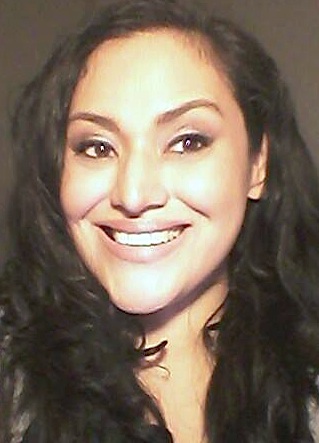
Puckett, Tatiana Caregiver 1 0713151. What is your name? (last name optional)

Tatiana Puckett

2. Where do you live? (city and/or state and/or country) Email? (optional)

Palmdale, California, USA     tatianamdiaz@yahoo.com

3. What is the brain-injury survivor’s relationship to you? How old was the survivor when he/she had the brain injury? What caused your survivor’s brain injury?

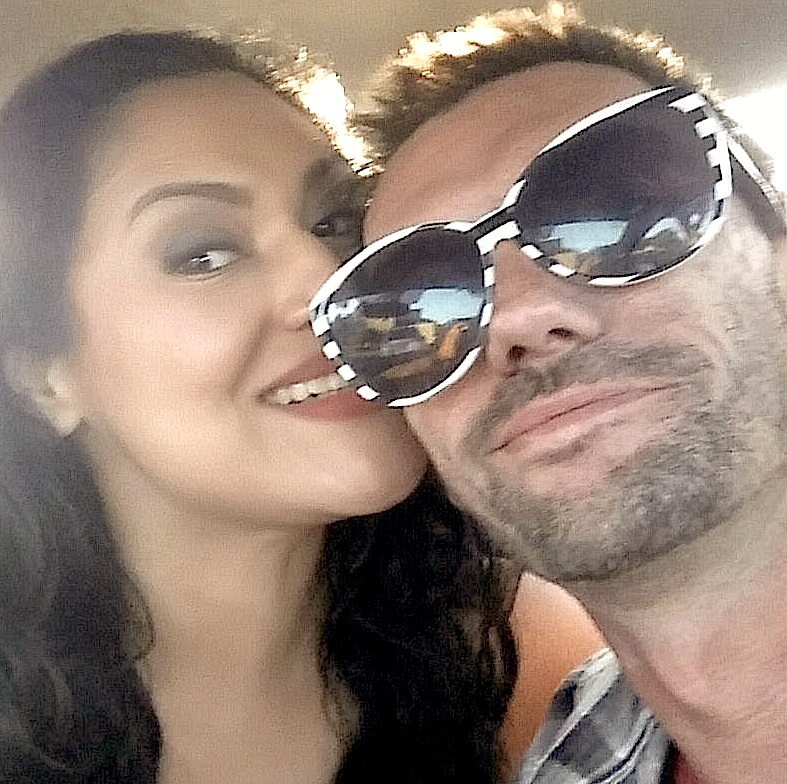
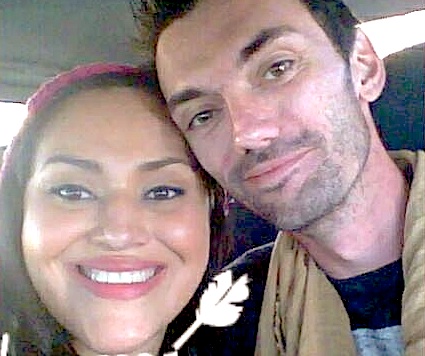
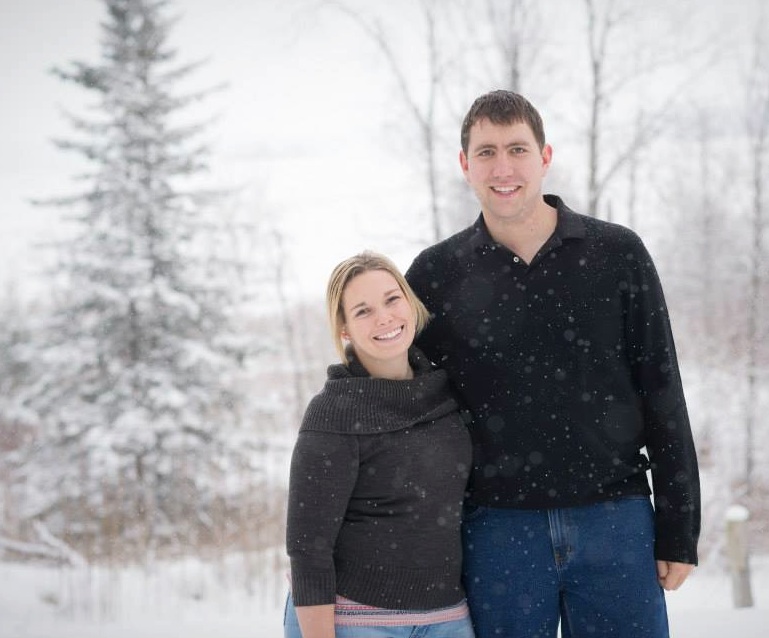
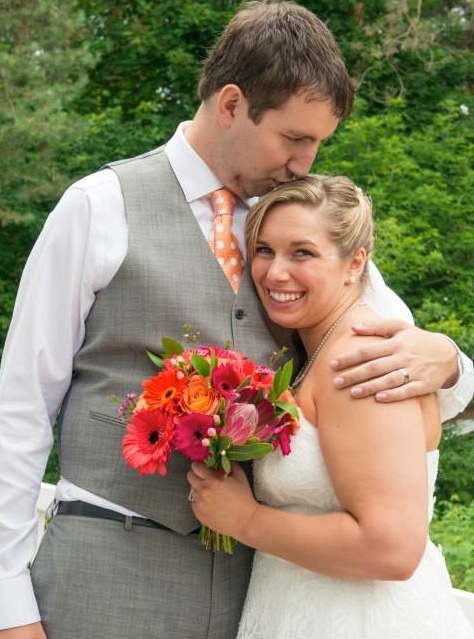
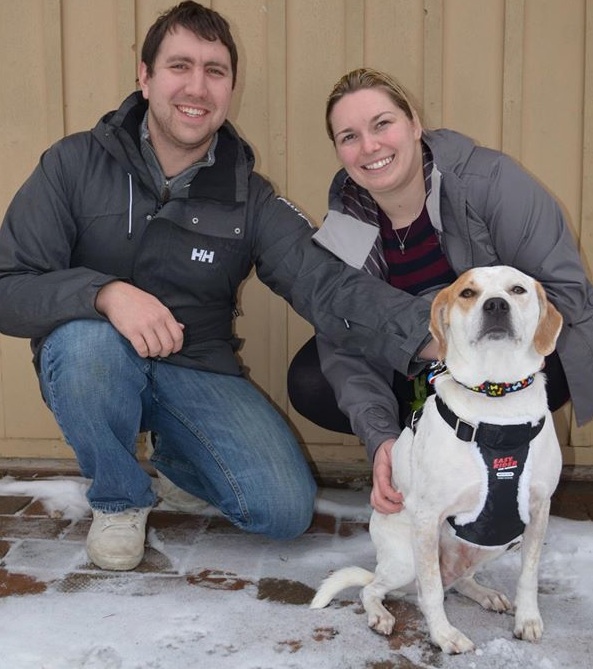
The traumatic brain injury (TBI) survivor is my spouse (Joshua). He was 31. Josh was assaulted late at night outside our apartment building.

4. On what date did you begin care for your brain-injury survivor? Were you the main caregiver? Are you now? How old were you when you began care?

I began care on April 10, 2013, the day Josh left the hospital. I have always been his main caregiver. I was 30.Puckett, Tatiana & Josh 071315
5. Were you caring for anyone else at that time (e.g., children, parents, etc.)?

I was caring for my two sons, and I was pregnant with the third.

6. Were you employed at the time of your survivor’s brain injury? If so, were you able to continue working?

I was employed but gradually had to go from full-time to part-time, which got me laid off from that position. My mother-in-law moved in with us, which allowed me to continue working and accept a new job.

7. Did you have any help? If so, what kind and for how long?

My mother-in-law takes care of the boys almost around the clock since the date of the injury to now.

8. When did your support of the survivor begin (e.g., immediately – in the hospital; when the survivor returned home; etc.)?

I began care as soon as Josh got home from the hospital.

9. Was your survivor in a coma? If so, what did you do during that time?

No. Josh wasn’t in a coma, but he was given a lot of sedatives. Josh is very rebellious and antsy. You can’t tell him to sit still because, even prior to his TBI, he wouldn’t. Josh constantly tried to flee the hospital and the rehab center. I even had to go to the hospital one night in the middle of the night to convince him to stay. I drove between home and the hospital a lot, especially since the hospital didn’t allow children under 12 to visit. My mother-in-law and I had to take turns.

10. Did your survivor have rehab? If so, what kind of rehab (i.e., inpatient and/or outpatient and occupational, physical, speech, and/or other)? How long was the rehab? Where were you when your survivor was getting therapy?

Yes, Josh had inpatient rehab – occupational, speech, and physical therapies. It should have been a lot longer, but Josh managed to talk his way out of it in two days time. When Josh had rehab, I was right there with him.

11. What problems or disabilities of your brain-injury survivor required your care, if any?

I try to keep Josh calm, which can be difficult. It changes daily and can get really frustrating, but I do my best to keep aggression at bay.
Puckett, Tatiana & Josh 2 07131512. How has your life changed since you became a caregiver? Is it better? Is it worse?

It’s difficult. I feel guilty because I feel torn between work, the kids, and Josh. Josh requires a lot of my time. I feel like my kids are missing out on time with me because, when I’m not at work, I’m with Josh. And, sometimes when Josh needs me, I can’t help him because I need to spend time with my boys.

13. What do you miss the most from pre-brain-injury life?

I miss being able to depend on my husband for everyday things. I have to parent with my mother-in-law instead of with my husband, which isn’t bad, but it’s not ideal. Josh can’t be around the kids too long because they overwhelm him. It’s hard.

14. What do you enjoy most in post-brain-injury life?

I like watching Josh discover new aspects of his creativity. He has a newfound excitement for writing and painting, both of which have bloomed since his TBI.

15. What do you like least about brain injury?

I find Josh’s new personality to be overwhelming at times. He wants to share every poem, every drawing, and every thought with me, even when I just want a quiet moment.

16. Has anything helped you to accept your survivor’s brain injury?

Time. As time goes on, it gets easier, but some days are still really hard.

17. Has your survivor’s injury affected your home life and relationships and, if so, how?

Like I mentioned above for question 12, I feel stretched in every direction. I did before as a working mom, but even more so now. I feel like, in a day, I end up with maybe two minutes to myself, but, once I get those minutes of silence, Josh needs me to listen to a song, a poem, etc. I’m happy for him, but, between work, handling home finances, kids, and him, it’s so tiring.

18. Has your social life been altered or changed and, if so, how?

A little. I mean, maybe Josh and I go out a bit more. With his mom home, we get to go to open mics, so Josh can play music and read his poetry.

19. What are your plans? What do you expect/hope to be doing ten years from now?

I’d like to say that we will own a home in ten years. We all need space, so this two-bedroom apartment isn’t cutting it.

Puckett, Tatiana Caregiver 2 07131520. What advice would you offer other caregivers of brain-injury survivors? Do you have any other comments that you would like to add? 

Give yourself and your TBIer some space. Don’t let your emotions get the best of you. If you feel an argument starting, stay calm and, as calmly as possible, explain that you should both step away before emotions escalate out of control. Remember not to take things personally. It’s not you your survivor’s mad at. It’s a frustrating world, and it’s scary, and your survivor’s lashing out. Just keep calm and step away.


Disclaimer: Any views and opinions of the Contributor are purely his/her own.

(Clip Art compliments of Bing.)

(Photos compliments of contributor.)

As I say after each post: Please leave a comment by clicking the blue words “Leave a Commentanim0014-1_e0-1 below this post.

Feel free to follow my blog. Click on “Follow” on the upper right sidebar.

If you like my blog, share it with your friends. It’s easy! Click the “Share” buttons below.

If you don’t like my blog, “Share” it with your enemies. I don’t care!

Feel free to “Like” my post.

TBI Tales . . . A Letter to Attackers Jasmine Oldham

To My Husband’s Attackers – One Year Later

by

Jasmine Oldham

presented by

Donna O’Donnell Figurski

Oldham, Jasmine Caregiver 071115You’ve been on my mind lately. Frankly, you’ve been on my mind most of this year. Do you realize today marks a year since you attacked my husband while he was walking in Toronto? Doesn’t it seem odd that your actions almost ended my husband’s life, and you haven’t even seen it?

I wonder about you. I can’t help it. When we’re in the city for appointments (don’t you know that all the brain-injury specialists are in the same city in which this happened), I watch the eyes of the men we meet. I wait to see if they recognize my husband – if they are seeing the ghost of the man whom they thought they murdered a year ago. I don’t know that I’ll ever stop being curious or watching for you. It just makes sense that we will meet; the police assigned to this case are kind and smart, and the world isn’t as big as you might think it is.

My husband and his friends were out for his bachelor party. I know they told you. I know you knew I was waiting at home for the love of my life. And yet, my husband and his friends barely talk now. Traumatic brain injuries have a way of breaking up friendships. Our first year of marriage was spent in doctors’ offices and rehab clinics, instead of having vacations and adventures.Oldham, Jasmine 071115

I wonder at your group dynamics now, and I am curious if they parallel ours. Have you pushed each other away because you can’t stand seeing your friends as the monsters from that night? Or, do you hold each other close – keeping tabs on each other to make sure the secret stays secret? Which of you will be the next with a boot to the head for saying the wrong thing? And that girl. Does she worry each time you all go out that you’ll be arrested? Or beaten? I wonder if she struggles with panic attacks each time a phone rings? I did. For months, I relived the voicemails detailing your attack on my husband.

When we meet, I hope you tell me you’ve counted the days. I hope that night changed each of your lives and convinced you to spend every day paying penance for the life you hurt. I hope the aftermath – living with that secret – haOldham, Jasmine 2 071115s propelled you from the boys you were a year ago to men. I hope you’ve done something stunning with your life.

Of course, I hope you approach the police and confess. I’m not going to lie and say that’s not a wish. But, even on my most optimistic days, I can’t see any of you being strong enough to step up and accept the consequences. Nor, can I imagine any of you with enough compassion to want to put us at ease and offer us closure. (If you want to prove me wrong, by all means contact the police at the 52nd Division – http://www.torontopolice.on.ca/d52/).

At the very least, let this monumental, awful thing that rocked our world rock yours too. Don’t be so callous and immature not to realize the gravity of what happened that night. You stole the life we were planning on. Oldham, Jasmine 3 071115Let that change you. Become better. Make it up to the world. Instead of letting your actions of that night define you, choose to make it the catalyst for a good life. I hope one day you can look back and say that that night you realized how powerful you were and you chose to invest your life in helping others instead. And, I hope when we meet, you can tell us that we’ve been on your mind too.

(Disclaimer: The views or opinions in this post are solely that of the author.)

If you have a story to share and would like to be a part of the SPEAK OUT! project, please submit your TBI Tale to me at neelyf@aol.com. I will publish as many stories as I can.

As I say after each post:

Please leave a comment by clicking the blue words “Leave a Comment” below this post.anim0014-1_e0-1

Please follow my blog. Click on “Follow” on the top right sidebar. (It’s nice to know there are readers out there.)

If you like my blog, share it with your friends. It’s easy! Click the “Share” buttons below.

If you don’t like my blog, “Share” it with your enemies. I don’t care!

Feel free to “Like” my post.

(Clip Art compliments of Bing.)

SPEAK OUT! Faces of Brain Injury Dan Zimmerman – the Trike Man

SPEAK OUT! Faces of Brain Injury Dan Zimmerman – the Trike Man

presented by

Donna O’Donnell Figurski

 Brain Injury is NOT Discriminating!

bigstock-cartoon-face-vector-people-25671746-e1348136261718

It can happen to anyone, anytime, . . . and anywhere.

The Brain Trauma Foundation states that there are 5.3 million people in the United States living with some form of brain injury.

On “Faces of Brain Injury,” you will meet survivors living with brain injury. I hope that their stories will help you to understand the serious implications and complications of brain injury.

The stories on SPEAK OUT! Faces of Brain Injury are published with the permission of the survivor or designated caregiver.

If you would like your story to be published, please send a short account and two photos to me at neelyf@aol.com. I’d love to publish your story and raise awareness for Brain Injury.

I am 50 yrs. (Proud of it!) 6’-4” tall, 203-208 weight
I don’t drink, smoke.
I have 2 sons -14, almost 18. They live with their mother. I have them 25% time. Nice. Young man, well-mannered.
I am neat-freak.
I don’t procrastinate.
I hate: lazy, smokers, dirty, rude people.
I can’t stand being still. I am always planning trip, ride.11695319_10205618433474274_6308388584089389432_n
I am project-man around the house, trailer, trike – anything.
Every year, I leave June-September. Summertime too hot ride trike in AZ. I have 30-foot RV trailer. Nice one. Home away from home.

I like going to movies, coffee, cooking and grilling, talking to people and people-watching, traveling, concerts. I like all music!
I am touchy and feely person. Hold hand and cuddling.

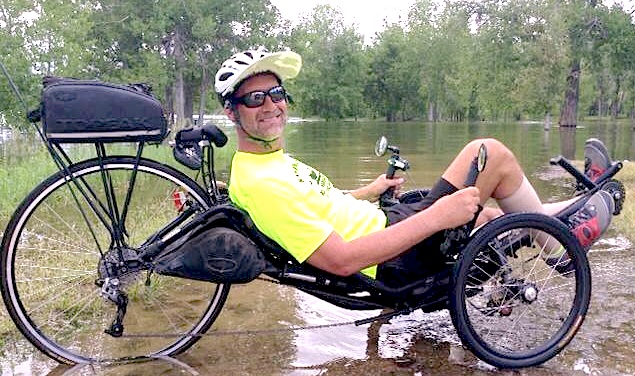
My passion is riding trike 170-220 miles each week.
I love to ride triking! My trike Catrike 700. Last year my tour – 5380 miles – started June 29 at WA State, ended Key West, FL, Nov. 29, 2014.

I am on tour now – “Rails to Trails” started June 1 to Oct. 1.

www.spokesfightingstrokes.org

Watch my video, please. Filmed two years ago. I am talking much better now.

Zimmerman, Dan Survivor 071015

I had stroke 9 3/4 yrs ago. Dr told me that I’d be in wheelchair for life and no talking.
They were wrong. I am walking and talking. Although, my writing and spelling is affected a little, so patience would be appreciated in that area. I have taught myself how to spell again.
DanTrikeMan

To learn more about Dan, please click on the link.

On the Air: Brain Injury Radio Interview with Catherine (Cat) Brubaker and Dan Zimmerman Another Fork in the Road: Catherine and Dan’s Reflections – Triking Across America

Disclaimer: Any views and opinions of the Contributor are purely his/her own.

(Clip Art compliments of Bing.)

(Photos compliments of contributor.)

As I say after each post: Please leave a comment by clicking the blue words “Leave a Commentanim0014-1_e0-1 below this post.

Feel free to follow my blog. Click on “Follow” on the upper right sidebar.

If you like my blog, share it with your friends. It’s easy! Click the “Share” buttons below.

If you don’t like my blog, “Share” it with your enemies. I don’t care!

Feel free to “Like” my post.
SPEAK OUT! NewsBit . . . . . . . . . . . National Hockey League Player Retires at 24 Because of Concussions

National Hockey League Player Retires at 24 Because of Concussions

presented by

Donna O’Donnell Figurski

newsboy-thFootball and hockey are the two sports that are responsible for the majority of concussions in athletes. A concussion is now known to be a brain injury and can be serious. More and more people are becoming aware of the possibility that a concussion may lead to a major life-change.Capitals_Predators_Hockey-09eb6

Previously I wrote about Chris Borland, a starting rookie linebacker for the San Francisco 49ers in the NFL (National Football League) who quit after one season because of his concerns about brain injury.

Now, Patrick Wey is quitting the Washington Capitals in the NHL (National Hockey League) at a young age (24) 185618_ebbecause he had two concussions in 2014. Wey plans to substitute “educational interests” for hockey.

(Clip Art compliments of Bing.)

As I say after each post:

Please leave a comment by clicking the blue words “Leave a Comment” below this post.anim0014-1_e0-1

Feel free to follow my blog. Click on “Follow” on the upper right sidebar.

If you like my blog, share it with your friends. It’s easy! Click the “Share” buttons below.

If you don’t like my blog, “Share” it with your enemies. I don’t care!

Feel free to “Like” my post.
SPEAK OUT! Faces of Brain Injury “Maria King”

 SPEAK OUT! Faces of Brain Injury – Maria King

presented by

Donna O’Donnell Figurski

 Brain Injury is NOT Discriminating!

facesOn a beautiful day, I went on a bike ride with some friends near San Francisco. The plan was to climb Mt. Tamalpais and even ride to gems like the Alpine Dam.

I loved cycling, but it wasn’t my life. I was a recent college graduate devoted and dedicated to working as a teacher in my hometown. I planned on going home to finish lesson-planning and grading after my morning bike ride. graphics-cycling-473021

I didn’t expect to crash while descending to the Alpine Dam – lacerating my kidney, getting a brain hematoma, and breaking my wrist. The crash also resulted in severe brain trauma – something that I and many of my friends don’t have enough awareness of. I don’t remember anything at all injury-clipart-kid-head-injury-sketch18385136from the downhill section that changed my life to most things that occurred to me and around me the following month. My senses of time, identity, personality, values, education, and motivation all temporarily left. The doctors in the ICU (intensive care unit) weren’t sure if I’d survive. All I can remember from the experience is being alive, but not feeling like myself.

When I finally went home from the hospital, I had a natural high from rediscovering life and surviving, despite all the “what ifs.” As I began to feel more like myself, I started feeling angry, disappointed, and guilty in regards to myself and the accident. It isn’t easy living with all these uncertainties, since I somewhat had a “plan” for my life. But, I survived, and I’m going to continue fighting the good fight.

Disclaimer: Any views and opinions of the Contributor are purely his/her own.

(Clip Art compliments of Bing.)

(Photos compliments of contributor.)

As I say after each post: Please leave a comment by clicking the blue words “Leave a Commentanim0014-1_e0-1 below this post.

Feel free to follow my blog. Click on “Follow” on the upper right sidebar.

If you like my blog, share it with your friends. It’s easy! Click the “Share” buttons below.

If you don’t like my blog, “Share” it with your enemies. I don’t care!

Feel free to “Like” my post.
SPEAK OUT! NewsBit . . . . . . . . . . . Depression Reversed in Mice

Depression Reversed in Mice

presented by

Donna O’Donnell Figurski

newsboy-thNOTE: This news is especially important for young brain-injury survivors because clinical application may take 10-20 years.

In a major advance in basic research of the brain, neuroscientists were able to reverse depression in mice by activating neurons storing a positive memory. The work was done by a team of brain scientists headed by Massachusetts Institute of Technology (MIT) Professor and Nobel Laureate, Dr. Susumu Tonegawa. This work on depression extended Dr. Tonegawa’s earlier work, on which I reported previously. The current research was done at the RIKEN-MIT Center for Neural Circuit Genetics.

The experiments were done on mice. (I have previously written why mice are good first models for humans.) Dr. Tonegawa’s team was able to use light to activate cells of the dentate gyrus, a part of the hippocampus – the area of the brain where memories are stored. They also showed that tagging a memory with a positive or negative feeling involved a pathway composed not only of neurons of the dentate gyrus, but also of neurons in two other areas of the brain: the nucleus accumbens and the basolateral amygdala.mouse-clipart-5

(The use of light to activate specific neurons is a powerful and relatively recent method called “optogenetics.” The mice are genetically engineered to allow the neurons that made new memories to be turned on by light. The light is supplied by implanting optical fibers near the desired neurons, in this case in the dentate gyrus of the mouse brain, and shining light from a laser through the fibers.)

When neurons storing a positive memory were light-activated in mice that showed the symptoms of depression, the mice no longer acted depressed. The depression had been reversed by turning on those neurons. Briefly activating the neurons storing a positive memory for five days and then stopping the trigger of activation (light) was also effective in reversing depression. This shows that the positive-memory neurons do not need to be continuously activated.

Current therapeutic drugs for the treatment of depression in humans act on all neurons of the brain. It is hoped that eventually drugs will be designed for specific neurons. Another approach to stimulate specific neurons is to use a kind of “pacemaker” that could be implanted in the brain. Such treatments would have fewer side effects. (Full story)

(Clip Art compliments of Bing.)

As I say after each post:

Please leave a comment by clicking the blue words “Leave a Comment” below this post.anim0014-1_e0-1

Feel free to follow my blog. Click on “Follow” on the upper right sidebar.

If you like my blog, share it with your friends. It’s easy! Click the “Share” buttons below.

If you don’t like my blog, “Share” it with your enemies. I don’t care!

Feel free to “Like” my post.

On The Air: Brain Injury Radio “Another Fork in the Road” . . . Panel Discussion – “All Disabilities Are Not Visible”

On The Air: Brain Injury Radio “Another Fork in the Road”

Panel Discussion – “All Disabilities Are Not Visible”

Panel Members – Catherine (Cat) Brubaker, Julie Kintz, and Juliet Madsen

with Host, Donna O’Donnell Figurski

presented

by

Donna O’Donnell Figurski

images-1Brain Injury survivors, Catherine (Cat) Brubaker, Julie Kintz, and Juliet Madsen discussed many issues that surround their lives as brain injury survivors who look “normal.”

Cat Brubaker Survivor Panel 070515Cat Brubaker is a two-time traumatic brain injury survivor and the founder of “Hope For Trauma.” Also, in the summer of 2014, Cat rode her recumbent trike Across America (diagonally) to raise awareness for brain injury.

Julie Kintz Survivor Panel 070515When Julie Kintz‘s car went off a cliff in California in 1991, she got a brain injury. Julie is a former Brain Injury Radio Network host.

Juliet Madsen UniformTroop, Juliet Madsen, got her brain injury while serving her country in Iraq. Juliet is a member of the Board of Directors of R4 Alliance and is a master quilter. You can see some of her work at “Stroke of Luck Quilting.”

If you missed this panel discussion about “invisible” brain injury on “Another Fork in the Road” on July 5th, you can listen to the archived show here. Click the link below to listen to Cat, Julie, Juliet, and me.

See you “On the Air!”

On The Air: Brain Injury Radio “Another Fork in the Road” Panel Discussion – “All Disabilities Are Not Visible”

Click here for a list of all “Another Fork in the Road” shows on the Brain Injury Radio Network.

“Another Fork in the Road” . . . Brain Injury Radio Network . . . Panel Discussion – “All Disabilities Are Not Visible”

YOU ARE INVITED!

Panel Discussion – “All Disabilities Are Not Visible”

Panel Members – Catherine (Cat) Brubaker, Julie Kintz, and Juliet Madsen

with host Donna O’Donnell Figurski

putthis_on_calendar_clip_art

Catherine (Cat) Brubaker, Julie Kintz, and Juliet Madsen join host Donna O’Donnell Figurski to discuss the many problems that surround their lives as brain injury survivors who look “normal.”

People easily understand the implications arising when someone suffers a broken limb or is diagnosed with cancer or is physically disabled. But, when someone is living with an “invisible” brain injury, folks find it difficult to comprehend. They don’t understand the seriousness of memory loss, confusion, lack of organizational skills, bursts of anger, or lack of emotions. “Get over it!” “That happens to me too,” and “Oh, I know what you mean….” are some of the phrases that are commonly heard by brain injury survivors, and they’re infuriating. Such a phrase is a big, red flag that shouts that the friend, family member, or loved one simply does not understand what his or her survivor is going through. Cat, Julie, and Juliet will address this topic. They hope to help others understand more clearly what it means to live with a brain injury while looking “normal.”

Cat Brubaker Survivor  Panel 070515Cat Brubaker is a two-time traumatic brain injury survivor and the founder of “Hope For Trauma.” Also, in the summer of 2014, Cat rode her recumbent trike Across America (diagonally) to raise awareness for brain injury.

Julie Kintz Survivor Panel 070515When Julie Kintz‘s car went off a cliff in California in 1991, she got a brain injury. Julie is a former Brain Injury Radio Network host.

Juliet Madsen UniformTroop, Juliet Madsen, got her brain injury while serving her country in Iraq. Juliet is a member of the Board of Directors of R4 Alliance and is a master quilter. You can see some of her work at “Stroke of Luck Quilting.”

Come One! Come ALL! 

What:        Panel Discussion Topic – “All Disabilities Are Not Visible”

Why:        Cat, Julie, and Juliet will discuss how “Invisible” brain injury affects their lives.

Where:     Brain Injury Radio Network

When:       Sunday, July 5th, 2015

Time:         5:30p PT (6:30p MT, 7:30p CT, and 8:30p ET) 80 minute show

How:         Click: Brain Injury Radio Network

Call In:    424-243-9540

Call In:     855-473-3711 toll free in USA

Call In:    202-559-7907 free outside USA

or SKYPE

If you miss the show, but would like to still hear the interview, you can access the archive on On Demand listening. The archived show will be available after the show both on the Brain Injury Radio Network site and on my blog in “On the Air.”

(Clip Art compliments of Bing.)

(Photos compliments of panelists.)

SPEAK OUT! . . . . . . . . . . . . . . . . Itty-Bitty GIANT Steps

SPEAK OUT! Itty-Bitty GIANT Steps

presented by

Donna O’Donnell Figurski

Itty-Bitty GIant Steps for BlogSPEAK OUT! Itty-Bitty Giant Steps will provide a venue for brain-injury survivors and caregivers to shout out their accomplishments of the week.

If you have an Itty-Bitty Giant Step and you would like to share it, just send an email to me at neelyf@aol.com.

If you are on Facebook, you can simply send a Private Message to me. It need only be a sentence or two. I’ll gather the accomplishments and post them with your name on my blog approximately once a week. (If you do not want your last name to be posted, please tell me in your email or Private Message.)

I hope we have millions of Itty-Bitty Giant Steps.

Here are this week’s Itty-Bitty GIANT Steps

Runners+-+Cartoon+4Jeffrey Smallwood (survivor)…This month is Brain Injury Awareness Month in Canada. Last weekend, I ran my first 5K run. marathon_race_male_runner_5k_bumper_sticker-r9dbbd0f42d254ebb8b5c309ad75f5967_v9wht_8byvr_324I did it for brain injury awareness. My local organization raised over twelve thousand dollars, which will continue to fund our clubhouse. My running is not pretty, as I’m a fat guy. I still felt the burn two days later. This was big for me, as I’ve done something I’ve never done before. A shout-out to all my fellow Canadian brain injury survivors!

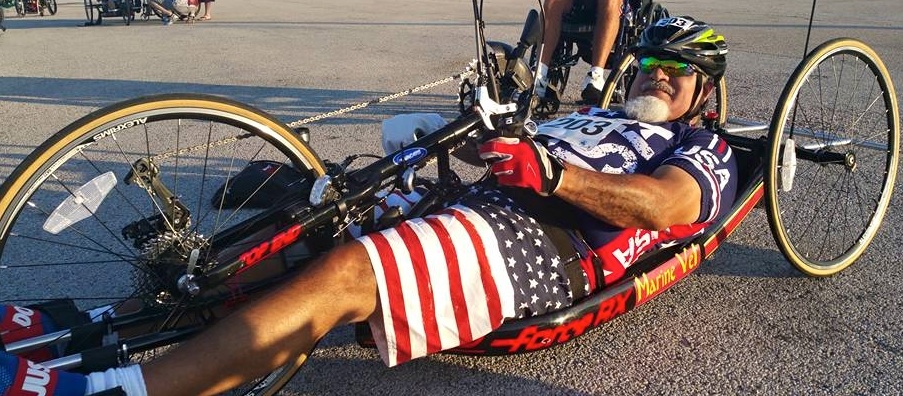
Dave Villarreal SurvivorDave Villarreal (survivor)…Dave Villarreal joined the competition at the National Veterans Wheelchair Games at the Kay Bailey Hutchison Convention Center in Dallas, Texas. 11252643_481277165373324_6491726304375694714_nIn this week-long event (June 21–26), Dave took part in many events, including shot put, javelin, handcycling, archery, and rifle shooting.

He is the proud recipient of two medals. He won a silver medal in shooting and a gold medal in archery!

And, he came in the top five for handcycling! Dave Villarreal Survivor 2He says, “That was my best race yet. What an awesome rush!” Dave’s advice: “Get out and LIVE your life. Have fun.”

YOU did it!

Congratulations to all contributors!

(Clip Art compliments of Bing.)

(Photos compliments of contributor.)

As I say after each post:anim0014-1_e0-1

Please leave a comment by clicking the blue words “Leave a Comment” below this post.

Feel free to follow my blog. Click on “Follow” on the upper right sidebar.

If you like my blog, share it with your friends. It’s easy! Click the “Share” buttons below.

If you don’t like my blog, “Share” it with your enemies. I don’t care!

Feel free to “Like” my post.

Caregivers SPEAK OUT! . . . . . Kendra Brittain

Caregivers SPEAK OUT! – Kendra Brittain

presented

by

Donna O’Donnell Figurski

Kendra Brittain 2 Survivor 0423151. What is your name? (last name optional)

Kendra Brittain

2. Where do you live? (city and/or state and/or country) Email? (optional)

Sapulpa, Oklahoma, USA     brittainhome@yahoo.com

3. What is the brain-injury survivor’s relationship to you? How old was the survivor when he/she had the brain injury? What caused your survivor’s brain injury?

My TBI (traumatic brain injury) survivor is my son. He was about 13 when his injury happened. He was playing football and got hit on both sides of his helmet. This caused a severe concussion. No one knew what was going on at that time. Of course, both the coach and we let him keep playing any sport out of not knowing what happened to him. As a result, his injury did not have time to heal.

4. On what date did you begin care for your brain-injury survivor? Were you the main caregiver? Are you now? How old were you when you began care?

I immediately took him to a seizure-doctor because I suspected his juvenile epilepsy had come back. But, it was very different. Nothing showed up on what was wrong with him until six months later. My son’s concussion was around 2008. I was 37 when his injury occurred. My son is now 18, and he is mostly unable to take care of himself.

5. Were you caring for anyone else at that time (e.g., children, parents, etc.)?

My husband and I were taking care of our daughter in addition to our son.

6. Were you employed at the time of your survivor’s brain injury? If so, were you able to continue working?

No, I wasn’t working. I had been injured at work, which left me disabled. So, I wouldn’t have been able to work anyway. But, I was able to care for my son better.

7. Did you have any help? If so, what kind and for how long?

My husband helped me a lot when he could. Other than that, I didn’t have any help.

8. When did your support of the survivor begin (e.g., immediately – in the hospital; when the survivor returned home; etc.)?Brittain, Tyler Survivor 2 042315

My husband and I helped our son immediately by taking him to the doctor.

9. Was your survivor in a coma? If so, what did you do during that time?

No, my son wasn’t in a coma, but he lost all memory of before the accident and the week of the injury. He can’t remember his childhood at all.

10. Did your survivor have rehab? If so, what kind of rehab (i.e., inpatient and/or outpatient and occupational, physical, speech, and/or other)? How long was the rehab? Where were you when your survivor was getting therapy?

My son did have to do a lot of physical therapy for his back because he developed a syrinx due to the injury. (A syrinx results when cerebrospinal fluid, which normally flows around the spinal cord and brain and transports nutrients and waste products, collects in a small area of the spinal cord and forms a pseudocyst.)

11. What problems or disabilities of your brain-injury survivor required your care, if any?

My son needs constant reminders to do stuff because his memory isn’t very long. He requires reminders to take his medicine. Because his depression was so great, we had to give it to him.

12. How has your life changed since you became a caregiver? Is it better? Is it worse?

My son’s brain injury has made life better because we are closer as a family, and it made us realize what is important in life.

13. What do you miss the most from pre-brain-injury life?

My son loved sports, and we loved to watch him play. But, because of his memory, no one will give him a chance – not even to play basketball, which he is good at and enjoys. He really misses playing too, so he has had to find enjoyment someplace else.

14. What do you enjoy most in post-brain-injury life?

I enjoy our family life and the closeness we have as a family. I would not change it for the world.

15. What do you like least about brain injury?

I dislike all the struggles my son has to go through and the limitations he has that no one can see by looking at him. I also dislike when he has a seizure and I can’t do anything about it.

16. Has anything helped you to accept your survivor’s brain injury?

I’ve been helped by my faith in God’s wisdom and knowing He can heal anyone.

17.  Has your survivor’s injury affected your home life and relationships and, if so, how?

We are a closer family than ever before.

18. Has your social life been altered or changed and, if so, how?

No, not really.

Brittain, Tyler Survivor 04231519. What are your plans? What do you expect/hope to be doing ten years from now?

My son got his driver’s license. He’s graduating high school and then heading to college to learn about computers. He will have a job that he went to school for – doing what he wants to do.

20. What advice would you offer other caregivers of brain-injury survivors? Do you have any other comments that you would like to add? 

Don’t give up – even though your circumstances may look dim. There is hope in life and in God. There is a better plan for your life in the future. God will make something good out of something bad. Also, if you know your child or your survivor and you know that something is not right and you feel that what the doctors say doesn’t make sense, get a second opinion and pursue it. We did that, and my son is ten times better.


Disclaimer: Any views and opinions of the Contributor are purely his/her own.

(Clip Art compliments of Bing.)

(Photos compliments of contributor.)

As I say after each post: Please leave a comment by clicking the blue words “Leave a Commentanim0014-1_e0-1 below this post.

Feel free to follow my blog. Click on “Follow” on the upper right sidebar.

If you like my blog, share it with your friends. It’s easy! Click the “Share” buttons below.

If you don’t like my blog, “Share” it with your enemies. I don’t care!

Feel free to “Like” my post.

diemodi jewelry

uniquely hand-crafted jewelry by donna

Welcome to Harmony Kent Online

The home of all things books

Pete Springer

Passionate Teacher and Future Children's Author

HOPE TBI

Helping Other People Excel - To Be Independent

For the Love of Books, Old and New

Katie Fischer, Writer and Reader of Stories

Charlie Bown

Children's Author

Jessica Hinrichs

“We write to taste life twice, in the moment and in retrospect.” ― Anais Nin

VIVIAN KIRKFIELD - Writer for Children

Picture Books Help Kids Soar

Mindy’s Writing Wonderland

For authors, parents, teachers & everyone who loves children’s books.

Kaitlyn Leann Sanchez

Literary Agent

Surviving Traumatic Brain Injury

TBI - Survivors, Caregivers, Family, and Friends

The Care Factor

Loving someone with a Traumatic Brain Injury

Brain Injury Support Group of Duluth-Extension

Brain Injury Information and SUPPORT

Brain Aneurysm Global Insight

Brain Aneurysm, cerebral hemorrhaging, hemorrhage stroke