TBI – Survivors, Caregivers, Family, and Friends

Posts tagged ‘https://survivingtraumaticbraininjury.com/’

Survivors SPEAK OUT! . . . . . . Ina M. Dutkiewicz

Survivors SPEAK OUT! Ina M. Dutkiewicz

presented

by

Donna O’Donnell Figurski
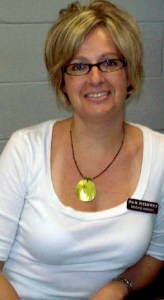
 

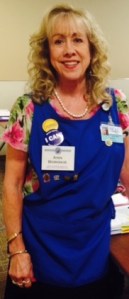
Dutkiewicz, Ina M. Survivor 041316

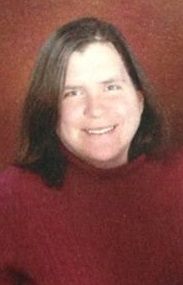
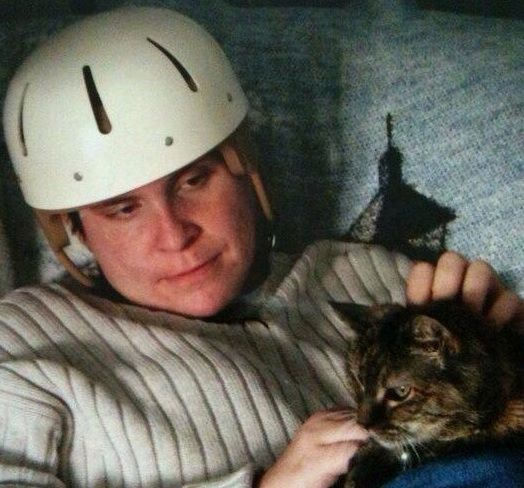
Ina M. Dutkiewicz – Survivor


1. What is your name? (last name optional)

Ina M. Dutkiewicz, pronounced “Ena”

2. Where do you live? (city and/or state and/or country) Email (optional)

Milford, Michigan, USA     inadutkiewicz@gmail.com

3. On what date did you have your brain injury? At what age?

I had my brain injury on February 3, 2010. I was 43 years old.

4. How did your brain injury occur?

While driving to work, I slid through a stop sign because of black ice. I was hit by a pickup truck.

5. When did you (or someone) first realize you had a problem?

I was immediately put into a coma.

6. What kind of emergency treatment, if any, did you have?

I was in the Neuro-Intensive Care Unit for three weeks. A feeding tube was in my belly, and an incision was made in my forehead (to relieve the pressure on my brain from bleeding, I think).

7. Were you in a coma? If so, how long?

Yes. I was in a coma for a total of four and a half weeks. My coma was not medically induced.

8. Did you do rehab? What kind of rehab (i.e., inpatient or outpatient and occupational and/or physical and/or speech and/or other)?

I started inpatient rehab for six weeks at a head injury place where I had to live (Origami in Mason, Michigan). Then I was able to transition to outpatient rehab. I still have to return daily for therapies and doctor appointments. I have done physical therapy, occupational, speech, and language therapies, driving therapy, and vocational therapy

How long were you in rehab?

I did rehab for a total of five years. I still do counseling every other week.

9. What problems or disabilities, if any, resulted from your brain injury
(e.g., balance, perception, personality, etc.)?

I have gait issues, memory problems, and word-finding difficulty. My personality changed. (I’m more docile – easy going – now.) My pelvis was broken on both sides from my seat belt, which means I have daily pelvis/hip pain. I have also had a headache every day since my car accident. Some days, they’re only pressure; others, pounding.

10. How has your life changed? Is it better? Is it worse?

My life has changed 100%. My husband divorced me a year after my car accident, so now I live with my mom. I do not work. I am on disability, which is barely enough to live on.

11. What do you miss the most from your pre-brain-injury life?Dutkiewicz, Ina M.car

I miss my friends.

12. What do you enjoy most in your post-brain-injury life?

I like that I am more laid back and not as serious.

13. What do you like least about your brain injury?

I dislike that I feel lost some days. I’m not working, and I don’t have anything worthy to put my hand to. My kids are now grown and living on their own. They have their own families. Also, my ex-husband has moved on to a girlfriend. It’s like I was left behind. 😦

14. Has anything helped you to accept your brain injury?

My Christian faith has been a HUGE help to me.

15. Has your injury affected your home life and relationships and, if so, how?

I have no friends from my past (pre-TBI) life. It is sad.

16. Has your social life been altered or changed and, if so, how?

My life has totally changed. I now spend my days with my mom – going to things she enjoys at the Senior Center. I am not really with people my age. While I enjoy the time with her, I long for age-appropriate friends.

17. Who is your main caregiver? Do you understand what it takes to be a caregiver?

My mom is my main caregiver. Yes, I realize how my TBI has changed her life. I know that she has had to give up things to support me.

18. What are your plans? What do you expect/hope to be doing ten years from now?

I really would like to get a part-time job in the future. My experience is with office work. I was an Executive Assistant before my car accident, helping with payroll and AP/AR (accounts payable/accounts receivable) on top of taking care of all correspondence that left the car dealership I worked at.
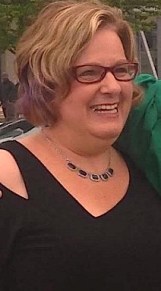
Dutkiewicz, Ina M. Survivor 2 041316

Ina M. Dutkiewicz – Survivor

I19. Are you able to provide a helpful hint that may have taken you a long time to learn, but which you wished you had known earlier? If so, please state what it is to potentially help other survivors with your specific kind of brain injury.

My helpful hint is that it is okay to be different. In a lot of cases, brain injury truly is an invisible disability. In outward appearance, we look “normal” (whatever that is). That means that we can easily blend in, but oftentimes it is hard to keep up. We need to find our own group of people to hang out with who understand where we are coming from and what we deal with on a daily basis. A support-group is a good place to start.

20. What advice would you offer to other brain-injury survivors? Do you have any other comments that you would like to add?

Don’t give up on yourself. Others can turn away and leave you, but your strength comes from you – no one can ever take that away from you. AND, you can rely on yourself to struggle through your low days and celebrate your victories!


(Disclaimer: The views or opinions in this post are solely that of the interviewee.)

If you would like to be a part of the SPEAK OUT! project, please go to TBI Survivor Interview Questionnaire for a copy of the questions and the release form.

(Clip Art compliments of Bing.)

(Photos compliments of contributor.)


As I say after each post:

Feel free to leave a comment by clicking the blue words “Leave a Comment” below this post.

Please follow my blog. Click on “Follow Me Via eMail” on the right sidebar of your screen.anim0014-1_e0-1

If you like my blog, click the “Like” button under this post.

If you REALLY like my blog, share it intact with your friends. It’s easy! Click the “Share” buttons below.

If you don’t like my blog, “Share” it intact with your enemies. That works for me too!

Another Fork in the Road Behavioral and Emotional Changes After Brain Injury

Fork in the Road copy“Another Fork in the Road”

This category is an extension of my radio show, “Another Fork in the Road,” which airs at 5:30 pm (Pacific Time) on the 1st and 3rd Sundays of each month on the Brain Injury Radio Network. (See the “On The Air Show Menu” category for a list – with links – of all my shows, which are archived and thus always available.)

On the 1st Sunday of each month, I host a panel of brain injury survivors, caregivers, and/or professionals in the field. On these shows, my panelists and I examine topics pertaining to brain injury.

On the 3rd Sunday of each month, I host guests – brain-injury survivors, caregivers, or professionals in the field.

Since I spend countless hours in preparation for each show, I decided to share the knowledge that I gather with my readers.


Behavioral and Emotional Changes After Brain Injury

by

Donna O’Donnell Figurski


BrainAs many of us know, all brain injuries are different. When an injury has happened to any part of the brain, there is going to be a change. The part of the brain that was damaged will determine the kind of symptoms that will be experienced. Because the brain is a complex organ in which different areas communicate, some damage may cause unexpected behaviors or emotional changes.

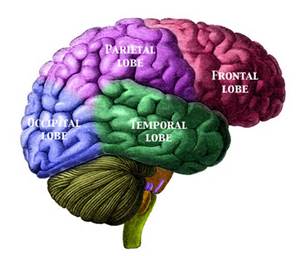
There are several sections of the brain, and each is responsible for many different aspects of daily life. Here I will discuss some of the behavioral and emotional changes that can result from damage to the cerebellum and to the cerebrum, which consists of the temporal lobe, the occipital lobe, the parietal lobe, and the frontal lobe, a major part of which is the prefrontal cortex.

The cerebellum, which is at the base of the skull, controls coordination, balance, equilibrium, and motor-skill memory. Some of the problems that result from damage to this area are compromised balance or the inability to walk, problems with fine-motor skills, and slurring of speech.

Damage to the temporal lobe can cause problems with hearing, memory, and motor-skill memory. Injury in the temporal lobe may also result in aggressive behavior.

The occipital lobe has to do with vision and vision-related activities. Reading and writing will be affected by damage to this area of the brain. Vision impairment can occur, which includes blurry, tilted, and double vision.

The parietal lobe is responsible for touch perception and the interpretation of visual information. Problems that may occur with damage to this lobe include difficulty in naming objects, difficulty with reading and/or writing, and spatial perception problems that can affect coordination.

Emotional responses and expressive language are housed in the frontal lobe. Emotions and the skills for problem-solving are dealt with there. The frontal lobe helps folks make sense of the world around them. It’s needed to understand others and be empathetic to them. Essentially, the frontal lobe is the emotional and social control area. It also determines and steers personality.

The prefrontal cortex of the frontal lobe controls analytical thinking, thought analysis, and behavior regulation. Executive functions are controlled here too. The prefrontal cortex is the gateway for making good decisions. When this area is injured, the thinking process is affected in such a way that inappropriate behavior is often the result.


I asked the following three questions of brain-injury survivors on the brain-injury support-group sites on Facebook to which I belong:

How have your emotions or your behaviors changed after your brain injury?

How do you cope with the change?

How do family members and/or friends cope with the change in your personality?

Several site members answered. The answers below are typical of the comments I received. (I used first names to protect the privacy of the contributors.)


Sherrie (survivor)

Happy SadIt’s been a long time since my brain injury. My emotions can be extreme or opposite to what they should be. Change is hard, and I don’t like change. Friends left, and family has never accepted my brain injury.

I have been known to laugh when someone gets hurt, like mashing a finger, and my emotions can be so overwhelming that I cry no matter the feeling. Happy, sad, proud, mad, love. It doesn’t matter.


Toby (survivor)

Toby told me that it’s hard to cope with his migraines with brain injury because a lot of meds don’t work very well.

He has been put on many meds for depression and anxiety disorder.

MemoryHe also says his memory is damaged, and he can’t remember a lot of things.

Toby’s family has a hard time with him and his brain injury because it changes many things in their lives too. A lot of people don’t know what to say, so they hold back, or they do not talk with Toby anymore.

Toby tries to cope by getting his head in a better place, but when the anxiety kicks in hard, he has no idea what to do. He tries to get some things set up in advance, so he can take the Migraineright meds before another migraine comes on. (He usually experiences over twenty migraines a month.)

When I asked Toby how his family and friends cope with him and his brain injury, he said, “They stay away from me. If I make a mistake on the computer or the Internet, they will call my wife and give her a heads-up on my condition. I don’t really have any friends after what happened to me.”


Jason (survivor)

k0184684In a nutshell, Jason said, “Lack of love.”


I thought an article by Janet Cromer in “Psychology Today” was very informative, especially for caregivers, who often struggle with emotional and/or behavioral changes in the survivor. The article can be found online (see below).

Janet Cromer, who is a Registered Nurse, has written the “Dark Side of Personality Change.” She tells of how her husband’s personality changed after his brain injury. Before his brain injury, Janet recalls her husband (Alan) as being kind and loving with a keen sense of curiosity and humor. Calm ManAfter his injury, Alan experienced intense anger and confusion. His bizarre behavior and sudden change from calm to fiery led Janet to believe her post-injury husband had two personalities. She likened Alan’s behavior to that of Dr. Jekyll and Mr. Hyde, which she found very frightening. (I’m sure Janet is not alone in her fears. I have heard comments such as these in my brain-injury support-groups too many times to count.)

As I mentioned above, injuries to the frontal lobe, especially to the prefrontal cortex, often result in emotional and behavioral changes in survivors. Survivors of any brain injury may find themselves in states of agitation and in unstable emotional chaos. These states can cause outbursts of unintended verbal aggression and raging attacks on family or friends, which can be very hurtful. Though family and friends may try to understand and to be empathetic and helpful, dealing with an unexpected outburst can be an overwhelming task because it is so hard to comprehend.

Violent outbursts and aggression by the survivor can result in the lack of trust and possibly fear of personal injury by the caregiver, family, or friends. But I think it’s the lack of trust – knowing that the survivor can become volatile at any time – that is the scariest and most hurtful. That loss of the sense of security is likely to be the most devastating.


How can caregivers, family, and friends help? I guess understanding would be at the top of the list. I know that’s not easy, especially if one feels that he or she has been unjustly attacked. Even knowing that the survivor is not responsible, would not act this way pre-brain injury, and will probably feel really bad after the incident, it will still be difficult to accept the aberrant behavior. It’s human nature.

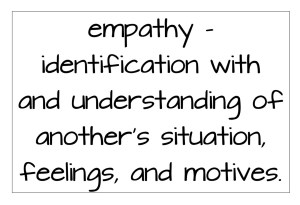
empathyThe caregiver, family, and friends need to understand that the survivor’s outburst may occur because of his or her frustration with the reality of the new life – lacking the ability to do the things he or she once did easily and/or experiencing loss of independence and/or the realization of a futile situation. Also, an outburst might be triggered by uncontrolled pain, depression, or any number of ailments. So, showing compassion or empathy, providing comfort, support, and encouragement will go a long way to helping your survivor.


What can one do when faced with irrational behavior by the survivor? It often helps to leave the area when an outburst begins. Don’t try to reason with the survivor – your efforts will probably not be fruitful. Remember, the survivor’s brain is injured, and he or she can’t help the aberrant behavior. It might help to talk about the behavior in a calm manner after the incident has subsided, or … maybe let it go.

Try to determine if there is a specific trigger for the outburst. If one is identified, try to avoid those situations that provide it. At the very least, knowing the trigger can help the caregiver, family member, or friend understand a little more. As time goes by, the caregiver and the survivor may each recognize the triggers and be able to eliminate them or lessen their impact.gg60887323


Identify the survivor’s actions immediately prior to an outburst. Does the survivor show signs of agitation, tense his or her muscles, or become distracted? If so, take note and maybe remove the survivor from the area. Large groups of people (as in malls, family gatherings, or parties) can often cause agitation in a survivor, which in turn may cause an outburst.

Any overwhelming situation can bring about an outburst. Having to be ready to leave the house at a certain time can cause stress. So allow more time. Don’t rush.

Give plenty of notice for planned events. Make sure there are no surprises. If a survivor knows in advance that there is a family gathering to go to on Friday night, then he or she can plan for it. Surprises and unexpected events often cause anxiety and confusion, which can easily bring on an outburst. So plan ahead.


ClipArt-AfterTheFire7Get counseling. Counseling for both the survivor and the caregiver (or family member) can be helpful. Visiting a neuropsychologist or a behavioral therapist can help (see below). They are able to teach compensatory tactics to avoid or lessen the effects of an angry outburst. The survivor may employ deep breathing, alter thoughts to a more pleasant topic, leave the area to regroup in a quiet place, let friends know the trigger points, and ask for help. Periodic reminders can help those who struggle with memory. These are all simple and effective ways to compensate.

There are a lot of little tricks that can be incorporated into the lives of survivors and their caregivers, family, or friends that can make life easier for all.


Helpful Links

What Does a Neuropsychologist Do, Exactly?

Who Are the Rehab Specialists?

Cerebellum

Frontal Lobes

Parietal Lobes

Temporal Lobes

Occipital Lobes

What Are the Functions of the Prefrontal Cortex?

After Brain Injury: The Dark Side of Personality Change Part I by Janet M. Cromer RN, LMHC


Click here to listen to my show

“Behavioral and Emotional Changes After Brain Injury” on “Another Fork in the Road,” on the Brain Injury Radio Network.”


(Clip Art compliments of Bing.)

As I say after each post: Please leave a comment by clicking the blue words “Leave a Commentanim0014-1_e0-1 below this post.

Feel free to follow my blog. Click on “Follow” on the upper right sidebar.

If you like my blog, share intact it with your friends. It’s easy! Click the “Share” buttons below.

If you don’t like my blog, “Share” it intact with your enemies. I don’t care!

Feel free to “Like” my post

Survivors SPEAK OUT! Ann Boriskie

Survivors SPEAK OUT! Ann Boriskie

presented

by

Donna O’Donnell Figurski


Boriskie, Ann Survivor 011116

Ann Boriskie – Survivor: Brain Injury Peer Visitor Association Director


1. What is your name? (last name optional)

Ann Boriskie

2. Where do you live? (city and/or state and/or country) Email (optional)

Alpharetta, Georgia, USA (a suburb of Atlanta, Georgia) aboriskie@braininjurypeervisitor.org

3. On what date did you have your brain injury? At what age?

November 12, 1998, at age 48

4. How did your brain injury occur?

My brain injury occurred in a car wreck less than five miles from home. I was headed to a regular dental checkup.

A woman was talking on her phone while driving, and she obviously missed her turn. She stopped suddenly, but I was able to stop my car and not hit her at all. She just sat there at the bottom of a hill on the two-lane road. She did not move. A young student (16 years old) came down the hill. He said he was messing with his radio and just did not see us. He hit my car going 50 mph and pushed my car into the woman’s car.

5. When did you (or someone) first realize you had a problem?

About 48 hours after my wreck, I started having concussion symptoms. I experienced dizziness and mental “fogginess.” I could not walk. There was bruising under my eyes. The toes on my right foot went numb. My left eye was out of focus.

6. What kind of emergency treatment, if any, did you have?

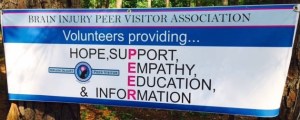
None. I walked away from the wreck thinking I was just fine. After 48 hours, I went to a 24-hour clinic, but they just sent me home. They told me I had no real problems and I would be fine. I also went to an eye doctor right away, but again, I was told there that nothing was wrong physically with my eye. Several months after my wreck, one neurologist told me that I had “post-concussion syndrome” and to go home – that I would be just fine. No one else mentioned my having a brain injury for one year. Then a dental TMJ specialist told me that I had a brain injury. That was what was causing my mental symptoms. (TMJ = temporomandibular joint)Peer Visitation Banner

7. Were you in a coma? If so, how long?

No

8. Did you do rehab? What kind of rehab (i.e., inpatient or outpatient and occupational and/or physical and/or speech and/or other)? How long were you in rehab?

My brain injury went undiagnosed for over a year. The physical therapy that I received was in relation to each of my physical injuries (see #9), especially to help after the surgeries that I had to have to repair the parts of my body that were injured.

9. What problems or disabilities, if any, resulted from your brain injury
(e.g., balance, perception, personality, etc.)?

a. My brain injury caused depression, anxiety, and anger (more so in the first several years). I had lots of memory issues. (I could not remember friends or faces. I got lost. I could not write. Then once I could write, I couldn’t write in cursive – I still can’t.) Some memory issues remain today. I permanently lost many of my past memories. (I can’t remember family events or experiences or places where we had lived. I lost memory of cities and our time there.) I lost a lot of my math skills (I was an A+ math student, and I was in advanced math classes), but I have regained many of these math skills.

b. My neck was injured. (The C4, C5, C6, and C7 vertebrae were knocked out of line.) I had to have neck surgery (for fusion and a metal plate holding these four levels together). My neck is in CONSTANT PAIN.

c. I had an injury to the L5 and S1 levels of my spine. (The last two vertebrae are not attached now to my spinal cord). Surgery was recommended, but my neck did not fuse properly, so I decided not to have back surgery. I am in CONSTANT PAIN in my lower back. The pain often radiates to my hips and legs.

d. I popped a tendon from its bone in my right elbow. (I braced my body on the steering wheel in the wreck.) It required surgery. The doctor said it was one of the worst tears he had ever seen.

e. Permanent nerve damage was created in various body areas.

f. The left part of my jaw was knocked out of line. It literally took years of appliance therapy to get the bone back into its correct place.

g. A valve was torn on the left side of my heart. This caused irregular heartbeats for a while. It repaired itself.

h. My left side remains weaker than my right side.

i. Numbness remains in my hands (which makes it harder to use my hands). I also have numbness in my feet, down my arms, and down my legs.

j. Sometimes my left eye will not focus or work well with my right eye.

k. I have a shorter attention span.

l. All of these physical injuries caused me to have fibromyalgia and constant body pains.

Boriskie, Ann Podium

Ann Boriskie – Survivor

10. How has your life changed? Is it better? Is it worse?

In the long run, I have to say my life is truly better. All three of our children are in the medical field. (My husband and I have raised one daughter, now a neonatologist who takes care of premature babies and helps the moms; raised a son, now a doctor of internal medicine who works as a hospitalist; and raised another daughter, now a Registered Nurse in a mental-illness hospital unit.)

My priorities changed in my life. I went from being a “work-oholic” and a person who was very competitive to a person who lives to help other people, including my family and friends.

I slowed down my life’s pace. I had to learn that I could no longer work at a full-time outside-the-home job. (For years, I could not work at all.) I also had to learn to take care of myself – due to all of the physical and mental problems that the wreck created.

I was at home, and thus I was “there” more for my children and husband. I was able to give them more help and more attention.

11. What do you miss the most from your pre-brain-injury life?

I miss my higher energy level. I miss many of my memories. I miss all of the physical sports and activities that I can no longer do (water skiing, snow skiing, kayaking, swimming, playing golf, etc.).

12. What do you enjoy most in your post-brain-injury life?Peer Visitor Banner

I enjoy running the Brain Injury Peer Visitor Association and being able to help thousands of brain-injury and stroke survivors throughout the United States and the world. I’ve done this each year since 2006.

13. What do you like least about your brain injury?

I dislike being in constant pain (which also affects my brain). I also dislike having to push myself more and having to work much harder to accomplish my goals and to do my work than I did prior to my wreck.

14. Has anything helped you to accept your brain injury?

  1. Helping other people helps me also.
  2. Sharing my experiences with others and listening to each brain-injury survivor’s problems (This helps me to better understand my own brain injury.)
  3. Attending support-groups (and being very open to sharing my own problems, experiences, successes, and methodologies)
  4. In the past, gaining the help of neuropsychologists
  5. Going to medical doctors who treat brain injury (e.g., a psychiatrist)

15. Has your injury affected your home life and relationships and, if so, how?

Yes. I am much more dedicated to my husband and three children. I treasure our relationships. I also treasure my friendships more. You really better understand that life is way too short and can change in a second.

16. Has your social life been altered or changed and, if so, how?

Yes. I no longer like to be in big crowds or in a noisy environment. Going to a party is now a struggle and sometimes a chore. I just avoid noisy places and huge crowds. This requirement definitely limits the activities in which I can participate.

17. Who is your main caregiver? Do you understand what it takes to be a caregiver?

My wonderful husband is my main caregiver. I am blessed that he “stuck it out” with me and helped me go through all of my physical and mental recoveries. He is also one of my biggest supporters – even financially supporting my association and approving of all of the volunteer hours that I dedicate to the Brain Injury Peer Visitor Association.

Boriskie, Ann Training in Florida Survivor 011116

Annn Boriskie – Survivor

18. What are your plans? What do you expect/hope to be doing ten years from now?

I plan to continue running the Brain Injury Peer Visitor Association as long as I possibly can. My dream is to continue to grow the association throughout the United States and even internationally.

I also plan to continue to enjoy and spend time with my immediate family and their families.

19. Are you able to provide a helpful hint that may have taken you a long time to learn, but which you wished you had known earlier? If so, please state what it is to potentially help other survivors with your specific kind of brain injury.

Accept your limitations, but continue to “push yourself” to improve. Realize that, even though you are different from the pre-TBI you, you are still a valuable person in the world. Let your “old self” go. Realize that person won’t be back. Embrace the “new you,” and learn to love yourself for who you now are. Remember that YOU CAN. Don’t defeat yourself by focusing on all of the things you can no longer do.

2011 Community Service Awards from WXIA 11

20. What advice would you offer to other brain-injury survivors? Do you have any other comments that you would like to add?

Help others. Get involved. Volunteer. By helping others with a brain injury, you truly help yourself in so many ways. You will help yourself get better, and you will gain confidence.


You can hear Ann Boriskie on my radio show, “Another Fork in the Road” at 5:30pm PT (6:30MT, 7:30CT, 8:30ET) on Sunday, January 17th on the Brain Injury Radio Network (BIRN)

Click here on Sunday 5:30pm Pacific Time. Another Fork in the Road: Ann Boriskie – Director of Brain Injury Peer Visitor 

You can call in to listen to the show or talk to the host by dialing this number. 424-243-9540

(Disclaimer: The views or opinions in this post are solely that of the interviewee.)

If you would like to be a part of the SPEAK OUT! project, please go to TBI Survivor Interview Questionnaire for a copy of the questions and the release form.

(Clip Art compliments of Bing.)

(Photos compliments of contributor.)

As I say after each post: Please leave a comment by clicking the blue words “Leave a Commentanim0014-1_e0-1 below this post.

Feel free to follow my blog. Click on “Follow” on the upper right sidebar.

If you like my blog, share it intact with your friends. It’s easy! Click the “Share” buttons below.

If you don’t like my blog, “Share” it intact with your enemies. I don’t care!

Feel free to “Like” my post.


SPEAK OUT! . . . . . . . . . . . . . Faces of Brain Injury – Amy Zellmer

SPEAK OUT! Faces of Brain Injury – Amy Zellmer

presented by

Donna O’Donnell Figurski

 Brain Injury is NOT Discriminating!

bigstock-cartoon-face-vector-people-25671746-e1348136261718It can happen to anyone, anytime, . . . and anywhere.

The Brain Trauma Foundation states that there are 5.3 million people in the United States living with some form of brain injury.

On “Faces of Brain Injury,” you will meet survivors living with brain injury. I hope that their stories will help you to understand the serious implications and complications of brain injury.

The stories on SPEAK OUT! Faces of Brain Injury are published with the permission of the survivor or designated caregiver.

If you would like your story to be published, please send a short account and two photos to me at neelyf@aol.com. I’d love to publish your story and raise awareness for Brain Injury.

Amy Zellmer (survivor)

Amy Zellmer 3 Survivor 101015They say a picture says a thousand words. It’s been nineteen months since I fell on a patch of ice and landed full-force on the back of my skull. I suffered a traumatic brain injury (TBI) plus whiplash, torn muscles in my neck, shoulder, and chest, and I also dislocated my sternum. What the photo doesn’t show is how I wasn’t able to do any exercise – even mild – for the first year. Just walking around the grocery store was enough to leave me spent for the rest of the day – let alone carrying in the bags of groceries. I am not exaggerating when I tell you that I lived pretty much in my bed or on the couch for over a year. I would do photography sessions a few times a week (because that’s my only form of income, and I had bills to pay) and pay the price for two days – icing my body and popping ibuprofen like it was candy. Even just six months ago, I couldn’t properly stand up straight – let alone do strength training. And let’s not forget about the horrible vertigo and balance issues that came with the TBI. But I finally decided that ENOUGH IS ENOUGH! It was time to DO SOMETHING – anything! So I started doing yoga for 10-15 minutes a day. At first it was hard – really hard. I could do only very basic, simple stretching poses. I would hold onto a chair for any pose that required standing so that I didn’t lose my balance. But you know what? IT HELPED! It started me on a path to gaining back my strength and endurance.Amy Zellmer Survivor 1 101015

AND NOW LOOK AT ME! I am working with a fab trainer. We are using weights and resistance to get my body back to pre-injury status. It feels so good to be able to walk standing fully upright, and have the strength to carry my groceries into the house. I feel absolutely amazing, and my symptoms are subsiding (the physical ones; Amy Zellmer 2 Survivor 101015the neurological ones are still present). I know it seems impossible when you’re in the darkest days after a TBI. I’ve completely been there. But, man, you take back control of your life when you finally start to step out of it and say, “F… Y.., TBI!” If I can do this, I know you can too!

(Clip Art compliments of Bing.)

(Photos compliments of contributor.)

As I say after each post: Please leave a comment by clicking the blue words “Leave a Commentanim0014-1_e0-1 below this post.

Feel free to follow my blog. Click on “Follow” on the upper right sidebar.

If you like my blog, share it intact with your friends. It’s easy! Click the “Share” buttons below.

If you don’t like my blog, “Share” it intact with your enemies. I don’t care!

Feel free to “Like” my post.

So, Whaddya Think? “Concussion” Now in Theaters

So, Whaddya Think?

“Concussion” Now in Theaters

by

David Figurski and Donna O’Donnell Figurski


(Note: This is our second opinion essay about Dr. Bennet Omalu and his research with brain trauma. The first was published on this blog on December 17th.)

So Whaddya Think Brain th-4The much-anticipated movie, Concussion (trailer), is making current and former players of American football, their families, parents, fans, and coaches think about what is really happening in a sport that has become a large part of American culture. The movie has the same goal as we in the brain-injury community have – greater awareness of the delicate Concussion Movie 2.jpgnature of the brain and the ramifications of brain damage. The movie was released on Christmas Day, but it has made much news before its release.

The movie, which unsurprisingly is not sanctioned by the National Football League (NFL), tells the true story of the Nigerian pathologist, Dr. Bennet Omalu, and his discovery of the relationship of a neurodegenerative disease, which Dr. Omalu named “chronic traumatic encephalopathy” (CTE), and American football. Dr. Omalu studied the brain of Hall-of-Fame center, Mike Webster,

MikeWebsternfl

Mike Webster – Pittsburgh Steeler Pro Football Hall of Fame

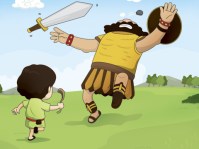
who died at age 50 homeless and with dementia. As shown in the Frontline documentary, League of Denial: The NFL’s Concussion Crisis (available free online), the movie shows how the multibillion-dollar NFL didn’t want to hear of Dr. Omalu’s discovery. The league’s questionable committee on concussions immediately attacked Dr. Omalu. It is a classic “David-vs.-Goliath” story.

David & Goliath.jpg

David & Goliath

(Dr. Omalu said in his Frontline interview, “You can’t go against the NFL. They’ll squash you.”) Former players have sued the NFL, arguing that the NFL knew of the dangers to the brain, but didn’t inform the players. In a class-action lawsuit, the NFL has recently settled for approximately $1 billion in medical expenses, but that settlement is being appealed by former players as inadequate.

Concussion Movie

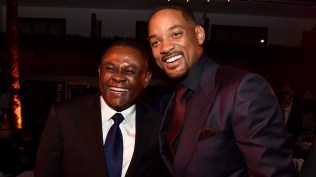
Dr. Bennet Omalu – pathologist – discovered CTE with Actor, Will Smith

Will Smith plays Dr. Omalu in Concussion. Will Smith, a former football fan whose son played high school football, recently admitted that he has not watched a full game of football since he made this movie. Peter Landesman, the movie’s director, played football into his sophomore year of college, but, knowing what he knows now, he would not let his children play the game.

The movie is a “must-see.” (video)


So, Whaddya Think?

Let’s get a dialogue going. Post your comments in the Comment Section. Directions are below.

So . . . what do you think? Is there something you are passionate about in this Brain Injury (BI) world? Do you want to be heard? Your opinion matters! You can SPEAK OUT! on “So Whaddya Think?”

Simply send me your opinion, and I will format it for publication. Posts may be short, but please send no more than 500 words. Send to Neelyf@aol.com

I hope to HEAR from you soon.

As I say after each post:

Feel free to leave a comment by clicking the blue words “Leave a Comment” below this post.

Please follow my blog. Click on “Follow Me Via eMail” on the right sidebar of your screen.anim0014-1_e0-1

If you like my blog, click the “Like” button under this post.

If you REALLY like my blog, share it intact with your friends. It’s easy! Click the “Share” buttons below.

If you don’t like my blog, “Share” it intact with your enemies. That works for me too!

(Clip Art compliments of Bing.)

Brain Injury Resources . . . . . . Will Smith’s Movie, Concussion, Based on True Story

Will Smith’s Movie, Concussion, Based on True Story 

presented

by

Donna O’Donnell Figurski

Brain th-2Concussion is scheduled to be in theaters in late December, but it is already making headlines (review and trailer). The National Football League (NFL) knows that its Achilles heel is the high risk of brain injury to its players, not only from documented concussions, which are likely to be far fewer in number than actual concussions, but also from the repeated sub-concussive hits, which many neurologists believe contribute to brain injury. Former players are concerned (video of the song Final Drive by former NFL star Kyle Turley), and current players are becoming concerned. Recently a promising rookie linebacker with the San Francisco 49ers quit after one season over the fear of brain injury.
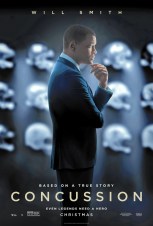
concussion-movie-nfl-20150903

Concussion

Concussion is based on the true story of the discovery of the brain disease known as chronic traumatic encephalopathy (CTE) by Dr. Bennet Omalu, a Nigerian pathologist who did the autopsy of Hall-of-Fame Pittsburgh Steelers center, Mike Webster. Dr. Omalu first saw CTE during his study of Webster’s brain. Webster was homeless, depressed, and suffering from dementia when he died at age 50. Dr. Omalu’s story, which is the basis of Concussion, is given in the PBS Frontline documentary League of Denial: The NFL’s Concussion Crisis. I urge everyone to watch the documentary before seeing Concussion. The 2-hour PBS documentary is available online at no cost. In Concussion, Will Smith plays Dr. Omalu.

Omalu & Smith

Dr. Bennet Omalu & Will Smith

This movie may change what you think about American football and the NFL. Knowing that brain disease is a major problem for the future of the game, the NFL tried to discredit Dr. Omalu and his provocative work. The NFL had previously established a questionable committee of doctors to study mild traumatic brain injuries (MTBIs), otherwise known as concussions. The NFL committee published papers claiming that MTBIs, even multiple MTBIs, were not a problem for players. (The conclusions are contradicted by current data. Also, some scientists question the validity of the published studies.)

NFL LogoDr. Omalu thought that the NFL would be very interested in his data. Instead, the NFL’s MTBI committee immediately attacked Dr. Omalu and his findings. At one point, the committee tried to get Dr. Omalu to retract the paper. Going against the multibillion dollar NFL has a steep price. Dr. Omalu has stated that he wishes he had never discovered CTE.
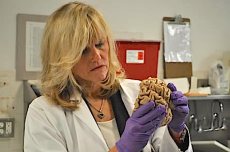

To date, CTE has been found in 88 of 92 autopsied NFL brains (1, 2). The currently accepted way that CTE is identified is by studying the brain postmortem. The major criticism of the postmortem analyses that were done is that the brains came from former players who already showed signs of brain disease. In other words, the claim is that the sample is biased. Dr. Ann McKee, a neuropathologist at Boston University’s CTE Center, studied most of the brains. She argues that the results would be extraordinary even in a biased sample.

AnnMcKeeMD1111

Dr. Ann McKee – neurolpathologist at Boston University

With a recent advance in technology, it seems that the bias criticism can soon be put to rest. Dr. Omalu is an author on a recent publication, in which neuroscientists from the University of California at Los Angeles (UCLA) and from the University of Chicago showed that CTE can be accurately diagnosed in a living person by a special PET (positron emission tomography) scan. If such scans were taken of all the current players, we would know if CTE is rare among players, as the NFL would like players and fans to believe, or if it’s relatively common, as Dr. Ann McKee believes.

Until that happens, we are left to decide about the risk of brain disease in players of American football on the basis of what we know. Concussion tells the little-known story of Dr. Omalu and the discovery of CTE. With this movie, we will be more informed and better able to evaluate the risk.

Omalu

Dr. Bennet Omalu – pathologist

As I say after each post:

Feel free to leave a comment by clicking the blue words “Leave a Comment” below this post.

Please follow my blog. Click on “Follow Me Via eMail” on the right sidebar of your screen.anim0014-1_e0-1

If you like my blog, click the “Like” button under this post.

If you REALLY like my blog, share it with your friends. It’s easy! Click the “Share” buttons below.

If you don’t like my blog, “Share” it with your enemies. That works for me too!


Survivors SPEAK OUT! Katey Ratz

Survivors  SPEAK OUT!  Katey Ratz

presented by

Donna O’Donnell Figurski

10887811_768025126566372_1831835211_n1. What is your name? (last name optional)

Katey Ratz

2. Where do you live? (city and/or state and/or country) Email (optional)

Milwaukee, Wisconsin, USA     KateyKat626@yahoo.com

3. On what date did you have your brain injury? At what age?

I had my first traumatic brain injury (TBI) in 2002 at age 22 and my second TBI in 2007 at age 28 (if I remember correctly).

4. How did your brain injury occur?

My first TBI occurred because I was getting electroconvulsive shock therapy. During my fifth treatment, I had a fifteen-minute seizure. I lost a lot of short-term memory. I have great long-term memory. My second TBI occurred when I thought I had epilepsy. I went to a neurologist. They did an EEG (electroencephalogram). They discovered left temporal lobe epilepsy and an aneurysm.

5. When did you (or someone) first realize you had a problem?

My fifteen-minute seizure happened January 21, 2002 – the day before my mom’s 50th birthday. As far as the second, I’m not sure.

6. What kind of emergency treatment, if any, did you have?

I’m not sure about my treatment for the emergency during electroconvulsive therapy. With the aneurysm, they removed a portion of my brain on the left side. Because they had to go through my skull, I now have a dent on my head.

7. Were you in a coma? If so, how long?

I don’t think so.

8. Did you do rehab? What kind of rehab (i.e., inpatient or outpatient and occupational and/or physical and/or speech and/or other)? How long were you in rehab?

I don’t think I officially did rehab. I am in a kind of rehab now. I go to the Milwaukee Center for Independence. It is for people with a brain injury. I go there three days a week. They have two groups a day and different groups every day.

9. What problems or disabilities, if any, resulted from your brain injury
(e.g., balance, perception, personality, etc.)?

I have a LOT of short-term memory loss. Like, I would call my mom and have a good conversation, hang up, and call her right back – forgetting that I had just spoken to her. And, my personality has been affected. I’m short-tempered – both with myself and with others.

10. How has your life changed? Is it better? Is it worse?

My life is both better and worse. I definitely don’t have the life I wanted. I have to rely on other people, which I hate. But, I am so lucky to be alive. My life is better because I am able to ask for help. I know I need it. Also, I am determined. And, my creative gift is outstanding. It’s my greatest strength. My life is worse because I can’t get the education I wanted. I cannot be a nurse or an occupational therapist. I wanted to be a labor and delivery nurse or a pediatric/adolescent occupational therapist specializing in psych.

11. What do you miss the most from your pre-brain-injury life?10872431_768025869899631_857990768_n

I miss that I had so many friends. I was very outgoing. I still am somewhat outgoing – I will talk to strangers in coffee shops. But, now my friendship is way down. I get emails, but like I call once a week, if that.

12. What do you enjoy most in your post-brain-injury life?

My creativity is strengthened. My poetry is awesome. I combine sonnets with acrostics, and away I go. Right now, I have over 1,250 fourteen-letter phrases for the acrostic part. I have them all in ABC order. I can go to a coffee shop for four hours and write several poems. It keeps me out of trouble. I listen to the church message and “take notes” by listening for a fourteen-letter phrase. Today it was “The Great Reward.”

13. What do you like least about your brain injury?

I miss the old Katey. I hate relying on others. I hate not being able to live on my own.

14. Has anything helped you to accept your brain injury?

Knowing that I am not alone has helped me accept my brain injuries. There are different levels of TBI. I mean, looking at me, you wouldn’t think I have a TBI. There are probably many more out there like me. I just have to accept that and know I am not alone.

15. Has your injury affected your home life and relationships and, if so, how?

I live in an apartment where there are caretakers, although they aren’t doing that great of a job. The caretakers are supposed to cook and help me clean, but they aren’t. They give me my allowance – I get my laundry money and $10 twice a week. As for relationships, my family is great. I love them so much! As for friends, I have a few, but only a couple really understand.

16. Has your social life been altered or changed and, if so, how?

My social life has changed. I go out, but I can’t be the old Katey. I can’t go to new places because I am afraid of getting lost. I have gotten lost a few times and had to call people for support. I want to join a bible study group, but I haven’t because of my fear of getting lost!

17. Who is your main caregiver? Do you understand what it takes to be a caregiver?

Like I said before, I live in an apartment where there are caretakers. There are a couple of them who pass out meds. At times, it frustrates me. They lay my meds out on a table at like 4 pm for bedtime, but I will forget to take them at bedtime. They need to give better care.

18. What are your plans? What do you expect/hope to be doing ten years from now?

I would so love to be back in school. If I only had all my brain! I would love to have a job helping people. I would love to be happily married and have kids.

19. Are you able to provide a helpful hint that may have taken you a long time to learn, but which you wished you had known earlier? If so, please state what it is to potentially help other survivors with your specific kind of brain injury.

I had an aneurysm. Yes, part of my brain is missing. But, I am still here and deserve to be. I deserve the help I need. And, I will gladly give back any help I can!

20. What advice would you offer to other brain-injury survivors? Do you have any other comments that you would like to add?

TBIs do take time. At times, there are great days. They may not last, but that does not equal failure. That is the TBI. The “T” in TBI stands for “traumatic” – but we still survived!Katey Ratz Survivor 061015


Thank you, Katey, for taking part in this interview. I hope that your experience will offer some hope, comfort, and inspiration to my readers.

(Disclaimer: The views or opinions in this post are solely that of the interviewee.)

If you would like to be a part of the SPEAK OUT! project, please go to TBI Survivor Interview Questionnaire for a copy of the questions and the release form.

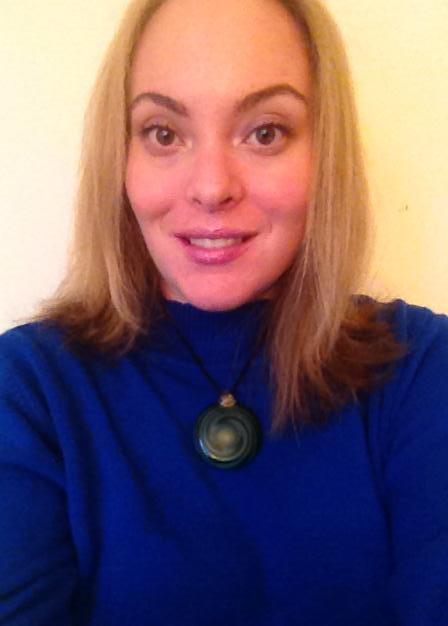
(Photos compliments of Katey.)

As I say after each post: Please leave a comment by clicking the blue words “Leave a Commentanim0014-1_e0-1 below this post.

Feel free to follow my blog. Click on “Follow” on the upper right sidebar.

If you like my blog, share it with your friends. It’s easy! Click the “Share” buttons below.

If you don’t like my blog, “Share” it with your enemies. I don’t care!

Feel free to “Like” my post.

Survivors SPEAK OUT! Lisa Dryer

Survivors  SPEAK OUT!  Lisa Dryer

presented by

Donna O’Donnell Figurski

11 Lisa Dryer Survivor 1 060115 281536_2048711670666_4659924_n1. What is your name? (last name optional)

Lisa Robin Dryer

2. Where do you live? (city and/or state and/or country) Email (optional)

Scottsdale, Arizona, USA     lisadryer@cox.net

3. On what date did you have your brain injury? At what age?

At birth

4. How did your brain injury occur?

I was born twelve weeks too early. The NICU (neonatal intensive care unit) nurse who was in charge of me was also taking care of another baby, whom she deemed sicker. Our emergency calls often had false alarms. In this case, the nurse only had to tap me on the foot so that I would start breathing again. But, I went into cardiac arrest, and I lost oxygen to my brain. It was this incident that caused my TBI (traumatic brain injury). As a child, I never knew it as such, but instead as a “learning disability.” When I was seven, we found out that I was having a seizure a minute, which also most assuredly inhibited my learning. I’ve always had motor-skill and spatial relationship issues as well. In college, I realized something else was wrong. In 2004, it grew worse. I was searching for a diagnosis, but I was degraded and shoulder-shrugged for years.05 Lisa Dryer Survivor 5 060115 1238881_10200476055050272_1657456156_n

5. When did you (or someone) first realize you had a problem?

Last year, a friend, Hanna, dragged me to a hospital. At the time, we were both living on the East Coast. We were nannying between acting jobs and reveling in the history of the Potomac River. It was just a fun spa weekend for two best friends. But, half of my body failed to function. I was stubborn and tried to walk it out. I had a complete distrust of doctors at this point, but Hanna dragged me to the Emergency Room. They thought I might be having a stroke. My symptoms on the CAT scan (computerized axial tomography; also called a “CT” scan for “computerized tomography”) showed an abnormal brain. When they told me that, I laughed and said, “I know that already! Tell me something I don’t know.” So, they sent me to Washington, D.C., for an MRI (magnetic resonance imaging), and faster than you can say “MS,” it was said!

6. What kind of emergency treatment, if any, did you have?

I don’t believe I had any treatments, but they certainly did some interesting testing on me!

7. Were you in a coma? If so, how long?

No. However, I have since been concussed several times.

19 Lisa Dryer Survivor 7 060115 10154056_10202572349343208_1951490992_n8. Did you do rehab? What kind of rehab (i.e., inpatient or outpatient and occupational and/or physical and/or speech and/or other)?

I have done inpatient rehab now twice, and I am currently doing outpatient rehab for the second time. I like to take pictures at rehab, so you can see some of my rehab and hospital journeys on my Facebook and Instagram accounts. I do physical, occupational, and speech therapies, and I’m supposed to be doing shoulder therapies.

How long were you in rehab?

Each visit was a month long, and I’ve had about three.

9. What problems or disabilities, if any, resulted from your brain injury
(e.g., balance, perception, personality, etc.)?

I have several issues: balance, sight, auditory, emotional, tactile, and sensory. I also have a problem with perception.

10. How has your life changed? Is it better? Is it worse?

This is a very hard question for me. I am the kind of person who likes to roll with the punches that life brings me. Right now, I think this must be where I am supposed to be and what I am supposed to be doing. I have met so many wonderful people who are really grateful that I am in their lives – being just the way that I am and wholly accepting me. That is a really beautiful thing. I really love that I can write about positivity in the face of adversity, that I have such a great response, and that I see that so many other beautiful communities are forming.

11. What do you miss the most from your pre-brain-injury life?

I miss my dog, and I miss my trailer. I miss acting.

12. What do you enjoy most in your post-brain-injury life?

I have to say I really like my friends – both online and those who have come out to meet me. I have a special place in my heart for them. I met my current boyfriend online. We started talking more in one of my groups. He asked if he could send me flowers. He then sent me cards. Then he flew from Cleveland, Ohio, to Arizona to take me on a date! I think the rest will be romance history in the TBI community!

13. What do you like least about your brain injury?08 Lisa Dryer Survivor 8 060115 10527549_10205510907245319_3908859801295010883_n

My back spasticity

14. Has anything helped you to accept your brain injury?

Learning to put a smile on and taking some deep belly-breaths have helped me.

15. Has your injury affected your home life and relationships and, if so, how?

Living with my mother again at 33 has been interesting. We have a very strong bond, but we are almost too close. We clash more than a bit. But, we have a lot of laughter and smiles too.

16. Has your social life been altered or changed and, if so, how?

I really don’t have a social life anymore.

17. Who is your main caregiver? Do you understand what it takes to be a caregiver?

My mother is my main caregiver. Until last year, I was sometimes a primary caregiver as a live-in nanny for children with disabilities. It was a job I loved. I also worked as a teacher at the Head Start program for the Los Angeles Unified School District and for needy children in other school districts.

1150365_10201334798525285_296956465_n18. What are your plans? What do you expect/hope to be doing ten years from now?

As John Lennon said, I’d like to be happy.

19. Are you able to provide a helpful hint that may have taken you a long time to learn, but which you wished you had known earlier? If so, please state what it is to potentially help other survivors with your specific kind of brain injury.

I have three recommendations:

  1. Try to continually be finding the beautiful around you.
  2. Find your center, and try to stay calm.
  3. If things seem off, they usually are. Talk to someone.

20. What advice would you offer to other brain-injury survivors? Do you have any other comments that you would like to add?

No matter what you think, know that you are a powerful, beautiful person and that you can bring so much joy to this world. I have seen so many people in pain who just needed a smile, a word of kindness, or a hand-squeeze. No one in life is that different – we all need love. People also need education. Don’t be afraid to raise your voice and tell your story. And, remember that you are beautiful.

Thank you, Lisa, for taking part in this interview. I hope that your experience will offer some hope, comfort, and inspiration to my readers.

(Disclaimer: The views or opinions in this post are solely that of the interviewee.)

If you would like to be a part of the SPEAK OUT! project, please go to TBI Survivor Interview Questionnaire for a copy of the questions and the release form.

(Photos compliments of Lisa.)

As I say after each post: Please leave a comment by clicking the blue words “Leave a Commentanim0014-1_e0-1 below this post.

Feel free to follow my blog. Click on “Follow” on the upper right sidebar.

If you like my blog, share it with your friends. It’s easy! Click the “Share” buttons below.

If you don’t like my blog, “Share” it with your enemies. I don’t care! Feel free to “Like” my post.

SPEAK OUT! . . . . . . . . . . . . . . . Itty-Bitty GIANT Steps

SPEAK OUT! Itty-Bitty GIANT Steps

Itty-Bitty GIant Steps for Blog


SPEAK OUT! Itty-Bitty Giant Steps will provide a venue for brain-injury survivors and caregivers to shout out their accomplishments of the week.

If you have an Itty-Bitty Giant Step and you would like to share it, just send an email to me at donnaodonnellfigurski@gmail.com.

If you are on Facebook, you can simply send a Private Message to me. It need only be a sentence or two. I’ll gather the accomplishments and post them with your name on my blog approximately once a week. (If you do not want your last name to be posted, please tell me in your email or Private Message.)

I hope we have millions of Itty-Bitty Giant Steps.


Here are this week’s Itty-Bitty Giant Steps.

Jessica…Made it to about ten houses Trick or Treating with my kiddos before it became too much for me. BUT I am CELEBRATING because I only went to a few last year, and I don’t even really remember it! I post this for those mourning the loss of the “old you.” It gets better. No, I’m not able to do what I used to do, but I have learned/am learning to appreciate the little victories in life, and I am counting my blessings. I have a great husband, who took over for me, and I got 30 minutes of “alone time” before my kids returned. (Isn’t that what most moms want – “alone time”? LOL.)

Bernadette McSorley Futch…After having a hemorrhagic stroke at 11, I got a job when I was 16. Basically I lived my life as though nothing happened. Now that I have had three additional surgeries to control seizures, I decided I have to slow down and focus on keeping my terminally ill husband comfortable. When he does pass, I would like to call the Board and tell them why I let my Massage Therapist license lapse. I plan to try to get back to doing massage. Being able to laugh at yourself helps, and there is always Faith.

YOU did it!

Congratulations to all contributors!

(Clip Art compliments of Bing.)

Brain Injury Resources . . . . . . Amazing Potential of Stem Cells to Repair the Brain

Amazing Potential of Stem Cells to Repair the Brain

Brain th-2My NewsBits are often about advances in stem cell research (1, 2, 3, 4). There is good reason – the recent advances in our understanding of stem cells make them a key component in efforts to heal the brain. This video shows the potential of stem cell-based therapy.

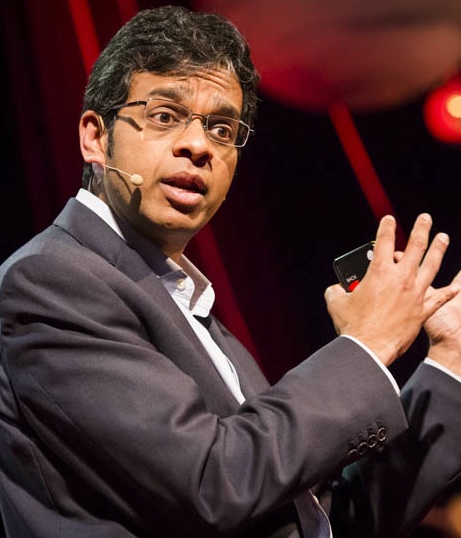
Siddharthan Chandran

Dr. Siddharthan Chandran on TED Talk

For years, medical students have been taught incorrectly that the brain cannot repair itself. Recent exciting research on stem cells has definitely put that “dogma” to rest. In fact, the rapid pace of discoveries about the brain indicates that the future may be closer than you think. The brain actually does repair itself, just not enough. The repair the brain does do uses a natural reservoir of stem cells (pluripotent cells that have the potential to become any cell). Recent research has shown that we will be able add more stem cells to boost the natural repair of the brain and restore lost functions, even functions usually considered to be lost forever. In the video, Dr. Siddharthan Chandran hypothesizes that the added stem cells help repair the brain, not by acting themselves to do the repairs, but by activating more of the brain’s own stem cells.


As I say after each post:

Feel free to leave a comment by clicking the blue words “Leave a Comment” below this post.

Please follow my blog. Click on “Follow Me Via eMail” on the right sidebar of your screen.anim0014-1_e0-1

If you like my blog, click the “Like” button under this post.

If you REALLY like my blog, share it with your friends. It’s easy! Click the “Share” buttons below.

If you don’t like my blog, “Share” it with your enemies. That works for me too!


(Clip Art compliments of Bing.)

diemodi jewelry

uniquely hand-crafted jewelry by donna

Welcome to Harmony Kent Online

The home of all things books

Pete Springer

Passionate Teacher and Future Children's Author

HOPE TBI

Helping Other People Excel - To Be Independent

For the Love of Books, Old and New

Katie Fischer, Writer and Reader of Stories

Charlie Bown

Children's Author

Jessica Hinrichs

“We write to taste life twice, in the moment and in retrospect.” ― Anais Nin

VIVIAN KIRKFIELD - Writer for Children

Picture Books Help Kids Soar

Mindy’s Writing Wonderland

For authors, parents, teachers & everyone who loves children’s books.

Kaitlyn Leann Sanchez

Literary Agent

Surviving Traumatic Brain Injury

TBI - Survivors, Caregivers, Family, and Friends

The Care Factor

Loving someone with a Traumatic Brain Injury

Brain Injury Support Group of Duluth-Extension

Brain Injury Information and SUPPORT

Brain Aneurysm Global Insight

Brain Aneurysm, cerebral hemorrhaging, hemorrhage stroke