TBI – Survivors, Caregivers, Family, and Friends

Posts tagged ‘https://survivingtraumaticbraininjury.com/’

SPEAK OUT! . . . . . . . . . . . . . Faces of Brain Injury . . . . . . . . . Carol Starke-Pyle (caregiver of her son, Thomas)

SPEAK OUT! Faces of Brain Injury – Carol Starke-Pyle

(caregiver of her son, Thomas)

presented

by

Donna O’Donnell Figurski

Brain Injury is NOT Discriminating!

bigstock-cartoon-face-vector-people-25671746-e1348136261718It can happen to anyone, anytime, . . . and anywhere.

The Brain Trauma Foundation states that there are 5.3 million people in the United States living with some form of brain injury.

On “Faces of Brain Injury,” you will meet survivors living with brain injury. I hope that their stories will help you to understand the serious implications and complications of brain injury.

The stories on SPEAK OUT! Faces of Brain Injury are published with the permission of the survivor or designated caregiver.

If you would like your story to be published, please send a short account and two photos to me at neelyf@aol.com. I’d love to publish your story and raise awareness for Brain Injury.

Carol Starke-Pyle (caregiver of her son, Thomas)

carol-starke-pyle-1

Carolyn Starke-Pyle – Caregiver for Brain Injury Survivor


This is my son’s story. Thomas was 43. He trained/rode horses for a living. He was very athletic, vivacious, funny, etc. He came to visit me one Sunday, and, as the day wore on, he became more and more delusional. I called an ambulance. My son knew his name, knew where he was, and walked to the ambulance. I followed to the Emergency Room. I was able to see Thomas twenty minutes later, as he was waiting in the cubicle. He could not talk – he babbled incoherently. He could not sit up or walk. He didn’t know me. He was admitted and was given many tests: a CT (computerized tomography) scan, an MRI (magnetic resonance imaging), and a spinal tap. The CDC (Centers for Disease Control) was called in. It was concluded that Thomas had brain damage. After two weeks, Thomas was transferred to a neurological center. He didn’t know how to swallow, he knew NO ONE, he was in a huge crib, and he was in diapers. More the-brain-hispinal taps and more MRIs. I was told his frontal lobe looked as if a bag of M&Ms had been tossed into it. Infectious/viral disease had been ruled out. It was determined that, due to numerous concussions from falls off horses, his brain had suffered too much damage – which was IRREVERSIBLE! I collapsed when his doctor said, “The Thomas you knew a month ago is no longer with us.” He continued to tell me that my vibrant son would need a nursing home for the rest of his life.

I went onto Facebook and shared my anguish and pleaded for prayers. A prayer chain encircled the globe. Meanwhile, I attended TBI (traumatic brain injury) seminars and met with social workers and more doctors to find a special nursing home for Thomas. Two months later, on my visit, his nurse grinned and said she had a surprise. Thomas was standing up! The next week, he was walking, then talking (he made little sense, but … !), then recognizing us, and then eating by himself. As I was a teacher, I chose to stick up all sorts of stimuli – photos of family, friends, pets, and horses. horse_adoptable_bay_animated_by_hikari_yumi-d5hrf17Thomas slowly improved (contrary to the opinions of ALL specialists). After four months, with short-term memory loss and some loss of intelligence, Thomas was released. I asked his doctor to explain. He looked at me and quietly said, “It is a miracle!”

My son is back to work with horses, has absolutely NO memory of the hospital, has a touch believe-clip-art-at-clker-com-vector-clip-art-online-royalty-free-qep8hi-clipartof short-term memory loss, and is as bright as he always was. BELIEVE IN MIRACLES! I am praying for YOU ALL!


(Disclaimer: The views or opinions in this post are solely that of the interviewee.)

If you would like to be a part of the SPEAK OUT! project, please go to TBI SPEAK OUT! Caregiver Interview Questionnaire for a copy of the questions and the release form.

(Clip Art compliments of Bing.)

As I say after each post: Please leave a comment by clicking the blue words “Leave a Commentanim0014-1_e0-1 below this post.

Feel free to follow my blog. Click on “Follow” on the upper right sidebar.

If you like my blog, share it with your friends. It’s easy! Click the “Share” buttons below.

If you don’t like my blog, “Share” it with your enemies. I don’t care!

Feel free to “Like” my post.

SPEAK OUT! . . . . . . . . . . Itty-Bitty GIANT Step

SPEAK OUT! Itty-Bitty GIANT Steps

presented by

Donna O’Donnell Figurski

Itty-Bitty GIant Steps for BlogSPEAK OUT! Itty-Bitty Giant Steps will provide a venue for brain-injury survivors and caregivers to shout out their accomplishments of the week.

If you have an Itty-Bitty Giant Step and you would like to share it, just send an email to me at neelyf@aol.com.

If you are on Facebook, you can simply send a Private Message to me. It need only be a sentence or two. I’ll gather the accomplishments and post them with your name on my blog approximately once a week. (If you do not want your lastname to be posted, please tell me in your email or Private Message.)

I hope we have millions of Itty-Bitty Giant Steps.

Here is this week’s Itty-Bitty GIANT Step

me


Jennifer Stokley (survivor) … I recently met a stranger at my door who was sent to do bug home care. There was no notice, but I let him in to do his work. I asked questions – I had him explain things I needed to know. I have severe anxiety disorder and huge panic attacks. Strangers are a HUGE trigger; letting them into my home is even bigger. I handled it all – no anxiety, no nothing!

YOU did it!

Congratulations to contributors!

(Clip Art compliments of Bing.)

(Photos compliments of contributors.)

As I say after each post:anim0014-1_e0-1

Please leave a comment by clicking the blue words “Leave a Comment” below this post.

Feel free to follow my blog. Click on “Follow” on the upper right sidebar.

If you like my blog, share it intact with your friends. It’s easy! Click the “Share” buttons below.

If you don’t like my blog, “Share” it intact with your enemies. I don’t care!

Feel free to “Like” my post.


SPEAK OUT! NewsBit . . . . . . Repair of Brain Injury in Mice by Transplanted Neurons

Repair of Brain Injury in Mice by Transplanted Neurons

presented

by

Donna O’Donnell Figurski

Newsboy thThis is an incredible finding with strong clinical implications! There already is evidence that transplanted neurons can survive and grow in the brain. The newly introduced neurons can form synapses, and they sometimes improve function by partially compensating for a damaged brain circuit. What was not known was whether the original damage could be repaired. Now scientists have shown in a well-studied mouse model of the brain that transplanted neurons can replace the damaged neurons, make the appropriate connections, and repair the damage.ridkk855t

The research was done in Germany by scientists at the Ludwig-Maximilians University Munich in Planegg, the Max Planck Institute of Neurobiology in Martinsried, the Helmholtz Center Munich, and the German Research Center for Environmental Health in Neuherberg. Neurons in the visual cortex of the adult mouse brain were killed, then immature (embryonic) mouse neurons from the cerebral cortex were transplanted into the damaged area of the adult mouse brain. What the scientists found was remarkable. The transplanted neurons developed into mature cells – the same kind as the killed cells, and the new cells replaced the killed cells to give normal function. The process took several months.th-1

The visual cortex is one of the best studied areas of the mouse brain. The structures and connections of the nerve cells are known. So, the scientists, using sophisticated tools, were able to propose that the transplanted neurons used the same developmental signals that were used by the original cells. The transplanted immature neurons developed the proper structures, targeted the same areas of the brain, and made the same connections throughout the brain as did the original cells. The transplanted cells repaired the damaged circuits and allowed the visual cortex to function normally again.gray-mouse-hi-1

This basic research in mice has astonishing clinical implications for humans. (I wrote before about how the mouse is a good first model for the human.) Lost or damaged neurons can be replaced with incredible precision. That means there may be a future treatment, maybe even a cure, for all kinds of damage to the brain, including that which occurs from acquired and traumatic brain injuries, stroke, and neurodegenerative diseases, like Parkinson’s Disease and Alzheimer’s Disease. (Full story)

(Clip Art compliments of Bing.)

As I say after each post: Please leave a comment by clicking the blue words “Leave a Commentanim0014-1_e0-1 below this post.

Feel free to follow my blog. Click on “Follow” on the upper right sidebar.

If you like my blog, share it (intact) with your friends. It’s easy! Click the “Share” buttons below.

If you don’t like my blog, “Share” it (intact) with your enemies. I don’t care!

Feel free to “Like” my post.

SPEAK OUT! . . . . . . . . . . . . . Guest Blogger . . . . . . . . . . . . . . . Ed Steeves – Standing Still

Standing Still

by

Ed Steeves

presented

by

Donna O’Donnell Figurski


Boy Blogger thNo matter how great it sounds, we can’t go back. No matter how much we may want to, that bridge has burned. The past has passed for a reason. We need to accept that it is over. We can only take the lessons we’ve learned.

Now we have a choice, since we can’t change the past or return to it. We can’t get the past back and never will. So, the decision that we have to make is Will we move on into the future, or will we simply stand still?k20874676

I, for one, will go forward with my life. I have decided that, somewhere ahead, there is something better to find. Because, if we just stand there and stare at what’s dead and gone, we will surely lose our mind.

The thing we fail to notice at times is that, no matter how amazing the past was, the future is better. The past, sadly, is occupied only with our memories, and it’s our prison. Only in the future can we all be free.

Ed Steeves - Survivor

Ed Steeves – Survivor

It’s OK to take some time to reflect – to forgive and move on. I’ve finally given up on all that’s there in the past.

But remember that life is still alive in the future, and we are never certain how long it will last.

Thank you, Ed Steeves.

Disclaimer:
Any views and opinions of the Guest Blogger are purely his/her own.

(Clip Art compliments of Bing.)

(Photos compliments of Ed Steeves.)


As I say after each post: Please leave a comment by clicking the blue words “Leave a Commentanim0014-1_e0-1 below this post.

Feel free to follow my blog. Click on “Follow” on the upper right sidebar.

If you like my blog, share it (intact) with your friends. It’s easy! Click the “Share” buttons below.

If you don’t like my blog, “Share” it (intact) with your enemies. I don’t care!

Feel free to “Like” my post.


SPEAK OUT! . . . . . . . . . . . . . Faces of Brain Injury . . . . . . . . . Bob Bernardi (survivor)

SPEAK OUT! Faces of Brain Injury –  Bob Bernardi (survivor)

presented

by

Donna O’Donnell Figurski

Brain Injury is NOT Discriminating!

bigstock-cartoon-face-vector-people-25671746-e1348136261718It can happen to anyone, anytime, . . . and anywhere.

The Brain Trauma Foundation states that there are 5.3 million people in the United States living with some form of brain injury.

On “Faces of Brain Injury,” you will meet survivors living with brain injury. I hope that their stories will help you to understand the serious implications and complications of brain injury.

The stories on SPEAK OUT! Faces of Brain Injury are published with the permission of the survivor or designated caregiver.

If you would like your story to be published, please send a short account and two photos to me at neelyf@aol.com. I’d love to publish your story and raise awareness for Brain Injury.


Bob Bernardi - survivor

Bob Bernardi – survivor

Bob Bernardi (survivor)

Recently was an anniversary. It’s been 24 years since that terrible day back in 1992, when I lost control of my car and suffered my traumatic brain injury. Needless to say, I have experienced a lot of life’s lessons – both good and bad. I am still here, and I have accepted my standing in life, but that is not to say that I am not a fighter. If I feel that something is not right with my care or if I have questions, then believe me when I say I am going to express my concerns or ask my questions! I have had the very best in medical care and some of the worst, and, for that reason, I will not just “go with the flow.” I am sure that most of you know that, when the human brain is hurt and damaged, that alteration is an alteration to “us.” Our brain is “us.” Just trying to get back to our original selves is what we strive for. I know I can be a pain to many of my friends outside of the brain-injury community with how I view everyday life. But all that we have shared in the brain-injury community make us friends. I know that I depend on their views. I would be lost without the brain-injury community, and for that I am thankful!


Thank you Bob Bernardi for sharing your story.


(Clip Art compliments of Bing.)

(Photos compliments of contributor.)

As I say after each post: Please leave a comment by clicking the blue words “Leave a Commentanim0014-1_e0-1 below this post.

Feel free to follow my blog. Click on “Follow” on the upper right sidebar.

If you like my blog, share it intact with your friends. It’s easy! Click the “Share” buttons below.

If you don’t like my blog, “Share” it intact with your enemies. I don’t care!

Feel free to “Like” my post.


SPEAK OUT! . . . . . . . . . . . . . Faces of Brain Injury . . . . . . Frank Bruno, Survivor

SPEAK OUT! Faces of Brain Injury Frank Bruno (survivor)

presented

by

Donna O’Donnell Figurski

Brain Injury is NOT Discriminating!

bigstock-cartoon-face-vector-people-25671746-e1348136261718It can happen to anyone, anytime, . . . and anywhere.

The Brain Trauma Foundation states that there are 5.3 million people in the United States living with some form of brain injury.

On “Faces of Brain Injury,” you will meet survivors living with brain injury. I hope that their stories will help you to understand the serious implications and complications of brain injury.

The stories on SPEAK OUT! Faces of Brain Injury are published with the permission of the survivor or designated caregiver.

If you would like your story to be published, please send a short account and two photos to me at neelyf@aol.com. I’d love to publish your story and raise awareness for Brain Injury.


Frank Bruno (survivor)

Frank Bruno - Survivor - Paralympics Contender

Frank Bruno – Survivor –
Paralympics Contender

On June 25, 1986, while at work, I fell twenty feet, fractured both sides of my skull, and was in a coma for three weeks.

In 1983, prior to my brain injury, I graduated in Sports Administration from Durham College. I had the honour of being named Male Athlete of the Year, which included winning the Provincial Basketball Championships in Tier 2 of the Ontario Colleges Athletic Association, being named to the Championship Tournament All-Star team, and capturing a bronze medal at the Provincial Touch Football Championship Tournament. Immediately following graduation, I was employed as the Racquet Sports Director at a popular racquet and fitness centre in Mississauga.

According to the doctors, there was little hope for my recovery. I was given less than a 2% chance of making it out of the operating room – never mind ever walking or talking again. Upon my awakening, I was placed into a rehabilitation program, where I received speech therapy, occupational therapy, and physiotherapy. My first recollection of being awake was that I could turn my head only to the left. The rest of my body was totally paralyzed. I had to be lifted in and out of my bed and wheelchair, as I could not do it myself. After several weeks of therapy, I was able to walk under my own power – much to the surprise of the doctors and therapists. They could not believe I had progressed to this point so quickly.Rehabilitation

In 1987, a fellow classmate who worked at the office of Sport for Disabled Ontario asked if I was interested in taking part in sports again. I had a tough enough time trying to walk, so I declined. In 1988, I decided to give it a try – with the hopes of improving my co-ordination and increasing my stamina. (In case you are wondering, Sport for Disabled is different from the Special Olympics. The Special Olympics is for people who are mentally challenged. Sport for Disabled is for athletes who have a physical disability.) There are four major disability groups: (1) wheelchair, (2) amputee, (3) blind/visually impaired, and (4) cerebral palsy.

After a medical evaluation, I was placed into the cerebral palsy division at level 8. Within this division, there are eight classes: levels 1 to 4 are in wheelchairs and levels 5 to 8 are ambulatory. Level 1 is for those most affected by cerebral palsy, whereas level 8 is for those having the least visible disability. I have never had cerebral palsy, but because of my brain injury, I have the same neurological symptoms as someone born with cerebral palsy.

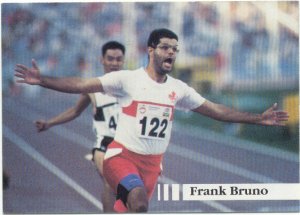
awardsIn 1988, I began to compete in Sport for the Disabled and at the Provincial Championships. I finished second in both the 100-meter race and the 200-meter race in the CP8 class. In Ottawa, for the 1989 Provincial Championships, I not only won both the 100-meter race and the 200-meter race, but I also won the long-jump and shot-put events. All were Canadian records. This earned me a place on the Provincial Team, which competed in the Foresters’ Games (National Championships) in Richmond, British Columbia. At these games, I won the same four events plus the 4 x 100-meter relay. This was the first time a Canadian cerebral palsy relay team ever finished in less than one minute. This qualified me to be named to the Canadian Team that would compete in the World Championships and Games for the Disabled, which were held in Assen, The Netherlands. I was entered into five sprint races, plus shot-put and long-jump. By the end of the Games, I had won five gold medals and two silver medals! I also set three world records and six Canadian records. The Ministry of Tourism and Recreation Ontario awarded me Ontario’s 1990 Disabled Athlete of the Year.

Frank Bruno - Survivor: 1990 Ontario Disabled Athlete

Frank Bruno – Survivor: 1990 Ontario Disabled Athlete

In 1991, the Barcelona Paralympic Organizing Committee invited me to take part in their “Test Meet” in Barcelona, Spain. I ran in the 200-meter and 400-meter events, winning Gold in both and lowering my world record in the 400-meter. The Paralympics are the Olympics for the physically disabled. They occur every four years in the same city as the Olympics. We use the same venues, eating facilities, and dormitories as the Olympics.

Frank Bruno - Survivor

Frank Bruno – Survivor (back of card)

The Paralympics are usually held two weeks after the Summer/Winter Olympics are completed. At the 1992 IX Summer Paralympics, I competed in three sprint events: 100-meter, 200-meter, and 400-meter. I won three Gold Medals, plus I set two New World and Paralympic records and a Canadian record. In 1993 at the Robin Hood Games (World Championships for Cerebral Palsy), which were held in Nottingham, England, I competed in the 100-meter and 200-meter sprint events. I won Gold Medals in both.

The 1994 World Disabled Athletics Championships was held in Berlin, Germany. This World Championships was not as fruitful, for I was unable to attend any of the practice sessions. My back flared up, as it did not adjust properly to my mattress. After many physiotherapy and acupuncture treatments, my back responded well enough to allow me to compete in the 100-meter semi-final. I was happy just to be able to compete in the event. I finished second with a time of 12:23 seconds. The next day featured the 100-meter final race. I had a fairly good start, but at about the midway point, I felt a sharp pain in my right hamstring. As I continued to push towards the finish line, I tore my hamstring and was out of the competition. In that race, I finished 7th with a time of 12:70 seconds.

For the 1996 Atlanta Paralympics, I participated in only one event – shot-put. My hamstring did not heal to the point where I could train as hard as I wished. Then on May 13, I suffered a tonic clonic seizure, and this really made a mess of my training. I learned to throw the shot-put in just under four weeks. I placed fourth at the Paralympics and threw a personal best of 11.07 meters. I have held the World Record in the 200-meter event for eight years and the Paralympic Record for three Games. I also held the World Record in the 400-meter event for five years and the Paralympic Record for four years and two Paralympic Games.

Frank Bruno - Survivor

Frank Bruno – Survivor

On November 17, 1998 I was inducted into the Terry Fox Hall of Fame (now called the Canadian Disability Hall of Fame). September 1999 saw me come out of retirement again. The Czech Republic Cerebral Palsy Sports Association invited me to take part in the opening of a brand new athletic centre in Turnov, Czech Republic. I was asked to be part of the Field Throwing Triathlon. I was required to throw the shot-put, discus, and javelin. At first I declined, but after speaking with the organizing committee, they still wanted me to compete. I told them that the last time I threw the shot-put was in the Atlanta Paralympics in 1996, that the last time I threw the javelin was in 1989, and that I never threw the discus. I went to the Czech Republic with less than three weeks of practice. Not much was expected, due to my lack of practice time and the fact that the rest of the throwing field had been training for the past three years. I finished fourth in shot-put, seventh in javelin, and eighth in discus. In August of 2004, I was asked to come out of retirement yet again to help build the soccer program for Canadian Cerebral Palsy Sports, with the goal of qualifying for the 2008 Summer Paralympics in Beijing, China.

On February 5, 2010, I was awarded the “King” Clancy Award. On March 10, 2011, I was inducted into the Durham College Sports Hall of Fame and awarded the Queen Elizabeth II Diamond Jubilee Medal (2012). On July 4, 2015, I took part in the Pan Am Torch relay. On April 25, 2016, the Brain Injury Society of 12042850_10207545538739267_7480792831760202695_nToronto selected me as the Volunteer of the Year.


Thank you Frank Bruno for sharing your story.


(Clip Art compliments of Bing.)

(Photos compliments of contributor.)

As I say after each post: Please leave a comment by clicking the blue words “Leave a Commentanim0014-1_e0-1 below this post.

Feel free to follow my blog. Click on “Follow” on the upper right sidebar.

If you like my blog, share it intact with your friends. It’s easy! Click the “Share” buttons below.

If you don’t like my blog, “Share” it intact with your enemies. I don’t care!

Feel free to “Like” my post.

Survivors SPEAK OUT! . . . . . . Charles Ross, Jr.

Survivors SPEAK OUT! Charles Ross, Jr.

presented

by

Donna O’Donnell Figurski


Ross, Charles Survivor

Charles Ross, Jr. – Brain Injury Survivor

1. What is your name? (last name optional)

Charles Ross, Jr.

2. Where do you live? (city and/or state and/or country) Email (optional)

Pittsburg, Missouri, USA     buds5101@gmail.com

3. On what date did you have your brain injury? At what age?

My TBI (traumatic brain injury) happened on November 15, 1985. I was 18 years old.

4. How did your brain injury occur?

I was in a head-on car crash on a narrow, two-lane highway on a rainy and foggy day. I swerved around a truck that was stopped in the road. The truck left the scene.

5. When did you (or someone) first realize you had a problem?

A witness came to the car and forced the door open. I had thrown up on impact. Until help arrived, he held my head up to keep me from choking.

6. What kind of emergency treatment, if any, did you have?

I had the paddles put on me before I got on the helicopter to fly to a large hospital. I also had a tracheotomy.

7. Were you in a coma? If so, how long?

I was in a coma for fifty days.

8. Did you do rehab? What kind of rehab (i.e., inpatient or outpatient and occupational and/or physical and/or speech and/or other)? How long were you in rehab?

I had physical, occupational, and speech therapies as an inpatient for nine months after I came out of the coma. I continued physical therapy as an outpatient for seven years after the accident. My mom then took over. She was a physical therapist aide in a nursing home at the time of the accident. She also did occupational therapy with me too.

9. What problems or disabilities, if any, resulted from your brain injury
(e.g., balance, perception, personality, etc.)?

I was in a wheelchair for one and a half years. I can now walk with a single cane. That level did not immediately come after the wheelchair. It occurred after seven summers of surgeries on my legs. I walked with two canes for many years. I also have epilepsy. That diagnosis took a grand mal seizure five years after the accident. I had thousands of petite mal seizures prior to my grand mal seizure. Only then did the neurologist say that the “spells,” as I called them then, were petite mal seizures. I take multiple medicines to control them. It took twenty-two years to find the right mixture to control them. Balance and memory are also great problems today – thirty years later. My sense of balance is gone. I fall frequently, even using a cane. My short-term and long-term memories were damaged. The short-term memory was destroyed. It took years of training to get back what I have. Long-term memory – I don’t recognize it as affecting me so badly. I just don’t think of it. I take two medicines that they give to Alzheimer’s patients. I am hoping they help me. I don’t know yet if they do.

10. How has your life changed? Is it better? Is it worse?teacher-improvement

I struggled to get two Associate Degrees over seven years. I struggled more in the workforce for fourteen years. Most of the time, I had no insurance. The meds I needed for the seizures came out-of-pocket. So my credit rating tanked, and a bankruptcy followed. I filed for disability insurance after losing my last job. I was making the most money ever, but I still had no benefits. On the last job, I grossed more money in a week and a half than I make in a month now.

11. What do you miss the most from your pre-brain-injury life?

I miss a sense of being normal – being able to go out and do anything at almost any time. My only restriction was money.

12. What do you enjoy most in your post-brain-injury life?

I enjoy knowing the people I have met as a result of the injury – the countless doctors and nurses who took care of me and other individuals who also have had head injuries. I never would have met them, or even thought of meeting them, had I not had a head injury.

13. What do you like least about your brain injury?

I dislike not having my “normal” life.

14. Has anything helped you to accept your brain injury?

I never had the attitude where I just wanted to give up on life, even though it could be depressing at times.

15. Has your injury affected your home life and relationships and, if so, how?

Yes. I think I experienced jealousy from a brother because I got more attention afterward. I’ve had many different relationships, but all have ended up failing. The lack of money was the usual excuse. Most relationships were started over the web.

16. Has your social life been altered or changed and, if so, how?

I don’t go out very much. Right now, I’m living with my mom. (My dad just passed.) As a 48-year-old male, I don’t regret living with my mom. It’s just not normal.

17. Who is your main caregiver? Do you understand what it takes to be a caregiver?

I am able to take care of myself, including my meds and my bills. I cooked when I was not with my mom.

18. What are your plans? What do you expect/hope to be doing ten years from now?

I want to get a place of my own again.

19. Are you able to provide a helpful hint that may have taken you a long time to learn, but which you wished you had known earlier? If so, please state what it is to potentially help other survivors with your specific kind of brain injury.

Charles Ross, Jr. - Brain Injury Survivor

Charles Ross, Jr. – Brain Injury Survivor

My advice: Do not turn down any kind of help that’s offered – do not be too proud.

20. What advice would you offer to other brain-injury survivors? Do you have any other comments that you would like to add?

You should take pride in being a survivor. Most people, if faced with the challenges you have, could not do it. You have already accomplished the hardest thing, which was to survive.


If you would like to be a part of the SPEAK OUT! project, please go to TBI Survivor Interview Questionnaire for a copy of the questions and the release form.

(Clip Art compliments of Bing.)

(Photos compliments of contributor.)


As I say after each post:

Feel free to leave a comment by clicking the blue words “Leave a Comment” below this post.

Please follow my blog. Click on “Follow Me Via eMail” on the right sidebar of your screen.anim0014-1_e0-1

If you like my blog, click the “Like” button under this post.

If you REALLY like my blog, share it intact with your friends. It’s easy! Click the “Share” buttons below.

If you don’t like my blog, “Share” it intact with your enemies. That works for me too!


SPEAK OUT! . . . . . . . . . . . . . . Itty-Bitty GIANT Steps

SPEAK OUT! Itty-Bitty GIANT Steps

presented by

Donna O’Donnell Figurski


Itty-Bitty GIant Steps for BlogSPEAK OUT! Itty-Bitty Giant Steps will provide a venue for brain-injury survivors and caregivers to shout out their accomplishments of the week.

If you have an Itty-Bitty Giant Step and you would like to share it, just send an email to me at neelyf@aol.com.

If you are on Facebook, you can simply send a Private Message to me. It need only be a sentence or two. I’ll gather the accomplishments and post them with your name on my blog approximately once a week. (If you do not want your last name to be posted, please tell me in your email or Private Message.)

I hope we have millions of Itty-Bitty Giant Steps.


Here is this week’s Itty-Bitty GIANT Steps


Janice Tindle - Survivor

Janice Tindle – Survivor

Janice Tindle (survivor)…My accomplishment is getting published after my TBI (traumatic brain injury). I have a blog (janicetindle.com), where you’ll find all my links. I’m on Facebook, Twitter, and LinkedIn. I’ve been published in Caregiver magazine, Fearless Caregiver, and TBI Hope and Inspiration magazine. I’m also a contributor to TheMighty.com. I raise awareness about TBI and dystonia (a neurological movement disorder). I recently won the 1pg. Short Screenplay Contest. My entry, entitled Galicia’s Granite, was performed at the Novel Writing Festival. It’s on YouTube. I just fought two spam sites and got them to remove my article, 7 Ways to Support a Loved One with a Traumatic Brain Injury, off their sites. kids-hand-writing-clip-art-hand_with_pencil_5CAnnie Ricketts has it posted (with my permission) on her site, biglobalpicnic.org. I’m very proud of that article. I’m working on a several books and hope to become a PAID writer very soon!
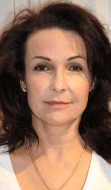


Raine Turner - Caregiver & Author

Raine Turner – Caregiver & Author

Raine Turner (caregiver)…I am going to brag – big huge momma brag! My son [my brain-injured son, who was not supposed to survive, never mind thrive; my drug-dealing son, with a federal criminal record; my son, who is now at the University of Calgary studying a dual degree in Business and Actuarial Science (I said I was going to brag) and getting 80s (yes, on a reduced course load and with tutors)] is thriving against all odds. congrats-you-did-itThis same young man was actually the KEYNOTE speaker at the Brain Injury conference in Ottawa, which is supported by the federal government! So, if you think you cannot achieve, cannot fight, or cannot rise up to be at a higher level than the one on which you are at, you should put on your “big boy” or “big girl” underpants and work hard. You WILL rise up to be at a level higher than the one you are at now. It will not be easy; it will not be fun; but you will improve your life. If you need, I can always “kick your ass” to achieve more, as I did for my son! I am so excited; I am so proud of him! He has worked so hard for so long. My son is my HERO!
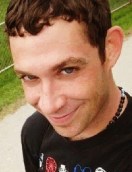
Raine Turner, the author of “Only Son… Only Child,” will be a guest on my show, “Another Fork in the Road” on Sunday, August 21, 2016, at 5:30pm Pacific Time, with her son, Ryan. I hope you will join us.


Matthew Vickers - Survivor

Matthew Vickers – Survivor


Matthew Vickers (survivor)…A huge feat for a traumatic brain injury survivor tubshower11who can’t walk or stand and only has the use of his right arm and hand … For consecutive weeks, I have independently showered, and that includes completing all necessary transfers.


YOU did it!

Congratulations to contributors!

(Clip Art compliments of Bing.)

(Photos compliments of contributors.)


As I say after each post:anim0014-1_e0-1

Please leave a comment by clicking the blue words “Leave a Comment” below this post.

Feel free to follow my blog. Click on “Follow” on the upper right sidebar.

If you like my blog, share it intact with your friends. It’s easy! Click the “Share” buttons below.

If you don’t like my blog, “Share” it intact with your enemies. I don’t care!

Feel free to “Like” my post.

SPEAK OUT! . . . . . . . . . . . . . . Faces of Brain Injury . . . . . . . . Freya Perry – Survivor & Artist

SPEAK OUT! Faces of Brain Injury

Freya Perry

presented

by

Donna O’Donnell Figurski

 Brain Injury is NOT Discriminating!

bigstock-cartoon-face-vector-people-25671746-e1348136261718It can happen to anyone, anytime, . . . and anywhere.

The Brain Trauma Foundation states that there are 5.3 million people in the United States living with some form of brain injury.

On “Faces of Brain Injury,” you will meet survivors living with brain injury. I hope that their stories will help you to understand the serious implications and complications of brain injury.

The stories on SPEAK OUT! Faces of Brain Injury are published with the permission of the survivor or designated caregiver.

If you would like your story to be published, please send a short account and two photos to me at neelyf@aol.com. I’d love to publish your story and raise awareness for Brain Injury.

2 Perry, Freya

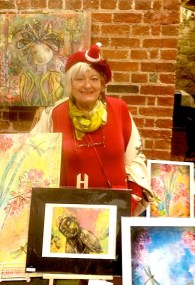
Freya Perry – Brain Injury Survivor & Artist

Freya Perry (survivor)

3 Perry, Freya

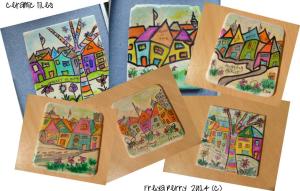
Ceramic Tiles by Freya Perry – Brain Injury Survivor & Artist

I thought my life as I knew it had ended five months after my TBI (traumatic brain injury). Ten months after my TBI, I got into painting as therapy. Now, eighteen months after my TBI, I have a small art studio and love painting. And people are loving my art!

Life is good.

I still have sensory-overload situations, but I am living with it – I am still recovering. Most importantly, I love me and my new life in a way I never thought could be possible.


To learn more about Freya Perry, please visit her website, Freya Perry.

Thank you Freya Perry for sharing your story.


(Clip Art compliments of Bing.)

(Photos compliments of contributor.)

As I say after each post: Please leave a comment by clicking the blue words “Leave a Commentanim0014-1_e0-1 below this post.

Feel free to follow my blog. Click on “Follow” on the upper right sidebar.

If you like my blog, share it intact with your friends. It’s easy! Click the “Share” buttons below.

If you don’t like my blog, “Share” it intact with your enemies. I don’t care!

Feel free to “Like” my post.


Survivors SPEAK OUT! . . . . . . Bart Goldstein

Survivors SPEAK OUT! Bart Goldstein

presented

by

Donna O’Donnell Figurski

Bart Goldstein 2

Bart Goldstein – Survivor

1. What is your name? (last name optional)

Bart Goldstein

2. Where do you live? (city and/or state and/or country) Email (optional)

Delmar, New York, USA

3. On what date did you have your brain injury? At what age?

My brain injury happened on December 29, 2001. I was almost 17.

4. How did your brain injury occur?

I was riding with friends in an auto, and we had an accident. I was in the back seat. We were just teenagers clowning around. There were no drugs or alcohol.

5. When did you (or someone) first realize you had a problem?

I was in a coma after the accident.

6. What kind of emergency treatment, if any, did you have?

I was airlifted to emergency surgery. Later I was given a trache and a G-peg (feeding tube inserted directly into the stomach by percutaneous endoscopic gastrostomy).

7. Were you in a coma? If so, how long?

Yes. I was in a coma for a month.

8. Did you do rehab? What kind of rehab (i.e., inpatient or outpatient and occupational and/or physical and/or speech and/or other)? How long were you in rehab?

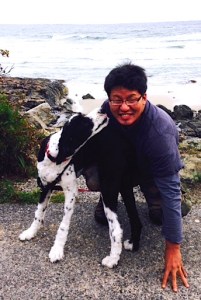
Bart Goldstein & Dog

Bart Goldstein – Survivor

I had speech therapy, physical therapy, and occupational therapy as an inpatient for three months at Helen Hayes Hospital. Then I had five more months of therapy as an outpatient at the hospital.

9. What problems or disabilities, if any, resulted from your brain injury
(e.g., balance, perception, personality, etc.)?

I have problems with walking, my speaking sensibly, control of anger, partial blindness, and memory.

10. How has your life changed? Is it better? Is it worse?

I am much more of a planner now than I was prior to accident. An article, “The Journey Back,” from Brain Injury Awareness Month a couple of years ago answers this question and most of the others: http://spotlightnews.com/uncategorized/2014/03/20/journey-back/

11. What do you miss the most from your pre-brain-injury life?

See the Spotlight article (address given in the answer to the question 10).

12. What do you enjoy most in your post-brain-injury life?

See the Spotlight article (address given in the answer to the question 10).

13. What do you like least about your brain injury?

See the Spotlight article (address given in the answer to the question 10).

14. Has anything helped you to accept your brain injury?

I’ve been helped by my Christian faith, my parents, and my sense of humor.

15. Has your injury affected your home life and relationships and, if so, how?

See the Spotlight article (address given in the answer to the question 10).

16. Has your social life been altered or changed and, if so, how?

See the Spotlight article (address given in the answer to the question 10).

17. Who is your main caregiver? Do you understand what it takes to be a caregiver?

My folks are my main caregivers. Caregiving takes a lot of love and more.

Bart & Joel Goldstein

Bart Goldstein – Survivor with Father, Joel Goldstein (author of “No Stone Unturned”)

18. What are your plans? What do you expect/hope to be doing ten years from now?

I hope to continue to heal and to find a good woman and settle down.

19. Are you able to provide a helpful hint that may have taken you a long time to learn, but which you wished you had known earlier? If so, please state what it is to potentially help other survivors with your specific kind of brain injury.

Learn patience. It’s a long haul.

20. What advice would you offer to other brain-injury survivors? Do you have any other comments that you would like to add?

Keep your faith and your sense of humor. Try alternative therapies.


(Disclaimer: The views or opinions in this post are solely that of the interviewee.)

If you would like to be a part of the SPEAK OUT! project, please go to TBI Survivor Interview Questionnaire for a copy of the questions and the release form.

(Clip Art compliments of Bing.)

(Photos compliments of contributor.)


As I say after each post:

Feel free to leave a comment by clicking the blue words “Leave a Comment” below this post.

Please follow my blog. Click on “Follow Me Via eMail” on the right sidebar of your screen.anim0014-1_e0-1

If you like my blog, click the “Like” button under this post.

If you REALLY like my blog, share it intact with your friends. It’s easy! Click the “Share” buttons below.

If you don’t like my blog, “Share” it intact with your enemies. That works for me too!

diemodi jewelry

uniquely hand-crafted jewelry by donna

Welcome to Harmony Kent Online

The home of all things books

Pete Springer

Passionate Teacher and Future Children's Author

HOPE TBI

Helping Other People Excel - To Be Independent

For the Love of Books, Old and New

Katie Fischer, Writer and Reader of Stories

Charlie Bown

Children's Author

Jessica Hinrichs

“We write to taste life twice, in the moment and in retrospect.” ― Anais Nin

VIVIAN KIRKFIELD - Writer for Children

Picture Books Help Kids Soar

Mindy’s Writing Wonderland

For authors, parents, teachers & everyone who loves children’s books.

Kaitlyn Leann Sanchez

Literary Agent

Surviving Traumatic Brain Injury

TBI - Survivors, Caregivers, Family, and Friends

The Care Factor

Loving someone with a Traumatic Brain Injury

Brain Injury Support Group of Duluth-Extension

Brain Injury Information and SUPPORT

Brain Aneurysm Global Insight

Brain Aneurysm, cerebral hemorrhaging, hemorrhage stroke