TBI – Survivors, Caregivers, Family, and Friends

Posts tagged ‘Donna O’Donnell Figurski’

On The Air: . . . . . . . . . . . . . . Brain Injury Radio . . . . . . . . “Another Fork in the Road” with Ann Boriskie, Director of Brain Injury Peer Visitor Assn.

On The Air: Brain Injury Radio “Another Fork in the Road” 

with

Guest: Ann Boriskie, Director of Brain Injury Peer Visitor Assn.

presented

by

Donna O’Donnell Figurski

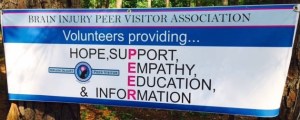
Boriskie, Ann Training in Florida Survivor 011116Ann Boriskie, a TBI survivor of more than 17-years says, “Get involved. Volunteer.” “By helping others with a brain injury, you truly help yourself in so many ways.” Ann is the Brain Injury Peer Visitor Association Director and her motto is “YOU CAN!”Peer Visitation BannerBoriskie, Ann Survivor 011116

 If you missed this show with Ann Boriskie on “Another Fork in the Road” on January 17th, 2016 don’t fret. You can listen to the archived show here. Click the link below.

See you “On the Air!”

On The Air: Brain Injury Radio “Another Fork in the Road” with Ann Boriskie, Director of Brain Injury Peer Visitor Assn.

(Clip Art compliments of Bing.)
As I say after each post: Please leave a comment by clicking the blue words “Leave a Comment” below this post.
Feel free to follow my blog. Click on “Follow” on the upper right sidebar.
 If you like my blog, share it intact with your friends. It’s easy! Click the “Share” buttons below.
 If you don’t like my blog, “Share” it intact with your enemies. I don’t care!
 Feel free to “Like” my post.


Survivors SPEAK OUT! Ann Boriskie

Survivors SPEAK OUT! Ann Boriskie

presented

by

Donna O’Donnell Figurski


Boriskie, Ann Survivor 011116

Ann Boriskie – Survivor: Brain Injury Peer Visitor Association Director


1. What is your name? (last name optional)

Ann Boriskie

2. Where do you live? (city and/or state and/or country) Email (optional)

Alpharetta, Georgia, USA (a suburb of Atlanta, Georgia) aboriskie@braininjurypeervisitor.org

3. On what date did you have your brain injury? At what age?

November 12, 1998, at age 48

4. How did your brain injury occur?

My brain injury occurred in a car wreck less than five miles from home. I was headed to a regular dental checkup.

A woman was talking on her phone while driving, and she obviously missed her turn. She stopped suddenly, but I was able to stop my car and not hit her at all. She just sat there at the bottom of a hill on the two-lane road. She did not move. A young student (16 years old) came down the hill. He said he was messing with his radio and just did not see us. He hit my car going 50 mph and pushed my car into the woman’s car.

5. When did you (or someone) first realize you had a problem?

About 48 hours after my wreck, I started having concussion symptoms. I experienced dizziness and mental “fogginess.” I could not walk. There was bruising under my eyes. The toes on my right foot went numb. My left eye was out of focus.

6. What kind of emergency treatment, if any, did you have?

None. I walked away from the wreck thinking I was just fine. After 48 hours, I went to a 24-hour clinic, but they just sent me home. They told me I had no real problems and I would be fine. I also went to an eye doctor right away, but again, I was told there that nothing was wrong physically with my eye. Several months after my wreck, one neurologist told me that I had “post-concussion syndrome” and to go home – that I would be just fine. No one else mentioned my having a brain injury for one year. Then a dental TMJ specialist told me that I had a brain injury. That was what was causing my mental symptoms. (TMJ = temporomandibular joint)Peer Visitation Banner
7. Were you in a coma? If so, how long?

No

8. Did you do rehab? What kind of rehab (i.e., inpatient or outpatient and occupational and/or physical and/or speech and/or other)? How long were you in rehab?

My brain injury went undiagnosed for over a year. The physical therapy that I received was in relation to each of my physical injuries (see #9), especially to help after the surgeries that I had to have to repair the parts of my body that were injured.

9. What problems or disabilities, if any, resulted from your brain injury
(e.g., balance, perception, personality, etc.)?

a. My brain injury caused depression, anxiety, and anger (more so in the first several years). I had lots of memory issues. (I could not remember friends or faces. I got lost. I could not write. Then once I could write, I couldn’t write in cursive – I still can’t.) Some memory issues remain today. I permanently lost many of my past memories. (I can’t remember family events or experiences or places where we had lived. I lost memory of cities and our time there.) I lost a lot of my math skills (I was an A+ math student, and I was in advanced math classes), but I have regained many of these math skills.

b. My neck was injured. (The C4, C5, C6, and C7 vertebrae were knocked out of line.) I had to have neck surgery (for fusion and a metal plate holding these four levels together). My neck is in CONSTANT PAIN.

c. I had an injury to the L5 and S1 levels of my spine. (The last two vertebrae are not attached now to my spinal cord). Surgery was recommended, but my neck did not fuse properly, so I decided not to have back surgery. I am in CONSTANT PAIN in my lower back. The pain often radiates to my hips and legs.

d. I popped a tendon from its bone in my right elbow. (I braced my body on the steering wheel in the wreck.) It required surgery. The doctor said it was one of the worst tears he had ever seen.

e. Permanent nerve damage was created in various body areas.

f. The left part of my jaw was knocked out of line. It literally took years of appliance therapy to get the bone back into its correct place.

g. A valve was torn on the left side of my heart. This caused irregular heartbeats for a while. It repaired itself.

h. My left side remains weaker than my right side.

i. Numbness remains in my hands (which makes it harder to use my hands). I also have numbness in my feet, down my arms, and down my legs.

j. Sometimes my left eye will not focus or work well with my right eye.

k. I have a shorter attention span.

l. All of these physical injuries caused me to have fibromyalgia and constant body pains.

Boriskie, Ann Podium

Ann Boriskie – Survivor

10. How has your life changed? Is it better? Is it worse?

In the long run, I have to say my life is truly better. All three of our children are in the medical field. (My husband and I have raised one daughter, now a neonatologist who takes care of premature babies and helps the moms; raised a son, now a doctor of internal medicine who works as a hospitalist; and raised another daughter, now a Registered Nurse in a mental-illness hospital unit.)

My priorities changed in my life. I went from being a “work-oholic” and a person who was very competitive to a person who lives to help other people, including my family and friends.

I slowed down my life’s pace. I had to learn that I could no longer work at a full-time outside-the-home job. (For years, I could not work at all.) I also had to learn to take care of myself – due to all of the physical and mental problems that the wreck created.

I was at home, and thus I was “there” more for my children and husband. I was able to give them more help and more attention.

11. What do you miss the most from your pre-brain-injury life?

I miss my higher energy level. I miss many of my memories. I miss all of the physical sports and activities that I can no longer do (water skiing, snow skiing, kayaking, swimming, playing golf, etc.).

12. What do you enjoy most in your post-brain-injury life?Peer Visitor Banner

I enjoy running the Brain Injury Peer Visitor Association and being able to help thousands of brain-injury and stroke survivors throughout the United States and the world. I’ve done this each year since 2006.

13. What do you like least about your brain injury?

I dislike being in constant pain (which also affects my brain). I also dislike having to push myself more and having to work much harder to accomplish my goals and to do my work than I did prior to my wreck.

14. Has anything helped you to accept your brain injury?

  1. Helping other people helps me also.
  2. Sharing my experiences with others and listening to each brain-injury survivor’s problems (This helps me to better understand my own brain injury.)
  3. Attending support-groups (and being very open to sharing my own problems, experiences, successes, and methodologies)
  4. In the past, gaining the help of neuropsychologists
  5. Going to medical doctors who treat brain injury (e.g., a psychiatrist)

15. Has your injury affected your home life and relationships and, if so, how?

Yes. I am much more dedicated to my husband and three children. I treasure our relationships. I also treasure my friendships more. You really better understand that life is way too short and can change in a second.

16. Has your social life been altered or changed and, if so, how?

Yes. I no longer like to be in big crowds or in a noisy environment. Going to a party is now a struggle and sometimes a chore. I just avoid noisy places and huge crowds. This requirement definitely limits the activities in which I can participate.

17. Who is your main caregiver? Do you understand what it takes to be a caregiver?

My wonderful husband is my main caregiver. I am blessed that he “stuck it out” with me and helped me go through all of my physical and mental recoveries. He is also one of my biggest supporters – even financially supporting my association and approving of all of the volunteer hours that I dedicate to the Brain Injury Peer Visitor Association.
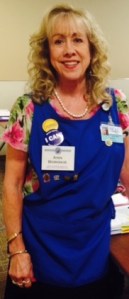
Boriskie, Ann Training in Florida Survivor 011116

Annn Boriskie – Survivor

18. What are your plans? What do you expect/hope to be doing ten years from now?

I plan to continue running the Brain Injury Peer Visitor Association as long as I possibly can. My dream is to continue to grow the association throughout the United States and even internationally.

I also plan to continue to enjoy and spend time with my immediate family and their families.

19. Are you able to provide a helpful hint that may have taken you a long time to learn, but which you wished you had known earlier? If so, please state what it is to potentially help other survivors with your specific kind of brain injury.

Accept your limitations, but continue to “push yourself” to improve. Realize that, even though you are different from the pre-TBI you, you are still a valuable person in the world. Let your “old self” go. Realize that person won’t be back. Embrace the “new you,” and learn to love yourself for who you now are. Remember that YOU CAN. Don’t defeat yourself by focusing on all of the things you can no longer do.
2011 Community Service Awards from WXIA 11

20. What advice would you offer to other brain-injury survivors? Do you have any other comments that you would like to add?

Help others. Get involved. Volunteer. By helping others with a brain injury, you truly help yourself in so many ways. You will help yourself get better, and you will gain confidence.


You can hear Ann Boriskie on my radio show, “Another Fork in the Road” at 5:30pm PT (6:30MT, 7:30CT, 8:30ET) on Sunday, January 17th on the Brain Injury Radio Network (BIRN)

Click here on Sunday 5:30pm Pacific Time. Another Fork in the Road: Ann Boriskie – Director of Brain Injury Peer Visitor 

You can call in to listen to the show or talk to the host by dialing this number. 424-243-9540

(Disclaimer: The views or opinions in this post are solely that of the interviewee.)

If you would like to be a part of the SPEAK OUT! project, please go to TBI Survivor Interview Questionnaire for a copy of the questions and the release form.

(Clip Art compliments of Bing.)

(Photos compliments of contributor.)

As I say after each post: Please leave a comment by clicking the blue words “Leave a Commentanim0014-1_e0-1 below this post.

Feel free to follow my blog. Click on “Follow” on the upper right sidebar.

If you like my blog, share it intact with your friends. It’s easy! Click the “Share” buttons below.

If you don’t like my blog, “Share” it intact with your enemies. I don’t care!

Feel free to “Like” my post.


So, Whaddya Think? . . . . . Football Puts Children’s Brains at Risk

So, Whaddya Think?

Football Puts Children’s Brains at Risk

by

David Figurski and Donna O’Donnell Figurski

(Note: This is our third opinion essay on brain trauma and American football. The first and second were published on this blog on December 17th and December 26th, respectively.)


So Whaddya Think Brain th-4Lack of awareness of new knowledge has allowed society to continue what some of us now know to be dangerous practices with respect to children. To understand what we mean, watch these short videos of children practicing or playing American football (1, 2, 3, 4, 5).

The danger to the brains of children in the videos is readily apparent to us (video, story). Parents often believe a brain injury is rare. But the evidence indicates otherwise. The hundreds of sub-concussive hits that a player of American football receives each season can result in the degenerative brain disease, chronic traumatic encephalopathy (CTE). CTE can lead to loss of memory, loss of cognitive ability, dementia, post-traumatic stress disorder (PTSD), aggressive behavior, depression, and suicidal thoughts. It has been seen in the brains of high school football players. In fact, individuals who started playing organized American football at a young age seem to have a higher rate of CTE.

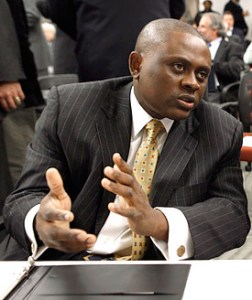
Bennet Omalu

Dr. Bennet Omalu – neuropathologist – discovered CTE

Recently, Dr. Bennet Omalu, who discovered CTE in an American football player by studying the brain of Hall-of-Fame center Mike Webster, was the author of a recent New York Times Op-Ed entitled Don’t Let Kids Play Football. In an interview for zap2it.com, Dr. Omalu said, “As a modern society it’s our duty to protect our most vulnerable, most precious gifts of life: our children. This is where I stand.”

(We highly recommend your seeing the newly released movie Concussion, which will bring about more awareness of the danger to the brain from playing American football. The movie tells the true story of how the National Football League – NFL – tried to dismiss Dr. Bennet Omalu’s discovery of the connection of brain disease and the playing of American football. Former players are suing the NFL, claiming that the NFL knew of the dangers, but did not inform the players.)kid-football-players-clip-art

In the documentary Head Games (online and free), we are reminded that children are not miniature adults. A child’s head is larger than an adult’s in proportion to his or her body. The neck muscles are not proportionately stronger, so a child’s head is more vulnerable than is an adult’s head. Brain development continues until at least age 14. (Some neurologists think brain development may continue longer.) In addition, the neurons in a developing brain are not yet fully myelinated. Recent research has shown that a concussion in a child impairs brain function for two years. The risk to the brain is the major reason why US Soccer banned heading for children 10 and under.

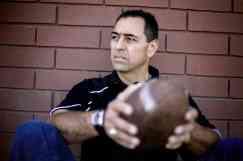
George Visger

Former San Francisco 49er – George Visger – TBI Survivor

On August 16th, Donna conducted a radio interview with George Visger, a former defensive lineman for the NFL’s San Francisco 49ers on her radio show, “Another Fork in the Road,” on the Brain Injury Radio Network. Visger stated that youth football might ultimately end because of the eventual high cost of liability insurance (minutes 30:25-33:45; we think you will also find the intervals 5:40-15:55 and 39:40-42:25 interesting because of their contents – children and football). Dr. Omalu, the discoverer of CTE in an American football player, says in Frontline’s documentary The League of Denial: The NFL’s Concussion Crisis that he was told if 10% of mothers think playing football is too dangerous, it will mean the end of football.

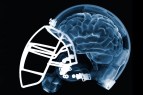
The consequences of a brain injury can be especially devastating, even fatal, to a young player (video 1, video 2, story of the suicide of a teenage football player). The risk of brain injury from high-impact sports, especially American football, is significant even for adults, but an adult can make his or her own decision to play. In contrast, children rely on parents and Brain in Helmetcoaches. No parent would deliberately put a child’s life-trajectory at risk, but what if the parent lacks awareness? The good news is that apparently society’s awareness is growing quickly. Peter Landesman, the director of Concussion, said that Pop Warner football enrollment is down by more than 30%. (Pop Warner football is for children aged 5 to 16.) The movie Concussion will further increase society’s awareness of the danger of concussions and sub-concussive hits, show what CTE is, tell Dr. Bennet Omalu’s story of his discovery of the relationship of CTE and American football, and show Dr. Omalu’s struggle with the NFL.

Healthy and Damaged Brain

Left – Healthy Brain — Right – Brain with CTE

It is also the brain-injury community’s responsibility to speak out to show society how life-altering a brain injury is.


So, Whaddya Think?

Let’s get a dialogue going. Post your comments in the Comment Section. Directions are below.

So . . . what do you think? Is there something you are passionate about in this Brain Injury (BI) world? Do you want to be heard? Your opinion matters! You can SPEAK OUT! on “So Whaddya Think?”

Simply send me your opinion, and I will format it for publication. Posts may be short, but please send no more than 500 words. Send to Neelyf@aol.com

I hope to HEAR from you soon.

As I say after each post:

Feel free to leave a comment by clicking the blue words “Leave a Comment” below this post.

Please follow my blog. Click on “Follow Me Via eMail” on the right sidebar of your screen.anim0014-1_e0-1

If you like my blog, click the “Like” button under this post.

If you REALLY like my blog, share it intact with your friends. It’s easy! Click the “Share” buttons below.

If you don’t like my blog, “Share” it intact with your enemies. That works for me too!

(Clip Art compliments of Bing.)

So, Whaddya Think? “Concussion” Now in Theaters

So, Whaddya Think?

“Concussion” Now in Theaters

by

David Figurski and Donna O’Donnell Figurski


(Note: This is our second opinion essay about Dr. Bennet Omalu and his research with brain trauma. The first was published on this blog on December 17th.)

So Whaddya Think Brain th-4The much-anticipated movie, Concussion (trailer), is making current and former players of American football, their families, parents, fans, and coaches think about what is really happening in a sport that has become a large part of American culture. The movie has the same goal as we in the brain-injury community have – greater awareness of the delicate Concussion Movie 2.jpgnature of the brain and the ramifications of brain damage. The movie was released on Christmas Day, but it has made much news before its release.

The movie, which unsurprisingly is not sanctioned by the National Football League (NFL), tells the true story of the Nigerian pathologist, Dr. Bennet Omalu, and his discovery of the relationship of a neurodegenerative disease, which Dr. Omalu named “chronic traumatic encephalopathy” (CTE), and American football. Dr. Omalu studied the brain of Hall-of-Fame center, Mike Webster,

MikeWebsternfl

Mike Webster – Pittsburgh Steeler Pro Football Hall of Fame

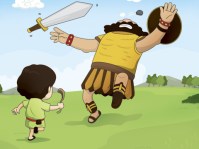
who died at age 50 homeless and with dementia. As shown in the Frontline documentary, League of Denial: The NFL’s Concussion Crisis (available free online), the movie shows how the multibillion-dollar NFL didn’t want to hear of Dr. Omalu’s discovery. The league’s questionable committee on concussions immediately attacked Dr. Omalu. It is a classic “David-vs.-Goliath” story.

David & Goliath.jpg

David & Goliath

(Dr. Omalu said in his Frontline interview, “You can’t go against the NFL. They’ll squash you.”) Former players have sued the NFL, arguing that the NFL knew of the dangers to the brain, but didn’t inform the players. In a class-action lawsuit, the NFL has recently settled for approximately $1 billion in medical expenses, but that settlement is being appealed by former players as inadequate.

Concussion Movie

Dr. Bennet Omalu – pathologist – discovered CTE with Actor, Will Smith

Will Smith plays Dr. Omalu in Concussion. Will Smith, a former football fan whose son played high school football, recently admitted that he has not watched a full game of football since he made this movie. Peter Landesman, the movie’s director, played football into his sophomore year of college, but, knowing what he knows now, he would not let his children play the game.

The movie is a “must-see.” (video)


So, Whaddya Think?

Let’s get a dialogue going. Post your comments in the Comment Section. Directions are below.

So . . . what do you think? Is there something you are passionate about in this Brain Injury (BI) world? Do you want to be heard? Your opinion matters! You can SPEAK OUT! on “So Whaddya Think?”

Simply send me your opinion, and I will format it for publication. Posts may be short, but please send no more than 500 words. Send to Neelyf@aol.com

I hope to HEAR from you soon.

As I say after each post:

Feel free to leave a comment by clicking the blue words “Leave a Comment” below this post.

Please follow my blog. Click on “Follow Me Via eMail” on the right sidebar of your screen.anim0014-1_e0-1

If you like my blog, click the “Like” button under this post.

If you REALLY like my blog, share it intact with your friends. It’s easy! Click the “Share” buttons below.

If you don’t like my blog, “Share” it intact with your enemies. That works for me too!

(Clip Art compliments of Bing.)

On The Air: . . . . . . . . . . . . . . Brain Injury Radio . . . . . . . . “Another Fork in the Road” Panel: Party Night

On The Air: Brain Injury Radio “Another Fork in the Road” 

with

Panelists: Caregiver, Lisabeth Mackall and Survivor, Daniel Mollino

Topic: Party Night

presented

by

Donna O’Donnell Figurski

Brandy Hunter and her mom were originally scheduled for this show time, but the season, and several personal issues prevented Brandy and her mom from joining me on this show. She will be rescheduled for a later date.

So now it was scramble time and the holiday season is no easy time to recruit panelists. Folks can barely get accomplished what they normally have to do without throwing in an

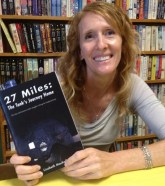
Lisabeth Mackall Book 061215

Caregiver, Lisabeth Mackall – author, 27 Miles: The Tank’s Journey Home

extra activity. I was fortunate to have five of my regular panelists agree to do the show with me and we decided to make it a holiday segment. It sounded like a lot of fun. Then shortly before the show three of the panelists had to decline because of health issues. I

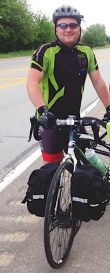
18 Daniel Mollino 060615 copy

Survivor, Daniel Mollino – cross-country cyclist

quickly checked with my remaining two panelists and they were still committed. Phew!

We did the show and sipped our virtual eggnog. We talked about traditions past – and new traditions we have each incorporated into our lives after brain injury took over. We looked at holiday issues through the eyes of survivor, Daniel, Mollino and caregiver, Lisabeth Mackall … and we had a lot of fun. I hope you will take some time during this holiday season to relax, sit back, and listen to the show.

Happy Holidays, Everyone!

See you “On the Air!”

http://www.blogtalkradio.com/braininjuryradio/2015/12/21/another-fork-in-the-road-party-nite-with-daniel-lisabeth-and-me

(Clip Art compliments of Bing.)

As I say after each post: Please leave a comment by clicking the blue words “Leave a Commentanim0014-1_e0-1 below this post.

Feel free to follow my blog. Click on “Follow” on the upper right sidebar.

If you like my blog, share it intact with your friends. It’s easy! Click the “Share” buttons below.

If you don’t like my blog, “Share” it intact with your enemies. I don’t care!

Feel free to “Like” my post.


So, Whaddya Think . . . . . . . . Should We Let Children Play Tackle Football?

So, Whaddya Think?

 Should We Let Children Play Tackle Football?

by

David Figurski and Donna O’Donnell Figurski


So Whaddya Think Brain th-4Dr. Bennet Omalu, the Nigerian pathologist who discovered the neurodegenerative disease chronic traumatic encephalopathy (CTE) by his study of the brain of Hall-of-Fame center Mike Webster, is making news again with an Op-Ed published in The New York Times. Dr. Omalu’s essay is entitled Don’t Let Kids Play Football. He says that our society has laws forbidding the sale of tobacco and alcohol to minors. There is legislation that mandates bicycle helmets for children. Football Player HurtWhy not protect children’s brains by prohibiting children from playing American-style tackle football? Dr. Omalu writes in his essay, “The risk of permanent impairment is heightened by the fact that the brain, unlike most other organs, does not have the capacity to cure itself ….”

Omalu & Will Smith

(Dr. Omalu’s CTE-discovery story and its impact on American football is told in the much-anticipated movie, Concussion, which will be in theaters on Christmas Day. Dr. Omalu is played by actor Will Smith. As grippingly shown in the Frontline documentary, League of Denial: The NFL’s Concussion Crisis, which is online and free, the National Football League – NFL – immediately attacked Dr. Omalu and tried to get him to retract the published paper.)league-of-denial-raster-br10-81-550x377

There is strong evidence that not only concussions, but also the large number of sub-concussive hits common to players of American football can lead to CTE, whose symptoms may appear as early as in the late teens. The symptoms of CTE include memory loss, reduced intelligence, depression, aggressive behavior, dementia, and suicidal thoughts. Both a college football player and a young professional player committed suicide, and they were found to have CTE. A high-school football player committed suicide. CTE has also been detected in the brains of players of high-school football.

NFLlogoThe NFL is concerned with the growing awareness of brain injuries in players of American football. If players, their families, fans, coaches, and/or parents think that CTE is common among players, a seemingly sacrosanct part of American culture and a multibillion-dollar industry would be put into jeopardy.

To get in front of the concussion issue, the NFL has aggressively promoted its image as a forward-thinking and safety-conscious league. The NFL has donated large sums of money for concussion research. The league has changed the rules of the game to discourage a player from using his helmet to make tackle or to prevent a tackle. It has established a “concussion protocol” to keep a concussed player from practice and/or games until he has been approved to return to play. The NFL has concussion-spotters present at every game and this year has empowered them to stop a game. (However, that protocol failed shamefully and dramatically in the recent instance of quarterback Case Keenum near the end of a tie game.) The rule changes are good progress, but can the NFL actually prevent brain injuries and save the game?

Current and former players have been affected by the brain-injury issue. Some players have had to retire early and fear imminent brain disease. A rookie linebacker for the San Francisco 49ers quit after one year of a four-year contract. (He is returning the signing bonus for the remaining three years.) He said that playing professional football, with all its potential for wealth, is not worth the risk of brain injury. football-brain-injuryLegendary former quarterback Joe Namath has said that, if he knew then what he knows now, he wouldn’t have played. Keith McCants, former NFL linebacker said, “We were paid to give concussions. If we knew that we were killing people, I would have never put on the jersey.”

The brains of several former players, including Hall-of-Fame linebacker

junior-seau-1024x682

Junior Seau

Junior Seau and four-time-Pro-Bowl safety Dave Duerson – both of whom committed suicide, were found to have CTE.

duerson

Dave Duerson

Boston University’s CTE Center has found CTE in 88 of 92 (1, 2) autopsied brains of former NFL players. (Dr. Ann McKee of Boston University says that this is a ridiculously high rate even for a sample of brains in which the individuals showed some signs of brain disease. DOF has written about a simple fix for the claim of bias. In the meantime, there was a report that was consistent with Dr. McKee’s fear that CTE is common among football players. Frank Gifford, Hall-of-Fame running back, apparently died of natural causes, but his brain showed CTE.)

Frank Gifford football

Frank Gifford

Should children play American football with all that is known? Obviously there is much more to be learned, but should society wait to protect the children? Children trust their parents and coaches. Dr. Omalu only wants society to protect the brains of young children until those children are able to understand the risks to the brain from playing Brain in football helmetfootball and to make their own decision of whether or not to play. Boston University’s Dr. Robert Cantu said that a child’s brain is developing until age 14. Should children be subjecting their developing brains to high impact hits? One study showed that sometimes the force of a young child’s hit can reach that of a college football player.

football player catching ball

One argument for safety in American football is that the equipment, especially the helmet, is much improved. The helmet does a very good job of protecting the skull, but does nothing to protect the brain. There is no helmet that can prevent a concussion.Concussions-sports-concussion-crisis

As you might imagine, Dr. Omalu’s position is highly unpopular. Danny Kanell, former NFL quarterback and now ESPN commentator, claims that Dr. Omalu is waging a “War on Football.” Many fans and parents agree with Kanell because they believe that CTE is not common among football players. (DOF has written how this issue can be resolved simply. Dr. Omalu is an author on a paper reporting the accurate detection of CTE in a living person using a special PET – positron emission tomography – scan. The NFL needs to have all of its players scanned.) If Dr. Omalu’s suggestion about not letting kids play tackle football were adopted, one effect would be immediately obvious. The NFL would see its pool of young players dry up, so the talent we now see in the NFL would no longer be seen.

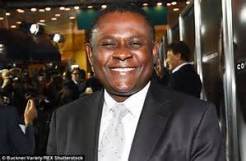
Bennet Omalu

Dr. Bennet Omalu at screening of “Concussion”

It is unlikely that Dr. Omalu’s suggestion would ever come true. But he has the stature to get people talking, and the discussion has already changed. More people are becoming aware of the danger to the brain of playing tackle football. The NFL is concerned with the movie Concussion because it will increase society’s awareness of the danger. (In an article about an early showing of Concussion to former players and their families, the Huffington Post writes “… the wife of former tight end Taz Anderson, said the movie made her question whether her grandchild should continue to play the sport.”) Recently Bob Costas, a renowned sports commentator, said that American football is based on violence. The league has no way of fixing its problem with head trauma.

If you’ve ever seen young children playing tackle football, you will realize that society must do something to protect its children.

So, Whaddya Think?

Let’s get a dialogue going. Post your comments in the Comment Section. Directions are below.

So . . . what do you think? Is there something you are passionate about in this Brain Injury (BI) world? Do you want to be heard? Your opinion matters! You can SPEAK OUT! on “So Whaddya Think?”

Simply send me your opinion, and I will format it for publication. Posts may be short, but please send no more than 500 words. Send to Neelyf@aol.com

I hope to HEAR from you soon.

As I say after each post:

Feel free to leave a comment by clicking the blue words “Leave a Comment” below this post.

Please follow my blog. Click on “Follow Me Via eMail” on the right sidebar of your screen.anim0014-1_e0-1

If you like my blog, click the “Like” button under this post.

If you REALLY like my blog, share it intact with your friends. It’s easy! Click the “Share” buttons below.

If you don’t like my blog, “Share” it intact with your enemies. That works for me too!

(Clip Art compliments of Bing.)


Survivors SPEAK OUT! Jenn Von Hatten

Survivors SPEAK OUT! Jenn Von Hatten

presented

by

Donna O’Donnell Figurski


Von Hatten, Jenn Survivor & Hanna 121315

Jenn Von Hatten – survivor and daughter, Hanna

1. What is your name? (last name optional)

Jenn Von Hatten

2. Where do you live? (city and/or state and/or country) Email (optional)

Trenton, Nova Scotia, Canada     jlvonhatten@gmail.com

3. On what date did you have your brain injury? At what age?

My brain injury happened on Valentine’s Day 2011. I was 35 years old.

4. How did your brain injury occur?

My brain injury resulted from a motor vehicle accident caused by freezing rain.

5. When did you (or someone) first realize you had a problem?

The paramedics found me clinically dead at the scene. The doctors wanted to airlift me to the Queen Elizabeth II (QEII) Health Sciences Centre in Halifax, which is the biggest hospital in Nova Scotia. But the freezing rain affected the rotors on the helicopter, so I had to be taken by road ambulance.

6. What kind of emergency treatment, if any, did you have?

The pressure in my brain needed to be monitored to see if I needed surgery. I also lacerated my liver. Fortunately, I did not need surgery for either. I also fractured a rib and three vertebrae.

7. Were you in a coma? If so, how long?

I was in a coma for seven weeks. First, I was in a coma from the accident. Then I was in a medically induced coma because of my fractured rib and vertebrae. I managed to develop pneumonia, and I had a tracheotomy.

8. Did you do rehab? What kind of rehab (i.e., inpatient or outpatient and occupational and/or physical and/or speech and/or other)? How long were you in rehab?

I was transferred to the Rehab Centre in Halifax around Easter 2011, and I was discharged in July 2011. Besides being a patient at the Rehab Centre, I’ve had to go to physiotherapy and occupational therapy. My spastic muscles affected my speech, so I also went to speech therapy.

9. What problems or disabilities, if any, resulted from your brain injury
(e.g., balance, perception, personality, etc.)?

Von Hatten, Jenn survivor Son Liam 121315

Jenn Von Hatten – survivor and son, Liam

My balance has been severely affected. I used to be in a wheelchair, due to fractured vertebrae. I’ve since “graduated” to a walker, a quad cane, and a mini-quad cane. I’m a Fall Risk, and I get the Disability Pension.

10. How has your life changed? Is it better? Is it worse?

I have joint custody of my seven-year-old daughter, Hanna. I am no longer able to work as a nurse. My life has definitely changed, but I can’t say if it is better or worse. All I can say with certainty is that my life is DIFFERENT.

11. What do you miss the most from your pre-brain-injury life?

I miss being able to work as a nurse the most. As much as I would like to a work as a nurse, I know I would NOT be safe – mentally, in terms of remembering if I gave a client medication or treatments, or physically.

12. What do you enjoy most in your post-brain-injury life?

I enjoy my time with Hanna. It is her time, as I don’t work anymore. I now have a cat, Spunkster, which I got from the local SPCA. When Hanna’s not with me, I hang out with Spunkster.

13. What do you like least about your brain injury?

I had graduated as a nurse only seven months before my traumatic brain injury (TBI). I had wanted to be a nurse for over fifteen years. At least I can say I turned that dream into reality! I sometimes miss being able to drive. My rehabilitation doctor says I still cannot drive, as my reflexes are not up to snuff. However, I can say that my driver’s license has NOT been revoked!

14. Has anything helped you to accept your brain injury?

Becoming a nurse was my dream. I finally realized that, just because I am no longer able to work as a nurse, I STILL AM A NURSE! Being a nurse is STILL a part of me.

15. Has your injury affected your home life and relationships and, if so, how?

My youngest daughter’s father threw me out, as he said he was not happy. I remind myself that not many relationships survive a TBI.

16. Has your social life been altered or changed and, if so, how?

I don’t really have a social life, except maybe for going grocery shopping. I go by cab, so I interact with the cab divers, who are husband and wife. They own the cab company, and they are now good friends of mine. I prefer to interact with people in small groups.

17. Who is your main caregiver? Do you understand what it takes to be a caregiver?

Von Hatten, Jenn survivor daughters Emma and Hanna 121315

Jenn Von Hatten – survivor and daughters Emma and Hanna

I am my own caregiver now. Yes, I do understand what it takes to be a caregiver, as I used to be one. When I was in school to become a nurse, I worked as a CCA (Certified Care Assistant). A CCA can also be called PCA (Personal Care Assistant) or PCW (Personal Care Worker).

18. What are your plans? What do you expect/hope to be doing ten years from now?

My plan is to be helping others who are TBI survivors or caregivers. I can provide info and support.

19. Are you able to provide a helpful hint that may have taken you a long time to learn, but which you wished you had known earlier? If so, please state what it is to potentially help other survivors with your specific kind of brain injury.

Understand that a person does not need to be working (and therefore getting paid) to be fulfilling whatever he or she was meant to be. Find other ways – perhaps volunteering.

20. What advice would you offer to other brain-injury survivors? Do you have any other comments that you would like to add?

Figure out what you like doing and makes you happy. If you can’t remember, that’s OK – find out. (It’s what I wish I knew back in the beginning when I was first dealing with this.) Find out what you like and makes you happy RIGHT NOW! Everybody, brain injury or not, is constantly evolving.


(Disclaimer: The views or opinions in this post are solely that of the interviewee.)

If you would like to be a part of the SPEAK OUT! project, please go to TBI Survivor Interview Questionnaire for a copy of the questions and the release form.

(Clip Art compliments of Bing.)

(Photos compliments of contributor.)

As I say after each post: Please leave a comment by clicking the blue words “Leave a Commentanim0014-1_e0-1 below this post.

Feel free to follow my blog. Click on “Follow” on the upper right sidebar.

If you like my blog, share it intact with your friends. It’s easy! Click the “Share” buttons below.

If you don’t like my blog, “Share” it intact with your enemies. I don’t care!

Feel free to “Like” my post.


SPEAK OUT! . . . . . . . . . . . . Itty-Bitty Giant Steps

SPEAK OUT! Itty-Bitty GIANT Steps

presented by

Donna O’Donnell Figurski

Itty-Bitty GIant Steps for BlogSPEAK OUT! Itty-Bitty Giant Steps will provide a venue for brain-injury survivors and caregivers to shout out their accomplishments of the week.
If you have an Itty-Bitty Giant Step and you would like to share it, just send an email to me at neelyf@aol.com.

If you are on Facebook, you can simply send a Private Message to me. It need only be a sentence or two. I’ll gather the accomplishments and post them with your name on my blog approximately once a week. (If you do not want your last name to be posted, please tell me in your email or Private Message.)

I hope we have millions of Itty-Bitty Giant Steps.

Here is this week’s Itty-Bitty GIANT Step

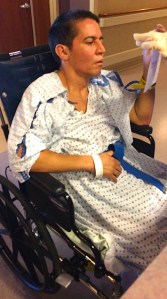
Otto Rodriguez (survivor) (submitted with permission by Otto’s sister, Sylvia Rodriguez Witt)…

Rodriguez, Otto Survivor 121115

Otto Rodriguez, Survivor

Otto sustained a diffuse axonal traumatic brain injury on February 28, 2015, due to an assault. Otto had to relearn to walk and talk, and he continues to learn independence. Before his injury, my brother was a marathon runner. Recently he and I completed a 5K together. Otto completed the 5K in an hour.

Rodriguez, Otto Survivor & sister Sylvia Witt

Otto Rodriguez, Survivor & sister, Sylvia Rodriguez Witt

I write this to offer hope to those in the early stages of this journey. Each day, my brother continues to heal. It is slow and requires patience. But with love, support, and patience, it is possible to loosen the grip of this awful beast, otherwise known as “TBI.” This holiday season, I am thankful for resilience, patience, and perseverance. Stay strong survivors!

YOU did it!

Congratulations to contributors!

(Clip Art compliments of Bing.)

As I say after each post:anim0014-1_e0-1

Please leave a comment by clicking the blue words “Leave a Comment” below this post.

Feel free to follow my blog. Click on “Follow” on the upper right sidebar.

If you like my blog, share it intact with your friends. It’s easy! Click the “Share” buttons below.

If you don’t like my blog, “Share” it intact with your enemies. I don’t care!

Feel free to “Like” my post.


Another Fork in the Road Holiday Stressors

Fork in the Road copy“Another Fork in the Road”

This category is an extension of my radio show, “Another Fork in the Road,” which airs at 5:30 pm (Pacific Time) on the 1st and 3rd Sundays of each month on the Brain Injury Radio Network. (See the “On The Air Show Menu” category for a list – with links – of all my shows, which are archived and thus always available.)

On the 1st Sunday of each month, I host a panel of brain injury survivors, caregivers, and/or professionals in the field. On these shows, my panelists and I examine topics pertaining to brain injury.

On the 3rd Sunday of each month, I host guests – brain-injury survivors, caregivers, or professionals in the field.

Since I spend countless hours in preparation for each show, I decided to share the knowledge that I gather with my readers.

Another Fork in the Road

Holiday Stressors

by

Donna O’Donnell Figurski

The turkey and stuffing are gone, and the winter holidays are around the corner. For most folks, the holidays bring happiness and cheer. Extra gaiety is seen in office parties and large family-gatherings. Secret Santas are chosen and Hanukkah candles are lit, Menorahbut for many survivors of brain injury, the holidays are a stressful time, leaving them anxiety-ridden, exhausted, and distressed.
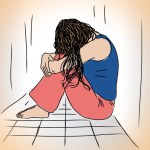
Survivors of brain injury may become melancholy as they remember their lost lives – lives in which they weren’t impaired, lives in which their freedom was at their fingertips, lives in which they were independent and didn’t need to rely on others for their every need. This supposedly joyous time may not be so happy for many folks. The holiday stress can be exaggerated for those living with a brain injury, compounding a survivor’s unhappiness and sometimes causing severe depression. The hustle and bustle of the holidays can definitely add disorganization and chaos to anyone’s life, but for those who live on a Sad GIrl 2daily basis with the confusion that often accompanies brain injury, the holiday season can be an utter nightmare.

The holidays bring many additional activities, like baking dozens and dozens of holiday cookies to give as gifts to family and friends. Entertaining friends might be fun, but decorating the house and preparing food and drinks for guests can be a daunting task. Entertaining out-of-town guests complicates that undertaking even further – arranging sleeping areas with sheets and pillows and extra blankets and towels. Then shopping – ah, shopping – braving the malls with their Women Shoppingwide-eyed, crazed shoppers and their cacophonous noise is not for the faint of heart. The uncertainty of whether Great Aunt Sally will love the little pink unicorn that you found in the bargain basement of Marky’s is tying up your brain in knots. For those who live in colder climes, weather may play a role, as blizzards and freezing rain make it difficult to leave the house and add the pressure of when to get the shopping done. The cold, gray skies can make life seem dreary, altering even the best of temperaments. But the holidays can be conquered, and a survivor can have fun if he or she tones it down a little and takes the holidays in itty-bitty steps.

To help ease their holiday doldrums, survivors of brain injury should try staying in the present or looking to the future. Survivors shouldn’t compare themselves and the current holiday to holidays from the past. It’s normal to feel the loss of one’s “old” self. It’s normal for a survivor to feel sadness at what once was and now is no longer. But if this is the “new normal,” then the survivor needs to make the new normal a better place to be.

Little Christmas TreePerhaps the six-foot tree that a survivor trekked out into the woods to cut down can be replaced by a three-foot artificial tree – something that can beFamily Eating assembled in less than an hour, instead of enduring the stress of an all-afternoon trip. Maybe the family-gathering to eat latkes must be limited to the immediate family to minimize the chaos that a large gathering might cause.

The holiday season is a good time for a survivor of brain injury to pull back. The survivor can make the holidays simpler and avoid their commercialism. So how does a survivor of brain injury still accomplish these goals? Here are some suggestions.

 Plan and Organize

ListMake a list of the things you want to do, and prioritize. Choose to do only one activity or job each day. Decide when you are best able to do the job. Are you better in the early morning hours – when you have more energy? Or are you like me – alive at night? That’s when I get more done. Everyone’s different, and only you will know what works best for you.

Pace Yourself

Baking Cookies-819562Don’t set your expectations too high. That is a guarantee for failure. Instead of baking ten dozen cookies in one afternoon, spread out the job by allowing several afternoons to accomplish the task. Or better still, make a smaller portion of the cookies. Set your sights lower. By planning and pacing yourself, you can avoid becoming overwhelmed, depressed, or simply exhausted.

Keep It Simple

Gift Bags 2Instead of wrapping a present the traditional way with giftwrap and ribbons, pop the gift into a pre-decorated box or a gift bag and stuff some colored tissue paper around it. It will be lovely, and it is so much easier! Do you really need to have a twenty-three-pound turkey with stuffing and all the trimmings? Probably not! A simpler meal will taste just as good and will be enjoyed by all simply because you are spending precious time together.

Accept Help

Wrapping Gifts

Usually family and friends like to offer help, especially during the holidays. Let them! Let them help shop for or wrap presents. Let them help cook dinner or bake cookies. It will be a lot more fun and actually make the holiday a more joyous occasion.


Make a change

Try something different. Plan a new routine or create a new ritual.

With some small steps, life during the holidays can be tolerable – maybe even fun. You just have to open your mind, look at life differently, and begin to make “new” traditions.Stress Free Holiday

Click here to listen to my show:

“Holidays – Less Stress – More Fun,” on “Another Fork in the Road,” on the Brain Injury Radio Network.


This article was also published on the following online magazines and journals.

Holiday Stress and Brain Injury” on Lash & Associates Publishing

Brain Injury – Surviving Holiday Stress” on Disabled Magazine

“Holiday Stressors” on TBI – Hope and Inspiration (coming soon – in press)


(Clip Art compliments of Bing.)

As I say after each post: Please leave a comment by clicking the blue words “Leave a Commentanim0014-1_e0-1 below this post.

Feel free to follow my blog. Click on “Follow” on the upper right sidebar.

If you like my blog, share intact it with your friends. It’s easy! Click the “Share” buttons below.

If you don’t like my blog, “Share” it intact with your enemies. I don’t care!

Feel free to “Like” my post


On The Air: . . . . . . . . . . . . . . Brain Injury Radio . . . . . . . . “Another Fork in the Road” Holidays – Less Stress – More Fun!

On The Air: Brain Injury Radio “Another Fork in the Road” 

with

Panelists: Survivor, Lisa Dryer and Caregiver, Lisabeth Mackall

Topic: Holidays – Less Stress – More Fun!

presented

by

Donna O’Donnell Figurski

images-1The holidays are just around the corner. Though they can be fun for many, for others this time of year is filled with extra stress. There are ways to lessen the anxiety and make the holidays more enjoyable by changing some of your old holiday traditions. My panelists, survivor, Lisa Dryer, and caregiver, Lisabeth Mackall, and I are going to discuss different ways that we make the holidays more fun with less stress.
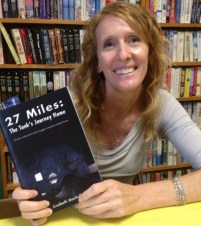
Lisabeth Mackall Book 061215

Lisabeth Mackall, caregiver  Author of “27 Miles: The Tank’s Journey Home

<–Panelist, Lisabeth Mackall

Dryer, Lisa Survivor

Lisa Dryer, survivor – former Renaissance Fair actor

Panelist, Lisa Dryer –>

If you missed this show, “Holidays – Less Stress – More Fun” on “Another Fork in the Road” with survivor, Lisa Dryer and caregiver, Lisabeth Mackall, and me on December 6th, 2015, don’t fret. You can listen to the archived show here.

Click the link below.


See you “On the Air!”

On The Air: Brain Injury Radio “Another Fork in the Road” with Panelists: Survivor, Lisa Dryer and Caregiver, Lisabeth Mackall Topic: Holidays – Less Stress – More Fun!

(Clip Art compliments of Bing.)

As I say after each post: Please leave a comment by clicking the blue words “Leave a Commentanim0014-1_e0-1 below this post.

Feel free to follow my blog. Click on “Follow” on the upper right sidebar.

If you like my blog, share it intact with your friends. It’s easy! Click the “Share” buttons below.

If you don’t like my blog, “Share” it intact with your enemies. I don’t care!

Feel free to “Like” my post.


diemodi jewelry

uniquely hand-crafted jewelry by donna

Welcome to Harmony Kent Online

The home of all things books

Pete Springer

Passionate Teacher and Future Children's Author

HOPE TBI

Helping Other People Excel - To Be Independent

For the Love of Books, Old and New

Katie Fischer, Writer and Reader of Stories

Charlie Bown

Children's Author

Jessica Hinrichs

“We write to taste life twice, in the moment and in retrospect.” ― Anais Nin

VIVIAN KIRKFIELD - Writer for Children

Picture Books Help Kids Soar

Mindy’s Writing Wonderland

For authors, parents, teachers & everyone who loves children’s books.

Kaitlyn Leann Sanchez

Literary Agent

Surviving Traumatic Brain Injury

TBI - Survivors, Caregivers, Family, and Friends

The Care Factor

Loving someone with a Traumatic Brain Injury

Brain Injury Support Group of Duluth-Extension

Brain Injury Information and SUPPORT

Brain Aneurysm Global Insight

Brain Aneurysm, cerebral hemorrhaging, hemorrhage stroke