TBI – Survivors, Caregivers, Family, and Friends

Posts tagged ‘Brain Injury’

SPEAK OUT! Itty-Bitty GIANT Steps

SPEAK OUT! Itty-Bitty GIANT Steps

Itty-Bitty GIant Steps for Blog


SPEAK OUT! Itty-Bitty Giant Steps will provide a venue for brain-injury survivors and caregivers to shout out their accomplishments of the week.

If you have an Itty-Bitty Giant Step and you would like to share it, just send an email to me at donnaodonnellfigurski@gmail.com.

If you are on Facebook, you can simply send a Private Message to me. It need only be a sentence or two. I’ll gather the accomplishments and post them with your name on my blog approximately once a week. (If you do not want your last name to be posted, please tell me in your email or Private Message.)

I hope we have millions of Itty-Bitty Giant Steps.


Lisa Parker


Lisa Parker (survivor) … I went to Al-Anon with my mom last night, and it was gr8!

FocusGroup-ridgetopvirtualsolutions


(Clip Art compliments of Bing.)

(Photos compliments of contributor.)

As I say after each post:

Please leave a comment by clicking the blue words “Leave a Comment” below this post.

Feel free to follow my blog. Click on “Follow” on the upper right sidebar.anim0014-1_e0-1

If you like my blog, share it intact with your friends. It’s easy! Click the “Share” buttons below.

SPEAK OUT! NewsBit . . . . . Blood Test Developed for Brain Injury

Blood Test Developed for Brain Injury

presented

by

Donna O’Donnell Figurski


th-1The Centers for Disease Control has reported that traumatic brain injury (TBI) accounts for more than 2.5 million visits to emergency rooms (ERs) in the US every year. Many people with a concussion do not even go to the ER because they have no symptoms and don’t believe that the ER can diagnose a brain injury if it’s not serious enough to be detected by a number of indirect tests. A CT (“cat”; computerized tomography) scan is usually ordered if a brain injury is suspected, but only 10% of CT scans detect a brain injury in people with a mild head injury.

thA quick, sensitive, and accurate blood test will soon be available for ERs EmergencyRoomto know if the brain has been injured. Some people will be negative. They will not need a CT scan and can go home with no worries. Others who are asymptomatic may actually discover that they’re positive for a brain injury. The ER doctor can then take appropriate action.

An objective blood test will be a game-changer for the treatment of TBIs. An obvious difference is that it will make many CT scans (and their radiation) unnecessary. On the other hand, people, especially those with a mild concussion, may discover they do have a brain injury and take appropriate steps. (Full story 1, 2)


(Clip Art compliments of Bing.)

As I say after each post: Please leave a comment by clicking the blue words “Leave a Commentanim0014-1_e0-1 below this post.

Feel free to follow my blog. Click on “Follow” on the upper right sidebar.

If you like my blog, share it (intact) with your friends. It’s easy! Click the “Share” buttons below.

If you don’t like my blog, “Share” it (intact) with your enemies. I don’t care!

Feel free to “Like” my post.

Sneak Peeks for Prisoners

My book, Prisoners without Bars: A Caregiver’s Tale, will be released to the public on November 1, 2018 by WriteLife Publishing of Boutique of Quality Books Publishing Company. Here are pre-order links for Barnes & Noble and Amazon.

Excerpt 4

Chapter 4

Unthinkable Odds

presented by

Donna O’Donnell Figurski

Crazed Woman

… I must have looked like a zombie. I stood mute, wringing my hands, breathing out and in and out again. I didn’t know what to do. I felt paralyzed. Brain SurgeonMy permission was needed to operate on my husband’s brain. How could I give it? How could I allow Dr. Hulda to ­work on my husband’s beautiful, smart brain? …


Please leave a comment/question. I will respond.

(Clip Art compliments of Bing.)

As I say after each post: Please leave a comment by clicking the blue words “Leave a Commentanim0014-1_e0-1 below this post.

Please follow my blog. Click on “Follow” on the upper right sidebar.

If you like my blog, share it (intact) with your friends. It’s easy! Click the “Share” buttons below.

If you don’t like my blog, “Share” it (intact) with your enemies. I don’t care!

Please “Like” my post.

Past Blast . . . . . . . . . . . . . . . Gabby Giffords & Mark Kelly: TED Interview

“Gabby Giffords & Mark Kelly: TED Interview”

(originally published April 28, 2014)

presented by

Donna O’Donnell Figurski

Gabby & Mark TED Intreview Apri 2014


When TED interviewer, Pat Richards, asked former Arizona Congresswoman, Gabrielle Giffords (who is recovering from a Traumatic Brain Injury caused by a gunshot wound to her head), if she wanted the “old” Gabby Giffords back or whether she was embracing the “new” version of herself, Gabby emphatically said, “The New One! … Better! Stronger! Tougher!”

Listen to the interview – “Gabby Giffords and Mark Kelly: Be passionate. Be courageous. Be your best.”

Gabby and Mark are working for a safer world. See Americans for Responsible Solutions.

(Photo compliments of TED.)

(Disclaimer: The views expressed are not necessarily mine.)


As I say after each post:

Please leave a comment by clicking the blue words “Leave a Comment” below this post.

Feel free to follow my blog. Click on “Follow” on the lower right corner of your screen.

If you like my blog, share it with your friends. It’s easy! Click the “Share” buttons below.

If you don’t like my blog, “Share” it with your enemies. I don’t care!

Feel free to “Like” my post.

Permission granted to “Reblog” my post.

SPEAK OUT! . . . . . . . . . . . . . . . Itty-Bitty GIANT Steps

SPEAK OUT! Itty-Bitty Giant Steps

presented by

Donna O’Donnell Figurski


Itty-Bitty GIant Steps for BlogSPEAK OUT! Itty-Bitty Giant Steps will provide a venue for brain-injury survivors and caregivers to shout out their accomplishments of the week.

If you have an Itty-Bitty Giant Step and you would like to share it, just send an email to me at neelyf@aol.com.

If you are on Facebook, you can simply send a Private Message to me. It need only be a sentence or two. I’ll gather the accomplishments and post them with your name on my blog approximately once a week. (If you do not want your last name to be posted, please tell me in your email or Private Message.)

I hope we have millions of Itty-Bitty Giant Steps.

Lauren Ziaks

Lauren Ziaks – Brain Injury Survivor

Lauren Ziaks (survivor) … I faced a huge fear today. I wanted to hike a slot canyon, but I was scared of claustrophobia, dizziness/balance issues from recent re-injury, falling etc. But, with (a lot of) help, some positive talk, and a couple of tears of fear at a really steep part, I was able to do Zebra Slot Canyon!8f71e4d8a4fe5b982b90c51e430a75c5

Keep pushing yourself to face your fears and limitations, whatever they are for you. And, lean on those around you for help when you can.


YOU did it!

Congratulations to Lauren!

(Clip Art compliments of Bing.)

(Photos compliments of contributor.)

As I say after each post:anim0014-1_e0-1

Please leave a comment by clicking the blue words “Leave a Comment” below this post.

Feel free to follow my blog. Click on “Follow” on the upper right sidebar.

If you like my blog, share it intact with your friends. It’s easy! Click the “Share” buttons below.

If you don’t like my blog, “Share” it intact with your enemies. I don’t care!

Feel free to “Like” my post.

TBI Tales . . . . . . . . . . . . . . . . . . This Song Could Be a Caregiver’s Anthem

This Song Could Be a Caregiver’s Anthem

by

Donna O’Donnell Figurski

David & Donna Aunt Irene's Funeral 060718


I happened to hear this old hit song (“Lean on Me”) a couple of days ago. After listening to the lyrics, I realized it reflects what we caregivers do. We just want to help.

a0379e35efb379c624212808302a9194

We don’t look this bad.

As the song implies, we give much-needed help. “Lean on Me” could be our anthem. Give it a listen.

PS. I just had to dance with this man to that song and we each did a bit of “leaning on.”


(Disclaimer: The views or opinions in this post are solely that of the author.)

If you have a story to share and would like to be a part of the SPEAK OUT! project, please submit your TBI Tale to me at neelyf@aol.com. I will publish as many stories as I can.

As I say after each post:

Please leave a comment by clicking the blue words “Leave a Comment” below this post.anim0014-1_e0-1

Please follow my blog. Click on “Follow” on the top right sidebar. (It’s nice to know there are readers out there.)

If you like my blog, share it with your friends. It’s easy! Click the “Share” buttons below.

If you don’t like my blog, “Share” it with your enemies. I don’t care!

Feel free to “Like” my post.

(Clip Art compliments of Bing.)


Sneak Peeks for Prisoners

My book, Prisoners without Bars: A Caregiver’s Tale, will be released to the public on November 1, 2018 by WriteLife Publishing of Boutique of Quality Books Publishing Company. Here are pre-order links for Barnes & Noble and Amazon.


Excerpt 1

Chapter 1

Everything’s Blurry

presented by

Donna O’Donnell Figurski

… On January 13, 2005, David’s morning started much the same as it did each day. The only difference was that he delayed his rising by one hour. He planned to work at home that morning, preparing a talk about his

figurski-1

David Figurski, PhD – a few months before brain injury

research that he expected to deliver at Wesleyan University in Connecticut on Saturday. A long-time professor-friend was retiring from the faculty, and David was a featured speaker at his retirement symposium. It was an invitation and an honor that may have saved David’s life. …


Please leave a comment/question. I will respond.


(Clip Art compliments of Bing.)

As I say after each post: Please leave a comment by clicking the blue words “Leave a Commentanim0014-1_e0-1 below this post.

Feel free to follow my blog. Click on “Follow” on the upper right sidebar.

If you like my blog, share it (intact) with your friends. It’s easy! Click the “Share” buttons below.

If you don’t like my blog, “Share” it (intact) with your enemies. I don’t care!

Feel free to “Like” my post.

Caregivers SPEAK OUT! . . . Theresa Friedle . . . . . . . (caregiver for her husband, Scott)

Caregivers SPEAK OUT!

Theresa Friedle (caregiver for her husband, Scott)

presented by

Donna O’Donnell Figurski
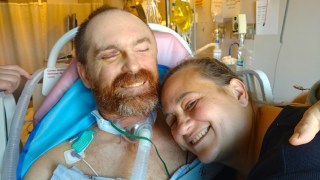
 

Theresa Friedle & Husband Scott IMG_20161112_102405896.jpg


1. What is your name? (last name optional)

Theresa Friedle

2. Where do you live? (city and/or state and/or country) Email? (optional)

Tomahawk, Wisconsin, USA     theresaj4man@gmail.com

3. What is the brain-injury survivor’s relationship to you?

The survivor is my husband, Scott. At the time of the accident, Scott and I were engaged. We were married on June 3, 2017.

How old was the survivor when he/she had the brain injury?

The accident happened two days before Scott’s 47th birthday.

What caused your survivor’s brain injury?

We were both working as truck drivers. Scott was picking up a load of plywood, which needed to be tarped. Something happened when he was on top of the load spreading out the tarp, and he fell anywhere from thirteen to nineteen feet (depending on if he was standing upright). He landed on his head on a concrete floor.

4. On what date did you begin care for your brain-injury survivor?

Scott’s injury happened on October 27, 2016. It took me ten and a half hours to get to him. I’ve been at his side ever since then.

Were you the main caregiver?

At first, the doctors and nurses were Scott’s caregivers. When he was discharged from rehab on December 22, I became his main caregiver.

Are you now?

Yes

How old were you when you began care?

I was 46 years old.

5. Were you caring for anyone else at that time (e.g., children, parents, etc.)?

At home, I had a young adult daughter, who was expecting her first child, as well as my younger two children (older teenagers).

6. Were you employed at the time of your survivor’s brain injury?

Yes. I was working for the same company as my (now) husband. I had a permit for a commercial driver’s license.truck4

If so, were you able to continue working?

No. However, I was told about a program through my state called “Family Care.” I now get paid to take care of my husband.

7. Did you have any help? If so, what kind and for how long?

I learned a great deal from the doctors, nurses, and therapists who worked with Scott. I asked a LOT of questions. However, once Scott came home, other than my family pitching in with the chores – no. It’s my job.

8. When did your support of the survivor begin (e.g., immediately – in the hospital; when the survivor returned home; etc.)?

Immediately – while Scott was in the neuro intensive care unit.

Scott’s family lives quite a ways away, so, to facilitate keeping them informed of his progress, I started a Facebook page about him. It turned out to be a wonderful support system.

9. Was your survivor in a coma?

Yes. Scott was in a medically induced coma. He had a craniotomy (to allow his brain room to swell), he was intubated, and he had two ports (one for meds and the other for nutrition).

If so, what did you do during that time?

I stayed by Scott’s side – talked to him and sang to him. I prayed. I kept his family informed, etc.

10. Did your survivor have rehab? If so, what kind of rehab (i.e., inpatient and/or outpatient and occupational, physical, speech, and/or other)? Theresa Friedle & Husband Scott IMG_20170705_220110

Yes. Scott was transported to an inpatient rehab facility closer to home. They provided him with occupational, speech, and physical therapies.

How long was the rehab?

We were there for twenty-two days. Scott continues to see speech and physical therapists twice a week.

Where were you when your survivor was getting therapy?

I stayed with Scott in the rehab center.

11. What problems or disabilities of your brain-injury survivor required your care, if any?

When Scott was first home, he needed help with almost everything! He was still in a wheelchair, and he needed assistance toileting, dressing, bathing, and more. He now walks with a cane, needs occasional help toileting, can dress himself, can help cook meals, does simple crafts, etc. He can’t drive, so I also transport him to and from wherever he needs to go.

12. How has your life changed since you became a caregiver?

Our lives have changed dramatically. Everything we do revolves around Scott’s needs, doctor appointments, and outpatient physical and speech therapy appointments. We can no longer attend church services, and we cannot go anywhere where there will be loud, noisy crowds.

Is it better?

In some aspects, yes! I get to be home with my children, and I get to see my grandson more.ITheresa Friedle & Husband Scott & Grandkids MG_20170714_083217

Is it worse?

Yes. Scott is limited as to the things we can do, and we cannot drive a semi right now – if ever.

13. What do you miss the most from pre-brain-injury life?

I miss going to church and driving a semi. The semi meant super-long days and hard work strapping and tarping loads. Driving it was often scary with how some people drive around us. But, it was something I’ve wanted to do since I was a teenager!

13. What do you enjoy most in post-brain-injury life?

I love that I’m able to be home with my family! I love that I get to take care of Scott, who remains a super-loving wonderful man!

14. What do you like least about brain injury?

Scott’s constantly in pain.

15. Has anything helped you to accept your survivor’s brain injury?

AliveWhat has helped me most is being super-grateful that Scott’s ALIVE! I feel that, even if Scott stays how he is now, we still have a great deal to be thankful for.

16. Has your survivor’s injury affected your home life and relationships and, if so, how?

Of course it has! Every aspect of our life has changed. We had to move our bedroom to the dining room because Scott cannot climb up and down the fifteen stairs to the upper level. Our laundry room is currently being remodeled so that Scott will have a shower. Now, I have to give him sponge baths in the kitchen. My children are happier because we’re home most of the time now. Through the Facebook page I created, I was able to develop a relationship with Scott’s family. They are so warm, loving, and welcoming.

17. Has your social life been altered or changed and, if so, how?

We seldom eat at restaurants anymore. The busyness of them overwhelms Scott. We can’t go to church for the same reason. Social events are out. Friends can only stay for an hour or so, otherwise Scott’s exhausted. At this point, most of my social life is through Facebook. Honestly, we’re NOT dwelling on that!

18. What are your plans? What do you expect/hope to be doing ten years from now?

We’ve discussed a few options, but none that is viable at this point. Until we know how permanent various parts of Scott’s injuries are, we really cannot plan much of anything. We make tentative plans for a week or two at a time, knowing that we can only do them IF Scott is having a good day that day.

19. What advice would you offer other caregivers of brain-injury survivors?

Caregiver Tips -clipart-blackboard-helpful-tips-detailed-illustration-heplful-text-43676517This is a SUPER-hard job, as our emotions are involved!

Be gentle with yourself and super-patient with the PERSON you are caring for.

Join support-groups, even if you can’t physically attend a group. (I have found several through Facebook by entering “TBI support groups.” TBI=traumatic brain injury.)

Make sure you get the rest you need.

The hardest for me? ASK for help when you need it!

Celebrate each step forward. Little steps are STILL STEPS!

It’s going to be a very long road. Educate yourself about TBI.

Get involved with the therapists – you will get a better sense of what your loved one can and can’t do. (This helped me tremendously with selecting activities for Scott. I wanted to give him something that he CAN do – so he has a sense of ACCOMPLISHMENT. I praise his efforts, regardless of his success. I don’t live with Scott’s pain – but I can see how HARD various tasks are for him to do. When Scott is frustrated that he can’t do something that he used to do easily – Scott’s usually upset about household chores, etc. – I remind him that there is a HUGE difference between CAN’T and WON’T!)

Take notes when you go to various doctors. I have found that their records are often INCORRECT.

Life is very, very different than what we had envisioned, but “different” does NOT need to equate with “bad.”

Attitude is EVERYTHING!

It’s OK to cry.

It’s OK if all the chores aren’t completed every day. Your best IS good enough. Know that your best fluctuates every day – sometimes several times a day. One day you will be able to get everything that you want to do done! Woohoo! Another day, your best is simply getting out of bed!

YOU ARE NOT ALONE! 

20. Do you have any other comments that you would like to add?

Sometimes reading the answers to these questions sparks more questions. I would be happy to explain further.


(Clip Art compliments of Bing.)

As I say after each post: Please leave a comment by clicking the blue words “Leave a Commentanim0014-1_e0-1 below this post.

Feel free to follow my blog. Click on “Follow” on the upper right sidebar.

If you like my blog, share it (intact) with your friends. It’s easy! Click the “Share” buttons below.

If you don’t like my blog, “Share” it (intact) with your enemies. I don’t care!

Feel free to “Like” my post.
New NEWS: My Radio Interview about My Upcoming Book

New NEWS: My Radio Interview about My Upcoming Book

presented by

Donna O’Donnell Figurski

Jamie Crane-Mauzy 053118

Jamie Crane-Mauzy


On May 27, 2018, Jamie Crane-Mauzy, a host on the Brain Injury Radio Network, interviewed me about my upcoming book (Prisoners without Bars: A Caregiver’s Tale), which will be available to the public on November 1, 2018, but that can be pre-ordered now. The 80-minute show has been archived and can be listened to at any time.

Donna O’Donnell Figurski

Prisoners

Prisoners without Bars: A Caregiver’s Tale


(Clip Art compliments of Bing.)

As I say after each post: Please leave a comment by clicking the blue words “Leave a Commentanim0014-1_e0-1 below this post.

Feel free to follow my blog. Click on “Follow” on the upper right sidebar.

If you like my blog, share it (intact) with your friends. It’s easy! Click the “Share” buttons below.

If you don’t like my blog, “Share” it (intact) with your enemies. I don’t care!

Feel free to “Like” my post.
Survivors SPEAK OUT! . . . . . . . Carole Starr

Survivors SPEAK OUT! Carole Starr

presented

by

Donna O’Donnell Figurski


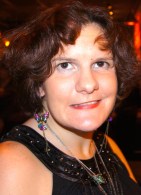
Carole Starr Survivor Speaker

Carole Starr – Brain Injury Survivor – Author of “To Root and to Rise”

1. What is your name? (last name optional)

Carole Starr

2. Where do you live? (city and/or state and/or country) Email (optional)

Maine, USA

3. On what date did you have your brain injury? At what age?

I had my brain injury on July 6, 1999. I was 32 years old.

4. How did your brain injury occur?

I was in a car accident. My vehicle was broadsided on the driver’s side by someone going about 50 mph.

5. When did you (or someone) first realize you had a problem?

My brain injury was diagnosed about six weeks after my accident. It was the physical therapist I saw for the whiplash who realized that I also had a brain injury. It became apparent to me when I tried to return to my regular life and struggled with tasks that used to be easy.

6. What kind of emergency treatment, if any, did you have?

After my accident, I was transported by ambulance to the emergency room. They diagnosed me with severe whiplash and other soft tissue injury. The signs of the brain injury were there, but they were missed.

7. Were you in a coma? If so, how long?

I was not in a coma.

8. Did you do rehab? What kind of rehab (i.e., inpatient or outpatient and occupational and/or physical and/or speech and/or other)? How long were you in rehab?

I didn’t receive any brain injury rehab until nearly a year after my injury. That was the worst year of my life, as I tried and failed numerous times to return to my old life. A physiatrist referred me to outpatient brain injury rehab. I’ve had physical, occupational, speech, and recreation therapies and counseling. I’ve also found help from alternative therapies, including cranial osteopathy, neuro-optometry, and homeopathy. I received rehab therapies on and off for several years. I still see several medical professionals, and I continue to make slow progress, even after more than eighteen years.

9. What problems or disabilities, if any, resulted from your brain injury
(e.g., balance, perception, personality, etc.)?

tired-womanI am plagued by extreme mental fatigue, sound and light sensitivities, balance issues, memory loss, visual midline shift, and difficulties with decision-making and problem-solving.

10, How has your life changed? Is it better? Is it worse?

My life changed dramatically after my brain injury. I had to give up my teaching career and my classical music hobby. I struggled to manage everyday-life tasks. I felt dependent on family and friends. For many years, I grieved the loss of my old life. I hated the new me. It was a long process to work through that grief and start to build a new life. I try really hard not to judge whether my life is better or worse. It’s just different. That helps me with the acceptance process.

11. What do you miss the most from your pre-brain-injury life?

I miss performing as a musician. I miss being able to go a whole day without needing to rest. I miss being able to trust my brain to do what I want it to.

12. What do you enjoy most in your post-brain-injury life?

Brain injury gave me the passion for a cause that was missing in my old life. This has become my life’s work. I like being able to use my experience to help other brain injury survivors. I do that through my book (To Root & To Rise: Accepting Brain Injury), my keynotes at brain injury conferences, and the volunteer group I lead (Brain Injury Voices).

Carole Starr & Book To Root and to Rise

Carole Starr – Brain Injury Survivor

13. What do you like least about your brain injury?

I dislike having to rest every day and missing out on activities I’d like to do. I never know when too much sound, light, motion, talking, or thinking is going to overwhelm my brain and require hours or days of rest to recover from.

14. Has anything helped you to accept your brain injury?

For a long time, I didn’t think I could ever accept my brain injury. It was a long process. Some things that helped me were support-groups, reading books by other survivors, counseling, journaling, crafts, learning to laugh at myself, finding silver linings, and focusing on what I’m thankful for.

15. Has your injury affected your home life and relationships and, if so, how?

For a long time, I felt like I was a burden – the one who always needed help. I had to learn to accept help from my family and friends and not resist their advice. I can now manage taking care of my home, but everything requires strategies. 67-Help_me

16. Has your social life been altered or changed and, if so, how?

My life is much smaller. My daily activities are short and quiet. If I want to do something bigger, I know that the price will be days on the couch recovering my mental energy.

17. Who is your main caregiver? Do you understand what it takes to be a caregiver?

I’ve been able to live on my own. Family, friends, and medical professionals have helped me learn strategies to take care of myself.

18. What are your plans? What do you expect/hope to be doing ten years from now?

kids-hand-writing-clip-art-hand_with_pencil_5CI plan to continue writing and speaking about brain injury. I want to use my experience to make a difference. I’ve spoken at brain injury conferences and events in six states so far. I’d like to speak in all fifty! I’d also like to help other survivors create education/advocacy groups like Brain Injury Voices in other states.

19. Are you able to provide a helpful hint that may have taken you a long time to learn, but which you wished you had known earlier? If so, please state what it is to potentially help other survivors with your specific kind of brain injury.

Find an activity that the new you can enjoy and do successfully. Start small, find success and build on it. Over time, small successes can grow into large achievements and lead you in directions you never imagined.

20. What advice would you offer to other brain-injury survivors? Do you have any other comments that you would like to add?

Find ways to connect with other survivors – either through an in-person support-group or online. Interacting with others who “get it” is invaluable.


Know that progress doesn’t stop after the first year or two after brain injury. Our brains are always healing. We may never be able to return to our old lives, but we can continue to grow into this new one.

Please feel free to contact me, either through StarrSpeakerAuthor.com or BrainInjuryVoices.org.

Brain Injury Voices Logo

If you would like to be a part of the SPEAK OUT! project, please go to TBI SPEAK OUT! Survivors Interview Questionnaire for a copy of the questions and the release form.

(Clip Art compliments of Bing.)

As I say after each post: Please leave a comment by clicking the blue words “Leave a Commentanim0014-1_e0-1 below this post.

Feel free to follow my blog. Click on “Follow” on the upper right sidebar.

If you like my blog, share it with your friends. It’s easy! Click the “Share” buttons below.

If you don’t like my blog, “Share” it with your enemies. I don’t care!

Feel free to “Like” my post.

diemodi jewelry

uniquely hand-crafted jewelry by donna

Welcome to Harmony Kent Online

The home of all things books

Pete Springer

Passionate Teacher and Future Children's Author

HOPE TBI

Helping Other People Excel - To Be Independent

For the Love of Books, Old and New

Katie Fischer, Writer and Reader of Stories

Charlie Bown

Children's Author

Jessica Hinrichs

“We write to taste life twice, in the moment and in retrospect.” ― Anais Nin

VIVIAN KIRKFIELD - Writer for Children

Picture Books Help Kids Soar

Mindy’s Writing Wonderland

For authors, parents, teachers & everyone who loves children’s books.

Kaitlyn Leann Sanchez

Literary Agent

Surviving Traumatic Brain Injury

TBI - Survivors, Caregivers, Family, and Friends

The Care Factor

Loving someone with a Traumatic Brain Injury

Brain Injury Support Group of Duluth-Extension

Brain Injury Information and SUPPORT

Brain Aneurysm Global Insight

Brain Aneurysm, cerebral hemorrhaging, hemorrhage stroke