TBI – Survivors, Caregivers, Family, and Friends

Posts tagged ‘Brain Injury’

Caregivers SPEAK OUT! . . . . Roxanne Greene

Caregivers SPEAK OUT! Roxanne Greene

presented by

Donna O’Donnell Figurski
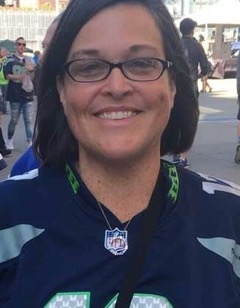
Roxanne Greene – Caregiver for a survivor of brain injury

1. What is your name? (last name optional)

Roxanne Greene

  1. Where do you live? (city and/or state and/or country) Email? (optional)

Wichita, Kansas, USA

  1. What is the brain-injury survivor’s relationship to you? How old was the survivor when he/she had the brain injury? What caused your survivor’s brain injury?

My husband was 35 years old when he developed sepsis due to an unknown infection. While he was at the hospital for that, the doctors discovered the presence of three frontal lobe brain tumors. My husband’s brain lost oxygen as they were trying to save my husband’s life. He also had a secondary brain injury – brain swelling – after brain surgery.

  1. On what date did you begin care for your brain-injury survivor? Were you the main caregiver? Are you now? How old were you when you began care?

I began as my husband’s caregiver on February 13 2007 – the day I took him to the Emergency Room. I was his main caregiver then, and I still am now. I was 38 years old at the beginning of this journey – 12 years ago.

  1. Were you caring for anyone else at that time (e.g., children, parents, etc.)

My husband and I had four young children – ages 3-12 at the time.

  1. Were you employed at the time of your survivor’s brain injury? If so, were you able to continue working?

I was not employed at the time. I was a stay-at-home mom.

  1. Did you have any help? If so, what kind and for how long?

I was very blessed to have a lot of support. My husband’s parents were able to help, and I had other friends and family that came alongside me – helping with the children, meals, or house, etc.

  1. When did your support of the survivor begin (e.g., immediately – in the hospital; when the survivor returned home; etc.)?

The support began the minute we arrived at the hospital. Our pastors met us there shortly after we arrived. During my husband’s entire hospital stay and even through rehab, I always had someone with me.

  1. Was your survivor in a coma? If so, what did you do during that time?

Yes. My husband was in a coma about 5-6 weeks. He woke up very slowly and had to learn everything all over again. It was a very challenging time for the both of us. I was there as his cheerleader – cheering him on. It was hard to have a balance between caring for my husband and taking care of the children. I was very overwhelmed at times, but again, family support was crucial to my husband’s success.

  1. Did your survivor have rehab? If so, what kind of rehab (i.e., inpatient and/or outpatient and occupational, physical, speech, and/or other)? How long was the rehab? Where were you when your survivor was getting therapy?

Yes. My husband had inpatient rehab for about a month, and then he transitioned to in-home rehabilitation, where the therapist would come into the home to do therapy. My husband had physical, occupational, and speech therapies and even counseling. He was in intensive therapy for about a year, and he had outpatient cognitive therapy off and on for another year?

11. What problems or disabilities of your brain-injury survivor required your care, if any?

My husband’s brain injury caused him to become aggravated easily. He has had memory problems and also issues with communication. I had to watch him when he was around the children in the beginning. He was totally dependent on me for everything. I was like a single mother – I paid the bills, and I took care of the house, cars, etc.

  1. How has your life changed since you became a caregiver? Is it better? Is it worse?

My life has changed drastically. My husband and I both say our new marriage started February 13th, 2007. He was then, and is now, a different person. We had to figure out how to be married again to each other as new people. It has been good because our love is stronger than before. It has also been very difficult because this is not what I pictured for my future. I have moments of self-pity and sometimes wish it could be the way it was. Those moments are fleeting, and I know I have so much to look forward to.

  1. What do you miss the most from pre-brain-injury life?

I miss my husband’s going to work every day. I miss his doing projects around the house. I miss his being able to be the protector and the provider that he once was. I miss being a stay-at-home mom and spending one-on-one time with the children (even though most are grown now).

  1. What do you enjoy most in post-brain-injury life?

My husband and I get to spend more time together. My husband is more loving than before. Before injury, he worked a lot and was not home as often.

  1. What do you like least about brain injury?

I miss having more financial freedom. I sometimes don’t like having to do everything, including all the paperwork that goes into maintaining a home. I have to organize all of my husband’s doctor appointments, medications, and dealings with SSDI (Social Security disability insurance). It can get so overwhelming sometimes that I just want to cry.

  1. Has anything helped you to accept your survivor’s brain injury?

Accepting the reality of my husband’s condition has helped. It is what it is. There is nothing I can do to change what happened to my husband. I decided I can either wallow in self-pity or pick up my feet and move forward. I have also read many books on brain injuries and educated myself through this journey. The one thing I wish for is a brain injury support group for caregivers. I know I am not alone.

17. Has your survivor’s injury affected your home life and relationships and, if so, how?

Yes. I have become the main parent and disciplinarian, as my husband cannot parent without getting overwhelmed and angry. He has improved, but the children, even as adults, come to me for advice.

  1. Has your social life been altered or changed and, if so, how?

We both had close friends before my husband’s brain injury. We would go out and socialize and have people over often. Now we still have friends, but we rarely have anyone over to our house. We go out with family once in a while, and my husband has a few friends that will invite him to lunch once a month. It sometimes happens that my husband will not make the most appropriate comment.

  1. What are your plans? What do you expect/hope to be doing ten years from now?

I am a grandparent now, which brings a new set of challenges. My plans are to continue my education. I am in school to become an ASL (American Sign Language) interpreter for the deaf. I had to go back to work to increase our income just so we could pay the bills. I would love to travel some, but I am not sure if that will ever become a reality, as I have to work full-time.

  1. What advice would you offer other caregivers of brain-injury survivors? Do you have any other comments that you would like to add?
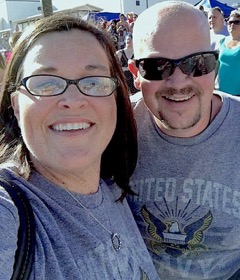
Roxanne Greene – Caregiver

Even though your life has changed, remember you are stronger than you realize. I look back and think of how much I have accomplished and learned about myself during this time. I am not sure I would have gone back to school if my husband had not become ill. Caregivers have been giving a gift that most people never get to experience. We get to see miracles every day as our loved ones fight to improve their lives. It’s a humbling thing to be a part of such a journey.

(Clip Art compliments of Bing.)

(Photos compliments of contributor.)

anim0014-1_e0-1

As I say after each post: Please leave a comment by clicking the blue words “Leave a Comment” below this post.

Feel free to follow my blog. Click on “Follow” on the upper right sidebar.

If you like my blog, share it intact with your friends. It’s easy! Click the “Share” buttons below.

If you don’t like my blog, “Share” it intact with your enemies. I don’t care!

Feel free to “Like” my post.

Please check out my book.

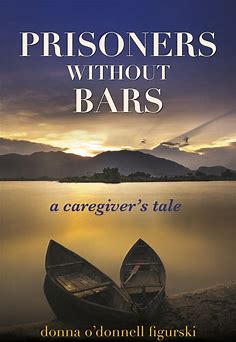
Prisoners without Bars: A Caregiver’s Tale
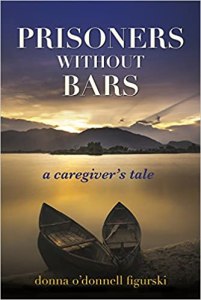
You can find Prisoners without Bars: A Caregiver’s Tale where most books are sold.

Amazon
Barnes and Noble
IndieBound
Kobo

WriteLife Publishing

Surviviors SPEAK OUT! . . . . . Craig J. Phillips . . . . . Survivor of Brain Injury

Survivors SPEAK OUT! Craig J. Phillips

presented by

Donna O’Donnell Figurski

Craig J. Phillips
Survivor of Brain Injury

1. What is your name? (last name optional)

Craig J, Phillips

2. Where do you live? (city and/or state and/or country) Email (optional)

Charlotte, North Carolina, USA

My email is secondchancetolive1@yahoo.com.

3. On what date did you have your brain injury? At what age?

August 11, 1967 at age 10

4. How did your brain injury occur?

Motor vehicle accident – We were in a Volkswagen Beetle that was hit by a woman driving a Cadillac. She lost control of her car, ran off the side of the road, hit a pole, came across her two lanes and a grass medium, and hit our car in the passing lane. I went up over my Dad’s bucket seat and hit the windshield, fracturing my left femur.

5. When did you (or someone) first realize you had a problem?

My father, who was driving.

6. What kind of emergency treatment, if any, did you have?

Hospitalization – I was not expected to live the night of the accident.  I was put into traction to set my femur. I was then placed into a full body – or Spica – cast for 5-6 months. With obvious external wounds, an invisible traumatic brain injury was not considered.

7. Were you in a coma? If so, how long?

Yes. I remained in a coma for three weeks.

8. Did you do rehab? What kind of rehab (i.e., inpatient or outpatient and occupational and/or physical and/or speech and/or other)? How long were you in rehab?

In 1967, there was nothing in the way of brain injury rehabilitation. Once my external wounds healed, I was on my own to navigate life with the impact of right frontal lobe damage and a severe brain bruise. I attended two physical therapy appointments, but was then on my own to teach myself how to walk.

For details, see my article:

Finding Craig — Learning to Walk Again by Not Giving Up (Part 3)

9. What problems or disabilities, if any, resulted from your brain injury
(e.g., balance, perception, personality, etc.)?

I underwent two EEGs (electroencephalograms – given to detect electrical activity in the brain) and a battery of cognitive and psychosocial tests. The results showed that I probably would not succeed academically beyond high school. That conclusion was shared with my parents, but not with me. I grew up not knowing that my life was being impacted by the traumatic brain injury that I sustained when I was 10 years old. I had difficulty reading non-verbal cues and social nuances and learning sequences of information. I had to discover how I learn best and to accept myself. I am not my traumatic brain injury.

10. How has your life changed? Is it better? Is it worse?

Better – I obtained my undergraduate degree in ten years, after attending two universities and one college and having four different majors. I obtained my graduate degree in rehabilitation counseling in three and a half years, after attending two graduate schools.

There were twenty years of getting and losing jobs. Twice, I had Department of Vocational Rehabilitation (DVR) evaluations. I was deemed to be unemployable by the DVR counselor after the second evaluation. Of my three applications for SSDI (Social Security Disability Insurance), two were denied, but I was approved after the third application.

Nevertheless, I still wanted to contribute and use my gifts, talents, and abilities. I created Second Chance to Live on February 6, 2007 (secondchancetolive.org). I have written 1860 articles and made 413 video presentations and 10 eBooks. I have 30 slide show presentations, 33 posters, and other creations.

For details, see my article:

Finding Craig – My Academic Path (Part 4)

11. What do you miss the most from your pre-brain-injury life?

I had my TBI (traumatic brain injury) at the age of 10. I don’t remember my life before then.

12. What do you enjoy most in your post-brain-injury life?

I enjoy using my creativity in ways that work for me. “Do what you can, with what you have, where you are.” Theodore Roosevelt

13. What do you like least about your brain injury?

It is as it is. I would like to have more of a social life. However, I accept that I do not have the skills to have more of a social life – so it is stressful for me.OIP-1

14. Has anything helped you to accept your brain injury?

When I reached a point in my life when denying my reality became more painful than my need to deny my reality, I began to grieve my reality through the five stages that Elisabeth Kübler-Ross spoke about in her book, On Death and Dying. Once I moved through confronting my denial; experiencing anger for what I was powerless to change; trying to bargain my way out of what I could not change; and experiencing depression, I was able to increase my acceptance. As I grew in acceptance of what I could not change, I was open to discovering possibilities. Possibilities through choices. Choices that helped me to get into action. Action that helped me to create hope in my life.

For details, see my article:

15. Finding Craig – My Brain Injury Awareness (Part 5)

Has your injury affected your home life and relationships and, if so, how?

Yes. As I accepted my reality, I stopped needing to convince other people of my reality. People cannot give what they do not possess. For people to accept my reality would mean that they would have to feel feelings and make changes – feelings and changes that they may not know how to feel or want to feel. Changes that they may not know how to make or want to. As I stopped trying to change people, I had more peace in my life.

16. Has your social life been altered or changed and, if so, how?

I enjoy my solitude and my freedom to create through Second Chance to Live. I have a small circle of friends.

17. Who is your main caregiver? Do you understand what it takes to be a caregiver?

I am my own case manager. As a rehabilitation counselor, I fully understand what a counselor does. A counselor is not in the position of having to do for another person what that person cannot do for himself or herself. As a counselor, what I seek to do is to teach and encourage the individual to fish – not provide fish, so that that individual will never go hungry again.

18. What are your plans? What do you expect/hope to be doing ten years from now?

I am an author, advocate, keynote speaker, and a motivational coach. I created Second Chance to Live nearly fourteen years ago. I do not know what the future holds. I am preparing to be available to present at more conferences and organizational settings as a keynote speaker/workshop leader. I am doing the footwork – one day at a time. I am trusting the process, a loving God, and myself. More will be revealed with time. The pieces of the puzzle will come together at the right time and in the right order.

For details, see my article:

Finding Craig – Making Sense of Brain Injury (Part 8)

19. Are you able to provide a helpful hint that may have taken you a long time to learn, but which you wished you had known earlier? If so, please state what it is to potentially help other survivors with your specific kind of brain injury.

Pursue excellence, instead of being driven by perfectionism.

I have difficulties learning sequences of information. I have written an article that explains what has helped me with this information: Neuroplasticity, Small Successes and Learning/Relearning Skills and Skill Sets.

Craig J. Phillips 120. What advice would you offer to other brain-injury survivors? Do you have any other comments that you would like to add?

Trust the process, a loving God, and yourself.

See that your circumstances are a way to build you up, not to keep you down.

See that you are not your traumatic brain injury or your disability.

See the disappointments and disillusionment that you experience as important parts of your process.

See how those events move you in the direction of your destiny.

Find ways to use what you can through your gifts, talents, and abilities.

Accept your inability to do some things because of your deficits and limitations. Stop berating yourself for your inability to do those things.

Live and explore outside of the box that society seeks to keep you in through dismissing, discounting, patronizing, minimization, and marginalization.

Love, accept, and celebrate who you are as an individual.

Break free from the denial system that keeps you feeling like a mistake. Stop identifying as a patient.

Accept the things you cannot change, change the things you can, have the wisdom to know the difference, and then be at peace with that difference.

See life as a process – a journey.

Realize that your job is to learn “how-to” from various ingredients and then combine what “you learned” together to bake various “cakes.”

Realize that there is no such thing as failure, only an opportunity to learn.

Realize that what occurs in your life is meant to set you up, not set you back.

Begin to live the “now” in life.

Struggle makes you stronger.

Avoid the comparison trap.

Share with other traumatic brain injury survivors that there is hope.

Realize that what happened to you is not as important as what you do with what happened to you.

(Clip Art compliments of Bing.)

(Photos compliments of contributor.)

anim0014-1_e0-1

As I say after each post: Please leave a comment by clicking the blue words “Leave a Comment” below this post.

Feel free to follow my blog. Click on “Follow” on the upper right sidebar.

If you like my blog, share it intact with your friends. It’s easy! Click the “Share” buttons below.

If you don’t like my blog, “Share” it intact with your enemies. I don’t care!

Feel free to “Like” my post.

Please check out my book.

Prisoners without Bars: A Caregiver’s Tale


SPEAK OUT! . . . . . . . . . . . . . Faces of Brain Injury . . . . . Rico Principe

SPEAK OUT! Faces of Brain Injury

Rico Principe (survivor)

presented by

Donna O’Donnell Figurski

Rico Principe – Brain Injury Survivor

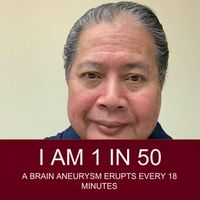
Rico Principe (survivor and advocate)

Don’t let my looks fool you. I have a laundry-list of deficits. Some are obvious, and some become obvious only to those who live with me. The brain aneurysm didn’t kill me, but it killed the “me that I was” and gave my family and my friends the “new me.”

The brain aneurysm turned my world upside down. I wasn’t even aware of brain aneurysms until I had the “worst headache of my life” in 2004. It gave me a 24/7-headache, occasional bouts with depression, aphasia, neurofatigue, forgetfulness, memory loss, PTSD (post-traumatic stress disorder), sleeplessness, and loss of filter.  I also have a short fuse.

shutterstock_2773830771

It came unannounced, and I wouldn’t be here if it weren’t for the actions of my wife (Elvie). She was there and called 9-1-1 so I could be taken to the hospital as soon as possible.

I struggle with the “baggage” that comes with being a brain aneurysm survivor, but I chose not to be burdened by it.  Instead, I chose to be an advocate. I help run a Facebook group of brain aneurysm survivors with almost 11,000 members.

This is me. A survivor and an advocate.

(Clip Art compliments of Bing.)

(Photos compliments of contributor.)

anim0014-1_e0-1

As I say after each post: Please leave a comment by clicking the blue words “Leave a Comment” below this post.

Feel free to follow my blog. Click on “Follow” on the upper right sidebar.

If you like my blog, share it intact with your friends. It’s easy! Click the “Share” buttons below.

If you don’t like my blog, “Share” it intact with your enemies. I don’t care!

Feel free to “Like” my post.

Please check out my book.

Prisoners without Bars: A Caregiver’s Tale

SPEAK OUT! Itty-Bitty GIANT Steps

SPEAK OUT! Itty-Bitty GIANT Steps

presented by

Donna O’Donnell Figurski

itty-bitty-giant-steps-for-blog

Andrea Coffey – Survivor of Brain Injury

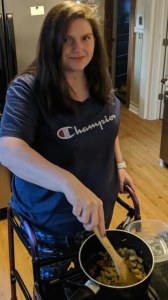
Andrea Coffey (survivor) … I cooked for the first time today – just something very simple.

I’m kind of proud of myself.  Frozen pesto pasta! I threw some chicken in it.cartoon_chicken22-1


(Clip Art compliments of Bing.)

(Photos compliments of contributor.)

As I say after each post:

Please leave a comment by clicking the blue words “Leave a Comment” below this post.

anim0014-1_e0-1

Feel free to follow my blog. Click on “Follow” on the upper right sidebar.

If you like my blog, share it intact with your friends. It’s easy! Click the “Share” buttons below.

Please check out my book, Prisoners without Bars: A Caregiver’s Tale.th

New News: . . . . . . . ZOOM! Coffee with the Authors @ BIAAZ

New News: . . . . . . . . ZOOM! Coffee with the Authors @ BIAAZ

presented by

Donna O’Donnell Figurski

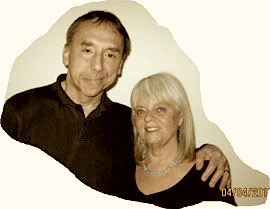
David & Donna Figurski

I’m so excited to be invited by the Brain Injury Alliance of Arizona (BIAAZ), to share my book with you. PRISONERS WITHOUT BARS: A CAREGIVER’S TALE has been called a compelling read, a true-to-life drama, and a heart-warming and inspiring love story. What do YOU call it?

More than fifteen years after my husband, David’s traumatic brain injury in January 2005, we are still searching for the light at the end of the tunnel. It’s there. It’s just still so tiny.

I hope you will join me on Saturday, October 24th at 10:30a Pacific Time for a virtual book club meeting on ZOOM.

It’s FREE! It’s FREE! It’s FREE! It’s FREE!

Please come hear me talk about my book and read a short excerpt.
Bring your QUESTIONS.

REGISTER HERE and you will receive a link to attend.

Can’t wait to see you there.

I’d love to hear what you think of PRISONERS WITHOUT BARS: A CAREGIVER’S TALE. Reviews on Amazon, Barnes and Noble, and Goodreads are really appreciated. Reviews keep books alive.

(Clip Art compliments of Bing.)

(Photos compliments of contributor.)

As I say after each post:

Please leave a comment by clicking the blue words “Leave a Comment” below this post.

anim0014-1_e0-1

Feel free to follow my blog. Click on “Follow” on the upper right sidebar.

If you like my blog, share it intact with your friends. It’s easy! Click the “Share” buttons below.

Caregivers SPEAK OUT: . . . Author, Abby Maslin

Caregivers SPEAK OUT: Author, Abby Maslin

presented by

Donna O’Donnell Figurski – author

Prisoners without Bars: A Caregiver’s Tale


Caregiver, Abby Maslin – author of “Love You Hard”


1. What is your name? (last name optional)

Abby Maslin

2. Where do you live? (city and/or state and/or country) Email? (optional)

Washington, DC, USA

3. What is the brain-injury survivor’s relationship to you? How old was the survivor when he/she had the brain injury? What caused your survivor’s brain injury?

My husband, TC, is the TBI (traumatic brain injury) survivor. He was 29 at the time of the assault that caused his injury.

4. On what date did you begin care for your brain-injury survivor? Were you the main caregiver? Are you now? How old were you when you began care?

I became my husband’s full-time caregiver on August 18, 2012. I had just celebrated my 30th birthday.

5. Were you caring for anyone else at that time (e.g., children, parents, etc.)?

I had a 21-month-old son, named Jack, whom I was also caring for at the time.

6. Were you employed at the time of your survivor’s brain injury? If so, were you able to continue working?

I was employed as a fourth-grade teacher. TC’s injury occurred the weekend before school started. I was not able to return to work for a year.

7. Did you have any help? If so, what kind and for how long?

We had family members who lived nearby and who offered intermittent help. My parents were both ill, however, and unable to help in any large capacity.

8. When did your support of the survivor begin (e.g., immediately – in the hospital; when the survivor returned home; etc.)?

Immediately. It began as I was tasked with advocating for TC’s medical care.

9. Was your survivor in a coma? If so, what did you do during that time?

Yes. TC was in a deep coma for about four days, but he took more than two weeks to fully come out of it.

10. Did your survivor have rehab? If so, what kind of rehab (i.e., inpatient and/or outpatient and occupational, physical, speech, and/or other)? How long was the rehab? Where were you when your survivor was getting therapy?

Yes. TC received all the therapies: speech, occupational, and physical. He received occupational and physical therapies for about one year. He received speech for more than two years.

Love You Hard by Abby Maslin

11. What problems or disabilities of your brain-injury survivor required your care, if any?

TC had severe aphasia (struggles with both expressive and receptive language). He had physical weakness on one side of his body and needed to relearn how to walk. He continues to have limited use of his right hand.

12. How has your life changed since you became a caregiver? Is it better? Is it worse?

It’s really impossible to compare. My life since becoming a caregiver is far more complex and difficult. It’s required a lot of emotional growth and healing to let go of the life I had and the relationship I once shared with my spouse. This new life, however, is far richer in purpose and gratitude than it was before. I have a clearer sense of who I am, what I’m capable of, and how I want to spend my time on earth.

13. What do you miss the most from pre-brain-injury life?

I miss the sense of safety I once felt. I miss the easy conversation my husband and I once shared. (His aphasia makes communication much more effortful.)

14. What do you enjoy most in post-brain-injury life?

I enjoy the sense of gratitude I live with daily. I can identify and reflect on my blessings with clarity. It’s a wonderful thing to appreciate life as it’s happening.

15. What do you like least about brain injury?

The unpredictability. As a caregiver, I find that it’s difficult to align one’s expectations to the recovery of a loved one, as everything is always in flux and changing.

16. Has anything helped you to accept your survivor’s brain injury?

What’s helped me is the recognition that suffering is universal. My family and I were never exempt from life’s challenges and normalizing that experience of hardship has helped me make peace with its existence.

17. Has your survivor’s injury affected your home life and relationships and, if so, how?

Absolutely. While my husband’s personality is mostly unchanged, there are subtle changes that have required us to relearn each other as people. It has shifted the dynamics of responsibility and roles in the household.

18. Has your social life been altered or changed and, if so, how?

Yes, at first. But, we were fortunate to have many friends who stuck out the recovery process with us and with whom we still socialize. We are not as social as before, but we also have two young children these days.

19. What are your plans? What do you expect/hope to be doing ten years from now?

Praying for continued good health. TC has wonderful healthy habits, but we can’t control the aging process. If all goes well, in ten years, we’ll still be working and living at home with a 14-year-old daughter and a 20-year-old son at college!

Caregiver, Abby Maslin – author of “Love You Hard”

20. What advice would you offer other caregivers of brain-injury survivors? Do you have any other comments that you would like to add?

Be forgiving of yourself and your own process of grief. It cannot be rushed. The hand you’ve been dealt is a terribly unfair one, and it is OK to acknowledge the gravity of that fact. Life with brain injury requires persistence, patience, and a lot of hope, but life can be as beautiful and as rich as before.


Stay Safe and Healthy!

Clip Art compliments of Bing.)

(Photos compliments of contributor.)

As I say after each post:

Please leave a comment by clicking the blue words “Leave a Comment” below this post.

Feel free to follow my blog. Click on “Follow” on the upper right sidebar.anim0014-1_e0-1

If you like my blog, share it intact with your friends. It’s easy! Click the “Share” buttons below.

Survivors SPEAK OUT! . . . . Nolan McDonnell — Survivor of Brain Injury

Survivors SPEAK OUT! Nolan McDonnell

presented by

Donna O’Donnell Figurski

Survivor of Brain Injury – Nolan McDonnell

1. What is your name? (last name optional)

Nolan McDonnell

2. Where do you live? (city and/or state and/or country) Email (optional)

San Jose, California, USA     Nolan@CoachNolan.com

3. On what date did you have your brain injury? At what age?

My traumatic brain injury occurred on April 23, 2017, at the age of 31.

4. How did your brain injury occur?

I was the victim of a robbery. I was held at gunpoint and then shot in the head. My brain injury is bilateral, as the bullet went through both sides of my brain.

5. When did you (or someone) first realize you had a problem?

I was found in my car, which was riddled with bullet holes. I had an entrance wound in my skull from the bullet.

6. What kind of emergency treatment, if any, did you have?

I had seven blood transfusions, a craniotomy, and maybe some other things.

7. Were you in a coma? If so, how long?physical-activity-clipart-10

Yes – fifteen days.

8. Did you do rehab? What kind of rehab (i.e., inpatient or outpatient and occupational and/or physical and/or speech and/or other)? How long were you in rehab?

I have or had speech, occupational, physical, stretch, recreational, massage, and craniosacral therapies and acupuncture. It has been two and a half years now, and I put in eight hours a day, five days a week.

9. What problems or disabilities, if any, resulted from your brain injury
(e.g., balance, perception, personality, etc.)?

I was a paraplegic – I could not move from the neck down. I worked hard to overcome this, however. I still suffer from extreme spasticity, muscle imbalance, and minimal range of motion on the left side of my body, as well as in my legs.

10. How has your life changed? Is it better? Is it worse?

My life is better after my traumatic brain injury. Before the injury, I did not know how short, valuable, and fragile life is.

11. What do you miss the most from your pre-brain-injury life?

I miss skateboarding, making new friends at school, the freedom to get up and do anything I wanted at any given time, athletics, not having a caregiver, living alone, and having guests come over.

12. What do you enjoy most in your post-brain-injury life?

I like my perspective on and my valuing of both life and people. Life is so valuable to me now – more meaningful and beautiful.

13. What do you like least about your brain injury?

I love everything about my brain injury. Life is more important to me now.

14. Has anything helped you to accept your brain injury?

No

15. Has your injury affected your home life and relationships and, if so, how?

Yes. We had to make everything wheelchair-accessible, and someone always needs to be with me. Also, with my injury, I can’t get up and go make myself a sandwich or go to the store and get something that I want. Somebody needs to do those things for me. I am a lot more limited in that aspect, but it’s not a big deal if I plan ahead.

The biggest aspect about this question is addressing the invisible injury. People look at me and see that I’m strong, and they expect that, at any moment, I can just get up and start walking, hiking, or going on dates.

16. Has your social life been altered or changed and, if so, how?

Not really for me. I have always been a very social person, and my wheelchair is a great conversation starter! People come up all the time and ask me what happened. I am always making new friends.

17. Who is your main caregiver? Do you understand what it takes to be a caregiver?

My mother

18. What are your plans? What do you expect/hope to be doing ten years from now?

(not answered)

19. Are you able to provide a helpful hint that may have taken you a long time to learn, but which you wished you had known earlier? If so, please state what it is to potentially help other survivors with your specific kind of brain injury.

This is a tough question because no two injuries are the same, but I will share my input and what worked for me to get my legs strong again.

Learning how to use my legs has been especially difficult. My parents bought an assist-bar at Home Depot and mounted it to the wall, a little below chest height. I can use my wheelchair to wheel up to the bar and practice standing up, do squats, stand up, and let go and learn how to balance.

Another great thing that I would love to share is to go to your local community college and check out adaptive PE (physical education) classes. The community colleges by my house have adaptive PE – they have standing frames and parallel bars, and all of the equipment and workout-machines are wheelchair-accessible. Adaptive PE programs usually have water classes as well.

20. What advice would you offer to other brain-injury survivors? Do you have any other comments that you would like to add?

Nolan McDonnell – Survivor of Brain Injury

I would suggest that other brain injury survivors take initiative and demonstrate that they want to help themselves because that will encourage support from other people. Also, always continue doing exercises and stretching. Try to increase your range of motion, and workout constantly. Fitness creates a mind-body connection and promotes new neurological pathways. Additionally, if you take care of yourself physically, you tend to eat better – and proper nutrition is very important for a healthy brain.


Stay Safe and Healthy!

Clip Art compliments of Bing.)

(Photos compliments of contributor.)

As I say after each post:

Please leave a comment by clicking the blue words “Leave a Comment” below this post.

Feel free to follow my blog. Click on “Follow” on the upper right sidebar.anim0014-1_e0-1

If you like my blog, share it intact with your friends. It’s easy! Click the “Share” buttons below.


Sneak Peeks for Prisoners – Audio Book Coming Soon

Coming SOON!

Prisoners without Bars: A Caregiver’s Tale – released soon as an audio book.

Prisoners without Bars: A Caregiver’s Tale, a memoir by Donna O’Donnell Figurski, is a heart-wrenching love story that will make readers laugh, cry, and G-A-S-P!

When my husband and best friend, David, had a traumatic brain injury in January 2005, it sent us down the rabbit hole. David’s neurosurgeon gave David a 1/600% chance of survival. David had two more brain surgeries after his first and again, he defied all odds. He lived!

Listen to the excerpt to see how it all started.
You can easily find my book on any of the following places.

Amazon

Barnes and Noble

IndieBound

Goodreads

Just click the links.  You can actually review it and rate it on Goodreads. Did you know that reviews and ratings are the life blood of books? Reviews and ratings help to keep books alive and they may even get to the bestseller list. So, PLEASE write a review and rate Prisoners. It can be short.

Learn more about me at donnafigurski.com

Please leave a comment/question. I will respond.

(Clip Art compliments of Bing.)

As I say after each post: Please leave a comment by clicking the blue words “Leave a Commentanim0014-1_e0-1 below this post.

Please follow my blog. Click on “Follow” on the upper right sidebar.

If you like my blog, share it (intact) with your friends. It’s easy! Click the “Share” buttons below.

If you don’t like my blog, “Share” it (intact) with your enemies. I don’t care!

Please “Like” my post.

COVID-19 — It’s Everywhere . . . Progress in Controlling COVID-19

Progress in Controlling COVID-19

by

Columbia University Professor Emeritus, Dr. David Figurski

presented by

Donna O’Donnell Figurski


(Disclaimer: The World Health Organization <WHO> has officially named the new coronavirus as SARS-CoV-2 and the disease it causes as COVID-19. Because the majority of people, including much of the press, commonly refer to the virus as “COVID-19,” to avoid confusion I use COVID-19 as the name of the virus in these posts.)

COVID-19

David H. Figurski, Ph.D & Survivor of Brain Injury


I want to tell you about an amazing podcast, TWiV (This Week in Virology), created and hosted by Dr. Vincent Racaniello, a colleague of mine at Columbia University.

Vincent’s a virologist who has done cutting edge research on the molecular biology of influenza virus, poliovirus, and rhinoviruses (which cause the common cold). His podcasts feature several PhDs in microbiology (virologists, an immunologist, a parasitologist, and a science reporter who earned his PhD with Vincent) discussing the latest research and advances in viruses.

Vincent has been self-quarantining at home. Consequently, since March 13th, he has made more than 30 podcasts, nearly all concerning COVID-19, potential therapies and vaccines, and pandemics. His guests have been infectious disease scientists doing research or physicians in the trenches learning about the clinical manifestations of the virus and how to treat their patients.

Dr. Vincent Racaniello – Columbia University Virologist

Vincent’s podcasts are made for non-scientists to understand, but they are 1-2 hours long. Probably none of you has the time to listen that long. Therefore, I’m trying to listen to them so I can point you to episodes and minutes you may want to hear.

Podcast #622, released June 2, featured Dr. Emmie de Wit of the Rocky Mountain Labs in Montana. She’s a virologist doing drug and vaccine research in monkeys. Because Rocky Mountain Labs is one of the few places in the country with a high-safety-level facility, Dr. de Wit has worked with several dangerous viruses: SARS-1, MERS, pandemic influenza strains, and Ebola. Now she’s working with SARS-2.

I’ve boiled down Episode #622 to four segments totaling ~16 minutes.

  1. 26:05-26:35 – The spike protein of the virus coat initiates infection of a cell by attaching to the ACE2 protein (angiotensin converting enzyme 2) on the cell’s surface. Here Emmie tells how it took only days to identify ACE2 and confirm viral binding. Rich Condit, a virologist, was astonished by the speed. ACE2-binding by spike is a potential drug target.


  1. 37:15-39:44 – The PCR test (polymerase chain reaction), simple enough to be done on a large scale, detects the 30,000-nucleotide (or base) RNA chromosome of the virus. But, PCR is so sensitive that it can detect degradation fragments of the RNA, even though the person is no longer contagious. The only way to tell for sure is to detect viable virus in cell culture. This is hard to do and is only done in virology research labs. As a result, a person is considered infected and contagious if the PCR test is positive.

  1. 43:35-54:05 Remdesivir, an antiviral drug, is a nucleotide-analog that blocks the copying of the RNA chromosome to make more virus. Emmie showed that giving remdesivir to monkeys early (at 12-hours post infection) was very effective. But, humans don’t show symptoms for days, and, because remdesivir must be administered intravenously, patients are only given remdesivir if they are hospitalized. This is very late, and still there is a modest effect. Rich Condit talks about the possibility of producing an oral form of the drug. Then remdesivir could be taken earlier – maybe even at home – and might be very effective in humans.


  1. 58:25-60:40 This segment concerns a vaccine. (I’ll write more on this topic later, but you should know that there are three types of promising technologies: the viral protein-based, the viral gene-based, and the virus vector-based, in which a harmless virus carries a gene from a disease-producing virus for a protein that’s needed to infect cells.)2ff087415a5009984739aa8fde5d5d4a

Emmie tested a harmless chimpanzee adenovirus that was engineered to carry the COVID-19 spike gene. This adenovirus produces the coronavirus spike protein, needed for COVID-19 to infect cells. So, this harmless adenovirus should cause us to make antibodies that will block infection by COVID-19.

In Emmie’s experiment in monkeys, the vaccine worked so well that it allowed clinical trials to proceed in humans.

Stay Safe and Healthy!

Clip Art compliments of Bing.)

(Photos compliments of contributor.)

As I say after each post:

Please leave a comment by clicking the blue words “Leave a Comment” below this post.

Feel free to follow my blog. Click on “Follow” on the upper right sidebar.anim0014-1_e0-1

If you like my blog, share it intact with your friends. It’s easy! Click the “Share” buttons below.

TBI Tales . . . . . . . . . . . . Overcoming Obstacles while Getting On with Life

Overcoming Obstacles while Getting On with Life
by
Chelsea Rolph

presented by


Donna O’Donnell Figurski
(author – Prisoners without Bars: A Caregiver’s Tale)


chelsea rolph

Chelsea Rolph – Survivor of Brain Injury

This has been one heck of a decade! When I think back to how it all began, I would have never seen myself where I am now.

I began this decade healing from a concussion and graduating high school. I chose to do a “Victory Lap” so I could have the time to figure out what I wanted to do with my future.

As the school year began in September 2010, I returned back to varsity sports to continue to do what I loved … play.

Unfortunately, as most people know, it did not end well. I was knocked out during a basketball game in the last 4 seconds, leaving me with the concussion of all concussions.

I remember sitting in accounting, music, and business classes and crying to myself because it hurt too much to read the text. I also remember going home and breaking down because I no longer had the sports to turn to as a stress relief. I was frustrated with the amount of exhaustion I was feeling at the end of the day.

I was sent to a concussion rehab clinic for a few months, and this was the first time I felt like I finally had some answers. At the beginning of this decade, my parents would take me to the hospital every week to get tests done on both my heart and my brain. These tests concluded with doctors suggesting that my “new normal” was going to be a long transition with no end in sight.

Although all of my friends were applying to colleges and universities, I was told that I should not consider post-secondary education at that time. Despite this, I still applied to colleges and universities to keep my options open.

After being accepted to all of my options, I decided to go to McMaster University (MAC), so I had family support close by if I were really struggling. After accepting MAC, I met with a counselor to discuss what the rehab clinic had said I should have for accommodations.

After the guidance counselor at MAC agreed to all of the accommodations that were recommended for me, she suggested that I should take two classes a semester and take ten years to complete my undergrad.

Fast-forward to the end of the decade – most people know that not only did I choose to take a full course load, but I also chose to try to accomplish it without the accommodations recommended. The counselors did not believe I would be successful even with the accommodations and tried to talk me out of it. Not only did I take a full course load, but I was also working close to full-time hours at the same time.

Get-a-Bachelors-Degree-Online-Step-15Four years later, in May of 2015, I graduated with a Bachelor of Arts degree. In August 2015, I was hired in my first full-time job! After three months, I received a promotion, and then, ten months after that, I was promoted again to the position I am currently in. Over the last 4.5 years, I have had the amazing opportunity to work with so many amazing students and colleagues who have helped shape me into the person I am today. Unfortunately, I have chosen to leave my current position to pursue other opportunities.

As this decade ends, a new and exciting chapter begins! Today I find myself writing this from the comforts of my home as I begin my journey as an entrepreneur. My business partner and I are so excited to have the opportunity to quit our full-time jobs to focus on running our own business.

Along with reminiscing about my professional career over the past ten years, I also think about the personal experiences. Many have been positive, but I also had my share of sorrows. I have lost so many amazing people in my life, including both of my grandmas, my uncle, and a friend. I have lost a pet and nearly lost two more. I struggled with immigration. And, my mom was diagnosed with breast cancer.

I am very happy to say that I have also had the opportunity to see my mom defeat cancer and ring that victory bell. I am also happy that Rod and I no longer need to worry about immigration or travelling out of the country together for events. I also have a long list of amazing other things that have happened over the past decade: graduating, falling in love, buying a car, travelling to many cities and countries (for example, Las Vegas, New York City, Ecuador, the east coast of Canada, mainland Europe, and the UK), attending a conference in the United Nations headquarters, fundraising around $150,000 for both OIPlocal and global organizations, making so many amazing new friends, experiencing weddings, getting over my fear of babies, having nieces and nephews, getting a kitten, and going back to school to study French as a second language.

Here’s to hoping that the next decade will bring less of the sadness and more of the happiness and excitement that I have been lucky enough/privileged to experience.

Cheers to 2020!

Clip Art compliments of Bing.)

(Photos compliments of contributor.)

As I say after each post:

Please leave a comment by clicking the blue words “Leave a Comment” below this post.

Feel free to follow my blog. Click on “Follow” on the upper right sidebar.anim0014-1_e0-1

If you like my blog, share it intact with your friends. It’s easy! Click the “Share” buttons below.


diemodi jewelry

uniquely hand-crafted jewelry by donna

Welcome to Harmony Kent Online

The home of all things books

Pete Springer

Passionate Teacher and Future Children's Author

HOPE TBI

Helping Other People Excel - To Be Independent

For the Love of Books, Old and New

Katie Fischer, Writer and Reader of Stories

Charlie Bown

Children's Author

Jessica Hinrichs

“We write to taste life twice, in the moment and in retrospect.” ― Anais Nin

VIVIAN KIRKFIELD - Writer for Children

Picture Books Help Kids Soar

Mindy’s Writing Wonderland

For authors, parents, teachers & everyone who loves children’s books.

Kaitlyn Leann Sanchez

Literary Agent

Surviving Traumatic Brain Injury

TBI - Survivors, Caregivers, Family, and Friends

The Care Factor

Loving someone with a Traumatic Brain Injury

Brain Injury Support Group of Duluth-Extension

Brain Injury Information and SUPPORT

Brain Aneurysm Global Insight

Brain Aneurysm, cerebral hemorrhaging, hemorrhage stroke