TBI – Survivors, Caregivers, Family, and Friends

Posts tagged ‘Brain Awareness’

Survivors SPEAK OUT! …….. Alan Gregory

Survivors SPEAK OUT! Alan Gregory

presented by

Donna O’Donnell Figurski


Alan Gregory 2

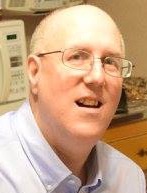
Alan Gregory – Brain Injury Survivor

1. What is your name? (last name optional)

Alan Gregory

2. Where do you live? (city and/or state and/or country) Email (optional)

Charlevoix, Michigan, USA     ajgregory@chartermi.net

3. On what date did you have your brain injury? At what age?

January 5, 2016     I was 52 at the time.

4. How did your brain injury occur?

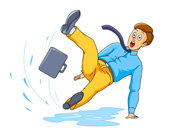
I slipped on ice in our driveway while going to move my wife’s car. I had just gotten home from work on a Friday evening, and I went to get into her car. I stepped on a patch man slips and falls in waterof ice and flew up into the air, landed on my back, and then hit the back of my head on the concrete. I still remember that awful “Crunch” sound.
5. When did you (or someone) first realize you had a problem?

I had suffered a concussion when I was hit in the head by a softball while coaching, so I knew the symptoms and the feeling. My wife is a Registered Nurse, so she knew I had to rest, and she kept checking on me all the time. After a trip to the Emergency Room, I expected the symptoms to go away in a few days or so. The ER doctor said I would be OK in a week at most. I returned to work on Wednesday (four days after the fall happened) because I had so much work to do in my job.

6. What kind of emergency treatment, if any, did you have?

I went to the Emergency Room at the time of my fall. I was released with orders to just rest for a few days and stay in dark, quiet areas. That was my treatment … nothing else.

7. Were you in a coma? If so, how long?

No. I was only knocked out for a second or two.

8. Did you do rehab? What kind of rehab (i.e., inpatient or outpatient and occupational and/or physical and/or speech and/or other)? How long were you in rehab?

I did outpatient rehab at New Approaches Center. I had physical therapy, occupational therapy, speech therapy, and cognitive therapy. I was at New Approaches as a patient for almost a year, with visits three times/week.

9. What problems or disabilities, if any, resulted from your brain injury
(e.g., balance, perception, personality, etc.)?

I have a balance problem, which is even worse when I “crash.” In the beginning, my crashes would happen randomly, and I would get severe dizziness, nausea, and confusion. Over time, these episodes started to spread apart, and now they hit when I am fatigued or overstimulated – usually 3-4 times/week at least. When I crash, my wife helps me into bed, and I usually nap two to three hours. Sometime, I wake up and feel good to go; sometimes, I am still very listless, and my brain feels like it is operating at about 20% at best.download_image
10. How has your life changed? Is it better? Is it worse?

Ha! Does anyone every answer “No”? Yes – life has changed dramatically! There are lots of adjustments and lots of compromises, but we do what we can do. First of all, I lost my job after 30 years with the same company. What really ticks me off about that is that I worked at home (company laptop) for five months after my traumatic brain injury (TBI). I tried to return to work, but the lights and general office-noise just hit me hard, and twice they found me on the floor throwing up. After that, I was told not to come back until I had a “clean bill of health from a doctor.” Yeah, right! I would work as long as I could on the laptop (30-40 mins at first) and then go lie down in dark and quiet. I would then come back later and try some more work. I was able to keep things going and get my reports out on time. I even helped do the monthly closing for each month, and I got things done in a timely manner. Sometimes I would work until I threw up, rest for a while, and then come back for more. I did everything I could and was assured by Human Resources that my job was safe. I asked about coming back part-time (as my doctor recommended) or even about working with no bright lights or noise, but I was told the company did not do that! So, I hit the 6-month mark from the date of my last work day IN the office (not counting my work at home – since I was told that “no one asked me to do that”), and they put me on disability. I was told I had 6 months from that date and I would be released. I was improving, but at a relatively slow pace. I could come back and try full-time – something every doctor and therapist said was a bad idea. But, if I did that, I lost all disability claims for the future. So, they let me go and dropped my insurance, and that was it.

My life may have changed for the better. I think I am a much more patient and caring person NOW. I stop and think about how people might be feeling and how I can help in some way. I am not stressed-out like I was because of my job … but my family has struggled financially from my losing my job. Life is different. I struggle to move on totally, as I still have a lot of deep-seated issues with people who did not help me at my former employer and with “friends” (at least I thought they were) who have nothing to do with me after my TBI. That is probably the next biggest thing – how people treat me or avoid me. Why? What did I do? You think I like being this way? I wish I could go back to work.

11. What do you miss the most from your pre-brain-injury life?

I miss my pre-TBI energy level … I felt like I could work hard for 9-10 hours in my job and then come home and help around the house. Now, I have to watch what I do and know that I may crash later.

12. What do you enjoy most in your post-brain-injury life?

I like having more time with my family. My get-so-caught-up-in making a living and doing my job meant that life just got away from us sometimes. It has been nice to get to spend more time with my wife and my boys – even though one is now in the Army. I feel like we have a better relationship.

13. What do you like least about your brain injury?

I used to consider myself smart and very good at my job. I was an accountant, and I worked for years to get to where I was. I went to night-school for over ten years to finish up my Bachelor’s Degree, and I was three classes into my Master’s schedule. I had a 3.98 GPA when I fell.1440606034164831363did-you-know-auditors-are-usually-accountants-work-in--809089-hi
14. Has anything helped you to accept your brain injury?

Reading books from people like Amy Zellmer and so many other wonderful people helped me to know that I was not alone. But, joining Facebook groups like Amy’s “TBI Tribe” really helped so much. I get to talk to people, and I always get their suggestions and ideas on things to do. Dr. Glenn Johnson and all the therapists at New Approaches helped me so much.

15. Has your injury affected your home life and relationships and, if so, how?

Of course. My TBI has changed the way my wife and I do things – simple things, like mowing the grass or shoveling snow. I have to watch what I do and be honest with myself on how I feel. I do think the TBI has made me open and easy to talk with.

16. Has your social life been altered or changed and, if so, how?

Yes. We go out with a very small group of friends, and we had to prepare them in case I crash. They have all witnessed it now, and some are very helpful. Some also just kind of back-off. I am 6’2”, and my wife is only 5’2”, so she sometimes needs some help with me.

17. Who is your main caregiver? Do you understand what it takes to be a caregiver?

thMy wife is my main caregiver. She is amazing, and I would be lost without her love and support. She is my rock. I know the things to do as a caregiver, but I also know how hard it can be.

18. What are your plans? What do you expect/hope to be doing ten years from now?

I take things more as one day, or maybe a few days, at a time now. I am much more flexible, and I do what I can each day. I hope I am still improving and helping others in ten years.

19. Are you able to provide a helpful hint that may have taken you a long time to learn, but which you wished you had known earlier? If so, please state what it is to potentially help other survivors with your specific kind of brain injury.

BE PATIENT, so give yourself time. Learning to live with a TBI takes a while … not days or weeks … but longer. Love each other.
Alan Gregory 3

Alan Gregory – Survivor of Brain Injury

20. What advice would you offer to other brain-injury survivors? Do you have any other comments that you would like to add?

My advice is to not take personally the actions of others, but it’s easier said than done. I still feel bad that people whom I called close friends treated me like I had the plague after my fall. But, they just don’t get it. WE do! So, look to people who really understand and get it.

(Clip Art compliments of Bing.)

As I say after each post: Please leave a comment by clicking the blue words “Leave a Commentanim0014-1_e0-1 below this post.

Feel free to follow my blog. Click on “Follow” on the upper right sidebar.

If you like my blog, share it (intact) with your friends. It’s easy! Click the “Share” buttons below.

If you don’t like my blog, “Share” it (intact) with your enemies. I don’t care!

Feel free to “Like” my post.

Caregivers SPEAK OUT! . . . . Malissa Mallett (caregiver for her son)

Caregivers SPEAK OUT!

Malissa Mallett (caregiver for her son)

presented by

Donna O’Donnell Figurski

“Malissa Mallett will be my guest tomorrow (Sunday, February 17) on my radio show (Another Fork in the Road) on the Brain Injury Radio Network. She has been caregiver for her son, who had an anoxic brain injury, since 1997, when he was an infant. Malissa is Program Director for the Brain Injury Alliance of Arizona (BIAAZ). We will discuss caring for her son and the effect of her expertise (opioid use on the brain.) My show broadcasts live at 5:30 PT (blogtalkradio.com/braininjuryradio), or it can be heard as a podcast anytime (https://survivingtraumaticbraininjury.com/category/on-the-air-show-menu/).”

Malissa Mallett

1. What is your name? (last name optional)

Malissa Mallett

2. Where do you live? (city and/or state and/or country) Email? (optional)

Laveen, Arizona, USA     Program@biaaz.org

3. What is the brain-injury survivor’s relationship to you? How old was the survivor when he/she had the brain injury? What caused your survivor’s brain injury?

The survivor is my son. He was 2 months old. His brain injury was caused by aspiration, causing him to stop breathing (anoxic brain injury).

4. On what date did you begin care for your brain-injury survivor? Were you the main caregiver? Are you now? How old were you when you began care?

My care began in April 1997. I was 22 years old. I was my son’s main caregiver then, but I’m not now.

th

Babies get brain injury too

5. Were you caring for anyone else at that time (e.g., children, parents, etc.)?

No

6. Were you employed at the time of your survivor’s brain injury? If so, were you able to continue working?

I had just returned to work after giving birth. I was not able to continue working, since my son required 24-hour supervision for his heart and lung monitor.

7. Did you have any help? If so, what kind and for how long?

Occasionally. My family, who were trained in CPR, would care for my son to give me a break or a night out.

cartoon-hospital8. When did your support of the survivor begin (e.g., immediately – in the hospital; when the survivor returned home; etc.)?

In the hospital

9. Was your survivor in a coma? If so, what did you do during that time?

No

10. Did your survivor have rehab? If so, what kind of rehab (i.e., inpatient and/or outpatient and occupational, physical, speech, and/or other)? How long was the rehab? Where were you when your survivor was getting therapy?

No

11. What problems or disabilities of your brain-injury survivor required your care, if any?

This is difficult to answer given my son’s age at the time of his brain injury.

12. How has your life changed since you became a caregiver? Is it better? Is it worse?

My life was challenging all throughout my son’s life.

13. What do you miss the most from pre-brain-injury life?

I will never know what could have been.

14. What do you enjoy most in post-brain-injury life?

Does not apply

15. What do you like least about brain injury?

shakilaramanwordpresscom

Learn about brain injury

The lack of understanding in the community

16. Has anything helped you to accept your survivor’s brain injury?

Yes. Education.

17. Has your survivor’s injury affected your home life and relationships and, if so, how?

Yes, it has. We can discuss this on your radio show. It’s too much to explain here.

18. Has your social life been altered or changed and, if so, how?

Not anymore

19. What are your plans? What do you expect/hope to be doing ten years from now?

I would love for my son to be successful and independent.

20. What advice would you offer other caregivers of brain-injury survivors? Do you have any other comments that you would like to add?

supportTake care of yourself.

Be surrounded by supportive people.

Educate yourself.


(Clip Art compliments of Bing.)

As I say after each post: Please leave a comment by clicking the blue words “Leave a Commentanim0014-1_e0-1 below this post.

Feel free to follow my blog. Click on “Follow” on the upper right sidebar.

If you like my blog, share it (intact) with your friends. It’s easy! Click the “Share” buttons below.

If you don’t like my blog, “Share” it (intact) with your enemies. I don’t care!

Feel free to “Like” my post.


Past Blast: Mansion Dancing Under the Stars

“TBI Tales: Mansion Dancing Under the Stars”

(originally published April 26, 2014)

presented by

Donna O’Donnell Figurski

mansion-at-westport

David and I met on the dance floor when I was 16 years old. He was 17. We fell in love under a strobe light. Through our married years, we danced at weddings and at parties, but when David’s Traumatic Brain Injury left his body as limp as Raggedy Andy, I never dreamed that David and I would ever dance again. But, during a recent trip to Westport, Massachusetts, to spend time with our son, Jared, his fiancé, Emily, and her family, we found ourselves staying in a mansion … only feet from the Atlantic Ocean. Our host, dancers-thSusan, was beyond gracious, concerned about our every comfort. On our second night there, she threw a big family party on her extensive patio and even more expansive grounds overlooking the ocean; and she invited us. We stopped in about midnight.

The partygoers were huddled around the fire-ring … music still blaring. Jared and Emily began to dance on the patio. I swayed. David sat in a tall patio chair. Then the unthinkable happened. David asked me to dance. I hadn’t expected that! David can barely walk – dancing had not been on his radar for more than seven years. I looked at him expectantly. Was he kidding, being facetious? ballroom_dancing_stars_swinging_lg_clrNo! With a huge grin, I answered, “Yes!”

We didn’t Cha-Cha or Swing, as we had learned in our Ballroom Dance classes. We didn’t attempt the Fox Trot, or even the Waltz, though Paula, our dance instructor after David had his TBI (another story), would have been proud of us if we had. But, we did our own dance. We swayed back and forth – never moving our feet. We call it the “TBI Sway.” We swayed with my head resting against David’s shoulder and his hand gently placed at the small of my back. We swayed with David holding on to me for dear life … for balance. We danced under the stars to an old favorite, “Unchained Melody” by The Righteous Brothers, with the sounds of ocean waves lapping the shore, with smiles on our lips, and remembrances of days gone by … and the promise of our days ahead.dance under stars

anim0014-1_e0-1As I say after each post:

Please leave a comment by clicking the blue words “Leave a Comment” below this post.

Feel free to follow my blog. Click on “Follow” on the lower right corner of your screen.

If you like my blog, share it with your friends. It’s easy! Click the “Share” buttons below.

If you don’t like my blog, “Share” it with your enemies. I don’t care!

Feel free to “Like” my post.

Permission granted to “Reblog” my post.

(Clip Art compliments of Bing.)

(Photos compliments of ME.)

If you have a story to tell, please contact me at donnaodonnellfigurski@gmail.com

Survivors SPEAK OUT! . . . . Robb Anthony Filippes

Survivors SPEAK OUT! Robb Anthony Filippes

presented by

Donna O’Donnell Figurski


Rob Filippes 052018

Robb Anthony Filippes – survivor of brain injury

1. What is your name? (last name optional)

Robb Anthony Filippes

2. Where do you live? (city and/or state and/or country) Email (optional)

Evansville, Indiana, USA

3. On what date did you have your brain injury? At what age?

May 22, 2016

4. How did your brain injury occur?

I had a full cardiac arrest.

5. When did you (or someone) first realize you had a problem?

I realized I had a problem when I woke up, and I had to go to HealthSouth Deaconess Rehabilitation Hospital.

6. What kind of emergency treatment, if any, did you have?

Well, I was on life-support … cartoon+infus

7. Were you in a coma? If so, how long?

Yes. One week

8. Did you do rehab? What kind of rehab (i.e., inpatient or outpatient and occupational and/or physical and/or speech and/or other)?

Yes. I was an inpatient at HealthSouth.

How long were you in rehab?

One month

9. What problems or disabilities, if any, resulted from your brain injury (e.g., balance, perception, personality, etc.)?

I lost my short-term memory. Balance is a problem. Sometimes I need to use a cane or a walker. My personality changed; I became nicer.

10. How has your life changed? Is it better? Is it worse?

My life is better.

11. What do you miss the most from your pre-brain-injury life?

Nothing. I was a drug addict for 35 years. (I’m 51 years old.)

12. What do you enjoy most in your post-brain-injury life?

I greatly appreciate that I’m still functioning. I’m very lucky.

13. What do you like least about your brain injury?

I dislike my short-term memory loss.

14. Has anything helped you to accept your brain injury?Shrink 2

I still have a hard time accepting my brain injury. I go to a “shrink” now.

15. Has your injury affected your home life and relationships and, if so, how?

My brain injury actually made my home life better. I was about to lose my marriage over it. (I lost my first marriage from it.)

16. Has your social life been altered or changed and, if so, how?

Robb Anthony Filippes & Wife

Survivor – Robb Anthony Filippes & wife

Yes. I don’t see anyone.

17. Who is your main caregiver?

My wife

Do you understand what it takes to be a caregiver?

Not really. She does everything for me and our family.

18. What are your plans?

I hope to help others with addiction.

What do you expect/hope to be doing ten years from now?

Rob Filippes Survivor 2 0520118

Robb Anthony Filippes – survivor of brain injury

I hope to still be alive and to have helped people, even if it’s one person.

19. Are you able to provide a helpful hint that may have taken you a long time to learn, but which you wished you had known earlier? If so, please state what it is to potentially help other survivors with your specific kind of brain injury.

Get counseling right away

20. What advice would you offer to other brain-injury survivors?

Never Give UpDon’t give up!

Do you have any other comments that you would like to add?

All brain-injured people are in my prayers.


(Clip Art compliments of Bing.)

As I say after each post: Please leave a comment by clicking the blue words “Leave a Commentanim0014-1_e0-1 below this post.

Feel free to follow my blog. Click on “Follow” on the upper right sidebar.

If you like my blog, share it (intact) with your friends. It’s easy! Click the “Share” buttons below.

If you don’t like my blog, “Share” it (intact) with your enemies. I don’t care!

Feel free to “Like” my post.
Caregivers SPEAK OUT! . . . . Carol . . . (for her husband, Andy)

Caregivers SPEAK OUT!

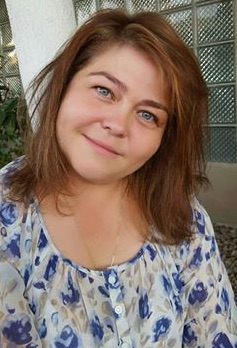
Carol (caregiver for her husband, Andy)

presented by

Donna O’Donnell Figurski


Carol1. What is your name? (last name optional)

Carol

2. Where do you live? (city and/or state and/or country) Email? (optional)

Toronto, Ontario, Canada

3. What is the brain-injury survivor’s relationship to you? How old was the survivor when he/she had the brain injury? What caused your survivor’s brain injury?

Andy is my spouse. He was 53. He was in a motorcycle accident on his way to work.th

4. On what date did you begin care for your brain-injury survivor? Were you the main caregiver? Are you now? How old were you when you began care?

I began care the day of the accident. I was in the hospital every day for eight to ten hours waiting for Andy to wake up. We finally came home after five months. I became his full-time caregiver, and I still am. I was 50; I just turned 52.

5. Were you caring for anyone else at that time (e.g., children, parents, etc.)?

No

6. Were you employed at the time of your survivor’s brain injury? If so, were you able to continue working?

Yes. I was working full-time, but I resigned after the accident.

7. Did you have any help? If so, what kind and for how long?

We were lucky to have a full team of therapists. But, we had no support-workers because Andy felt that the people were invading his privacy.

8. When did your support of the survivor begin (e.g., immediately – in the hospital; when the survivor returned home; etc.)?

Immediately. I was in the hospital every day to give my husband moral support and the healing effect of touch.

9. Was your survivor in a coma? If so, what did you do during that time?

My husband’s coma was induced. I was in the ICU (intensive care unit) with him all day. Holding his hands. Playing his music.e799afda1f4dee4bd0c8c6e0606325b1

10. Did your survivor have rehab? If so, what kind of rehab (i.e., inpatient and/or outpatient and occupational, physical, speech, and/or other)? How long was the rehab? Where were you when your survivor was getting therapy?

My husband was admitted to rehab for almost three months. It was exceptionally long. But, he was not in a position to benefit from all the therapies. He suffered from seizures, and the medication made him tired. He slept most of the days. I was at rehab with him all day. I tiptoed out for coffee breaks, but I didn’t go far.

11. What problems or disabilities of your brain-injury survivor required your care, if any?

I help with Andy’s problems with gait, balance, cognitive functions, memory, and emotional lability (involuntary, sometimes inappropriate, emotional displays of mood, which are overly rapid and exaggerated). I take care of meals, finances, housekeeping, and Andy’s soiled beddings. After continuing physio three times a week, Andy found that his gait and balance improved. The problem with his urinary tract got better on its own. I still accompany him to all his therapy sessions because of his memory problem.

12. How has your life changed since you became a caregiver? Is it better? Is it worse?

Life has become simpler. No running after unnecessary things. This gave me the chance to notice more, and I realized that there all lots of kind and helpful people around the community. Our roles changed – I have to deal with the house and finances.

13. What do you miss the most from pre-brain-injury life?hotel-clipart-transparent-background-4.png

We travel together two or three times a year. Andy was the one who used to plan and book the trips and accommodations. I miss him sharing his ideas about everything.

14. What do you enjoy most in post-brain-injury life?

Being with him. Seeing the progress every day. Listening to his fears and seeing him happy.

15. What do you like least about brain injury?

A lot of people are not aware of TBI (traumatic brain injury). I myself never heard of it until my husband was diagnosed as having a TBI. It has drastically changed his life. I have to deal with all the house work and repairs. I have to make the final decisions.

16. Has anything helped you to accept your survivor’s brain injury?

Yes. Andy used to tell me that there are no regrets in life. Everything is done through our own decisions. We cannot say “What if … ?”No Excuses

17. Has your survivor’s injury affected your home life and relationships and, if so, how?

Yes. My role is now changed. My two children and I miss Andy’s ideas, suggestions, and guidance.

18. Has your social life been altered or changed and, if so, how?

Yes. I have become overprotective. I don’t want to leave my husband alone. My friends are all working, so not only is there no time to meet, but it’s also not easy for me to leave the house without him.

volunteers19. What are your plans? What do you expect/hope to be doing ten years from now?

I would love to volunteer and help other people.

20. What advice would you offer other caregivers of brain-injury survivors? Do you have any other comments that you would like to add?

Be patient; time heals. It’s a learning process to both the survivor and the caregiver. And, it’s absolutely worthwhile! It changed my perspectives in life.


(Clip Art compliments of Bing.)

As I say after each post: Please leave a comment by clicking the blue words “Leave a Commentanim0014-1_e0-1 below this post.

Feel free to follow my blog. Click on “Follow” on the upper right sidebar.

If you like my blog, share it (intact) with your friends. It’s easy! Click the “Share” buttons below.

If you don’t like my blog, “Share” it (intact) with your enemies. I don’t care!

Feel free to “Like” my post.



SPEAK OUT! NewsBit . . . . . Blood Test Developed for Brain Injury

Blood Test Developed for Brain Injury

presented

by

Donna O’Donnell Figurski


th-1The Centers for Disease Control has reported that traumatic brain injury (TBI) accounts for more than 2.5 million visits to emergency rooms (ERs) in the US every year. Many people with a concussion do not even go to the ER because they have no symptoms and don’t believe that the ER can diagnose a brain injury if it’s not serious enough to be detected by a number of indirect tests. A CT (“cat”; computerized tomography) scan is usually ordered if a brain injury is suspected, but only 10% of CT scans detect a brain injury in people with a mild head injury.

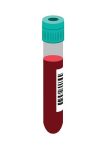
thA quick, sensitive, and accurate blood test will soon be available for ERs EmergencyRoomto know if the brain has been injured. Some people will be negative. They will not need a CT scan and can go home with no worries. Others who are asymptomatic may actually discover that they’re positive for a brain injury. The ER doctor can then take appropriate action.

An objective blood test will be a game-changer for the treatment of TBIs. An obvious difference is that it will make many CT scans (and their radiation) unnecessary. On the other hand, people, especially those with a mild concussion, may discover they do have a brain injury and take appropriate steps. (Full story 1, 2)


(Clip Art compliments of Bing.)

As I say after each post: Please leave a comment by clicking the blue words “Leave a Commentanim0014-1_e0-1 below this post.

Feel free to follow my blog. Click on “Follow” on the upper right sidebar.

If you like my blog, share it (intact) with your friends. It’s easy! Click the “Share” buttons below.

If you don’t like my blog, “Share” it (intact) with your enemies. I don’t care!

Feel free to “Like” my post.

SPEAK OUT! . . . . . . . . . . . . . . . Itty-Bitty GIANT Steps

SPEAK OUT! Itty-Bitty Giant Steps

presented by

Donna O’Donnell Figurski


Itty-Bitty GIant Steps for BlogSPEAK OUT! Itty-Bitty Giant Steps will provide a venue for brain-injury survivors and caregivers to shout out their accomplishments of the week.

If you have an Itty-Bitty Giant Step and you would like to share it, just send an email to me at neelyf@aol.com.

If you are on Facebook, you can simply send a Private Message to me. It need only be a sentence or two. I’ll gather the accomplishments and post them with your name on my blog approximately once a week. (If you do not want your last name to be posted, please tell me in your email or Private Message.)

I hope we have millions of Itty-Bitty Giant Steps.

Lauren Ziaks

Lauren Ziaks – Brain Injury Survivor

Lauren Ziaks (survivor) … I faced a huge fear today. I wanted to hike a slot canyon, but I was scared of claustrophobia, dizziness/balance issues from recent re-injury, falling etc. But, with (a lot of) help, some positive talk, and a couple of tears of fear at a really steep part, I was able to do Zebra Slot Canyon!8f71e4d8a4fe5b982b90c51e430a75c5

Keep pushing yourself to face your fears and limitations, whatever they are for you. And, lean on those around you for help when you can.


YOU did it!

Congratulations to Lauren!

(Clip Art compliments of Bing.)

(Photos compliments of contributor.)

As I say after each post:anim0014-1_e0-1

Please leave a comment by clicking the blue words “Leave a Comment” below this post.

Feel free to follow my blog. Click on “Follow” on the upper right sidebar.

If you like my blog, share it intact with your friends. It’s easy! Click the “Share” buttons below.

If you don’t like my blog, “Share” it intact with your enemies. I don’t care!

Feel free to “Like” my post.

TBI Tales . . . . . . . . . . . . . . . . . . This Song Could Be a Caregiver’s Anthem

This Song Could Be a Caregiver’s Anthem

by

Donna O’Donnell Figurski

David & Donna Aunt Irene's Funeral 060718


I happened to hear this old hit song (“Lean on Me”) a couple of days ago. After listening to the lyrics, I realized it reflects what we caregivers do. We just want to help.

a0379e35efb379c624212808302a9194

We don’t look this bad.

As the song implies, we give much-needed help. “Lean on Me” could be our anthem. Give it a listen.

PS. I just had to dance with this man to that song and we each did a bit of “leaning on.”


(Disclaimer: The views or opinions in this post are solely that of the author.)

If you have a story to share and would like to be a part of the SPEAK OUT! project, please submit your TBI Tale to me at neelyf@aol.com. I will publish as many stories as I can.

As I say after each post:

Please leave a comment by clicking the blue words “Leave a Comment” below this post.anim0014-1_e0-1

Please follow my blog. Click on “Follow” on the top right sidebar. (It’s nice to know there are readers out there.)

If you like my blog, share it with your friends. It’s easy! Click the “Share” buttons below.

If you don’t like my blog, “Share” it with your enemies. I don’t care!

Feel free to “Like” my post.

(Clip Art compliments of Bing.)


Sneak Peeks for Prisoners

My book, Prisoners without Bars: A Caregiver’s Tale, will be released to the public on November 1, 2018 by WriteLife Publishing of Boutique of Quality Books Publishing Company. Here are pre-order links for Barnes & Noble and Amazon.


Excerpt 1

Chapter 1

Everything’s Blurry

presented by

Donna O’Donnell Figurski

… On January 13, 2005, David’s morning started much the same as it did each day. The only difference was that he delayed his rising by one hour. He planned to work at home that morning, preparing a talk about his

figurski-1

David Figurski, PhD – a few months before brain injury

research that he expected to deliver at Wesleyan University in Connecticut on Saturday. A long-time professor-friend was retiring from the faculty, and David was a featured speaker at his retirement symposium. It was an invitation and an honor that may have saved David’s life. …


Please leave a comment/question. I will respond.


(Clip Art compliments of Bing.)

As I say after each post: Please leave a comment by clicking the blue words “Leave a Commentanim0014-1_e0-1 below this post.

Feel free to follow my blog. Click on “Follow” on the upper right sidebar.

If you like my blog, share it (intact) with your friends. It’s easy! Click the “Share” buttons below.

If you don’t like my blog, “Share” it (intact) with your enemies. I don’t care!

Feel free to “Like” my post.

New NEWS: My Radio Interview about My Upcoming Book

New NEWS: My Radio Interview about My Upcoming Book

presented by

Donna O’Donnell Figurski

Jamie Crane-Mauzy 053118

Jamie Crane-Mauzy


On May 27, 2018, Jamie Crane-Mauzy, a host on the Brain Injury Radio Network, interviewed me about my upcoming book (Prisoners without Bars: A Caregiver’s Tale), which will be available to the public on November 1, 2018, but that can be pre-ordered now. The 80-minute show has been archived and can be listened to at any time.

Donna O’Donnell Figurski

Prisoners

Prisoners without Bars: A Caregiver’s Tale


(Clip Art compliments of Bing.)

As I say after each post: Please leave a comment by clicking the blue words “Leave a Commentanim0014-1_e0-1 below this post.

Feel free to follow my blog. Click on “Follow” on the upper right sidebar.

If you like my blog, share it (intact) with your friends. It’s easy! Click the “Share” buttons below.

If you don’t like my blog, “Share” it (intact) with your enemies. I don’t care!

Feel free to “Like” my post.

diemodi jewelry

uniquely hand-crafted jewelry by donna

Welcome to Harmony Kent Online

The home of all things books

Pete Springer

Passionate Teacher and Future Children's Author

HOPE TBI

Helping Other People Excel - To Be Independent

For the Love of Books, Old and New

Katie Fischer, Writer and Reader of Stories

Charlie Bown

Children's Author

Jessica Hinrichs

“We write to taste life twice, in the moment and in retrospect.” ― Anais Nin

VIVIAN KIRKFIELD - Writer for Children

Picture Books Help Kids Soar

Mindy’s Writing Wonderland

For authors, parents, teachers & everyone who loves children’s books.

Kaitlyn Leann Sanchez

Literary Agent

Surviving Traumatic Brain Injury

TBI - Survivors, Caregivers, Family, and Friends

The Care Factor

Loving someone with a Traumatic Brain Injury

Brain Injury Support Group of Duluth-Extension

Brain Injury Information and SUPPORT

Brain Aneurysm Global Insight

Brain Aneurysm, cerebral hemorrhaging, hemorrhage stroke