TBI – Survivors, Caregivers, Family, and Friends

Posts tagged ‘blogtalkradio.com/braininjuryradio’

Another Fork in the Road Behavioral and Emotional Changes After Brain Injury

Fork in the Road copy“Another Fork in the Road”

This category is an extension of my radio show, “Another Fork in the Road,” which airs at 5:30 pm (Pacific Time) on the 1st and 3rd Sundays of each month on the Brain Injury Radio Network. (See the “On The Air Show Menu” category for a list – with links – of all my shows, which are archived and thus always available.)

On the 1st Sunday of each month, I host a panel of brain injury survivors, caregivers, and/or professionals in the field. On these shows, my panelists and I examine topics pertaining to brain injury.

On the 3rd Sunday of each month, I host guests – brain-injury survivors, caregivers, or professionals in the field.

Since I spend countless hours in preparation for each show, I decided to share the knowledge that I gather with my readers.


Behavioral and Emotional Changes After Brain Injury

by

Donna O’Donnell Figurski


BrainAs many of us know, all brain injuries are different. When an injury has happened to any part of the brain, there is going to be a change. The part of the brain that was damaged will determine the kind of symptoms that will be experienced. Because the brain is a complex organ in which different areas communicate, some damage may cause unexpected behaviors or emotional changes.

There are several sections of the brain, and each is responsible for many different aspects of daily life. Here I will discuss some of the behavioral and emotional changes that can result from damage to the cerebellum and to the cerebrum, which consists of the temporal lobe, the occipital lobe, the parietal lobe, and the frontal lobe, a major part of which is the prefrontal cortex.

The cerebellum, which is at the base of the skull, controls coordination, balance, equilibrium, and motor-skill memory. Some of the problems that result from damage to this area are compromised balance or the inability to walk, problems with fine-motor skills, and slurring of speech.

Damage to the temporal lobe can cause problems with hearing, memory, and motor-skill memory. Injury in the temporal lobe may also result in aggressive behavior.

The occipital lobe has to do with vision and vision-related activities. Reading and writing will be affected by damage to this area of the brain. Vision impairment can occur, which includes blurry, tilted, and double vision.

The parietal lobe is responsible for touch perception and the interpretation of visual information. Problems that may occur with damage to this lobe include difficulty in naming objects, difficulty with reading and/or writing, and spatial perception problems that can affect coordination.

Emotional responses and expressive language are housed in the frontal lobe. Emotions and the skills for problem-solving are dealt with there. The frontal lobe helps folks make sense of the world around them. It’s needed to understand others and be empathetic to them. Essentially, the frontal lobe is the emotional and social control area. It also determines and steers personality.

The prefrontal cortex of the frontal lobe controls analytical thinking, thought analysis, and behavior regulation. Executive functions are controlled here too. The prefrontal cortex is the gateway for making good decisions. When this area is injured, the thinking process is affected in such a way that inappropriate behavior is often the result.


I asked the following three questions of brain-injury survivors on the brain-injury support-group sites on Facebook to which I belong:

How have your emotions or your behaviors changed after your brain injury?

How do you cope with the change?

How do family members and/or friends cope with the change in your personality?

Several site members answered. The answers below are typical of the comments I received. (I used first names to protect the privacy of the contributors.)


Sherrie (survivor)

Happy SadIt’s been a long time since my brain injury. My emotions can be extreme or opposite to what they should be. Change is hard, and I don’t like change. Friends left, and family has never accepted my brain injury.

I have been known to laugh when someone gets hurt, like mashing a finger, and my emotions can be so overwhelming that I cry no matter the feeling. Happy, sad, proud, mad, love. It doesn’t matter.


Toby (survivor)

Toby told me that it’s hard to cope with his migraines with brain injury because a lot of meds don’t work very well.

He has been put on many meds for depression and anxiety disorder.
MemoryHe also says his memory is damaged, and he can’t remember a lot of things.

Toby’s family has a hard time with him and his brain injury because it changes many things in their lives too. A lot of people don’t know what to say, so they hold back, or they do not talk with Toby anymore.

Toby tries to cope by getting his head in a better place, but when the anxiety kicks in hard, he has no idea what to do. He tries to get some things set up in advance, so he can take the Migraineright meds before another migraine comes on. (He usually experiences over twenty migraines a month.)

When I asked Toby how his family and friends cope with him and his brain injury, he said, “They stay away from me. If I make a mistake on the computer or the Internet, they will call my wife and give her a heads-up on my condition. I don’t really have any friends after what happened to me.”


Jason (survivor)

k0184684In a nutshell, Jason said, “Lack of love.”


I thought an article by Janet Cromer in “Psychology Today” was very informative, especially for caregivers, who often struggle with emotional and/or behavioral changes in the survivor. The article can be found online (see below).

Janet Cromer, who is a Registered Nurse, has written the “Dark Side of Personality Change.” She tells of how her husband’s personality changed after his brain injury. Before his brain injury, Janet recalls her husband (Alan) as being kind and loving with a keen sense of curiosity and humor. Calm ManAfter his injury, Alan experienced intense anger and confusion. His bizarre behavior and sudden change from calm to fiery led Janet to believe her post-injury husband had two personalities. She likened Alan’s behavior to that of Dr. Jekyll and Mr. Hyde, which she found very frightening. (I’m sure Janet is not alone in her fears. I have heard comments such as these in my brain-injury support-groups too many times to count.)

As I mentioned above, injuries to the frontal lobe, especially to the prefrontal cortex, often result in emotional and behavioral changes in survivors. Survivors of any brain injury may find themselves in states of agitation and in unstable emotional chaos. These states can cause outbursts of unintended verbal aggression and raging attacks on family or friends, which can be very hurtful. Though family and friends may try to understand and to be empathetic and helpful, dealing with an unexpected outburst can be an overwhelming task because it is so hard to comprehend.
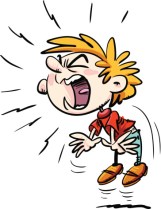
Violent outbursts and aggression by the survivor can result in the lack of trust and possibly fear of personal injury by the caregiver, family, or friends. But I think it’s the lack of trust – knowing that the survivor can become volatile at any time – that is the scariest and most hurtful. That loss of the sense of security is likely to be the most devastating.


How can caregivers, family, and friends help? I guess understanding would be at the top of the list. I know that’s not easy, especially if one feels that he or she has been unjustly attacked. Even knowing that the survivor is not responsible, would not act this way pre-brain injury, and will probably feel really bad after the incident, it will still be difficult to accept the aberrant behavior. It’s human nature.
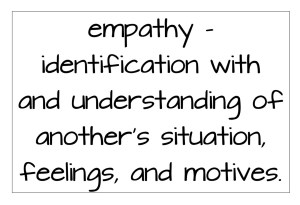
empathyThe caregiver, family, and friends need to understand that the survivor’s outburst may occur because of his or her frustration with the reality of the new life – lacking the ability to do the things he or she once did easily and/or experiencing loss of independence and/or the realization of a futile situation. Also, an outburst might be triggered by uncontrolled pain, depression, or any number of ailments. So, showing compassion or empathy, providing comfort, support, and encouragement will go a long way to helping your survivor.


What can one do when faced with irrational behavior by the survivor? It often helps to leave the area when an outburst begins. Don’t try to reason with the survivor – your efforts will probably not be fruitful. Remember, the survivor’s brain is injured, and he or she can’t help the aberrant behavior. It might help to talk about the behavior in a calm manner after the incident has subsided, or … maybe let it go.

Try to determine if there is a specific trigger for the outburst. If one is identified, try to avoid those situations that provide it. At the very least, knowing the trigger can help the caregiver, family member, or friend understand a little more. As time goes by, the caregiver and the survivor may each recognize the triggers and be able to eliminate them or lessen their impact.gg60887323


Identify the survivor’s actions immediately prior to an outburst. Does the survivor show signs of agitation, tense his or her muscles, or become distracted? If so, take note and maybe remove the survivor from the area. Large groups of people (as in malls, family gatherings, or parties) can often cause agitation in a survivor, which in turn may cause an outburst.

Any overwhelming situation can bring about an outburst. Having to be ready to leave the house at a certain time can cause stress. So allow more time. Don’t rush.

Give plenty of notice for planned events. Make sure there are no surprises. If a survivor knows in advance that there is a family gathering to go to on Friday night, then he or she can plan for it. Surprises and unexpected events often cause anxiety and confusion, which can easily bring on an outburst. So plan ahead.
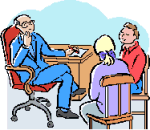
 

ClipArt-AfterTheFire7Get counseling. Counseling for both the survivor and the caregiver (or family member) can be helpful. Visiting a neuropsychologist or a behavioral therapist can help (see below). They are able to teach compensatory tactics to avoid or lessen the effects of an angry outburst. The survivor may employ deep breathing, alter thoughts to a more pleasant topic, leave the area to regroup in a quiet place, let friends know the trigger points, and ask for help. Periodic reminders can help those who struggle with memory. These are all simple and effective ways to compensate.

There are a lot of little tricks that can be incorporated into the lives of survivors and their caregivers, family, or friends that can make life easier for all.


Helpful Links

What Does a Neuropsychologist Do, Exactly?

Who Are the Rehab Specialists?

Cerebellum

Frontal Lobes

Parietal Lobes

Temporal Lobes

Occipital Lobes

What Are the Functions of the Prefrontal Cortex?

After Brain Injury: The Dark Side of Personality Change Part I by Janet M. Cromer RN, LMHC


Click here to listen to my show

“Behavioral and Emotional Changes After Brain Injury” on “Another Fork in the Road,” on the Brain Injury Radio Network.”


(Clip Art compliments of Bing.)

As I say after each post: Please leave a comment by clicking the blue words “Leave a Commentanim0014-1_e0-1 below this post.

Feel free to follow my blog. Click on “Follow” on the upper right sidebar.

If you like my blog, share intact it with your friends. It’s easy! Click the “Share” buttons below.

If you don’t like my blog, “Share” it intact with your enemies. I don’t care!

Feel free to “Like” my post

SPEAK OUT! Guest Blogger . . . GeorgeAnna Bell . . . . . . . . . . . . . How My Brain Injury Affected My Life

How My Brain Injury Affected My Life

by

GeorgeAnna L. Bell

presented

 by

Donna O’Donnell Figurski


Girl Blogger cartoon_picture_of_girl_writingI was diagnosed as being moody at nine years old. I still have that diagnosis to this very day: “mood disorder due to brain injury.” I also have anxiety and panic attacks. I still have today most of the same problems I had back then, just in an expanded manner.

GeorgeAnna Bell - Survivor

GeorgeAnna Bell – Survivor

I remember one thing that always frustrated me – Before my head injury, I was able to read, comprehend, and retain what I was reading. I remember having A to A+ grades and never getting into trouble. But, as soon as I had my head injury, I remember being hit a lot with a ruler by the nuns, being called “demon child,” not being able to read out loud, and having issue after issue trying to remember what we just learned or read five minutes ago and being told that I was lazy. (Oh, that one always got my goat.) I could not keep quiet or shut my mouth for more than five seconds, and I would speak out of turn. I could not sit still in my seat, and I was constantly moving around and around. These are some of the things I personally remember.

Kids_smiling_girl_cartwheelI know my parents wondered why I acted out, and they took me to multiple specialists during my youth. I was diagnosed with optic nerve damage, but no other problems resulting from my head injury were identified. Each doctor gave my parents the same answer: “There is no logical explanation as to why she is doing this now when she did not do it before the head injury.

I was extremely impulsive and still am to this day. In addition to the moodiness, this has been one of the hardest things for me to overcome. I experience emotions very quickly and intensely. As a child and into my teen years, I was very moody and got aggravated very quickly over the littlest things. I always felt anxious without exactly knowing why most of the time. It still happens to me to this very day. I will have an anxiety/panic attack, and I cannot explain why it happened. Recently, I went to a friend’s house, and I had to leave soon after I got there because I started to have an anxiety attack. I get anxious easily still today because I am so afraid people are going to make fun of me and tease me because I am different. I do not tend to keep friends very long because they tend to find something that is strange or I say something weird and they run from me.

I have absolutely no tolerance for change. I have no patience when it comes to waiting – I have to have everything NOW, NOW, NOW. I am always told I have indiscreet ways for making my feelings known to others. So many people take my statements out of context. I feel that I am acting appropriately, but others do not see me that way. When I change my way of saying something or going about something, I am told I am coming off as hostile or aggressive. I do not see it that way, nor do I mean it in that way either. I try to explain my head injury to others, but they tell me to shut up and act normal and stop giving excuses. Yet, it is not an excuse; it is the truth.gg66852714

As a child, as a teenager, and even in my adult years, I lacked awareness of my own personal deficits. It was only about five years ago that I started to realize the things I do that cause these issues, and I personally have tried to change them.

I would verbally lash out, cry, become depressed, and literally throw temper tantrums. This went on into my early 30s. I realized that, if I do not change, I will never have anyone in my life because all I do is find a way to push everyone out of my life. It wasn’t until maybe a year ago that I started to try to change things on my own.

I have also tried to seek professional help, even going as far as intentionally getting myself diagnosed as being “severely mentally ill” just to get the help. But, nothing worked. Actually, getting that diagnosis set me back years.

I had NO assistance from the mental health system. They were actually making my problems worse. Now I try to address the fact that there is an issue, and I doggedly try to understand what the physical, emotional, and psychological effects are upon my daily day. I try to rectify those effects that I deem as a hindrance to my social well-being by forcing myself to change the way I interact with others. I started by intentionally going to bars, not to drink, but to interact with others so I could watch how people reacted to certain behaviors. Honestly, this was hard and long. I lost people from my life, but those people were not the people I truly wanted in my life anyway.family-clip-art

I have a problem keeping people in my life as a result of my inability to function properly in certain social situations. The majority of family and/or friends that choose to maintain their relationship with me either ignore or downplay any behaviors that I portray. Only a select few recognize and respond well when my behaviors are considered outside social normality. When people start to see the social abnormalities in my personality, most either ask what is wrong with me, why I am acting like a crazy person, or just never speak to me again by cutting me out of their lives. (Almost always, they cut me out little by little.)

sad-teenage-girl-clipart-teen_girlDuring my teenage years and into my 20s and even 30s, I had depression on and off. It got better after I had a hysterectomy. When my behaviors started to level out a lot, I was able to control myself better and move past other issues by actually learning not to do this or that.

Amber GeorgeAnna Bell's Service Dog

GeorgeAnna Bell’s Service Dog, Amber

Within the last year, I have found one of the best outlets to cope with the changes in my behavior. I now fall back on crocheting. I make things for others who are in need of certain things more than I. For years, I would fall back a lot on my dogs and my boyfriend. Honestly, one of the dogs – my service dog, Amber – helped me break free from my isolation. The attention that people placed on her made me break free of the isolation I had restricted myself to. I interacted with people just by talking. I learned how to cope with my anxiety and my expression around other people.


Thank you, GeorgeAnna Bell.

Disclaimer:
Any views and opinions of the Guest Blogger are purely his/her own.

(Clip Art compliments of Bing.)

(Photos compliments of GeorgeAnna Bell.)

As I say after each post: Please leave a comment by clicking the blue words “Leave a Commentanim0014-1_e0-1 below this post.

Feel free to follow my blog. Click on “Follow” on the upper right sidebar.

If you like my blog, share it (intact) with your friends. It’s easy! Click the “Share” buttons below.

If you don’t like my blog, “Share” it (intact) with your enemies. I don’t care!

Feel free to “Like” my post.


On The Air: . . . . . . . . . . . . . “Another Fork in the Road:” . . . . Substitute Hosts, Lisa Dryer & Cam Compton – M.S. Meets Stroke

On The Air: “Another Fork in the Road:” with substitute hosts, Lisa Dryer & Cam Compton “M.S. Meets Stroke”

presented

by

Donna O’Donnell Figurski


images-1

Brain Injury Radio Network (BIRN) hosts, Lisa Dryer of “Mess with M.S.” (Multiple Sclerosis) and Cam Compton of “Cam’s Corner” step up to the mic on “Another Fork in the Road” while I, (Donna O’Donnell Figurski) traveled to Michigan for my nephew’s wedding. Party Time!

Lisa and Cam discussed the similarities and differences of each of their brain injuries and how they approach life from slightly different angles. Both hosts emphasized how each brain injury is different and how each survivor responds to the difficulties presented to him or her.

18 Lisa Dryer copy

Lisa Dryer – Survivor – Host of “Mess with M.S.”

03 Cam Compton Photo for Banner copy

Cam Compton – Survivor – Host of “Cam’s Corner”


See you “On the Air!”

On The Air: “Another Fork in the Road:” with substitute hosts, Lisa Dryer & Cam Compton “M.S. Meets Stroke”


(Clip Art compliments of Bing.)

As I say after each post: Please leave a comment by clicking the blue words “Leave a Commentanim0014-1_e0-1 below this post.

Feel free to follow my blog. Click on “Follow” on the upper right sidebar.

If you like my blog, share it intact with your friends. It’s easy! Click the “Share” buttons below.

If you don’t like my blog, “Share” it intact with your enemies. I don’t care!

Feel free to “Like” my post.


On The Air: . . . . . . . . . . . . . “Another Fork in the Road:” . . . . Panel: Behavioral & Emotional Problems After Brain Injury

On The Air: Brain Injury Radio “Another Fork in the Road”

Panel: Behavioral & Emotional Problems After Brain Injury with

Lisa Dryer and GeorgeAnna Bell

presented

by

Donna O’Donnell Figurski

images-1One of the most difficult aftereffects of brain injury is losing oneself. Depending on the injury and which part of the brain is impacted determines the type of emotional and behavioral change in one’s personality. A person who was agreeable, complacent, reasonable, and calm before the injury may change drastically to one who is violent, depressive, or struggles with anger management. These effects are not easy for others to understand – BUT, have you thought about how difficult it must be for the survivor?

Dryer, Lisa Survivor

Lisa Dryer – Survivor & BIRN Host


My panel, M.S. (Multiple Sclerosis) survivor, Lisa Dryer, and brain injury survivor, GeorgeAnna Bell, will join me to discuss this sensitive topic.

03 Bell, GeorgeAnna, Bell copy

GeorgeAnna Bell – Survivor

See you “On the Air!”

On The Air: Brain Injury Radio “Another Fork in the Road” Panel: Behavioral & Emotional Problems After Brain Injury

(Clip Art compliments of Bing.)

As I say after each post: Please leave a comment by clicking the blue words “Leave a Commentanim0014-1_e0-1 below this post.

Feel free to follow my blog. Click on “Follow” on the upper right sidebar.

If you like my blog, share it intact with your friends. It’s easy! Click the “Share” buttons below.

If you don’t like my blog, “Share” it intact with your enemies. I don’t care!

Feel free to “Like” my post.

SPEAK OUT! . . . . . . . . . . . . . . . Faces of Brain Injury Beth Kidd Koziol (survivor)

SPEAK OUT! Faces of Brain Injury Beth Kidd Koziol

presented

by

Donna O’Donnell Figurski


Beth Kidd Koziol

Beth Kidd Koziol – Survivor

My brain injury happened in 2005 from being a passenger on the back of a motorcycle. I had a traumatic brain injury (TBI)/closed-head brain bleed, a fractured clavicle, five fractured ribs, a lung contusion, many fractures in my left hand, including a fractured scaphoid bone. (I was told that, if the blood supply could not get to it, I would lose the use of my hand. Thank God, it healed!) I also had a badly fractured pelvis and several torn ligaments in my left shoulder. I was airlifted to a trauma unit, where I stayed for three days. I was then transferred to a rehab hospital for about two months. There I got extensive occupational, physical, and speech therapies. I had a neuropsychologist, a neurologist, an orthopedic specialist, and a pain-control specialist. After I left the rehab hospital (in a wheelchair), I visited three times a week for an additional three to six months. I had to learn how to eat, swallow, talk, and walk. I had taste and smell issues with food, plus I couldn’t swallow normal foods. I got dizzy when I moved my head. It was determined that I had shattered microscopic bones in my left ear (the side of all my injuries). After about three weeks of physical therapy, I had a treatment that corrected that problem and reset those little microscopic bones.

I left the rehab hospital in a wheelchair. It took me another three to four months before I could walk with a walker and then with a cane. Now I use nothing. After six to nine months of continued outpatient sessions of physical therapy and occupational therapy, I was called “Wonder Woman” and “Miracle Child” because no one knew how determined I was in my recovery. I was my own caregiver because I was 3,000 miles away from family. Rather than alarm them, I did not tell them of my accident until I was well enough to travel back to the East Coast and tell them in person, so they could see that I was OK on the outside. My family still doesn’t understand the damage and changes on the inside that I endure daily. I have short-term memory problems, I can no longer multitask, and I have to talk in detail as if I were writing a book or describing a picture. I’m told I talk too much; that hurts. If I am doing anything, including talking, and I am interrupted, I cannot remember what it was that I was going to say or do. This is commonly the new normal for many brain injury survivors.

Beth Kidd Koziol 2 survivor 051616

Beth Kidd Koziol – Survivor

The best thing I can suggest is to find materials – books to read to get informed or educated and websites that help you understand what a TBI-person goes through. It helps the survivor when you understand and are patient with him or her. After ten years for me, I still find areas in which I am still healing.
My motto is “Never Give Up!” [smile emoticon]


As I say after each post:

Feel free to leave a comment by clicking the blue words “Leave a Comment” below this post.

Please follow my blog. Click on “Follow Me Via eMail” on the right sidebar of your screen.anim0014-1_e0-1

If you like my blog, click the “Like” button under this post.

If you REALLY like my blog, share it with your friends. It’s easy! Click the “Share” buttons below.

If you don’t like my blog, “Share” it with your enemies. That works for me too!


SPEAK OUT! . . . Guest Blogger Tanya Dallas

One Day at a Time

by

Tanya Dallas

presented

by

Donna O’Donnell Figurski

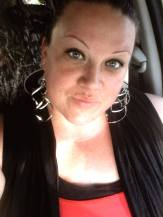
Girl Blogger cartoon_picture_of_girl_writingI am new to this diagnosis of brain injury. For the last few years, I have had several unexplained symptoms – my life was spinning out of control. No one was listening to me. No one was asking the right questions. A few weeks ago, my father took me to the Emergency Room. He was desperately seeking help because I had no control of my emotions. I was placed in a locked-down psychiatric unit.

Dallas, Tanya Survivor 2 050716

Tanya Dallas – Brain Injury Survivor

A very nice doctor asked me if I’ve ever had a head injury. I began to tell my story. At 11 years old, I had a bike accident. I had no helmet, and I was unconscious for two minutes. At 12 years old, I took a softball to the face. I was unconscious for a few seconds. At 18 years old, I was in a car accident. I was unconscious for an unknown amount of time. Once I was struck in the head with a rock. I was also hit in the head with a ten-pound dumbbell (working with juveniles means risks). I experienced five years of domestic violence. I have no idea which of these things caused my brain to work differently.

Dallas, Tanya Survivor 1 050716

Tanya Dallas – Brain Injury Survivor

It’s hard for me to process. I was always so independent, and now I am unable to even hold a job. I learned what “flooding” was yesterday. I cried as I watched the video. For the first time in years, I felt understood. I felt like I wasn’t completely losing my mind.

It’s hard because my family still doesn’t understand. And they can’t see the injury, so they don’t think it’s there. I’m just taking one day at a time at this moment.


Thank you, Tanya Dallas.

Disclaimer:
Any views and opinions of the Guest Blogger are purely his/her own.

(Clip Art compliments of Bing.)

(Photos compliments of Tanya Dallas)

As I say after each post: Please leave a comment by clicking the blue words “Leave a Commentanim0014-1_e0-1 below this post.

Feel free to follow my blog. Click on “Follow” on the upper right sidebar.

If you like my blog, share it (intact) with your friends. It’s easy! Click the “Share” buttons below.

If you don’t like my blog, “Share” it (intact) with your enemies. I don’t care!

Feel free to “Like” my post.

Brain Injury Resources . . . . . “Jump on the Bumper” to Raise Awareness of Brain Injury

“Jump on the Bumper” to Raise Awareness of Brain Injury

presented

by

Donna O’Donnell Figurski

Kidd Koziol, Beth Survivor 2

Beth Kidd Koziol – Brain Injury Survivor – NASCAR enthusiast

If you have a NEED for Speed, then “Jump on the Bumper” with our own Beth Kidd Koziol. Beth’s name and photo will be on the bumper of driver Joey Gase’s racecar as he races around the Charlotte Motor Speedway (in North Carolina) in search of a win in the Xfinity Race on Memorial Day weekend.

Joey Gase

Joey Gase – NASCAR Driver


Joey lost his mother to a brain aneurysm when he was eighteen. Joey donated his mother’s organs, and today 66 people are alive because of them. Joey’s goal is to raise awareness for “Donate Life” and traumatic brain injury groups of North Carolina.

Beth, a NASCAR enthusiast, invites other brain injury survivors to take the ride of their life with her on the bumper of Joey’s car and help her fulfill her dream of raising awareness for brain injury.

Joey Gase and Car

Joey Gase – NASCAR Driver

All I can add is “Beth, hang on tight!”

Please click the link below for details.

“Jump on the Bumper” with Beth Kidd Koziol


As I say after each post:

Feel free to leave a comment by clicking the blue words “Leave a Comment” below this post.

Please follow my blog. Click on “Follow Me Via eMail” on the right sidebar of your screen.anim0014-1_e0-1

If you like my blog, click the “Like” button under this post.

If you REALLY like my blog, share it with your friends. It’s easy! Click the “Share” buttons below.

If you don’t like my blog, “Share” it with your enemies. That works for me too!

Survivors SPEAK OUT! . . . . . . Heather Love Leffel

Survivors SPEAK OUT! Heather Love Leffel

presented

by

Donna O’Donnell Figurski

Leffel, Heather Love MS survivor

Heather Love Leffel – Multiple (M.S.) Survivor

1. What is your name? (last name optional)

Heather Love Leffel

2. Where do you live? (city and/or state and/or country) Email (optional)

Toledo, Ohio, USA     heatherleffel419@gmail.com

3. On what date did you have your brain injury? At what age?

I have multiple sclerosis (MS), which essentially is brain damage. I had my first symptom at 19 years old.

4. How did your brain injury occur?

Well, my mother and twin sister also have MS. I do believe MS has a genetic aspect to it, but as of now, they don’t know the cause of MS.

5. When did you (or someone) first realize you had a problem?

I first noticed my MS in 1999. I was at my son’s T-ball game. I looked into the sky, and suddenly my left eye saw white flashes, and a black lace went over my vision. This was my mother’s first symptom too. I knew in my heart I had MS.

6. What kind of emergency treatment, if any, did you have?

None. I went directly into denial without passing GO (LOL) (a Monopoly reference). I didn’t want to know I had MS, so I ignored every symptom I had. I was in complete denial.

7. Were you in a coma? If so, how long?

No, I was not.

8. Did you do rehab? What kind of rehab (i.e., inpatient or outpatient and occupational and/or physical and/or speech and/or other)? How long were you in rehab?

I have done a brief treatment of physical therapy for my balance and walking, but I stopped going. I shouldn’t have, but I did.

9. What problems or disabilities, if any, resulted from your brain injury
(e.g., balance, perception, personality, etc.)?

Oh my symptoms list is a mile long! I can name some major ones. I have issues with balance and memory. I have nerve pain that results in a burning limbs sensation. I also have excruciating headaches, blurred vision, vertigo, the “MS hug” (a tightening around the waist), spasticity, speech issues occasionally, and more.

10. How has your life changed? Is it better? Is it worse?multiple_sclerosis_believe_dream_hope_sticker-r9050a576f9804d99a628b40913eb66e5_v9waf_8byvr_512

In some ways, my life is better, and, in many ways, it’s worse. I have met some of the most amazing and wonderful people through this disease. I’ve also learned to slow down and appreciate life, but MS has taken so much from me. I lost my job, my fiancé, friends, financial stability, and the energy needed to be the mother I always was.

11. What do you miss the most from your pre-brain-injury life?

I miss working and having the money to fully provide for my children all the things I needed and wanted to.

gg6402838012. What do you enjoy most in your post-brain-injury life?

I most enjoy spending any time I can with my sons and also being an MS advocate.

13. What do you like least about your brain injury?

I least like what my having MS has done to my family, and I dislike the fear I have daily that I’ve passed the monster to my children.

14. Has anything helped you to accept your brain injury?

Honestly, acceptance happened fast for me – maybe because I knew in my heart for so many years that I had it, but was denying it. (I showed my first symptoms in 1999, but I didn’t break down and see a doctor until 2012.)

15. Has your injury affected your home life and relationships and, if so, how?

Yes. I lost my fiancé. The first year after my diagnosis was challenging. I had to stop working just three months after my diagnosis. That crushed me. I was going through depression. I was also having issues with trusting my fiancé, since he lived in another state due to the military. Long story short – my trust issues were justified. He cheated on me, got the girl pregnant, and secretly married her while with me (one year after my diagnosis and after seven and a half years together).

16. Has your social life been altered or changed and, if so, how?

Oh my, yes! I have no social life. The only social life I have is Facebook really. I’ve definitely isolated myself.

17. Who is your main caregiver? Do you understand what it takes to be a caregiver?

I am my own caregiver at the moment. My 18-year-old son helps me a lot, but I wouldn’t call him my caregiver. I absolutely understand what it takes to be a caregiver. It’s a hard and selfless thing for someone to do. Caregivers deserve the utmost respect.

18. What are your plans? What do you expect/hope to be doing ten years from now?

I hope to be married to a good man – someone who can look past my MS and see me for me. I hope to have a grandbaby. I hope my son is happily married and has an enjoyable life. I hope my youngest is enjoying college and living life to the fullest. Most of all, I hope and pray that neither of my children has multiple sclerosis.

19. Are you able to provide a helpful hint that may have taken you a long time to learn, but which you wished you had known earlier? If so, please state what it is to potentially help other survivors with your specific kind of brain injury.

The most helpful thing I can say to you if you have MS is to allow yourself to grieve for the “old” you when you need to. Let it all out, and then pick up the pieces and move forward. You must allow yourself to grieve for who you once were and to grieve when things change because with this disease you are ever-changing. Allow yourself to feel it, and then accept it and continue to be the MS warrior that you are!

58df9ecb6c5b1b58ba8911d21946404420. What advice would you offer to other brain-injury survivors? Do you have any other comments that you would like to add?

My advice to others like me is to speak out. We need to understand that we didn’t choose MS; it chose us! MS is nothing to hide or to be ashamed of; neither is your MS story. To create awareness about this disease, we must speak about it. We must all raise our voices and be heard. One person can make change – it only takes one. Be the difference you want to see!


(Disclaimer: The views or opinions in this post are solely that of the interviewee.)

If you would like to be a part of the SPEAK OUT! project, please go to TBI Survivor Interview Questionnaire for a copy of the questions and the release form.

(Clip Art compliments of Bing.)

(Photos compliments of contributor.)


As I say after each post:

Feel free to leave a comment by clicking the blue words “Leave a Comment” below this post.

Please follow my blog. Click on “Follow Me Via eMail” on the right sidebar of your screen.anim0014-1_e0-1

If you like my blog, click the “Like” button under this post.

If you REALLY like my blog, share it intact with your friends. It’s easy! Click the “Share” buttons below.

If you don’t like my blog, “Share” it intact with your enemies. That works for me too!

SPEAK OUT! . . . . . . . . . . . . . . . . Faces of Brain Injury Charles Ross

SPEAK OUT! Faces of Brain Injury Charles Ross  (survivor)

presented by

Donna O’Donnell Figurski

 Brain Injury is NOT Discriminating!

bigstock-cartoon-face-vector-people-25671746-e1348136261718It can happen to anyone, anytime, . . . and anywhere.

The Brain Trauma Foundation states that there are 5.3 million people in the United States living with some form of brain injury.

On “Faces of Brain Injury,” you will meet survivors living with brain injury. I hope that their stories will help you to understand the serious implications and complications of brain injury.

The stories on SPEAK OUT! Faces of Brain Injury are published with the permission of the survivor or designated caregiver.

If you would like your story to be published, please send a short account and two photos to me at neelyf@aol.com. I’d love to publish your story and raise awareness for Brain Injury.


Charles Ross (survivor)

Ross Jr., Charles Survivor 112415 copy

Charles Ross Jr. – Brain Injury Survivor

It has been just over thirty years since I had my traumatic brain injury (TBI) in November 1985. I remember nothing of the accident at all. What I say of the accident is what I learned after the fact. I had the paddles put on me before I got on the helicopter to fly to the larger hospital in St. Louis. The doctors even told my parents they were removing me from Intensive Care to make room for someone who might live. I was in a coma for fifty days. I spent over ten months in the hospital. I was in a wheelchair for one and a half years. And, I had seven summers of surgery to make it to where I can now walk with a cane.

I have severe memory problems. My short-term memory was, and still is, bad. I had been having what I called “spells,” during which I would get a feeling like a chill in my spine. My parents noticed the staring while I was in the hospital. The doctors took me off seizure medicine because they did not believe I was having seizures. I know those spells increased in frequency after that. I could go days with no spells, but other days, I could have hundreds. They usually seemed to last a few seconds, but Mom thought they sometimes lasted longer.

As the spells increased, the feelings I had changed too. I began to notice a feeling like I needed to have a bowel movement, but I never did that, I remember. I would get extremely hot, and sometimes the sweat would just pour out of me for a few seconds. Mainly at night, I would wake with a spell and have a horrible taste in my mouth. After I got my license back, I sometimes had these spells while I was driving. I could have them in class or while I was watching TV or walking or sleeping – it did not matter. I never noticed anything that triggered them. Four years after the accident, in my sleep on New Year’s Eve night 1989, I had a tonic-clonic (grand mal) seizure. It was determined that the “spells” were petit mal seizures. Treatments finally began for traumatically incurred epilepsy, which the doctor finally said I had.

OLYMPUS DIGITAL CAMERA

After I started on medication, the spells decreased dramatically. I would still have one, and my neurologist would increase my dose. That helped for some time, but the spells never stopped completely. Even though I had severe memory and physical problems along with the seizures, I managed to get two Associate Degrees over nine years. However, because of my memory problems, I failed to get my Bachelor’s Degree. I started working with my last degree, but the stress was too powerful to maintain the job. I had many jobs though, mainly contract jobs without benefits.

I began to have blank spells. Maybe I had them before, but I never remembered them or realized it. Why I knew I had them was because I was driving again and I would have an accident in which I hit someone in the back end. I would come out of any blank spell immediately, but I never remembered what had happened, other than that I hit someone. I figured that they hit the brakes quickly in rush-hour traffic and I could not stop.

Over the years, I would have an accident every year or two. Finally, I realized that, before each accident, I had that strange feeling also. So, then I knew what the real cause of the accidents was. After fifteen years of work, I lost my job. I moved in with my parents again. The new neurologist started me on a second medication, and that helped. It did not stop the spells though.

Ross, Charles Survivor

Charles Ross Jr. – Brain Injury Survivor

I moved again and got another neurologist. She put me on two more medicines. One was the same brand, just a different strength. That medicine with such a heavy dosage made me have mood swings sometimes. Altogether, it was over twenty-two years after treatment began and twenty-seven years after the accident before the right mixture was found and I felt in control again. I moved back in with my parents again in late 2014. I helped my parents the best I could with my three hospital stays and two operations. I drove my dad for cancer treatments before his death in September 2015. I am with my mom now. We help each other during the grieving process.

I hope my story serves as a source of strength, encouragement, and determination for others with TBIs to never give up. I was never supposed to live! If I did, they said I would be no more than a being in a chair, unable to do anything for myself.

Never Give UpI am writing my story, I drive, I went to college, I got two Associate degrees, and I worked for fifteen years. There is so much more, but anyone who reads this story should know that anything is possible. You may not accomplish as much as I did, or you may accomplish more. Just know that you should never give up on yourself. Feel proud of your body. If they had been in your shoes, they could never have done what you did, and that is to survive! Be proud!


(Clip Art compliments of Bing.)

(Photos compliments of contributor.)

As I say after each post: Please leave a comment by clicking the blue words “Leave a Commentanim0014-1_e0-1 below this post.

Feel free to follow my blog. Click on “Follow” on the upper right sidebar.

If you like my blog, share it intact with your friends. It’s easy! Click the “Share” buttons below.

If you don’t like my blog, “Share” it intact with your enemies. I don’t care!

Feel free to “Like” my post.


Survivors SPEAK OUT! Ryan Stoltz

Survivors SPEAK OUT! Ryan Stoltz

presented

by

Donna O’Donnell Figurski


Stoltz, Ryan Survivor

Ryan Stoltz – Brain Injury Survivor

1. What is your name? (last name optional)

Ryan Stoltz

2. Where do you live? (city and/or state and/or country) Email (optional)

Eureka, California, USA     Ryan.Stoltz2014@gmail.com

3. On what date did you have your brain injury? At what age?

My traumatic brain injury (TBI) happened on July 13, 1997. I was 17 years old.

4. How did your brain injury occur?

My TBI was caused by a car accident.

5. When did you (or someone) first realize you had a problem?

About six months

6. What kind of emergency treatment, if any, did you have?

I was intubated at the scene. I was then given a trach (tracheostomy tube), a G-Tube (gastrostomy tube), and IVs.

7. Were you in a coma? If so, how long?

I was in a coma for 23 days.

8. Did you do rehab? What kind of rehab (i.e., inpatient or outpatient and occupational and/or physical and/or speech and/or other)? How long were you in rehab?

I had occupational, speech, and physical therapies. The physical therapy was to relearn how to walk. I was in acute physical rehab for nine months.

9. What problems or disabilities, if any, resulted from your brain injury
(e.g., balance, perception, personality, etc.)?

I have problems with balance, memory, speech, and perception.

10. How has your life changed? Is it better? Is it worse?

My life is dramatically much worse. I have no independence.

11. What do you miss the most from your pre-brain-injury life?

I miss being able to go out and about on my own – without assistance from anyone. I also miss having my own family.

12. What do you enjoy most in your post-brain-injury life?

I don’t enjoy anything because every day is a struggle.

13. What do you like least about your brain injury?

I dislike not being able to accomplish the dreams and goals I had for myself.

14. Has anything helped you to accept your brain injury?

I was helped by my support system at home (my family) and by my support systems at my job and my day program.

15. Has your injury affected your home life and relationships and, if so, how?

My relationships at home were not affected because my parents have been a great support for me.

16. Has your social life been altered or changed and, if so, how?

Stoltz, Ryan 2 Survivor

Ryan Stoltz – Brain Injury Survivor

My social life was affected greatly because I can’t go anyplace or do anything on my own. All my friends have grown and were able to move on with their lives. I feel like I was left behind.

17. Who is your main caregiver? Do you understand what it takes to be a caregiver?

My parents have been my main caregivers. Yes, I do understand what it takes. They help me with all my needs and wants in my home life. I also have a respite worker who takes me out into the community to do the fun things I like to do.

18. What are your plans? What do you expect/hope to be doing ten years from now?

I want to be a mentor to others by telling them my life-story from before my accident to my accident and then telling them how the accident has affected my life.

19. Are you able to provide a helpful hint that may have taken you a long time to learn, but which you wished you had known earlier? If so, please state what it is to potentially help other survivors with your specific kind of brain injury.

I would like survivors to be more willing to hear both sides of the story.

20. What advice would you offer to other brain-injury survivors? Do you have any other comments that you would like to add?

Don’t get angry at your situation. Take life day by day.

If you’d like to learn more about Ryan, please check out his blog.

Didn’t Give Up: Your Life Can Change in a Minute


(Disclaimer: The views or opinions in this post are solely that of the interviewee.)

If you would like to be a part of the SPEAK OUT! project, please go to TBI Survivor Interview Questionnaire for a copy of the questions and the release form.

(Clip Art compliments of Bing.)

(Photos compliments of contributor.)


As I say after each post:

Feel free to leave a comment by clicking the blue words “Leave a Comment” below this post.

Please follow my blog. Click on “Follow Me Via eMail” on the right sidebar of your screen.anim0014-1_e0-1

If you like my blog, click the “Like” button under this post.

If you REALLY like my blog, share it intact with your friends. It’s easy! Click the “Share” buttons below.

If you don’t like my blog, “Share” it intact with your enemies. That works for me too!


blog: http://didntgiveup.wordpress.com

diemodi jewelry

uniquely hand-crafted jewelry by donna

Welcome to Harmony Kent Online

The home of all things books

Pete Springer

Passionate Teacher and Future Children's Author

HOPE TBI

Helping Other People Excel - To Be Independent

For the Love of Books, Old and New

Katie Fischer, Writer and Reader of Stories

Charlie Bown

Children's Author

Jessica Hinrichs

“We write to taste life twice, in the moment and in retrospect.” ― Anais Nin

VIVIAN KIRKFIELD - Writer for Children

Picture Books Help Kids Soar

Mindy’s Writing Wonderland

For authors, parents, teachers & everyone who loves children’s books.

Kaitlyn Leann Sanchez

Literary Agent

Surviving Traumatic Brain Injury

TBI - Survivors, Caregivers, Family, and Friends

The Care Factor

Loving someone with a Traumatic Brain Injury

Brain Injury Support Group of Duluth-Extension

Brain Injury Information and SUPPORT

Brain Aneurysm Global Insight

Brain Aneurysm, cerebral hemorrhaging, hemorrhage stroke