TBI – Survivors, Caregivers, Family, and Friends

Posts tagged ‘blogtalkradio.com’

SPEAK OUT! NewsBit . . . . . . . . . . . . Domestic Violence in Women May Result in Brain Injury

Domestic Violence in Women May Result in Brain Injury

presented by

Donna O’Donnell Figurski

Estimate: Every year, domestic violence gives 20 million women a TBI

Maria Garay Sojourner Center 060315

Maria Garay, CEO Sojourner Center Phoenix, Az

Newsboy thThe news media have made people aware of traumatic brain injury (TBI) in soldiers returning from war and in sports, especially football. But, no one has been tracking TBIs in domestic violence cases. Maria Garay, CEO of the Sojourner Center in Phoenix, Arizona, which is responsible for a new program to identify TBIs in victims of domestic violence, said of the failure to identify TBIs in abuse cases, “The fact that no one is tracking this is, to me, a crime.”

The number of victims of domestic violence with a TBI will dwarf military and sports-related TBIs combined. One estimate says 20 million abused women a year in the US will get a TBI. The Sojourner Center is initiating a program to identify TBIs in women and children who are victims of domestic violence.

Sojourner Center Maria Garay 060315

Sojourner Center Phoenix, Az

One issue is that shelters do not routinely test for a TBI, so one objective is to develop tools that allow shelter workers to routinely screen for TBIs. Another objective is to provide every victim who has a TBI with a treatment plan. Soldiers and athletes are often directed to a rehab center. Victims of domestic abuse with a TBI are not currently helped. The TBI may actually make it more difficult for a woman to leave because it may be difficult to find a job. Kim Gandy, president of the National Network To End Domestic Violence, warns that women who are known to have a TBI may be at a disadvantage in child custody cases. But, Kerri Walker, a coordinator for a women’s shelter and herself a victim of domestic violence said, “The one thing that abusers tell us over and over is that we are stupid. The relief factor for so many women is going to be unmeasurable.” (Full story)stop-domestic-violence

(Clip Art compliments of Bing.)

As I say after each post:

Please leave a comment by clicking the blue words “Leave a Comment” below this post.anim0014-1_e0-1

Feel free to follow my blog. Click on “Follow” on the upper right sidebar.

If you like my blog, share it with your friends. It’s easy! Click the “Share” buttons below.

If you don’t like my blog, “Share” it with your enemies. I don’t care!

Feel free to “Like” my post.

SPEAK OUT! Faces of Brain Injury Barrett Sturgill

SPEAK OUT! Faces of Brain Injury – Barrett Sturgill

presented by

Donna O’Donnell Figurski

 Brain Injury is NOT Discriminating!

(submitted by Barrett’s mother and caregiver, Amanda Sturgill)

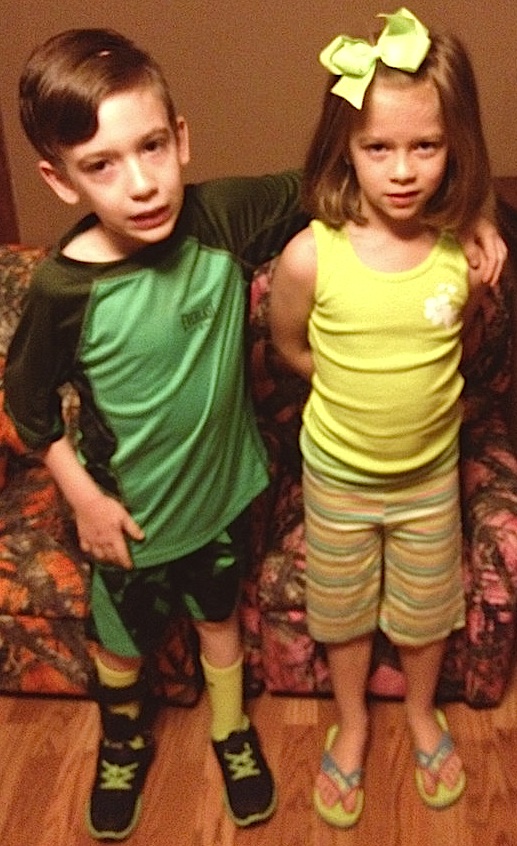
 bigstock-cartoon-face-vector-people-25671746-e1348136261718We were in a motor vehicle accident on April 13, 2012. It caused Barrett to have an aneurysm and a brain hemorrhage from contrecoup (a contusion resulting from the brain contacting the skull on the sideBarrett Sturgill Survivor 0610115 opposite from where impact occurs). He was only five years old at the time.

He immediately had a frontotemporoparietal craniotomy (the frontal, temporal, and parietal bones were removed from the skull). He suffered epidural and subdural hematomas. (Both allowed the buildup of blood to impinge on the brain.) Barrett was then flown to a children’s hospital. He was in critical condition and was in the intensive care unit until May 1.

Barrett Sturgill 3 Survivor 060115On April 26, he was given a G-tube (gastric feeding tube, which allows nutrients to be introduced directly into the stomach) and trach (a small tube inserted in the trachea to keep the airway open). Barrett Sturgill 2 Survivor 060115Barrett remained in a coma until May 1. Then he only opened his eyes. We went to Cardinal Hill Rehab on May 4 and stayed there until June 30. On June 14, the trach was removed. He remained nonverbal until June 22. At that time, he also began to eat small amounts. On August 6, the feeding tube was removed.

In October, he started walking with assistance. Barrett Sturgill Survivor 060115 And his SisterNow three years later, Barrett walks, runs, talks, and eats. He has muscle weakness in his right side – he uses his leg better than his arm. Barrett is in a regular first grade with his sister, and he only goes to Special Ed for two hours – for spelling and math. He loves video games.

Disclaimer: Any views and opinions of the Contributor are purely his/her own.

(Clip Art compliments of Bing.)

(Photos compliments of contributor.)

As I say after each post: Please leave a comment by clicking the blue words “Leave a Commentanim0014-1_e0-1 below this post.

Feel free to follow my blog. Click on “Follow” on the upper right sidebar.

If you like my blog, share it with your friends. It’s easy! Click the “Share” buttons below.

If you don’t like my blog, “Share” it with your enemies. I don’t care! Feel free to “Like” my post.

Survivors SPEAK OUT! Susan Shacka

Survivors  SPEAK OUT!  Susan Shacka

presented by

Donna O’Donnell Figurski

Shacka, Susan1. What is your name? (last name optional)

Susan Shacka

2. Where do you live? (city and/or state and/or country) Email (optional)

Sioux City, Iowa, USA

3. On what date did you have your brain injury? At what age?

I acquired a brain injury in 2009 at age 51.

4. How did your brain injury occur?

My brain injury occurred after the removal of a lap-band procedure that caused complications. I couldn’t keep anything down – not even food or water.

5. When did you (or someone) first realize you had a problem?

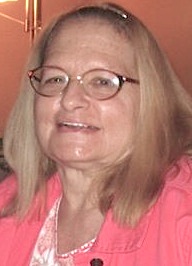
My stomach felt numb for a few days after the removal. I couldn’t eat for two months, and I lost 80 pounds in that period. I was so weak. The first angel in my life was Suzanne. We just met.

6. What kind of emergency treatment, if any, did you have?

Within fourteen days, I couldn’t walk. I went to the hospital via ambulance, not knowing that I would never come home; lose my apartment, car, and cat of ten years; and lose a lot memories and collectibles. I had double vision within two weeks of the lap-band removal. Prior to removing the band, my potassium was so low that I had to take it straight (three times a day in the hospital – Ugh!). They immediately ordered a CT (computerized tomography) scan, a spinal tap, Xrays, etc. First, I was given cortisone shots and IVs because I was dehydrated. I requested “Ensure” to bump up my vitamin levels, but it made my blood sugar high. Then they realized the cortisone was making it high, so they stopped. Just to let everyone know, I never went back to that surgeon or that hospital ever again. I was treated at another hospital. I was all alone and scared. All the tests were done during the first week. Doctor after doctor came, and they still didn’t know what the cause was. They thought it might have been Multiple Sclerosis at some point. I was given IVIg (intravenous immunoglobulin), and I had insurance people and neurologists coming in and out. The head neurologist – bless Dr. Shen! – found out that I had Guillain-Barré syndrome (named after two French doctors). It is both a neurological and an autoimmune disease. One can be paralyzed, which I was from waist down. (That numbness on my waist and the tripping were clues.) Dr. Shen immediately ordered eight hours a day of IVIg to neutralize the antibodies attacking my system.

7.Were you in a coma? If so, how long?Shacka, Susan Survivor 053015

No

8. Did you do rehab? What kind of rehab (i.e., inpatient or outpatient and occupational and/or physical and/or speech and/or other)? How long were you in rehab?

I was in rehab for eight months. While in the hospital, I had to do baby steps and learn how to sit, move, and touch hands with the occupational therapist. It was hard, as I had to take Benadryl during each session to help with symptoms. The medication worked so well that it sometimes knocked me out. The ultimate indignity occurred before I left the hospital. It is clear in my mind to this day. I had to use the sliding-board to get into the wheelchair. Eventually I went to an acute rehab facility. I am still getting occupational and physical therapies twice a week through a government program called PACE (Programs for All-inclusive Care for the Elderly). Everything is paid for through them: a bath aide who cleans while I shower, meals at home, occupational and physical therapies, my learning how to write, glasses, etc.

9. What problems or disabilities, if any, resulted from your brain injury
(e.g., balance, perception, personality, etc.)?

My personality toward my family has changed – I just want to be part of them. I use my “Cadillac” a lot – my walker! But, I risk my safety when I walk the dog. I have residuals from Guillain-Barré syndrome – neuropathy pain and pins and needles in my hands. I have a special type of shoes, as I don’t have flexibility in my feet. And, I have use of only my left hand. After being a secretary for top doctors, a marketing director, vice presidents, etc., I now type with one finger. To top things off, and there is no connection, I acquired another neurological/autoimmune disease (ataxia) in 2013. There are over 60 types. I guess I have Cerebellum Ataxia. This is a movement disorder similar to Parkinson’s Disease. (It’s Michael J. Fox who will help find a cure!) I knew something else was wrong – I was dropping things, I had a problem with balance, I was slurring my words, and my fine-motor skills deteriorated. By this time, I had moved back to my hometown, where my aunt and cousins live. But, it turned out they rejected me – it was hurtful knowing that something was wrong with me. The local contact at Brain Alliance knew I needed to see neurophysicist. I was diagnosed with PTSD (post-traumatic stress disorder). My neurologist did blood test after blood test (over 15 vials one time). He wasn’t about to give up. Luckily, my neurologist knows the neurophysicist, and they conferred about me. I did have to go in for emergency IVIg treatments for my ataxia. My anti-GAD (glutamic acid decarboxylase, an enzyme) antibody titer (a marker for cerebellar ataxia) was high. It was over 250; normal is 0.10.

10. How has your life changed? Is it better? Is it worse?

I moved closer to my sister and her brother-in-law, which helps so much. I am going to church and meeting new people. I changed my Medical Power of Attorney to someone who gets me and my problems; goes to my church; understands about depression and, more importantly, disability, as her husband had a stroke. Bless both!

11. What do you miss the most from your pre-brain-injury life?

I miss driving and working.

12. What do you enjoy most in your post-brain-injury life?

I would still be living in California.

13. What do you like least about your brain injury?

I’m homebound a lot!

14. Has anything helped you to accept your brain injury?

I spend time at MPOA once a month and do bible study. I live in a place with older people (80s), but I want to spend more time with people my age. I am 57.

15. Has your injury affected your home life and relationships and, if so, how?

I find it hard to meet people.

16. Has your social life been altered or changed and, if so, how?

Meeting people is difficult, as it costs money for the handicap bus.

17. Who is your main caregiver? Do you understand what it takes to be a caregiver?

I have a bath aide twice a week – no other caregiver. My family says they’ll take me grocery shopping.

18. What are your plans? What do you expect/hope to be doing ten years from now?

I hope to pay off my bills and move to another place.

19. Are you able to provide a helpful hint that may have taken you a long time to learn, but which you wished you had known earlier? If so, please state what it is to potentially help other survivors with your specific kind of brain injury.

Get involved; find a church. For me, getting a pet has been wonderful for my mood. Medication has been important. Don’t be embarrassed about seeing a counselor. It has helped me so much.

20. What advice would you offer to other brain-injury survivors? Do you have any other comments that you would like to add?

Understand that it’s not your fault. For me, I did the lap-band upon the suggestion of a doctor. I also did it because I didn’t want to be like my mother, who was extremely overweight. I eventually lost 150 pounds – half of me!

You can still find your passion. I am administrator for my disease support-group on Facebook, called “Ataxians Helping Other Ataxians,” which in about eight months has over 860 members. This is my passion. I still have the need to help people. I was in the local newspaper and on TV and radio. Now I am working on a petition to get a spokesperson. It is listed “Spokesperson needed….” Please vote!

Bless you all for reading this! Love each other more. Say it more, as life is short!


Susan Shacka Survivor 053015Thank you, Susan, for taking part in this interview. I hope that your experience will offer some hope, comfort, and inspiration to my readers.

(Disclaimer: The views or opinions in this post are solely that of the interviewee.)

If you would like to be a part of the SPEAK OUT! project, please go to TBI Survivor Interview Questionnaire for a copy of the questions and the release form.

(Photos compliments of Susan.)

As I say after each post: Please leave a comment by clicking the blue words “Leave a Commentanim0014-1_e0-1 below this post.

Feel free to follow my blog. Click on “Follow” on the upper right sidebar.

If you like my blog, share it with your friends. It’s easy! Click the “Share” buttons below.

If you don’t like my blog, “Share” it with your enemies. I don’t care! Feel free to “Like” my post.

SPEAK OUT! NewsBit . . . . . . . . . . . . Joe Namath – Football – Brain Injury

Joe Namath Speaks OUT About Brain Injury and Football

presented by

Donna O’Donnell Figurski

Newsboy thJoe Namath, former star quarterback for the New York Jets and football legend, said that, now knowing the sport’s likely danger to the brain, he wouldn’t have played football.joe namath large

Namath’s wake up call happened when he saw a problem with his brain in a brain scan. It revealed that the right side was not getting enough oxygen, whereas the left side was normal. He was worried about the several concussions he had had, but he thought his growing forgetfulness was caused by old age.

Fortunately, after several months of rigorous treatment alg-joe-namath-jpg(1-hour sessions, 5 days a week) in a hyperbaric chamber, in which he was subjected to a high pressure of oxygen, a new scan indicated that both sides of Namath’s brain were normal. (Full story 1 and Full story 2 – with video)

(Clip Art compliments of Bing.)

As I say after each post:

Please leave a comment by clicking the blue words “Leave a Comment” below this post.anim0014-1_e0-1

Feel free to follow my blog. Click on “Follow” on the upper right sidebar.

If you like my blog, share it with your friends. It’s easy! Click the “Share” buttons below.

If you don’t like my blog, “Share” it with your enemies. I don’t care!

Feel free to “Like” my post.

SPEAK OUT! . . . . . . . . . . . . . . . . . . Guest Blogger: Ermira Mitre . . . Dream of an Earthquake

The Dream of an Earthquake

by

Ermira Mitre

presented by

Donna O’Donnell Figurski

Girl Blogger cartoon_picture_of_girl_writingOne night, after I came home from a long day of work, I noticed that my friend Eileen had called me twice during the day. I love talking to Eileen. Although it was 9:30, I decided to call her back and chit-chat a little bit to update each other on our everyday lives.

During our conversation, Eileen said, “Mira, you know what? I dreamed about an earthquake last night. The shaking was so hard that I got up and went to the computer to see if any earthquake had happened nearby. I didn’t find anything. So, I realized that the earthquake was a dream. And what a dream!”

Her dream instantly brought up the experience of my having had a similar dream while I was living in Albania with my family. I said, “You know, Eileen, years ago, I had a dream of an earthquake too.” I continued, “I dreamed an earthquake was happening, and it threw me from the balcony of my third-floor apartment. I fell onto the ground – but standing up.”

Eileen’s dream was frightening, but I told her about my positive symbol of “standing up” after “falling down.” So, I said, “The dream is telling you that, whatever happens, you will be fine.” My own experiences have shown that this indeed can be true.

My earthquake dream first occurred in March 1991 – a time of turmoil in Albania. Many young people had Ermira Mitre 2left the country. Two days after I had the dream, I got a phone call from my uncle. He said that my brother (who lived with my parents and my stepbrother) got onto a ship and escaped to Italy. He left behind my paralyzed mom, my dad, who was still recovering from a stroke, and my stepbrother, who had been diagnosed with a severe disease.

The news was a total shock. I felt divided. One part of me cared about my immediate family, and another part worried about my parents and my brothers. Psychologically, I was struggling to find a solution to the situation, while in my heart, I remained calm and at peace. My heart didn’t allow me to hurt myself with feelings of anger, anguish, or bitterness toward the decision of my twenty-two-year-old brother.

Although I was still picking up the pieces of the shattered glass I had become after the accidental death of my almost three-year-old son and having two little kids, a paralyzed mom, a half-paralyzed dad, and a brother with an incurable disease and also working as a teacher, I didn’t think of myself. The positive symbol of my earthquake-dream supported my actions. I was “standing up” when I needed it most.

Situations like these made me grow as a person and reach the deeper core of myself as a human being. By acknowledging peace within terrible storms, I have been able to extend my heart and actions to those who needed me.

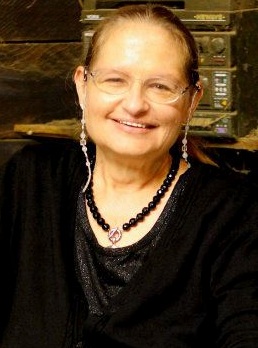
Ermira Mitre copyMy peace allowed me to place my thoughts into a higher level of understanding. I can accept life as it comes by using exuberant, and often hidden, strength, courage, love, care, generosity, kindness, gentleness, and loyalty.

After I got off the phone with Eileen, I went to sleep. The next morning I had this poem within myself. It is about our existence and our strength. I hope you enjoy it.

THE EXISTENCE

Opening the eyelids and waking up by touching the dawn,
While the eyeballs kissing the vastness of the light,
Waking and feeling the joy of being alive,
Living through the day and experience,
The joy of living, the thunders, the storms,
And earthquakes that bring shakiness,
And awakens as much as the labor of a new baby born,
Still standing up and building up being grabbed,
And infused by the strength that lies beneath and beyond,
Sleeping is falling in quietness and stillness,
And darkness of the other side of our existence,
Being born thus waking up,
Living through the experience,
And dying thus sleeping in stillness,
Are the matching pieces of a puzzle,
Named as “our known but unknown existence.

Thank you, Ermira Mitre.

Disclaimer:
Any views and opinions of the Guest Blogger are purely his/her own.

(Clip Art compliments of Bing.)

(Photos compliments of Ermira Mitre.)

anim0014-1_e0-1

As I say after each post:

Please leave a comment by clicking the blue words “Leave a Comment” below this post.

Feel free to follow my blog. Click on “Follow” on the lower right corner of your screen.

If you like my blog, share it with your friends. It’s easy! Click the “Share” buttons below.

If you don’t like my blog, “Share” it with your enemies. I don’t care!

Feel free to “Like” my post.

SPEAK OUT! Faces of Brain Injury Jenn Von Hatten

SPEAK OUT! Faces of Brain Injury – Jenn Von Hatten

presented by

Donna O’Donnell Figurski

 Brain Injury is NOT Discriminating!

bigstock-cartoon-face-vector-people-25671746-e1348136261718On Valentine’s Day 2011, I went to work only for a meeting. (I was a nurse at a long-term mental health facility.) Freezing rain struck during the meeting. The treacherous road condition was responsible for my car’s being T-boned at highway speed. That’s how I acquired my traumatic brain injury. The paramedics found me “clinically dead.” Obviously, I was alive. The pressure on my brain was monitored to see if I needed to have surgery. Also my liver was lacerated. Fortunately I did not need surgery for either. I was put into a medically induced coma because, in addition to my brain injury, I fractured a rib and three vertebrae. I was in a coma for over seven weeks. I managed to develop pneumonia and had to have a tracheotomy. I was discharged on July 14th. I Jenn Von Hatten Emma, & Hannasurvived to see my oldest children graduate from high school. Emma graduated in June 2013, and Liam, in 2014.

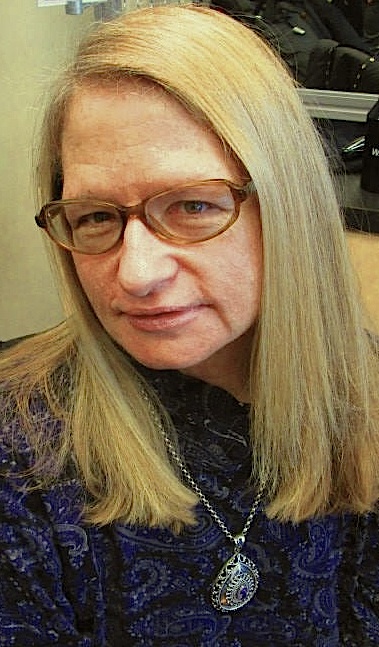
Spastic muscles affected my speeJenn Von Hatten & Liamch, so I went to physiotherapy, occupational therapy, and speech therapy. My balance was severely affected. I used to be in a wheelchair, due to the fractured vertebrae. I since “graduated” to a walker, then to a quad cane, and eventually to a mini quad cane. Now I’m a fall risk. My life has definitely changed. I am no longer able to work as a nurse. I cannot say if my life is better or worse. All I can say with certainty is that my life is different.  I enjoy my time with Hanna, my 7-year-old daughter and youngest child. (I have joint custody. I remind myself that not many relationships survive a TBI.) I now have a cat, Spunkster, which I got from the local SPCA. When Hanna’s not with me, I hang out with Spunkster. I miss most my being able to work as a nurse. But as much as I would like to a work as a nurse, I know I would not be safe – physically (because I am a fall risk) as well as mentally Jenn Von Hatten & Hanna(in terms of remembering if I gave a client his or her medication or treatments). I had graduated as a nurse only seven months before my TBI. I had wanted to be a nurse for over fifteen years. At least I can say I turned that dream into reality! I sometimes miss being able to drive. My driver’s license has not been revoked, but my rehabilitation doctor says I still cannot drive, as my reflexes are not up to snuff. My plan is to help others that are TBI survivors or caregivers. I can provide info and support.

Disclaimer: Any views and opinions of the Contributor are purely his/her own.

(Clip Art compliments of Bing.)

(Photos compliments of contributor.)

As I say after each post: Please leave a comment by clicking the blue words “Leave a Comment” below this post.

Feel free to follow my blog. Click on “Follow” on the upper right sidebar.

If you like my blog, share it with your friends. It’s easy! Click the “Share” buttons below.

If you don’t like my blog, “Share” it with your enemies. I don’t care! Feel free to “Like” my post.

So, Whaddya Think? . . . . . . . . Tackle Football League for Young Girls – REALLY, Utah! What Are You Thinking?

Outrageous: A Tackle Football League for Young Girls

by

David Figurski

presented by

Donna O’Donnell Figurski

So Whaddya Think Brain th-4There is growing public concern, backed by scientific evidence, about the violence of football and the possibility of a life-altering brain injury, especially in children. Former professional players have spoken out about the risks inherent to the game of football. Evidence now exists that a concussion can be dangerous (1, 2), especially to the developing brain of a young player. Even the repetitive sub-concussive hits can be harmful. Legendary quarterback Joe Namath, who had a recent scare with his cognitive functioning, said that if he knew then what is known now, he wouldn’t have played. A talented rookie linebacker on the San Francisco 49ers has quit the game after one season, saying “…I don’t want to have any neurological diseases or die younger than I would otherwise.”

Utah organizers are excited to establish the first tackle football league for girls. A video of a nine-year-old girl, Sam Gordon – now twelve, playing tackle football in a boys’ league confirms that she is talented and shows what many of us have always believed – that girls can be as skilled as boys. The Utah Girls Tackle Football League has teams of fifth- and sixth-grade girls. To enhance its visibility, the league advertises Sam Gordon as a marquee player.

This is dangerous and a step in the wrong direction. At a time when some adults are calling for the abolishment of children’s football leagues, Utah has established a tackle football league for girls. It’s one thing when players are old enough to understand the risks and decide to play, but it’s another thing when children trust that their parents will protect them. I’m sure that every parent who allows a child to play football is well-meaning, but those parents are likely to be unaware of the risks. We have a lot of work to do to spread awareness about football’s risk of brain injury.

There is no doubt that the games in this new league will be exciting. But, how many girls will have their lives dramatically changed by a brain injury?

So, Whaddya Think?

Let’s get a dialogue going. Post your comments in the Comment Section. Directions are below.

So . . . what do you think? Is there something you are passionate about in this Brain Injury (BI) world? Do you want to be heard? Your opinion matters! You can SPEAK OUT! on “So Whaddya Think?”

Simply send me your opinion, and I will format it for publication. Posts may be short, but please send no more than 500 words. Send to Neelyf@aol.com

I hope to HEAR from you soon.

As I say after each post:

Feel free to leave a comment by clicking the blue words “Leave a Comment” below this post.

Please follow my blog. Click on “Follow Me Via eMail” on the right sidebar of your screen.anim0014-1_e0-1

If you like my blog, click the “Like” button under this post.

If you REALLY like my blog, share it with your friends. It’s easy! Click the “Share” buttons below.

If you don’t like my blog, “Share” it with your enemies. That works for me too!

(Clip Art compliments of Bing.)

On The Air: Brain Injury Radio “Another Fork in the Road” with Juliet Madsen, TBI Survivor, US Troop, Quilter, Author

On The Air: Brain Injury Radio “Another Fork in the Road”

with

Juliet Madsen, TBI Survivor, US Troop, Quilter, Author

presented by

Donna O’Donnell Figurski

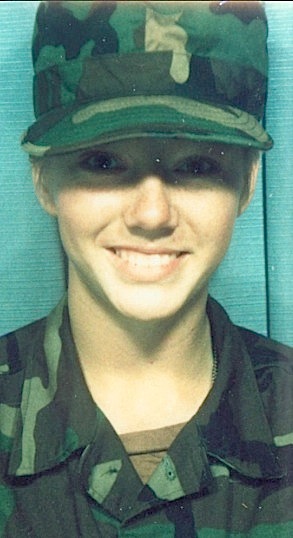
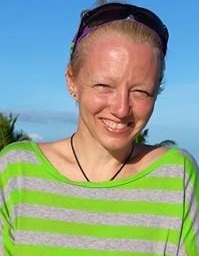
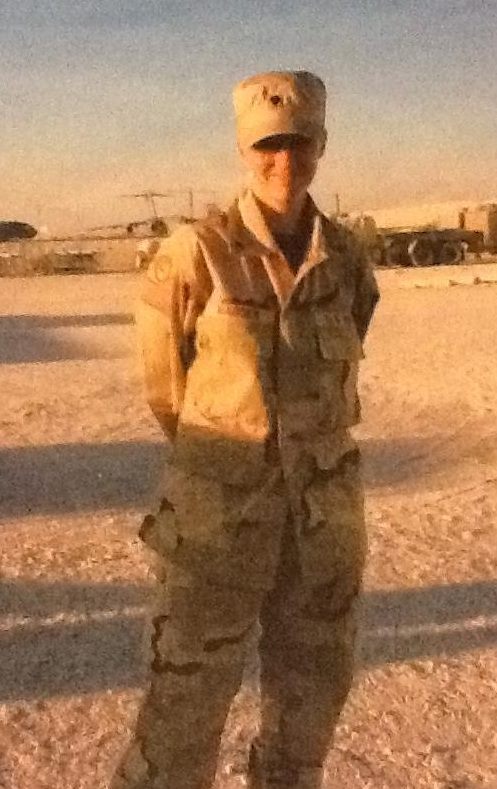
Juliet Madsen UniformJuliet Madsen has served in the US Army since she was 17-years old. She was involved in Operations Desert Storm and Desert Shield. While serving her country, Juliet suffered a Traumatic Brain Injury, at least one stroke, and numerous other medical issues, which changed her life #7 10610754_10203491518354714_4796635925244510505_nforever. On “Another Fork in the Road,” Juliet talked about how she copes with her new life and how she and her family make this new life work for them. I hope you won’t miss her show.

You can learn more about Juliet and read her book at Veterans Book Project. Scroll down the page to find Juliet’s book.

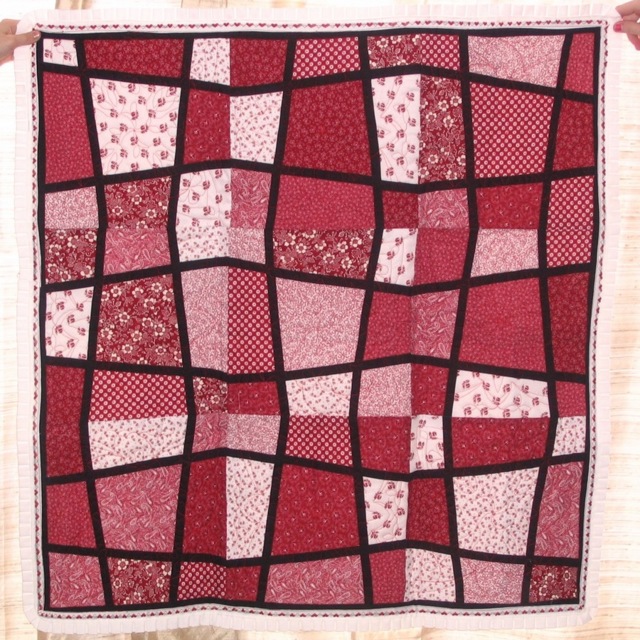
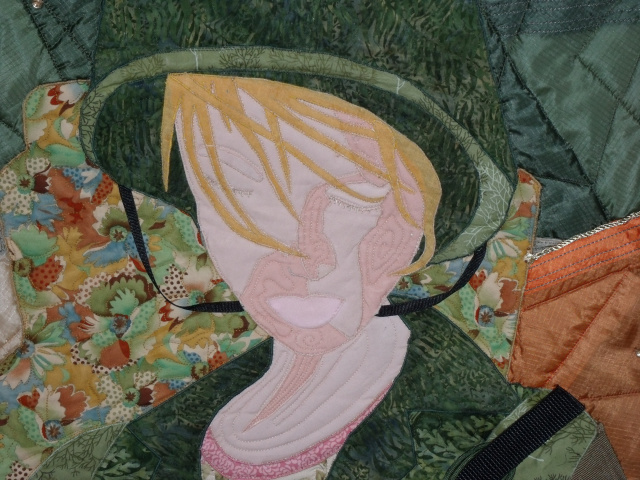
You can also see her collections of more than 50 quilts at Stroke of Luck Quilting.

Here are two of my favorites.

6Madsen092011

If you missed her interview on “Another Fork in the Road” on May 17th, you are in luck. You can listen to the archived show here.

Click the link below to listen to Juliet Madsen and me.

See you “On the Air!”

On the Air: Brain Injury Radio – Another Fork in the Road”

with Juliet Madsen – TBI Survivor, US Troop, Quilter, Author

Click here for a list of all “Another Fork in the Road” shows on the Brain Injury Radio Network.

Survivors SPEAK OUT! Juliet Madsen

Survivors  SPEAK OUT!  Juliet Madsen

presented by

Donna O’Donnell Figurski

#4 Juliet Madsen 21. What is your name? (last name optional)

Juliet Madsen

2. Where do you live? (city and/or state and/or country) Email (optional)

Parker, Colorado, USA     juliet@strokeofluckquilting.com

3. On what date did you have your brain injury? At what age?

I had three strokes (2004, 2009, and 2010), and I have a traumatic brain injury (TBI). I was 33 in 2004.

4. How did your brain injury occur?

My brain injuries are complex: heat strokes complicated by a traumatic brain injury in Iraq in 2004. I was being moved to a secondary location because of a heat injury, when there was a series of explosions on the highway. So, I have the illustrious honor of having both a brain injury as a result of heat injury and then a traumatic brain injury. This creates a problem for the doctors because I do not fall into any one category. I have very complicated neurological issues.

5. When did you (or someone) first realize you had a problem?

My family and the people I was stationed with in Iraq realized there was a problem. I was not making much sense when I wrote patient notes and when I wrote letters home. Then my speech was becoming garbled. I exhibited a halting speech pattern, in which I had trouble “spitting out” words. I also had tremors, which made even the simplest tasks difficult. #3 1454864_10200875275550279_968652467_n Manual dexterity issues, massive migraines, and balance problems caused my unit to put me on night shift and to adjust how and where I was living in Iraq. Then I was being transferred north where I could work in a more controlled environment when we were involved in a series of vehicle explosions. After that event, I was sitting with a few of the guys at the chow hall, and I said that “I didn’t feel well.” I suffered a seizure in the chow hall, and that started my slow trip home.

6. What kind of emergency treatment, if any, did you have?

I had emergency care to stabilize me in Iraq, then in a C-130 flying from Iraq to Kuwait, then again from Kuwait to Germany, and again to Walter Reed, and then to Ft. Bragg.  Although I know I had care to treat seizures and stroke, I only have very few bits and pieces of my memory from that time.

7. Were you in a coma? If so, how long?

No, I was not.

8. Did you do rehab? What kind of rehab (i.e., inpatient or outpatient and occupational and/or physical and/or speech and/or other)? How long were you in rehab?

I have had rehab both as an inpatient and as an outpatient. I am in and out of occupational, speech, physical, and recreational therapies even today. I have gone in and out of these therapies, as my TBI symptoms change over the years. I have often described my TBI as causing “rolling blackouts.” The polytrauma team that treats me has been really good about getting me in to see the appropriate team.

9. What problems or disabilities, if any, resulted from your brain injury
(e.g., balance, perception, personality, etc.)?

That is such a loaded question…. Initially I had left-sided weakness from the stroke, difficulty talking, balance issues, drop foot, short-term memory loss, major time perception problems, migraines all the time, and ringing in my ears. I was sound-sensitive. I have constant neck and head pain. I have hearing and vision changes (which the doctors tell me are a direct result of the TBI). I absolutely have personality changes. I was someone who always got along with people, worked as a paramedic, and did research. Now I have no concentration, I am angry with everyone, I am short with people, I cry easily, and I feel very defeated. Even with all of the incredible accomplishments in my life, I am disappointed in the perceived failures in my day-to-day life. I have had times since my brain injury when it is like I forgot who I was or what I have always stood for, and I hurt the ones who have always cared for me. I have major learning disabilities. I can’t do anything with numbers or time, and learning new information is extremely difficult – this from someone who graduated from college with honors. Concentration and accomplishing simple tasks are often very difficult.

10. How has your life changed? Is it better? Is it worse?

My life has changed 100%, but I can’t say that it is worse because I am still here. So, that is a good thing, but it is very different. I was a paramedic in the United States Army. I was always busy working, and now I am retired. I become tired and overwhelmed far too easily. I quilt for a living, and I make quilts for programs across the country. I am on the Board of Directors of a national non-profit organization that works with programs for the families of military and veteran personnel with TBI/PTSD (post-traumatic stress disorder). The organization provides other programs through recreational and activity-based services. This is a very different place from being a paramedic and saving lives.

11. What do you miss the most from your pre-brain-injury life?

I admit that I miss who I was before I was hurt. I miss being able to go to the store alone. I miss being able to be trusted with my own finances or being able to read a recipe and understand it the first time I read it. I had a very definite plan for my life, and my injuries changed all of those plans. I miss feeling like I really contribute to my family and to the world around me.

12. What do you enjoy most in your post-brain-injury life?

I try to enjoy simple things: butterflies, the pure joy of my dogs lying with me, my kids telling me that they love me, etc. I like learning new recipes, listening to music, or holding hands with my husband in case I can’t tomorrow. Basically, I try to enjoy this moment because I know that tomorrow isn’t promised.

13. What do you like least about your brain injury?

I would give anything to trust my memory and my body again. But, if I could have one wish, it would be to have my memory back. I have no memory of any of my kid’s proms, their birthdays, their graduations, etc. I wish I could just remember these events for their sakes.

14. Has anything helped you to accept your brain injury?
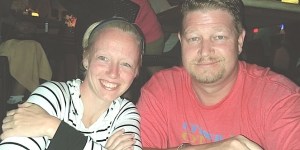
#8 Juliet & Peter MadsenMy family has helped me to accept my injuries because, although we joke around, they accept me for all that has happened. I was so angry and really emotionally crushed when I first came home. The only thing that I can always count on is my family, no matter what. The only other thing that has probably helped is time.

15. Has your injury affected your home life and relationships and, if so, how?

My husband, Peter, and I are so lucky to have each other. After twenty-three years together, I am thankful that this injury has not torn us apart, but it came very close. A TBI is exhausting for everyone involved, and I think that the first few years are spent in emergency mode – performing triage. Then as we started to get comfortable with how things were going, my brain “kicked us” – I suffered another stroke. We had a whole new series of issues and rules to learn. Peter and the kids have been incredible at supporting me. Although it has been a really rough road, we have been through it together. We are stronger because we are always together, and that part I am thankful for.

16. Has your social life been altered or changed and, if so, how?

Yes, I have actually lost friendships because of my TBI. I describe myself as a “golden retriever.” (I am excited to see you, but if you leave the room and come back in, I don’t know how long you were gone, but I am still really excited to see you.) It is because of this lack of the concept of time that I have lost friends. Also I wasn’t good enough at keeping in contact. I had a friend call me and tell me that I wasn’t an attentive enough friend. So now, I tell every potential friend this cautionary story. But to be honest, I don’t really try to make friends any more. Most people don’t understand me – or our family. Because of that, we are very private people. We don’t do a whole lot with others. It’s just easier that way. We would prefer to have lots of friends, but it just isn’t that easy.

17. Who is your main caregiver? Do you understand what it takes to be a caregiver?

My husband, Peter, is my main caregiver. I am so very thankful to him, in love with him, indebted to him, sorry, and every other adjective I can think of. I have moments of clarity when I see how terribly hard all of this is. It kills me that I have become a burden, and yet I am still his wife. I’d also like to say that I have had to watch my kids become my caregivers. They have taken care of me on too many occasions to count. It is incredibly hard on the entire family. They all suffer from PTSD as we go through this process. They all deserve so much more credit than they get for surviving this experience.

18. What are your plans? What do you expect/hope to be doing ten years from now?

I am ten years out from my injuries, but I am light years from my initial injuries. I hope to continue my physical improvements, and I would like to recover better in terms of my learning disabilities and mental health. I would like to go back to school and get a degree in Art Therapy to help other veterans and their families with TBI and PTSD. In ten years, I would really like to be working with military families through art in my own program. I would also like to have published my own quilting book.

19. Are you able to provide a helpful hint that may have taken you a long time to learn, but which you wished you had known earlier? If so, please state what it is to potentially help other survivors with your specific kind of brain injury.

There are so many setbacks during the recovery process. I never seem to be where I am supposed to be. But, I never stop because there are no set rules and no one is saying where you have to be. So, just keep going – never give up.

20. What advice would you offer to other brain-injury survivors? Do you have any other comments that you would like to add?

I think the worst thing I do to myself is to constantly beat myself up about what I could have or should have done to either prevent this or to change it now. It kills me to know where my family is and how my family has been changed forever because of all of the things that happened since 2004. I would give anything to change it, but I can’t. On good days, I can accept it and move past it, but on bad days, I can’t. It hangs over me and suffocates me. It is my wish that others out there like me hold on and cherish the life you have because no one can live it like you can.

Thank you, Juliet, for taking part in this interview. I hope that your experience will offer some hope, comfort, and #6 Juliet Madsen Snowinspiration to my readers.

(Disclaimer: The views or opinions in this post are solely that of the interviewee.)

If you would like to be a part of the SPEAK OUT! project, please go to TBI Survivor Interview Questionnaire for a copy of the questions and the release form.

(Photos compliments of Juliet.)

As I say after each post:

Please leave a comment by clicking the blue words “Leave a Comment” below this post.

Feel free to follow my blog. Click on “Follow” on the lower right corner of your screen.

If you like my blog, share it with your friends. It’s easy! Click the “Share” buttons below.

If you don’t like my blog, “Share” it with your enemies. I don’t care!

Feel free to “Like” my post.


SPEAK OUT! Faces of Brain Injury Tanner Thomas

SPEAK OUT! Faces of Brain Injury Tanner Thomas

presented by

Donna O’Donnell Figurski

Brain Injury is NOT Discriminating!

bigstock-cartoon-face-vector-people-25671746-e1348136261718It can happen to anyone, anytime, . . . and anywhere. The Brain Trauma Foundation states that there are 5.3 million people in the United States living with some form of brain injury. On “Faces of Brain Injury,” you will meet survivors living with brain injury. I hope that their stories will help you to understand the serious implications and complications of brain injury. The stories on SPEAK OUT! Faces of Brain Injury are published with the permission of the survivor or designated caregiver. If you would like your story to be published, please send a short account and two photos to me at neelyf@aol.com. I’d love to publish your story and raise awareness for Brain Injury – one view at a time.

Tanner Thomas (survivor) contributed by Molly Strieter Thomas‎ (mom and caregiver)

Thomas, Tanner Survivor 051015 Mom Molly Streiter ThomasMy six-year-old son, Tanner, had emergency brain surgery to deal with a ruptured cerebral AVM (arteriovenous malformation) on March 8th, spent two weeks in the PICU (pediatric intensive care unit) for his coma, was in Pediatric Care another one and a half weeks, Thomas, Tanner Survivor 051015 Molley Strieter Thomas Mom 11138613_10206751047637517_944490406653736580_nand had another two and a half weeks of inpatient rehab. It was a delight to go home! We are continuing with outpatient therapy. The doctors are amazed with his rehab. They are calling him a miracle. He has come so far – nothing is slowing this kid down. He remains so positive. He never says “no” or “I can’t.” Tanner really is an inspiration! He is AWESOME! ❤

Disclaimer: Any views and opinions of the Contributor are purely his/her own.

(Clip Art compliments of Bing.)

(Photos compliments of contributor.)

As I say after each post: Please leave a comment by clicking the blue words “Leave a Comment” below this post.

Feel free to follow my blog. Click on “Follow” on the upper right sidebar.

If you like my blog, share it with your friends. It’s easy! Click the “Share” buttons below.

If you don’t like my blog, “Share” it with your enemies. I don’t care! Feel free to “Like” my post

diemodi jewelry

uniquely hand-crafted jewelry by donna

Welcome to Harmony Kent Online

The home of all things books

Pete Springer

Passionate Teacher and Future Children's Author

HOPE TBI

Helping Other People Excel - To Be Independent

For the Love of Books, Old and New

Katie Fischer, Writer and Reader of Stories

Charlie Bown

Children's Author

Jessica Hinrichs

“We write to taste life twice, in the moment and in retrospect.” ― Anais Nin

VIVIAN KIRKFIELD - Writer for Children

Picture Books Help Kids Soar

Mindy’s Writing Wonderland

For authors, parents, teachers & everyone who loves children’s books.

Kaitlyn Leann Sanchez

Literary Agent

Surviving Traumatic Brain Injury

TBI - Survivors, Caregivers, Family, and Friends

The Care Factor

Loving someone with a Traumatic Brain Injury

Brain Injury Support Group of Duluth-Extension

Brain Injury Information and SUPPORT

Brain Aneurysm Global Insight

Brain Aneurysm, cerebral hemorrhaging, hemorrhage stroke