TBI – Survivors, Caregivers, Family, and Friends

Posts tagged ‘SPEAK OUT!’

Survivors SPEAK OUT! DuWayne Hall

SPEAK OUT! – DuWayne Hall

by

Donna O’Donnell Figurski


Hall, DuWayne 1

DuWayne Hall

1. What is your name? (last name optional)

DuWayne Hall

2. Where do you live? (city and/or state and/or country) Email (optional)

Colorado Springs, Colorado, USA    Braindamagedguy@gmail.com

3. When did you have your TBI? At what age?

August 16, 1992 – I was 32 years old.

4. How did your TBI occur?

It was a single vehicle motorcycle accident. (For complete story see Guest Blog.)

5. When did you (or someone) first realize you had a problem?

As soon as I became aware in the hospital!

6. What kind of emergency treatment, if any, did you have?

I was on total life support, so they did whatever was necessary for that. My arm was tied around my neck because they expected me to die.

I was not wearing my helmet at the time of the accident. I had my right ear torn off; they sewed it back on. My right cheek was crushed from my shoulder’s smacking my face as I face-planted the road. They put a titanium cheekbone in to fix my face. My right eye was hanging out of its socket; it had to be placed back into my skull. I sustained a closed-head injury. My right frontal lobe and the pons portion of my brain sustained what they refer to as a “contracoup” injury (that is, the brain is damaged exactly opposite to the impact point). They implanted a shunt on the top of my head. I’ve got a metal plate in the top of my head.

I had road rash from being dragged 100 or so feet before the motorcycle stopped sliding. My arm was shattered at the elbow. My collarbone was broken in two places. I had knee surgery.

7. Were you in a coma? If so, how long?

I was in a coma 24 days. On the 25th day, my living will was going to become effective, and they were going to unplug me from life support.

8. Did you do rehab? What kind of rehab (i.e., inpatient or outpatient and occupational, physical, speech, and/or other)?
How long were you in rehab?

I was in rehab three years. I relearned everything from how to go to the bathroom to how to eat again, talk again, and interact again. I was just like a child relearning how to do everything – dress myself, cook, shower, stand upright, etc.

9. What problems or disabilities, if any, resulted from your TBI
(e.g., balance, perception, personality, etc.)?

As a result of my TBI, I became increasingly more isolated, until Facebook came into the picture about ten years ago. I walk with an uneven gait. I have problems seeing just one of something. I’m partially deaf. My face is partially paralyzed. Over the years, I’ve developed PTSD (post-traumatic stress disorder) as a result of multiple TBI’s. I get frustrated very easily, but it is perceived as anger by others.

10. How has your life changed? Is it better? Is it worse?

It became more burdensome and unfulfilled.

11. What do you miss the most from your pre-TBI life?

I miss friends, family, social relationships, and camping. Any exercise is burdensome. Personal relationships ended. I can’t defend myself. I lost my hospital job of 8 years.

12. What do you enjoy most in your post-TBI life?

Nothing!

13. What do you like least about your TBI?
It gave me PTSD. Anybody diagnosed with it understands what I am talking about! It is hell!

14. Has anything helped you to accept your TBI?

It is hard to define “accept.” I know that it has happened and that I can’t do anything about it. I believe all things happen for a reason, but I cannot find any good being returned because I am disabled. So, if I can help keep one soul from going through the hell I’ve been through these last 24 years, then that would be worth it to me!

15. Has your injury affected your home life and relationships and, if so, how?

I have been married two times since my TBI. No lady wants me because I’m broken, not only physically, but also emotionally and mentally.

16. Has your social life been altered or changed and, if so, how?

I have no social life! At first, people seemed happy that I did not die. However, after time, I no longer had the number of friends that I had before my accident. The example would be that I receive a get-well card at the hospital with approximately 825 signatures of people wishing me well during recovery. If only 25 percent were sincere, I would have 207 friends. I have two – one who lives out-of-state and one who lives out-of-town. I am constantly lonely and feeling rejected!

17. Who is your main caregiver? Do you understand what it takes to be a caregiver?

I don’t have one. I am my own caregiver!

18. What are your future plans? What do you expect/hope to be doing ten years from now?

I don’t have any plans. I believe that life has ended for me! I am just waiting to die.

19. Are you able to provide a helpful hint that may have taken you a long time to learn, but which you wished you had known earlier? If so, please state what it is to potentially help other TBI survivors with your specific kind of TBI.

I’m too gullible. Most TBIers are.

20. What advice would you offer to other TBI survivors? Do you have any other comments that you would like to add?

Hall, DuWayne 2

DuWayne Hall

Be patient with yourself. Recovery takes a long time!


Thank you, DuWayne, for taking part in this interview. I hope that your experience will offer some hope, comfort, and inspiration to my readers.

(Disclaimer: The views or opinions in this post are solely that of the interviewee.)

(Photos compliments of DuWayne.)

If you would like to be a part of the SPEAK OUT! project, please go to TBI Survivor Interview Questionnaire for a copy of the questions and the release form.


“Another Fork in the Road” . . . Brain Injury Radio Network: “Prisoner Without Bars” (part 2)

                  Come one! Come ALL!putthis_on_calendar_clip_art

(NOTE: New Day, Sunday – Same Time)

What:        “Another Fork in the Road” on Brain Injury Radio Network:                               “Prisoner Without Bars” (part 2)

(This show was originally scheduled for August 18th, but was aborted due to technical difficulties in the studio.)

Why:         Donna continues her story of David’s Traumatic Brain Injury and their life together after TBI.

Where:     Brain Injury Radio Network

When:       Sunday, September 7th, 2014

Time:         5:00p PDT (6:00p MDT, 7:00p CDT, and 8:00p EDT) 90 minute show

How:         Click: Brain Injury Radio Network.

Call In:    424-243-9540

Call In:     855-473-3711 toll free in USA

Call In:    202-559-7907 free outside US

or SKYPE

If you miss the show, but would like to still hear the interview, you can access the archive on On Demand listening (Archived show) will be available after the show both on the Brain Injury radio Network site and on my blog in “On the Air.”

(Clip Art compliments of Bing.)

So, Whaddya Think? . . . . . . . . Football, Brain Injury, and Steve Almond

So . . . what do you think? Is there something you are passionate about in this TBI world? Do you want to be heard? Your opinion matters! You can SPEAK OUT! on “So Whaddya Think?”

Simply send me your opinion, and I will format it for publication. Posts may be short, but please send no more than 1,000 words. Send to donnaodonnellfigurski@gmail.com

I hope to HEAR from you soon.

Football, Brain Injury, and Steve Almond

 by

 David Figurski

presented by

Donna O’Donnell Figurski

So Whaddya Think Brain th-4

The National Football League (NFL) starts its season today. I’ve written before about American football and the likelihood of a player getting a life-altering brain injury. Incontrovertible evidence is building that playing football is dangerous for the brain. The evidence is particularly dismaying when it comes to our youth.

I admit to liking the game. But as author Steve Almond points out, I am one of the many fans who are feeling “queasy” about enjoying a game that has so much baggage. I am certainly happy that none of my nephews who played football in high school thought about playing in college, even though each one excelled in the game. I also have a traumatic brain injury. I know what my brain injury has done to Donna’s and my life. I have also read the interviews and guest blogs. The amount of chaos and stress that visits not only the afflicted person, but also his or her family, is unimaginable.

Steve Almond, a former rabid fan, has been questioning the U.S. society’s love of football. He has written a bestselling book, Against Football: One Fan’s Reluctant Manifesto. I think his essay, an article written about his ideas, and an audio are food for thought for us and completely appropriate for this category.

Disclaimer:
Any views and opinions of the author are purely his/her own.

As I say after each post:

Feel free to leave a comment by clicking the blue words “Leave a Comment” below this post.

Please follow my blog. Click on “Follow Me Via eMail” on the right sidebar of your screen.anim0014-1_e0-1

If you like my blog, click the “Like” button under this post.

If you REALLY like my blog, share it with your friends. It’s easy! Click the “Share” buttons below.

If you don’t like my blog, “Share” it with your enemies. That works for me too!

(Clip Art compliments of Bing.)

Survivors SPEAK OUT! . . . . . . Michelle

SPEAK OUT! – Michelle

by

Donna O’Donnell Figurski

Lawson, Michelle Shell 2

Michelle

1. What is your name? (last name optional)

Michelle

2. Where do you live? (city and/or state and/or country) Email (optional)

Indiana, USA

3. When did you have your TBI? At what age?

February 16, 1999.  I was 16 (my sophomore year in high school).

4. How did your TBI occur?

I was in a vehicle going south. The driver passed a vehicle at a stop sign. He was going 90 mph in a 30 mph zone. An eastbound vehicle T-boned us on my side. I was ejected from the vehicle, thrown 60 ft., and came within inches of a loading dock. I was dead on the scene, and the paramedics had to revive me. In the process, they punctured my vocal cords. I still talk low, and it takes a lot to speak up.

5. When did you (or someone) first realize you had a problem?

I think right away. The doctors actually told my mother that I would pretty much be a vegetable.

6. What kind of emergency treatment, if any, did you have?

I didn’t have to have any surgery.

7. Were you in a coma? If so, how long?

Yes. I was in a coma for 2 1/2 weeks.

8. Did you do rehab? What kind of rehab (i.e., inpatient or outpatient and occupational, physical, speech, and/or other)?
How long were you in rehab?

I had to do a year of speech therapy and physical therapy as an outpatient.

9. What problems or disabilities, if any, resulted from your TBI
(e.g., balance, perception, personality, etc.)?

I have a balance problem and short/long-term memory loss. I have developed fibromyalgia, which the doctor thinks is a result of the accident. I also have arthritis.

10. How has your life changed? Is it better? Is it worse?

Since the age of 2, I wanted to be a police officer or go into the military. I can’t do either because of the memory loss and the risk of getting hit in the head. I had a lot of anger towards the driver for a few years after the accident, but I learned to forgive him. I realized that everything happens for a reason. Sometimes I don’t like having TBI, but I wouldn’t go back and change it. It’s part of who I am today, and God only knows who I would have become if the accident didn’t happen. It may have been worse. I don’t remember who I was before (personality, etc.).

11. What do you miss the most from your pre-TBI life?

Refer to the answer above.

12. What do you enjoy most in your post-TBI life?

Refer to the answer above.

13. What do you like least about your TBI?

My memory loss, the fear of having Alzheimer’s or dementia, and dying before I get old because of having a brain injury.

14. Has anything helped you to accept your TBI?

No. Just about everything that I have had to relearn, I have done on my own.

15. Has your injury affected your home life and relationships and, if so, how?

(No Answer)

16. Has your social life been altered or changed and, if so, how?

Yes. I lost all my friends, but I gained new ones. I tend not to have any close/best friends though. I do wish very badly that I did have a best friend – sometimes it’s hard to accept that I don’t anymore.  I stay to myself, due to my being extremely paranoid about saying something wrong, being put down, or not being accepted.

17. Who is your main caregiver? Do you understand what it takes to be a caregiver?

Mainly myself, but my mother, as well as my husband, helps me on remembering things.

18. What are your future plans? What do you expect/hope to be doing ten years from now?

To have completed college and to be a teacher with my own classroom.

19. Are you able to provide a helpful hint that may have taken you a long time to learn, but which you wished you had known earlier? If so, please state what it is to potentially help other TBI survivors with your specific kind of TBI.

(No answer)

20. What advice would you offer to other TBI survivors? Do you have any other comments that you would like to add?

Lawson, Michelle Shell

Michelle

Be patient, forgive, keep God in your life at all times, and remember to always love. Also NEVER forget how short life can be.

Thank you, Michelle, for taking part in this interview. I hope that your experience will offer some hope, comfort, and inspiration to my readers.

(Disclaimer: The views or opinions in this post are solely that of the interviewee.)

(Photos compliments of Michelle.)

If you would like to be a part of the SPEAK OUT! project, please go to TBI Survivor Interview Questionnaire for a copy of the questions and the release form.

SPEAK OUT! NewsBit . . . . . . . . Changing a Negative Feeling About a Memory

Changing a Negative Feeling About a Memory

newsboy-thThis is exciting, but complicated, basic research. Here I simplify the main experiments. Neuroscientists at the Massachusetts Institute of Technology (MIT) have identified a neuronal circuit in mice that associates a positive or negative feeling with a memory. In a tour de force of molecular studies of the brain, the researchers conducted experiments that provide considerable hope for future therapy in humans with syndromes like PTSD (post-traumatic stress disorder), anxiety, and depression. The scientists were able to turn a memory associated with a negative feeling into a memory that has a more positive feeling and vice versa.

(How relevant are studies done in mice? The mouse is an accepted animal model for humans. You might not expect it, but mice and humans are very similar genetically. The DNA sequences of the mouse and human chromosomes are known. Many mouse genes have sequences similar to human genes. They both code for proteins that have similar structures and do the same things. Because mouse and human genes are so similar, much of the underlying biology of mice and humans is also similar. Still there are differences. So until something has been shown to be true in humans, a scientist’s conclusions must be conservative. Most of the time, however, much is learned about humans from the mouse. It has become a convenient initial model for humans.)

The researchers at MIT engineered a virus that infects the mouse brain. They specifically infected either the hippocampus, the part of the brain that contains neurons that store contextual information about a memory (for example, the place), or the amygdala, the part of the brain that contains neurons that put a positive or negative emotional tag onto the memory. The engineered virus is essentially a dead-end. It doesn’t reproduce or harm the cell, but it does have an ability to cause infected neurons to make a light-sensitive protein – but only when the neuron is actively making a new memory. In this way, the researchers were able to make neurons involved in making a new memory sensitive to light. By implanting an optical fiber in the part of the brain that contained the light-sensitive neurons (i.e., in the hippocampus or in the amygdala), the scientists could use light to turn on these memory-making neurons at will. The general technique of using a light-sensitive protein to activate a cell is called “optogenetics.” When the light-sensitive neurons are activated by the researcher, the mice recall that memory with its associated positive or negative feeling. To make a memory with a positive feeling, male mice were allowed to mix with female mice. To make a memory having an associated negative feeling, mice were put into a special cage and given a mild electrical shock. For both kinds of memories, the neurons involved could be turned on by light.

The researchers then took the mice and put them into a cage with two compartments. When a mouse with a negative memory explored a particular compartment, the researchers turned on its bad-memory neurons by shining a laser into the optical fiber to activate those neurons. The mice “remembered” the bad feeling and avoided that compartment. When the experiment was done with the mice having a good memory, the mice preferred that compartment. These results were seen only when neurons of the hippocampus were activated. No change in mouse behavior was seen when amygdala neurons were activated. Whereas the amygdala is needed to add the positive or negative feeling to a memory, the researchers concluded that a memory with its associated feeling is stored in the hippocampus.

The researchers then asked if they could change a negative memory into a positive memory and vice versa. They took the male mice with the negative memory and mixed them with females to make a positive memory. When they used light to activate the bad-memory neurons, the positive feeling from mixing them with females dominated. Unexpectedly, those mice did not suddenly avoid the females when the researchers activated the bad-memory neurons. When the mice were put back into the cage with two compartments, they went randomly into both compartments, even when the researchers activated the bad-memory neurons with light. The bad memory was no longer causing them to avoid one of the compartments. The negative tag had been supplanted by the positive feeling. What happened to the first (negative) tag? Was it removed? Was it changed? This question is being investigated. When the experiment was reversed, the scientists found that the positive feeling became more negative.

This new research gives a molecular explanation for why emotion associated with a memory can be changed – the basis of current therapy. Dr. Susumu Tonegawa, who directed the research, believes that the amygdala has two kinds of neurons: neurons that can tag a memory with a positive feeling and other neurons that can tag a memory with a negative feeling. He wants to identify those two populations of cells and understand how they work at the molecular level. Such information will be valuable for the development of new therapies and drugs. (Full story)

(Clip Art compliments of Bing.)

On the Air . . . . . . . . . . . . . . . . . . . “Another Fork in the Road” meets “Quantum Leap”

Breaking News! Breaking News! Breaking News!

images-1“Another Fork in the Road” and “Quantum Leap” have merged for every 5th Sundays of a month. (August 31, 2014, November 30, 2014, March 29 2015, May 31, 2015, August 30, 2015, and November 29, 2015) Join Julie Sharp Kintz and me (Donna O’Donnell Figurski) in “Another Quantum Leap on the Road” as we explore topics directly related to Traumatic Brain Injury.

The topic for August 31, 2014 delved into how “Life Changes After TBI” from the viewpoints of both survivor (Julie) and caregiver (me).

It was a great show and a great discussion. Some of the topics we covered were:

1. Personality change in the survivor

2. Loss of old friends

3. Making new friends

4. Role reversal. Caregiver becomes dominant partner taking on ALL of the responsibilities

5. Loss of career/job

6. Loss of substantial income

7. Frustration of family and friends not understand the extent of TBI

If you missed the show, don’t fret. You can always listen to the archived show. I’ve included the link below.

Please SHARE!

I hope you’ll tune into my regular show the 1st and 3rd Sunday evenings of every month. The show airs at 5:00p Pacific time and runs for 90 minutes.

See you “On the Air!”

(Clip Art compliments of Bing.)

“Another ‘Quantum Leap’ in the Road”: Life Changes After TBI

Breaking News!       Breaking News!       Breaking News!

What Do You Do When There is  a 5th Sunday in a month? MERGE!

(Another Fork in the Road  & “Quantum Leap” merge on 5th Sundays)

putthis_on_calendar_clip_art“Another Fork in the Road” (1st & 3rd Sunday of each month @5:00pm PT) hosted by Donna O’Donnell Figurski and “Quantum Leap” (2nd & 4th Sunday of each month @5:00pm PT) hosted by Julie Kintz have merged for every 5th Sunday in a month.”

Join Julie and Donna as they explore topics directly related to Traumatic Brain Injury. The discussion on August 31, 2104 will delve into how “Life Changes After TBI” from the viewpoints of both the survivor (Julie) and the caregiver (Donna).

If you have any questions you would like us to address, please send a private message to either Julie or me. I hope you will join us at 5:00pm PT. (8:00pm ET) See you there. (http://www.blogtalkradio.com/braininjuryradio/2014/09/01/another-quantum-leap-in-the-road)

Come one! Come ALL!

What:       “Another ‘Quantum Leap’ in the Road” on Brain Injury Radio Network:
Why:          Donna & Julie talk about “Life Changes After TBI.”
Where:     Brain Injury Radio Network
When:       Sunday, August 31, 2014
Time:         5:00p PDT (6:00p MDT, 7:00p CDT, and 8:00p EDT) 90 minute show
How:          Click: Brain Injury Radio Network.
Call In:      424-243-9540
Call In:      855-473-3711 toll free in USA
Call In:      202-559-7907 free outside US

or SKYPE
If you miss the show, but would like to still hear the interview, you can access the archive on On Demand listening (Archived show) will be available after the show

(Clip Art compliments of Bing.)

Surviviors SPEAK OUT! Marie Cooney

SPEAK OUT! – Marie Cooney

by

Donna O’Donnell Figurski


Cooney, Marie Sailboat

Marie Cooney – 1st Sail post-TBI

1. What is your name? (last name optional)

Marie Grace Cooney

2. Where do you live? (city and/or state and/or country) Email (optional)

Saint Paul, Minnesota, USA

3. When did you have your TBI? At what age?

June 29, 2005, at the age of 44

4. How did your TBI occur?

I had been a professional stagehand for approximately 20 years. We were setting up for a Carlos Santana concert. Years later, I learned that it was a very unusual setup, where two diamond-shaped trusses were to be built onto the stage. But when they were flown out, they extended over the audience. A co-worker had just yelled that it was a very dangerous situation. As I crossed from the stage-left side of one truss to the other side towards center, I noticed in a flash that there wasn’t any stage below me. A friend told me that I tried to cover my head protectively as I flew off the edge. I landed head first on the cement floor of the Xcel Arena, and many people thought I was dead. Another friend jumped to my aid to slow down the profuse bleeding. When my body went into seizures, those who witnessed the injury knew I was not dead. Thank God, the paramedics arrived within minutes, and I was transported to Regions Hospital’s Trauma Center.

5. When did you (or someone) first realize you had a problem?

Apparently I yelled out a horrible cry, which got the attention of everyone within earshot. My friend Colette, who tried to warn me of the imminent danger, closed her eyes and prayed, “Please God, don’t let Marie die!” Years later, my friend Michael told me that he heard my head crack like a bowling ball being smashed on the ground and that I “danced the Mariachi without the music.” My friend Melissa jumped to my aid to slow the bleeding. Aaron assisted her when I started to come to and tried to get up. Jeff, Chip, and other stagehands told me not to move – that I was hurt. I later learned some were afraid I might have broken my neck or injured my back. Matt was the first stagehand to reach 9-1-1 on his cell phone, though I understand that many others tried simultaneously. I do NOT remember any of this, though I have been told by friends that they will never forget.

I realized there was a serious problem when I opened my eyes at the hospital and saw my friend Sherri. “What are YOU doing in a hospital?” I asked. “No, no, no!” she corrected me. “I’m here to get your keys!” “Why?” I asked. “I need to take care of Tucker….” “You’re not going anywhere!” she explained. As I touched my head, I felt tremendous pain and saw blood on my hand and myself. I realized I was the one in the hospital!

6. What kind of emergency treatment, if any, did you have?

I was transported to the Regions Hospital Emergency Room. There I was stitched up; they did scans of my head; and I had X-rays taken of my neck, back, and hands. I was then transferred to their Trauma Center, where a nurse was always in my room. Unfortunately, I was only kept there for two days because I seemingly made sense, which I don’t remember, and I could go to the bathroom by myself. I also think they might have thought I lived with a person – instead of my dog, Tucker! Melissa and Sherri kept asking if they could call my Mom. I was too scared to tell them that all I could remember was the picture of the rotary-dial phone we had when I was a child and the number. I could not remember where my mother or either sister lived. I didn’t know I had such a thing as a cell phone and hoped I’d figure it out when I got home. I kept repeating over and over, “I had a previous head injury. My records are at Noran and Abbott.” Then I’d fall asleep again, only to tell the next person the same thing at the next location.

7. Were you in a coma? If so, how long?

No

8. Did you do rehab? What kind of rehab (i.e., inpatient or outpatient and occupational, physical, speech, or other)?

I wish I had done rehab at Regions Hospital. But when the doctor wrote orders for physical therapy, I asked if I could go to some place closer to home – to where I could walk. I wish he had had the sense to tell me I had a serious injury and needed a hospital familiar with TBIs. I also went to counseling in the town in which I lived. I eventually went to a work hardening program, where they evaluated both my physical and my cognitive conditions. As an outpatient, I saw a neuropsychologist and speech therapist at Regions. I was also treated by a neurologist, physiatrist, migraine specialist, urologist, optometrist, psychiatrist, neuro-ophthalmologist, and various counselors who included EMDR (Eye Movement Desensitization and Reprocessing) and PTSD (Post-Traumatic Stress Disorder) therapy techniques and DBT (Dialectical Behavior Therapy). Eventually I was a resident at Courage Center in Golden Valley, Minnesota, as part of their Chronic Pain Program. A number of months later, I also participated in the Community Reintegration Program (for people with brain injuries) for only four of the typically six-month program because of medical denials by State Fund Mutual, the workers’ compensation insurance company.

How long were you in rehab?

I am nine years post-injury. I see my neurologist and my psychiatrist   approximately every six months. I also see my neuro-ophthalmologist as needed for optic-nerve injections for eye pain.

9. What problems or disabilities, if any, resulted from your TBI (e.g., balance, perception, personality, etc.)?

I have severe sensitivity to lights, sounds, crowds, and chemical smells. A visor and dark amber, Churada-framed, protective eyewear are essential parts of my daily wardrobe. I carry various types of earplugs to dampen what is called “auditory discrimination” – the inability to filter out foreground and background noises. I’ve peed in my pants in the presence of Clorox. I have been told this and the extreme nausea could have been the results of petite seizures. I am, or have been, on various anti-seizure, anti-pain, anti-depression, and anti-anxiety medications. I have also been treated for migraines. My balance has been helped and my pain has been lessened by pool therapy. I have experienced many emotional changes throughout my recovery process. I would consider myself among those with heightened emotions post-TBI, as opposed to having dampened emotions. Greater self-awareness and an ability to deal with fluctuating emotions have come with time.

10. How has your life changed? Is it better? Is it worse?

At first, “everything” was worse. I wanted the “old” me back, at least some of me. I didn’t ever want to be a stagehand again. Then I wanted to. Then I was afraid it could kill me. I thought the oversensitivity ruined “everything.” I used to sail competitively. I wanted to be able to sail, but I knew a knock to my head could kill me. I wanted to move back to the East Coast, where I was raised, but my medical treatment and my legal help were here. I was a ship without a rudder, lost at sea, and escalating depression was overwhelming me.

Things have gotten better, as I have learned to use compensatory strategies to live my life as it is now. I have had many supportive people who have helped me with many aspects of my life. “I have reclaimed my life!” I proclaimed one day. “Work comp no longer owns me!” I told my counselor, “I bought a sailboat!” Although I didn’t return to competitive sailing, this was an extremely important step for me. In ways I was now capable of, I was reclaiming parts of my life that I had loved before. I wasn’t afraid of denials or surveillance by workers’ compensation. I was choosing life for me! And now, I have a wonderful new partner, Nanette, who loves me just the way I am and is supportive in every way, without being “my caregiver.” We care about each other tremendously.

11. What do you miss the most from your pre-TBI life?

  1. Sailing competitively with my friend Steve and others at the Wayzata Yacht Club.
  2. Working in theater, especially running a spotlight and seeing all types of shows!
  3. Friends and family. I missed my nieces growing up. I lost touch with too many friends, until Facebook.
  4. Being “fearless,” not in the sense of being cocky, but rather in being totally comfortable and at ease.
  5. The wonderful sense of spontaneity. Also not being so tired so much of the time.
  6. My dog, Tucker!
  7. The feeling that I could do anything I wanted and go anywhere I liked.
  8. It is hard to be a high-achieving person who is really smart, but who has a TBI and feels so dumb.
  9. I started arguing with people I love. I felt so misunderstood, especially in the first few years.
  10. Writing plays and being active in the arts community, in addition to my theater career.

12. What do you enjoy most in your post-TBI life?

  1. Choosing to sail again and sharing that love with others.
  2. I didn’t know if I would ever have a partner again. Amazingly, I met Nanette! There is hope – even if relationships end.
  3. My dog, Rico, and Nanette’s cats, Shiloh and Hildy!
  4. Making new friends; getting back in touch with people I thought I’d never see again.
  5. Hugs and kisses. Forget formalities! Let me hug you tightly! So many friends have been hugged or have hugged me, now that I have returned to stagehand work in a very limited, but fulfilling, capacity.
  6. Joy in life again – even if it is simpler. (A brush with death makes simple things seem to be much more!)
  7. Renewed relationships with my family, who didn’t understand so much at first. I traveled to Ireland with my Mom recently.
  8. A spiritual awareness that we are not alone. I “experienced” my Dad during my first head injury, even though he had died years earlier. I would not admit this at first, but now I do freely.

13. What do you like least about your TBI?

Extreme hypersensitivity, fatigue, predictably unpredictable days, difficulty making plans.

14. Has anything helped you to accept your TBI?

Time, time, and more time. Rest, rest, and more rest. Others with TBIs. Courage Center friends and staff. A sense of humor. My lawyer, Gerry, who helped put things in perspective when “everything” seemed out of control. Writing a blog for Lash and Associates. Co-facilitating a brain injury support group. Reclaiming scripts.

15. Has your injury affected your home life and relationships and, if so, how?

I lost my housing multiple times. I didn’t know if landlords were trying to get around service animal laws, if my anger was too piqued, or if I lost my sense of diplomacy. Courage Center and HUD tried to help me, but I still had to move, which was a bigger mess each time. Now I can take partial responsibility, but it is really important to know your rights, the laws regarding reasonable accommodations, and anti-discrimination laws. Losing my housing caused extreme difficulties with my family and some close friends. I felt blamed and condemned for things that were not my fault.

Now I live with my partner, Nanette, in Saint Paul. We also have my sailboat in Duluth, where I can sail within the safety of Duluth Bay or out on Lake Superior, depending on the weather and my crew. My relationships with my family have improved with time, and I’m back in touch with various friends. However, I have also lost some friends, which is sad. As Nanette says, “Communication is key!” Try to keep the doors to communication open, no matter what part of the TBI equation you find yourself in.

16. Has your social life been altered or changed and, if so, how?

It is hard to make plans with others. For the best results, they need to understand and accept that I might become extremely fatigued, need to take medications, rest, or even go to sleep. After six years, I have been able to attend some theater shows. I ask people to stay, even if I need to leave, so I can live vicariously through them. Loud music, concerts, dances, and strobe lights are all OUT! Quality time with smaller groups is better than lousy time with large groups. At family events, I plan breaks and rest periods.

17. Who is your main caregiver? Do you understand what it takes to be a caregiver?

I am a person with a Traumatic Brain Injury, and I am my own caregiver. Through others I know, I have learned to understand and appreciate the dedication, love, fatigue, frustration, and various emotions that caregivers also experience. Nanette is someone who cares deeply about and for me, as I also care deeply about and for her. But it is important that we each have some sense of autonomy and a shared life, without Nanette’s being in the role of “caregiver.” Having said that, I must also confirm she is the most understanding, accepting, and supportive person in my life.

18. What are your future plans? What do you expect/hope to be doing ten years from now?
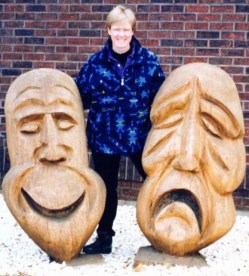
Marie Cooney Playwright

Marie Cooney – Playwright

We laugh about this! I love Nanette, but I absolutely cannot tolerate the Minnesota winters. She has been telling me it’s okay to leave and calls me her “Wandering Pirate Girlfriend.” I finally believe her. I plan to spend as much time as possible doing things we love together, especially attending many smaller theaters and dance productions, which are not as assaulting. I enjoy traveling between Saint Paul and Duluth and will be getting away for at least some parts of the winters. I want to return to being a playwright, to participate in the Playwrights’ Center in Minneapolis, and to travel to wherever the production of scripts might bring me. In ten years? I will be almost twenty years post-TBI. I could be doing almost anything – with rest, as needed!

19. Are you able to provide a helpful hint that may have taken you a long time to learn, but which you wished you had known earlier? If so, please state what it is to potentially help other TBI survivors with your specific kind of TBI.

Don’t be in such a rush to get back to your previous life or move on from your injury. Time, time, time! Take the time you need. Rest, rest, rest! It’s a long road to recovery. Laughter truly is the best medicine. There will be good days, and there will be bad days, and there will be good ones and bad ones again. Stay in the hospital or in rehab as long as you can, and get as much help as you can from the people who really know about brain injuries. (People who say they are “experts” aren’t always telling the truth.) Get a great QRC (Quality Rehabilitation Consultant) who is recommended by your lawyer, not by the workers’ compensation insurance company.  Don’t take it personally – you are in a system that is designed to cut you off as soon as possible. “Powerhouse” attorneys can be “slaughterhouse” attorneys. Get personal recommendations. A great TBI attorney will listen to and respect you, not treat you as someone who doesn’t know anything. Offer reasonable accommodations, as needed. If an attorney won’t work with you, he or she won’t work for your greatest good, so run the other way.

20. What advice would you offer to other TBI survivors?

Get all the help you possibly can from every source possible. A physiatrist or a PMR (Physical Medicine and Rehabilitation) specialist is an important part of your team. If you don’t have one, get one. Keep a sense of humor. Admit when life’s unbearable. Believe that it will get better.

Do you have any other comments that you would like to add?
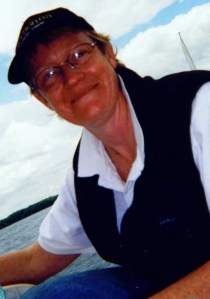
Cooney, Marie Sailboat 2

Marie Cooney – Skipper – pre-TBI

In our support group, NOTHING IS OFF THE TABLE! Everything is open for discussion, no matter what. Some thing you are afraid to discuss might be the very thing others need to talk about. Take chances. Share all your feelings. Accept tears of sadness and tears of laughter. Both are welcomed and accepted, as is everything in between.


Thank you, Marie, for taking part in this interview. I hope that your experience will offer some hope, comfort, and inspiration to my readers.

(Disclaimer: The views or opinions in this post are solely that of the interviewee.)

(Photos compliments of Marie.)

If you would like to be a part of the SPEAK OUT! project, please go to TBI Survivor Interview Questionnaire for a copy of the questions and the release form.


SPEAK OUT! Itty-Bitty GIANT Steps

SPEAK OUT! Itty-Bitty GIANT Steps

Itty-Bitty GIant Steps for Blog

SPEAK OUT! Itty-Bitty Giant Steps will provide a venue for brain-injury survivors and caregivers to shout out their accomplishments of the week.

If you have an Itty-Bitty Giant Step and you would like to share it, just send an email to me at donnaodonnellfigurski@gmail.com. If you are on Facebook, you can simply send a Private Message to me. It need only be a sentence or two. I’ll gather the accomplishments and post them with your name on my blog approximately once a week. (If you do not want your last name to be posted, please tell me in your email or Private Message.)

I hope we have millions of Itty-Bitty Giant Steps.


Here are this week’s Itty-Bitty Giant Steps.

Melinda Murphy…I made it to church last week for the first time in two years, and I managed to stay through the whole service. I still had a decent day. Oh my!

Catherine (Cat) Brubaker…I stood up for myself by establishing boundaries. I made sure someone talked to me with respect. This is a big step for me because my self-esteem has been in the toilet for a long time – after being humiliated in my assault in 2010, which gave me my first TBI.

Jenny Marie…I can drive now if I use a GPS so I don’t get lost.

Judy Feeley…I was proud of myself today. My head hurt, and I am not good with crowds. Despite these issues, I went to a funeral and stayed through it.

Ellie K. Payton (caregiver)…This week Claus Nowell hit his 6-month mark and stood using the parallel bars. He also began weaning off the trach.

Michael Anthony Boccio…Hey People!! Michael and Rachel down here in HOT Florida, and we are trying to keep things cool. Rachy is nearly done with her studies at Liberty University, and me – well, even through the pains, I keep pushing on to that finish line. (Rachel is 12 years out from her TBI, and me – well, I’m 35 years post-TBI, and life keeps getting more interesting every day!!)

Cheri Richardson Hicks…Okay, my Itty-Bitty Giant Step is that with two very small children in tow, I made a three-hour trip to visit my in-laws. It was much easier than I’d expected. We had a really relaxing and enjoyable trip. It was due time because it has been over a year since we’ve gone to visit them. Well worth the drive!

Tracy McDonald (caregiver)…I am happy to say that my son has asked his neurologist to wean him off The DURAGESIC® (fentanyl transdermal system) CII patch. He has been on it for over two years for pain – not only from his TBI, but also for the pains he suffers from injuries. He has gone without the patch for five days now, and he is toughing it out with the horrific withdrawal associated with the pain patch. This is a challenge for anyone with pain of this magnitude. The plan is custom – scheduled doses with a different medication that has little or no withdrawal or addiction problems. I wanted to share something positive today, as many times I get on here to tell of my woes or of the struggles of my son. I am glad to celebrate a positive thing. We really celebrate each and every move forward for our TBI survivor. It is a great thing for all of us. All positive developments are precious for TBI survivors – no matter how small or minor they may seem to “outsiders.”

YOU did it!

Congratulations to all contributors!

(Clip Art compliments of Bing.)


SPEAK OUT! Guest Blogger: DuWayne Hall . . . My Journey

SPEAK OUT! Guest Blogger: DuWayne Hall

My Journey

Boy Blogger thIt was a day like any other day. I got ready for work. As usual, I rode my motorcycle there. I drove around the hairpin turn that lies in front of the Emergency Room at Saint Benedict’s Hospital, where I worked. I arrived 15 minutes early, as usual, and I parked in the parking spaces up in front by the Admission doors. The day was as mundane as expected. Nothing exciting or out of the ordinary had happened. This routine had been repeated daily for eight years. Every day had been painfully identical: I arrived to work at 11:00 pm, worked until 7:00 am, and then went home. I lived only 10 minutes away. As expected, my shift went painfully slowly.

At 7:00, my shift relief failed to show up and relieve me. I was required by my employer – and by law – to stay on the job for another shift.

The Psych ward was about full. Almost half of those patients were minors. I went to my shift change, learned the medical history on my patients, and then began to gather the supplies necessary for my Group Session.

The patients filed in to attend the first Group Session of the day. I handed out supplies and manuals to document the progress of the patients’ recovery from whatever crises had caused them to be admitted into the hospital in the first place.

I thought my usual shift was long, but the next shift felt longer because it was all day. At lunchtime, I clocked out to get off the hospital grounds. I drove down the road to McDonald’s. Before I drove back, I removed my helmet to place my lunch into it to shield my dinner from the wind – thus, keeping it warm during my ride back.

As I rounded that hairpin turn in front of the Emergency Room, a car pulled out right in front of me, causing me to lay the motorcycle down. The bike pinned my right leg under it and then dragged me 100 feet down the road. As a consequence, my head bounced just like a Super Ball between my shoulder and the ground. I acquired a massive amount of “road rash” on my right side, as my chaps and uniform became shredded from the grinding of the motorcycle scraping across the road. I acquired a severe Traumatic Brain Injury and a compound fracture of my right collarbone. I also shattered my right elbow. I crushed my right cheek. I almost ripped off my right ear. I broke my right leg. My right eye was hanging out of its socket. My Big Mac sandwich did much better than I did!

To control brain swelling, the doctors introduced a shunt and placed me into a prolonged coma. While I was in my coma, I did not know that I was injured. I imagined myself on a mountaintop overlooking the city I lived in. I kept thinking to myself, When are they going to start the fireworks? I was only in the mountains to observe the fireworks from up above, instead of from down below, for a better view of the show. The fireworks finally went off. The next thing I knew, I was looking through hospital bed bars. I had no idea where I was or how I got there or when I got there. The last thing I remembered was being in the mountains with friends and watching the fireworks go off.

I was in my coma for 25 days. On the 24th day, the doctors began preparations to remove me from the life-support equipment. My parents, not wanting my daughter to see me dead, had made arrangements to first bring her into my hospital room to view my body before they disconnected me. My daughter, who had not seen me in nine years, was brought into my room. The doctors, nurses, my parents, and several friends watched passively as my daughter, who was 10 at the time, walked over to me and asked, “Daddy, do you want a cup of coffee?” To everybody’s amazement, I started to laugh. I had inexplicably come out of my coma. The doctors immediately started backpedaling. Nobody could explain how it was that they thought I was going to die until I was asked if I wanted a cup of coffee!

The documentation on head injury is incomplete at best. Rehabilitation therapists only follow a standardized guideline on how to treat a head injury. Every article I’ve ever read states that head injuries are unique. So it stands to figure that if every head injury is different, then it is ludicrous to apply standardized testing. The doctors did not like the fact that I was questioning my treatment. I was transferred to three different rehabilitation hospitals over a period of five years, while I relearned to walk, talk, interact with other people, and relearn names. I was taught how to add, subtract, eat, cook for myself, shop, take a shower, wash my clothes, phone, and use the toilet. I had to brush up on my job, my family, relationships, schooling, etc.

Ten years into my disability, because of my coordination problems, I slipped and fell in my own home. I broke my neck. It was a miracle I did not paralyze myself from the neck down. Because I was brain-damaged, nobody believed that I was badly hurt. They thought I was exaggerating my symptoms. The X-rays were not interpreted by a radiologist. Instead, the Emergency Room staff sent me home with instructions to be careful. First thing the next morning, the hospital called me and informed me that I had, in fact, broken my neck. They wanted me to return for admission and treatment, even emergency surgery. I was operated on for a permanent fusion of my T1 and T2 vertebrae.

Eighteen years into my disability, I received a second severe head injury. It occurred while I was just walking across the road. A truck driver did not see me crossing the road, and he hit me in the crosswalk. That injury gave me PTSD (post-traumatic stress disorder) along with new neural deficits. At this point, I am rated by Social Security as 105% disabled. I am more than totally disabled, just because I walked across the street!

It has now been more than 23 years post-injury. I have learned so much that I cannot even begin to describe what my journey has been like. I do know that EVERY single DAY is a challenge for me as a TBI survivor. We as survivors need to negotiate trials that the average person may find overwhelming. Little things could be insurmountable – for example, deciding what to wear and what, or even if, to eat. My own body is the enemy. Just talking to people can be a challenge. People misunderstand me all the time. I am a loner, but not by choice. It hurts me inside to be alone. Obviously, it is not healthy to be alone. Yet, many TBI survivors are alone. The stats validate that fact. Most marriages attempted by someone with a TBI end in divorce. It would seem then that survivors of a TBI make poor candidates for relationships. Everything is a challenge for the TBI survivor! You can never know what it is like until you “walk a mile in another man’s shoes.”

Favorite quotations:

DuWayne Hall

DuWayne Hall

You’re only as old as you feel!

You only live once in life!

You won’t know unless you try!


Thank you, DuWayne Hall.

Disclaimer:
Any views and opinions of the Guest Blogger are purely his/her own.

(Clip Art compliments of Bing.)

diemodi jewelry

uniquely hand-crafted jewelry by donna

Welcome to Harmony Kent Online

The home of all things books

Pete Springer

Passionate Teacher and Future Children's Author

HOPE TBI

Helping Other People Excel - To Be Independent

For the Love of Books, Old and New

Katie Fischer, Writer and Reader of Stories

Charlie Bown

Children's Author

Jessica Hinrichs

“We write to taste life twice, in the moment and in retrospect.” ― Anais Nin

VIVIAN KIRKFIELD - Writer for Children

Picture Books Help Kids Soar

Mindy’s Writing Wonderland

For authors, parents, teachers & everyone who loves children’s books.

Kaitlyn Leann Sanchez

Literary Agent

Surviving Traumatic Brain Injury

TBI - Survivors, Caregivers, Family, and Friends

The Care Factor

Loving someone with a Traumatic Brain Injury

Brain Injury Support Group of Duluth-Extension

Brain Injury Information and SUPPORT

Brain Aneurysm Global Insight

Brain Aneurysm, cerebral hemorrhaging, hemorrhage stroke