TBI – Survivors, Caregivers, Family, and Friends

Posts tagged ‘SPEAK OUT!’

Brain Injury Resources: . . . Movies & Documentaries About Sports and Brain Injury

Brain Injury Resources: Movies & Documentaries

About Sports and Brain Injury

presented

by

Donna O’Donnell Figurski


The following are in alphabetical order.

Brain th-2


Concussion

Concussion

ConcussionThis drama is based on the discovery of CTE (chronic traumatic encephalopathy) in the brains of deceased former NFL (National Football League) players by forensic neuropathologist Dr. Bennet Omalu. CTE is a serious disease of the brain, found mostly in football players. It is caused by concussions and repeated sub-concussive hits. CTE has been found to cause several neurological problems, including early memory loss, impulsive behavior, and dementia. The movie details Dr. Omalu’s life, especially after his discovery, and the walls that he had to tear down to make this discovery known.

The movie, currently in theaters, stars Will Smith as Dr. Bennet Omalu.

Movie details and trailer are at http://www.sonypictures.com/movies/concussion/.


Gridiron Gladiators

Gridiron Gladiators

Gridiron Gladiators This movie documents the history of football since the late 1800s. It depicts how football has evolved through the years and shows the extreme violence of the game. This documentary shows that, though football is one of America’s favorite sports, it is in dire need of reformation to reduce greatly or cease the possibility of getting a brain injury.

A stream of this documentary can be rented for $7 at http://gridirongladiatorsmovie.com/. Click “Stream Movie” to see the trailer.


Head Games

Head Games

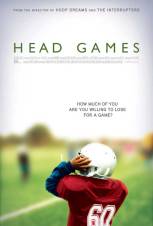
Head Games This documentary is not just about American football, but about any sport that can readily cause brain injury, including soccer and hockey. George Visger, a former NFL (National Football League) player for the San Francisco 49ers, states in the documentary, “It’s been known for a long time that banging your head over and over and over again can be a bad thing.” This documentary also addresses the risks of children playing sports that can cause brain injury.

See it free online at http://www.hulu.com/watch/446640.


League of Denial

League of Denial

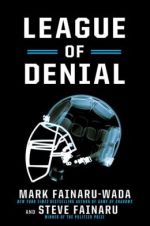
League of Denial: The NFL’s Concussion CrisisThis Frontline documentary shows the role of the NFL (National Football League) in the serious problem of getting concussions on the playing field. It unveils the stories of several NFL players who were diagnosed posthumously with CTE (chronic traumatic encephalopathy), a disease of the brain discovered by forensic neuropathologist Dr. Bennet Omalu. The story of Dr. Omalu and his discovery of CTE in American football players is the basis for the movie “Concussion.”

See it free online at http://www.pbs.org/wgbh/frontline/film/league-of-denial/.

Read about it on my blog at

https://survivingtraumaticbraininjury.com/2016/01/06/so-whaddya-think-football-puts-childrens-brains-at-risk/.


The Crash Reel

The Crash Reel

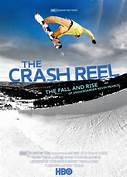
The Crash Reel” This documentary is a gripping 4+ star movie about Kevin Pearce, a champion snowboarder who was expected to win a gold medal in the 2010 Winter Olympics. While training on the half-pipe, Kevin missed his mark and severely slammed his head. His dream of an Olympic gold medal disappeared as he was faced with a traumatic brain injury (TBI). You will see breathtaking footage of Kevin snowboarding before his TBI.

See it free online at https://vid.me/x2HU/the-crash-reel. See the trailer at https://www.youtube.com/watch?v=2KkFZ-QC53Q.


The United States of Football

The United States of Football

The United States of Football This documentary is yet another look at the dangers of concussions in American football. It features 40-year-old Kyle Turley, former player for the New Orleans Saints, the St. Louis Rams, and the Kansas City Chiefs, as he talks about his fears and concerns about his own possible impending memory loss and dementia. It features other former NFL (National Football League) players who are in the throes of brain damage and shows how their lives have collapsed after repeated concussions. It delves into the harm that football can cause youngsters, whose brains are still developing.

A stream of this documentary can be rented for $3.99 at http://theusof.com/store.

The trailer can be seen at https://www.youtube.com/watch?v=Z8JMSMvWsBE.

Read about it on my blog at https://survivingtraumaticbraininjury.com/2015/10/19/4643/.


As I say after each post:

Feel free to leave a comment by clicking the blue words “Leave a Comment” below this post.

Please follow my blog. Click on “Follow Me Via eMail” on the right sidebar of your screen.anim0014-1_e0-1

If you like my blog, click the “Like” button under this post.

If you REALLY like my blog, share it intact with your friends. It’s easy! Click the “Share” buttons below.

If you don’t like my blog, “Share” it intact with your enemies. That works for me too!

(Clip Art compliments of Bing.)


So, Whaddya Think? . . . My Opinion: Sports Benefits Outweigh the Risks

So, Whaddya Think?

My Opinion: Sports Benefits Outweigh the Risks

by

 Charles Ross

presented

by

Donna O’Donnell Figurski

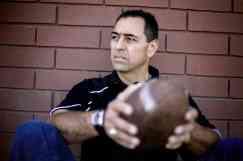
So Whaddya Think Brain th-4I was eighteen when I had my traumatic brain injury (TBI) in a car accident in 1985. I was brought back to life once. I was in a coma for fifty days. I was in a wheelchair for one and a half years. I have memory problems. My body drew up into a fetal position. It took seven years of painful surgery and therapy and close to thirty procedures to straighten my legs, feet, arms, and hands. Thirty years later, my claw-shaped right hand looks like it has rheumatoid arthritis, but I use it. I write with that hand and walk with a cane in it. Three years after my accident, I went back to college. It took three years of difficult work to get my first Associate Degree and two years for a second in Mechanical Drafting, AutoCAD. I worked fifteen difficult years doing AutoCAD. Not one day since my accident has been easy for me. I am proud of what I accomplished, and I hope my story will be an inspiration to others.

Ross Jr., Charles Survivor 112415 copy

Charles Ross Jr. TBI Survivor

I know personally how tragic it is if a person gets hurt or killed accidentally, but that’s life. I don’t want to seem like life does not matter to me – because it does. (My life now is precious to me. I cherish each moment I have with family or friends. Hundreds, maybe thousands, of people, whom I never would have met otherwise, have blessed my life.) I am not heartless; I am very compassionate. I cry when I hear a tragic story of any kind. I know what life is. I know what death is. And I know what pain and suffering are.

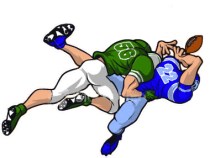
I played three years of high-school football. Many guys were much bigger than I was, and I was fortunate not to get hurt. It was my third year of driving when I had my accident. Throughout my recovery, I looked back at the grueling football practices, and they football-player-tackling-cartoon-football-playersinspired me to go forward. What a sport does is teach sportsmanship, pride, respect, and loyalty, and it inspires one to do better.

Should I never ride in a car or even drive again because somebody has gotten hurt in a car accident? A baseball player may get hit in the head by a pitch, but now players have helmets to protect them. (There isn’t protective headwear in basketball, volleyball, tennis, or soccer, but maybe there should be.) Thousands of people end up in Emergency football_-_helmet_5Rooms or even in morgues because they fall while walking and hit their head. Should every man, woman, and child wear a helmet simply to walk? It seems just as foolish to end all athletics.


So, Whaddya Think?

Let’s get a dialogue going. Post your comments in the Comment Section. Directions are below.

So . . . what do you think? Is there something you are passionate about in this Brain Injury (BI) world? Do you want to be heard? Your opinion matters! You can SPEAK OUT! on “So Whaddya Think?”

Simply send me your opinion, and I will format it for publication. Posts may be short, but please send no more than 500 words. Send to Neelyf@aol.com

I hope to HEAR from you soon.

As I say after each post:

Feel free to leave a comment by clicking the blue words “Leave a Comment” below this post.

Please follow my blog. Click on “Follow Me Via eMail” on the right sidebar of your screen.anim0014-1_e0-1

If you like my blog, click the “Like” button under this post.

If you REALLY like my blog, share it intact with your friends. It’s easy! Click the “Share” buttons below.

If you don’t like my blog, “Share” it intact with your enemies. That works for me too!

(Clip Art compliments of Bing.)

(Photos compliments of contributor)

SPEAK OUT! NewsBit . . . . . Mental Decline Causes a Hero of Super Bowl XL to Regret Playing Professional Football

Mental Decline Causes a Hero of Super Bowl XL to

Regret Playing Professional Football

presented

by

Donna O’Donnell Figurski


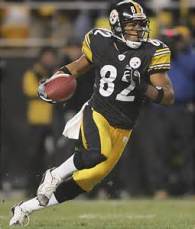
Newsboy thAmerican football wide receiver Antwaan Randle El, who played for the Pittsburgh Steelers, is fondly remembered for doing a reverse and then throwing a touchdown pass to ice the National Football League’s Super Bowl XL, played February 2006 against the Seattle Seahawks. The final score was 21-10.

th-1

Antwaan Randle El #82 former Pittsburgh Steeler

Randle El retired early in 2010. Now 36, he has trouble with his memory and has difficulty on stairs. He fears what the violence of football has done to his brain and regrets playing professionally. An all-around athlete, Randle El had been drafted by the Chicago Cubs, a U.S. professional team in Major League Baseball, but his life-path brought him to football. He said in an interview by the Pittsburgh Post-Gazette, “If I could go back, I wouldn’t (play football.) I would play baseball.”


antwaan-randle-el-0071-002

Antwaan Randle El – former Pittsburgh Steeler

Randle El wants to see his kids grow up and to know his grandkids. He is aware of recent brain research and the problems associated with playing football, so he is worried about his own neurological health. He said, “It’s a tough pill to swallow because I love the game of football. … It just comes down to it’s a physically violent game. … I wouldn’t be surprised if football isn’t around in 20, 25 years.” (Full story)


(Clip Art compliments of Bing.)

As I say after each post: Please leave a comment by clicking the blue words “Leave a Commentanim0014-1_e0-1 below this post.

Feel free to follow my blog. Click on “Follow” on the upper right sidebar.

If you like my blog, share it (intact) with your friends. It’s easy! Click the “Share” buttons below.

If you don’t like my blog, “Share” it (intact) with your enemies. I don’t care!

Feel free to “Like” my post.

So, Whaddya Think? . . . . . . . . . My Opinion: Football Is Safer With Kevlar Helmet Inserts

So, Whaddya Think?

My Opinion: Football Is Safer With Kevlar Helmet Inserts

by

Mike Doherty

presented

by

Donna O’Donnell FigurskiSo Whaddya Think Brain th-4

As a youth football coach, I am infuriated that more isn’t being done to spread the word about a great product out there that would greatly reduce the number of concussions. I came across it two years ago. It’s cheap, and you’d think the powers-that-be would jump all over it. Nope!

Southern Methodist University (SMU) did a study when their football players used this inexpensive piece of equipment in their helmets. The concussion rate dropped impressively.

American football is really a safe sport, considering the amount of contact involved. It’s just garnering the most attention because of the National Football League (NFL), where you have much bigger, stronger, and MUCH faster athletic men trying to hit each other. It’s controlled violence.

Mike doherty

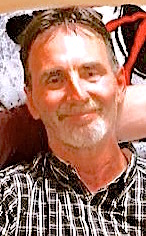
Mike Doherty – TBI Survivor

Coaches now go through a lot of training on how to teach kids the proper way of tackling and how to recognize the possibility of a concussion. Trust me, it is probably the most important issue that’s been addressed on the field in the last few years. I’m glad concussions are finally being addressed. All in all, at the youth level, football is still pretty safe as compared with other sports. High school, college, and the pros are where you see concussions pick up. (The non-helmeted sports, like soccer and girls’ lacrosse, don’t get nearly the attention they should. For the life of me, I can’t understand why helmets are not worn in girls’ lacrosse.)

What’s the flip side of removing some of these sports for youths? The kids may then get into trouble doing crazy stuff. As kids, we did crazy stuff just being boys, and I played football.

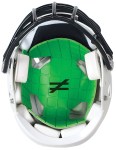
Unequal Gyro

Inside of helmet with Unequal Gyro

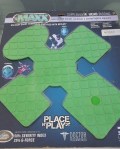
That equipment I mentioned above is a helmet insert from Unequal Technologies. It’s a pad lined with Kevlar, the same material used in military helmets. It inserts into each helmet and disperses the energy from an

Kevlar for Football

The Unequal Gyro

impact throughout the pad, reducing greatly the severity of the impact itself. Unequal Technologies also promotes a headband for helmetless sports.

(Disclaimer: The views or opinions in this post are solely that of the contributor.)

So, Whaddya Think?

Let’s get a dialogue going. Post your comments in the Comment Section. Directions are below.

So . . . what do you think? Is there something you are passionate about in this Brain Injury (BI) world? Do you want to be heard? Your opinion matters! You can SPEAK OUT! on “So Whaddya Think?”

Simply send me your opinion, and I will format it for publication. Posts may be short, but please send no more than 500 words. Send to Neelyf@aol.com

I hope to HEAR from you soon.

As I say after each post:

Feel free to leave a comment by clicking the blue words “Leave a Comment” below this post.

Please follow my blog. Click on “Follow Me Via eMail” on the right sidebar of your screen.anim0014-1_e0-1

If you like my blog, click the “Like” button under this post.

If you REALLY like my blog, share it intact with your friends. It’s easy! Click the “Share” buttons below.

If you don’t like my blog, “Share” it intact with your enemies. That works for me too!

(Clip Art compliments of Bing.)

(Photos compliments of contributor)


On The Air: . . . . . . . . . . . . . . Brain Injury Radio . . . . . . . . “Another Fork in the Road” with Ann Boriskie, Director of Brain Injury Peer Visitor Assn.

On The Air: Brain Injury Radio “Another Fork in the Road” 

with

Guest: Ann Boriskie, Director of Brain Injury Peer Visitor Assn.

presented

by

Donna O’Donnell Figurski

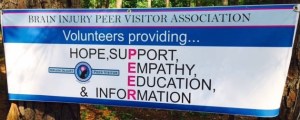
Boriskie, Ann Training in Florida Survivor 011116Ann Boriskie, a TBI survivor of more than 17-years says, “Get involved. Volunteer.” “By helping others with a brain injury, you truly help yourself in so many ways.” Ann is the Brain Injury Peer Visitor Association Director and her motto is “YOU CAN!”Peer Visitation BannerBoriskie, Ann Survivor 011116

 If you missed this show with Ann Boriskie on “Another Fork in the Road” on January 17th, 2016 don’t fret. You can listen to the archived show here. Click the link below.

See you “On the Air!”

On The Air: Brain Injury Radio “Another Fork in the Road” with Ann Boriskie, Director of Brain Injury Peer Visitor Assn.

(Clip Art compliments of Bing.)
As I say after each post: Please leave a comment by clicking the blue words “Leave a Comment” below this post.
Feel free to follow my blog. Click on “Follow” on the upper right sidebar.
 If you like my blog, share it intact with your friends. It’s easy! Click the “Share” buttons below.
 If you don’t like my blog, “Share” it intact with your enemies. I don’t care!
 Feel free to “Like” my post.


Survivors SPEAK OUT! Ann Boriskie

Survivors SPEAK OUT! Ann Boriskie

presented

by

Donna O’Donnell Figurski


Boriskie, Ann Survivor 011116

Ann Boriskie – Survivor: Brain Injury Peer Visitor Association Director


1. What is your name? (last name optional)

Ann Boriskie

2. Where do you live? (city and/or state and/or country) Email (optional)

Alpharetta, Georgia, USA (a suburb of Atlanta, Georgia) aboriskie@braininjurypeervisitor.org

3. On what date did you have your brain injury? At what age?

November 12, 1998, at age 48

4. How did your brain injury occur?

My brain injury occurred in a car wreck less than five miles from home. I was headed to a regular dental checkup.

A woman was talking on her phone while driving, and she obviously missed her turn. She stopped suddenly, but I was able to stop my car and not hit her at all. She just sat there at the bottom of a hill on the two-lane road. She did not move. A young student (16 years old) came down the hill. He said he was messing with his radio and just did not see us. He hit my car going 50 mph and pushed my car into the woman’s car.

5. When did you (or someone) first realize you had a problem?

About 48 hours after my wreck, I started having concussion symptoms. I experienced dizziness and mental “fogginess.” I could not walk. There was bruising under my eyes. The toes on my right foot went numb. My left eye was out of focus.

6. What kind of emergency treatment, if any, did you have?

None. I walked away from the wreck thinking I was just fine. After 48 hours, I went to a 24-hour clinic, but they just sent me home. They told me I had no real problems and I would be fine. I also went to an eye doctor right away, but again, I was told there that nothing was wrong physically with my eye. Several months after my wreck, one neurologist told me that I had “post-concussion syndrome” and to go home – that I would be just fine. No one else mentioned my having a brain injury for one year. Then a dental TMJ specialist told me that I had a brain injury. That was what was causing my mental symptoms. (TMJ = temporomandibular joint)Peer Visitation Banner
7. Were you in a coma? If so, how long?

No

8. Did you do rehab? What kind of rehab (i.e., inpatient or outpatient and occupational and/or physical and/or speech and/or other)? How long were you in rehab?

My brain injury went undiagnosed for over a year. The physical therapy that I received was in relation to each of my physical injuries (see #9), especially to help after the surgeries that I had to have to repair the parts of my body that were injured.

9. What problems or disabilities, if any, resulted from your brain injury
(e.g., balance, perception, personality, etc.)?

a. My brain injury caused depression, anxiety, and anger (more so in the first several years). I had lots of memory issues. (I could not remember friends or faces. I got lost. I could not write. Then once I could write, I couldn’t write in cursive – I still can’t.) Some memory issues remain today. I permanently lost many of my past memories. (I can’t remember family events or experiences or places where we had lived. I lost memory of cities and our time there.) I lost a lot of my math skills (I was an A+ math student, and I was in advanced math classes), but I have regained many of these math skills.

b. My neck was injured. (The C4, C5, C6, and C7 vertebrae were knocked out of line.) I had to have neck surgery (for fusion and a metal plate holding these four levels together). My neck is in CONSTANT PAIN.

c. I had an injury to the L5 and S1 levels of my spine. (The last two vertebrae are not attached now to my spinal cord). Surgery was recommended, but my neck did not fuse properly, so I decided not to have back surgery. I am in CONSTANT PAIN in my lower back. The pain often radiates to my hips and legs.

d. I popped a tendon from its bone in my right elbow. (I braced my body on the steering wheel in the wreck.) It required surgery. The doctor said it was one of the worst tears he had ever seen.

e. Permanent nerve damage was created in various body areas.

f. The left part of my jaw was knocked out of line. It literally took years of appliance therapy to get the bone back into its correct place.

g. A valve was torn on the left side of my heart. This caused irregular heartbeats for a while. It repaired itself.

h. My left side remains weaker than my right side.

i. Numbness remains in my hands (which makes it harder to use my hands). I also have numbness in my feet, down my arms, and down my legs.

j. Sometimes my left eye will not focus or work well with my right eye.

k. I have a shorter attention span.

l. All of these physical injuries caused me to have fibromyalgia and constant body pains.

Boriskie, Ann Podium

Ann Boriskie – Survivor

10. How has your life changed? Is it better? Is it worse?

In the long run, I have to say my life is truly better. All three of our children are in the medical field. (My husband and I have raised one daughter, now a neonatologist who takes care of premature babies and helps the moms; raised a son, now a doctor of internal medicine who works as a hospitalist; and raised another daughter, now a Registered Nurse in a mental-illness hospital unit.)

My priorities changed in my life. I went from being a “work-oholic” and a person who was very competitive to a person who lives to help other people, including my family and friends.

I slowed down my life’s pace. I had to learn that I could no longer work at a full-time outside-the-home job. (For years, I could not work at all.) I also had to learn to take care of myself – due to all of the physical and mental problems that the wreck created.

I was at home, and thus I was “there” more for my children and husband. I was able to give them more help and more attention.

11. What do you miss the most from your pre-brain-injury life?

I miss my higher energy level. I miss many of my memories. I miss all of the physical sports and activities that I can no longer do (water skiing, snow skiing, kayaking, swimming, playing golf, etc.).

12. What do you enjoy most in your post-brain-injury life?Peer Visitor Banner

I enjoy running the Brain Injury Peer Visitor Association and being able to help thousands of brain-injury and stroke survivors throughout the United States and the world. I’ve done this each year since 2006.

13. What do you like least about your brain injury?

I dislike being in constant pain (which also affects my brain). I also dislike having to push myself more and having to work much harder to accomplish my goals and to do my work than I did prior to my wreck.

14. Has anything helped you to accept your brain injury?

  1. Helping other people helps me also.
  2. Sharing my experiences with others and listening to each brain-injury survivor’s problems (This helps me to better understand my own brain injury.)
  3. Attending support-groups (and being very open to sharing my own problems, experiences, successes, and methodologies)
  4. In the past, gaining the help of neuropsychologists
  5. Going to medical doctors who treat brain injury (e.g., a psychiatrist)

15. Has your injury affected your home life and relationships and, if so, how?

Yes. I am much more dedicated to my husband and three children. I treasure our relationships. I also treasure my friendships more. You really better understand that life is way too short and can change in a second.

16. Has your social life been altered or changed and, if so, how?

Yes. I no longer like to be in big crowds or in a noisy environment. Going to a party is now a struggle and sometimes a chore. I just avoid noisy places and huge crowds. This requirement definitely limits the activities in which I can participate.

17. Who is your main caregiver? Do you understand what it takes to be a caregiver?

My wonderful husband is my main caregiver. I am blessed that he “stuck it out” with me and helped me go through all of my physical and mental recoveries. He is also one of my biggest supporters – even financially supporting my association and approving of all of the volunteer hours that I dedicate to the Brain Injury Peer Visitor Association.
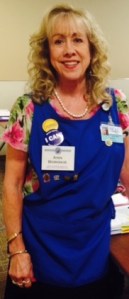
Boriskie, Ann Training in Florida Survivor 011116

Annn Boriskie – Survivor

18. What are your plans? What do you expect/hope to be doing ten years from now?

I plan to continue running the Brain Injury Peer Visitor Association as long as I possibly can. My dream is to continue to grow the association throughout the United States and even internationally.

I also plan to continue to enjoy and spend time with my immediate family and their families.

19. Are you able to provide a helpful hint that may have taken you a long time to learn, but which you wished you had known earlier? If so, please state what it is to potentially help other survivors with your specific kind of brain injury.

Accept your limitations, but continue to “push yourself” to improve. Realize that, even though you are different from the pre-TBI you, you are still a valuable person in the world. Let your “old self” go. Realize that person won’t be back. Embrace the “new you,” and learn to love yourself for who you now are. Remember that YOU CAN. Don’t defeat yourself by focusing on all of the things you can no longer do.
2011 Community Service Awards from WXIA 11

20. What advice would you offer to other brain-injury survivors? Do you have any other comments that you would like to add?

Help others. Get involved. Volunteer. By helping others with a brain injury, you truly help yourself in so many ways. You will help yourself get better, and you will gain confidence.


You can hear Ann Boriskie on my radio show, “Another Fork in the Road” at 5:30pm PT (6:30MT, 7:30CT, 8:30ET) on Sunday, January 17th on the Brain Injury Radio Network (BIRN)

Click here on Sunday 5:30pm Pacific Time. Another Fork in the Road: Ann Boriskie – Director of Brain Injury Peer Visitor 

You can call in to listen to the show or talk to the host by dialing this number. 424-243-9540

(Disclaimer: The views or opinions in this post are solely that of the interviewee.)

If you would like to be a part of the SPEAK OUT! project, please go to TBI Survivor Interview Questionnaire for a copy of the questions and the release form.

(Clip Art compliments of Bing.)

(Photos compliments of contributor.)

As I say after each post: Please leave a comment by clicking the blue words “Leave a Commentanim0014-1_e0-1 below this post.

Feel free to follow my blog. Click on “Follow” on the upper right sidebar.

If you like my blog, share it intact with your friends. It’s easy! Click the “Share” buttons below.

If you don’t like my blog, “Share” it intact with your enemies. I don’t care!

Feel free to “Like” my post.


So, Whaddya Think? . . . . . Football Puts Children’s Brains at Risk

So, Whaddya Think?

Football Puts Children’s Brains at Risk

by

David Figurski and Donna O’Donnell Figurski

(Note: This is our third opinion essay on brain trauma and American football. The first and second were published on this blog on December 17th and December 26th, respectively.)


So Whaddya Think Brain th-4Lack of awareness of new knowledge has allowed society to continue what some of us now know to be dangerous practices with respect to children. To understand what we mean, watch these short videos of children practicing or playing American football (1, 2, 3, 4, 5).

The danger to the brains of children in the videos is readily apparent to us (video, story). Parents often believe a brain injury is rare. But the evidence indicates otherwise. The hundreds of sub-concussive hits that a player of American football receives each season can result in the degenerative brain disease, chronic traumatic encephalopathy (CTE). CTE can lead to loss of memory, loss of cognitive ability, dementia, post-traumatic stress disorder (PTSD), aggressive behavior, depression, and suicidal thoughts. It has been seen in the brains of high school football players. In fact, individuals who started playing organized American football at a young age seem to have a higher rate of CTE.

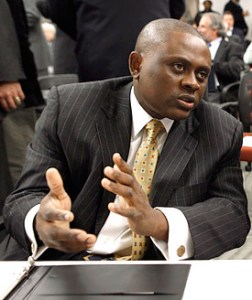
Bennet Omalu

Dr. Bennet Omalu – neuropathologist – discovered CTE

Recently, Dr. Bennet Omalu, who discovered CTE in an American football player by studying the brain of Hall-of-Fame center Mike Webster, was the author of a recent New York Times Op-Ed entitled Don’t Let Kids Play Football. In an interview for zap2it.com, Dr. Omalu said, “As a modern society it’s our duty to protect our most vulnerable, most precious gifts of life: our children. This is where I stand.”

(We highly recommend your seeing the newly released movie Concussion, which will bring about more awareness of the danger to the brain from playing American football. The movie tells the true story of how the National Football League – NFL – tried to dismiss Dr. Bennet Omalu’s discovery of the connection of brain disease and the playing of American football. Former players are suing the NFL, claiming that the NFL knew of the dangers, but did not inform the players.)kid-football-players-clip-art

In the documentary Head Games (online and free), we are reminded that children are not miniature adults. A child’s head is larger than an adult’s in proportion to his or her body. The neck muscles are not proportionately stronger, so a child’s head is more vulnerable than is an adult’s head. Brain development continues until at least age 14. (Some neurologists think brain development may continue longer.) In addition, the neurons in a developing brain are not yet fully myelinated. Recent research has shown that a concussion in a child impairs brain function for two years. The risk to the brain is the major reason why US Soccer banned heading for children 10 and under.

George Visger

Former San Francisco 49er – George Visger – TBI Survivor

On August 16th, Donna conducted a radio interview with George Visger, a former defensive lineman for the NFL’s San Francisco 49ers on her radio show, “Another Fork in the Road,” on the Brain Injury Radio Network. Visger stated that youth football might ultimately end because of the eventual high cost of liability insurance (minutes 30:25-33:45; we think you will also find the intervals 5:40-15:55 and 39:40-42:25 interesting because of their contents – children and football). Dr. Omalu, the discoverer of CTE in an American football player, says in Frontline’s documentary The League of Denial: The NFL’s Concussion Crisis that he was told if 10% of mothers think playing football is too dangerous, it will mean the end of football.

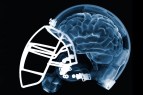
The consequences of a brain injury can be especially devastating, even fatal, to a young player (video 1, video 2, story of the suicide of a teenage football player). The risk of brain injury from high-impact sports, especially American football, is significant even for adults, but an adult can make his or her own decision to play. In contrast, children rely on parents and Brain in Helmetcoaches. No parent would deliberately put a child’s life-trajectory at risk, but what if the parent lacks awareness? The good news is that apparently society’s awareness is growing quickly. Peter Landesman, the director of Concussion, said that Pop Warner football enrollment is down by more than 30%. (Pop Warner football is for children aged 5 to 16.) The movie Concussion will further increase society’s awareness of the danger of concussions and sub-concussive hits, show what CTE is, tell Dr. Bennet Omalu’s story of his discovery of the relationship of CTE and American football, and show Dr. Omalu’s struggle with the NFL.

Healthy and Damaged Brain

Left – Healthy Brain — Right – Brain with CTE

It is also the brain-injury community’s responsibility to speak out to show society how life-altering a brain injury is.


So, Whaddya Think?

Let’s get a dialogue going. Post your comments in the Comment Section. Directions are below.

So . . . what do you think? Is there something you are passionate about in this Brain Injury (BI) world? Do you want to be heard? Your opinion matters! You can SPEAK OUT! on “So Whaddya Think?”

Simply send me your opinion, and I will format it for publication. Posts may be short, but please send no more than 500 words. Send to Neelyf@aol.com

I hope to HEAR from you soon.

As I say after each post:

Feel free to leave a comment by clicking the blue words “Leave a Comment” below this post.

Please follow my blog. Click on “Follow Me Via eMail” on the right sidebar of your screen.anim0014-1_e0-1

If you like my blog, click the “Like” button under this post.

If you REALLY like my blog, share it intact with your friends. It’s easy! Click the “Share” buttons below.

If you don’t like my blog, “Share” it intact with your enemies. That works for me too!

(Clip Art compliments of Bing.)

SPEAK OUT! . . . . . . . . . . . . . Faces of Brain Injury – Amy Zellmer

SPEAK OUT! Faces of Brain Injury – Amy Zellmer

presented by

Donna O’Donnell Figurski

 Brain Injury is NOT Discriminating!

bigstock-cartoon-face-vector-people-25671746-e1348136261718It can happen to anyone, anytime, . . . and anywhere.

The Brain Trauma Foundation states that there are 5.3 million people in the United States living with some form of brain injury.

On “Faces of Brain Injury,” you will meet survivors living with brain injury. I hope that their stories will help you to understand the serious implications and complications of brain injury.

The stories on SPEAK OUT! Faces of Brain Injury are published with the permission of the survivor or designated caregiver.

If you would like your story to be published, please send a short account and two photos to me at neelyf@aol.com. I’d love to publish your story and raise awareness for Brain Injury.

Amy Zellmer (survivor)

Amy Zellmer 3 Survivor 101015They say a picture says a thousand words. It’s been nineteen months since I fell on a patch of ice and landed full-force on the back of my skull. I suffered a traumatic brain injury (TBI) plus whiplash, torn muscles in my neck, shoulder, and chest, and I also dislocated my sternum. What the photo doesn’t show is how I wasn’t able to do any exercise – even mild – for the first year. Just walking around the grocery store was enough to leave me spent for the rest of the day – let alone carrying in the bags of groceries. I am not exaggerating when I tell you that I lived pretty much in my bed or on the couch for over a year. I would do photography sessions a few times a week (because that’s my only form of income, and I had bills to pay) and pay the price for two days – icing my body and popping ibuprofen like it was candy. Even just six months ago, I couldn’t properly stand up straight – let alone do strength training. And let’s not forget about the horrible vertigo and balance issues that came with the TBI. But I finally decided that ENOUGH IS ENOUGH! It was time to DO SOMETHING – anything! So I started doing yoga for 10-15 minutes a day. At first it was hard – really hard. I could do only very basic, simple stretching poses. I would hold onto a chair for any pose that required standing so that I didn’t lose my balance. But you know what? IT HELPED! It started me on a path to gaining back my strength and endurance.Amy Zellmer Survivor 1 101015

AND NOW LOOK AT ME! I am working with a fab trainer. We are using weights and resistance to get my body back to pre-injury status. It feels so good to be able to walk standing fully upright, and have the strength to carry my groceries into the house. I feel absolutely amazing, and my symptoms are subsiding (the physical ones; Amy Zellmer 2 Survivor 101015the neurological ones are still present). I know it seems impossible when you’re in the darkest days after a TBI. I’ve completely been there. But, man, you take back control of your life when you finally start to step out of it and say, “F… Y.., TBI!” If I can do this, I know you can too!

(Clip Art compliments of Bing.)

(Photos compliments of contributor.)

As I say after each post: Please leave a comment by clicking the blue words “Leave a Commentanim0014-1_e0-1 below this post.

Feel free to follow my blog. Click on “Follow” on the upper right sidebar.

If you like my blog, share it intact with your friends. It’s easy! Click the “Share” buttons below.

If you don’t like my blog, “Share” it intact with your enemies. I don’t care!

Feel free to “Like” my post.

So, Whaddya Think? “Concussion” Now in Theaters

So, Whaddya Think?

“Concussion” Now in Theaters

by

David Figurski and Donna O’Donnell Figurski


(Note: This is our second opinion essay about Dr. Bennet Omalu and his research with brain trauma. The first was published on this blog on December 17th.)

So Whaddya Think Brain th-4The much-anticipated movie, Concussion (trailer), is making current and former players of American football, their families, parents, fans, and coaches think about what is really happening in a sport that has become a large part of American culture. The movie has the same goal as we in the brain-injury community have – greater awareness of the delicate Concussion Movie 2.jpgnature of the brain and the ramifications of brain damage. The movie was released on Christmas Day, but it has made much news before its release.

The movie, which unsurprisingly is not sanctioned by the National Football League (NFL), tells the true story of the Nigerian pathologist, Dr. Bennet Omalu, and his discovery of the relationship of a neurodegenerative disease, which Dr. Omalu named “chronic traumatic encephalopathy” (CTE), and American football. Dr. Omalu studied the brain of Hall-of-Fame center, Mike Webster,

MikeWebsternfl

Mike Webster – Pittsburgh Steeler Pro Football Hall of Fame

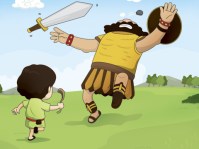
who died at age 50 homeless and with dementia. As shown in the Frontline documentary, League of Denial: The NFL’s Concussion Crisis (available free online), the movie shows how the multibillion-dollar NFL didn’t want to hear of Dr. Omalu’s discovery. The league’s questionable committee on concussions immediately attacked Dr. Omalu. It is a classic “David-vs.-Goliath” story.

David & Goliath.jpg

David & Goliath

(Dr. Omalu said in his Frontline interview, “You can’t go against the NFL. They’ll squash you.”) Former players have sued the NFL, arguing that the NFL knew of the dangers to the brain, but didn’t inform the players. In a class-action lawsuit, the NFL has recently settled for approximately $1 billion in medical expenses, but that settlement is being appealed by former players as inadequate.

Concussion Movie

Dr. Bennet Omalu – pathologist – discovered CTE with Actor, Will Smith

Will Smith plays Dr. Omalu in Concussion. Will Smith, a former football fan whose son played high school football, recently admitted that he has not watched a full game of football since he made this movie. Peter Landesman, the movie’s director, played football into his sophomore year of college, but, knowing what he knows now, he would not let his children play the game.

The movie is a “must-see.” (video)


So, Whaddya Think?

Let’s get a dialogue going. Post your comments in the Comment Section. Directions are below.

So . . . what do you think? Is there something you are passionate about in this Brain Injury (BI) world? Do you want to be heard? Your opinion matters! You can SPEAK OUT! on “So Whaddya Think?”

Simply send me your opinion, and I will format it for publication. Posts may be short, but please send no more than 500 words. Send to Neelyf@aol.com

I hope to HEAR from you soon.

As I say after each post:

Feel free to leave a comment by clicking the blue words “Leave a Comment” below this post.

Please follow my blog. Click on “Follow Me Via eMail” on the right sidebar of your screen.anim0014-1_e0-1

If you like my blog, click the “Like” button under this post.

If you REALLY like my blog, share it intact with your friends. It’s easy! Click the “Share” buttons below.

If you don’t like my blog, “Share” it intact with your enemies. That works for me too!

(Clip Art compliments of Bing.)

On The Air: . . . . . . . . . . . . . . Brain Injury Radio . . . . . . . . “Another Fork in the Road” Panel: Party Night

On The Air: Brain Injury Radio “Another Fork in the Road” 

with

Panelists: Caregiver, Lisabeth Mackall and Survivor, Daniel Mollino

Topic: Party Night

presented

by

Donna O’Donnell Figurski

Brandy Hunter and her mom were originally scheduled for this show time, but the season, and several personal issues prevented Brandy and her mom from joining me on this show. She will be rescheduled for a later date.

So now it was scramble time and the holiday season is no easy time to recruit panelists. Folks can barely get accomplished what they normally have to do without throwing in an

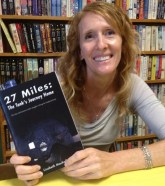
Lisabeth Mackall Book 061215

Caregiver, Lisabeth Mackall – author, 27 Miles: The Tank’s Journey Home

extra activity. I was fortunate to have five of my regular panelists agree to do the show with me and we decided to make it a holiday segment. It sounded like a lot of fun. Then shortly before the show three of the panelists had to decline because of health issues. I

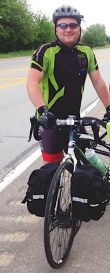
18 Daniel Mollino 060615 copy

Survivor, Daniel Mollino – cross-country cyclist

quickly checked with my remaining two panelists and they were still committed. Phew!

We did the show and sipped our virtual eggnog. We talked about traditions past – and new traditions we have each incorporated into our lives after brain injury took over. We looked at holiday issues through the eyes of survivor, Daniel, Mollino and caregiver, Lisabeth Mackall … and we had a lot of fun. I hope you will take some time during this holiday season to relax, sit back, and listen to the show.

Happy Holidays, Everyone!

See you “On the Air!”

http://www.blogtalkradio.com/braininjuryradio/2015/12/21/another-fork-in-the-road-party-nite-with-daniel-lisabeth-and-me

(Clip Art compliments of Bing.)

As I say after each post: Please leave a comment by clicking the blue words “Leave a Commentanim0014-1_e0-1 below this post.

Feel free to follow my blog. Click on “Follow” on the upper right sidebar.

If you like my blog, share it intact with your friends. It’s easy! Click the “Share” buttons below.

If you don’t like my blog, “Share” it intact with your enemies. I don’t care!

Feel free to “Like” my post.


diemodi jewelry

uniquely hand-crafted jewelry by donna

Welcome to Harmony Kent Online

The home of all things books

Pete Springer

Passionate Teacher and Future Children's Author

HOPE TBI

Helping Other People Excel - To Be Independent

For the Love of Books, Old and New

Katie Fischer, Writer and Reader of Stories

Charlie Bown

Children's Author

Jessica Hinrichs

“We write to taste life twice, in the moment and in retrospect.” ― Anais Nin

VIVIAN KIRKFIELD - Writer for Children

Picture Books Help Kids Soar

Mindy’s Writing Wonderland

For authors, parents, teachers & everyone who loves children’s books.

Kaitlyn Leann Sanchez

Literary Agent

Surviving Traumatic Brain Injury

TBI - Survivors, Caregivers, Family, and Friends

The Care Factor

Loving someone with a Traumatic Brain Injury

Brain Injury Support Group of Duluth-Extension

Brain Injury Information and SUPPORT

Brain Aneurysm Global Insight

Brain Aneurysm, cerebral hemorrhaging, hemorrhage stroke