Survivors SPEAK OUT! Shelly Millsap
Survivors SPEAK OUT! Shelly Millsap
presented
by
Donna O’Donnell Figurski

Shelly Rupert Millsap – Brain Injury Survivor
1. What is your name? (last name optional)
Shelly Millsap
2. Where do you live? (city and/or state and/or country) Email (optional)
Glendale, Arizona, USA
3. On what date did you have your brain injury? At what age?
My brain injury happened on January 17, 2013. I was 46.
4. How did your brain injury occur?
I was in a freak accident at home – a bottle of homemade ginger ale exploded in my face.
5. When did you (or someone) first realize you had a problem?
I realized I had a problem approximately 1-2 weeks after my accident.
6. What kind of emergency treatment, if any, did you have?
I was taken to the Emergency Room for CT (computerized tomography) scan.
7. Were you in a coma? If so, how long?
I was knocked unconscious for about twenty minutes.
8. Did you do rehab? What kind of rehab (i.e., inpatient or outpatient and occupational and/or physical and/or speech and/or other)?
I had to do rehab to relearn to walk correctly and talk correctly. I still do home therapy – I’m trying to regain abilities for a lot of things that I once could do easily and now cannot.
How long were you in rehab?
A few months
9. What problems or disabilities, if any, resulted from your brain injury (e.g., balance, perception, personality, etc.)?
 I have severe PTSD (post-traumatic stress disorder) and cannot be around loud noises or big crowds. I have issues with being in new environments. I tire very easily. I don’t understand people when they talk too quickly. I can’t remember new information very easily. I get lost easily or become disoriented. I have balance issues. I have a bit of anger inside that wasn’t there before … the list goes on and on.
10. How has your life changed? Is it better? Is it worse?
I can’t say that my life is better, but I refuse to say that it is worse. It is a work in progress. Life is full of ups and downs. I have always been a person who likes to take care of people. It is hard for me to let anyone take care of me. My life has changed in the mere fact that I need help with certain things … I used to be very independent. I still am, but I know that I have limitations now.
11. What do you miss the most from your pre-brain-injury life?
I miss being out-and-about without worrying that the noise will be too much or that I’ll be in a situation that will mentally paralyze me. I miss the ability to get into my car and know that I can drive myself anywhere I want to go.
12. What do you enjoy most in your post-brain-injury life?
I enjoy seeing the changes that have happened to my immediate family. They have become more compassionate.
13. What do you like least about your brain injury?
I dislike my new limitations and the loss of who I once was intellectually.
14. Has anything helped you to accept your brain injury?
God. I’ve always had a strong faith, and I know that God isn’t looking down and laughing at me. This didn’t happen because of some sick joke. God is going to use me and my experience to help someone else. I believe that we all have the choice to have a good day or a bad day. When I wake up, I choose to have a good one. There are things that come into my path at times that aren’t always pleasant, but I try to not focus too much on that and move on.
15. Has your injury affected your home life and relationships and, if so, how?
Yes. I have friends who have a hard time with this and really don’t call or communicate much anymore. I understand. It’s hard for some people. I don’t worry myself too much about what is out of my control with people who don’t understand. I just try to focus on the people who are still around and cherish them.
16. Has your social life been altered or changed and, if so, how?
I can’t go out a lot because of the noise. I don’t handle situations very well when I don’t know what is going to happen. I can’t be spontaneous. I have a hard time going to movies because of the noise. It’s hard going out to eat at times. But I do get together with my good friends a lot.
17. Who is your main caregiver? Do you understand what it takes to be a caregiver?

Shelly Rupert Millsap – Brain Injury Survivor
Bob Millsap – Caregiver
My main caregiver is ME … with some help from my husband.
18. What are your plans? What do you expect/hope to be doing ten years from now?
I’m not sure. It’s hard for me to look that far into the future. So many things have changed in my life that I kind of take it day to day. My main goal in life is to help people, and I plan on continuing to do that. I think that we should all give more than we take from this world. That is how I live my life. I’m not a “people-pleaser.” I could care less sometimes if I please someone. I hate that term. I do things because they need to be done. I just try to treat people the way that I want to be treated.
19. Are you able to provide a helpful hint that may have taken you a long time to learn, but which you wished you had known earlier? If so, please state what it is to potentially help other survivors with your specific kind of brain injury.
Gosh, that is a hard one. I am tired and can’t think of anything right now.
20. What advice would you offer to other brain-injury survivors? Do you have any other comments that you would like to add?
No matter what your circumstance, there is always someone else out there who probably has it worse. If you are having a bad day and are feeling hopeless, remember that tomorrow is just around the corner and that most likely it will be a better day. You can pick yourself up and make the most out of what you still have. Life is a precious thing. Live it, love it, and be around people who love you as you are.
NOTE:
Shelly is a contributing author on”Surviving Brain Injury: Stories of Strength and Inspiration,” which will be available in mid November 2016. You can order the book by clicking the title. The book includes stories from about 80 brain injury survivors or caregivers.
If you would like to be a part of the SPEAK OUT! project, please go to TBI Survivor Interview Questionnaire for a copy of the questions and the release form.
(Clip Art compliments of Bing.)
(Photos compliments of contributor.)
As I say after each post:
Feel free to leave a comment by clicking the blue words “Leave a Comment” below this post.
Please follow my blog. Click on “Follow Me Via eMail” on the right sidebar of your screen.
If you like my blog, click the “Like” button under this post.
If you REALLY like my blog, share it intact with your friends. It’s easy! Click the “Share” buttons below.
If you don’t like my blog, “Share” it intact with your enemies. That works for me too!
 My husband and I used to be avid bicyclists all throughout the trail system here in Calgary (in Alberta, Canada). Sometimes we would be out and about for the whole day, putting on as much as 50 km (31 miles). Mostly this was back in ‘83 to ‘88. Then we bought a house. The trail system wasn’t as good in that neighbourhood. As a result, we only went sporadically over the following years.


 It can happen to anyone, anytime, . . . and anywhere.
 SPEAK OUT! Itty-Bitty Giant Steps will provide a venue for brain-injury survivors and caregivers to shout out their accomplishments of the week.
 GeorgeAnna Bell (survivor) …
  I was looking forward to a walk-in shower, so I could place my walker into the shower and use it as a chair, but my room had a tub. I was extremely cautious, but I did it! I am so happy!
 Cat Brubaker (survivor) …
 Sallie Stewart (survivor) …
  And several snacks in between. I can chew – on BOTH sides of my jaw. It’s a giant win in life for me! I feel strong. It’s been a true challenge to try to find the majority of my nutrition in a blender. It was so nice to really be able to chow-down food. These braces come off soon. And for that, I am happy. But I’m not nearly as grateful for that as I am for being able to chew pain-free. My heart is full! A strong full!
 The regular season of the NFL (National Football League) begins this week. Although American football can be exciting, we in the brain-injury community are very aware of the havoc that both concussive and sub-concussive head impacts play not only on the brain health of the pros, but also on the brain health of college and high school players (
 head and lead to “memory loss, confusion, impaired judgement, impulse control problems, aggression, depression and progressive dementia.” Some players have retired early (

 My husband is still in physical therapy, and he recently started occupational therapy again. (He had “graduated” from occupational therapy about a year ago, but his neurologist requested that he do it again.)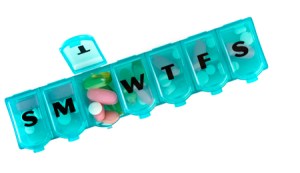
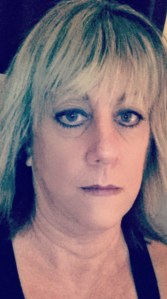

 Three years ago, I had to start loving a new me. It’s still a struggle. But with all the support I have from family and friends, I know it’s possible.
 Basic research on the repair of damaged mouse brains has again produced a potential breakthrough for human therapy. The research may accelerate our ability to repair damaged human brains. A trial study for using this therapy in humans is now being designed.
 Scientists had previously shown that an FDA (Food and Drug Administration)-approved reagent, the engineered protein 3K3A-APC, caused stem cells in culture to become neurons. The USC scientists wanted to see if 3K3A-APC would help the recovery of a brain-injured animal. The model used for brain damage was mice that were induced to have a stroke. The scientists implanted human stem cells and then treated the mice with 3K3A-APC or a placebo (mock-3K3A-APC). Mice that were treated with stem cells + 3K3A-APC did markedly better (some were almost normal) in tests of sensory perception and motor skills than did mice that were treated with stem cells + the placebo. Unlike the earlier study in which the added stem cells did not become neurons, these stem cells did become neurons if the mouse had been treated with 3K3A-APC.
 The human stem cells not only became neurons, but they also formed normal connections with mouse neurons. Because the implanted cells were human, the scientists were able to use a human-specific toxin to kill only the implanted cells (the mouse cells were resistant to the toxin). When scientists killed the new neurons, the mice lost the signs of recovery. The scientists concluded that 3K3A-APC caused the cells to develop into neurons that then formed functional neural circuits, ultimately leading to recovery.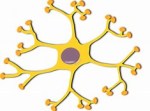


 Raising Awareness of Traumatic Brain Injury - one view at a time. Thanks for visiting my blog
 Surviving Traumatic Brain Injury
Recent Comments