TBI – Survivors, Caregivers, Family, and Friends

Archive for the ‘Survivors SPEAK OUT!’ Category

Survivors SPEAK OUT! Kenneth Powell

Survivors SPEAK OUT!    Kenneth Powell

presented by

Donna O’Donnell Figurski


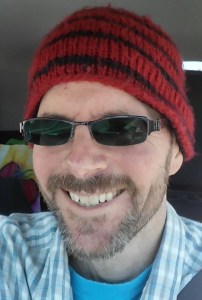
Kenneth Powell - Brain Injury Survivor

Kenneth Powell – Brain Injury Survivor

1. What is your name? (last name optional)

Kenneth Powell

2. Where do you live? (city and/or state and/or country) Email (optional)

Saint Louis, Missouri, USA

3. On what date did you have your brain injury? At what age?

2010     I was 42 years of age.

4. How did your brain injury occur?

I’ve had three hemorrhagic strokes on the lower left side of my brain.

5. When did you (or someone) first realize you had a problem?

I fell out of bed after trying to stand up. My (then) girlfriend found me.

6. What kind of emergency treatment, if any, did you have?

The first stroke occurred on April 30, 2010. I knew my name, where I was, and what I was told had happened. Immediately after sleeping that night, the second stroke occurred. I was put into a coma for the next 30 days.

7. Were you in a coma? If so, how long?

Yes. 30 days

8. Did you do rehab? What kind of rehab (i.e., inpatient or outpatient and occupational and/or physical and/or speech and/or other)?

I had occupational, physical, and speech therapies as an inpatient and an outpatient.

9. How long were you in rehab?

One month

10. What problems or disabilities, if any, resulted from your brain injury
(e.g., balance, perception, personality, etc.)?

Aphasia, right-side paralysis, complete amnesia

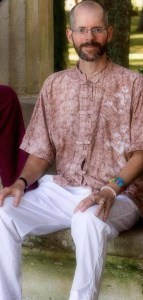
Kenneth Powell - Brain Injury Survivor

Kenneth Powell – Brain Injury Survivor

11. How has your life changed? Is it better? Is it worse?

My life is challenging.

12. What do you miss the most from your pre-brain-injury life?

I miss running and normal kidney function.

13. What do you enjoy most in your post-brain-injury life?

I enjoy sharing my experience with others and proving mind over matter.

14. What do you like least about your brain injury?

I dislike people’s perceptions of “the disabled.”

15. Has anything helped you to accept your brain injury?

My faith has helped me accept my brain injury.

16. Has your injury affected your home life and relationships and, if so, how?

The perceptions about “disabled” or “handicapped” individuals have been a hindrance. Romantic relationships are nearly nonexistent.

17. Has your social life been altered or changed and, if so, how?

Perceptions about the disabled greatly affect my life.

18. Who is your main caregiver? Do you understand what it takes to be a caregiver?

I am my own main caregiver. I am helped occasionally by my sister.

Kenneth Powell - Brain Injury Survivor

Kenneth Powell – Brain Injury Survivor

19. What are your plans? What do you expect/hope to be doing ten years from now?

I hope to be back to work.

20. Are you able to provide a helpful hint that may have taken you a long time to learn, but which you wished you had known earlier? If so, please state what it is to potentially help other survivors with your specific kind of brain injury.

Ask as many questions as possible. Know and interact with as many survivors as you can (via websites, support-groups, etc.).

What advice would you offer to other brain-injury survivors? Do you have any other comments that you would like to add?

Personal and spiritual FAITH is essential to the day-to-day survival of this injury.


(Disclaimer: The views or opinions in this post are solely that of the interviewee.)

If you would like to be a part of the SPEAK OUT! project, please go to TBI SPEAK OUT! Caregiver Interview Questionnaire for a copy of the questions and the release form.

(Clip Art compliments of Bing.)

As I say after each post: Please leave a comment by clicking the blue words “Leave a Commentanim0014-1_e0-1 below this post.

Feel free to follow my blog. Click on “Follow” on the upper right sidebar.

If you like my blog, share it with your friends. It’s easy! Click the “Share” buttons below.

If you don’t like my blog, “Share” it with your enemies. I don’t care!

Feel free to “Like” my post.


Survivors SPEAK OUT! Richard Schooping

Survivors SPEAK OUT!    Richard Schooping

presented by

Donna O’Donnell Figurski

Richard Schooping - Brain Injury Survivor

Richard Schooping – Brain Injury Survivor

1. What is your name? (last name optional)

Richard Schooping

2. Where do you live? (city and/or state and/or country) Email (optional)

Orlando, Florida, USA     apebblethrown@gmail.com

3. On what date did you have your brain injury? At what age?

I was 44.

4. How did your brain injury occur?

A mysterious brain infection from AIDS attacked my entire brain and spinal cord.

5. When did you (or someone) first realize you had a problem?

My functions in my mind and body began to slow down. Typing and talking slowed to zero over the period of a month. I watched it happen from a shattering mirror of identity.

6. What kind of emergency treatment, if any, did you have?patient-in-hospital

I was put in the hospital on liquid experimental medications to slow the attack of the mysterious virus. Also, I was on oxygen therapies to raise my blood-oxygen level. Doctors had never seen anything like this. I was also informed I had aphasia.

7. Were you in a coma? If so, how long?

No. I was awake and asleep intermittently for days.

8. Did you do rehab? What kind of rehab (i.e., inpatient or outpatient and occupational and/or physical and/or speech and/or other)? How long were you in rehab?

I was in a nursing home for three weeks of intense rehabilitative therapy. Then I had occupational therapy for as long as insurance would cover it – about three months.

9. What problems or disabilities, if any, resulted from your brain injury (e.g., balance, perception, personality, etc.)?

Richard Schooping - Brain Injury Survivor

Richard Schooping – Brain Injury Survivor

I seemed to lose everything. I had no idea who I was during the infection. I lost my ability to swallow, my speech functions, and all motor functions. I atrophied so quickly over a few weeks that I became immobile and rail thin. Bladder control also became an issue, as well as balance and perceptions. But, I am blessed – most of everything has returned. I also worked incredibly hard to survive and shine for others.

10. How has your life changed? Is it better? Is it worse?

My life is truly hard, but it’s also amazing. I am not able to work. I take care of my mother, which could not have happened without this stroke. My days are unpredictable – my energy can wane quickly without warning. Arthritis and neuropathy and HIV dementia fill my days, as well as domestic duties while my husband works. I am creative daily in some aspect. I add inspirations to Facebook. I am grateful. I know I am more than this body. I am an eternal spirit. I feel aware and know that I am more.

11. What do you miss the most from your pre-brain-injury life?

I miss writing music, freedom of body and mind, fluidity of speech, my handwriting, and self-reliance.

12. What do you enjoy most in your post-brain-injury life?

My compassion has deepened and expanded in my life in ways unimagined. I embrace and deepen into being a source of inspiration and hope for others. I enjoy volunteering; creating digital pieces of heART; having quality time for my sister, Laurie; and having time with my cat, Autumn. I also enjoy singing.

13. What do you like least about your brain injury?

I dislike feeling caged in my body, not being able to do what I once could do effortlessly, and my speech and motor functions being so affected, but I have faith.

14. Has anything helped you to accept your brain injury?

Several things have helped me: meditation, Qi Gong, chanting, forgiveness, singing, playing, and serving others.

Richard Schooping - Brain Injury Survivor

Richard Schooping – Brain Injury Survivor

15. Has your injury affected your home life and relationships and, if so, how?

Yes. I feel it confused and bewildered all of my friends. Many fell away, and I do not blame them. This is my journey. My marriage to my amazing husband is withstanding the strain this stroke has brought into our lives. My family is very supportive. We have all become stronger and more caring people.

16. Has your social life been altered or changed and, if so, how?

Yes. My social life is only what I make happen now. It still takes effort to talk and think, but many new friends have opened their hearts to me and accept me as I AM.

17. Who is your main caregiver? Do you understand what it takes to be a caregiver?

My husband, Cal Kalaf, is my main caregiver. I do know what caregiving means. I understand in that I helped three previous husbands pass over from AIDS.

18. What are your plans? What do you expect/hope to be doing ten years from now?

"From Suffering to Soaring" by Richard Schooping

“From Suffering to Soaring” by Richard Schooping

I will share my story of hope through my first book, “From Suffering to Soaring.” I will offer insights and strength to as many souls as possible. I plan to tour and to write more books. I will finish my second book, which shares both my and my husband’s perspectives of the stroke. I hope to write more albums as well. I want to make the most of my time while I am still here.

19. Are you able to provide a helpful hint that may have taken you a long time to learn, but which you wished you had known earlier? If so, please state what it is to potentially help other survivors with your specific kind of brain injury.

Don’t judge the stroke or disease. Things happen. There are huge patterns at play. Respond with caring and self-love. Nutrition is important. We are what we eat. This is good advice for all of our senses.

20.What advice would you offer to other brain-injury survivors? Do you have any other comments that you would like to add?

Richard Schooping - Brain Injury Survivor

Richard Schooping – Brain Injury Survivor

Find a creative outlet.

Get out in nature more.

Simplify your life.

Honor the entire process.

When emotions rise and attempt to capsize you, become aware of your breath and breathe through them.

Emotions are only energy.

Energy is neutral.

Look into mindfulness meditation.

Keep the faith.

Don’t blame.

Do whatever calms you.

This too shall pass.

Share your story.


(Disclaimer: The views or opinions in this post are solely that of the interviewee.)

If you would like to be a part of the SPEAK OUT! project, please go to TBI SPEAK OUT! Caregiver Interview Questionnaire for a copy of the questions and the release form.

(Clip Art compliments of Bing.)

As I say after each post: Please leave a comment by clicking the blue words “Leave a Commentanim0014-1_e0-1 below this post.

Feel free to follow my blog. Click on “Follow” on the upper right sidebar.

If you like my blog, share it with your friends. It’s easy! Click the “Share” buttons below.

If you don’t like my blog, “Share” it with your enemies. I don’t care!

Feel free to “Like” my post.

Survivors SPEAK OUT! … Jo Dalton

Survivors SPEAK OUT!   Jo Dalton

presented

by

Donna O’Donnell Figurski

Jo Dalton – Brain Injury Survivor

1. What is your name? (last name optional)

Jo Dalton

2. Where do you live? (city and/or state and/or country) Email (optional)

Switzerland

3. On what date did you have your brain injury? At what age?

Age 28

4. How did your brain injury occur?

Traffic accident – head-on collision at 50 mph

5. When did you (or someone) first realize you had a problem?

My car was smashed up, and it was obvious that I was injured. My husband was driving his car behind me and was terrified that I was dead.

medical-helicopter6. What kind of emergency treatment, if any, did you have?

I was helicoptered to the Emergency Room. I became very agitated, and it took three men to get me into the helicopter.

7. Were you in a coma? If so, how long?

Yes. Around 45 minutes

8. Did you do rehab? What kind of rehab (i.e., inpatient or outpatient and occupational and/or physical and/or speech and/or other)? How long were you in rehab?

I was released from the hospital after five weeks: three weeks in one hospital and two weeks in another. I remember very little of it. My physical therapy was five weeks with a couple of “islands of memory.” I had some neuropsychology, although I don’t remember it. At the second hospital, I believe I had some physiotherapy. At two months post TBI (traumatic brain injury), I saw the treating-neurologist from the first hospital. That doctor said that I “could go back to work and forget all about it”! The treating-doctor from the second hospital saw me as an outpatient, and she was not happy. She organized six neuropsychology appointments for me. That was the only rehab I had.

9. What problems or disabilities, if any, resulted from your brain injury (e.g., balance, perception, personality, etc.)?

Initially, I had phobias about closed doors and the dark. My balance was a little out. I was told by one psychiatrist that my personality caused depression and insomnia; by another, that if I was tired, I would sleep. I found it incredibly hard to teach – I had forgotten everything I learned in college and in five years of teaching. I felt I had lost my identity. I was assessed by a neuropsychologist recently. I was told that I am slow to respond, that I have aphasia, that I get tired very quickly, and that I don’t deal well with stress.

10. How has your life changed? Is it better? Is it worse?girl_teaching

I was an ambitious, full-time, Primary School teacher. I loved my job, and I was studying for a Master’s Degree in Education to achieve promotion. Because of my brain injury, it was impossible to continue either. I was confident and outgoing. I was enjoying living in a new country (I’m English, and I wanted some experience abroad). My life has changed entirely, but not all for the bad. I appreciate the small things in life (for example, fresh air, my dogs, reading (though it’s harder now to concentrate), clean bedding, and the beauty of nature (quite easy to appreciate here in Switzerland!). I also appreciate my friends and see the importance of supporting other people.

11. What do you miss the most from your pre-brain-injury life?

I miss quite a lot really! I miss the ambition and energy that I had, the love of my job, and my independence.

12. What do you enjoy most in your post-brain-injury life?

I enjoy getting outside with my dogs, exercising, and being involved in forums to help TBI survivors.

13. What do you like least about your brain injury?

I dislike the fact that I am slow; that I have insomnia and depression, for which I’ve been taking benzodiazepines and antidepressants on and off for the last sixteen years; and the inability to have children unaided – my periods stopped and have only restarted since I stopped work. I’ve miscarried five times – presumably due to stress. I wanted to have two children, but I am lucky to have the one daughter whom I do have.

clock-clip-art-4ib4bm5ig14. Has anything helped you to accept your brain injury?

Time! To me, it’s the biggest healer. Time passing has put things into perspective and allowed me to accept that I cannot have my life back as it was. But, there are other things I can do. I am currently in the process of making a claim for help from the state, and if I receive an allowance, I would like to work with just one dyslexic student.

15. Has your injury affected your home life and relationships and, if so, how?

Thankfully, I am extremely lucky to have a supportive husband and family. I found out who my true friends are, and I am lucky that they have been so much help. The ones who weren’t were clearly not really friends.

Jo Dalton - Brain Injury Survivor

Jo Dalton – Brain Injury Survivor

16. Has your social life been altered or changed and, if so, how?

For the first five or six years after the accident, I didn’t really have a social life – talking to more than one person was impossible. I became tired very quickly and had to leave, straight away. I was not keen to have too much noise around me. I spent quite a lot of time watching films in my apartment, as I was not keen on going out during the day. I live in a French-speaking area and lost a lot of confidence with language. In the last two years, I’ve rediscovered the need for a social life. I go out a couple of times a month, easier since I stopped work after a seizure in September 2015.

17. Who is your main caregiver? Do you understand what it takes to be a caregiver?

My husband is my main caregiver. We are both currently coming to terms with what this has meant for both of us at different stages in my recovery. He is now seeing a psychologist to give him some direction and help.

18. What are your plans? What do you expect/hope to be doing ten years from now?

I would like to be doing dyslexia tutoring on a small scale, raising awareness of TBI by talking in schools, and perhaps doing some voluntary work.

18. Are you able to provide a helpful hint that may have taken you a long time to learn, but which you wished you had known earlier? If so, please state what it is to potentially help other survivors with your specific kind of brain injury.

As a survivor, you need to educate yourself, accept that recovery is a long, long haul, and find online support. We are talking years of recovery. And, hard as it is to hear, it is very unlikely that you will get back to how you were. On the other hand, the strength you gain from dealing with life after a brain injury is enormous and empowering. I would also say that you shouldn’t accept what every doctor tells you. Very few “get” brain injury, and you must not allow anyone to make you feel that it’s your fault in some way.

20. What advice would you offer to other brain-injury survivors? Do you have any other comments that you would like to add?

See my answer above. Also, know that [time] + [acceptance] = [ease in life]. Oh, and don’t push yourself too far, too fast. It doesn’t produce good results, as I’ve discovered!

If you would like to be a part of the SPEAK OUT! project, please go to TBI Survivor Interview Questionnaire for a copy of the questions and the release form.

(Clip Art compliments of Bing.)

(Photos compliments of contributor.)

As I say after each post:

Feel free to leave a comment by clicking the blue words “Leave a Comment” below this post.

Please follow my blog. Click on “Follow Me Via eMail” on the right sidebar of your screen.anim0014-1_e0-1

If you like my blog, click the “Like” button under this post.

If you REALLY like my blog, share it intact with your friends. It’s easy! Click the “Share” buttons below.

If you don’t like my blog, “Share” it intact with your enemies. That works for me too!


Survivor/Caregiver ………… SPEAK OUT! Cyndy Davy Feasel, wife of Grant Feasel

Survivors/Caregivers  SPEAK OUT! 

Cyndy Davy Feasel, wife of Grant Feasel

presented by

Donna O’Donnell Figurski

Note: This interview is by Cyndy Feasel, the wife of Grant Feasel, who died of brain disease obtained from playing football. Some answers apply to Cyndy, and some, to Grant. I have made it obvious to whom the answer applies.


Cyndy Davy Feasel - spouse of Grant Feasel, a former Seattle Seahawks Center

Cyndy Davy Feasel – spouse of Grant Feasel, a former Seattle Seahawks Center

1. What is your name? (last name optional)

My name is Cyndy Davy Feasel, wife of Grant Feasel, who succumbed to brain disease.

2.Where do you live? (city and/or state and/or country) Email (optional)

Ft. Worth, Texas, USA

3. On what date did you have your brain injury? At what age?

There was no single event that was responsible for Grant’s brain injury. It occurred from years of playing football. Concussions had a role.

4. How did your brain injury occur?

Playing football (See the answer to the previous question.)

5. When did you (or someone) first realize you had a problem?

We knew Grant had a problem about age 40.

6. What kind of emergency treatment, if any, did you have?

Grant Feasel, former Seattle Seahawks Center diagnosed with CTE

Grant Feasel, former Seattle Seahawks Center diagnosed with CTE

None. Grant used drugs and alcohol to numb the pain.

7. Were you in a coma? If so, how long?

Grant was never in a coma.

8. Did you do rehab? What kind of rehab (i.e., inpatient or outpatient and occupational and/or physical and/or speech and/or other)? How long were you in rehab?

No

9. What problems or disabilities, if any, resulted from your brain injury
(e.g., balance, perception, personality, etc.)?

Grant had some speech difficulties. He stuttered often and repeated himself as the CTE (chronic traumatic encephalopathy) worsened. Grant also had problems with his vision and balance. His personality changed over the years. He had difficulty thinking and completing tasks. He showed impulsive behavior, irritability, and aggression towards me!

10. How has your life changed? Is it better? Is it worse?

(No answer)

11. What do you miss the most from your pre-brain-injury life?

Cyndy: I miss my normal family life.

12. What do you enjoy most in your post-brain-injury life?

(No answer)

13. What do you like least about your brain injury?

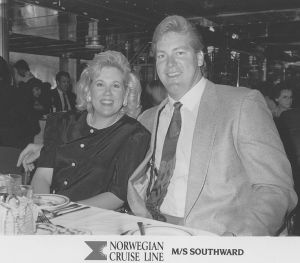
Cyndy Davy Feasel and spouse, Grant Feasel former Seattle Seahawk

Cyndy Davy Feasel and spouse, Grant Feasel former Seattle Seahawk

Cyndy: Grant died in 2012. I miss who he was when we met in 1982.

14. Has anything helped you to accept your brain injury?

Cyndy: Raising awareness is helping to ease the pain of a lost life.

15. Has your injury affected your home life and relationships and, if so, how?

Cyndy: My family was destroyed.

16. Has your social life been altered or changed and, if so, how?

Cyndy: I was sad for years about the life I lost in the midst of Grant’s brain damage.

17. Who is your main caregiver? Do you understand what it takes to be a caregiver?

(No answer)

18. What are your plans? What do you expect/hope to be doing ten years from now?

Cyndy: I intend to be an advocate who increases awareness about concussions and brain injury.

After the Cheering Stops by Cyndy Davy Feasel

“After the Cheering Stops” by Cyndy Davy Feasel

19. Are you able to provide a helpful hint that may have taken you a long time to learn, but which you wished you had known earlier? If so, please state what it is to potentially help other survivors with your specific kind of brain injury.

Cyndy: Educate yourself! Please ask your doctor for his or her opinion about your child’s safety before your child plays a head-banging sport.

20. What advice would you offer to other brain-injury survivors? Do you have any other comments that you would like to add?

Cyndy: Seek knowledge! Find a group for support.


(Disclaimer: The views or opinions in this post are solely that of the interviewee.)

If you would like to be a part of the SPEAK OUT! project, please go to TBI SPEAK OUT! Caregiver Interview Questionnaire for a copy of the questions and the release form.

(Clip Art compliments of Bing.)


As I say after each post: Please leave a comment by clicking the blue words “Leave a Commentanim0014-1_e0-1 below this post.

Feel free to follow my blog. Click on “Follow” on the upper right sidebar.

If you like my blog, share it with your friends. It’s easy! Click the “Share” buttons below.

If you don’t like my blog, “Share” it with your enemies. I don’t care!

Feel free to “Like” my post.

Survivors SPEAK OUT! Shelly Millsap

Survivors SPEAK OUT! Shelly Millsap

presented

by

Donna O’Donnell Figurski

Shelly Rupert Millsap - Brain Injury Survivor

Shelly Rupert Millsap – Brain Injury Survivor

1. What is your name? (last name optional)

Shelly Millsap

2. Where do you live? (city and/or state and/or country) Email (optional)

Glendale, Arizona, USA

3. On what date did you have your brain injury? At what age?

My brain injury happened on January 17, 2013. I was 46.

4. How did your brain injury occur?

I was in a freak accident at home – a bottle of homemade ginger ale exploded in my face.dcredykoi

5. When did you (or someone) first realize you had a problem?

I realized I had a problem approximately 1-2 weeks after my accident.

6. What kind of emergency treatment, if any, did you have?

I was taken to the Emergency Room for CT (computerized tomography) scan.

7. Were you in a coma? If so, how long?

I was knocked unconscious for about twenty minutes.

8. Did you do rehab? What kind of rehab (i.e., inpatient or outpatient and occupational and/or physical and/or speech and/or other)?

I had to do rehab to relearn to walk correctly and talk correctly. I still do home therapy – I’m trying to regain abilities for a lot of things that I once could do easily and now cannot.

How long were you in rehab?

A few months

9. What problems or disabilities, if any, resulted from your brain injury (e.g., balance, perception, personality, etc.)?

gg61447820I have severe PTSD (post-traumatic stress disorder) and cannot be around loud noises or big crowds. I have issues with being in new environments. I tire very easily. I don’t understand people when they talk too quickly. I can’t remember new information very easily. I get lost easily or become disoriented. I have balance issues. I have a bit of anger inside that wasn’t there before … the list goes on and on.

10. How has your life changed? Is it better? Is it worse?

I can’t say that my life is better, but I refuse to say that it is worse. It is a work in progress. Life is full of ups and downs. I have always been a person who likes to take care of people. It is hard for me to let anyone take care of me. My life has changed in the mere fact that I need help with certain things … I used to be very independent. I still am, but I know that I have limitations now.

11. What do you miss the most from your pre-brain-injury life?

I miss being out-and-about without worrying that the noise will be too much or that I’ll be in a situation that will mentally paralyze me. I miss the ability to get into my car and know that I can drive myself anywhere I want to go.

12. What do you enjoy most in your post-brain-injury life?

I enjoy seeing the changes that have happened to my immediate family. They have become more compassionate.large_familylovetitle

13. What do you like least about your brain injury?

I dislike my new limitations and the loss of who I once was intellectually.

14. Has anything helped you to accept your brain injury?

God. I’ve always had a strong faith, and I know that God isn’t looking down and laughing at me. This didn’t happen because of some sick joke. God is going to use me and my experience to help someone else. I believe that we all have the choice to have a good day or a bad day. When I wake up, I choose to have a good one. There are things that come into my path at times that aren’t always pleasant, but I try to not focus too much on that and move on.

15. Has your injury affected your home life and relationships and, if so, how?

Yes. I have friends who have a hard time with this and really don’t call or communicate much anymore. I understand. It’s hard for some people. I don’t worry myself too much about what is out of my control with people who don’t understand. I just try to focus on the people who are still around and cherish them.

16. Has your social life been altered or changed and, if so, how?

I can’t go out a lot because of the noise. I don’t handle situations very well when I don’t know what is going to happen. I can’t be spontaneous. I have a hard time going to movies because of the noise. It’s hard going out to eat at times. But I do get together with my good friends a lot.

17. Who is your main caregiver? Do you understand what it takes to be a caregiver?

Shelly Rupert Millsap - Brain Injury Survivor Bob Millsap - Caregiver

Shelly Rupert Millsap – Brain Injury Survivor
Bob Millsap – Caregiver

My main caregiver is ME … with some help from my husband.

18. What are your plans? What do you expect/hope to be doing ten years from now?

I’m not sure. It’s hard for me to look that far into the future. So many things have changed in my life that I kind of take it day to day. My main goal in life is to help people, and I plan on continuing to do that. I think that we should all give more than we take from this world. That is how I live my life. I’m not a “people-pleaser.” I could care less sometimes if I please someone. I hate that term. I do things because they need to be done. I just try to treat people the way that I want to be treated.

19. Are you able to provide a helpful hint that may have taken you a long time to learn, but which you wished you had known earlier? If so, please state what it is to potentially help other survivors with your specific kind of brain injury.

Gosh, that is a hard one. I am tired and can’t think of anything right now.

20. What advice would you offer to other brain-injury survivors? Do you have any other comments that you would like to add?

No matter what your circumstance, there is always someone else out there who probably has it worse. If you are having a bad day and are feeling hopeless, remember that tomorrow is just around the corner and that most likely it will be a better day. You can pick yourself up and make the most out of what you still have. Life is a precious thing. Live it, love it, and be around people who love you as you are.

NOTE:surviving-brain-injury-stories-of-strength-and-inspiration

Shelly is a contributing author on”Surviving Brain Injury: Stories of Strength and Inspiration,” which will be available in mid November 2016. You can order the book by clicking the title. The book includes stories from about 80 brain injury survivors or caregivers.


If you would like to be a part of the SPEAK OUT! project, please go to TBI Survivor Interview Questionnaire for a copy of the questions and the release form.

(Clip Art compliments of Bing.)

(Photos compliments of contributor.)

As I say after each post:

Feel free to leave a comment by clicking the blue words “Leave a Comment” below this post.

Please follow my blog. Click on “Follow Me Via eMail” on the right sidebar of your screen.anim0014-1_e0-1

If you like my blog, click the “Like” button under this post.

If you REALLY like my blog, share it intact with your friends. It’s easy! Click the “Share” buttons below.

If you don’t like my blog, “Share” it intact with your enemies. That works for me too!

Survivors SPEAK OUT! . . . Gretchen

Survivors SPEAK OUT! Gretchen

presented

by

Donna O’Donnell Figurski

Gretchen - Brain Injury Survivor

Gretchen – Brain Injury Survivor

1. What is your name? (last name optional)

Gretchen

2. Where do you live? (city and/or state and/or country) Email (optional)

Louisiana, USA

3. On what date did you have your brain injury? At what age?

I had just turned 20.

4. How did your brain injury occur?

My brain injury is from a car accident. My best friend was driving. I was sitting on the console and flew into the backseat. The driver was ejected, and she was killed instantly. Another friend with us, who was sitting in passenger’s seat, just had stitches.

5. When did you (or someone) first realize you had a problem?

I was medevacked to a hospital right away and stabilized. I was then flown to a larger hospital. I knew one of the emergency responders, and he said he recognized my brain injury from the way I was breathing. I was also erratic and trying to move and fight and get up, but I had a head injury. Another responder told me that he had to almost lie on me to keep me still.

6. What kind of emergency treatment, if any, did you have?

I had a PEG (percutaneous endoscopic gastrostomy) tube (to add nutrition directly into the stomach), a halo brace (a metal ring attached to the head and shoulders to immobilize the spine) because I had a broken neck (fracture of the C2 vertebra), a tracheotomy, and the usual IVs and ports.

Gretchen with Halo Brace

Gretchen with Halo Brace

7. Were you in a coma? If so, how long?

Yes. I was in a coma for three and a half weeks.

8. Did you do rehab? What kind of rehab (i.e., inpatient or outpatient and occupational and/or physical and/or speech and/or other)?

Yes. I had some physical therapy, but mostly I had cognitive therapy. I had both inpatient and outpatient rehab.

How long were you in rehab?

Inpatient rehab was about a week. Outpatient rehab was for several weeks (a couple of times a week).

9. What problems or disabilities, if any, resulted from your brain injury
(e.g., balance, perception, personality, etc.)?

I have no physical problems; they’re mostly cognitive. I have some personality changes. My family has voiced this to me. I have no control over it, but I do feel it, and I feel so uncomfortable with it. I’m not happy and confident and wonderful. That doesn’t come naturally to me anymore.

10. How has your life changed? Is it better? Is it worse?

Worse. I am almost always anxious and uncomfortable.

11. What do you miss the most from your pre-brain-injury life?

I miss my friend and my carefree and happy self.

12. What do you enjoy most in your post-brain-injury life?

I guess I just have to enjoy living life. That’s all I have. I take it one day at a time.

13. What do you like least about your brain injury?

My brain injury took a part of me that I was happy with – my confidence and my peace. I hate that about it.

14. Has anything helped you to accept your brain injury?

I just do. I have to accept it.

15. Has your injury affected your home life and relationships and, if so, how?

My relationships have definitely been affected – both romantic and friendship. I fought the change with my boyfriend at the time, but he recognized it. We ended up breaking up after several years. My friendships are also different. I find it difficult to talk and keep in conversation. It’s hard to find stuff to say to people I was so close to before. It makes me so uncomfortable, although it could also be from our drifting apart naturally. It’s like I feel cold to them, but I don’t intentionally try to act that way.

16. Has your social life been altered or changed and, if so, how?

Yes. I’m so anxious all the time. I’m very uncomfortable with myself.

17. Who is your main caregiver? Do you understand what it takes to be a caregiver?

My aunt was my caregiver right after I got out of the coma. I am my own caregiver now. I live on my own. My dad has to work, and my mom didn’t feel comfortable doing it. We live right next door to each other, though.

18. What are your plans? What do you expect/hope to be doing ten years from now?

I want to be happy. I have a degree in English. I hope to write more. I have been published twice, but I haven’t gotten back an email or a response. I was a French major, but I lost it all after the accident. I was heartbroken.

Gretchen - Brain Injury Survivor

Gretchen – Brain Injury Survivor

19. Are you able to provide a helpful hint that may have taken you a long time to learn, but which you wished you had known earlier? If so, please state what it is to potentially help other survivors with your specific kind of brain injury.

Nothing I can think of

20. What advice would you offer to other brain-injury survivors? Do you have any other comments that you would like to add?

Take it one day at a time, and don’t be hard on yourself. Love yourself. Again – don’t be hard on yourself!

If you would like to be a part of the SPEAK OUT! project, please go to TBI Survivor Interview Questionnaire for a copy of the questions and the release form.

(Clip Art compliments of Bing.)

(Photos compliments of contributor.)

As I say after each post:

Feel free to leave a comment by clicking the blue words “Leave a Comment” below this post.

Please follow my blog. Click on “Follow Me Via eMail” on the right sidebar of your screen.anim0014-1_e0-1

If you like my blog, click the “Like” button under this post.

If you REALLY like my blog, share it intact with your friends. It’s easy! Click the “Share” buttons below.

If you don’t like my blog, “Share” it intact with your enemies. That works for me too!

Survivors SPEAK OUT! Natalie Collins

Survivors SPEAK OUT! Natalie Collins

presented

by

Donna O’Donnell Figurski


Natalie Collins - Brain Injury Survivor

Natalie Collins – Brain Injury Survivor

1. What is your name? (last name optional)

Natalie Collins

2. Where do you live? (city and/or state and/or country) Email (optional)

Shreveport, Louisiana, USA

3. On what date did you have your brain injury? At what age?

I was 34.

4. How did your brain injury occur?

In a car accident

5. When did you (or someone) first realize you had a problem?

Immediately after the accident

6. What kind of emergency treatment, if any, did you have?

None

7. Were you in a coma? If so, how long?

I wasn’t in one.

8. Did you do rehab? What kind of rehab (i.e., inpatient or outpatient and occupational and/or physical and/or speech and/or other)? How long were you in rehab?

I had outpatient physical therapy for six months.

9. What problems or disabilities, if any, resulted from your brain injury
(e.g., balance, perception, personality, etc.)?

I have problems with balance, perception, and personality, and I suffer from mood changes.

10. How has your life changed? Is it better? Is it worse?

My outlook on life is better, but I still grieve the “old” me. The worst is knowing I will be forever changed.

11. What do you miss the most from your pre-brain-injury life?

I miss being able to read a book.

12. What do you enjoy most in your post-brain-injury life?

I enjoy people more and “stopping to smell the roses,” as that old cliché goes.

13. What do you like least about your brain injury?

I dislike needing constant assistance because of my memory.

14. Has anything helped you to accept your brain injury?

I found it helpful to take Sticky Notes everywhere.

15. Has your injury affected your home life and relationships and, if so, how?

Yes. My current husband didn’t understand how big of a job it is to take care of me. As a result, I hide a lot of my disability. I also have to stay in the kitchen while cooking.

16. Has your social life been altered or changed and, if so, how?

Absolutely. I really don’t have a social life now. Before the accident, I had all sorts of people to hang out with.

17.  Who is your main caregiver? Do you understand what it takes to be a caregiver?

My mom has been a great help teaching me how to do stuff and not doing it all for me.

18. What are your plans? What do you expect/hope to be doing ten years from now?

I honestly don’t know what I’ll be doing in the future. It depends on if this head injury allows me to continue my education in counseling.

Natalie Collins - Brain Injury Survivor

Natalie Collins – Brain Injury Survivor

19. Are you able to provide a helpful hint that may have taken you a long time to learn, but which you wished you had known earlier? If so, please state what it is to potentially help other survivors with your specific kind of brain injury.

My advice is to take notes everywhere, especially doctors’ offices. (I had a friend who made me make a daily list, so I would remember even to take a bath. If you’re like me, you won’t remember why the stove is dinging.) Keep a set routine. Stay in the kitchen when cooking.

20. What advice would you offer to other brain-injury survivors? Do you have any other comments that you would like to add?

All I can say is “Notes everywhere.” Sticky Notes are fairly cheap in comparison to forgetting really important stuff.


If you would like to be a part of the SPEAK OUT! project, please go to TBI Survivor Interview Questionnaire for a copy of the questions and the release form.

(Clip Art compliments of Bing.)

(Photos compliments of contributor.)


As I say after each post:

Feel free to leave a comment by clicking the blue words “Leave a Comment” below this post.

Please follow my blog. Click on “Follow Me Via eMail” on the right sidebar of your screen.anim0014-1_e0-1

If you like my blog, click the “Like” button under this post.

If you REALLY like my blog, share it intact with your friends. It’s easy! Click the “Share” buttons below.

If you don’t like my blog, “Share” it intact with your enemies. That works for me too!

Survivors SPEAK OUT! . . . . . . Rogan Grant

Survivors SPEAK OUT! Rogan Grant

presented

by

Donna O’Donnell Figurski


Rogan Grant - Brain Injury Survivor

Rogan Grant – Brain Injury Survivor

1. What is your name? (last name optional)

Rogan Grant

2. Where do you live? (city and/or state and/or country) Email (optional)

Edinburgh, Scotland     rogan_g@hotmail.com

3. On what date did you have your brain injury? At what age?

I acquired my brain injury in 2006. I was 35.

4. How did your brain injury occur?

I was attacked outside a nightclub by some customers I had thrown out of my pub the previous week.

5. When did you (or someone) first realize you had a problem?

I knew something was wrong when I woke up the next day. I was admitted to the hospital and then released the next morning. A friend found me unconscious and in a pool of blood and vomit. I was rushed back to the hospital. A few weeks later when I was released, I thought I was OK, but I kept forgetting things. I set the kitchen on fire three times in one week because I forgot I was cooking. Once I even went to bed and left a full meal cooking. I knew then I needed to be around family “for a week or two, until I cleared my head.”

Rogan Grant – Survivor of brain injury

6. What kind of emergency treatment, if any, did you have?

In the first hospital, I theoretically had a CT (computerized tomography) scan. After I was released from that hospital and went to stay with family, I had an X-ray. That’s when I was told of the multiple fractures of my skull and around my face. So I don’t think I had a scan done.

7. Were you in a coma? If so, how long?

I was lucky – I didn’t go into a coma. I just went in and out of consciousness for a few hours.

8. Did you do rehab? What kind of rehab (i.e., inpatient or outpatient and occupational and/or physical and/or speech and/or other)?

I went to a head-injury service and to the Neurology Department at a hospital. Rehab just seemed to be a social event. But it became more useful as time went on and I struggled more and more.

How long were you in rehab?

Six years

9. What problems or disabilities, if any, resulted from your brain injury
(e.g., balance, perception, personality, etc.)?

I had no sense of smell or taste for two-three years. For about three years, I dreamt every night that I died. My balance went all to hell. My vision had a problem with focus. My hearing became strange. (I hear everything at once and can’t isolate specifics, so I struggle to hear people with a lot of noise around.) I lost family contact and friends because I was emotional and aggressive, I couldn’t focus mentally, and my memory was erratic. I still have no concept of time in regards to the memory of anything since the injury. Facial recognition is gone, unless the person speaks or is where I would expect that person to be. I have to work every day to keep calm and controlled. My panic attacks and anxiety are now under control (my agoraphobia was the result of anxiety). My self-confidence was shot – I doubted everything I said and what I remembered, and I wondered whether or not I had done things I shouldn’t have. My personality went from being the life and soul and centre of every party (and there were a few) to sitting on a sofa with a blanket trying to avoid anybody and everybody. Self-loathing and a feeling of hopelessness and loss were incredibly strong. I felt people would be better off without me around. My mood was so low that I had very, very dark thoughts. Now I work on my mood. I use my techniques to stay “normal.”

10. How has your life changed? Is it better? Is it worse?

I was happy with work, I was back at University doing a double degree (I had completed three years in two), I was working full-time, I had great friends, and I was always busy. Now, after a lot of work, I realize I can’t work for other people because I can’t keep their schedules. So I am trying to work for myself. I also have a new partner; we have a baby and a nice home.

Rogan Grant – Survivor of brain injury

My life’s not “better” or “worse,” but it is different. I always try to remember it is important not to compare my current life to what it was before. Life changes day to day, and, yes, my brain injury caused a major change with massive problems. But I am here, and I have things I didn’t before.

11. What do you miss the most from your pre-brain-injury life?

I miss the self-confidence and the feeling of self-assurance I had. I knew what I was doing, what I had done, and where I wanted to go. People could come along for the ride or not. I was me, and I did well.

12. What do you enjoy most in your post-brain-injury life?

I learned from mistakes I didn’t know I was making. I am much more aware of others, and I can now help them because I trained as a therapist to do just that. I have a new family, and we are happy.

13. What do you like least about your brain injury?

I dislike the loss of memory and recognition. I hate having to fake that I remember someone or that I remember things he or she told me. But, if I say I had a head injury, people often treat me like I lost 80 points off my IQ. And the headache … the constant headache … never left; it just eased a bit. At least the sudden “brain-freeze” attacks are down to every couple of months and only last a day. They used to be three days long and twice a week.

14. Has anything helped you to accept your brain injury?Hypnotherapy

Yes. I was helped by hypnotherapy. After years of being pumped full of drugs, I got more results in six weeks with hypnotherapy. It made a massive difference. I can now focus, stay calm, recall information, and even read books again.

15. Has your injury affected your home life and relationships and, if so, how?

I lost a lot of my old friends. Family are only just now coming around to understanding that I have a problem. It took a decade, but at least it has started. Of course, they are there now that I no longer need their help or their understanding. It has been very hard not to throw that back at them, but it is their issue, not mine. I got through my problems; they still have theirs.

16. Has your social life been altered or changed and, if so, how?

I was always out. I was the one people called when they wanted things to get lively and fun. I ran pubs. It was my job to make people enjoy themselves, and I enjoyed doing it. I loved being in a crowd – laughing, singing, music pumping – everything busy. Now I don’t like going into a supermarket at peak times. Although I am generally better, I still have my moments. I don’t get anxious, but I am wary of how I could react.

17. Who is your main caregiver? Do you understand what it takes to be a caregiver?

My main caregiver is my partner, Jane. She understands a lot, but not everything. We try to have a “normal” relationship, but she knows I can react differently – and quickly. Now, instead of getting angry with myself and blowing things out of proportion, I can take a moment, calm down, apologize for acting out, and start again. She reminds me of pretty much everything. She also has to keep pushing me on those days when it all gets to be too much.

18. What are your plans? What do you expect/hope to be doing ten years from now?

I hope that in ten years’ time, I will have a business running that pays the bills. Jane and I will have moved to a bigger house because there will be another baby or two. I will have found a way to fix my remaining problems and will have shared the solutions with those who are trying to regain control of their own lives.

19. Are you able to provide a helpful hint that may have taken you a long time to learn, but which you wished you had known earlier? If so, please state what it is to potentially help other survivors with your specific kind of brain injury.

Sudden change is very hard to deal with or understand, but, if you spend your time comparing yourself to who you were or to what you could do, you will never move forward. We ALWAYS change; it is the only constant. Look back before your injury – were you the same person every year then? No, of course not. So look forward; find what you want to do with who you are now and go ahead. All human beings compare themselves to others, and we hate ourselves for it! Why do we do it? If someone has wavy hair, he or she looks at someone with straight hair and feels jealous. If we are big, we want to be smaller; those who are small want to be bigger. It is never ending! With a head injury – no matter how you got it or how it affected you – look forward and stay away from comparing yourself to the past.

20. What advice would you offer to other brain-injury survivors? Do you have any other comments that you would like to add?

Rogan Grant - Brain Injury Survivor

Rogan Grant – Brain Injury Survivor

As I said before, look forward, stay away from comparisons, and be honest to those around you. No one will ever understand your feelings, unless that person has been there. (I know none of us would wish that knowledge on anyone.) When it gets too much, say so, and when you feel that frustration and anger build, find a way to let it out sensibly. Let it out any way you can, but let it out before you hurt those whom you care for and love.


If you would like to be a part of the SPEAK OUT! project, please go to TBI Survivor Interview Questionnaire for a copy of the questions and the release form.

(Clip Art compliments of Bing.)

(Photos compliments of contributor.)


As I say after each post:

Feel free to leave a comment by clicking the blue words “Leave a Comment” below this post.

Please follow my blog. Click on “Follow Me Via eMail” on the right sidebar of your screen.anim0014-1_e0-1

If you like my blog, click the “Like” button under this post.

If you REALLY like my blog, share it intact with your friends. It’s easy! Click the “Share” buttons below.

If you don’t like my blog, “Share” it intact with your enemies. That works for me too!


Survivors SPEAK OUT! . . . . . . Charles Ross, Jr.

Survivors SPEAK OUT! Charles Ross, Jr.

presented

by

Donna O’Donnell Figurski


Ross, Charles Survivor

Charles Ross, Jr. – Brain Injury Survivor

1. What is your name? (last name optional)

Charles Ross, Jr.

2. Where do you live? (city and/or state and/or country) Email (optional)

Pittsburg, Missouri, USA     buds5101@gmail.com

3. On what date did you have your brain injury? At what age?

My TBI (traumatic brain injury) happened on November 15, 1985. I was 18 years old.

4. How did your brain injury occur?

I was in a head-on car crash on a narrow, two-lane highway on a rainy and foggy day. I swerved around a truck that was stopped in the road. The truck left the scene.

5. When did you (or someone) first realize you had a problem?

A witness came to the car and forced the door open. I had thrown up on impact. Until help arrived, he held my head up to keep me from choking.

6. What kind of emergency treatment, if any, did you have?

I had the paddles put on me before I got on the helicopter to fly to a large hospital. I also had a tracheotomy.

7. Were you in a coma? If so, how long?

I was in a coma for fifty days.

8. Did you do rehab? What kind of rehab (i.e., inpatient or outpatient and occupational and/or physical and/or speech and/or other)? How long were you in rehab?

I had physical, occupational, and speech therapies as an inpatient for nine months after I came out of the coma. I continued physical therapy as an outpatient for seven years after the accident. My mom then took over. She was a physical therapist aide in a nursing home at the time of the accident. She also did occupational therapy with me too.

9. What problems or disabilities, if any, resulted from your brain injury
(e.g., balance, perception, personality, etc.)?

I was in a wheelchair for one and a half years. I can now walk with a single cane. That level did not immediately come after the wheelchair. It occurred after seven summers of surgeries on my legs. I walked with two canes for many years. I also have epilepsy. That diagnosis took a grand mal seizure five years after the accident. I had thousands of petite mal seizures prior to my grand mal seizure. Only then did the neurologist say that the “spells,” as I called them then, were petite mal seizures. I take multiple medicines to control them. It took twenty-two years to find the right mixture to control them. Balance and memory are also great problems today – thirty years later. My sense of balance is gone. I fall frequently, even using a cane. My short-term and long-term memories were damaged. The short-term memory was destroyed. It took years of training to get back what I have. Long-term memory – I don’t recognize it as affecting me so badly. I just don’t think of it. I take two medicines that they give to Alzheimer’s patients. I am hoping they help me. I don’t know yet if they do.

10. How has your life changed? Is it better? Is it worse?teacher-improvement

I struggled to get two Associate Degrees over seven years. I struggled more in the workforce for fourteen years. Most of the time, I had no insurance. The meds I needed for the seizures came out-of-pocket. So my credit rating tanked, and a bankruptcy followed. I filed for disability insurance after losing my last job. I was making the most money ever, but I still had no benefits. On the last job, I grossed more money in a week and a half than I make in a month now.

11. What do you miss the most from your pre-brain-injury life?

I miss a sense of being normal – being able to go out and do anything at almost any time. My only restriction was money.

12. What do you enjoy most in your post-brain-injury life?

I enjoy knowing the people I have met as a result of the injury – the countless doctors and nurses who took care of me and other individuals who also have had head injuries. I never would have met them, or even thought of meeting them, had I not had a head injury.

13. What do you like least about your brain injury?

I dislike not having my “normal” life.

14. Has anything helped you to accept your brain injury?

I never had the attitude where I just wanted to give up on life, even though it could be depressing at times.

15. Has your injury affected your home life and relationships and, if so, how?

Yes. I think I experienced jealousy from a brother because I got more attention afterward. I’ve had many different relationships, but all have ended up failing. The lack of money was the usual excuse. Most relationships were started over the web.

16. Has your social life been altered or changed and, if so, how?

I don’t go out very much. Right now, I’m living with my mom. (My dad just passed.) As a 48-year-old male, I don’t regret living with my mom. It’s just not normal.

17. Who is your main caregiver? Do you understand what it takes to be a caregiver?

I am able to take care of myself, including my meds and my bills. I cooked when I was not with my mom.

18. What are your plans? What do you expect/hope to be doing ten years from now?

I want to get a place of my own again.

19. Are you able to provide a helpful hint that may have taken you a long time to learn, but which you wished you had known earlier? If so, please state what it is to potentially help other survivors with your specific kind of brain injury.

Charles Ross, Jr. - Brain Injury Survivor

Charles Ross, Jr. – Brain Injury Survivor

My advice: Do not turn down any kind of help that’s offered – do not be too proud.

20. What advice would you offer to other brain-injury survivors? Do you have any other comments that you would like to add?

You should take pride in being a survivor. Most people, if faced with the challenges you have, could not do it. You have already accomplished the hardest thing, which was to survive.


If you would like to be a part of the SPEAK OUT! project, please go to TBI Survivor Interview Questionnaire for a copy of the questions and the release form.

(Clip Art compliments of Bing.)

(Photos compliments of contributor.)


As I say after each post:

Feel free to leave a comment by clicking the blue words “Leave a Comment” below this post.

Please follow my blog. Click on “Follow Me Via eMail” on the right sidebar of your screen.anim0014-1_e0-1

If you like my blog, click the “Like” button under this post.

If you REALLY like my blog, share it intact with your friends. It’s easy! Click the “Share” buttons below.

If you don’t like my blog, “Share” it intact with your enemies. That works for me too!


Survivors SPEAK OUT! . . . . . . Jamie Crane-Mauzy

Survivors SPEAK OUT! Jamie Crane-Mauzy

presented

by

Donna O’Donnell Figurski



#1 Jamie 5

Jamie Crane-Mauzy – Brain Injury Survivor & Professional Skier

1. What is your name? (last name optional)

Jamie Crane-Mauzy

2. Where do you live? (city and/or state and/or country) Email (optional)

Park City, Utah, USA

3. On what date did you have your brain injury? At what age?

I had a traumatic brain injury (TBI) on April 11, 2015. I was 22 years old.

4. How did your brain injury occur?

I was competing at the world-tour finals in Whistler, Canada. I got 4th first run, and I wanted to upgrade my off-axis backflip to an off-axis double backflip. I under-rotated, caught the edge of my ski, and whiplashed my head into the snow. My brain started bleeding in eight spots. I hurt my right brainstem, so my right side was paralyzed. I started convulsing and slipped into a coma.

#4 Jamie Crane-Mauzy In Air

Jamie Crane-Mauzy – Brain Injury Survivor & Professional Skier

5. When did you (or someone) first realize you had a problem?

Immediately. I started convulsing on the snow. First Response came, and it was obvious at the moment that I was in serious trouble. I was convulsing in a way that usually only happens on the verge of death. After I left in the helicopter, my First Response wrote up my fatality report. They though I had a “one in a miracle” chance of surviving. For the first few days, the doctors didn’t know if I was going to survive. After it became clear I was going to survive, they weren’t sure if I would ever walk or drive. They didn’t think I would be able to go back to sporting activities, accomplish anything, or live a normal life.

6. What kind of emergency treatment, if any, did you have?

I became the first person in all of North America (I was in Canada at the time) to be treated with an oxygen-analyzing brain bolt. I didn’t have to have any of my skull removed because I had extra space for my brain to swell into. (See, I am a certified airhead. ;)) I didn’t break any bones or tear any ligaments.

7. Were you in a coma? If so, how long?

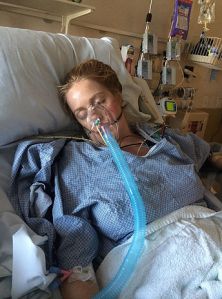
I was in a coma for around ten days. I was aware for seconds, when I was flying from Vancouver to Salt Lake City, but I then slipped back into the coma.
#3 Jamie 7

Jamie Crane-Mauzy – Brain Injury Survivor & Professional Skier

8. Did you do rehab? What kind of rehab (i.e., inpatient or outpatient and occupational and/or physical and/or speech and/or other)? How long were you in rehab?

I did two weeks of inpatient therapy. Then I left the hospital and did two months of five-days-a-week therapy. Each day, I did three hours of therapy – one hour each of occupational therapy, physical therapy, and speech therapy. Then I always say I did about five hours of my mom’s therapy. I had to relearn Rosetta Stone in English; I had to use a hand-strengthener; and I had to do Algebra 1, read, write, and do Lumosity. And then, outside of my regular physical therapy, I would do light workouts with a physical trainer three times a week. I would also do modest activities, like go for a one-quarter-mile hike.

9. What problems or disabilities, if any, resulted from your brain injury
(e.g., balance, perception, personality, etc.)?

I have no permanent damage. The emotional damage took the longest to heal.

10. How has your life changed? Is it better? Is it worse?

I am more aware about life. I used to be a “park rat,” just interested in skiing. I never really thought past a year, so I was very focused just on the next year of skiing. Now I am aware of my future. I feel it’s important to relax and have fun and not want to make my life in one year. I want to develop a career as a motivational speaker. I now know what I am looking for out of life, and I believe it’s moving positively. I have an incredible story to tell, so I am doing media conventions and television interviews. For the first year, I did lots of healing. Now I am sharing my story. I believe sometimes my  TBI was the best thing that ever happened to me because now I have a way to share a motivational story.

11. What do you miss the most from your pre-brain-injury life?

I honestly don’t miss much. I can ski, flip, and spin again. I had a lot of emotional issues, but I worked through them all. So now I am just a 23-year-old girl. I don’t know how my life will turn out, but I am accomplishing as many goals as I can.

12. What do you enjoy most in your post-brain-injury life?

I enjoy several things: the opportunities presented to me to be able to showcase an inspiring motivational story, how happy relearning everything has made me, and how much I have grown up and evolved in one year.

13. What do you like least about your brain injury?sport-graphics-skiing-020331
I dislike never being able to compete and go to Dew Tour and X-Games again. A TBI is not like tearing your knee, which sucks, but has an eight-month recovery. It’s a fact that TBI changes your life. You can make it as beneficial of a change as you can. But it did change, and there is no going back to being the exact person you were before the accident.

14. Has anything helped you to accept your brain injury?

A lot. My family has supported and helped me in a way I will owe them for life. The ski industry has kept me relevant. (For example, I was a guest athlete-announcer at the winter Dew Tour.) Since my accident, everyone has wanted to help me, which has been crazy. Now I am going to the University at Westminster College. I am working at the National Ability Center and setting goals and having accomplishments. Doing flips and spins on the water ramps again has made me so happy. The hardest part for me is dealing with all the emotions – knowing that, once you hit your head, you physically change your emotions and knowing that I was a competitive freestyle skier whose life was competing on the world tour. It’s important to remember every time it’s hard that there are still doors – grab the handles and walk through. I am only 23 and still have an incredible life to live! No one knows where this life will go. (Maybe someone reading this will recommend me to those in charge of their corporate special events who want to hire a public speaker.)

15. Has your injury affected your home life and relationships and, if so, how?

My home life and my family have been fabulous. It has changed every week, but it is solid now and has been good for a while. What hit me the most was boys. I usually don’t fall for a boy very easily, but all of a sudden I became obsessed and needy. I wanted someone to save me. I wanted to find the man of my dreams, have him save me, and get married in the future, but fall in love right now. Then I realized that’s not me. I have opportunities, standards, and my own life. I never before wanted to find the one, and I don’t now. I have so much going in my life. I am back to being busy, and it will all work out. When I’m not looking in the future, I might find someone I want to be with. Now I’m my own best friend, and I need no one else to save me.

16. Has your social life been altered or changed and, if so, how?

#2 Jamie 6.jpg

Jamie Crane-Mauzy – Brain Injury Survivor & Professional Skier

Going back to what I wrote before, I fell for a lot of boys I was friends with. Because everyone was so happy I was alive, no one told me “no.” They would say, “Yes, let’s hang out” and then blow me off. Now I won’t even approach them to give them the time of day. If someone generally wants to spend time with me, they have to reach out and contact me. If someone doesn’t say what’s on his mind, we can never have a genuine friendship. Many were egotistical, but it made them feel better to always agree with me because I was alive and had almost died. People are beginning to treat me normally again. I really missed how everyone would be overly nice and how no one would tease me, make jokes, or “pull my leg.” I never realized I would miss it so.

17. Who is your main caregiver? Do you understand what it takes to be a caregiver?

My main caregiver is my mom. She doesn’t have to take care of me now, but, yes, I do understand how I will owe her for the rest of my life. My mom is the reason I fully recovered. Back when I did three hours of outpatient therapy every weekday, I did five hours of my mom’s therapy. She made me learn Rosetta Stone in English, squeeze a hand-strengthener, do Algebra 1 again, read, write, do Lumosity every day, go for a quarter-mile “hike,” do yoga – three poses and a half hour of Shavasana (the Corpse Pose in yoga, which rejuvenates body, mind, and spirit), and more. I will owe her for more than I can ever repay. There are no words to say how much I owe her for taking care of me and allowing me to heal back to who I was before.

18. What are your plans? What do you expect/hope to be doing ten years from now?

Well, I have decided I don’t focus on long-term goals. I focus on making sure that every day I set one little goal I can accomplish and take baby steps in the direction I want to go. I went to the American Academy of Dramatic Arts in Hollywood. I have already done television interviews, and I have media conferences scheduled. I would love to move in the film direction, be on the Ellen Show, do a TED talk, be on talk shows, and spread the message that you can be and accomplish what you want if you focus on taking baby steps and not get stressed out about how far it is to go. I would also love to start getting paid for public-speaking gigs, start filming and tell a motivational story for my segments in ski films, and find someone who sets and accomplishes his own goals (someone who feels our happiness coincides; who loves the mountains, skateboarding, surfing, and being active; who believes our lives just fit in together; and who has the capabilities to go on adventures around the world with me). I want to stay as content as possible and strong and healthy. My future life has so many possibilities. My number one goal is to stay alive and strong and live out my life.
ski-clip-art-ski-clip-art-619. Are you able to provide a helpful hint that may have taken you a long time to learn, but which you wished you had known earlier? If so, please state what it is to potentially help other survivors with your specific kind of brain injury.

My biggest hints are the following:

Believe in yourself. Your doctor might not; your boss might not; your CEO might not; but, if deep, deep down you believe you are going to be OK, it will happen. There are many different levels that are “OK,” but you will be content with yourself.

It’s scary to think how far you have to go and to wonder why this happened to you. So focus on just the short-term. Set one short-term goal you actually can accomplish, and take baby steps in the direction you want to go.

What advice would you offer to other brain-injury survivors? Do you have any other comments that you would like to add?

Find something that makes you happy. Then go and do it. (For me, it was getting busy, accomplishing goals, and doing sports.) And smile as big as you can.


For motivational speaking gigs and media please reach out! MoCrazyStrong@gmail.com


If you would like to be a part of the SPEAK OUT! project, please go to TBI Survivor Interview Questionnaire for a copy of the questions and the release form.

(Clip Art compliments of Bing.)

(Photos compliments of contributor.)


As I say after each post:

Feel free to leave a comment by clicking the blue words “Leave a Comment” below this post.

Please follow my blog. Click on “Follow Me Via eMail” on the right sidebar of your screen.anim0014-1_e0-1

If you like my blog, click the “Like” button under this post.

If you REALLY like my blog, share it intact with your friends. It’s easy! Click the “Share” buttons below.

If you don’t like my blog, “Share” it intact with your enemies. That works for me too!


diemodi jewelry

uniquely hand-crafted jewelry by donna

Welcome to Harmony Kent Online

The home of all things books

Pete Springer

Passionate Teacher and Future Children's Author

HOPE TBI

Helping Other People Excel - To Be Independent

For the Love of Books, Old and New

Katie Fischer, Writer and Reader of Stories

Charlie Bown

Children's Author

Jessica Hinrichs

“We write to taste life twice, in the moment and in retrospect.” ― Anais Nin

VIVIAN KIRKFIELD - Writer for Children

Picture Books Help Kids Soar

Mindy’s Writing Wonderland

For authors, parents, teachers & everyone who loves children’s books.

Kaitlyn Leann Sanchez

Literary Agent

Surviving Traumatic Brain Injury

TBI - Survivors, Caregivers, Family, and Friends

The Care Factor

Loving someone with a Traumatic Brain Injury

Brain Injury Support Group of Duluth-Extension

Brain Injury Information and SUPPORT

Brain Aneurysm Global Insight

Brain Aneurysm, cerebral hemorrhaging, hemorrhage stroke