SPEAK OUT! NewsBit . . . . . . Repair of Neural Circuits in Stroke-damaged Mouse Brains
SPEAK OUT! NewsBit
Repair of Neural Circuits in Stroke-damaged Mouse Brains
presented by
Donna O’Donnell Figurski
 Basic research on the repair of damaged mouse brains has again produced a potential breakthrough for human therapy. The research may accelerate our ability to repair damaged human brains. A trial study for using this therapy in humans is now being designed.
I’ve already written about the extraordinary promise of cell therapy in eliminating or greatly reducing the effects of brain damage. Much of this promise has to do with the discovery of stem cells, which have the stunning ability to develop into virtually any kind of cell. (The previous NewsBit, however, showed that scientists found a way to cause a common cell type to develop into functional neurons directly without going through a stem-cell stage.) In a study earlier this year, scientists showed that stem cells surgically implanted into damaged human brains reduced the severity of symptoms. But in that study, the scientists were surprised to find that the added stem cells themselves did not become new neurons and form new circuits, but they somehow revved up the brain’s natural ability to heal itself.
Now scientists at the University of Southern California (USC) with help from scientists at the National Institutes of Health (NIH) have found a way to activate the implanted stem cells so they develop into neurons and become part of new neural circuits. The direct involvement of the added stem cells resulted in enhanced repair and a much greater loss of symptoms. One NIH scientist said, “If the therapy works in humans, it could markedly accelerate the recovery of these patients.”
 Scientists had previously shown that an FDA (Food and Drug Administration)-approved reagent, the engineered protein 3K3A-APC, caused stem cells in culture to become neurons. The USC scientists wanted to see if 3K3A-APC would help the recovery of a brain-injured animal. The model used for brain damage was mice that were induced to have a stroke. The scientists implanted human stem cells and then treated the mice with 3K3A-APC or a placebo (mock-3K3A-APC). Mice that were treated with stem cells + 3K3A-APC did markedly better (some were almost normal) in tests of sensory perception and motor skills than did mice that were treated with stem cells + the placebo. Unlike the earlier study in which the added stem cells did not become neurons, these stem cells did become neurons if the mouse had been treated with 3K3A-APC.
 The human stem cells not only became neurons, but they also formed normal connections with mouse neurons. Because the implanted cells were human, the scientists were able to use a human-specific toxin to kill only the implanted cells (the mouse cells were resistant to the toxin). When scientists killed the new neurons, the mice lost the signs of recovery. The scientists concluded that 3K3A-APC caused the cells to develop into neurons that then formed functional neural circuits, ultimately leading to recovery.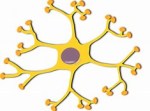
USC physician-scientist Berislav Zlokovic, M.D., Ph.D., who directed the research, said, “When you give these mice 3K3A-APC, it works much better than stem cells alone. We showed that 3K3A-APC helps the cells convert into neurons and make structural and functional connections with the host’s nervous system.” (Full story)
(Clip Art compliments of Bing.)
As I say after each post: Please leave a comment by clicking the blue words “Leave a Comment” below this post.
Feel free to follow my blog. Click on “Follow” on the upper right sidebar.
If you like my blog, share it (intact) with your friends. It’s easy! Click the “Share” buttons below.
If you don’t like my blog, “Share” it (intact) with your enemies. I don’t care!
Feel free to “Like” my post.

 Of course, these studies need to be done with human cells. But, because the mouse is similar enough to humans genetically, new neurons are likely to be made from human cells. If so, cell therapy to treat brain injury will become common in the foreseeable future. One benefit is that therapy can be personalized. It’s not practical to get your neurons from a brain biopsy, but your easy-to-get fibroblasts can be converted to neurons. Those neurons can then be tested with therapeutic drugs to see what works best with your genetic background. Also, the implanted cells would not be rejected by your body (prevention of rejection is the reason for immunosuppressive drugs today) because the neurons would be made from cells of your own body. (

 This preliminary study has extended evidence of the inosine benefit from mice and rats to a primate. The result indicates that inosine may one day benefit human victims of brain injury. Inosine is already in clinical trials for the treatment of multiple sclerosis and Parkinson’s Disease. Inosine appears to be safe – athletes have taken inosine supplements for decades.




 Frank Gifford died at 84 of natural causes. Because he had always been concerned with player safety and helped to found the National Football League Players Association, his family donated his brain to science for study.
 statement that he experienced symptoms. As a running back, Gifford endured many sub-concussive hits, which many neurologists now believe contribute to neurodegenerative disease. In 1960, Gifford was knocked unconscious by a brutally hard tackle. That concussion caused the end of his season, and he did not play the next year.
 for CTE showed symptoms of brain disease. (In fact, some of the deaths were from suicide.) The claim has been made that the group that was almost entirely positive for CTE was biased. But Dr. Ann McKee, a neuropathologist at Boston University’s CTE Center and the person who studied most of the brains, pointed out that, even in a biased sample, the number of brains testing positive for CTE is ridiculously high. Frank Gifford’s brain would not be considered part of the biased sample. (Gifford showed no outward signs of brain disease.) Yet Frank Gifford’s brain tested positive for CTE. This latest result is consistent with Dr. McKee’s worry that CTE is common among players of American football. (
 The National Football League (NFL) governs most of professional American football, and it is proud of its “concussion protocol” to protect its players. That system shamefully failed Sunday with 1:04 left in a 13-13 game between the St. Louis Rams and the Baltimore Ravens.


 Concussions from playing soccer rank second to football in boys’ sports, but they are first in girls’ sports and second among all sports. Of the more than 3 million youths playing soccer in the U.S., 50,000 concussions were reported among high-school soccer players in 2010, more than the number from wrestling, basketball, baseball, and softball combined. Parents and players brought a lawsuit accusing U.S. Soccer and other U.S. youth soccer organizations of negligence. As a result, U.S. Soccer established new rules that prevent heading by players age 10 and under and prohibits heading by 11- to 13-year-olds in practice. There are also new guidelines for
  substitution. For example, a player who replaces another player who has to leave the game because of a suspected concussion does not count as a substation.
 heading for players 14 and under, applauds the new rules. (The advisory board of Safer Soccer includes Brandi Chastain, Cindy Parlow Cone, and Joy Fawcett – former players of the women’s U.S. national soccer team, which has won four Olympic gold medals since 1996.) (


 Raising Awareness of Traumatic Brain Injury - one view at a time. Thanks for visiting my blog
 Surviving Traumatic Brain Injury
Recent Comments