TBI – Survivors, Caregivers, Family, and Friends

Posts tagged ‘Traumatic Brain Injury’

Speaking Engagement . . . . . . . “Prisoner Without Bars . . . . . . . . . . . A Caregiver’s Story”

YOU ARE INVITED!


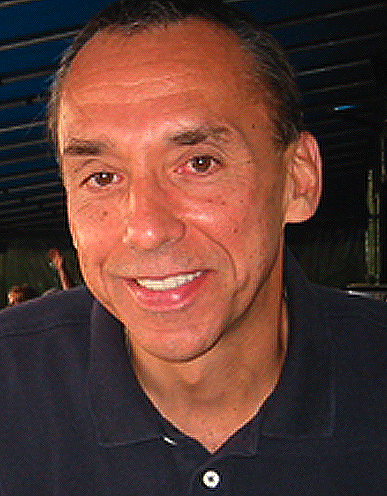
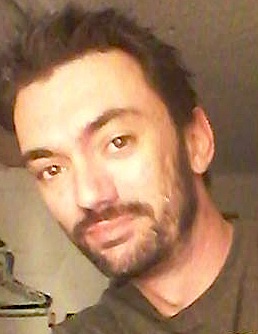
putthis_on_calendar_clip_artWhen Donna’s spouse, David, did one chin-up too many, he had a brain injury (BI), and Donna became a caregiver. David had three brain surgeries within two weeks. Donna signed on the dotted line for each of them – probably the hardest thing she has ever done in her life. Donna will share her story, “Prisoner Without Bars: A Caregiver’s Story” about David’s unexpected recovery and how she and David are making this “new normal” work for them. She will also share tips and offer David Figurski 2004 Pre-Brain Injurysuggestions from what she learned along the way.

It’s been a long, bumpy road for both David and Donna, but they travel that road together.

Come One! Come ALL!

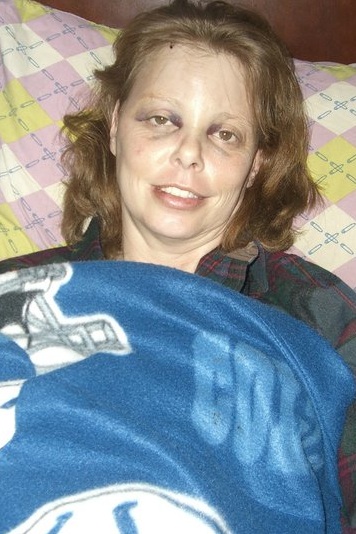
Donna and David Post-Brain Injury  2010

Post-Brain Injury 2010


What:        Donna will share her experiences with caregiving and will offer tips based on what worked for her. Donna  will also share snippets of her book, “Prisoners Without Bars: A Caregiver’s Memoir,” which is searching for a publisher.

Why:        Hopefully, Donna’s experiences with caregiving will help others who might find themselves in this position

When:       Monday, April 6, 2015

Time:         1:00 to 2:30pm

Where:      Desert Palms Presbyterian Church
13459 W. Stardust Boulevard
Sun City West, Arizona 85375-2548

(Clip Art compliments of Bing.)

(Photos compliments of Donna)

SPEAK OUT! . . . . . . . . . . . . . . . . . Itty-Bitty GIANT Steps

SPEAK OUT! Itty-Bitty GIANT Steps


Itty-Bitty GIant Steps for BlogSPEAK OUT! Itty-Bitty Giant Steps will provide a venue for brain-injury survivors and caregivers to shout out their accomplishments of the week.

If you have an Itty-Bitty Giant Step and you would like to share it, just send an email to me at neelyf@aol.com.

If you are on Facebook, you can simply send a Private Message to me. It need only be a sentence or two. I’ll gather the accomplishments and post them with your name on my blog approximately once a week. (If you do not want your last name to be posted, please tell me in your email or Private Message.)

I hope we have millions of Itty-Bitty Giant Steps.


Here are this week’s Itty-Bitty Giant Steps

Cat Brubaker with Congresswoman Krysten Sinema

Cat Brubaker with Congresswoman Krysten Sinema


Catherine (Cat) Brubaker (survivor)…I’m very excited to have gone all the way to Washington, DC, all by myself.

I planned it, and I got to my appointments on time. I still used a wheelchair at the airport because of overstimulation, shaky balance, and the possibility of getting lost. I met with my congresswoman about brain injury and about helping me with my new foundation, Hope for Trauma. I can’t believe how far I’ve come in a year. I feel very excited.

Jonathan Curtis (survivor)…Today I had an amazing day at Website-Volunteersmy volunteer job at a nursing home. I went with a difficult resident to an eye clinic appointment, and I organized a movie in the nursing home coffee shop. I felt so able and competent!

Keri Giacomini (caregiver)…My husband, John, had a very severe TBI almost twelve years ago. While he was at college, he fell out of a third floor window. The only residual problems are from aphasia. But, he does really well. Also, he is so sweet and thoughtful. A few days ago, we were thtalking about my care bear, which I’ve had since I was four (that is, for 27 years). He is a secret bear. He is now brown, has no eyes, and doesn’t talk. John knows how much my care bear means to me. He’s been with me through the toughest of times – surgery, hospitalizations, etc. I have Crohn’s Disease, and my care bear has always been my comfort. Well after we were talking, John went on eBay and ordered me an original secret care bear that still talks. He knows how much it means to me. It was probably the sweetest thing he’s done. I just thought I’d share what he did because, while John is always caring and sweet, sometimes it’s hard for him to initiate things.

Timothy Guetling (survivor)…Swaim Guetling is soon to graduate from the University of California at Santa Barbara (UCSB). He is a Communications major with a 3.5 GPA. Swaim is my Swaim Guetling21-year-old son. I’m thankful that he is where he can do best for himself and that he took the love, respect, and guidance from his parents to assist him in his future, wherever it takes him. Swaim speaks four languages. He has been around the US, India, and China with his fellow students. I am stoked to the max. He’s a chip off the old block, except he has hair!


YOU did it!

Congratulations to all contributors!

(Clip Art compliments of Bing.)


Brain Injury Resources . . . . . . Fatigue and The Spoon Theory

Fatigue and The Spoon Theory

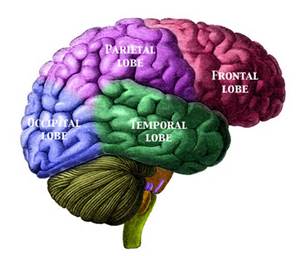
Brain th-2Every brain injury is different. Yet, the survivor interviews on this blog have shown that fatigue is a common effect of a brain injury. Once the survivor was energetic – able to do many things. Now the survivor is often tired or worried about getting tired.

Have you ever tried to explain chronic fatigue to someone healthy? Usually he or she doesn’t get it. Christine Miserandino, who has Lupus – a chronic disease, invented The Spoon Theory to show her healthy friend why she is so concerned with the energy cost of doing anything. Christine’s Spoon Theory 309_1_is a simple way to show the difference between being healthy and energetic and being worried about fatigue by having a chronic condition – like Lupus or a brain injury. In The Spoon Theory, Christine writes, “I explained that some days were worse than others; some days I have more spoons then most. But I can never make it go away, and I can’t forget about it. I always have to think about it.”

Christine’s Spoon Theory can be found HERE.

(Clip Art compliments of Bing.)


Survivors SPEAK OUT! Peter Corfield

Survivors  SPEAK OUT!  Peter Corfield

by

Donna O’Donnell Figurski

Peter Corfield - Brain Injury Survivor - 2010

Peter Corfield – Brain Injury Survivor – 2010

1. What is your name? (last name optional)

Peter Corfield

2. Where do you live? (city and/or state and/or country) Email (optional)

Marcilly En Bassigny, France      petercorfield3@gmail.com

3. When did you have your brain injury? At what age?

My brain injury happened on June 1, 2010. I was 55 years old.

4. How did your brain injury occur?

I had a stroke caused by bleeding of an AVM (arteriovenous malformation).

5. When did you (or someone) first realize you had a problem?

After returning from an art course, my wife found me on the floor.

6. What kind of emergency treatment, if any, did you have?

I was stabilized, and then I was helicoptered to Dijon Hospital. There they did a craniotomy and repaired the vein.

Peter Corfield - Brain Injury Survivor 2010

Peter Corfield – Brain Injury Survivor – 2010

7. Were you in a coma? If so, how long?

Yes. I was put into a coma for about two and a half weeks.

8. Did you do rehab? What kind of rehab (i.e., inpatient or outpatient and occupational and/or physical and/or speech and/or other)? How long were you in rehab?

I was sent to a rehab centre. There I had rehab for five and a half months.

9. What problems or disabilities, if any, resulted from your brain injury
(e.g., balance, perception, personality, etc.)?

I was hemiplegic (paralysis of one side of the body) with left-side paralysis, and I had an anxiety problem in the form of overactive bladder.

10. How has your life changed? Is it better? Is it worse?

My life has changed a great deal. In some ways, it is better; in others, much worse.

11. What do you miss the most from your pre-brain-injury life?

I miss being able to sleep in a normal bed with my wife. I also miss playing my guitar and driving.

12. What do you enjoy most in your post-brain-injury life?

I like being able to help others who have had the same experience.

13. What do you like least about your brain injury?

I dislike the lack of normality.

14. Has anything helped you to accept your brain injury?

My wife’s support has helped. Also my writing has been important.

15. Has your injury affected your home life and relationships and, if so, how?

It has. My wife and I sleep apart. But, my stroke has made me more thoughtful towards others. I think I am a better person.

16. Has your social life been altered or changed and, if so, how?

Yes. My anxiety affects our going out in the dark. The anxiety also makes it awkward to sit on chairs with no arms.

17. Who is your main caregiver? Do you understand what it takes to be a caregiver?

My wife is my caregiver. I fully understand how hard it is for her. It drives me on to recovery.

18. What are your future plans? What do you expect/hope to be doing ten years from now?

I am determined to be recovered enough to look after my wife and to be helping other stroke survivors

19. Are you able to provide a helpful hint that may have taken you a long time to learn, but which you wished you had known earlier? If so, please state what it is to potentially help other survivors with your specific kind of injury.

Keep a diary to realise just how much you have improved, as recovery is slow.

Corfield, Peter  Leg Push

Peter Corfield – Brain Injury Survivor – 2010

20. What advice would you offer to other survivors? Do you have any other comments that you would like to add?

I have written Kindle stroke-experience books. I donate all royalties to The ARNI (Action for Rehabilitation from Neurological Injury) Institute (http://www.arni.uk.com) to try to help other stroke-affected people.


Thank you, Peter, for taking part in this interview. I hope that your experience will offer some hope, comfort, and inspiration to my readers.

(Disclaimer: The views or opinions in this post are solely that of the interviewee.)

If you would like to be a part of the SPEAK OUT! project, please go to TBI Survivor Interview Questionnaire for a copy of the questions and the release form.

(Photos compliments of Peter.)


SPEAK OUT! NewsBit . . . . . . . . . . Chris Borland – Rookie Linebacker Retires Over Fear of Brain Trauma

Rookie Linebacker, Chris Borland,  Retires Over Fear of Brain Trauma


newsboy-thChris Borland, a promising rookie linebacker with the San Francisco 49ers, retired after one year of a four-year contact because the possibility of brain disease wasn’t “worth the risk.” (Full story 1; story and video 2)Borland, Chris

There is a growing body of evidence that repeated head trauma can lead to neurological problems and premature death. A NewsBit on this blog reported that a University of Tulsa study revealed changes to the brains of football players, even in the absence of a documented concussion. Last season, an Ohio State University football player apparently committed suicide. Concussions may have had a role in his death. The National Football League (NFL), the premier professional football organization in the United States, is in the middle of a multimillion-dollar lawsuit over concussions and neurological problems.

Chris Borland gave careful thought to his early and unexpected retirement. He talked with family, friends, teammates, and brain researchers before making his decision to retire from a game he was good at. He said the game is inherently dangerous, which is not necessarily a bad thing, but a player should make an informed decision. Borland also said, “There’s just too much unknown for me, and there have been too many tragedies for me to be comfortable playing…I just want to live a long, healthy life, and I don’t want to have any neurological diseases or die younger than I would otherwise.” He was asked about walking away from probable wealth. Borland answered that no amount of money could take the place of being there for his family. (Full story 3)

(Clip Art compliments of Bing.)

On the Air: Brain Injury Radio Another Fork in the Road . . . . . Joshua Puckett and wife, Tatiana

On the Air: Brain Injury Radio

Another Fork in the Road

with Brain Injury Survivor, Joshua Puckett and his wife, Tatiana

images-1

Joshua Puckett was just minding his business in his own front yard when he was attacked by a “random
drunk person” causing his brain injury. Now he says he has a “memory of a fish.”Joshua Puckett - TBI Survivor 2013
Memory problems combined with balance issues, anger, and confusion have become the “new norm” in his new life.

But, Joshua is overcoming his deficits by directing his attentions to his art and his music. Both are opening new doors in this talented young man’s life.

If you missed his interview on “Another Fork in the Road” on March 15th, you are in luck. You can listen to the archived show here.Joshua Puckett & Tatiana Puckett

Click the link below to listen to Joshua Puckett, his wife, Tatiana, and me.

See you “On the Air!”

On the Air: Brain Injury Radio – Another Fork in the Road

with Brain Injury Survivor, Joshua Puckett and his wife, Tatiana

Click here for a list of all “Another Fork in the Road” shows on the Brain Injury Radio Network.

“Another Fork in the Road” . . . Brain Injury Radio Network … Interview with Joshua Puckett

YOU ARE INVITED!

putthis_on_calendar_clip_art


Joshua Puckett was minding his own business in his own front yard when an unknown assailant attacked him. This attack resulted in a life-change for Joshua. Joshua, with his wife, Tatiana, will join me on my show, “Another Fork in the Road,” to share his story about how he … about how they … are adapting to life after TBI.

Come One! Come ALL!

What:        Interview with Joshua Puckett, brain injury survivor. Joshua’s wife, Tatiana, will join Joshua.

Why:        Joshua will talk about his brain injury and how his life is affected by it.

Where:     Brain Injury Radio Network

When:       Sunday, March  15th, 2015

Time:         5:00p PT (6:00p MT, 7:00p CT, and 8:00p ET) 90 minute show

How:         Click: Brain Injury Radio Network

Joshua Puckett - Survivor 2013

Joshua Puckett – Survivor 2013

Call In:    424-243-9540

Call In:     855-473-3711 toll free in USA

Call In:    202-559-7907 free outside USA

or SKYPE

If you miss the show, but would like to still hear the interview, you can access the archive on On Demand listening. The archived show will be available after the show both on the Brain Injury Radio Network site and on my blog in “On the Air.”

(Clip Art compliments of Bing.)

(Photo compliments of Joshua Puckett.)

SPEAK OUT! . . . . . . . . . . . . . . . . . Faces of Brain Injury

Brain Injury is Not Discriminating.

bigstock-cartoon-face-vector-people-25671746-e1348136261718

It can happen to anyone, anytime, . . . and anywhere.

The Brain Trauma Foundation states that there are 5.3 million people in the United States living with some form of brain injury.

On “Faces of Brain Injury,” you will meet survivors living with brain injury. I hope that their stories will help you to understand the serious implications and complications of brain injury.

The stories on SPEAK OUT! Faces of Brain Injury are published with the permission of the survivor or designated caregiver.

If you would like your story to be published, please send a short account and two photos to me at neelyf@aol.com. I’d love to publish your story and raise awareness for Brain Injury.

Michael Flusche (survivor)

I am who I am – a survivor of brain injury. Some say I am acting or I am forgetful, impulsive, weird, lame, FLushche, Michael Survivor 031015crazy, etc. I get lost easily. I have short attention at times.Flusche, Michael Survivor 030515 I run into things, stumble, spill food, trip, and do other stupid stuff, but I like me this way. I hope you can too.


Melinda Murphy (survivor)

Murphy, Melinda 1I am just over four years post injury. I was a home health nurse in my Murphy, Melinda 2autistic client’s home when it happened. I fell down the basement steps. Wood and concrete are not a good mix. Because it was a work injury, I was caught up in the workers’ comp system, and I was not treated for several months. Only then did I find out that I had a basilar skull fracture. Only 5% of those who suffer from them survive. I did! I’m still progressing. Don’t give up.

Ginger Pickering (caregiver of her son, Bob)

On July 1, 2014, my youngest son, Bob, who is eight, and I were in a car accident. He suffered a severe TBI and other injuries. He had a sucker in his mouth when we hit, and the air bag pushed it into his Pickering, Ginger & Son 1throat. He went a very long time without oxygen, which contributed to the severiPickering, Ginger Son 2ty of the TBI. Our lives changed in that moment, and they will never be the same. He was flown three hours to the primary children’s hospital in Salt Lake City, Utah, and put into a medically induced coma for fourteen days. We were told that, if he survived, we would have to place him into a home. He had no gag reflex, no responses – nothing. I was devastated and in shock. For three months, Bob was in a medical rehab hospital, where he received outstanding care and intense therapy daily. I can’t say enough about his progress. It’s an absolute miracle! We are just so grateful. It’s a struggle, but we’re doing whatever we need to do.

(Clip art compliments of Bing.)

(Photos compliments of contributors.)

Caregivers SPEAK OUT! . . . . . Karie Collins

Caregivers SPEAK OUT! – Karie Collins

by

Donna O’Donnell Figurski


Karie Collins - Caregiver

Karie Collins – Caregiver

1. What is your name? (last name optional)

Karie Collins

2. Where do you live? (city and/or state and/or country)     Email? (optional)

Green River, Wyoming, USA     mrskarie@q.com

3. What is the TBI survivor’s relationship to you?

The TBI survivor is my husband, Danny.

How old was the survivor when he/she had the TBI?

He was 50.

What caused your survivor’s TBI?

Danny was in a golf cart accident. The foursome he was in had finished golfing, and they were racing each other back to the truck. The wind blew the driver’s hat off, and the driver made a sharp U Turn to go get it. Danny was the passenger. He hit his head on the cart and fell out. Danny landed on his feet, but he instantly fell face-first onto the pavement. They had been drinking all day.

4. On what date did you begin care for your TBI survivor?

Karie Collins - Caregiver Danny Collins - TBI Survivor

Karie Collins – Caregiver
Danny Collins – TBI Survivor

Danny’s accident was on August 16, 2014. He was taken to our local hospital by ambulance. He was then airlifted to Salt Lake City, Utah. He came home from the hospital/rehab on September 24. I was with him from the beginning, but I took on the role of sole caregiver on the 24th, when we came home from the University of Utah Hospital/rehab.

Were you the main caregiver?

Yes

Are you now?

Danny is high-functioning now. He has returned to driving and working, so the need for a full-time caregiver has mostly passed. I still help him manage and remember things as needed. We remain a team and have been for over 30 years.

How old were you when you began care?

I was 50.

5. Were you caring for anyone else at that time (e.g., children, parents, etc.)?

Our children are all grown now. They are on their own, except for our youngest son. However, Danny’s mother had to be placed in a care center at the beginning of September – while we were still in the hospital. So, we began caring for her, as Danny is her only living biological child.

6. Were you employed at the time of your survivor’s TBI? If so, were you able to continue working?

I was in the process of making a job change – certifying to be a substitute teacher. I opted to put that on the back burner to be able to care for the love of my life. Now that Danny is doing so well, I am updating my résumé so that I can return to work. We need additional steady income to get our financial security back.

7. Did you have any help? If so, what kind and for how long?

I did have some help off and on – from our children and from some friends as well. They were good about giving me breaks. They came to be with Danny or even sometimes to take Danny “out” so I could get things done at home. (Danny always wanted me to be right by him or to be playing cards with him.)

8. When did your support of the survivor begin (e.g., immediately – in hospital, when the survivor returned home, etc.)?

My support began immediately. Actually, you could say that my support of Danny began on April 7, 1985, when we married. 😉

9. Was your survivor in a coma? If so, what did you do at that time?

Danny was in a coma for several days and in a state of confusion for several weeks after. Overall, Danny spent two weeks in the Neuro Critical Care unit. He then spent another three and a half weeks in the rehab unit. The first few days were low to no contact days, so I mostly hung out in the waiting room with family and friends and prayed. After that, I was pretty much in his room with him. I continued to pray. Also I asked questions and learned all I could to support and assist him.

Karie Collins - Caregiver Danny Collins - TBI Survivor

Karie Collins – Caregiver
Danny Collins – TBI Survivor

10. Did your survivor have rehab? If so, what kind of rehab (i.e., inpatient and/or outpatient and occupational, physical, speech, and/or other)?

In addition to the three and a half weeks of physical, occupational, and speech therapies in the hospital, Danny continued with all three therapies on an outpatient basis at our local hospital after we came home. He finished with physical therapy in December. He “graduated” (that’s how he puts it) from speech and occupational therapies on February 23rd.

How long was the rehab? Where were you when this was happening?

During outpatient therapies, I would drive Danny to and from his appointments. I did this until the end of January, when Danny’s driving privileges were restored. Usually I sat and waited for him, but on some days, I took advantage of the three hour sessions to go run errands or do other tasks. Occasionally, I would go visit the teachers and students at the school I used to work at. It was my “therapy.”

11. What problems or disabilities of your TBI survivor required your care, if any?

Well, Danny couldn’t drive, so I drove him. I handled and organized his medications, and initially I gave them to him. Now I load his pill organizer, and he takes them. Danny was diagnosed with diabetes during all of this, so monitoring his blood sugar was my task at first. He now takes care of it. Other difficulties Danny has are looping, fixation, frustration, outbursts, over-stimulation, anger, anxiety, etc. He has no filter; he has difficulties with memory loss; and he is easily tired. I/we deal with it as it comes along. Through therapy, we have learned some new coping skills and some strategies to use to compensate for what was damaged and lost. Danny has always been very independent and determined, so while in the beginning these qualities caused great stress, once the corner was turned to where Danny began to understand he had had a serious injury, they became the driving force to his recovery. He HAD to drive, and he HAD to go back to work. If that meant therapy, meds, and no drinking, then that’s what had to be done – even if he didn’t think he needed it.

12. How has your life changed since you became a caregiver? Is it better? Is it worse?

Our life changed dramatically. We went from being spontaneous and outgoing to being very routine-oriented. Danny is not as affectionate as he once was, nor is his tolerance for things and people what it was. He says what he thinks, no matter whom it hurts. Some things are better, as we have a new appreciation for life, our family and friends, and the blessings of greater faith. For a while, things were bad, but thankfully, they improved. While I don’t wish this on anyone, I wouldn’t trade what we have gained for anything.

13. What do you miss the most from pre-TBI life?

I miss Danny’s affection. In April, we will have been married 30 years, and I miss my affectionate man. Fortunately, more and more now, he is showing affection to our grandsons, so I am hopeful his affection will come back to the kids and me with time. Somethings, I think, are a matter of relearning them.

14. What do you enjoy most in post-TBI life?

I enjoy how much closer my family has become. I also enjoy how my faith and testimony have grown. I have become calmer and more tolerant of things because in the big picture WHAT REALLY MATTERS?

15. What do you like least about TBI?

I dislike how one moment things seem fine/normal, and then, out of the blue and for no real explainable reason, it all gets turned upside down and inside out.

16. Has anything helped you to accept your survivor’s TBI?

Yes. Love, faith, and reality. I mean, it is what it is. You either accept it, move on, and make the best of it, or you don’t. If it were cancer or some other disease, you would do all you could to overcome it. No different here.

17. Has your survivor’s injury affected your home life and relationships and, if so, how?

How can it not? Some struggles exist because of Danny’s difficulties, so we have learned to choose our battles. We also choose to accept that life changes and people change, and so we choose to accept Danny’s injury and to try to understand all that we can. Overall it has brought us closer together and has given us a new respect for life and how truly fragile it is.

18. Has your social life been altered or changed and, if so, how?

This all changed Danny in ways he doesn’t understand. He acknowledges that he has a brain injury. But, he thinks he is the same as he was before the accident, so he thinks life should be as it was before. You see, Danny was very social and what I would call a “social alcoholic.” So much of what we did socially was tied to drinking – drinking to get fall-down drunk. So, while we have still socialize with our friends, it is different because Danny cannot drink (or at least shouldn’t). So far, he hasn’t, but he says that it isn’t as much fun because he cannot drink.

19. What are your plans? What do you expect/hope to be doing ten years from now?

Wow! Ten years from now…I hope that Danny has better clarity, that he can show affection again, that he can again filter what not to say in certain situations, and that financially we are again back to where we were headed, so we can travel and enjoy time with each other and with our family and friends.

20. What advice would you offer other TBI survivor caregivers? Do you have any other comments that you would like to add? 

First, take time for you – no matter what. Even ten minutes a day can make a huge difference.

Ask for help. On some of the worst days, I reached out to say I need help. I was never let down. Someone always came through. Even if it was just a phone call, it helped.

Find and join a support-group for yourself. They will get it when no one else does.

Cut yourself some slack. It’s okay to be mad, cry, grieve, and mourn. We always think we have to be brave or strong, but sometimes we NEED to let it out and let go.

Try to stay positive.

Choose your battles wisely. At the end of the day, this is what will be most important.

You can only control so much. Give your survivor information and your opinion or reason, and then let him or her decide things as much as you can. Where respect is given, respect will be returned.

Karie Collins - Caregiver

Karie Collins – Caregivers

Lastly, never give up. There is always HOPE.


Thank you, Karie, for taking part in this interview. I hope that your experience will offer some hope, comfort, and inspiration to my readers.

If you would like to be a part of this project, please go to TBI Caregiver Interview Questionnaire for a copy of the questions and the release form.

(Photo compliments of Karie.)

Disclaimer: The views or opinions in this post are solely that of the interviewee.

Survivors SPEAK OUT! Amanda Parten

Survivors  SPEAK OUT!  Amanda Parten

by

Donna O’Donnell Figurski


Amanda Parten - TBI Survivor

Amanda Parten – TBI Survivor

1. What is your name? (last name optional)

Amanda Parten

2. Where do you live? (city and/or state and/or country) Email (optional)

Grove Hill, Alabama, USA     amanda.parten@yahoo.com

3. When did you have your TBI? At what age?

Age 29

4. How did your TBI occur?

My Jeep was hit by a Mack Truck. I was sitting in the median, and a Brand Energy Mack Truck jackknifed me in the driver’s door.

5. When did you (or someone) first realize you had a problem?

The EMS (Emergency Medical Service) technicians realized I had a problem as soon as they were on the scene.

6. What kind of emergency treatment, if any, did you have?

I was life-flighted south to the Medical Center at The University of South Alabama in Mobile. I suffered a broken hip, a crushed pelvis, and a lacerated spleen. Transverse processes were broken off my spine. I had a “mild to moderate” parietal TBI. I was in a coma, and I remained in the hospital for a few weeks after I woke up. I was in physical therapy for six weeks after I was released from the hospital.

7. Were you in a coma? If so, how long?

Yes. I was in a coma for eleven days. Technically, I was still in my coma for an additional 4-6 months after the wreck – according to the Rancho Los Amigos coma scale.

8. Did you do rehab? What kind of rehab (i.e., inpatient or outpatient and occupational and/or physical and/or speech and/or other)?

I had physical therapy as an outpatient.

How long were you in rehab?

Six weeks

9. What problems or disabilities, if any, resulted from your TBI
(e.g., balance, perception, personality, etc.)?

I am mostly plagued by short-term memory loss. I experience hip pain, mood swings, and personality changes. I have difficulty sleeping. I had a year of depression.

10. How has your life changed? Is it better? Is it worse?

Everything about my life has changed. Sometimes I feel like my life is better; sometimes I feel like it’s worse.

11. What do you miss the most from your pre-TBI life?

I miss my awesome memory. I could remember things from every moment – no matter how long ago. I never had to write anything down.

12. What do you enjoy most in your post-TBI life?

I appreciate little things more now. For example, when I wake up and remember a dream, it’s like a gift! This has happened maybe six times in six years.

13. What do you like least about your TBI?

I dislike the fact that I really have to warm up to new people. New people tend to make me nervous.

14. Has anything helped you to accept your TBI?

Time…knowing that there is nothing that will undo the accident and that I must press on.

15. Has your injury affected your home life and relationships and, if so, how?

I feel like people don’t want to stay around for more than a few months once they see what an impact the TBI has had on me. I was living with my boyfriend at the time of the accident. We broke up two years later. I was married a couple years after that – but for only four months.

16. Has your social life been altered or changed and, if so, how?

It has. I don’t go out anymore. I’m no longer spontaneous. Everything has to be very scheduled.

17. Who is your main caregiver? Do you understand what it takes to be a caregiver?

I am my own caregiver. I also take care of my two children.

18. What are your future plans? What do you expect/hope to be doing ten years from now?

Ten years from now, I expect one daughter to be graduating from college. The other will be in middle school. I will still be a therapist.

19. Are you able to provide a helpful hint that may have taken you a long time to learn, but which you wished you had known earlier? If so, please state what it is to potentially help other TBI survivors with your specific kind of TBI.

If you cannot accept your new self, then try to compensate. When I stopped thinking that I would “wake up” and be back to normal, accepted myself, and started putting compensatory strategies into place, life stopped being such a struggle.

20. What advice would you offer to other TBI survivors? Do you have any other comments that you would like to add?

Get into a group, whether it is on Facebook or somewhere else on the Internet. Having access to others who are going through the same thing as you can be such a help. Sometimes knowing that you aren’t the only one who has ever felt a certain way or that the same thing that happened to you has happened to someone else can make a huge difference.

Amanda Parten - TBI Survivor

Amanda Parten – TBI Survivor


Thank you, Amanda, for taking part in this interview. I hope that your experience will offer some hope, comfort, and inspiration to my readers.

(Disclaimer: The views or opinions in this post are solely that of the interviewee.)

If you would like to be a part of the SPEAK OUT! project, please go to TBI Survivor Interview Questionnaire for a copy of the questions and the release form.

(Photos compliments of Amanda.)

diemodi jewelry

uniquely hand-crafted jewelry by donna

Welcome to Harmony Kent Online

The home of all things books

Pete Springer

Passionate Teacher and Future Children's Author

HOPE TBI

Helping Other People Excel - To Be Independent

For the Love of Books, Old and New

Katie Fischer, Writer and Reader of Stories

Charlie Bown

Children's Author

Jessica Hinrichs

“We write to taste life twice, in the moment and in retrospect.” ― Anais Nin

VIVIAN KIRKFIELD - Writer for Children

Picture Books Help Kids Soar

Mindy’s Writing Wonderland

For authors, parents, teachers & everyone who loves children’s books.

Kaitlyn Leann Sanchez

Literary Agent

Surviving Traumatic Brain Injury

TBI - Survivors, Caregivers, Family, and Friends

The Care Factor

Loving someone with a Traumatic Brain Injury

Brain Injury Support Group of Duluth-Extension

Brain Injury Information and SUPPORT

Brain Aneurysm Global Insight

Brain Aneurysm, cerebral hemorrhaging, hemorrhage stroke