Survivors SPEAK OUT! Meghan Beaudry
Survivors SPEAK OUT! Meghan Beaudry
presented by
Donna O’Donnell Figurski

Meghan Beaudry – Brain Injury Survivor
1. What is your name? (last name optional)
Meghan Beaudry
2. Where do you live? (city and/or state and/or country) Email (optional)
Houston, Texas, USA meghan_wang@yahoo.com
3. On what date did you have your brain injury? At what age?
In 2009, I developed lupus, an autoimmune disease, that turned into brain inflammation. I was twenty-two. Five years later, in 2014, I had another severe brain inflammation flare in which I forgot both how to walk and much of my past.
4. How did your brain injury occur?
Lupus is an autoimmune disease.
5. When did you (or someone) first realize you had a problem?
I first realized something was wrong when I began to struggle in grad school.
6. What kind of emergency treatment, if any, did you have?

A female Doctor.
I had a difficult time getting diagnosed, so I did not receive treatment the first year I was sick. I saw seven doctors before I was diagnosed with lupus.
7. Were you in a coma? If so, how long?
No.
8. Did you do rehab? What kind of rehab (i.e., inpatient or outpatient and occupational and/or physical and/or speech and/or other)? How long were you in rehab?
No.
9. What problems or disabilities, if any, resulted from your brain injury (e.g., balance, perception, personality, etc.)?
I have some short-term and long-term memory loss. While I don’t have noticeable balance problems, I have a poor sense of balance for someone my age.
10. How has your life changed? Is it better? Is it worse?
My life has changed in many ways since I’ve survived brain inflammation. In some ways, it has improved. I’m more fearless and confident. Because living with brain injury and lupus takes up so much energy, I have little energy for negative thoughts and people who might hold me back
11. What do you miss the most from your pre-brain-injury life?
I miss being able to memorize information quickly and with little effort.
12. What do you enjoy most in your post-brain-injury life?
I never would have started writing if I hadn’t developed a brain injury. It’s been an honor to be able to share my experience so that others with brain injuries can feel less alone.
13. What do you like least about your brain injury?
I dislike the fatigue that comes with lupus, as well as worrying that I will have a memory slip when speaking, presenting, or performing.
14. Has anything helped you to accept your brain injury?
What has helped me let go of my grief is understanding that, while living with brain injury is not a choice, grief is. I’d rather only live with one chronic condition than with two.
15. Has your injury affected your home life and relationships and, if so, how?
It took a while for my family to accept that my abilities and needs were different after my diagnosis. My second episode of brain inflammation led to my divorce because my husband was emotionally unable to handle it.
16. Has your social life been altered or changed and, if so, how?
I’ve been lucky to know friends who understand my limitations, especially because of the fatigue I experience daily. In many ways, brain inflammation has deepened many of my existing friendships.
17. Who is your main caregiver? Do you understand what it takes to be a caregiver?
When I was very sick and bedridden with the second brain inflammation flare, my mother-in-law moved into my house to take care of me. Her selflessness and positive energy were huge factors in my recovery.
18. What are your plans? What do you expect/hope to be doing ten years from now?
I hope to have published a memoir about my experience.
19. Are you able to provide a helpful hint that may have taken you a long time to learn, but which you wished you had known earlier? If so, please state what it is to potentially help other survivors with your specific kind of brain injury.
I use my phone to help me remember everything. There are so many apps to help you keep track of your life.
20. What advice would you offer to other brain-injury survivors? Do you have any other comments that you would like to add?
Always remember that the lowest point in your injury/life is not the point at which you will stay forever.
Get Your Copy Now
Read It! Review It! Listen to It!

Click Links under Book
PAPERBACK! Read it Now! e-BOOK! Read it Now!
AUDIO BOOK Listen to it Now!
Stay Safe and Healthy!
Clip Art compliments of Bing.)
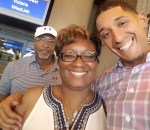
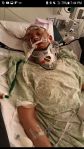
(Photos compliments of contributor.)
As I say after each post:
Please leave a comment by clicking the blue words “Leave a Comment” below this post.

Feel free to follow my blog. Click on “Follow” on the upper right sidebar.
If you like my blog, share it intact with your friends. It’s easy! Click the “Share” buttons below.
 YAY! I am one of ten finalists for the 2019 Caregiving Visionary
  Award, so I’m still in the running. A great big THANK YOU to all who voted for me. Your votes helped immensely. YOU made this happen and I am so honored to be a finalist. Winners will be announced March 1st.
 caregivers who stand out in their caregiver world. Now frankly, I think all caregivers deserve this award, but, alas, only five will be chosen, and I hope I am one of them. David thinks I should be too. He nominated me.


 day to day, and nothing seemed real. My familiar routine was gone, and my life was as upended as David’s was. Life swirled around me, but I didn’t feel it. I floundered in a fog. When we arrived at Radburn, I never dreamed that we would spend the next two months of our lives there. I had no idea what our time frame would be. Nobody did …
 My permission was needed to operate on my husband’s brain. How could I give it? How could I allow Dr. Hulda to work on my husband’s beautiful, smart brain? …
 I’ve been married for almost seven months. Since my wedding, I’ve knit twenty-five hats, five sweaters, three scarves, and one blanket.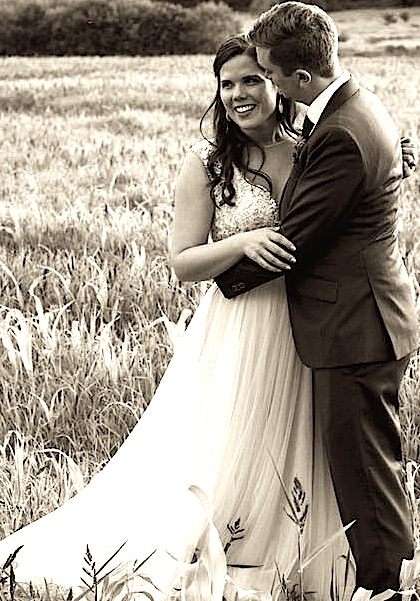
 more complex than a simple hat, knit in the round, just knit, purl, knit, purl. I’m happy to say that out of the twenty-five hats I’ve knit since my wedding day, not a single one is that old favorite of mine. Before the wedding, I avoided new patterns because I avoided counting as much as possible. How could an activity be fun if it involved math?
 I wasn’t supposed to have time to knit on my honeymoon. I was supposed to be rappelling down waterfalls in the Azores and soaking in thermal baths, but you can’t do that when you wake up in the middle of your wedding night to the sound of your husband falling down the stairs. Going to the bathroom should be easy. It shouldn’t end with your husband lying in pool of his own blood. The first time you use the phrase “my husband” shouldn’t be when calling 911, and as much as you love your bridesmaid, she isn’t the person you should be sharing your bed with. I wasn’t supposed to spend the third day of my honeymoon in the waiting room of the ICU sobbing with my mom, not understanding why my husband wasn’t awake, and what it meant that his nurse had kicked me out.
 The hospital called me at 4 am the next morning to tell me that they were rushing my husband in for an emergency decompressive craniotomy. They could no longer control the rising pressure in his brain with medication alone, so they removed half of his skull.
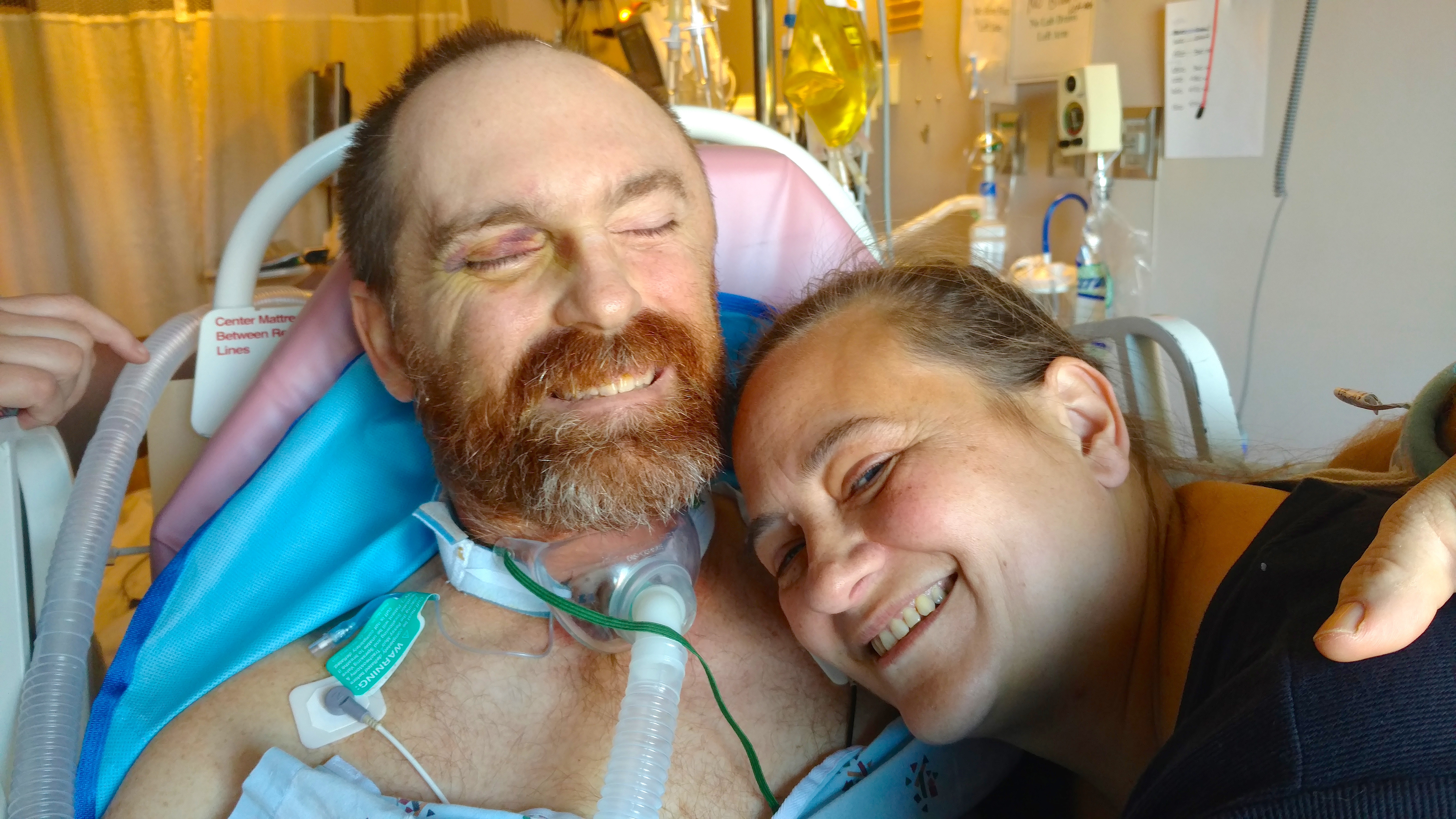

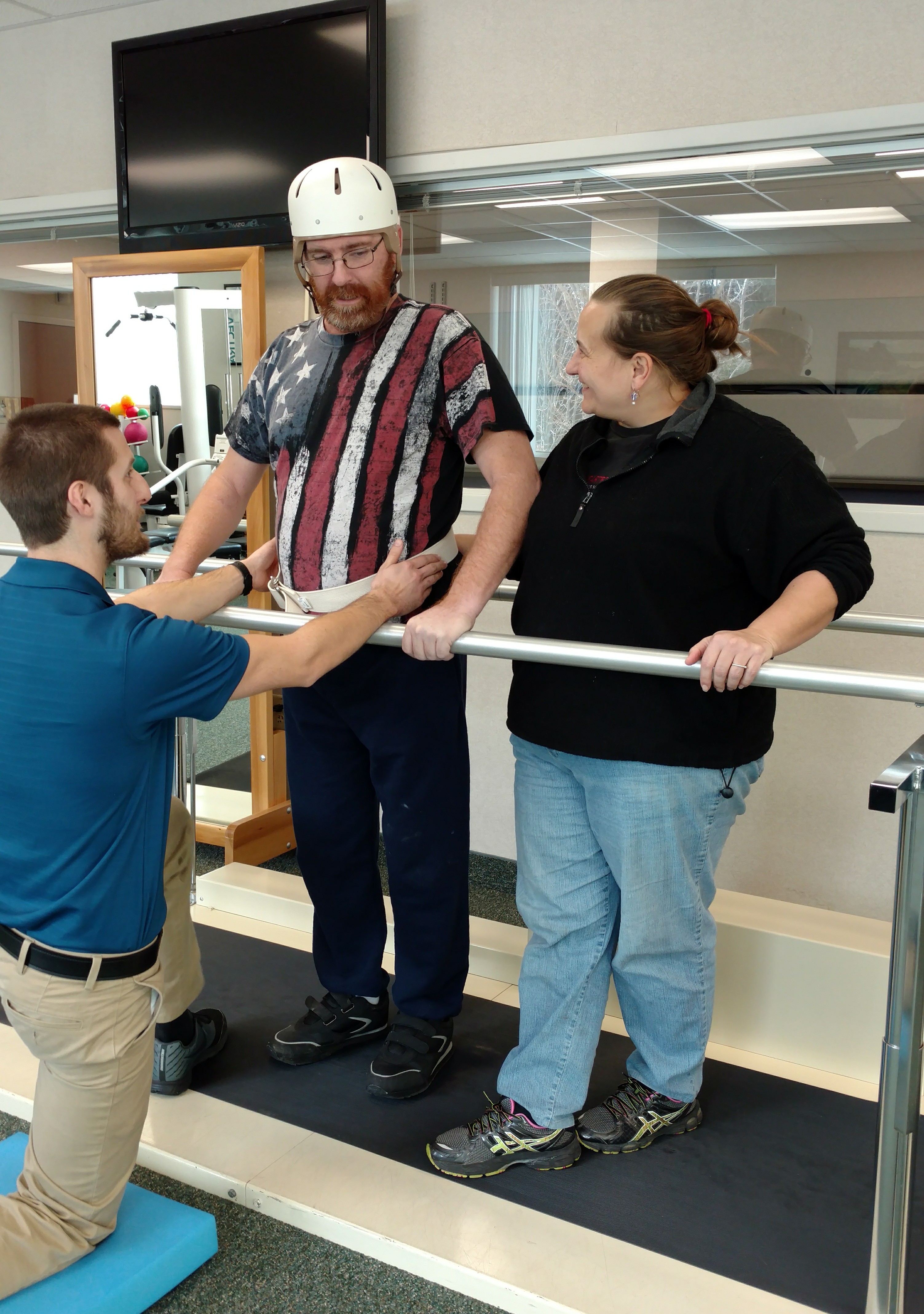

 What has helped me most is being super-grateful that Scott’s ALIVE! I feel that, even if Scott stays how he is now, we still have a great deal to be thankful for.
 This is a SUPER-hard job, as our emotions are involved!
 October 6, 2002






 Raising Awareness of Traumatic Brain Injury - one view at a time. Thanks for visiting my blog
 Surviving Traumatic Brain Injury
Recent Comments