TBI – Survivors, Caregivers, Family, and Friends

Posts tagged ‘TBI’

Survivors SPEAK OUT! Natalie Collins

Survivors SPEAK OUT! Natalie Collins

presented

by

Donna O’Donnell Figurski


Natalie Collins - Brain Injury Survivor

Natalie Collins – Brain Injury Survivor

1. What is your name? (last name optional)

Natalie Collins

2. Where do you live? (city and/or state and/or country) Email (optional)

Shreveport, Louisiana, USA

3. On what date did you have your brain injury? At what age?

I was 34.

4. How did your brain injury occur?

In a car accident

5. When did you (or someone) first realize you had a problem?

Immediately after the accident

6. What kind of emergency treatment, if any, did you have?

None

7. Were you in a coma? If so, how long?

I wasn’t in one.

8. Did you do rehab? What kind of rehab (i.e., inpatient or outpatient and occupational and/or physical and/or speech and/or other)? How long were you in rehab?

I had outpatient physical therapy for six months.

9. What problems or disabilities, if any, resulted from your brain injury
(e.g., balance, perception, personality, etc.)?

I have problems with balance, perception, and personality, and I suffer from mood changes.

10. How has your life changed? Is it better? Is it worse?

My outlook on life is better, but I still grieve the “old” me. The worst is knowing I will be forever changed.

11. What do you miss the most from your pre-brain-injury life?

I miss being able to read a book.

12. What do you enjoy most in your post-brain-injury life?

I enjoy people more and “stopping to smell the roses,” as that old cliché goes.

13. What do you like least about your brain injury?

I dislike needing constant assistance because of my memory.

14. Has anything helped you to accept your brain injury?

I found it helpful to take Sticky Notes everywhere.

15. Has your injury affected your home life and relationships and, if so, how?

Yes. My current husband didn’t understand how big of a job it is to take care of me. As a result, I hide a lot of my disability. I also have to stay in the kitchen while cooking.

16. Has your social life been altered or changed and, if so, how?

Absolutely. I really don’t have a social life now. Before the accident, I had all sorts of people to hang out with.

17.  Who is your main caregiver? Do you understand what it takes to be a caregiver?

My mom has been a great help teaching me how to do stuff and not doing it all for me.

18. What are your plans? What do you expect/hope to be doing ten years from now?

I honestly don’t know what I’ll be doing in the future. It depends on if this head injury allows me to continue my education in counseling.

Natalie Collins - Brain Injury Survivor

Natalie Collins – Brain Injury Survivor

19. Are you able to provide a helpful hint that may have taken you a long time to learn, but which you wished you had known earlier? If so, please state what it is to potentially help other survivors with your specific kind of brain injury.

My advice is to take notes everywhere, especially doctors’ offices. (I had a friend who made me make a daily list, so I would remember even to take a bath. If you’re like me, you won’t remember why the stove is dinging.) Keep a set routine. Stay in the kitchen when cooking.

20. What advice would you offer to other brain-injury survivors? Do you have any other comments that you would like to add?

All I can say is “Notes everywhere.” Sticky Notes are fairly cheap in comparison to forgetting really important stuff.


If you would like to be a part of the SPEAK OUT! project, please go to TBI Survivor Interview Questionnaire for a copy of the questions and the release form.

(Clip Art compliments of Bing.)

(Photos compliments of contributor.)


As I say after each post:

Feel free to leave a comment by clicking the blue words “Leave a Comment” below this post.

Please follow my blog. Click on “Follow Me Via eMail” on the right sidebar of your screen.anim0014-1_e0-1

If you like my blog, click the “Like” button under this post.

If you REALLY like my blog, share it intact with your friends. It’s easy! Click the “Share” buttons below.

If you don’t like my blog, “Share” it intact with your enemies. That works for me too!

SPEAK OUT! . . . . . . . . . . . . . Guest Blogger . . . . . . . . . . . . . . . Ed Steeves – Standing Still

Standing Still

by

Ed Steeves

presented

by

Donna O’Donnell Figurski


Boy Blogger thNo matter how great it sounds, we can’t go back. No matter how much we may want to, that bridge has burned. The past has passed for a reason. We need to accept that it is over. We can only take the lessons we’ve learned.


Now we have a choice, since we can’t change the past or return to it. We can’t get the past back and never will. So, the decision that we have to make is Will we move on into the future, or will we simply stand still?k20874676

I, for one, will go forward with my life. I have decided that, somewhere ahead, there is something better to find. Because, if we just stand there and stare at what’s dead and gone, we will surely lose our mind.

The thing we fail to notice at times is that, no matter how amazing the past was, the future is better. The past, sadly, is occupied only with our memories, and it’s our prison. Only in the future can we all be free.

Ed Steeves - Survivor

Ed Steeves – Survivor

It’s OK to take some time to reflect – to forgive and move on. I’ve finally given up on all that’s there in the past.

But remember that life is still alive in the future, and we are never certain how long it will last.

Thank you, Ed Steeves.

Disclaimer:
Any views and opinions of the Guest Blogger are purely his/her own.

(Clip Art compliments of Bing.)

(Photos compliments of Ed Steeves.)


As I say after each post: Please leave a comment by clicking the blue words “Leave a Commentanim0014-1_e0-1 below this post.

Feel free to follow my blog. Click on “Follow” on the upper right sidebar.

If you like my blog, share it (intact) with your friends. It’s easy! Click the “Share” buttons below.

If you don’t like my blog, “Share” it (intact) with your enemies. I don’t care!

Feel free to “Like” my post.


SPEAK OUT! . . . . . . . . . . . . . Faces of Brain Injury . . . . . . . . . Bob Bernardi (survivor)

SPEAK OUT! Faces of Brain Injury –  Bob Bernardi (survivor)

presented

by

Donna O’Donnell Figurski

Brain Injury is NOT Discriminating!

bigstock-cartoon-face-vector-people-25671746-e1348136261718It can happen to anyone, anytime, . . . and anywhere.

The Brain Trauma Foundation states that there are 5.3 million people in the United States living with some form of brain injury.

On “Faces of Brain Injury,” you will meet survivors living with brain injury. I hope that their stories will help you to understand the serious implications and complications of brain injury.

The stories on SPEAK OUT! Faces of Brain Injury are published with the permission of the survivor or designated caregiver.

If you would like your story to be published, please send a short account and two photos to me at neelyf@aol.com. I’d love to publish your story and raise awareness for Brain Injury.


Bob Bernardi - survivor

Bob Bernardi – survivor

Bob Bernardi (survivor)

Recently was an anniversary. It’s been 24 years since that terrible day back in 1992, when I lost control of my car and suffered my traumatic brain injury. Needless to say, I have experienced a lot of life’s lessons – both good and bad. I am still here, and I have accepted my standing in life, but that is not to say that I am not a fighter. If I feel that something is not right with my care or if I have questions, then believe me when I say I am going to express my concerns or ask my questions! I have had the very best in medical care and some of the worst, and, for that reason, I will not just “go with the flow.” I am sure that most of you know that, when the human brain is hurt and damaged, that alteration is an alteration to “us.” Our brain is “us.” Just trying to get back to our original selves is what we strive for. I know I can be a pain to many of my friends outside of the brain-injury community with how I view everyday life. But all that we have shared in the brain-injury community make us friends. I know that I depend on their views. I would be lost without the brain-injury community, and for that I am thankful!


Thank you Bob Bernardi for sharing your story.


(Clip Art compliments of Bing.)

(Photos compliments of contributor.)

As I say after each post: Please leave a comment by clicking the blue words “Leave a Commentanim0014-1_e0-1 below this post.

Feel free to follow my blog. Click on “Follow” on the upper right sidebar.

If you like my blog, share it intact with your friends. It’s easy! Click the “Share” buttons below.

If you don’t like my blog, “Share” it intact with your enemies. I don’t care!

Feel free to “Like” my post.


SPEAK OUT! . . . . . . . . . . Itty-Bitty GIANT Steps

SPEAK OUT! Itty-Bitty GIANT Steps

presented by

Donna O’Donnell Figurski


Itty-Bitty GIant Steps for BlogSPEAK OUT! Itty-Bitty Giant Steps will provide a venue for brain-injury survivors and caregivers to shout out their accomplishments of the week.

If you have an Itty-Bitty Giant Step and you would like to share it, just send an email to me at neelyf@aol.com.

If you are on Facebook, you can simply send a Private Message to me. It need only be a sentence or two. I’ll gather the accomplishments and post them with your name on my blog approximately once a week. (If you do not want your lastname to be posted, please tell me in your email or Private Message.)

I hope we have millions of Itty-Bitty Giant Steps.


Here is this week’s Itty-Bitty GIANT Steps

georgeanna-bell-survivor-091016GeorgeAnna Bell (survivor) … For the first time, I took a shower sanding up! Normally, I use a shower-chair because of dizziness, but I was fine standing. I was supposed to get a Disability Room. I guess what I had was one to some degree. gg57881072I was looking forward to a walk-in shower, so I could place my walker into the shower and use it as a chair, but my room had a tub. I was extremely cautious, but I did it! I am so happy!


cat-brubaker-survivor-090916Cat Brubaker (survivor) … Today I used the oven – TWICE – all by myself! And I didn’t burn anything down. I got a little “fancy” (I added my own thing). I kept the timer with me at ALL TIMES.

cats-quiche

crustless, veggie butternut quicheTIMES.


sallie-stewartSallie Stewart (survivor) … Big win in life for me! (It may sound small and trivial to many.) I have said it before – I have this swallowing challenge. Nerve damage is some of it; synching of the epiglottis and trachea is also a problem. Then there is this crushed-disk issue with my jaw. Orthodontic braces were put on two years ago in hopes that things might change. They did. There are still challenges, but today was a great day! I ate ALL of my Eggs Benedict, ALL of my lunch, and ALL of my dinner. thAnd several snacks in between. I can chew – on BOTH sides of my jaw. It’s a giant win in life for me! I feel strong. It’s been a true challenge to try to find the majority of my nutrition in a blender. It was so nice to really be able to chow-down food. These braces come off soon. And for that, I am happy. But I’m not nearly as grateful for that as I am for being able to chew pain-free. My heart is full! A strong full!


YOU did it!

Congratulations to contributors!

(Clip Art compliments of Bing.)

(Photos compliments of contributors.)


As I say after each post:anim0014-1_e0-1

Please leave a comment by clicking the blue words “Leave a Comment” below this post.

Feel free to follow my blog. Click on “Follow” on the upper right sidebar.

If you like my blog, share it intact with your friends. It’s easy! Click the “Share” buttons below.

If you don’t like my blog, “Share” it intact with your enemies. I don’t care!

Feel free to “Like” my post.

Brain Injury Resources CTE & Football (chronic traumatic encephalopathy )

Brain Injury Resources . . . CTE & Football

presented

by

Donna O’Donnell Figurski


Brain th-2The regular season of the NFL (National Football League) begins this week. Although American football can be exciting, we in the brain-injury community are very aware of the havoc that both concussive and sub-concussive head impacts play not only on the brain health of the pros, but also on the brain health of college and high school players (1). We are especially sensitive to the high risk of the trusting and still-developing young players in Pop Warner leagues (2, 3).th

There has been a growing public awareness of the brain disease CTE (chronic traumatic encephalopathy), which can develop from hits to the ctehead and lead to “memory loss, confusion, impaired judgement, impulse control problems, aggression, depression and progressive dementia.” Some players have retired early (4, 5). Former players have sued or are suing the NFL (6). There is still a great deal of ignorance about CTE, but much research has been done and is being continued vigorously. This article tells us some basic facts that we should know.

Here is a brief outline from the article:

“Concussions in the NFL are more widespread than we thought

“An estimated 96 percent of deceased NFL players had CTE

“Researchers are working on a test for living players

“The NFL has donated $0 to this important new brain injury study”

I urge you to read the article for the details.


(Clip Art compliments of Bing.)


As I say after each post:

Feel free to leave a comment by clicking the blue words “Leave a Comment” below this post.

Please follow my blog. Click on “Follow Me Via eMail” on the right sidebar of your screen.anim0014-1_e0-1

If you like my blog, click the “Like” button under this post.

If you REALLY like my blog, share it with your friends. It’s easy! Click the “Share” buttons below.

If you don’t like my blog, “Share” it with your enemies. That works for me too!


Caregivers SPEAK OUT! . . . Lynn Sandoval

Caregivers  SPEAK OUT!  Lynn Sandoval

presented by

Donna O’Donnell Figurski


Lynn Sandoval - Caregiver

Lynn Sandoval – Caregiver

1. What is your name? (last name optional)

Lynn Sandoval

2. Where do you live? (city and/or state and/or country) Email? (optional)

Brady, Texas, USA

3. What is the brain-injury survivor’s relationship to you? How old was the survivor when he/she had the brain injury? What caused your survivor’s brain injury?

The brain-injury survivor is my husband. He was 39 years old when he had the brain injury. He was in an automobile accident. His car was hit twice, once head-on. The first car hit my husband’s car at ~95 mph. This hit spun my husband’s car around, and a second car, following the first car, hit my husband’s car in the rear at ~85 mph. My husband’s car was spun back around and finally came to a rest in the middle of the road.

4. On what date did you begin care for your brain-injury survivor?

I began care the day after my husband’s accident – when I was able to get to the hospital where he had been flown.

Were you the main caregiver?

In the beginning, my husband had hospital care in addition to mine.

Are you now?

I have been my husband’s only caregiver since he came home from the hospital.

How old were you when you began care?

I was 52.

5. Were you caring for anyone else at that time (e.g., children, parents, etc.)?

No

6. Were you employed at the time of your survivor’s brain injury? If so, were you able to continue working?

Yes, I was employed. I have been able to utilize FMLA (Family and Medical Leave Act) and sick leave. I have continued working whenever I am able to.

7. Did you have any help? If so, what kind and for how long?

I have not had any help at home caring for my husband.

8. When did your support of the survivor begin (e.g., immediately – in the hospital; when the survivor returned home; etc.)?

My support began in the hospital, and it continues to this day.

9. Was your survivor in a coma? If so, what did you do during that time?

My husband was in a coma the first few days. While he was in a coma, I stayed by his bedside and talked to him. I touched him on the areas that weren’t bandaged to let him know I was there.

10. Did your survivor have rehab? If so, what kind of rehab (i.e., inpatient and/or outpatient and occupational, physical, speech, and/or other)?

My husband had physical, speech, and occupational therapies in the hospital. They continued when we got home, once I got him set up for evaluations.

How long was the rehab?

k20116138My husband is still in physical therapy, and he recently started occupational therapy again. (He had “graduated” from occupational therapy about a year ago, but his neurologist requested that he do it again.)

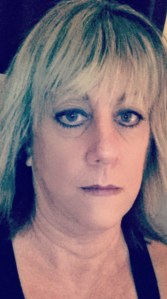
Where were you when your survivor was getting therapy?

I was there with my husband during the beginning therapies, but after some time, he went to the therapies alone. Now we work together on exercises at home.

 11. What problems or disabilities of your brain-injury survivor required your care, if any?

Now my husband is able to do things for himself, but I still have to get his medications together for him every day because he doesn’t remember if he’s taken them or not.diabetes_medications

12. How has your life changed since you became a caregiver? Is it better? Is it worse?

Since I’ve become a caregiver, I have discovered that people will withdraw from situations because they don’t understand TBI (traumatic brain injury). It has its ups and downs, but we are now seeing more positive steps and are hopeful for the future. I have found that I am more depressed and feel alone because I am more involved with making sure everything is OK for my husband, but I am learning to take time for me.

13. What do you miss the most from pre-brain-injury life?

Life before my husband’s TBI was a lot less stressful – being able to leave the house and not worry if he is OK. Now I keep my phone with me continuously so that, if he needs something, he can call and I’ll be there for him.

14. What do you enjoy most in post-brain-injury life?

I am grateful that I still have my husband with me.

15. What do you like least about brain injury?

I dislike the frustration and confusion that my husband feels when he is trying to remember something and he can’t.

16. Has anything helped you to accept your survivor’s brain injury?

Yes – support-groups and reading – and more reading – on anything and everything I can find about TBI and about what can and can’t be beneficial – not only for him, but for us and our relationship.

17. Has your survivor’s injury affected your home life and relationships and, if so, how?

Yes. I find I am hyper-aware of anything and everything my husband does in an effort to keep him safe. The relationships with his family and friends have become nonexistent. It hurts my husband so much to feel that no one cares about him.

18. Has your social life been altered or changed and, if so, how?

Yes. We don’t go out much anymore because my husband doesn’t like being in large, noisy crowds and because it is difficult for him to stand or walk for extended periods of time.

19. What are your plans? What do you expect/hope to be doing ten years from now?

My husband’s plans are to hopefully get approved for disability insurance and then to return to his job (that they are holding for him) part-time so that he can financially contribute to our family. My plans, if we are able to get some additional income instead of just mine (which has been our income for almost the last two years), would be to find a job to use my Master’s Degree. I just completed my degree program this past year in psychology. I’d like to work with other traumatic-brain-injury survivors and help advocate for them. Here in our small town, nothing is available.

Lynn Sandoval - Caregiver

Lynn Sandoval – Caregiver

20. What advice would you offer other caregivers of brain-injury survivors? Do you have any other comments that you would like to add? 

I would say that, despite the difficulties in being a caregiver, caregiving can be rewarding – when together you see the progress your survivor is making because of his or her drive and determination and because of the support and love that you give him or her. It is tiring, it can be frustrating, and you may feel like screaming – these are all normal responses. The key is to remember to take a moment, to try to take care of yourself (this is the hardest thing), and to believe in each other.


(Disclaimer: The views or opinions in this post are solely that of the interviewee.)

If you would like to be a part of the SPEAK OUT! project, please go to TBI SPEAK OUT! Caregiver Interview Questionnaire for a copy of the questions and the release form.

(Clip Art compliments of Bing.)


As I say after each post: Please leave a comment by clicking the blue words “Leave a Commentanim0014-1_e0-1 below this post.

Feel free to follow my blog. Click on “Follow” on the upper right sidebar.

If you like my blog, share it with your friends. It’s easy! Click the “Share” buttons below.

If you don’t like my blog, “Share” it with your enemies. I don’t care!

Feel free to “Like” my post.

SPEAK OUT! NewsBit . . . . . . Repair of Neural Circuits in Stroke-damaged Mouse Brains

SPEAK OUT! NewsBit

Repair of Neural Circuits in Stroke-damaged Mouse Brains

presented by

Donna O’Donnell Figurski


newsboy-thBasic research on the repair of damaged mouse brains has again produced a potential breakthrough for human therapy. The research may accelerate our ability to repair damaged human brains. A trial study for using this therapy in humans is now being designed.

I’ve already written about the extraordinary promise of cell therapy in eliminating or greatly reducing the effects of brain damage. Much of this promise has to do with the discovery of stem cells, which have the stunning ability to develop into virtually any kind of cell. (The previous NewsBit, however, showed that scientists found a way to cause a common cell type to develop into functional neurons directly without going through a stem-cell stage.) In a study earlier this year, scientists showed that stem cells surgically implanted into damaged human brains reduced the severity of symptoms. But in that study, the scientists were surprised to find that the added stem cells themselves did not become new neurons and form new circuits, but they somehow revved up the brain’s natural ability to heal itself.animal-cell-hi

Now scientists at the University of Southern California (USC) with help from scientists at the National Institutes of Health (NIH) have found a way to activate the implanted stem cells so they develop into neurons and become part of new neural circuits. The direct involvement of the added stem cells resulted in enhanced repair and a much greater loss of symptoms. One NIH scientist said, “If the therapy works in humans, it could markedly accelerate the recovery of these patients.”

CellScientists had previously shown that an FDA (Food and Drug Administration)-approved reagent, the engineered protein 3K3A-APC, caused stem cells in culture to become neurons. The USC scientists wanted to see if 3K3A-APC would help the recovery of a brain-injured animal. The model used for brain damage was mice that were induced to have a stroke. The scientists implanted human stem cells and then treated the mice with 3K3A-APC or a placebo (mock-3K3A-APC). Mice that were treated with stem cells + 3K3A-APC did markedly better (some were almost normal) in tests of sensory perception and motor skills than did mice that were treated with stem cells + the placebo. Unlike the earlier study in which the added stem cells did not become neurons, these stem cells did become neurons if the mouse had been treated with 3K3A-APC.

ScientistThe human stem cells not only became neurons, but they also formed normal connections with mouse neurons. Because the implanted cells were human, the scientists were able to use a human-specific toxin to kill only the implanted cells (the mouse cells were resistant to the toxin). When scientists killed the new neurons, the mice lost the signs of recovery. The scientists concluded that 3K3A-APC caused the cells to develop into neurons that then formed functional neural circuits, ultimately leading to recovery.Brain Cell
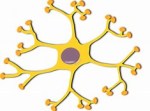
USC physician-scientist Berislav Zlokovic, M.D., Ph.D., who directed the research, said, “When you give these mice 3K3A-APC, it works much better than stem cells alone. We showed that 3K3A-APC helps the cells convert into neurons and make structural and functional connections with the host’s nervous system.” (Full story)


(Clip Art compliments of Bing.)

As I say after each post: Please leave a comment by clicking the blue words “Leave a Commentanim0014-1_e0-1 below this post.

Feel free to follow my blog. Click on “Follow” on the upper right sidebar.

If you like my blog, share it (intact) with your friends. It’s easy! Click the “Share” buttons below.

If you don’t like my blog, “Share” it (intact) with your enemies. I don’t care!

Feel free to “Like” my post.

Survivors SPEAK OUT! . . . . . . Charles Ross, Jr.

Survivors SPEAK OUT! Charles Ross, Jr.

presented

by

Donna O’Donnell Figurski


Ross, Charles Survivor

Charles Ross, Jr. – Brain Injury Survivor

1. What is your name? (last name optional)

Charles Ross, Jr.

2. Where do you live? (city and/or state and/or country) Email (optional)

Pittsburg, Missouri, USA     buds5101@gmail.com

3. On what date did you have your brain injury? At what age?

My TBI (traumatic brain injury) happened on November 15, 1985. I was 18 years old.

4. How did your brain injury occur?

I was in a head-on car crash on a narrow, two-lane highway on a rainy and foggy day. I swerved around a truck that was stopped in the road. The truck left the scene.

5. When did you (or someone) first realize you had a problem?

A witness came to the car and forced the door open. I had thrown up on impact. Until help arrived, he held my head up to keep me from choking.

6. What kind of emergency treatment, if any, did you have?

I had the paddles put on me before I got on the helicopter to fly to a large hospital. I also had a tracheotomy.

7. Were you in a coma? If so, how long?

I was in a coma for fifty days.

8. Did you do rehab? What kind of rehab (i.e., inpatient or outpatient and occupational and/or physical and/or speech and/or other)? How long were you in rehab?

I had physical, occupational, and speech therapies as an inpatient for nine months after I came out of the coma. I continued physical therapy as an outpatient for seven years after the accident. My mom then took over. She was a physical therapist aide in a nursing home at the time of the accident. She also did occupational therapy with me too.

9. What problems or disabilities, if any, resulted from your brain injury
(e.g., balance, perception, personality, etc.)?

I was in a wheelchair for one and a half years. I can now walk with a single cane. That level did not immediately come after the wheelchair. It occurred after seven summers of surgeries on my legs. I walked with two canes for many years. I also have epilepsy. That diagnosis took a grand mal seizure five years after the accident. I had thousands of petite mal seizures prior to my grand mal seizure. Only then did the neurologist say that the “spells,” as I called them then, were petite mal seizures. I take multiple medicines to control them. It took twenty-two years to find the right mixture to control them. Balance and memory are also great problems today – thirty years later. My sense of balance is gone. I fall frequently, even using a cane. My short-term and long-term memories were damaged. The short-term memory was destroyed. It took years of training to get back what I have. Long-term memory – I don’t recognize it as affecting me so badly. I just don’t think of it. I take two medicines that they give to Alzheimer’s patients. I am hoping they help me. I don’t know yet if they do.

10. How has your life changed? Is it better? Is it worse?teacher-improvement

I struggled to get two Associate Degrees over seven years. I struggled more in the workforce for fourteen years. Most of the time, I had no insurance. The meds I needed for the seizures came out-of-pocket. So my credit rating tanked, and a bankruptcy followed. I filed for disability insurance after losing my last job. I was making the most money ever, but I still had no benefits. On the last job, I grossed more money in a week and a half than I make in a month now.

11. What do you miss the most from your pre-brain-injury life?

I miss a sense of being normal – being able to go out and do anything at almost any time. My only restriction was money.

12. What do you enjoy most in your post-brain-injury life?

I enjoy knowing the people I have met as a result of the injury – the countless doctors and nurses who took care of me and other individuals who also have had head injuries. I never would have met them, or even thought of meeting them, had I not had a head injury.

13. What do you like least about your brain injury?

I dislike not having my “normal” life.

14. Has anything helped you to accept your brain injury?

I never had the attitude where I just wanted to give up on life, even though it could be depressing at times.

15. Has your injury affected your home life and relationships and, if so, how?

Yes. I think I experienced jealousy from a brother because I got more attention afterward. I’ve had many different relationships, but all have ended up failing. The lack of money was the usual excuse. Most relationships were started over the web.

16. Has your social life been altered or changed and, if so, how?

I don’t go out very much. Right now, I’m living with my mom. (My dad just passed.) As a 48-year-old male, I don’t regret living with my mom. It’s just not normal.

17. Who is your main caregiver? Do you understand what it takes to be a caregiver?

I am able to take care of myself, including my meds and my bills. I cooked when I was not with my mom.

18. What are your plans? What do you expect/hope to be doing ten years from now?

I want to get a place of my own again.

19. Are you able to provide a helpful hint that may have taken you a long time to learn, but which you wished you had known earlier? If so, please state what it is to potentially help other survivors with your specific kind of brain injury.

Charles Ross, Jr. - Brain Injury Survivor

Charles Ross, Jr. – Brain Injury Survivor

My advice: Do not turn down any kind of help that’s offered – do not be too proud.

20. What advice would you offer to other brain-injury survivors? Do you have any other comments that you would like to add?

You should take pride in being a survivor. Most people, if faced with the challenges you have, could not do it. You have already accomplished the hardest thing, which was to survive.


If you would like to be a part of the SPEAK OUT! project, please go to TBI Survivor Interview Questionnaire for a copy of the questions and the release form.

(Clip Art compliments of Bing.)

(Photos compliments of contributor.)


As I say after each post:

Feel free to leave a comment by clicking the blue words “Leave a Comment” below this post.

Please follow my blog. Click on “Follow Me Via eMail” on the right sidebar of your screen.anim0014-1_e0-1

If you like my blog, click the “Like” button under this post.

If you REALLY like my blog, share it intact with your friends. It’s easy! Click the “Share” buttons below.

If you don’t like my blog, “Share” it intact with your enemies. That works for me too!


SPEAK OUT! Guest Blogger . . . David A. Grant . . . . . . . . . . . . . You Gave Me the Life I Was Destined to Have

You Gave Me the Life I Was Destined to Have

by

David A. Grant

presented by

Donna O’Donnell Figurski

Boy Blogger thI’ve been thinking about you again and wondering how life has been treating you.
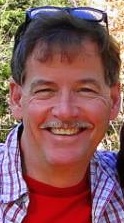
Last night, Sarah and I were at the high school. We went to watch fireworks.

Like we do most every year, we set up our blanket, then walked the oval track for a couple of laps. It’s a great place to people-watch.

The bleachers caught my eye as I looked up to one of the top rows – to where I was sitting when I saw you graduate.

David A. Grant - Brain Injury Survivor & Author

David A. Grant – Brain Injury Survivor & Author

You had no idea I was there at your graduation. How could you?

Except for the day we met shortly after the accident, we’ve not seen each other.

One of our own kids graduated the same day that you did. It was just another of those “chance meetings” that have too often come to pass.

I never expected to hear your name on the loudspeaker that graduation day.

Nor did I know how deeply my PTSD (post-traumatic stress disorder) ran as I fell into my seat, unable to even stand for the rest of the ceremony.

A while back, I wrote that if I had the chance, I might just thank you for changing the very course of my life.

Today, I would most likely not thank you.

fireworks-animatedBut I need to be very clear, I am not angry, nor do I hold any resentment. To hold bitterness in my heart is to allow myself to be run over again and again – every day that I breathe.

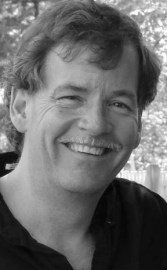
Life is just too short.

Sometimes things just happen.

Sometimes newly-licensed teenage drivers run over cyclists. We both know that better than most.

It’s a safe bet to say that you did not plan your day by saying, “By today’s end, I’ll have T-boned a local cyclist.”onbicycle

It’s weird and hard to put into words – even for a guy like me, but I am living the life I was destined to live.

You just played a small, rather impactful part.

Kind of like a long line of falling dominoes, you knocked over the first domino when you struck me that cold November day back in 2010.

And from there, that line of dominoes has continued to fall. It’s circled the globe a few times … and, one-by-one, the dominoes fall.Dominoes

While I can’t thank you for hitting me that fated day, I can now see that it was unavoidable. It was destined to happen.

Over the years, I have come to realize that I have lost my life. I spend a lot of time living for others.

A few years ago, I was able to find you on Facebook. You were in college then.

Lest we forget, you were only sixteen when we first met.

You looked like a typical college kid – happy, clean cut, smiling … ready to embrace your future and all the promise that it holds.

I looked for you again today. Not in a creepy kind of way – more so, just to see how you are.

After a few minutes, I gave up. You were nowhere to be found.

I suppose that’s best.

You most likely don’t wonder about “that guy” that you hit while you were still a kid, but occasionally he thinks about you.

I have no need to forgive you as I never condemned you. Funny how that works.

If Fate saw our paths cross again, I would most likely not let you know who I was. No greater good would be served by it.

But here, in the faux anonymity that comes with today’s world, I wish you well … and I wish you happiness.

Peace.

About David A. Grant

David A. Grant 2 101115

David A. Grant – Brain Injury Survivor & Author

David A. Grant is a freelance writer, keynote speaker and traumatic brain injury survivor based out of southern New Hampshire. He is the author of “Metamorphosis, Surviving Brain Injury,” a book that chronicles in exquisite detail the first year-and-a-half of his new life as a brain injury survivor. His newest title, “Slices of Life after Traumatic Brain Injury,” was released in 2015.

David is also a contributing author to “Chicken Soup for the Soul, Recovering from Traumatic Brain Injuries.” As a survivor of a cycling accident in 2010, he shares his experience and hope though advocacy work including a public speaking as well as his weekly brain injury blog.

David is a regular contributing writer to Brainline.org, a PBS sponsored website. He is also a BIANH board member as well as a columnist in HEADWAY, the Brain Injury Association of New Hampshire’s periodic newsletter.

David is the founder of TBI Hope and Inspiration, a Facebook community with over 15,000 members including survivors, family members, caregivers as well as members of the medical and professional community as well as the publisher of “TBI Hope and Inspiration Magazine.”


Thank you, David A. Grant.

Disclaimer:
Any views and opinions of the Guest Blogger are purely his/her own.

(Clip Art compliments of Bing.)

(Photos compliments of David A. Grant.)


As I say after each post: Please leave a comment by clicking the blue words “Leave a Commentanim0014-1_e0-1 below this post.

Feel free to follow my blog. Click on “Follow” on the upper right sidebar.

If you like my blog, share it (intact) with your friends. It’s easy! Click the “Share” buttons below.

If you don’t like my blog, “Share” it (intact) with your enemies. I don’t care!

Feel free to “Like” my post.

SPEAK OUT! . . . . . . . . . . . . . . . Faces of Brain Injury . . . . . . . . Michael J. Kline – Survivor

SPEAK OUT!

Michael J. Kline – Survivor

presented

by

Donna O’Donnell Figurski


Kline, Michael Survivor

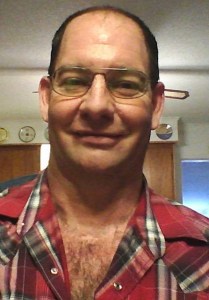
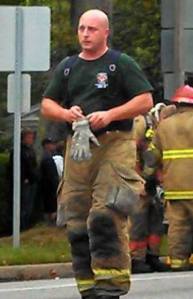
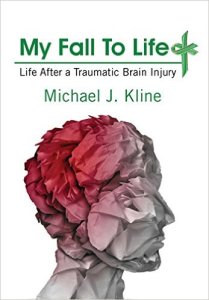
I am a traumatic brain injury (TBI) survivor. On November 18th, 2011, I fell from a standing position. I had a sub-arachnoid hemorrhage, midline brain sheering, contusions, and a 3.5 cm skull fracture. I am happy and lucky to say that “I have made it.” I used many tools to help me focus on recovery, such as coin collecting, photography, metal detecting, and others. After eight months, I returned back to full-time duty as a firefighter. I also published a book, called “My Fall to Life,” that tells the story of my injury. My Fall to LifeMy injury resulted in 100% loss of taste and smell and other lingering effects. I don’t allow that to bring me down, and I am proud to say that, when all is said and done, my injury has helped me to become a better person by refocusing on life and never taking a day for granted. Recovery from brain injury has its challenges, but with motivation and a positive attitude, there is no path that I am afraid of.


To learn more about Michael J. Kline, please see his book, “My Fall To Life: Life After a Traumatic Brain Injury.”

Thank you Michael J. Kline for sharing your story.


(Clip Art compliments of Bing.)

(Photos compliments of contributor.)

As I say after each post: Please leave a comment by clicking the blue words “Leave a Commentanim0014-1_e0-1 below this post.

Feel free to follow my blog. Click on “Follow” on the upper right sidebar.

If you like my blog, share it intact with your friends. It’s easy! Click the “Share” buttons below.

If you don’t like my blog, “Share” it intact with your enemies. I don’t care!

Feel free to “Like” my post.

diemodi jewelry

uniquely hand-crafted jewelry by donna

Welcome to Harmony Kent Online

The home of all things books

Pete Springer

Passionate Teacher and Future Children's Author

HOPE TBI

Helping Other People Excel - To Be Independent

For the Love of Books, Old and New

Katie Fischer, Writer and Reader of Stories

Charlie Bown

Children's Author

Jessica Hinrichs

“We write to taste life twice, in the moment and in retrospect.” ― Anais Nin

VIVIAN KIRKFIELD - Writer for Children

Picture Books Help Kids Soar

Mindy’s Writing Wonderland

For authors, parents, teachers & everyone who loves children’s books.

Kaitlyn Leann Sanchez

Literary Agent

Surviving Traumatic Brain Injury

TBI - Survivors, Caregivers, Family, and Friends

The Care Factor

Loving someone with a Traumatic Brain Injury

Brain Injury Support Group of Duluth-Extension

Brain Injury Information and SUPPORT

Brain Aneurysm Global Insight

Brain Aneurysm, cerebral hemorrhaging, hemorrhage stroke