TBI – Survivors, Caregivers, Family, and Friends

Posts tagged ‘TBI Survivor’

SPEAK OUT! . . . . . . . . . . . . . . Faces of Brain Injury . . . . . . Gabee Snarr Wilcox (survivor)

SPEAK OUT! Faces of Brain Injury

Gabee Snarr Wilcox (survivor)

presented by

Donna O’Donnell Figurski

Brain Injury is NOT Discriminating!

bigstock-cartoon-face-vector-people-25671746-e1348136261718It can happen to anyone, anytime, . . . and anywhere.

The Brain Trauma Foundation states that there are 5.3 million people in the United States living with some form of brain injury.

On “Faces of Brain Injury,” you will meet survivors living with brain injury. I hope that their stories will help you to understand the serious implications and complications of brain injury.

The stories on SPEAK OUT! Faces of Brain Injury are published with the permission of the survivor or designated caregiver.

If you would like your story to be published, please send a short account and two photos to me at neelyf@aol.com. I’d love to publish your story and raise awareness for Brain Injury.


Gabee Snarr Wilcox (survivor)
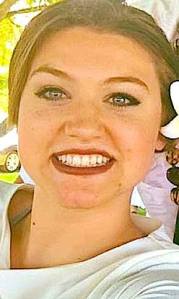
20179690_1363437513691794_1356961170_n

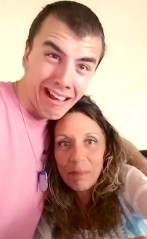
Gabee Snarr Wilcox – brain injury survivor

When I was 16, I went through a windshield. Before that, I was the lead in every musical and captain of the dance team. My whole life changed in an instant. I ripped my liver in half; broke my leg, nose, ribs, and arm; suffered some minor flesh wounds; etc. But, nothing could compare to or prepare me for the TBI (traumatic brain injury) I also suffered.

20206238_1363437833691762_1002246323_n

Gabee Snarr Wilcox – brain injury survivor

I woke up a different person. My personality was completely different than the one I had before. I was having rage fits for no reason. The next two years would come with some new-found crippling anxiety and depression. I had no balance, and my memory was awful. (Still kinda is … Do not trust me with your keys, people!) I was confined to a wheelchair for about a year. I felt nothing but hopeless.

It seemed like I had lost everybody. The people who did stick around, I treated terribly. I was wallowing in my own self-pity … and I wanted to die. I felt like I would never live up to the person I had been. I didn’t think I would ever be able to go to college or find love. I thought suicide was the best solution. I planned my death, and I looked forward to it every day.

Then one day, I saw a dear friend of mine, who also had a TBI. Later, news broke that she had killed herself. My world changed that day. I started living for Hannah. I saw the potential she had, and I wanted to show her that I wasn’t going to let a stupid TBI take both of us down.

LaughingI started really trying at physical therapy. Instead of hating myself for my memory, my anxiety, my insomnia, and my depression, I learned to laugh at it. I stopped hating people because they didn’t understand, and I realized they were lucky they didn’t. I went to college, and I failed. So, I tried again, and I failed. I tried again, and I found joy and love in working hard in school. I passed a whole year. I proved every doctor, friend, and family-member wrong – they said I was too damaged. But, I did it!I Did It!

20187595_1363437727025106_436353193_n

Gabee Snarr Wilcox – brain injury survivor

I took the jump and married the love of my life. I stopped putting my TBI first and started putting my happiness first. Today, I still have problems – headaches every day, anxiety, depression, insomnia, exhaustion … you name it! But, I push through and find myself every day.

It’s been a hard five years, but I wouldn’t change them. I’ve learned to be glad this happened to me – it’s made me stronger than I ever thought I could be. I commend everyone going through this – it’s hard! But, you can do anything. I truly believe that.


(Clip Art compliments of Bing.)

(Photos compliments of contributor.)

As I say after each post: Please leave a comment by clicking the blue words “Leave a Commentanim0014-1_e0-1 below this post.

Feel free to follow my blog. Click on “Follow” on the upper right sidebar.

If you like my blog, share it intact with your friends. It’s easy! Click the “Share” buttons below.

If you don’t like my blog, “Share” it intact with your enemies. I don’t care!

Feel free to “Like” my post.


SPEAK OUT! . . . . . . . . . . . . . Faces of Brain Injury . . . . . . Darlene Watson Mabry (caregiver for her son, Gage)

SPEAK OUT! Faces of Brain Injury

Darlene Watson Mabry (caregiver for her son, Gage)

presented by

Donna O’Donnell Figurski

Brain Injury is NOT Discriminating!

bigstock-cartoon-face-vector-people-25671746-e1348136261718It can happen to anyone, anytime, . . . and anywhere.

The Brain Trauma Foundation states that there are 5.3 million people in the United States living with some form of brain injury.

On “Faces of Brain Injury,” you will meet survivors living with brain injury. I hope that their stories will help you to understand the serious implications and complications of brain injury.

The stories on SPEAK OUT! Faces of Brain Injury are published with the permission of the survivor or designated caregiver.

If you would like your story to be published, please send a short account and two photos to me at neelyf@aol.com. I’d love to publish your story and raise awareness for Brain Injury.

Darlene Watson Mabry (caregiver for her son, Gage)

Mabry, Darlene Watson Caregiver

Mabry, Darlene Watson – Caregiver


My son, who is now 22, suffered his TBI (traumatic brain injury) two years ago in a work-related accident. That’s when the nightmare began, and our lives were forever changed.

This altered state of reality is so overwhelming at times that I just have to sit down and cry. There are good days, but it seems like for every good one, there are three bad ones – for every advancement, there comes a setback. The everyday struggle to maintain wears you down. It’s like going the wrong way on a one-way street.

Right Way Wrong Way
The company that my son was working for when the accident happened is still fighting this, and Worker’s Compensation in Missouri is unscrupulous! For the last year-and-a-half, they have refused to pay for treatment and prescriptions or provide temporary-disability pay. Resources are limited in this situation until this claim is settled, so, financially, we are bankrupt. Not only are they making my son’s already-burdensome recovery more difficult, but they are actually hindering it. I have cried, thrown fits, prayed, been depressed, and had anxiety attacks that I thought were heart attacks, and that was just today.

Darlene Watson Mabry & Son, Gage

Darlene Watson Mabry – Caregiver for son, Gage – Brain Injury Survivor

Crayon

So, I have erased this, and tomorrow we will begin again. (I’m thinking of using a crayon, so I can color outside the lines – LOL.)

At the end of the day, I’m grateful – my son is alive and highly functional, unlike some who have suffered this type of injury. God has blessed us with another day, and for that I’m thankful.


(Clip Art compliments of Bing.)

(Photos compliments of contributor.)

As I say after each post: Please leave a comment by clicking the blue words “Leave a Commentanim0014-1_e0-1 below this post.

Feel free to follow my blog. Click on “Follow” on the upper right sidebar.

If you like my blog, share it intact with your friends. It’s easy! Click the “Share” buttons below.

If you don’t like my blog, “Share” it intact with your enemies. I don’t care!

Feel free to “Like” my post.


Survivors SPEAK OUT! Geo Gosling

Survivors SPEAK OUT!  Geo Gosling

presented

by

Donna O’Donnell Figurski


Geo Gosing 1

Geo Gosling – Brain Injury Survivor

1. What is your name? (last name optional)

Geo Gosling

2. Where do you live? (city and/or state and/or country) Email (optional)

St. Helena, California, USA     goose3@wildblue.net

3. On what date did you have your brain injury? At what age?

In 1995 at the age of 25

4. How did your brain injury occur?

I was riding my bicycle 40-45 mph down a steep hill. (That’s pretty fast on a bicycle.) It was dusk, and I didn’t have a bike-light. A car going in the opposite direction was at the bottom of the hill, didn’t see me, and turned left onto a street. I hit her. In auto accidents, this would be referred to as a “T-bone.” So, while on my bicycle, I “T-boned” a car at about 40 mph.bike

5. When did you (or someone) first realize you had a problem?

Pretty soon thereafter

6. What kind of emergency treatment, if any, did you have?

I was transported by ambulance to Queen of the Valley Hospital in Napa. (It should be noted that my crash occurred only a few hundred feet from the St. Helena Hospital and Health Center, but the ambulance was routed to Napa – about 25 min. south of where I was – because “The Queen” is much better prepared for head trauma.) I had a tracheotomy, and my right shoulder was pretty smashed. I fractured two neck vertebrae, so I had a broken neck. Some ribs were broken also. That all pales in comparison to the TBI (traumatic brain injury), however.

7. Were you in a coma? If so, how long?

I was technically never in a coma, but I was unconscious for either six or eight days – I don’t remember which. (Funny story – I think: I was technically never in a coma because I would respond to outside stimuli. The doctor demonstrated this by talking loud at me or yelling or saying bad things or something, and I would just lie there in bed give him the finger. I just lay there and flipped him off. I later found out the doctors thought this to be rather amusing.)

Geo Gosling 1

Geo Gosling – Brain Injury Survivor

8. Did you do rehab? What kind of rehab (i.e., inpatient or outpatient and occupational and/or physical and/or speech and/or other)?

I had both inpatient and outpatient therapy. Both in- and outpatient therapy consisted of occupational therapy, physical therapy, speech therapy, and “thought” therapy. (I had to see a psychologist because I was rather … ah … depressed. I called it “thought therapy.”) I was in rehab for years. In fact, I still go to massage therapy because my muscles don’t seem to relax too well anymore. Speech therapy helped, but not much because, as a result of my TBI, I have dysarthria, which is basically paralyzed facial muscles. As a result, I have trouble speaking clearly, and I sound a wee-bit tipsy most of the time.

How long were you in rehab?

Years. I still go to massage therapy twice a month.

9. What problems or disabilities, if any, resulted from your brain injury
(e.g., balance, perception, personality, etc.)?

Let’s see … where to begin? I’m in constant pain. The part of my brain that is responsible for, or connected to, the gums on the left side of my mouth is injured or damaged or whatever. Anyhow, my brain thinks my gums on the left side of my mouth are telling it that they hurt because something is wrong. Well, something is wrong, but not with my gums. It’s my brain that is confused. My brain “thinks” my gums hurt. So, I just think my gums hurt, but they don’t. (Don’t think about that too long, or you will need to see a shrink.) I don’t like people anymore. I’m pissed off all the time. I haven’t had a date in 20+ years. That could also be why I’m pissed off and don’t like people. I can go from being “happy as a clam” to extremely furious in about ten nanoseconds. (I was never like that before.) My balance is terrible – I fall over very easily. (I couldn’t run to save my life – assuming I wanted to save it. I can’t even walk fast.) I have arthritis in my neck – hurts like hell. My lower back hurts often.

10. How has your life changed? Is it better? Is it worse?

Is this a trick question?

11. What do you miss the most from your pre-brain-injury life?

I miss a career I enjoyed, laughing, hope, feeling good, living, friends.

12. What do you enjoy most in your post-brain-injury life?

Is this another trick question?

13. What do you like least about your brain injury?

Let’s see … where to begin? I dislike my speech. I hate the constant pain. I’m unhappy with having no friends, no job, little money, and no hope. That about covers it.

dT76zBKac14. Has anything helped you to accept your brain injury?

Passage of time, but nothing really helped. I just realized shit happens, and you have to deal with it.

15. Has your injury affected your home life and relationships and, if so, how?

I live alone and always will. I can’t really deal with people anymore. I don’t trust anyone, the reason being that my psychologist lied to me. As a result, I ended up in the mental ward of St. Helena Hospital and Health Center for two nights and three days. I also had a therapist call the police after I had done what SHE SAID I SHOULD DO!

16. Has your social life been altered or changed and, if so, how?

I used to have somewhat of a social life, but now, the only person I do anything with is my mom. That’s a tad depressing.

17. Who is your main caregiver? Do you understand what it takes to be a caregiver?

I don’t really have one now.

18. What are your plans? What do you expect/hope to be doing ten years from now?

I have no future plans. I will probably be doing the exact same thing ten years from now – nothing.

Geo Gosling 3

Geo Gosling – Brain Injury Survivor

19. Are you able to provide a helpful hint that may have taken you a long time to learn, but which you wished you had known earlier? If so, please state what it is to potentially help other survivors with your specific kind of brain injury.

Just deal with it the best you can.

20. What advice would you offer to other brain-injury survivors? Do you have any other comments that you would like to add?

Do as much stuff for yourself as you can. Doing “everyday living” stuff is the best therapy. If you can walk, walk as much as you can.

Check out these books by Geo Gosling.

 TBI Hell by Geo Gosling 4      TBI Purgatory by Geo Gosling 5


If you would like to be a part of the SPEAK OUT! project, please go to TBI SPEAK OUT! Survivors Interview Questionnaire for a copy of the questions and the release form.

(Clip Art compliments of Bing.)

As I say after each post: Please leave a comment by clicking the blue words “Leave a Commentanim0014-1_e0-1 below this post.

Feel free to follow my blog. Click on “Follow” on the upper right sidebar.

If you like my blog, share it with your friends. It’s easy! Click the “Share” buttons below.

If you don’t like my blog, “Share” it with your enemies. I don’t care!

Feel free to “Like” my post.

Survivors SPEAK OUT! . . . Jason Westhoff

Survivors SPEAK OUT!   Jason Westhoff

presented

by

Donna O’Donnell Figurski


Jason Westhoff IMG_9574

Jason Westhoff – Brain Injury Survivor

1. What is your name? (last name optional)

Jason Westhoff

2. Where do you live? (city and/or state and/or country) Email (optional)

Phoenix, Arizona, USA     jrwesthoff1@gmail.com

3. On what date did you have your brain injury? At what age?

March 11, 2012     Age 29

4. How did your brain injury occur?

I was assaulted after leaving a club in Peoria, Illinois.

5. When did you (or someone) first realize you had a problem?

I realized I had a problem around eight months after the assault. I was in the Emergency Room and honestly realized I had lost all control. I had no clue how to go about regaining that control and made many wrong attempts over the next five years.

6. What kind of emergency treatment, if any, did you have?

Hospital thI was knocked unconscious from the assault, and I was transported by ambulance to the hospital. The medical staff noticed the swelling, and, as a result, I was taken into emergency surgery. I had a craniotomy to relieve the swelling.

7. Were you in a coma? If so, how long?

After the emergency surgery, I was placed in an induced coma for approximately three weeks. I had another two surgeries during this time.

8. Did you do rehab? What kind of rehab (i.e., inpatient or outpatient and occupational and/or physical and/or speech and/or other)? How long were you in rehab?

I had approximately three weeks of inpatient rehab before I was discharged. Afterwards, I continued physical, occupational, and speech therapies on a twice-weekly basis for approximately three months before I returned to school. At this time, I knew something was different, but I did not understand the battles I was fighting.

9. What problems or disabilities, if any, resulted from your brain injury
(e.g., balance, perception, personality, etc.)?

After my TBI (traumatic brain injury), I was a completely different person. It took me years to realize the extent of my injury. My balance and normal body functions were the easiest to check and the most obvious. The major changes, which I am still trying to adjust to daily, are my personality and perception during normal life-events. My injury has placed strains on every previous relationship I had and the new ones I have developed. I honestly feel like two completely different people. I still have the same general personality, but my ability to adjust to unplanned change is the ability most affected. I have a problem with the skill of adjusting in the moment.

10. How has your life changed? Is it better? Is it worse?Better Worse

My life has been extreme on both sides. It seems as if everything is extremely better or extremely worse on a rotating cycle. I am thankful on the whole because of the strength I have found to deal will all issues that have occurred. I am still working every day on my recovery, but I know, through this fire, I will become a better human being.

11. What do you miss the most from your pre-brain-injury life?

I miss my intellect and communication skills. It always feels as if I’m grasping for, but never quite reaching my projected goal.

12. What do you enjoy most in your post-brain-injury life?

I enjoy the communities I never knew about and the social interaction within the “brain-injury-support community”. There is a bond, which I have never quite been able to explain to others, of just knowing how something feels.

13. What do you like least about your brain injury?

Medicine side-effects!Medicine bottle 7Ta6Ezr8c

14. Has anything helped you to accept your brain injury?

Time. It has been extremely difficult to adjust and accept my brain injury.

15. Has your injury affected your home life and relationships and, if so, how?

Yes. It has been hard to be a successful father without the resources desired. Relationships in general have been a struggle because I don’t completely understand myself at all times. There is a constant unbalance in my life since the injury.

16. Has your social life been altered or changed and, if so, how?

Yes. I had struggles – extreme struggles – in my social life, primarily involving drugs and alcohol. Alcohol was a bigger problem than the drugs. I often get so stressed and/or anxious I want to drown my thoughts away. It is very easy just to give up at times.

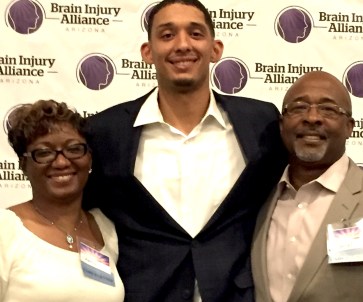
Jason Westhoff Sheria & Darryl Eubanks

Jason Westhoff – Brain Injury Survivor with Parents, Sheria & Darryl Eubanks

17. Who is your main caregiver? Do you understand what it takes to be a caregiver?

My parents have been my main caregivers, my mother in particular for emotional support, which is where it has been needed most. It took me 2-3 years to start to comprehend the stress involved in being a caregiver, until I really tried to manage Jayla (my daughter) by myself for an extended period of time.

18. What are your plans? What do you expect/hope to be doing ten years from now?

My plans as of this moment are just trying to get my medications set and lowering my mental-fatigue issues. My focus is primarily on understanding my new mind and body so I then have the ability to make the proper adjustments. I love it here in Arizona! By the time I do my radio interview with Donna, I will have been in Arizona for fourteen months. I am currently looking forward to doing more work in the brain-injury community.

19. Are you able to provide a helpful hint that may have taken you a long time to learn, but which you wished you had known earlier? If so, please state what it is to potentially help other survivors with your specific kind of brain injury.

Listen! Listen! Listen! I am one of the worst listeners. I have proved this point time and time again. I would suggest to swallow your pride and let people help you.Ear_clip_art-1

20. What advice would you offer to other brain-injury survivors? Do you have any other comments that you would like to add?

My best advice to give to any survivor is to never stop growing. Don’t become content with your situation. We can always improve!


If you would like to be a part of the SPEAK OUT! project, please go to TBI SPEAK OUT! Survivors Interview Questionnaire for a copy of the questions and the release form.

(Clip Art compliments of Bing.)

As I say after each post: Please leave a comment by clicking the blue words “Leave a Commentanim0014-1_e0-1 below this post.

Feel free to follow my blog. Click on “Follow” on the upper right sidebar.

If you like my blog, share it with your friends. It’s easy! Click the “Share” buttons below.

If you don’t like my blog, “Share” it with your enemies. I don’t care!

Feel free to “Like” my post.


SPEAK OUT! . . . . . . . . . . . . . Guest Blogger: Erin Lieben

Inspiring Other Survivors

by

Erin Lieben

presented by

Donna O’Donnell Figurski


Girl Blogger cartoon_picture_of_girl_writingIt’s okay to lose hope sometimes. We will never be the same as before. You’ll get used to the “new you,” and you’ll be a tough, beautiful, brave individual who knows what it’s like to feel hopeless. And, that is what makes it all worth it – because you can give hope to others.

bigstock_hope_2576413Tell other survivors that it’s okay to be the “new you” and to not necessarily meet the status quo or the goals they were striving for before their brain injury. Tell them to just make a new game-plan and to be exceedingly thankful for the little things they previously took for granted.

23804465_1469432809758930_2026712132_n

Erin Lieben – Brain Injury Survivor

When I present my story to others, my goal is for them to feel inspired. I don’t want pity, and I don’t want to bring others down. I’ve been given a gift, and I’ve worked like hell to be able to pass that on to others. There is always hope.

Cherish each passing moment as if it’s your last – because you know that it very well could be. It might sound crazy, but, when I’m at my lowest, that’s the time when I can lift others up. And, it lifts my spirit as well! My heart is with you all.


Thank you, Erin Lieben.


Disclaimer:
Any views and opinions of the Guest Blogger are purely his/her own.

(Clip Art compliments of Bing.)

(Photos compliments of Erin Lieben.)

As I say after each post: Please leave a comment by clicking the blue words “Leave a Commentanim0014-1_e0-1 below this post.

Feel free to follow my blog. Click on “Follow” on the upper right sidebar.

If you like my blog, share it (intact) with your friends. It’s easy! Click the “Share” buttons below.

If you don’t like my blog, “Share” it (intact) with your enemies. I don’t care!

Feel free to “Like” my post.

SPEAK OUT! . . . . . . . . . . . . . Faces of Brain Injury . . . . . . Christine Durant (survivor)

SPEAK OUT! Faces of Brain Injury

Christine Durant (survivor)

presented by

Donna O’Donnell Figurski

Brain Injury is NOT Discriminating!

bigstock-cartoon-face-vector-people-25671746-e1348136261718It can happen to anyone, anytime, . . . and anywhere.

The Brain Trauma Foundation states that there are 5.3 million people in the United States living with some form of brain injury.

On “Faces of Brain Injury,” you will meet survivors living with brain injury. I hope that their stories will help you to understand the serious implications and complications of brain injury.

The stories on SPEAK OUT! Faces of Brain Injury are published with the permission of the survivor or designated caregiver.

If you would like your story to be published, please send a short account and two photos to me at neelyf@aol.com. I’d love to publish your story and raise awareness for Brain Injury.


Christine Durant (survivor)

Christine Durant Survivor 040817

Christine Durant – Brain Injury Survivor

I had brain surgery in 1983, during the second semester of my senior year of college. As a result, I came home with no degree. I was forced into a full-time job by my mother in addition to going to school full time. I received my first graduate degree a year later, adapting for differences all by myself. I had a great 30-year career and finished three more graduate degrees while working full time.

However, a car accident 20 years ago derailed my career. I couldn’t work because of pain-management issues. But that worked out. car-accident-clipartApparently, the neurosurgeon hadn’t put things back together in an appropriate manner. So, I needed another brain surgery. It would have been hard to do if I were working full time. My wife and my friends saw me through it.

In April, I celebrated my “Sweet 16” – sixteen months post-op and seizure-free! My wife and I also celebrated 25 years in May. We travel a lot on the accident money. Life is good.


(Clip Art compliments of Bing.)

(Photos compliments of contributor.)

As I say after each post: Please leave a comment by clicking the blue words “Leave a Commentanim0014-1_e0-1 below this post.

Feel free to follow my blog. Click on “Follow” on the upper right sidebar.

If you like my blog, share it intact with your friends. It’s easy! Click the “Share” buttons below.

If you don’t like my blog, “Share” it intact with your enemies. I don’t care!

Feel free to “Like” my post.


SPEAK OUT! NewsBit . . . . . . High School Football Game Forfeited After Nine Head Injuries

High School Football Game Forfeited After Nine Head Injuries

presented

by

Donna O’Donnell Figurski


football-teamA high school football team from Moncton, New Brunswick, Canada, forfeited its game after nine players left the game with possible head injuries. The coach took the precaution of having all players checked at the hospital. Before going to hospital, four players had already displayed symptoms of having a serious concussion (nausea, vomiting), and they still showed symptoms two days later when the article was written.

Illegal hits were not the problem, but the violence of football became even more obvious when the forfeiting team was clearly outmatched by its opponent.  The score was 35-0 about halfway through the game.

football13It is now known that players of US and Canadian football have a high risk of developing a brain injury, and the problem is particularly serious for youth, with their still-developing brains.  Concussions are the most obvious brain injury, but the multiple subconcussive hits common in US and Canadian football can also lead to brain damage, which may not become apparent for several years.  A highly-cited research paper in the Journal of the American Medical Association showed that the degenerative brain disease CTE (chronic traumatic encephalopathy) was found in a low but significant fraction (21%) of players who only played football through high school. CTE was more commonly found (>90%) in the autopsied brains of players who played professionally or only through college. Even with a possible bias in the brains studied, the findings are alarming. As a result of the new knowledge, some players are retiring early (1,2), and parents are becoming concerned. (1. Full story and 2. my radio interview of Cyndy Feasel, Mary Seau, and Debra Pyka, all of whom lost a loved one to football)

onair

(Clip Art compliments of Bing.)

As I say after each post: Please leave a comment by clicking the blue words “Leave a Commentanim0014-1_e0-1 below this post.

Feel free to follow my blog. Click on “Follow” on the upper right sidebar.

If you like my blog, share it (intact) with your friends. It’s easy! Click the “Share” buttons below.

If you don’t like my blog, “Share” it (intact) with your enemies. I don’t care!

Feel free to “Like” my post.

TBI Tales . . . . . . . . . . . . . . . . . . TBI to “Victory” . . . . . . . . . . . . . by Daniel Mollino

TBI to “Victory”

by

Daniel Mollino

presented by

Donna O’Donnell Figurski


Daniel Mollino – Brain Injury Survivor – Red Bull Athlete

Well, what a year I have had! I watched as all my competitions were abandoned due to blood clots (DVT, deep vein thrombosis: a blood clot that forms in a vein deep in the body), which laid me up for three months. But one race continued to call to me – the Red Bull 400 in Park City. See, I am a cyclist not a runner, but last year I took on the Red Bull 400 in Park City to simply see how I would do, and I completed it. I did no special training outside my usual for cycling. However, the Red Bull 400 in Park City is a whole new world of insanity in racing!

I initially went into this year with the push to try and race all the Red Bull 400s around the globe in a single year. But then medical issues struck.

The Park City race, however, still called for me. My wife wanted to run it. She has never run an event of any kind before, and I needed to get at least one competition in for the year. I was medically cleared a couple of weeks before the race. But I hadn’t done a bit of training of any kind to prepare.

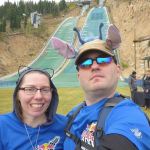
Daniel Mollino -Brain Injury Survivor & Red Bull 400 survivor with spouse, Amby Silex

Nevertheless, I took it on. Now just crossing the starting line is an accomplishment, considering. I honestly hoped I would at least make it to the top somewhat close to the time I had the previous year. Sadly, that did not happen.

I did finish, eventually. My time this year was a little over 39 minutes. (I had to take the steps for the last half.) This is over double the time of last year. Still, I did cross the finish line and have an official time.

We ran and we finished. Last year’s time was much better, but it was a victory nonetheless considering the medical issues I had this year. Onward and upward ….


READ MORE about Daniel Mollino and the “Red Bull 400” results here.


(Disclaimer: The views or opinions in this post are solely that of the author.)

If you have a story to share and would like to be a part of the SPEAK OUT! project, please submit your TBI Tale to me at neelyf@aol.com. I will publish as many stories as I can.

As I say after each post:

Please leave a comment by clicking the blue words “Leave a Comment” below this post.anim0014-1_e0-1

Please follow my blog. Click on “Follow” on the top right sidebar. (It’s nice to know there are readers out there.)

If you like my blog, share it with your friends. It’s easy! Click the “Share” buttons below.

If you don’t like my blog, “Share” it with your enemies. I don’t care!

Feel free to “Like” my post.
(Clip Art compliments of Bing.)

Survivors SPEAK OUT! . . . Pamela Ann Taylor

Survivors SPEAK OUT!   Pamela Ann Taylor

presented 

by

Donna O’Donnell Figurski


Pamela Ann Taylor Survivor 092417

Pamela Ann Taylor – Brain Injury Survivor

1. What is your name? (last name optional)

Pamela Ann Taylor

2. Where do you live? (city and/or state and/or country) Email (optional)

Mansfield, Ohio, USA     Teach621@aol.com

3. On what date did you have your brain injury? At what age?

Age 55

4. How did your brain injury occur?

I have been in three accidents in my life. The last one was a rollover.

5. When did you (or someone) first realize you had a problem?

I had some issues with balance and vision after the second accident, but more recently it has become far worse. This is due to the rollover-accident.

6. What kind of emergency treatment, if any, did you have?0016

I was transported to a Trauma Center in an ambulance, where they found I had a concussion. I was released and told to go home. They had done some tests, but, because they had given me pain meds, they thought that I was throwing up due to the meds and not the concussion. I was throwing up in the wheelchair all of the way to the car, but they still sent me home.

7. Were you in a coma? If so, how long?

N/A

8. Did you do rehab? What kind of rehab (i.e., inpatient or outpatient and occupational and/or physical and/or speech and/or other)?

I have had occupational, physical, and speech therapies.

How long were you in rehab?

My first round of physical therapy lasted a few months and helped somewhat with back pain, neck pain, and headaches. I am now in rehab again. I have been going for about four months, and I’m still working with an Occupational Therapist and Physical Therapist. Speech therapy did not last as long. I found these places myself through searching and asking my doctor for referrals. A general doctor in my area seemed not to know of TBI (traumatic brain injury) treatments much at all. Be a self-advocate if you can.

9. What problems or disabilities, if any, resulted from your brain injury
(e.g., balance, perception, personality, etc.)?

I have issues with vision, balance, perception, and personality. I’m more aggressive – things escalate more easily. My eyes are like that of a 6-month-old baby – not coordinated.

10. How has your life changed?

I cannot work and cannot drive. I have no income (as the disability stuff is still in process), and I don’t know when I will get an income. I do not go to crowded places or shop for long in fluorescent lighting. I have lost connection with some friends, as I cannot get to them to visit now, etc.

Is it better?

I am home more.

Is it worse?

I get bored, and at times I’m lonely. I wish I could go out to lunch or drive to a friend’s house.

11. What do you miss the most from your pre-brain-injury life?

I miss feeling like I make a difference in the world. I used to travel and do missions work, but now, without an income and a way to get myself to the locations to serve, it is a real challenge to help others. It is forcing me to focus more on myself.

12. What do you enjoy most in your post-brain-injury life?no-noise-1

I do enjoy the solace in that I cannot tolerate noise, etc. much anymore. I am finding ways to write like I used to, and I am finding more time to pray, which I do like.

13. What do you like least about your brain injury?

People don’t understand – I don’t look sick.

14. Has anything helped you to accept your brain injury?

I’ve been helped by prayer and focusing on those who love me unconditionally. Baby steps forward bring joy as well.

15. Has your injury affected your home life and relationships and, if so, how?

The house is more organized and cleaner (LOL). I have made a new friend through needing a driver to take me to therapy sessions. She is a real gem.

16. Has your social life been altered or changed and, if so, how?

My social life is near nil. I can’t get to the places I used to go to.

17. Who is your main caregiver? Do you understand what it takes to be a caregiver?

I do most things for myself, but the financial burden is all on my husband. I would rather it be 50:50 like it used to be.

18. What are your plans? What do you expect/hope to be doing ten years from now?

I hope to be able to travel again. I am beginning to work on my physical healing, including walking more, etc. I have put on weight and need to get back in shape. I also see myself being with my grandchildren more. I hope to be able to drive to local places and get out more with them and others I care about. I am beginning to blog, and I’m hoping that takes off and helps others. Perhaps I will publish another book one day. (I had a book coming out when the accident happened under a pen name – Phoebe Siylor; the book – Molding Sharon.)

19. Are you able to provide a helpful hint that may have taken you a long time to learn, but which you wished you had known earlier? If so, please state what it is to potentially help other survivors with your specific kind of brain injury.

Pamela Ann Taylor & dog

Pamela Ann Taylor – Brain Injury Survivor

I would tell you to be an advocate for yourself or your loved one. Seek out what you need. It does not seem as if those in the medical field know what to do. I should have stayed at the hospital and not gone home. Also, I should have been told about therapy and not had to find it on my own. Seek, and you will find some answers. It is a process, and it takes time. Be patient, and keep moving forward.

20. What advice would you offer to other brain-injury survivors? Do you have any other comments that you would like to add?

Find a therapist who knows how to help you. If he or she does not seem to be the right fit, move on. When people comment things, like how long do you expect me to support you in the system, remember that you paid into that system, and it is your right to get help if you need it. Don’t let them kick you down – rise up and be strong. It is hard, but you can do it. Pray – connect with a church and with God – He will always love you unconditionally. I fall back on Him a LOT.


HUGZ

You can learn more about Pamela Ann Taylor on her blog. Pamela Ann Taylor Blog.


If you would like to be a part of the SPEAK OUT! project, please go to TBI SPEAK OUT! Survivors Interview Questionnaire for a copy of the questions and the release form.

(Clip Art compliments of Bing.)

As I say after each post: Please leave a comment by clicking the blue words “Leave a Commentanim0014-1_e0-1 below this post.

Feel free to follow my blog. Click on “Follow” on the upper right sidebar.

If you like my blog, share it with your friends. It’s easy! Click the “Share” buttons below.

If you don’t like my blog, “Share” it with your enemies. I don’t care!

Feel free to “Like” my post.

Survivors SPEAK OUT! Paul McMahon

Survivors SPEAK OUT! Paul McMahon

presented 

by

Donna O’Donnell Figurski


Paul McMahon 1 082817

Paul McMahon – Brain Injury Survivor from Down Under

1. What is your name? (last name optional)

Paul McMahon

2. Where do you live? (city and/or state and/or country) Email (optional)

Sydney, Australia

3. On what date did you have your brain injury? At what age?

I was 28 years old.

4. How did your brain injury occur?

At my birthday party, I fell 3 1/2 floors – off a building onto concrete.

5. When did you (or someone) first realize you had a problem?

The moment it occurred

6. What kind of emergency treatment, if any, did you have?

I had surgeries for my physical condition. I have had no assistance with brain injury.

7. Were you in a coma? If so, how long?

Yes. Three days, I believe

8. Did you do rehab? What kind of rehab (i.e., inpatient or outpatient and occupational and/or physical and/or speech and/or other)? How long were you in rehab?

Yes. I was in rehabilitation during my first three months at hospital and then a required three months following my exit. It was six months in total, but I now realise that it should have gone for longer. Part of that was my own fault – by passing the neurological test at the minimum six-month recovery point (Australia). I should have waited longer – to realise the challenges I could face. I needed more time to think of how my second stage of recovery would take place.

9. What problems or disabilities, if any, resulted from your brain injury
(e.g., balance, perception, personality, etc.)?

Paul McMahon 2 082817

Paul McMahon- Brain Injury Survivor from Down Under

I have problems with short-term memory and especially with attention to detail. Attention to detail in quick moments was a great challenge. I work in communications/policy, and so this is certainly a working issue that can’t be avoided. Also, my aura was different, and I could not connect with people as I once did. This emotional issue lasted about three years.

10. How has your life changed? Is it better? Is it worse?

It’s different. I have learnt so much. I have fewer friends, but I knew my intelligence was not taken by the accident. I started a Master’s degree and wrote my book. I am editing now.

11. What do you miss the most from your pre-brain-injury life?

I miss people’s lack of judgement about me. People assume they are helping by telling you what is wrong with you. That is 100%, and it is an instigator for suicide, as you feel no one understands, but tells you how to react. The loss of their lack of judgement is my deepest pain from the brain injury.

12. What do you enjoy most in your post-brain-injury life?

I have learned to be more compassionate. I have a deeper understanding of mental health and realise that I couldn’t understand depression or other illnesses in the same way previously.

13. What do you like least about your brain injury?

I dislike the way people handle my judgement – when you assume you are right, but others judge a situation with no thought of your opinion. It hurts and is damaging psychologically and, at times, in your economic life at work.

14. Has anything helped you to accept your brain injury?

Man Writing BookYes – writing. My book was my therapy. It is safe to say that, if I sell zero books and have zero readers, I will still be happy, as I believe writing helped me heal faster.

15. Has your injury affected your home life and relationships and, if so, how?

Yes. Many friends just ignore me or keep away to feel self-security. I guess the upcoming book tells the rest of the story.

16. Has your social life been altered or changed and, if so, how?

Yes! I felt very anti-social. While I would attempt a little, I needed people to be more open and accepting of my changes. I felt this was a lonely journey, so I took that avenue – different from my old caring self.

17. Who is your main caregiver? Do you understand what it takes to be a caregiver?

I don’t have one.

18. What are your plans? What do you expect/hope to be doing ten years from now?

I will finish the book, earn a Master’s Degree, and be as different as I always am. I’ll be economically safe and live the full experiences of this world.

19. Are you able to provide a helpful hint that may have taken you a long time to learn, but which you wished you had known earlier? If so, please state what it is to potentially help other survivors with your specific kind of brain injury.

From the beginning, I felt my brain injury was temporary, so all I can say is to KEEP GOING and DON’T GIVE UP! I learnt that when the accident occurred. I would also say to FOLLOW YOUR PASSIONS. Don’t do only what a therapist tells you – you know you better than any external you-decider.

20. What advice would you offer to other brain-injury survivors? Do you have any other comments that you would like to add?

Paul McMahon & Camel 082817

Paul McMahon – Brain Injury Survivor and Camel

Remember that your passion to follow your dreams may have been limited due to the accident. That does not mean STOP! It means you continue to train your brain in what you love and hold dear. Listen to you!


You can learn more about Paul McMahon on his Facebook site (https://www.facebook.com/paulmcmahonauthor/).


If you would like to be a part of the SPEAK OUT! project, please go to TBI SPEAK OUT! Survivors Interview Questionnaire for a copy of the questions and the release form.

(Clip Art compliments of Bing.)

As I say after each post: Please leave a comment by clicking the blue words “Leave a Commentanim0014-1_e0-1 below this post.

Feel free to follow my blog. Click on “Follow” on the upper right sidebar.

If you like my blog, share it with your friends. It’s easy! Click the “Share” buttons below.

If you don’t like my blog, “Share” it with your enemies. I don’t care!

Feel free to “Like” my post.
diemodi jewelry

uniquely hand-crafted jewelry by donna

Welcome to Harmony Kent Online

The home of all things books

Pete Springer

Passionate Teacher and Future Children's Author

HOPE TBI

Helping Other People Excel - To Be Independent

For the Love of Books, Old and New

Katie Fischer, Writer and Reader of Stories

Charlie Bown

Children's Author

Jessica Hinrichs

“We write to taste life twice, in the moment and in retrospect.” ― Anais Nin

VIVIAN KIRKFIELD - Writer for Children

Picture Books Help Kids Soar

Mindy’s Writing Wonderland

For authors, parents, teachers & everyone who loves children’s books.

Kaitlyn Leann Sanchez

Literary Agent

Surviving Traumatic Brain Injury

TBI - Survivors, Caregivers, Family, and Friends

The Care Factor

Loving someone with a Traumatic Brain Injury

Brain Injury Support Group of Duluth-Extension

Brain Injury Information and SUPPORT

Brain Aneurysm Global Insight

Brain Aneurysm, cerebral hemorrhaging, hemorrhage stroke