TBI – Survivors, Caregivers, Family, and Friends

Posts tagged ‘TBI Survivor’

SPEAK OUT! Itty-Bitty GIANT Steps

SPEAK OUT! Itty-Bitty GIANT Steps

presented by

Donna O’Donnell Figurski

Itty-Bitty GIant Steps for BlogSPEAK OUT! Itty-Bitty Giant Steps will provide a venue for brain-injury survivors and caregivers to shout out their accomplishments of the week.

If you have an Itty-Bitty Giant Step and you would like to share it, just send an email to me at neelyf@aol.com.

If you are on Facebook, you can simply send a Private Message to me. It need only be a sentence or two. I’ll gather the accomplishments and post them with your name on my blog approximately once a week. (If you do not want your last name to be posted, please tell me in your email or Private Message.)

I hope we have millions of Itty-Bitty Giant Steps.


Here is this week’s Itty-Bitty GIANT Steps

Julie Attwell (survivor)…I’m in Oz (Australia). AustraliaI recently got out of hospital. I was in because of epilepsy from my acquired brain injury (ABI). My discharge was HUGE for me! I was finally put on the list for rehab for fine motor skills, speech,Hospital Bed walking, reading, and writing. I am able to start being me again. I’m super excited! My injury happened in February of 2015, and I have had no help. Now I am finally getting some. YAY!


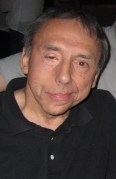
David June 14 copy

David Figurski Brain Injury Survivor


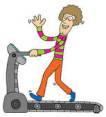
David Figurski (survivor)…I’m ecstatic that I finally walked 1.5 miles on the treadmill! I did it at 2.5 mph.

treadmill-clipart-k10354422.jpg

YOU did it!

Congratulations to contributors!


As I say after each post:anim0014-1_e0-1

Please leave a comment by clicking the blue words “Leave a Comment” below this post.

Feel free to follow my blog. Click on “Follow” on the upper right sidebar.

If you like my blog, share it intact with your friends. It’s easy! Click the “Share” buttons below.

If you don’t like my blog, “Share” it intact with your enemies. I don’t care!

Feel free to “Like” my post.


(Clip Art compliments of Bing.)

(Photo compliments of contributor.)

Survivors SPEAK OUT! Evan Powers

Survivors SPEAK OUT! Evan Powers

presented

by

Donna O’Donnell Figurski


Powers, Evan Joseph Motorcycle

Evan Powers – Brain Injury Survivor

1. What is your name? (last name optional)

Evan Powers

2. Where do you live? (city and/or state and/or country) Email (optional)

Fort Mill, South Carolina, USA

3. On what date did you have your brain injury? At what age?

My brain injury happened on August 30th, 2014. I was 31.

4. How did your brain injury occur?

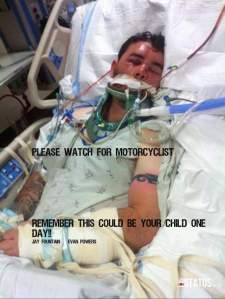
I was riding my Harley V-Rod Muscle with friends, and I was hit by an SUV. The driver, in a rush to buy smokes, turned illegally left and hit me. I died, was revived, fell into a coma, and “received” a traumatic brain injury (TBI) (diffuse axonal injury and brain stem damage). I had to relearn how to do everything! I’m doing very well, however – “What doesn’t kill you makes you stronger,” and I’ve proven to be a tough SOB. (LOL!)

5. When did you (or someone) first realize you had a problem?

At the scene of the accident

6. What kind of emergency treatment, if any, did you have?

A lot (LOL) – a craniotomy, arm surgery (compound fracture of my left arm), and intensive therapy (cognitive, vocational, physical, vocational, mental health, etc.). And I continued therapy (once a week and checkups).

Powers, Evan Joseph hospital

Evan Powers – Brain Injury Survivor

7. Were you in a coma? If so, how long?

Yes. I was in a coma a month.

8. Did you do rehab? What kind of rehab (i.e., inpatient or outpatient and occupational and/or physical and/or speech and/or other)? How long were you in rehab?

Yes. I did intensive inpatient therapy at Craig Hospital in Colorado (an incredible place!). Afterward, I continued with intensive rehab. Now I’m going only once a week.

9. What problems or disabilities, if any, resulted from your brain injury
(e.g., balance, perception, personality, etc.)?

I have balance issues, left-side weakness, and memory loss. I am prone to impulsivity and mood fluctuations.

10. How has your life changed? Is it better? Is it worse?

My life has changed in many ways – both negatively and, more importantly, positively! I suffer with balance issues, left-side weakness, memory issues, impulsivity, and emotional control issues. While those deficits suck (LOL), I’ve changed in so many ways for the better. I’m more positive. (I struggled with depression terribly before the accident.) I do not take life for granted, I am funnier and more fun-loving, and I am more passionate. Further, I’ve gained an understanding into the hell of having a TBI, and I have been moved to work with those who experience likewise – encouraging, sharing, and helping other survivors!

11. What do you miss the most from your pre-brain-injury life?

I miss some things – my job, my friends (lost a lot after the accident), having a sense of purpose, working, and – crazy as it may seem, considering what happened – riding my motorcycle (LOL). … But all in time!

12. What do you enjoy most in your post-brain-injury life?

I like how positive and passionate for life I am now. J

13. What do you like least about your brain injury?

I dislike not working and my left arm being weaker.

14. Has anything helped you to accept your brain injury?

Yes. I have been helped by friends, doctors, experience, time, and especially my mom!

15, Has your injury affected your home life and relationships and, if so, how?

Yes, very much so! I’m now divorced. (My ex and I had a rocky relationship before the accident.) Because of my problem with impulse control, I rush into relationships and “move too fast.”

16. Has your social life been altered or changed and, if so, how?

Yes. I lost a lot of friends after my accident. There were several reasons: my crazy behavior, being afraid of interacting with me, or just being “lousy friends” (LOL) – (for the best, I see now).

17. Who is your main caregiver? Do you understand what it takes to be a caregiver?

My mom is my main caregiver. She helps me out tremendously. I couldn’t have done what I did without her and my brother, Chris. Their love and support is much needed and is greatly appreciated!

18. What are your plans? What do you expect/hope to be doing ten years from now?

My future plans include going to school to get a degree in a field in which I can work with TBI survivors. I want to continue to heal, and I plan to start working part-time. I intend to better myself and help others, which has me excited!

Powers, Evan Joseph

Evan Powers – Brain Injury Survivor

19. Are you able to provide a helpful hint that may have taken you a long time to learn, but which you wished you had known earlier? If so, please state what it is to potentially help other survivors with your specific kind of brain injury.

Recovery from a TBI is brutal, but it gets better. Sometimes you run; other times, you crawl. Keep pushing and fighting – it’s worth it!

20. What advice would you offer to other brain-injury survivors? Do you have any other comments that you would like to add?

Be patient with yourself. Do the best you can – that’s all you can do. Keep fighting. I know that it’s hard, but it is worth the struggle! Also, reach out – get involved with other survivors. We understand each other more then others without injuries can. We’re family – rely on, encourage, and strengthen one another!


(Disclaimer: The views or opinions in this post are solely that of the interviewee.)

If you would like to be a part of the SPEAK OUT! project, please go to TBI Survivor Interview Questionnaire for a copy of the questions and the release form.

(Clip Art compliments of Bing.)

(Photos compliments of contributor.)


As I say after each post:

Feel free to leave a comment by clicking the blue words “Leave a Comment” below this post.

Please follow my blog. Click on “Follow Me Via eMail” on the right sidebar of your screen.anim0014-1_e0-1

If you like my blog, click the “Like” button under this post.

If you REALLY like my blog, share it intact with your friends. It’s easy! Click the “Share” buttons below.

If you don’t like my blog, “Share” it intact with your enemies. That works for me too!


Survivors SPEAK OUT! . . . . . . . Raquel (Rocky) Gloden

Survivors SPEAK OUT! Raquel (Rocky) Gloden

presented

by

Donna O’Donnell Figurski


Gloden, Raquel (Rocky Survivor1. What is your name? (last name optional)

My name is Raquel Gloden. I go by Rocky.

2. Where do you live? (city and/or state and/or country) Email (optional)

I live in Arizona, east of Phoenix; my email is brainyliferocky@gmail.com.

3. On what date did you have your brain injury? At what age?

I had my last TBI (traumatic brain injury) in October 2013; I had concussions prior to this last one – it just happened to be the worst. I was 35 years old when it happened.

4. How did your brain injury occur?

I was enjoying an outing with my family. I stopped to take a picture of my children, and when I stepped back to get a better view, I slipped on some sort of substance on the marble floor. I bounced the back of my head on the floor a couple of times – and that was it.

5. When did you (or someone) first realize you had a problem?

I went by ambulance right away and had it checked. I was told that it was a concussion and to take some ibuprofen and that I should start feeling better. I followed the doctor’s recommendation, but it got worse instead of better. I ended up back in the hospital a week later for other issues associated with it. They advised me to go get it checked out further.

6. What kind of emergency treatment, if any, did you have?

Other than a CT (or “CAT”; computerized tomography) scan, I did not have any other emergency treatment.

7. Were you in a coma? If so, how long?

No. I am very fortunate not to have been in a coma.

8. Did you do rehab? What kind of rehab (i.e., inpatient or outpatient and occupational and/or physical and/or speech and/or other)?

I did outpatient vestibular and occupational rehab.

How long were you in rehab?

I did this for a couple of months.

9. What problems or disabilities, if any, resulted from your brain injury
(e.g., balance, perception, personality, etc.)?

Oh wow! This is a loaded question. I have balance problems. I have vision issues. (I see double now.) I was diagnosed with symptomatic ADD (attention deficit disorder). I now suffer from depression. My personality has definitely changed – some good, some not so good. I try to maintain a positive outlook towards everything, but it is often a challenge. Before my medication was regulated (and before it was determined that I needed medication), it was much more difficult to function (from what I can recall). Oh yes, I have memory problems now too.

10. How has your life changed? Is it better? Is it worse?

My life has changed. Is it better or worse? … I don’t know. I am no longer employed at the career I had for fifteen and a half years – that is scary. But, I get to be home with my children for now. I think it is all in the way I look at it. There are many things I will not be able to do anymore that I would have liked to. But, not many people are afforded the perspective and opportunity that I have either.

11. What do you miss the most from your pre-brain-injury life?

I miss the old me. I was very outgoing, loved to be around people, and was almost always happy. I could multitask better than many. I could solve problems and issues within seconds.

12. What do you enjoy most in your post-brain-injury life?

I was able to find out who my friends really are. I am able to help create the person I want to become. Most of all, I get to be with my children.

13. What do you like least about your brain injury?

I dislike the headaches, double vision, depression, ADD, and the lack of understanding. Those issues that are personal – I can find a way to deal with them. The lack of understanding is the worst. It feels as though I am not listened to sometimes and, even if I am, I feel like people just don’t understand.friendsfamily

14. Has anything helped you to accept your brain injury?

I have a great support-team that includes my family and dear friends. I go to counseling weekly, and my counselor is very counselorsupportive. I have been learning about being more mindful, which has also helped immensely. Recently, I have found that the TBI community is very supportive as well. Many times I think that I have not truly accepted my TBI, but I am getting there.

15. Has your injury affected your home life and relationships and, if so, how?

Yes, very much so. There are some relationships that do not exist anymore. This was mostly due to my ending the relationship. I had a new perspective after my TBI, and I do not feel I have time for people who will bring me down or whom I feel uncomfortable around. This was not usually the other person’s fault, but I am not the same as I was. I need my TBI to be accepted, or I do not need them in my life. My home life changed for sure. My children saw the incident, and I deal with that trauma every time we walk by a wet spot on the ground. My husband is a wonderful man and very supportive. I was the breadwinner though, and this has had to change. He is such a great man – he has not complained one bit. He supports me in all I do. I am fortunate to have my mom around me too, and she is a huge support; my dad was very supportive before he passed away in 2014. They all have encouraged me to continue creating myself.

16. Has your social life been altered or changed and, if so, how?

As I stated before, I am not as outgoing. If I can, I often avoid situations in which there will be loud noises or too many people. This means that I don’t go to as many parties or social gatherings, and when I do, I do not stay like I used to. I don’t think I have as many friends as I thought I did.

17. Who is your main caregiver? Do you understand what it takes to be a caregiver?

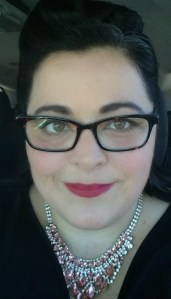
My main caregiver is my husband. He is at home with me. My mom helps a lot too, especially with the kids when my husband is at work. I believe a caregiver helps when times are tough, and he or she encourages positive thoughts and actions. To me, a caregiver assists when needed, but is not enabling. A caregiver encourages independence.Gloden, Raquel (Rocky) 2 Survivor
18. What are your plans? What do you expect/hope to be doing ten years from now?

My future plans … I would like to speak about TBI and help people to better understand. There are subjects that people do not talk about at all, and I would like to bring light to them and to help people understand that they are not alone. I would also like for others to understand the hardships that follow TBI survivors – even when other people cannot see them.

19. Are you able to provide a helpful hint that may have taken you a long time to learn, but which you wished you had known earlier? If so, please state what it is to potentially help other survivors with your specific kind of brain injury.

I wish that I would have known when I was younger how concussions would have impacted me long term. I remember pushing it when I previously had concussions. They were not treated the same as now either, and I wish I knew then what I know now. Take care of your brain – it is the only one you will ever have.

20. What advice would you offer to other brain-injury survivors? Do you have any other comments that you would like to add?

My advice is to stay strong, but still allow yourself to cry. It is hard, but as long as the hard times decrease and the positive times increase, you are on the right track. Also, you are not alone. I know people may see you and think that there is nothing wrong, and they may even think it is all made-up, but the people who know you – the people who truly matter – know. And you know. And that is all that matters.


(Disclaimer: The views or opinions in this post are solely that of the interviewee.)

If you would like to be a part of the SPEAK OUT! project, please go to TBI Survivor Interview Questionnaire for a copy of the questions and the release form.

(Clip Art compliments of Bing.)

(Photos compliments of contributor.)


As I say after each post:

Feel free to leave a comment by clicking the blue words “Leave a Comment” below this post.

Please follow my blog. Click on “Follow Me Via eMail” on the right sidebar of your screen.anim0014-1_e0-1

If you like my blog, click the “Like” button under this post.

If you REALLY like my blog, share it intact with your friends. It’s easy! Click the “Share” buttons below.

If you don’t like my blog, “Share” it intact with your enemies. That works for me too!
 

So, Whaddya Think? . . . . . . . . . We Must All Be Advocates for Brain Injury Awareness

So, Whaddya Think?

We Must All Be Advocates for Brain Injury Awareness

by

Beth Kidd Koziol

presented

by

Donna O’Donnell Figurski


so-whaddya-think-brain-th-4Having been a diehard NASCAR (National Association for Stock Car Auto Racing) fan for 50+ years, I’ve seen fatal injuries, career-ending brain injuries, and loss of job, spouse, or self – just part of the damage a traumatic brain injury (TBI) can cause. Once NASCAR realized the need, it made major changes to the requirements of all safety gear used on the driver and to the inside and the outside of the car. Great strides have been made with “soft”

Hans Device

Hans Device for Racing

walls, the HANS (head and neck support) device, a five-point harness system, crush panels in the sides of the car, and so much more. Bobby Allison’s racing career was ended years ago due to a brain injury – before so many changes were made. It wasn’t until the sport lost Dale Earnhardt, Sr. in a horrific Daytona crash that NASCAR really took safety to a higher level. They are still working on safety.

Kidd Koziol, Beth Survivor 2

Beth Kidd Koziol – Brain Injury Survivor

The brain injury community also has a major need. I wish there were more people in schools talking to young children to make them more aware of TBI. (Most children now learn about TBI if they have it themselves.) We want the public to be exposed more to and to be more aware of TBI. The public needs to know how to best try to prevent TBI. The knowledge could also lessen the damage if something happens – a fall, an accident, or whatever might happen.

Racing Cars 1288639-nascar-002_06172006

Awareness is vital. I’m sure that, like me, many survivors have had much trouble getting family and friends to understand what TBI has done to the person. I’m so tired of hearing, “You look fine. You talk OK. It’s just an excuse.” (I’ve heard those very words so many times that I decided to withdraw contact with those who hurt me.) I want to socialize, to have fun, and to be who I am now (ten years later). Recently, a neurologist told me that, due to my brain injury, I’m very high risk for early dementia. This was the first time I’ve ever been told this! So, what are we doing about the problem?

We must all be advocates for brain injury awareness in whatever ways we can to try and make a difference.

Kidd Koziol, Beth Survivor 3

Beth Kidd Koziol – Brain Injury Survivor

So, Whaddya Think?

Let’s get a dialogue going. Post your comments in the Comment Section. Directions are below.

So . . . what do you think? Is there something you are passionate about in this Brain Injury (BI) world? Do you want to be heard? Your opinion matters! You can SPEAK OUT! on “So Whaddya Think?”

Simply send me your opinion, and I will format it for publication. Posts may be short, but please send no more than 500 words. Send to Neelyf@aol.com

I hope to HEAR from you soon.

As I say after each post:

Feel free to leave a comment by clicking the blue words “Leave a Comment” below this post.

Please follow my blog. Click on “Follow Me Via eMail” on the right sidebar of your screen.anim0014-1_e0-1

If you like my blog, click the “Like” button under this post.

If you REALLY like my blog, share it intact with your friends. It’s easy! Click the “Share” buttons below.

If you don’t like my blog, “Share” it intact with your enemies. That works for me too!

(Clip Art compliments of Bing.)

(Photos compliments of contributor)

Survivors SPEAK OUT! Ryan Stoltz

Survivors SPEAK OUT! Ryan Stoltz

presented

by

Donna O’Donnell Figurski


Stoltz, Ryan Survivor

Ryan Stoltz – Brain Injury Survivor

1. What is your name? (last name optional)

Ryan Stoltz

2. Where do you live? (city and/or state and/or country) Email (optional)

Eureka, California, USA     Ryan.Stoltz2014@gmail.com

3. On what date did you have your brain injury? At what age?

My traumatic brain injury (TBI) happened on July 13, 1997. I was 17 years old.

4. How did your brain injury occur?

My TBI was caused by a car accident.

5. When did you (or someone) first realize you had a problem?

About six months

6. What kind of emergency treatment, if any, did you have?

I was intubated at the scene. I was then given a trach (tracheostomy tube), a G-Tube (gastrostomy tube), and IVs.

7. Were you in a coma? If so, how long?

I was in a coma for 23 days.

8. Did you do rehab? What kind of rehab (i.e., inpatient or outpatient and occupational and/or physical and/or speech and/or other)? How long were you in rehab?

I had occupational, speech, and physical therapies. The physical therapy was to relearn how to walk. I was in acute physical rehab for nine months.

9. What problems or disabilities, if any, resulted from your brain injury
(e.g., balance, perception, personality, etc.)?

I have problems with balance, memory, speech, and perception.

10. How has your life changed? Is it better? Is it worse?

My life is dramatically much worse. I have no independence.

11. What do you miss the most from your pre-brain-injury life?

I miss being able to go out and about on my own – without assistance from anyone. I also miss having my own family.

12. What do you enjoy most in your post-brain-injury life?

I don’t enjoy anything because every day is a struggle.

13. What do you like least about your brain injury?

I dislike not being able to accomplish the dreams and goals I had for myself.

14. Has anything helped you to accept your brain injury?

I was helped by my support system at home (my family) and by my support systems at my job and my day program.

15. Has your injury affected your home life and relationships and, if so, how?

My relationships at home were not affected because my parents have been a great support for me.

16. Has your social life been altered or changed and, if so, how?

Stoltz, Ryan 2 Survivor

Ryan Stoltz – Brain Injury Survivor

My social life was affected greatly because I can’t go anyplace or do anything on my own. All my friends have grown and were able to move on with their lives. I feel like I was left behind.

17. Who is your main caregiver? Do you understand what it takes to be a caregiver?

My parents have been my main caregivers. Yes, I do understand what it takes. They help me with all my needs and wants in my home life. I also have a respite worker who takes me out into the community to do the fun things I like to do.

18. What are your plans? What do you expect/hope to be doing ten years from now?

I want to be a mentor to others by telling them my life-story from before my accident to my accident and then telling them how the accident has affected my life.

19. Are you able to provide a helpful hint that may have taken you a long time to learn, but which you wished you had known earlier? If so, please state what it is to potentially help other survivors with your specific kind of brain injury.

I would like survivors to be more willing to hear both sides of the story.

20. What advice would you offer to other brain-injury survivors? Do you have any other comments that you would like to add?

Don’t get angry at your situation. Take life day by day.

If you’d like to learn more about Ryan, please check out his blog.

Didn’t Give Up: Your Life Can Change in a Minute


(Disclaimer: The views or opinions in this post are solely that of the interviewee.)

If you would like to be a part of the SPEAK OUT! project, please go to TBI Survivor Interview Questionnaire for a copy of the questions and the release form.

(Clip Art compliments of Bing.)

(Photos compliments of contributor.)


As I say after each post:

Feel free to leave a comment by clicking the blue words “Leave a Comment” below this post.

Please follow my blog. Click on “Follow Me Via eMail” on the right sidebar of your screen.anim0014-1_e0-1

If you like my blog, click the “Like” button under this post.

If you REALLY like my blog, share it intact with your friends. It’s easy! Click the “Share” buttons below.

If you don’t like my blog, “Share” it intact with your enemies. That works for me too!


blog: http://didntgiveup.wordpress.com

SPEAK OUT! Guest Blogger . . . Ric Johnson . . . . . . . . . . . . . . . . . . Why You Should Tell Your Brain-Injury Story

Why You Should Tell Your Brain-Injury Story

by

Ric Johnson

presented

by

Donna O’Donnell Figurski


Boy Blogger thMarch is Brain Injury Awareness Month.  It’s said that brain injuries constitute an invisible and silent epidemic. Invisible? Yes, because most times we, “the walking wounded,” seem fine and because there isn’t a high-profile celebrity who is a spokesperson for brain injuries. Silent? Yes, again, because most of us prefer to blend in and don’t have a public forum to speak from.

Is it possible to stop having brain injuries called “silent” or “invisible”? Yes, it is. It’s all about educating the general public.

Let’s start first by explaining. What is the difference between a mild, moderate, or severe traumatic brain injury (TBI)? According to my dictionary, “traumatic” means “shocking,” “devastating,” “alarming,” “distressing,” “terrifying,” “upsetting,” “wounding,” and even more adjectives. Which seems like there is no such thing as a “mild” or “moderate” traumatic brain injury. The only apparent difference is what caused the injury. A brain injury is a different kind of injury. We didn’t break our arm; we broke our brain. We didn’t remove a cast after eight weeks and get on with life; we needed to relearn, refocus, and re-navigate into our old lives if or when possible. There isn’t a 100% healing process – any person who had a brain injury still has a brain injury and is still recovering.

Concussion seems to be a brain injury that’s mentioned everywhere these days. That’s good – people are beginning to understand concussions. But, concussions are mainly (not always) from sports (football, skating, soccer, and skiing, to name a few). I probably had two concussions after getting hit by cars. I didn’t think I had a concussion at the time, but the more I think about it now, the more I believe I had a concussion from each. I didn’t have any major problems that I can think of, but the accidents happened many years ago.

Johnson, Richard la5-seQbctqTwXPuELQm7w3ZPSPra73-BTYsV2TzFrmHjlfsj8CAdfvj1wnfejETg2tSTJ4rfqDvOL9oMI_160CYm__3H82mWGki2QEVhZYz8ZLYhqad7IsWyOqj_li8nObQrOkqqzVt95fKknyW4oNd7A0fSkhYMnExzhzeBcwPbATtvzU5LI-TdmefuMcdZc7l959--u6H5aNYtBUCZmiCBS0BWSmt

Ric Johnson – Brain Injury Survivor

Traumatic brain injuries seem to be getting more attention as well. A TBI may seem as the most serious type of brain injury, but only because of the circumstance that caused the injury (a violent blow/jolt to the head or an object penetrating the skull). Most people think TBIs come from actions like bomb blasts, combat, violent shootings, or horrible car accidents. Well, falls are main causes of TBIs – falling down stairs, falling from a ladder, falling when attempting to cross the street, etc.

My injury happened when I fell from a ladder while cleaning the gutters on my house in October 2003. I spent one month in HCMC (Hennepin County Medical Center) in a medically induced coma. I needed craniotomy surgery to relieve swelling on my brain. I had many MRI (magnetic resonance imaging) and CAT (computerized tomography) scans, a feeding tube, a tracheotomy, a session in the hyperbaric chamber, etc.

After waking from my coma, I spent the next two months in two different hospitals to see what, if any, therapy would be necessary. I started with physical, occupational, and speech therapy sessions daily. In January 2004, I was released and was back at home. I wore a protective helmet until the bone flap was reinserted on my skull in February 2004. I continued with speech and occupational therapies at Courage Kenny (Center) from January to September 2004. I went back to my full-time job in October 2004.

Since then, I have become a member of the Minnesota Brain Injury Alliance Speaker Bureau, and a facilitator for the Courage Kenny Brain Injury Support Group. It looks like I recovered nicely, but looks can be deceiving. It may seem like most survivors can go back to their pre-injury occupations. In fact, most survivors cannot.Typewriter 4C

So what can survivors do? They can become advocates for all survivors. Let the public know that a brain injury is perhaps the worst injury of all. It doesn’t just happen to one person; it happens to the entire family as well. Let the public know by telling your story.


Thank you, Ric Johnson.

Disclaimer:
Any views and opinions of the Guest Blogger are purely his/her own.

(Clip Art compliments of Bing.)

(Photos compliments of Ric Johnson)

As I say after each post: Please leave a comment by clicking the blue words “Leave a Commentanim0014-1_e0-1 below this post.

Feel free to follow my blog. Click on “Follow” on the upper right sidebar.

If you like my blog, share it (intact) with your friends. It’s easy! Click the “Share” buttons below.

If you don’t like my blog, “Share” it (intact) with your enemies. I don’t care!

Feel free to “Like” my post.


Survivors SPEAK OUT! Ventura Manzanares

Survivors SPEAK OUT! Ventura Manzanares

presented

by

Donna O’Donnell Figurski


Manzanares, Ventura Survivor 070515 1

Ventura Manzanares – Brain Injury Survivor

1. What is your name? (last name optional)

Ventura Manzanares

2. Where do you live? (city and/or state and/or country) Email (optional)

Denver, Colorado, USA     venzar2238@gmail.com

3. On what date did you have your brain injury? At what age?

I was poisoned by carbon monoxide between the ages of 4 and 9. The poisoning was from low-level dosages over time (five winters in Colorado). The rest of the year, I often played in the basement – near the pile of coal. Coal dust has arsenic. Furthermore, the heat pipes were wrapped in asbestos paper. I remember that, when the furnace was hot, little silver specks would pop off into the air. So, I got a triple whammy – carbon monoxide gas, arsenic dust, and asbestos dust.

4. How did your brain injury occur?

When I was one month old, I was abandoned by my parents. I was raised by my step-grandmother. I was sometimes beaten and sent to the basement to shovel coal to warm the house.

5. When did you (or someone) first realize you had a problem?

All through school, I remember being on-edge, fighting, and having rage blackouts. My brain would “spin.” (When you drive down the road and look at the wheels of the car next to you, every once in awhile, you get a glimpse of the hubcap. That was how my brain functioned.) I didn’t know at the time that I had brain injury. After many years, I just ignored it and tried to fake it until it passed. My brain injury wasn’t diagnosed until 2010 – during a check-up when I was living in a homeless shelter in San Francisco. Then I found the carbonmonoxidesurvivor.com website.

6. What kind of emergency treatment, if any, did you have?

I was never treated until 2011, fifty-nine years after I was poisoned. I was given an experimental drug – Depakote (a mood stabilizer) – for one year. It worked immediately and had a lasting effect. I still feel good to this day.

7. Were you in a coma? If so, how long?

No, but at times I did fall asleep. I remember waking up on the dirt in the basement. I also had the most painful headaches – cluster headaches on the right side of my head. My headache would last for days and take days to go away. (Cluster headaches last for periods of time. They are among the most painful types of headache known. Typically, they occur on one side of the head.). The headaches lasted from my teens into my mid-30s. I lost my life – my wife and daughter and also jobs – from those days.

8. Did you do rehab? What kind of rehab (i.e., inpatient or outpatient and occupational and/or physical and/or speech and/or other)? How long were you in rehab?

I have gone to a psychologist for most of my adult life, but the carbon monoxide poisoning was never addressed. My therapy now is EMDR (Eye Movement Desensitization Reprocessing) as well as binaural beats (non-musical sounds that can get your brain into a variety of desired states) and Hemi-Sync (an audio-guidance process that results in the left and right hemispheres working together) brain entertainment programs that I have installed on my smartphone. I can use them anytime I need throughout the day.

9. What problems or disabilities, if any, resulted from your brain injury
(e.g., balance, perception, personality, etc.)?

Tinnitus is a major issue in both ears – the ringing in each ear having a different frequency and volume. I suffer from throbbing and a sudden high-pitched ring that makes me deaf. I have to create a vacuum with my hands and pump out my ears to make it stop. I also experience nausea, dry heaves and a bubbling belly, and diarrhea – sometimes daily and several times a day. I get a feeling like I have an attached entity – like a heavy darkness – on the top of my head and on my face, throat, and chest. All these come in waves and last hours to days. I had always felt overwhelmed and stressed out. I could never keep a job for very long. Violence in my relationships and at work was my way of life.

10.How has your life changed? Is it better? Is it worse?

As I’ve gotten older, I have eliminated as much stress as possible. But, my family (three ex-wives and two daughters) all hate me. In the 90s, I was a lot worse. I would wake up sick for hours at a time. It is not as bad now after the Depakote treatment.

Manzanares, Ventura Survivor 070515 3

Ventura Mazanares – Brain Injury Survivor

11. What do you miss the most from your pre-brain-injury life?

I missed out on everything. I don’t have many good memories of my childhood. I don’t remember Christmases, my birthdays, or Thanksgivings. School was a blur of time. I do remember getting beat up by bullies. My second marriage was horrible. I was out of control and violent. I was stressed to the maximum of my mind.

12. What do you enjoy most in your post-brain-injury life?

I like that I have gotten smarter and more calmed-down. I want to live now. Before, I just wanted to be dead. I’m happy for the first time in my life.

13. What do you like least about your brain injury?

I dislike the tinnitus for sure. I get really tired of the throbbing and hearing the ringing. It wears me down. I also don’t like the nausea and the dry heaves, which have me gagging all the time.

14. Has anything helped you to accept your brain injury?

Yes. It has helped to know what caused it – carbon monoxide gas. I’ve also been helped by the carbonmonoxidesurvivor.com website. I thought I was insane, and so did everyone else. I finally have a reason why I have had so many problems all my life. I was a bad person with a bad brain. But, I knew I was a good person. I just didn’t know how to do life, until now.

15. Has your injury affected your home life and relationships and, if so, how?

Yes. Everybody hates me. They won’t accept the truth about carbon monoxide poisoning. My family life is destroyed. I haven’t seen my youngest daughter for sixteen years.

16. Has your social life been altered or changed and, if so, how?

I had no social life before because I was overwhelmed. I was like a leaf in the breeze – drifting and lost. Now I feel like getting out more. Also, I have met many wonderful, supportive people in the TBI (traumatic brain injury) networks on Facebook.

17. Who is your main caregiver? Do you understand what it takes to be a caregiver?

I have myself as a caregiver. I was employed as such when I was going to massage school in the early 90s. I did massage for twenty years. It gave some balance to my spinning brain.

18. What are your plans? What do you expect/hope to be doing ten years from now?

I am in the process of writing a book about my life with TBI. I hope to enjoy my retirement and my pathetic social security money. Maybe I’ll be living on a friend’s ranch and be at peace.

Manzanares, Ventura Survivor 070515 2

Ventura Manzanares – Brain Injury Survivor

19. Are you able to provide a helpful hint that may have taken you a long time to learn, but which you wished you had known earlier? If so, please state what it is to potentially help other survivors with your specific kind of brain injury.

Seek help immediately – no matter how little something may seem. Don’t take the “You’ll get over it” answer from anyone. You know what you need. Go get the answers, and save yourself.

20. What advice would you offer to other brain-injury survivors? Do you have any other comments that you would like to add?

Be gentle with yourself. Surround yourself with gentle, supportive people. It’s okay to do it alone sometimes. In not talking and dealing with others, we can hear ourselves. Go with your cravings – eat when you’re hungry and rest when you’re tired. Sometimes your body knows better than your mind.


(Disclaimer: The views or opinions in this post are solely that of the interviewee.)

If you would like to be a part of the SPEAK OUT! project, please go to TBI Survivor Interview Questionnaire for a copy of the questions and the release form.

(Clip Art compliments of Bing.)

(Photos compliments of contributor.)


As I say after each post:

Feel free to leave a comment by clicking the blue words “Leave a Comment” below this post.

Please follow my blog. Click on “Follow Me Via eMail” on the right sidebar of your screen.anim0014-1_e0-1

If you like my blog, click the “Like” button under this post.

If you REALLY like my blog, share it intact with your friends. It’s easy! Click the “Share” buttons below.

If you don’t like my blog, “Share” it intact with your enemies. That works for me too!

SPEAK OUT! . . . . . . . . . . . . Itty-Bitty Giant Steps

SPEAK OUT! Itty-Bitty GIANT Steps

presented by

Donna O’Donnell Figurski

Itty-Bitty GIant Steps for BlogSPEAK OUT! Itty-Bitty Giant Steps will provide a venue for brain-injury survivors and caregivers to shout out their accomplishments of the week.

If you have an Itty-Bitty Giant Step and you would like to share it, just send an email to me at neelyf@aol.com.

If you are on Facebook, you can simply send a Private Message to me. It need only be a sentence or two. I’ll gather the accomplishments and post them with your name on my blog approximately once a week. (If you do not want your last name to be posted, please tell me in your email or Private Message.)

I hope we have millions of Itty-Bitty Giant Steps.


Here is this week’s Itty-Bitty GIANT Steps


shaveBarbara Dan (caregiver)My husband came out of the bedroom with th-1his shaving kit and cell phone, and he gave me the biggest smile. He said, “My mind is getting better. Do you know why? I wanted to get my cell phone, but when I went into the bedroom, I couldn’t remember what I went in for. Then I started doing my shaving stuff, and when I saw your cell phone on the night stand, I remembered what I went into the room for – my cell phone.” He was so excited. The little stuff counts so much!
12674091_940851459283737_1880330839_nCarmen Gaarder Kumm (survivor)…Yesterday I left to go to the Mall of America, which is about a three-hour drive from my home, with a 16-year-old, a 15-year-old, and a 10-year-old. (My 15-year-old family+cardrove 80% of the way, and my 16-year-old was a Peruvian exchange student.) Halfway there I realized I forgot my pill for sleeping and my “happy” pill. I was concerned Mallbecause we were spending the night in a hotel, and then the next day would be spent shopping and driving home. Not only was I able to do it all with no anxiety, no bursts of anger, and no frantic rushing, but I also came home and attended my husband’s fire department banquet. (Note: I planned to sleep all the next day if I needed to.) Yay me!

 

Evan Joseph Powers (survivor)I just got incredible newcollege-student-studying-clipart-good-student-clipart-196s :), and I have to share the joy. College_Clip_ArtI got approval to go to a university – covered (thanks in part to my test scores ;). I get to fulfill my dream of working with TBI survivors. I’ve had this dream since my accident in August 2014. I am beyond happy right now!

 

YOU did it!

Congratulations to contributors!


As I say after each post:anim0014-1_e0-1

Please leave a comment by clicking the blue words “Leave a Comment” below this post.

Feel free to follow my blog. Click on “Follow” on the upper right sidebar.

If you like my blog, share it intact with your friends. It’s easy! Click the “Share” buttons below.

If you don’t like my blog, “Share” it intact with your enemies. I don’t care!

Feel free to “Like” my post.


(Clip Art compliments of Bing.)

(Photo compliments of contributor.)

On The Air: . . . . . . . . . . . . . . Brain Injury Radio . . . . . . . . “Another Fork in the Road” with Jessica E. Taylor – Brain Injury Survivor & Author

On The Air: Brain Injury Radio “Another Fork in the Road”

with

Jessica E. Taylor – Brain Injury Survivor & Author

presented

by

Donna O’Donnell Figurski

images-1Jessica E. Taylor learned about brain injury the hard way when she fell down a flight of concrete stairs. That event changed her life forever. Jessica had to pick up the pieces and glue them back together. She details her life with brain injury in her book, “From Tragedy to Triumph: Journey Back from the Edge.”

03 Taylor, Jessica 1 copy

Jessica E. Taylor – Brain Injury Survivor & Author

She will share her story and tell of how she advocates for brain injury survivors now.

If you missed this show with Jessica E. Taylor on “Another Fork in the Road” on February 21st, 2016, don’t fret. You can listen to the archived show here. Click the link below.

See you “On the Air!”

On The Air: Brain Injury Radio “Another Fork in the Road” with Jessica Taylor – Brain Injury Survivor & Author

(Clip Art compliments of Bing.)

As I say after each post: Please leave a comment by clicking the blue words “Leave a Commentanim0014-1_e0-1 below this post.

Feel free to follow my blog. Click on “Follow” on the upper right sidebar.

If you like my blog, share it intact with your friends. It’s easy! Click the “Share” buttons below.

If you don’t like my blog, “Share” it intact with your enemies. I don’t care!

Feel free to “Like” my post.


Survivors SPEAK OUT! Jessica Taylor

Survivors SPEAK OUT! Jessica Taylor

presented

by

Donna O’Donnell Figurski


03 Taylor, Jessica 1 copy

Jessica Taylor – Brain Injury Survivor and Author

1. What is your name? (last name optional)

Jessica Elizabeth Taylor

2. Where do you live? (city and/or state and/or country) Email (optional)

Vancouver Island, British Columbia, Canada

3. On what date did you have your brain injury? At what age?

Age 31

4. How did your brain injury occur?

A fall down a steep staircase head first into a steel-plated door

5. When did you (or someone) first realize you had a problem?

My husband knew I was sick, but he did not know I had a brain injury. (I was not told that I had brain injury until six years after the injury!) I didn’t know who I was, who my husband was, and who my children were. I became a child again. I had to relearn everything. My personality was greatly changed. My balance was off for some time. My left hand curled inwards, but I trained it to straighten. I also had contusion of the back, a hemorrhage behind my right eye, and scalp laceration.

6. What kind of emergency treatment, if any, did you have?

Intensive care

7. Were you in a coma? If so, how long?

I was in a semi-coma for several weeks.

8. Did you do rehab? What kind of rehab (i.e., inpatient or outpatient and occupational and/or physical and/or speech and/or other)?

I had rehab only in a psychiatric ward as a day patient for some months at a time in two different countries. I trained myself by learning again and also by becoming positive and never giving in to depression or my disabilities.

How long were you in rehab?

I had no proper rehab. I was just given many IQ tests and psychiatric care. This did not help matters!

9. What problems or disabilities, if any, resulted from your brain injury
(e.g., balance, perception, personality, etc.)?

Recent recall was and still is a problem. I cannot take on too may projects at a time. I have to avoid stress at all times.

10. How has your life changed? Is it better? Is it worse?

My life has been enhanced through training my dormant brain neurons myself and by having spiritual knowledge. As a result, I am a happier person.

06 Taylor, Jessica 2 copy

Jessica Taylor – Brain Injury Survivor and Author

11. What do you miss the most from your pre-brain-injury life?

I do not look back.

12. What do you enjoy most in your post-brain-injury life?

I enjoy being who I am.

13. What do you like least about your brain injury?

I don’t think about the past. I just put up with my disability as a part of my life.

14. Has anything helped you to accept your brain injury?

No

15. Has your injury affected your home life and relationships and, if so, how?

I had distant relationships with my husband and my children, as well as with all who knew me.

16. Has your social life been altered or changed and, if so, how?

My new and holistic view of life has changed all that I do and think.

17. Who is your main caregiver?

ME

Do you understand what it takes to be a caregiver?

I know what caregivers should be aware of with regards to brain injury.

18. What are your plans? What do you expect/hope to be doing ten years from now?

I hope to keep sharing my knowledge through the publication of my books and by giving talks.

19. Are you able to provide a helpful hint that may have taken you a long time to learn, but which you wished you had known earlier?

11 Taylor, Jessica Book Cover copy

From Tragedy to Triumph: Journey Back From the Edge by Jessica Taylor

I only wish that I had been taught by specialists how to retrain my brain in the early years, as opposed to doing so later.

If so, please state what it is to potentially help other survivors with your specific kind of brain injury.

Know that we can train and activate dormant neurons through studying a subject that is of interest. This has to be done frequently.

20. What advice would you offer to other brain-injury survivors? Do you have any other comments that you would like to add?

My advice is to study spirituality and to read as much as possible about the subject. I do not mean in the religious sense – study people like Deepak Chopra and watch Super Soul Sunday on TV. Stay positive and learn not to give in to negative thoughts. Try hard to rise above fear, jealousy, hatred, greed, envy, etc., and your vibration will increase in frequency. All this happened to me through my self-rehab.

To learn more about Jessica Taylor, click on the following links.

Jessica Elizabeth Taylor website
Jessica E. Taylor Facebook
Jessica E. Taylor Twitter
Jessica Elizabeth Taylor Linked in

Jessica’s book

“From Tragedy to Triumph: Journey Back From the Edge”


(Disclaimer: The views or opinions in this post are solely that of the interviewee.)

If you would like to be a part of the SPEAK OUT! project, please go to TBI Survivor Interview Questionnaire for a copy of the questions and the release form.

(Clip Art compliments of Bing.)

(Photos compliments of contributor.)


As I say after each post:

Feel free to leave a comment by clicking the blue words “Leave a Comment” below this post.

Please follow my blog. Click on “Follow Me Via eMail” on the right sidebar of your screen.anim0014-1_e0-1

If you like my blog, click the “Like” button under this post.

If you REALLY like my blog, share it intact with your friends. It’s easy! Click the “Share” buttons below.

If you don’t like my blog, “Share” it intact with your enemies. That works for me too!

diemodi jewelry

uniquely hand-crafted jewelry by donna

Welcome to Harmony Kent Online

The home of all things books

Pete Springer

Passionate Teacher and Future Children's Author

HOPE TBI

Helping Other People Excel - To Be Independent

For the Love of Books, Old and New

Katie Fischer, Writer and Reader of Stories

Charlie Bown

Children's Author

Jessica Hinrichs

“We write to taste life twice, in the moment and in retrospect.” ― Anais Nin

VIVIAN KIRKFIELD - Writer for Children

Picture Books Help Kids Soar

Mindy’s Writing Wonderland

For authors, parents, teachers & everyone who loves children’s books.

Kaitlyn Leann Sanchez

Literary Agent

Surviving Traumatic Brain Injury

TBI - Survivors, Caregivers, Family, and Friends

The Care Factor

Loving someone with a Traumatic Brain Injury

Brain Injury Support Group of Duluth-Extension

Brain Injury Information and SUPPORT

Brain Aneurysm Global Insight

Brain Aneurysm, cerebral hemorrhaging, hemorrhage stroke