TBI – Survivors, Caregivers, Family, and Friends

Posts tagged ‘TBI Survivor Interview’

Survivors SPEAK OUT! . . . Abi

Survivors SPEAK OUT! Abi

presented

by

Donna O’Donnell Figurski


Abigail

Abi – brain injury survivor

1. What is your name? (last name optional)

Abi

2. Where do you live? (city and/or state and/or country) Email (optional)

Columbia City, Indiana, USA

3. On what date did you have your brain injury? At what age?

I had my TBI (traumatic brain injury) at age 20.

4. How did your brain injury occur?

I was hit by a freight train in a suicide attempt.

5. When did you (or someone) first realize you had a problem?

I knew I had a problem when I started speaking, as my voice pitch changed quite a bit. Also, when I was asked to remember things from the day before, I had trouble doing so.

6. What kind of emergency treatment, if any, did you have?

I was taken to a hospital right away. In addition to the problems noted above, I also had a messed up back and an amputated right arm, so those were tended to right away. I was also immediately given stitches to close up a wound on my head.

7. Were you in a coma? If so, how long?

I don’t think I was in a coma, but I don’t recall very well the two days after my incident.

8. Did you do rehab? What kind of rehab (i.e., inpatient or outpatient and occupational and/or physical and/or speech and/or other)? How long were you in rehab?

I had occupational therapy, physical therapy, and speech therapy both as an inpatient and as an outpatient. I was in the rehab inpatient therapy for at least six weeks. I was in outpatient therapy even longer, but the outpatient therapy focused more on my missing arm. I also had in-home therapy.

9.What problems or disabilities, if any, resulted from your brain injury
(e.g., balance, perception, personality, etc.)?

I have poor balance and slurred speech. I experience personality changes.

10. How has your life changed? Is it better? Is it worse?

I believe my life has changed for the better, as I’ve met so many who are worse off than me.

11. What do you miss the most from your pre-brain-injury life?

I miss nothing from my pre-brain-injury life, as my personality changed for the good. But I do miss people understanding me.

12. What do you enjoy most in your post-brain-injury life?

Abigail 2

Abi – brain injury survivor

I like to meet others with a TBI and other disabilities.

13. What do you like least about your brain injury?

I dislike my slurred speech and sounding different than I used to.

14. Has anything helped you to accept your brain injury?

Yeah – meeting those worse off

15. Has your injury affected your home life and relationships and, if so, how?

I’m much better, as I’m more social.

16. Has your social life been altered or changed and, if so, how?

Yeah. I went from being deathly shy to a social butterfly.

17. Who is your main caregiver? Do you understand what it takes to be a caregiver?

My mother is my main caregiver. Yeah, I do understand what it takes. It’s hard work.

18. What are your plans? What do you expect/hope to be doing ten years from now?

I plan to have a family and to be a counselor helping suicidal people.

19. Are you able to provide a helpful hint that may have taken you a long time to learn, but which you wished you had known earlier? If so, please state what it is to potentially help other survivors with your specific kind of brain injury.

Don’t give up.Don't Give Up

20. What advice would you offer to other brain-injury survivors? Do you have any other comments that you would like to add?

My advice is Don’t give up, and be you.
(Disclaimer: The views or opinions in this post are solely that of the interviewee.)

If you would like to be a part of the SPEAK OUT! project, please go to TBI Survivor Interview Questionnaire for a copy of the questions and the release form.

(Clip Art compliments of Bing.)

(Photos compliments of contributor.)


As I say after each post:

Feel free to leave a comment by clicking the blue words “Leave a Comment” below this post.

Please follow my blog. Click on “Follow Me Via eMail” on the right sidebar of your screen.anim0014-1_e0-1

If you like my blog, click the “Like” button under this post.

If you REALLY like my blog, share it intact with your friends. It’s easy! Click the “Share” buttons below.

If you don’t like my blog, “Share” it intact with your enemies. That works for me too!

SPEAK OUT! . . . . . . . . . . . . . Itty-Bitty GIANT Steps

SPEAK OUT! Itty-Bitty GIANT Steps

presented by

Donna O’Donnell Figurski

Itty-Bitty GIant Steps for BlogSPEAK OUT! Itty-Bitty Giant Steps will provide a venue for brain-injury survivors and caregivers to shout out their accomplishments of the week.

If you have an Itty-Bitty Giant Step and you would like to share it, just send an email to me at neelyf@aol.com.

If you are on Facebook, you can simply send a Private Message to me. It need only be a sentence or two. I’ll gather the accomplishments and post them with your name on my blog approximately once a week. (If you do not want your last name to be posted, please tell me in your email or Private Message.)

I hope we have millions of Itty-Bitty Giant Steps.


Here is this week’s Itty-Bitty GIANT Steps

Sherrie Crusha son

Sherri Crusha

Sherrie Crusha – Survivor


Sherrie Crusha (survivor)…My biggest accomplishment is raising a young man who will be a Marine in a few days. 🙂

Marine Corp Emblem


graduation02


Rayne Patterson (survivor)…In early April, I graduated high school at age 30.


YOU did it!

Congratulations to contributors!

As I say after each post:anim0014-1_e0-1

Please leave a comment by clicking the blue words “Leave a Comment” below this post.

Feel free to follow my blog. Click on “Follow” on the upper right sidebar.

If you like my blog, share it intact with your friends. It’s easy! Click the “Share” buttons below.

If you don’t like my blog, “Share” it intact with your enemies. I don’t care!

Feel free to “Like” my post.


(Clip Art compliments of Bing.)

(Photo compliments of contributors.)

Survivors SPEAK OUT! . . . . . . Bart Goldstein

Survivors SPEAK OUT! Bart Goldstein

presented

by

Donna O’Donnell Figurski

Bart Goldstein 2

Bart Goldstein – Survivor

1. What is your name? (last name optional)

Bart Goldstein

2. Where do you live? (city and/or state and/or country) Email (optional)

Delmar, New York, USA

3. On what date did you have your brain injury? At what age?

My brain injury happened on December 29, 2001. I was almost 17.

4. How did your brain injury occur?

I was riding with friends in an auto, and we had an accident. I was in the back seat. We were just teenagers clowning around. There were no drugs or alcohol.

5. When did you (or someone) first realize you had a problem?

I was in a coma after the accident.

6. What kind of emergency treatment, if any, did you have?

I was airlifted to emergency surgery. Later I was given a trache and a G-peg (feeding tube inserted directly into the stomach by percutaneous endoscopic gastrostomy).

7. Were you in a coma? If so, how long?

Yes. I was in a coma for a month.

8. Did you do rehab? What kind of rehab (i.e., inpatient or outpatient and occupational and/or physical and/or speech and/or other)? How long were you in rehab?

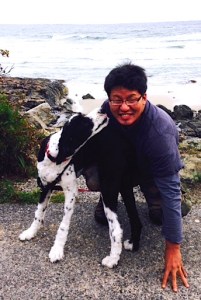
Bart Goldstein & Dog

Bart Goldstein – Survivor

I had speech therapy, physical therapy, and occupational therapy as an inpatient for three months at Helen Hayes Hospital. Then I had five more months of therapy as an outpatient at the hospital.

9. What problems or disabilities, if any, resulted from your brain injury
(e.g., balance, perception, personality, etc.)?

I have problems with walking, my speaking sensibly, control of anger, partial blindness, and memory.

10. How has your life changed? Is it better? Is it worse?

I am much more of a planner now than I was prior to accident. An article, “The Journey Back,” from Brain Injury Awareness Month a couple of years ago answers this question and most of the others: http://spotlightnews.com/uncategorized/2014/03/20/journey-back/

11. What do you miss the most from your pre-brain-injury life?

See the Spotlight article (address given in the answer to the question 10).

12. What do you enjoy most in your post-brain-injury life?

See the Spotlight article (address given in the answer to the question 10).

13. What do you like least about your brain injury?

See the Spotlight article (address given in the answer to the question 10).

14. Has anything helped you to accept your brain injury?

I’ve been helped by my Christian faith, my parents, and my sense of humor.

15. Has your injury affected your home life and relationships and, if so, how?

See the Spotlight article (address given in the answer to the question 10).

16. Has your social life been altered or changed and, if so, how?

See the Spotlight article (address given in the answer to the question 10).

17. Who is your main caregiver? Do you understand what it takes to be a caregiver?

My folks are my main caregivers. Caregiving takes a lot of love and more.

Bart & Joel Goldstein

Bart Goldstein – Survivor with Father, Joel Goldstein (author of “No Stone Unturned”)

18. What are your plans? What do you expect/hope to be doing ten years from now?

I hope to continue to heal and to find a good woman and settle down.

19. Are you able to provide a helpful hint that may have taken you a long time to learn, but which you wished you had known earlier? If so, please state what it is to potentially help other survivors with your specific kind of brain injury.

Learn patience. It’s a long haul.

20. What advice would you offer to other brain-injury survivors? Do you have any other comments that you would like to add?

Keep your faith and your sense of humor. Try alternative therapies.


(Disclaimer: The views or opinions in this post are solely that of the interviewee.)

If you would like to be a part of the SPEAK OUT! project, please go to TBI Survivor Interview Questionnaire for a copy of the questions and the release form.

(Clip Art compliments of Bing.)

(Photos compliments of contributor.)


As I say after each post:

Feel free to leave a comment by clicking the blue words “Leave a Comment” below this post.

Please follow my blog. Click on “Follow Me Via eMail” on the right sidebar of your screen.anim0014-1_e0-1

If you like my blog, click the “Like” button under this post.

If you REALLY like my blog, share it intact with your friends. It’s easy! Click the “Share” buttons below.

If you don’t like my blog, “Share” it intact with your enemies. That works for me too!

SPEAK OUT! . . . . . . . . . . . . . Itty-Bitty GIANT Steps

SPEAK OUT! Itty-Bitty GIANT Steps

presented by

Donna O’Donnell Figurski

Itty-Bitty GIant Steps for BlogSPEAK OUT! Itty-Bitty Giant Steps will provide a venue for brain-injury survivors and caregivers to shout out their accomplishments of the week.

If you have an Itty-Bitty Giant Step and you would like to share it, just send an email to me at neelyf@aol.com.

If you are on Facebook, you can simply send a Private Message to me. It need only be a sentence or two. I’ll gather the accomplishments and post them with your name on my blog approximately once a week. (If you do not want your last name to be posted, please tell me in your email or Private Message.)

I hope we have millions of Itty-Bitty Giant Steps.


Here is this week’s Itty-Bitty GIANT Steps


051916 Roberts, Crystal Caregiver for Son

Ethan – Survivor


Ethan (survivor)…submitted by his mother, Crystal Roberts (caregiver)…My son is

starting to crawl. He suffered a severe TBI (traumatic brain injury) and a stroke in an accident that happened two years ago.

This is my son’s first attempt.


Robert Williams (survivor)…Never thought I would garden again. I had a tumor surgically removed from my brain stem, and I was in a wheelchair for over five years afterwards. The doctors didn’t think I’d ever walk normally again (but God makes the impossible possible).

Pictures of me gardening.

Robert Williams 1

Robert Williams – Survivor

Robert Williams 2

Robert Williams 3

Robert Williams – Survivor


YOU did it!

Congratulations to contributors!

As I say after each post:anim0014-1_e0-1

Please leave a comment by clicking the blue words “Leave a Comment” below this post.

Feel free to follow my blog. Click on “Follow” on the upper right sidebar.

If you like my blog, share it intact with your friends. It’s easy! Click the “Share” buttons below.

If you don’t like my blog, “Share” it intact with your enemies. I don’t care!

Feel free to “Like” my post.


(Clip Art compliments of Bing.)

(Photo compliments of contributors.)

Survivors SPEAK OUT! Evan Powers

Survivors SPEAK OUT! Evan Powers

presented

by

Donna O’Donnell Figurski


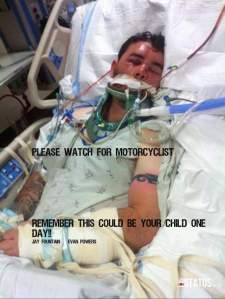
Powers, Evan Joseph Motorcycle

Evan Powers – Brain Injury Survivor

1. What is your name? (last name optional)

Evan Powers

2. Where do you live? (city and/or state and/or country) Email (optional)

Fort Mill, South Carolina, USA

3. On what date did you have your brain injury? At what age?

My brain injury happened on August 30th, 2014. I was 31.

4. How did your brain injury occur?

I was riding my Harley V-Rod Muscle with friends, and I was hit by an SUV. The driver, in a rush to buy smokes, turned illegally left and hit me. I died, was revived, fell into a coma, and “received” a traumatic brain injury (TBI) (diffuse axonal injury and brain stem damage). I had to relearn how to do everything! I’m doing very well, however – “What doesn’t kill you makes you stronger,” and I’ve proven to be a tough SOB. (LOL!)

5. When did you (or someone) first realize you had a problem?

At the scene of the accident

6. What kind of emergency treatment, if any, did you have?

A lot (LOL) – a craniotomy, arm surgery (compound fracture of my left arm), and intensive therapy (cognitive, vocational, physical, vocational, mental health, etc.). And I continued therapy (once a week and checkups).

Powers, Evan Joseph hospital

Evan Powers – Brain Injury Survivor

7. Were you in a coma? If so, how long?

Yes. I was in a coma a month.

8. Did you do rehab? What kind of rehab (i.e., inpatient or outpatient and occupational and/or physical and/or speech and/or other)? How long were you in rehab?

Yes. I did intensive inpatient therapy at Craig Hospital in Colorado (an incredible place!). Afterward, I continued with intensive rehab. Now I’m going only once a week.

9. What problems or disabilities, if any, resulted from your brain injury
(e.g., balance, perception, personality, etc.)?

I have balance issues, left-side weakness, and memory loss. I am prone to impulsivity and mood fluctuations.

10. How has your life changed? Is it better? Is it worse?

My life has changed in many ways – both negatively and, more importantly, positively! I suffer with balance issues, left-side weakness, memory issues, impulsivity, and emotional control issues. While those deficits suck (LOL), I’ve changed in so many ways for the better. I’m more positive. (I struggled with depression terribly before the accident.) I do not take life for granted, I am funnier and more fun-loving, and I am more passionate. Further, I’ve gained an understanding into the hell of having a TBI, and I have been moved to work with those who experience likewise – encouraging, sharing, and helping other survivors!

11. What do you miss the most from your pre-brain-injury life?

I miss some things – my job, my friends (lost a lot after the accident), having a sense of purpose, working, and – crazy as it may seem, considering what happened – riding my motorcycle (LOL). … But all in time!

12. What do you enjoy most in your post-brain-injury life?

I like how positive and passionate for life I am now. J

13. What do you like least about your brain injury?

I dislike not working and my left arm being weaker.

14. Has anything helped you to accept your brain injury?

Yes. I have been helped by friends, doctors, experience, time, and especially my mom!

15, Has your injury affected your home life and relationships and, if so, how?

Yes, very much so! I’m now divorced. (My ex and I had a rocky relationship before the accident.) Because of my problem with impulse control, I rush into relationships and “move too fast.”

16. Has your social life been altered or changed and, if so, how?

Yes. I lost a lot of friends after my accident. There were several reasons: my crazy behavior, being afraid of interacting with me, or just being “lousy friends” (LOL) – (for the best, I see now).

17. Who is your main caregiver? Do you understand what it takes to be a caregiver?

My mom is my main caregiver. She helps me out tremendously. I couldn’t have done what I did without her and my brother, Chris. Their love and support is much needed and is greatly appreciated!

18. What are your plans? What do you expect/hope to be doing ten years from now?

My future plans include going to school to get a degree in a field in which I can work with TBI survivors. I want to continue to heal, and I plan to start working part-time. I intend to better myself and help others, which has me excited!

Powers, Evan Joseph

Evan Powers – Brain Injury Survivor

19. Are you able to provide a helpful hint that may have taken you a long time to learn, but which you wished you had known earlier? If so, please state what it is to potentially help other survivors with your specific kind of brain injury.

Recovery from a TBI is brutal, but it gets better. Sometimes you run; other times, you crawl. Keep pushing and fighting – it’s worth it!

20. What advice would you offer to other brain-injury survivors? Do you have any other comments that you would like to add?

Be patient with yourself. Do the best you can – that’s all you can do. Keep fighting. I know that it’s hard, but it is worth the struggle! Also, reach out – get involved with other survivors. We understand each other more then others without injuries can. We’re family – rely on, encourage, and strengthen one another!


(Disclaimer: The views or opinions in this post are solely that of the interviewee.)

If you would like to be a part of the SPEAK OUT! project, please go to TBI Survivor Interview Questionnaire for a copy of the questions and the release form.

(Clip Art compliments of Bing.)

(Photos compliments of contributor.)


As I say after each post:

Feel free to leave a comment by clicking the blue words “Leave a Comment” below this post.

Please follow my blog. Click on “Follow Me Via eMail” on the right sidebar of your screen.anim0014-1_e0-1

If you like my blog, click the “Like” button under this post.

If you REALLY like my blog, share it intact with your friends. It’s easy! Click the “Share” buttons below.

If you don’t like my blog, “Share” it intact with your enemies. That works for me too!


Survivors SPEAK OUT! . . . . . . . Raquel (Rocky) Gloden

Survivors SPEAK OUT! Raquel (Rocky) Gloden

presented

by

Donna O’Donnell Figurski


Gloden, Raquel (Rocky Survivor1. What is your name? (last name optional)

My name is Raquel Gloden. I go by Rocky.

2. Where do you live? (city and/or state and/or country) Email (optional)

I live in Arizona, east of Phoenix; my email is brainyliferocky@gmail.com.

3. On what date did you have your brain injury? At what age?

I had my last TBI (traumatic brain injury) in October 2013; I had concussions prior to this last one – it just happened to be the worst. I was 35 years old when it happened.

4. How did your brain injury occur?

I was enjoying an outing with my family. I stopped to take a picture of my children, and when I stepped back to get a better view, I slipped on some sort of substance on the marble floor. I bounced the back of my head on the floor a couple of times – and that was it.

5. When did you (or someone) first realize you had a problem?

I went by ambulance right away and had it checked. I was told that it was a concussion and to take some ibuprofen and that I should start feeling better. I followed the doctor’s recommendation, but it got worse instead of better. I ended up back in the hospital a week later for other issues associated with it. They advised me to go get it checked out further.

6. What kind of emergency treatment, if any, did you have?

Other than a CT (or “CAT”; computerized tomography) scan, I did not have any other emergency treatment.

7. Were you in a coma? If so, how long?

No. I am very fortunate not to have been in a coma.

8. Did you do rehab? What kind of rehab (i.e., inpatient or outpatient and occupational and/or physical and/or speech and/or other)?

I did outpatient vestibular and occupational rehab.

How long were you in rehab?

I did this for a couple of months.

9. What problems or disabilities, if any, resulted from your brain injury
(e.g., balance, perception, personality, etc.)?

Oh wow! This is a loaded question. I have balance problems. I have vision issues. (I see double now.) I was diagnosed with symptomatic ADD (attention deficit disorder). I now suffer from depression. My personality has definitely changed – some good, some not so good. I try to maintain a positive outlook towards everything, but it is often a challenge. Before my medication was regulated (and before it was determined that I needed medication), it was much more difficult to function (from what I can recall). Oh yes, I have memory problems now too.

10. How has your life changed? Is it better? Is it worse?

My life has changed. Is it better or worse? … I don’t know. I am no longer employed at the career I had for fifteen and a half years – that is scary. But, I get to be home with my children for now. I think it is all in the way I look at it. There are many things I will not be able to do anymore that I would have liked to. But, not many people are afforded the perspective and opportunity that I have either.

11. What do you miss the most from your pre-brain-injury life?

I miss the old me. I was very outgoing, loved to be around people, and was almost always happy. I could multitask better than many. I could solve problems and issues within seconds.

12. What do you enjoy most in your post-brain-injury life?

I was able to find out who my friends really are. I am able to help create the person I want to become. Most of all, I get to be with my children.

13. What do you like least about your brain injury?

I dislike the headaches, double vision, depression, ADD, and the lack of understanding. Those issues that are personal – I can find a way to deal with them. The lack of understanding is the worst. It feels as though I am not listened to sometimes and, even if I am, I feel like people just don’t understand.friendsfamily

14. Has anything helped you to accept your brain injury?

I have a great support-team that includes my family and dear friends. I go to counseling weekly, and my counselor is very counselorsupportive. I have been learning about being more mindful, which has also helped immensely. Recently, I have found that the TBI community is very supportive as well. Many times I think that I have not truly accepted my TBI, but I am getting there.

15. Has your injury affected your home life and relationships and, if so, how?

Yes, very much so. There are some relationships that do not exist anymore. This was mostly due to my ending the relationship. I had a new perspective after my TBI, and I do not feel I have time for people who will bring me down or whom I feel uncomfortable around. This was not usually the other person’s fault, but I am not the same as I was. I need my TBI to be accepted, or I do not need them in my life. My home life changed for sure. My children saw the incident, and I deal with that trauma every time we walk by a wet spot on the ground. My husband is a wonderful man and very supportive. I was the breadwinner though, and this has had to change. He is such a great man – he has not complained one bit. He supports me in all I do. I am fortunate to have my mom around me too, and she is a huge support; my dad was very supportive before he passed away in 2014. They all have encouraged me to continue creating myself.

16. Has your social life been altered or changed and, if so, how?

As I stated before, I am not as outgoing. If I can, I often avoid situations in which there will be loud noises or too many people. This means that I don’t go to as many parties or social gatherings, and when I do, I do not stay like I used to. I don’t think I have as many friends as I thought I did.

17. Who is your main caregiver? Do you understand what it takes to be a caregiver?

My main caregiver is my husband. He is at home with me. My mom helps a lot too, especially with the kids when my husband is at work. I believe a caregiver helps when times are tough, and he or she encourages positive thoughts and actions. To me, a caregiver assists when needed, but is not enabling. A caregiver encourages independence.Gloden, Raquel (Rocky) 2 Survivor

18. What are your plans? What do you expect/hope to be doing ten years from now?

My future plans … I would like to speak about TBI and help people to better understand. There are subjects that people do not talk about at all, and I would like to bring light to them and to help people understand that they are not alone. I would also like for others to understand the hardships that follow TBI survivors – even when other people cannot see them.

19. Are you able to provide a helpful hint that may have taken you a long time to learn, but which you wished you had known earlier? If so, please state what it is to potentially help other survivors with your specific kind of brain injury.

I wish that I would have known when I was younger how concussions would have impacted me long term. I remember pushing it when I previously had concussions. They were not treated the same as now either, and I wish I knew then what I know now. Take care of your brain – it is the only one you will ever have.

20. What advice would you offer to other brain-injury survivors? Do you have any other comments that you would like to add?

My advice is to stay strong, but still allow yourself to cry. It is hard, but as long as the hard times decrease and the positive times increase, you are on the right track. Also, you are not alone. I know people may see you and think that there is nothing wrong, and they may even think it is all made-up, but the people who know you – the people who truly matter – know. And you know. And that is all that matters.


(Disclaimer: The views or opinions in this post are solely that of the interviewee.)

If you would like to be a part of the SPEAK OUT! project, please go to TBI Survivor Interview Questionnaire for a copy of the questions and the release form.

(Clip Art compliments of Bing.)

(Photos compliments of contributor.)


As I say after each post:

Feel free to leave a comment by clicking the blue words “Leave a Comment” below this post.

Please follow my blog. Click on “Follow Me Via eMail” on the right sidebar of your screen.anim0014-1_e0-1

If you like my blog, click the “Like” button under this post.

If you REALLY like my blog, share it intact with your friends. It’s easy! Click the “Share” buttons below.

If you don’t like my blog, “Share” it intact with your enemies. That works for me too!


So, Whaddya Think? . . . . . . . . . My Opinion: Football Is Safer With Kevlar Helmet Inserts

So, Whaddya Think?

My Opinion: Football Is Safer With Kevlar Helmet Inserts

by

Mike Doherty

presented

by

Donna O’Donnell FigurskiSo Whaddya Think Brain th-4

As a youth football coach, I am infuriated that more isn’t being done to spread the word about a great product out there that would greatly reduce the number of concussions. I came across it two years ago. It’s cheap, and you’d think the powers-that-be would jump all over it. Nope!

Southern Methodist University (SMU) did a study when their football players used this inexpensive piece of equipment in their helmets. The concussion rate dropped impressively.

American football is really a safe sport, considering the amount of contact involved. It’s just garnering the most attention because of the National Football League (NFL), where you have much bigger, stronger, and MUCH faster athletic men trying to hit each other. It’s controlled violence.

Mike doherty

Mike Doherty – TBI Survivor

Coaches now go through a lot of training on how to teach kids the proper way of tackling and how to recognize the possibility of a concussion. Trust me, it is probably the most important issue that’s been addressed on the field in the last few years. I’m glad concussions are finally being addressed. All in all, at the youth level, football is still pretty safe as compared with other sports. High school, college, and the pros are where you see concussions pick up. (The non-helmeted sports, like soccer and girls’ lacrosse, don’t get nearly the attention they should. For the life of me, I can’t understand why helmets are not worn in girls’ lacrosse.)

What’s the flip side of removing some of these sports for youths? The kids may then get into trouble doing crazy stuff. As kids, we did crazy stuff just being boys, and I played football.

Unequal Gyro

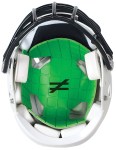
Inside of helmet with Unequal Gyro

That equipment I mentioned above is a helmet insert from Unequal Technologies. It’s a pad lined with Kevlar, the same material used in military helmets. It inserts into each helmet and disperses the energy from an

Kevlar for Football

The Unequal Gyro

impact throughout the pad, reducing greatly the severity of the impact itself. Unequal Technologies also promotes a headband for helmetless sports.

(Disclaimer: The views or opinions in this post are solely that of the contributor.)

So, Whaddya Think?

Let’s get a dialogue going. Post your comments in the Comment Section. Directions are below.

So . . . what do you think? Is there something you are passionate about in this Brain Injury (BI) world? Do you want to be heard? Your opinion matters! You can SPEAK OUT! on “So Whaddya Think?”

Simply send me your opinion, and I will format it for publication. Posts may be short, but please send no more than 500 words. Send to Neelyf@aol.com

I hope to HEAR from you soon.

As I say after each post:

Feel free to leave a comment by clicking the blue words “Leave a Comment” below this post.

Please follow my blog. Click on “Follow Me Via eMail” on the right sidebar of your screen.anim0014-1_e0-1

If you like my blog, click the “Like” button under this post.

If you REALLY like my blog, share it intact with your friends. It’s easy! Click the “Share” buttons below.

If you don’t like my blog, “Share” it intact with your enemies. That works for me too!

(Clip Art compliments of Bing.)

(Photos compliments of contributor)


Survivors SPEAK OUT! Jenn Von Hatten

Survivors SPEAK OUT! Jenn Von Hatten

presented

by

Donna O’Donnell Figurski


Von Hatten, Jenn Survivor & Hanna 121315

Jenn Von Hatten – survivor and daughter, Hanna

1. What is your name? (last name optional)

Jenn Von Hatten

2. Where do you live? (city and/or state and/or country) Email (optional)

Trenton, Nova Scotia, Canada     jlvonhatten@gmail.com

3. On what date did you have your brain injury? At what age?

My brain injury happened on Valentine’s Day 2011. I was 35 years old.

4. How did your brain injury occur?

My brain injury resulted from a motor vehicle accident caused by freezing rain.

5. When did you (or someone) first realize you had a problem?

The paramedics found me clinically dead at the scene. The doctors wanted to airlift me to the Queen Elizabeth II (QEII) Health Sciences Centre in Halifax, which is the biggest hospital in Nova Scotia. But the freezing rain affected the rotors on the helicopter, so I had to be taken by road ambulance.

6. What kind of emergency treatment, if any, did you have?

The pressure in my brain needed to be monitored to see if I needed surgery. I also lacerated my liver. Fortunately, I did not need surgery for either. I also fractured a rib and three vertebrae.

7. Were you in a coma? If so, how long?

I was in a coma for seven weeks. First, I was in a coma from the accident. Then I was in a medically induced coma because of my fractured rib and vertebrae. I managed to develop pneumonia, and I had a tracheotomy.

8. Did you do rehab? What kind of rehab (i.e., inpatient or outpatient and occupational and/or physical and/or speech and/or other)? How long were you in rehab?

I was transferred to the Rehab Centre in Halifax around Easter 2011, and I was discharged in July 2011. Besides being a patient at the Rehab Centre, I’ve had to go to physiotherapy and occupational therapy. My spastic muscles affected my speech, so I also went to speech therapy.

9. What problems or disabilities, if any, resulted from your brain injury
(e.g., balance, perception, personality, etc.)?

Von Hatten, Jenn survivor Son Liam 121315

Jenn Von Hatten – survivor and son, Liam

My balance has been severely affected. I used to be in a wheelchair, due to fractured vertebrae. I’ve since “graduated” to a walker, a quad cane, and a mini-quad cane. I’m a Fall Risk, and I get the Disability Pension.

10. How has your life changed? Is it better? Is it worse?

I have joint custody of my seven-year-old daughter, Hanna. I am no longer able to work as a nurse. My life has definitely changed, but I can’t say if it is better or worse. All I can say with certainty is that my life is DIFFERENT.

11. What do you miss the most from your pre-brain-injury life?

I miss being able to work as a nurse the most. As much as I would like to a work as a nurse, I know I would NOT be safe – mentally, in terms of remembering if I gave a client medication or treatments, or physically.

12. What do you enjoy most in your post-brain-injury life?

I enjoy my time with Hanna. It is her time, as I don’t work anymore. I now have a cat, Spunkster, which I got from the local SPCA. When Hanna’s not with me, I hang out with Spunkster.

13. What do you like least about your brain injury?

I had graduated as a nurse only seven months before my traumatic brain injury (TBI). I had wanted to be a nurse for over fifteen years. At least I can say I turned that dream into reality! I sometimes miss being able to drive. My rehabilitation doctor says I still cannot drive, as my reflexes are not up to snuff. However, I can say that my driver’s license has NOT been revoked!

14. Has anything helped you to accept your brain injury?

Becoming a nurse was my dream. I finally realized that, just because I am no longer able to work as a nurse, I STILL AM A NURSE! Being a nurse is STILL a part of me.

15. Has your injury affected your home life and relationships and, if so, how?

My youngest daughter’s father threw me out, as he said he was not happy. I remind myself that not many relationships survive a TBI.

16. Has your social life been altered or changed and, if so, how?

I don’t really have a social life, except maybe for going grocery shopping. I go by cab, so I interact with the cab divers, who are husband and wife. They own the cab company, and they are now good friends of mine. I prefer to interact with people in small groups.

17. Who is your main caregiver? Do you understand what it takes to be a caregiver?

Von Hatten, Jenn survivor daughters Emma and Hanna 121315

Jenn Von Hatten – survivor and daughters Emma and Hanna

I am my own caregiver now. Yes, I do understand what it takes to be a caregiver, as I used to be one. When I was in school to become a nurse, I worked as a CCA (Certified Care Assistant). A CCA can also be called PCA (Personal Care Assistant) or PCW (Personal Care Worker).

18. What are your plans? What do you expect/hope to be doing ten years from now?

My plan is to be helping others who are TBI survivors or caregivers. I can provide info and support.

19. Are you able to provide a helpful hint that may have taken you a long time to learn, but which you wished you had known earlier? If so, please state what it is to potentially help other survivors with your specific kind of brain injury.

Understand that a person does not need to be working (and therefore getting paid) to be fulfilling whatever he or she was meant to be. Find other ways – perhaps volunteering.

20. What advice would you offer to other brain-injury survivors? Do you have any other comments that you would like to add?

Figure out what you like doing and makes you happy. If you can’t remember, that’s OK – find out. (It’s what I wish I knew back in the beginning when I was first dealing with this.) Find out what you like and makes you happy RIGHT NOW! Everybody, brain injury or not, is constantly evolving.


(Disclaimer: The views or opinions in this post are solely that of the interviewee.)

If you would like to be a part of the SPEAK OUT! project, please go to TBI Survivor Interview Questionnaire for a copy of the questions and the release form.

(Clip Art compliments of Bing.)

(Photos compliments of contributor.)

As I say after each post: Please leave a comment by clicking the blue words “Leave a Commentanim0014-1_e0-1 below this post.

Feel free to follow my blog. Click on “Follow” on the upper right sidebar.

If you like my blog, share it intact with your friends. It’s easy! Click the “Share” buttons below.

If you don’t like my blog, “Share” it intact with your enemies. I don’t care!

Feel free to “Like” my post.


Survivors SPEAK OUT! Jennifer Stokley

Survivors SPEAK OUT! Jennifer Stokley

presented

by

Donna O’Donnell Figurski


Jennifer Stokely Survivor 0526151. What is your name? (last name optional)

Jennifer Stokley

2. Where do you live? (city and/or state and/or country) Email (optional)

Kutztown, Pennsylvania, USA

3. On what date did you have your brain injury? At what age?

May 10, 2007, was the day of my traumatic brain injury (TBI). I was 42.

4. How did your brain injury occur?

I fell out of a second story window of my home to the sidewalk below. I did what I now call my “Amazing, Exotic Jeni Bounce.” I was home alone. Please don’t ask me how the fall occurred. I have no clue, other than I know that back then I was a hard-core alcoholic. My TBI cured me of that completely! No withdrawal. I just never desired alcohol again. Odd, but wonderful!

5. When did you (or someone) first realize you had a problem?

My ex found me on the sidewalk. He thought I had fallen outside (no external injuries, strange). I used to have a seizure disorder back then, so my ex and some friends carried me inside, up the stairs, and put me on the bed. Then I started to have trouble breathing. My ex immediately called 9-1-1. The paramedics arrived, took me back downstairs, across the street at night, and worked on me under a streetlight in a public park. They understood something was terribly wrong then.

The thing I find funny about the whole thing, though, is that the emergency folks cut my clothes off right then and there – for the whole city block to see me naked – under lights! I showed my butt to the city! (LOL) Thank goodness I don’t live there anymore.

6. What kind of emergency treatment, if any, did you have?

I had two cardiac arrests during the life-flight to the hospital. I had ruptured my bladder (which they had to stitch back together like a patchwork blanket). I punctured my lung, due to one of my five broken ribs. I had broken my pelvis in three places. I also had broken my neck.

The only things I remember for sure are a breathing tube down my throat, the surgery on my belly to put my bladder back together, and the two times they restarted my heart. The rest is unknown to me. I haven’t asked; they haven’t told. That is my past. I survived. I do not wish to relive the past while I’m so busy living my present and focusing on my future.

7. Were you in a coma? If so, how long?

I was in a full coma for three weeks. My coma was a 3 on the Glasgow Scale. It’s the lowest score before death. (A score of 3 indicates a severe brain injury.) After all my surgeries and the use of all the professional skills to save my life, the surgeon actually came out to my Momma and said, “We’ve done all that we can. Now it’s in God’s hands.” It literally was. One day prior to their disconnecting my life-support, I took my first breath on my own! They were able to take me off of life-support, knowing I was going to survive. To what extent, they still had no clue, but at least I was no longer in a coma on life-support.

8. Did you do rehab? What kind of rehab (i.e., inpatient or outpatient and occupational and/or physical and/or speech and/or other)?

First, I went to inpatient therapy from the Intensive Care Unit for two and a half months. I was taken to a rehab room (by wheelchair with my “fun-catheter” along for the ride) to exercise a bit and then attempt to stand. (They said my standing would never really happen because of my broken neck, but I showed them. I stand just fine now, and when I leave the house, I walk with only a cane.) Later, when I was discharged, I was in outpatient therapy for … I don’t know how long. There, I did physical therapy, speech therapy, and cognitive therapy. (Speech therapy was a hoot. The therapist would hand me things to read out loud. The problem was I couldn’t see! I’m legally blind now. “Come on. Read the medical records already.” LOL Cognitive therapy was just as much fun – pegs in holes I was unable to see. LOL That didn’t last too long.)

How long were you in rehab?

Inpatient, two and a half months; outpatient, more than six months, I think

9. What problems or disabilities, if any, resulted from your brain injury
(e.g., balance, perception, personality, etc.)?

I have a severe anxiety disorder, cerebellar ataxia, aphasia (not much now, but it used to be severe), bladder/bowel control issues, and taste bud issues. I’m legally blind. Memory issues are HUGE. My ability to smell has been affected. I have issues with concentration and making decisions. My personality did a 180 on me, and for that, I am actually grateful. I was not a very nice person prior to my TBI.

10. How has your life changed? Is it better? Is it worse?

My life is harder than it was prior, but it is also so much better than it’s ever been. I will gladly take the difficulties to have such a wonderful life. I had no difficulties prior, and I had such a horrible life. Go figure. I gladly take the trade I’ve been handed.

11. What do you miss the most from your pre-brain-injury life?

I miss the memories. I lost 42 years of my life. All my memories are gone – my childhood, my college, my graduation, everything – poof, gone in a second. When I woke from my coma, I was a stranger even to myself. I was literally reborn. I was no longer “Jennifer.” I was “Jeni,” a child. I didn’t know anyone or anything. I had to be taught how to eat, how to walk, how to talk – like an infant. I was told things about Jennifer, but they were all foreign to me – even to this day. (But I sure don’t miss memories of three ex-hubbies, so I guess it’s cool with me anyway! LOL)

12. What do you enjoy most in your post-brain-injury life?

I enjoy that I am building my life from scratch. I am building it in a way that brings me joy and peace. I have reconnected with my family, which never would have happened if not for my TBI. That I guess is the best part of this all! I have my Momma and my big sister in my life now, and they never were before. Now they love me, look out for me, and help me just because they want to. I love them with all my heart!

13. What do you like least about your brain injury?Stokley, Jennifer Survivor 112815

I dislike my loss of independence and being legally blind. I will never be able to drive again, and, with my anxiety disorder, I can’t go anywhere without my family’s support anyway. So I can’t just get up and go, even if I feel like it. I have accepted it. But it doesn’t mean I always have to like it.

14. Has anything helped you to accept your brain injury?

Time and God have helped. Please let me explain a bit. It took me nearly five years to find my way through my “brain fog” to the light of awareness, where I could even look around and understand what the heck is even going on. When I mention “God,” please know I am not a believer of any formal religion of any kind. I sure wouldn’t understand any of it anyway. Sorry. I am fully a spiritual gal. I know God saved my life. I speak and pray directly to him privately. I believe in angels. I also feel that I am a part of all things of this earth, sky, and everything in-between. I do not, have never, and never will step inside any church. That is not something that my heart desires. My connection is full and complete. I need nothing more and nothing less.

15. Has your injury affected your home life and relationships and, if so, how?

I had a “love of my life” prior to my TBI. He tried – truly he did – post TBI. He stuck it out for three years, but I myself never emotionally reconnected with him. I do know he loved me. He used to come home from the hospital, walk half way up the stairs, and collapse in tears. He became my full-time caregiver and friend, but emotionally I was unable to love him back. So I personally set him free to find love again, and he has – with a baby on the way. YAY!

16. Has your social life been altered or changed and, if so, how?

My social life changed big time, but it improved big time. My social life had been with drunk folks at the bar and such. I never drink at all post TBI. I never miss drinking for some strange reason. So that circle of folks is no longer in my life. At first, my social life consisted of “my dad,” a neighbor who just cared so much that he would spend about an hour every day with me. Sometimes he would take me places. He always made sure I was safe. My social life now consists of wonderful, caring neighbors who accept me knowing my limitations. They help when needed and spend time with me “just because.” My biggest social life consists of my family, who, for 30+ years, really weren’t much of a part of my life at all.

17. Who is your main caregiver? Do you understand what it takes to be a caregiver?

I am and have been my main caregiver for six years now. I had no one after my ex-boyfriend/caregiver left. I was completely alone. I do, however, understand in many ways what it takes. Many of my dear friends who I know so well on the Internet are caregivers of survivors. They fill me in totally and honestly. I also help them to maybe know what their loved one is thinking when a reaction occurs, things that may stimulate the survivor, things that the survivor may enjoy, etc.

18. What are your plans? What do you expect/hope to be doing ten years from now?

My life will be pretty much what I do now – “pay my life forward” to other survivors and caregivers by helping them – sometimes with info or sometimes with laughter, music, inspiration, joy, etc. I am permanently and totally disabled, so I truly believe that “work” is out of my future. That’s okay with me, truly. I love what I do now, and, as my father used to always say, “If it works, don’t fix it.”

19. Are you able to provide a helpful hint that may have taken you a long time to learn, but which you wished you had known earlier? If so, please state what it is to potentially help other survivors with your specific kind of brain injury.

Realize it is what it is!

20. What advice would you offer to other brain-injury survivors? Do you have any other comments that you would like to add?

Please never rush it. You’ll get there when you’re ready to get there – not a second sooner. It may take years and years, but when YOU are ready, you’ll know it.

Tell folks to get over themselves and their ignorance if they ever say, “Just get over it.” It takes a lifetime!

If you’re unable to do something right now, always say, “I can’t do it AS OF YET!” It leaves room for possibility and hope for your future!


(Disclaimer: The views or opinions in this post are solely that of the interviewee.)

If you would like to be a part of the SPEAK OUT! project, please go to TBI Survivor Interview Questionnaire for a copy of the questions and the release form.

(Clip Art compliments of Bing.)

(Photos compliments of contributor.)

As I say after each post: Please leave a comment by clicking the blue words “Leave a Commentanim0014-1_e0-1 below this post.

Feel free to follow my blog. Click on “Follow” on the upper right sidebar.

If you like my blog, share it with your friends. It’s easy! Click the “Share” buttons below.

If you don’t like my blog, “Share” it with your enemies. I don’t care!

Feel free to “Like” my post.


Survivors SPEAK OUT! Alisa Noah


Survivors SPEAK OUT! Alisa Ann Noah

presented

by

Donna O’Donnell Figurski


Noah, Alisa Ann L7l38moCWms-awgtIo9_70iApASPda_FVoPydfH1Eav5cCUnvpSudWfhdApNDrmPOqCkIcYbJLDfkrIxawI0Iu_D3IeGgzKZ1Whh7Lc2pmxdyJbB19_Vw114VdME3ant9vsNlq-qX9SNXn7SApjHhzoVZqU1ToqtwiFTpWcqKJ9lbUSBAV0pVh-fvnXN3tkGrsqt1hPzAODSjNBFrDOOjJ-u_iGQ547W

1. What is your name? (last name optional)

Alisa aka “El Dorado”

2. Where do you live? (city and/or state and/or country) Email (optional)

North Carolina, USA

3. On what date did you have your brain injury? At what age?

February 2012

4. How did your brain injury occur?

My brain injury came from a motor vehicle accident. I wasn’t at fault. My truck was rear-ended at 50+ mph. Because my truck had no headrests, my head hit the back glass.

5. When did you (or someone) first realize you had a problem?

Immediately

6. What kind of emergency treatment, if any, did you have?

I was first treated in the Emergency Room. Scans and X-rays were taken. Later I had a neck brace, cervical epidurals, other cervical injections, and physical therapy.

7. Were you in a coma? If so, how long?

No

8. Did you do rehab? What kind of rehab (i.e., inpatient or outpatient and occupational and/or physical and/or speech and/or other)?

I did physical therapy.

How long were you in rehab?

Three months of 3 days a week

9. What problems or disabilities, if any, resulted from your brain injury
(e.g., balance, perception, personality, etc.)?

I have vision loss; migraines; balance issues; sleep problems; mood problems; memory loss; anxiety; and pain, pain, pain. Unexpected loud noises send me into a panic.

10. How has your life changed? Is it better? Is it worse?

My life got worse for about three years. I have recently started to make progress with happiness and finding new ways to keep busy.

11. What do you miss the most from your pre-brain-injury life?

I miss my career as a horse trainer, and I miss college.

12. What do you enjoy most in your post-brain-injury life?

Retirement (LOL)

13. What do you like least about your brain injury?

I dislike the pain and my physical limitations.

14. Has anything helped you to accept your brain injury?

Friends and new hobbies have helped me accept my brain injury.

15. Has your injury affected your home life and relationships and, if so, how?

Yes. People don’t understand my thought process or mood swings.

16. Has your social life been altered or changed and, if so, how?

Yes. I fear driving. I don’t engage in social activities much anymore.

17. Who is your main caregiver? Do you understand what it takes to be a caregiver?

My mother and my roommate are my main caregivers.

18. What are your plans? What do you expect/hope to be doing ten years from now?

Hmmm, I’m not sure. I take things one day at a time. 🙂

19. Are you able to provide a helpful hint that may have taken you a long time to learn, but which you wished you had known earlier? If so, please state what it is to potentially help other survivors with your specific kind of brain injury.

Don’t let doctors just throw pills at you. After I had been told for almost three years that my condition is permanent, I recently learned that I can heal from it. Do your research. Some doctors are really no help.

20. What advice would you offer to other brain-injury survivors? Do you have any other comments that you would like to add?

NEVER let your “disabilities” define who you are as a person! You are and always will be just as valuable and important as anyone else. Never let anyone tell you otherwise. Stay strong!

(Disclaimer: The views or opinions in this post are solely that of the interviewee.)

If you would like to be a part of the SPEAK OUT! project, please go to TBI Survivor Interview Questionnaire for a copy of the questions and the release form.

(Clip Art compliments of Bing.)

(Photos compliments of contributor.)

As I say after each post: Please leave a comment by clicking the blue words “Leave a Commentanim0014-1_e0-1 below this post.

Feel free to follow my blog. Click on “Follow” on the upper right sidebar.

If you like my blog, share it with your friends. It’s easy! Click the “Share” buttons below.

If you don’t like my blog, “Share” it with your enemies. I don’t care!

Feel free to “Like” my post.


diemodi jewelry

uniquely hand-crafted jewelry by donna

Welcome to Harmony Kent Online

The home of all things books

Pete Springer

Passionate Teacher and Future Children's Author

HOPE TBI

Helping Other People Excel - To Be Independent

For the Love of Books, Old and New

Katie Fischer, Writer and Reader of Stories

Charlie Bown

Children's Author

Jessica Hinrichs

“We write to taste life twice, in the moment and in retrospect.” ― Anais Nin

VIVIAN KIRKFIELD - Writer for Children

Picture Books Help Kids Soar

Mindy’s Writing Wonderland

For authors, parents, teachers & everyone who loves children’s books.

Kaitlyn Leann Sanchez

Literary Agent

Surviving Traumatic Brain Injury

TBI - Survivors, Caregivers, Family, and Friends

The Care Factor

Loving someone with a Traumatic Brain Injury

Brain Injury Support Group of Duluth-Extension

Brain Injury Information and SUPPORT

Brain Aneurysm Global Insight

Brain Aneurysm, cerebral hemorrhaging, hemorrhage stroke