Survivors SPEAK OUT! . . . . . . Ina M. Dutkiewicz
Survivors SPEAK OUT! Ina M. Dutkiewicz
presented
by
Donna O’Donnell Figurski

Ina M. Dutkiewicz – Survivor
1. What is your name? (last name optional)
Ina M. Dutkiewicz, pronounced “Ena”
2. Where do you live? (city and/or state and/or country) Email (optional)
Milford, Michigan, USA inadutkiewicz@gmail.com
3. On what date did you have your brain injury? At what age?
I had my brain injury on February 3, 2010. I was 43 years old.
4. How did your brain injury occur?
While driving to work, I slid through a stop sign because of black ice. I was hit by a pickup truck.
5. When did you (or someone) first realize you had a problem?
I was immediately put into a coma.
6. What kind of emergency treatment, if any, did you have?
I was in the Neuro-Intensive Care Unit for three weeks. A feeding tube was in my belly, and an incision was made in my forehead (to relieve the pressure on my brain from bleeding, I think).
7. Were you in a coma? If so, how long?
Yes. I was in a coma for a total of four and a half weeks. My coma was not medically induced.
8. Did you do rehab? What kind of rehab (i.e., inpatient or outpatient and occupational and/or physical and/or speech and/or other)?
I started inpatient rehab for six weeks at a head injury place where I had to live (Origami in Mason, Michigan). Then I was able to transition to outpatient rehab. I still have to return daily for therapies and doctor appointments. I have done physical therapy, occupational, speech, and language therapies, driving therapy, and vocational therapy
How long were you in rehab?
I did rehab for a total of five years. I still do counseling every other week.
9. What problems or disabilities, if any, resulted from your brain injury (e.g., balance, perception, personality, etc.)?
I have gait issues, memory problems, and word-finding difficulty. My personality changed. (I’m more docile – easy going – now.) My pelvis was broken on both sides from my seat belt, which means I have daily pelvis/hip pain. I have also had a headache every day since my car accident. Some days, they’re only pressure; others, pounding.
10. How has your life changed? Is it better? Is it worse?
My life has changed 100%. My husband divorced me a year after my car accident, so now I live with my mom. I do not work. I am on disability, which is barely enough to live on.
11. What do you miss the most from your pre-brain-injury life?
I miss my friends.
12. What do you enjoy most in your post-brain-injury life?
I like that I am more laid back and not as serious.
13. What do you like least about your brain injury?
I dislike that I feel lost some days. I’m not working, and I don’t have anything worthy to put my hand to. My kids are now grown and living on their own. They have their own families. Also, my ex-husband has moved on to a girlfriend. It’s like I was left behind. 😦
14. Has anything helped you to accept your brain injury?
My Christian faith has been a HUGE help to me.
15. Has your injury affected your home life and relationships and, if so, how?
I have no friends from my past (pre-TBI) life. It is sad.
16. Has your social life been altered or changed and, if so, how?
My life has totally changed. I now spend my days with my mom – going to things she enjoys at the Senior Center. I am not really with people my age. While I enjoy the time with her, I long for age-appropriate friends.
17. Who is your main caregiver? Do you understand what it takes to be a caregiver?
My mom is my main caregiver. Yes, I realize how my TBI has changed her life. I know that she has had to give up things to support me.
18. What are your plans? What do you expect/hope to be doing ten years from now?
I really would like to get a part-time job in the future. My experience is with office work. I was an Executive Assistant before my car accident, helping with payroll and AP/AR (accounts payable/accounts receivable) on top of taking care of all correspondence that left the car dealership I worked at.
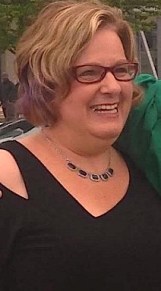
Ina M. Dutkiewicz – Survivor
I19. Are you able to provide a helpful hint that may have taken you a long time to learn, but which you wished you had known earlier? If so, please state what it is to potentially help other survivors with your specific kind of brain injury.
My helpful hint is that it is okay to be different. In a lot of cases, brain injury truly is an invisible disability. In outward appearance, we look “normal” (whatever that is). That means that we can easily blend in, but oftentimes it is hard to keep up. We need to find our own group of people to hang out with who understand where we are coming from and what we deal with on a daily basis. A support-group is a good place to start.
20. What advice would you offer to other brain-injury survivors? Do you have any other comments that you would like to add?
Don’t give up on yourself. Others can turn away and leave you, but your strength comes from you – no one can ever take that away from you. AND, you can rely on yourself to struggle through your low days and celebrate your victories!
(Disclaimer: The views or opinions in this post are solely that of the interviewee.)
If you would like to be a part of the SPEAK OUT! project, please go to TBI Survivor Interview Questionnaire for a copy of the questions and the release form.
(Clip Art compliments of Bing.)
(Photos compliments of contributor.)
As I say after each post:
Feel free to leave a comment by clicking the blue words “Leave a Comment” below this post.
Please follow my blog. Click on “Follow Me Via eMail” on the right sidebar of your screen.
If you like my blog, click the “Like” button under this post.
If you REALLY like my blog, share it intact with your friends. It’s easy! Click the “Share” buttons below.
If you don’t like my blog, “Share” it intact with your enemies. That works for me too!

 As many of us know, all brain injuries are different. When an injury has happened to any part of the brain, there is going to be a change. The part of the brain that was damaged will determine the kind of symptoms that will be experienced. Because the brain is a complex organ in which different areas communicate, some damage may cause unexpected behaviors or emotional changes.
 It’s been a long time since my brain injury. My emotions can be extreme or opposite to what they should be. Change is hard, and I don’t like change. Friends left, and family has never accepted my brain injury.
 He also says his memory is damaged, and he can’t remember a lot of things.
 right meds before another migraine comes on. (He usually experiences over twenty migraines a month.)
 In a nutshell, Jason said, “Lack of love.”
 After his injury, Alan experienced intense anger and confusion. His bizarre behavior and sudden change from calm to fiery led Janet to believe her post-injury husband had two personalities. She likened Alan’s behavior to that of Dr. Jekyll and Mr. Hyde, which she found very frightening. (I’m sure Janet is not alone in her fears. I have heard comments such as these in my brain-injury support-groups too many times to count.)
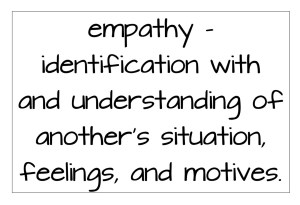 The caregiver, family, and friends need to understand that the survivor’s outburst may occur because of his or her frustration with the reality of the new life – lacking the ability to do the things he or she once did easily and/or experiencing loss of independence and/or the realization of a futile situation. Also, an outburst might be triggered by uncontrolled pain, depression, or any number of ailments. So, showing compassion or empathy, providing comfort, support, and encouragement will go a long way to helping your survivor.
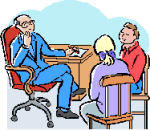 Get counseling. Counseling for both the survivor and the caregiver (or family member) can be helpful. Visiting a
  I was diagnosed as being moody at nine years old. I still have that diagnosis to this very day: “mood disorder due to brain injury.” I also have anxiety and panic attacks. I still have today most of the same problems I had back then, just in an expanded manner.
 I know my parents wondered why I acted out, and they took me to multiple specialists during my youth. I was diagnosed with optic nerve damage, but no other problems resulting from my head injury were identified. Each doctor gave my parents the same answer: “There is no logical explanation as to why she is doing this now when she did not do it before the head injury.

 During my teenage years and into my 20s and even 30s, I had depression on and off. It got better after I had a hysterectomy. When my behaviors started to level out a lot, I was able to control myself better and move past other issues by actually learning not to do this or that.



 One of the most difficult aftereffects of brain injury is losing oneself. Depending on the injury and which part of the brain is impacted determines the type of emotional and behavioral change in one’s personality. A person who was agreeable, complacent, reasonable, and calm before the injury may change drastically to one who is violent, depressive, or struggles with anger management. These effects are not easy for others to understand – BUT, have you thought about how difficult it must be for the survivor?

 SPEAK OUT! Itty-Bitty Giant Steps will provide a venue for brain-injury survivors and caregivers to shout out their accomplishments of the week.
 I finally smiled again – I mean a real smile. It is the simple things, folks … the simple things.


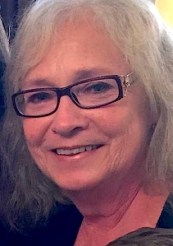

 I am new to this diagnosis of brain injury. For the last few years, I have had several unexplained symptoms – my life was spinning out of control. No one was listening to me. No one was asking the right questions. A few weeks ago, my father took me to the Emergency Room. He was desperately seeking help because I had no control of my emotions. I was placed in a locked-down psychiatric unit.






 12. What do you enjoy most in your post-brain-injury life?
 20. What advice would you offer to other brain-injury survivors? Do you have any other comments that you would like to add?


 Raising Awareness of Traumatic Brain Injury - one view at a time. Thanks for visiting my blog
 Surviving Traumatic Brain Injury
Recent Comments