Caregivers SPEAK OUT! . . . Drew Niemann
Caregivers SPEAK OUT! Drew Niemann
presented by
Donna O’Donnell Figurski
01. What is your name? (last name optional)
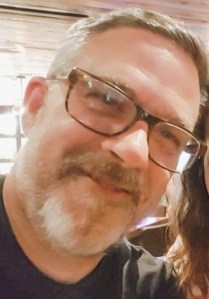
Drew Niemann
2. Where do you live? (city and/or state and/or country) Email? (optional)
Lancaster, Pennsylvania, USA
3. What is the brain-injury survivor’s relationship to you?
My wife, Terry
-How old was the survivor when he/she had the brain injury?
(No answer)
-What caused your survivor’s brain injury?
Terry had a bicycle accident and two falls, which resulted in three concussions within three years. The second impact syndrome certainly played a role. (Second impact syndrome happens when the brain swells rapidly shortly after a person suffers a second concussion before symptoms from an earlier concussion have subsided.)
4. On what date did you begin care for your brain-injury survivor?
On and off – beginning in September 2014
-Were you the main caregiver?

Yes
-Are you now?
I’m more of a “support” person now.
-How old were you when you began care?
49
5. Were you caring for anyone else at that time (e.g., children, parents, etc.)?
No
6. Were you employed at the time of your survivor’s brain injury?
Yes
-If so, were you able to continue working?
Yes
7. Did you have any help?
Yes
–If so, what kind and for how long?
On and off for days and weeks
8. When did your support of the survivor begin (e.g., immediately – in the hospital; when the survivor returned home; etc.)?
Immediately
9. Was your survivor in a coma? If so, what did you do during that time?
No

10. Did your survivor have rehab?
Yes
-If so, what kind of rehab (i.e., inpatient and/or outpatient and occupational, physical, speech, and/or other)?
Terry had physical, occupational, speech, vestibular, and vision therapies – all as an outpatient.
-How long was the rehab?
The duration of therapy depended on the particular injury being treated.
-Where were you when your survivor was getting therapy?
(No answer)
11. What problems or disabilities of your brain-injury survivor required your care, if any?
Day to day living; assistance in accommodating and with medical appointments
12. How has your life changed since you became a caregiver? Is it better? Is it worse?
Some days are better; some days, worse.
13. What do you miss the most from pre-brain-injury life?
I miss outdoor and physical activities.
14. What do you enjoy most in post-brain-injury life?
I have a clearer understanding of what is important in life.
15. What do you like least about brain injury?
I dislike what the brain injury has taken from Terry and the pain it has caused her and continues to cause her.
16. Has anything helped you to accept your survivor’s brain injury?
Time
17. Has your survivor’s injury affected your home life and relationships and, if so, how?

Yes. Roles changed in the household. Terry’s no longer able to work as a teacher, so it has affected us financially as well.
18. Has your social life been altered or changed and, if so, how?
Yes. We cannot do the things we once did or do them to same level. We need to choose differently now.
19. What are your plans? What do you expect/hope to be doing ten years from now?
(No answer)
20. What advice would you offer other caregivers of brain-injury survivors? Do you have any other comments that you would like to add?
Be patient. Learn as much as you can. Take time for yourself. Be sure to allow your loved one to do what he or she capable of. If you can and if it is possible, allow for his or her independence.
Get Your Copy Now
Read It! Review It! Listen to It!

Click Links under Book
PAPERBACK! Read it Now! e-BOOK! Read it Now! AUDIO BOOK Listen to it Now!
Stay Safe and Healthy!
Clip Art compliments of Bing.)
(Photos compliments of contributor.)
As I say after each post:
Please leave a comment by clicking the blue words “Leave a Comment” below this post.

Feel free to follow my blog. Click on “Follow” on the upper right sidebar.
If you like my blog, share it intact with your friends. It’s easy! Click the “Share” buttons below.


 16. Has your social life been altered or changed and, if so, how?
 Learning how to use my legs has been especially difficult. My parents bought an assist-bar at Home Depot and mounted it to the wall, a little below chest height. I can use my wheelchair to wheel up to the bar and practice standing up, do squats, stand up, and let go and learn how to balance.


 feelings of a memory.
 Ramirez and his collaborators (including first author Briana Chen of Columbia University) used genetically engineered mice whose neurons glow when they’re activated. Those cells can later be artificially activated with laser light. The team found that a negative memory (like getting a mild electric shock to the feet) activates cells at the bottom of the hippocampus. A positive memory (like being in the presence of a female mouse) activates cells at the top of the hippocampus.

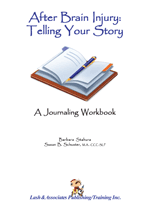 This workbook by Barbara Stahura and Susan B. Schuster guides survivors of brain injury and blast injury through the powerful healing experience of telling their own stories with simple journaling techniques.









 6. What kind of emergency treatment, if any, did you have?
 It can happen to anyone, anytime, . . . and anywhere.
 continue to this day. I have completed speech and vision therapies, and I am continuing physical and occupational therapies. Cognitively, I am 100% there, but physically, not so much. Although I am not wheelchair-bound, I have lost the ability to walk from the accident. Through physical therapy, I have progressed to using a cane and a walker. I can walk with minimal assistance a good seventy feet.


 Raising Awareness of Traumatic Brain Injury - one view at a time. Thanks for visiting my blog
 Surviving Traumatic Brain Injury
Recent Comments