TBI – Survivors, Caregivers, Family, and Friends

Posts tagged ‘“Prisoner Without Bars: A Caregiver’s Story”’

SPEAK OUT! Guest Blogger . . . Ric Johnson . . . . . . . . . . . . . . . . . . Why You Should Tell Your Brain-Injury Story

Why You Should Tell Your Brain-Injury Story

by

Ric Johnson

presented

by

Donna O’Donnell Figurski


Boy Blogger thMarch is Brain Injury Awareness Month.  It’s said that brain injuries constitute an invisible and silent epidemic. Invisible? Yes, because most times we, “the walking wounded,” seem fine and because there isn’t a high-profile celebrity who is a spokesperson for brain injuries. Silent? Yes, again, because most of us prefer to blend in and don’t have a public forum to speak from.

Is it possible to stop having brain injuries called “silent” or “invisible”? Yes, it is. It’s all about educating the general public.

Let’s start first by explaining. What is the difference between a mild, moderate, or severe traumatic brain injury (TBI)? According to my dictionary, “traumatic” means “shocking,” “devastating,” “alarming,” “distressing,” “terrifying,” “upsetting,” “wounding,” and even more adjectives. Which seems like there is no such thing as a “mild” or “moderate” traumatic brain injury. The only apparent difference is what caused the injury. A brain injury is a different kind of injury. We didn’t break our arm; we broke our brain. We didn’t remove a cast after eight weeks and get on with life; we needed to relearn, refocus, and re-navigate into our old lives if or when possible. There isn’t a 100% healing process – any person who had a brain injury still has a brain injury and is still recovering.

Concussion seems to be a brain injury that’s mentioned everywhere these days. That’s good – people are beginning to understand concussions. But, concussions are mainly (not always) from sports (football, skating, soccer, and skiing, to name a few). I probably had two concussions after getting hit by cars. I didn’t think I had a concussion at the time, but the more I think about it now, the more I believe I had a concussion from each. I didn’t have any major problems that I can think of, but the accidents happened many years ago.

Johnson, Richard la5-seQbctqTwXPuELQm7w3ZPSPra73-BTYsV2TzFrmHjlfsj8CAdfvj1wnfejETg2tSTJ4rfqDvOL9oMI_160CYm__3H82mWGki2QEVhZYz8ZLYhqad7IsWyOqj_li8nObQrOkqqzVt95fKknyW4oNd7A0fSkhYMnExzhzeBcwPbATtvzU5LI-TdmefuMcdZc7l959--u6H5aNYtBUCZmiCBS0BWSmt

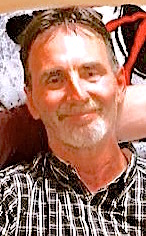
Ric Johnson – Brain Injury Survivor

Traumatic brain injuries seem to be getting more attention as well. A TBI may seem as the most serious type of brain injury, but only because of the circumstance that caused the injury (a violent blow/jolt to the head or an object penetrating the skull). Most people think TBIs come from actions like bomb blasts, combat, violent shootings, or horrible car accidents. Well, falls are main causes of TBIs – falling down stairs, falling from a ladder, falling when attempting to cross the street, etc.

My injury happened when I fell from a ladder while cleaning the gutters on my house in October 2003. I spent one month in HCMC (Hennepin County Medical Center) in a medically induced coma. I needed craniotomy surgery to relieve swelling on my brain. I had many MRI (magnetic resonance imaging) and CAT (computerized tomography) scans, a feeding tube, a tracheotomy, a session in the hyperbaric chamber, etc.

After waking from my coma, I spent the next two months in two different hospitals to see what, if any, therapy would be necessary. I started with physical, occupational, and speech therapy sessions daily. In January 2004, I was released and was back at home. I wore a protective helmet until the bone flap was reinserted on my skull in February 2004. I continued with speech and occupational therapies at Courage Kenny (Center) from January to September 2004. I went back to my full-time job in October 2004.

Since then, I have become a member of the Minnesota Brain Injury Alliance Speaker Bureau, and a facilitator for the Courage Kenny Brain Injury Support Group. It looks like I recovered nicely, but looks can be deceiving. It may seem like most survivors can go back to their pre-injury occupations. In fact, most survivors cannot.Typewriter 4C

So what can survivors do? They can become advocates for all survivors. Let the public know that a brain injury is perhaps the worst injury of all. It doesn’t just happen to one person; it happens to the entire family as well. Let the public know by telling your story.


Thank you, Ric Johnson.

Disclaimer:
Any views and opinions of the Guest Blogger are purely his/her own.

(Clip Art compliments of Bing.)

(Photos compliments of Ric Johnson)

As I say after each post: Please leave a comment by clicking the blue words “Leave a Commentanim0014-1_e0-1 below this post.

Feel free to follow my blog. Click on “Follow” on the upper right sidebar.

If you like my blog, share it (intact) with your friends. It’s easy! Click the “Share” buttons below.

If you don’t like my blog, “Share” it (intact) with your enemies. I don’t care!

Feel free to “Like” my post.


Another Fork in the Road Reasonable, Responsible, & Realistic Resolutions

“Another Fork in the Road”

Fork in the Road copyThis category is an extension of my radio show, “Another Fork in the Road,” which airs at 5:30 pm (Pacific Time) on the 1st and 3rd Sundays of each month on the Brain Injury Radio Network. (See the “On The Air Show Menu” category for a list – with links – of all my shows, which are archived and thus always available.)

On the 1st Sunday of each month, I host a panel of brain injury survivors, caregivers, and/or professionals in the field. On these shows, my panelists and I examine topics pertaining to brain injury.

On the 3rd Sunday of each month, I host guests – brain-injury survivors, caregivers, or professionals in the field.

Since I spend countless hours in preparation for each show, I decided to share the knowledge that I gather with my readers.


Reasonable, Responsible, & Realistic Resolutions

by

Donna O’Donnell Figurski

 

blank list of resolutions on blackboard

New Year’s Day has passed. A new year is always a time of renewal – a time to look back on the past year and make positive commitments for the upcoming year. As humans, we seem to strive to improve, to make life better. The new year is a good time to correct old mistakes and to look to the future and make new plans.

I think this topic is appropriate now, as we look back on the past two months to determine if we are honoring our New Year’s resolutions. Did we, in fact, make reasonable, responsible, and realistic resolutions?

 It feels like the whirlwind of the holidays happened eons ago, and yet it’s just been two months. If you are like most of the population, you probably made resolutions on New Year’s Day – promises to yourselves that you would do something in your life to better it. In the days after the New Year’s celebration, you will see more people in the gym or running through the streets – maybe decked out in new running clothes to increase their motivation. You might hear folks talking about the new diet they are going to try to lose those unwanted pounds. Some folks vow to stop smoking or drinking, or at least they intend to cut down. Folks promise to take more time for family or friends, save money, travel more. new-years-resolutionsThe list goes on and on. Usually these resolutions are good intentions for the year that last maybe a week or two – perhaps even a month – but for whatever reason or reasons – time, lack of interest or motivation – many of these good intentions fall by the wayside.

Each new year, I usually make the resolution to exercise more. I start off okay, but not long after New Year’s Day is past, the motivation walking_girlstarts to wane. Lack of time, or more like “inability to properly manage time,” is a big factor for me. I seem to be always too busy with tons of projects, most of them involving writing. I work daily on my blog. I spend hours preparing my radio show. I’m writing articles for publication, and, of course, I have to write a lot of query letters to agents and publishers as I try to sell my book, “Prisoners Without Bars: A Caregiver’s Story.” It seems that the only things that ever get any exercise are my brain … and my fingers as they fly over the keyboard. Uh, did I say “fly”? I meant more like “stumble.” Most of my projects have deadlines – if not actual ones, then at least self-imposed ones. So, due to my over-commitments, this year I chose not to make any resolutions that I know I will not keep. Not keeping my resolutions only makes me feel like a failure, and that is not productive. I bet a lot of people fall into this category.

Folks with a brain injury are continually working to improve their lives, and New Year’s resolutions may seem even more important. Brain-injured people are used to taking small steps, but the temptation for New Year’s resolutions may be to try to do too much.

I’m going to discuss how to keep interest up and to make it possible to reach the goal of a reasonable, responsible, and realistic resolution.

DO YOU ENJOY YOUR GOAL?

Don’t have a goal you will never want to do. That’s a recipe for disaster. Is your resolution such a chore that you can easily find any excuse to NOT do it? If you’d rather clean toilets than complete your resolution, then perhaps you should reassess your resolution. toilet1I can pretty much guarantee that you will not be successful and that lack of success is certainly going to instill feelings of failure. I think a big part of being successful in keeping a resolution is to give the goal some thought first.

DECIDE HOW YOU WILL IMPLEMENT YOUR GOAL

If you want to get more sleep and go to bed earlier, then set an alarm for 30 minutes before your desired bedtime so you can start your sleep in bedbedtime preparations. If you want to always remember where your keys are, put a hook on the wall and ALWAYS hang your keys there. You will never have to search your home again for keys. Following a routine makes life easier. That goes for anything. Also, use available tools (calendar, Post-It notes, smart phone, etc.) to help you keep organized.

KEEP A TRACK RECORD

By keeping a record of your accomplishments, you are setting yourself up for success. You could keep a record in a journal-like notebook. journalSimply write the date at the top of the page, and write what you accomplished that day (e.g., Sit-ups – 5 minutes; Meditated – 10 minutes). You could also simply use a calendar dedicated just to your resolution and write your activity under each day that you do it. If you are computer savvy, you could keep a spreadsheet. Place the days in the left column; list the activities across the top. Then just put a checkmark in the box corresponding to day and activity. That would be the way I would do it.

I like to see my progress. It motivates me. I enjoy seeing how well I am doing – or NOT doing, so that I can readjust and improve. It may work for you too.

BE PATIENT – YOUR GOAL WILL NOT BE ACCOMPLISHED OVERNIGHT

Your success will not happen overnight. It will take time. You may even become lax at times, but don’t worry. The record keeping that we spoke of above will help to get you back on track.

Before his brain injury in 2005, my husband, David, used to do a half hour of his version of Tai Chi every morning. He’d run twenty miles each week, and he’d regularly lift small weights to strengthen weight_lifting_13his arms. He was fit and healthy. He exercised not only for his health, but also to leave the stress of his laboratory behind. David’s disabilities are all physical, including severely compromised balance, which makes him unable to run. He regrets this, but he has turned his attention to the treadmill – with its handrails – for exercise. He has also recently acquired a recumbent trike, which allows him to pedal away on his own with no danger of falling. None of this was possible when David first arrived home from the hospital. He was confined to wheelchair and bed. He could not even stand unassisted. It was a slow process – one that he has worked on over the past eleven years, but with small steps and small increments of exercise, he is gaining his strength and his independence.

So, no matter what your goal is, BE PATIENT. Reach for the stars, but remember, it will take time.

BE FLEXIBLE

If you choose a goal that you find is not appropriate – it’s too hard, it’s too easy, or you are not enjoying it – QUIT IT!

?????????????????????????????

It’s your life, and you can make the choices. Because you are a brain-injury survivor, I am sure there are many goals you would like to accomplish. Make new resolutions. (It doesn’t have to be a new year.) And, mix it up.

If you are not seeing the progress you want – for whatever reason, choose something else to work on. You can always come back and try again later. That’s why I encourage you to make reasonable and realistic resolutions. You want success to be imminent.

Once David tried a form of therapy on the recommendation of a friend who insisted that it helped her greatly, and, in fact, it did help her. David tried it for quite a long time and dedicated himself to it, but found it tedious and boring. He soon quit and set his sights on something more enjoyable that was not going to make him miserable. That’s where the flexibility comes in. Do what works for you.

TRY SOMETHING NEW

I mentioned earlier to “mix it up.” That’s not a bad idea for anyone. If boredom sets in, your chance of success will fall greatly. You won’t reach your proposed goal, and you will become disenchanted with the activity. The feelings of failure are right behind. So, don’t put yourself in that position. Make a new resolution, and try something different. It can be something different that is still familiar, or it can be something so different that you have never done it before.David on Recumbent Trike

I want to go back to the story of David’s recumbent trike. In his adult life, he never rode a bicycle. As I mentioned, his preferred method of exercise was to run. When that was no longer a viable exercise mode, he turned to a recumbent trike. That has changed his post-brain-injury life. Before the trike, David was unable to leave the house alone. Now he can leave whenever he wants to. He is able to go to the garage, get on his trike, ride for several hours, and return. (The only thing he cannot do is get off the trike anywhere else because his balance issues do not allow him to walk freely outdoors.) So, try something you have never done before. Maybe you always wanted to draw or paint. Do it.

HAVE A BUDDY FOR SUPPORT

You may want to exercise with a buddy. Exercise can be much easier with a friend. I much prefer walking and talking or treading water in the deep end of a pool and talking or rotating through the machines in the gym and talking. Are you seeing a pattern here? I find exercising with a friend much more enjoyable than exercising alone. No matter what your goal is, if you can do it with someone else, it makes the exercise easier. It also adds an element of accountability. If you have made plans with a friend, you are more likely to meet your goal.swimming

For most survivors with brain injury, life has drastically changed. The kinds of resolutions that you may have made before your brain injury are now more than likely impossible to attain. But, that doesn’t mean that you can’t set goals that you can successfully achieve. The gym may be out of the question, but you can set aside some moments at home for leg lifts, small weights, push-ups, stepping-in-place, etc. You can do anything to keep your body fit.

Each brain injury is different. The disabilities that accompany each brain injury are wide and varied. For some folks, the injury entails only cognitive/learning disabilities or emotional issues. For others, the brain injury might include physical disabilities.

So basically, you want to assess what you can do to improve your life while not being miserable. You want to make resolutions that can fit into your lifestyle. You don’t want to set your goals so high that they cannot be achieved. But, if you set your goals too high, change them. Make your resolutions reasonable, responsible, and realistic. Most of all, make them FUN.

have_fun


Click here to listen to my show:

“Responsible Resolutions” on “Another Fork in the Road,” on the Brain Injury Radio Network.”

(Clip Art compliments of Bing.)

As I say after each post: Please leave a comment by clicking the blue words “Leave a Commentanim0014-1_e0-1 below this post.

Feel free to follow my blog. Click on “Follow” on the upper right sidebar.

If you like my blog, share intact it with your friends. It’s easy! Click the “Share” buttons below.

If you don’t like my blog, “Share” it intact with your enemies. I don’t care!

Feel free to “Like” my post


So, Whaddya Think? Opinion: Rethinking the Design of Football Helmets

So, Whaddya Think?

 My Opinion: Rethinking the Design of Football Helmets

by

David Lloyd

presented

by

Donna O’Donnell Figurski


So Whaddya Think Brain th-4The reason for a hard helmet in American football is to prevent deaths from skull fractures. The attempts to make bigger and thicker helmets have been based on trying to absorb linear impact force, but that’s based on the faulty notion that linear impact force is related to brain injury (Condi, 2015).

It is the sudden rotation of the head that actually causes brain injury (Meaney, Morrison, & Bass, 2014). A bigger helmet “leverages” rotation, increasing the likelihood of brain injury (2016, January). We need to rethink helmet design entirely. I suggest using an artificial scalp (Aare, 2003), like the leather helmets from the 1930s (Stamp, 2012, October), with a springy, lightweight, carbon-fiber framework to absorb linear impact. The design should include guarding the mouth and chin.

11998344_873343152701235_1064470731_n

David Lloyd – Brain Injury Survivor

Another possibility would be a variation of the so-called “invisible helmet” (Haupt & Alstin, 2016), which is like the airbag in a car. Players would wear invisible-helmet-collars, which instantly expand to cushion the head upon impact. (While I think this could be a great idea for bicyclists, I suspect it would not work for football, but since it occurred to me just now, I thought I would include the idea.)

I would also put a couple of strategically placed, clear, and inexpensive disposable gelatin capsules in the helmet. These gelatin capsules would contain a bright-colored liquid dye in the center. When an impact is sharp enough to cause the gelatin capsule to release the dye, the capsule turns bright red (assuming a red dye was used) to indicate a possible brain injury. The moment a player’s dye-capsule breaks, that player is out of the game (possibly along with the opponent who hit the player). A light-sensor could trigger an electronic ID number to be broadcast instantly to officials, so an appropriate response could happen immediately. Every incident in which a dye-capsule is broken is recorded as a possible sub-concussive injury. Players with too many sub-concussive injuries can no longer play, regardless of apparent brain health.Gelatin Capsules.jpg

In addition, a smart phone-based application (Lathan, Spira, Bleiberg, Vice & Tsao, 2013) is used to test the player’s response times to a short series of tests, with scores compared with a baseline. Concussion is diagnosed on the field when the player’s test score is significantly different from his baseline. If a concussion is diagnosed, the player does not return to the field, and, at the discretion of the physician, the player may be treated with a neuroprotective drug, such as NeuroStat® (Campbell, Elmér, & Bronnegard, 2015), to prevent the death of neurons, which generally occurs before the symptoms of concussion are apparent.

th-1I think the Kevlar insert sounds like a very good idea. Put that layer next to the head, below the artificial scalp I suggested. This in turn is to be below a light weight, springy framework, which I imagined would absorb linear impact by rapidly changing shape and then dissipating the energy by vibrating. The artificial scalp layer, in addition to sliding to absorb rotational impact, would also insulate the player from damage due to the vibration energy.

The three most important issues are (1) detecting potential sub-concussive injuries when they happen and before they cause symptoms (via the gel-capsules), (2) protecting against skull-fracture, and (3) protecting against sharp rotation, which requires a helmet with a much smaller surface area.

Many studies (Kis, Saunders, Hove, & Leslie, 2004) over the years have concluded that protecting against linear impact is equivalent to protecting against rotational impact. If one reads only abstracts and conclusions from these studies, one may be led to believe rotational factors don’t need consideration. However, only recently have there been any attempts to measure rotational damage, and even in those cases, the tests actually measure linear impact from various angles. They assume it is possible to infer information about rotational impact from this information (Kis, Saunders, Irrcher, Tator, Bishop, & Hove, 2013).Concussion

I don’t believe a linear impact test provides any significant data regarding rotational injury to the brain. I think a meaningful test of rotational impact is with my dye-in-gelatin suggestion. It is simply not possible to design a laboratory test that can reliably measure all possible angles of force (Hernandez, Shull, & Camarillo, 2015) created in a multi-vector, real-situation impact. I have yet to see a meaningful test of damage caused by compression waves (Laksari, Wu, Kurt, Kuo, & Camarillo, 2015), which, depending on frequency, can be augmented by hard objects, such as helmets or even the skull itself. Create a clear-gel facsimile of a brain, add a few grapes to the gelatin to simulate denser areas of the brain, put it in a structure like a skull, wrap the skull in something analogous to skin and hair, and put THAT in a helmet. Then spin it, and drop it onto a fast-moving conveyor belt. Now count the fractures in the gelatin per cubic millimeter (using a microscope), and you will have BEGUN to create a meaningful model of what happens in a brain injury. It is likely that one cannot realistically study impact on the brain unless the artificial brain is connected by a neck to a body (Hernandez, Shull, & Camarillo, 2015).

I think attempting to reform the game would meet such extreme resistance that all kinds of misinformation would get published – obscuring the facts and preventing change. A better approach is to detect and track sub-concussive injuries before they compound to a level that threatens lives or affects mental performance.

Some are suggesting the elimination of football, but this “solution” makes no sense unless we eliminate all contact sports. I know boxing is much worse than football, in terms of the risk of brain injury. I’m pretty sure I could find evidence to indicate thatth-2 hockey and soccer are statistically more likely to cause brain injuries than football, but even basketball, track, wrestling, swimming, skating, ice skating, and even bicycling present similar dangers. [Actually, football is second only to cycling, followed by baseball and basketball for associated brain injuries (Sports-related Head Injury, 2014, August)]. In my mind, the greater danger to the collective health of the nation would be the elimination of these various sports (Devine, & Zafonte, 2009). Humans need to be active, and there is no way to eliminate the potential danger of living a healthy life.


So, Whaddya Think?

Let’s get a dialogue going. Post your comments in the Comment Section. Directions are below.

So . . . what do you think? Is there something you are passionate about in this Brain Injury (BI) world? Do you want to be heard? Your opinion matters! You can SPEAK OUT! on “So Whaddya Think?”

Simply send me your opinion, and I will format it for publication. Posts may be short, but please send no more than 500 words. Send to Neelyf@aol.com

I hope to HEAR from you soon.

As I say after each post:

Feel free to leave a comment by clicking the blue words “Leave a Comment” below this post.

Please follow my blog. Click on “Follow Me Via eMail” on the right sidebar of your screen.anim0014-1_e0-1

If you like my blog, click the “Like” button under this post.

If you REALLY like my blog, share it intact with your friends. It’s easy! Click the “Share” buttons below.

If you don’t like my blog, “Share” it intact with your enemies. That works for me too!

(Clip Art compliments of Bing.)

(Photos compliments of contributor)

SPEAK OUT! Guest Blogger Heather Sivori Floyd . . . . . Thoughts from a Caregiver Mom

Thoughts from a Caregiver Mom

by

Heather Sivori Floyd

presented

by

Donna O’Donnell Figurski


Girl Blogger cartoon_picture_of_girl_writingThere is nothing sweeter or more rewarding in life than spending time and helping those with special challenges.

I do not like the word “disability,” so I use “special challenges.” Why define people by what they are or are not capable of? While some days my heart hurts from my knowing the challenges that TJ (now 13) will face in life, my heart is actually very full from my spending the time with him that I do.

Heather Sivori Floyd 1

Heather Sivori Floyd – Caregiver

As I tucked TJ in the other night, I just sat there in a moment of silence and reflected back on everything we have been through. He has an innocence about him now. But I was overcome with a moment of sadness thinking about all that was ripped from TJ at such a young age (7 years old) and the special challenges that he will be faced with in adulthood.

I try not to think like that, but sometimes a parent does. I would say that it is quite normal. The burden a parent carries when advocating for his or her child with special challenges will at times take your breath away. You constantly question if you are doing the right thing or if you could be doing more. You realize that, even into adulthood, your child’s ability to have a voice is gone. You will forever be your child’s voice. You accept that, and you do what you have to do to make that voice heard – even if it means roaring.

TJ Floyd Survivor 021116

TJ – Brain Injury Survivor

Over the years, people have told me not to worry about the future. But it is never a possibility. I know my mom-friends in a similar position will understand this. When in a position like this, you have to think about it. It’s really not an option. You are the sole caregiver, and if you do not make a plan for the future, no one else will. Also many programs to help children like TJ as an adult have a mile-long waiting list (meaning years).

TJ Floyd Survivor 021216

TJ – Brain Injury Survivor

Being TJ’s sole caregiver has been challenging and exhausting but, at the same time, very rewarding. I have learned so much about myself and my desire to help others. I have learned from TJ about the human spirit and not giving in. He amazes me daily. Yes, things are very elementary for TJ now. His day consists of food, cartoons, therapy, etc. – very basic needs. In-depth conversation has never been a possibility with my son since his brain injury so mercilessly ripped away his dignity and his ability for independence. The list goes on. But that doesn’t mean we give up. TJ certainly has not.

With love and persistence, TJ has defied the odds. After all, 60-80% of patients typically do not survive an acute subdural hematoma, even with surgery. TJ did. He continues to defy the odds and what we were told would be our “new normal.”

Heather Sivori Floys TJ 4

Heather Sivori Floyd, caregiver for her son, TJ

I am often asked how I do it. (It is a general question, and it is the most-asked question from many family members and friends over the years.) I just do it. You do not have a choice. Many times your heart hurts like no other, but you keep going because you are it for them. There is no one else. You learn to draw on inner strength. You learn to keep it together because you can’t afford to break down.

In my case, I learned from my son how to love life and still laugh. TJ does daily. If he can, then so can I. It doesn’t make the special challenges any easier or the decisions to be made any

Heather Sivori Floyd & TJ

Heather Sivori Floyd and her son, TJ

less hurtful. What it does is fill your heart with an overwhelming love. I am honored to know a person like TJ in my life. He is the definition of courage, strength, hope, and love. I’ve said it before, and I will say it again: He is my hero. To overcome daily adversity with a smile on his face makes him downright amazing. No matter where he ends up intellectually, TJ will always be pretty amazing to me.


Thank you, Heather Sivori Floyd.

Disclaimer:
Any views and opinions of the Guest Blogger are purely his/her own.

(Clip Art compliments of Bing.)

(Photos compliments of Heather Sivori Floyd)

As I say after each post: Please leave a comment by clicking the blue words “Leave a Commentanim0014-1_e0-1 below this post.

Feel free to follow my blog. Click on “Follow” on the upper right sidebar.

If you like my blog, share it (intact) with your friends. It’s easy! Click the “Share” buttons below.

If you don’t like my blog, “Share” it (intact) with your enemies. I don’t care!

Feel free to “Like” my post.

Survivors SPEAK OUT! Jeremy Dorr


Survivors SPEAK OUT! Jeremy Dorr

presented

by

Donna O’Donnell Figurski


042315 Dorr, Jeremy

Jeremy Dorr – Brain Injury Survivor

1. What is your name? (last name optional)

Jeremy Dorr

2. Where do you live? (city and/or state and/or country) Email (optional)

Lynchburg, Virginia, USA

3. On what date did you have your brain injury? At what age?

September 15, 2013. I was 25.

4. How did your brain injury occur?

Car accident

5. When did you (or someone) first realize you had a problem?

My brain injury was first noticed by the doctors at the hospital.

6. What kind of emergency treatment, if any, did you have?

I had a tracheotomy.

7. Were you in a coma? If so, how long?

I was in a medically induced coma for one and a half weeks.

8. Did you do rehab? What kind of rehab (i.e., inpatient or outpatient and occupational and/or physical and/or speech and/or other)? How long were you in rehab?

I did outpatient rehab at the Sheppard Center for six weeks.

9. What problems or disabilities, if any, resulted from your brain injury
(e.g., balance, perception, personality, etc.)?

I have a problem with control of my emotions. Others say that I am slower than before.

10. How has your life changed? Is it better? Is it worse?

I worked at UPS, and I drove a Bobcat. I lost both jobs as result of the traumatic brain injury (TBI).

11. What do you miss the most from your pre-brain-injury life?

I miss the friends and working. (My “hobby” was working.)

12. What do you enjoy most in your post-brain-injury life?

Helping others.

13. What do you like least about your brain injury?

I dislike the loss of my prior life. I also dislike the effects that my TBI has had on my daughter.

14. Has anything helped you to accept your brain injury?

I learned to look for the positive in all situations and to stay positive.

15. Has your injury affected your home life and relationships and, if so, how?

Dorr, Jeremy

Jeremy Dorr – Brain Injury Survivor

Yes. I pay attention to my family more. My brain injury has brought me closer to them.

16. Has your social life been altered or changed and, if so, how?

Yes. I rarely hear from the friends I had before – if I hear from them at all.

17. Who is your main caregiver? Do you understand what it takes to be a caregiver?

I am my own caregiver. Yes, I do understand what it takes to be a caregiver.

18. What are your plans? What do you expect/hope to be doing ten years from now?

My plan is to help TBI survivors after they come home and are getting their lives back together. I want them to know that they are not alone.

19. Are you able to provide a helpful hint that may have taken you a long time to learn, but which you wished you had known earlier? If so, please state what it is to potentially help other survivors with your specific kind of brain injury.

Be positive, no matter what. Positive brings more positive. Remember, you’re still here, so you can help make the change also. Believe in yourself.

20. What advice would you offer to other brain-injury survivors? Do you have any other comments that you would like to add?

The outlook on life has changed, but with change, great things can come. Let go of the hatred of what happened and embrace the “new” you. You are awesome! Don’t respond to negativity. Believe in yourself.

(Disclaimer: The views or opinions in this post are solely that of the interviewee.)

If you would like to be a part of the SPEAK OUT! project, please go to TBI Survivor Interview Questionnaire for a copy of the questions and the release form.

(Clip Art compliments of Bing.)

(Photos compliments of contributor.)


As I say after each post:

Feel free to leave a comment by clicking the blue words “Leave a Comment” below this post.

Please follow my blog. Click on “Follow Me Via eMail” on the right sidebar of your screen.anim0014-1_e0-1

If you like my blog, click the “Like” button under this post.

If you REALLY like my blog, share it intact with your friends. It’s easy! Click the “Share” buttons below.

If you don’t like my blog, “Share” it intact with your enemies. That works for me too!

Brain Injury Resources: . . . Movies & Documentaries About Sports and Brain Injury

Brain Injury Resources: Movies & Documentaries

About Sports and Brain Injury

presented

by

Donna O’Donnell Figurski


The following are in alphabetical order.

Brain th-2


Concussion

Concussion

ConcussionThis drama is based on the discovery of CTE (chronic traumatic encephalopathy) in the brains of deceased former NFL (National Football League) players by forensic neuropathologist Dr. Bennet Omalu. CTE is a serious disease of the brain, found mostly in football players. It is caused by concussions and repeated sub-concussive hits. CTE has been found to cause several neurological problems, including early memory loss, impulsive behavior, and dementia. The movie details Dr. Omalu’s life, especially after his discovery, and the walls that he had to tear down to make this discovery known.

The movie, currently in theaters, stars Will Smith as Dr. Bennet Omalu.

Movie details and trailer are at http://www.sonypictures.com/movies/concussion/.


Gridiron Gladiators

Gridiron Gladiators

Gridiron Gladiators This movie documents the history of football since the late 1800s. It depicts how football has evolved through the years and shows the extreme violence of the game. This documentary shows that, though football is one of America’s favorite sports, it is in dire need of reformation to reduce greatly or cease the possibility of getting a brain injury.

A stream of this documentary can be rented for $7 at http://gridirongladiatorsmovie.com/. Click “Stream Movie” to see the trailer.


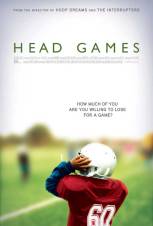
Head Games

Head Games

Head Games This documentary is not just about American football, but about any sport that can readily cause brain injury, including soccer and hockey. George Visger, a former NFL (National Football League) player for the San Francisco 49ers, states in the documentary, “It’s been known for a long time that banging your head over and over and over again can be a bad thing.” This documentary also addresses the risks of children playing sports that can cause brain injury.

See it free online at http://www.hulu.com/watch/446640.


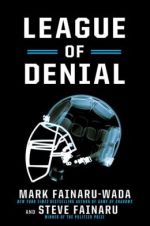
League of Denial

League of Denial

League of Denial: The NFL’s Concussion CrisisThis Frontline documentary shows the role of the NFL (National Football League) in the serious problem of getting concussions on the playing field. It unveils the stories of several NFL players who were diagnosed posthumously with CTE (chronic traumatic encephalopathy), a disease of the brain discovered by forensic neuropathologist Dr. Bennet Omalu. The story of Dr. Omalu and his discovery of CTE in American football players is the basis for the movie “Concussion.”

See it free online at http://www.pbs.org/wgbh/frontline/film/league-of-denial/.

Read about it on my blog at

https://survivingtraumaticbraininjury.com/2016/01/06/so-whaddya-think-football-puts-childrens-brains-at-risk/.


The Crash Reel

The Crash Reel

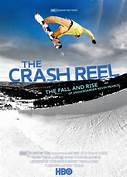
The Crash Reel” This documentary is a gripping 4+ star movie about Kevin Pearce, a champion snowboarder who was expected to win a gold medal in the 2010 Winter Olympics. While training on the half-pipe, Kevin missed his mark and severely slammed his head. His dream of an Olympic gold medal disappeared as he was faced with a traumatic brain injury (TBI). You will see breathtaking footage of Kevin snowboarding before his TBI.

See it free online at https://vid.me/x2HU/the-crash-reel. See the trailer at https://www.youtube.com/watch?v=2KkFZ-QC53Q.


The United States of Football

The United States of Football

The United States of Football This documentary is yet another look at the dangers of concussions in American football. It features 40-year-old Kyle Turley, former player for the New Orleans Saints, the St. Louis Rams, and the Kansas City Chiefs, as he talks about his fears and concerns about his own possible impending memory loss and dementia. It features other former NFL (National Football League) players who are in the throes of brain damage and shows how their lives have collapsed after repeated concussions. It delves into the harm that football can cause youngsters, whose brains are still developing.

A stream of this documentary can be rented for $3.99 at http://theusof.com/store.

The trailer can be seen at https://www.youtube.com/watch?v=Z8JMSMvWsBE.

Read about it on my blog at https://survivingtraumaticbraininjury.com/2015/10/19/4643/.


As I say after each post:

Feel free to leave a comment by clicking the blue words “Leave a Comment” below this post.

Please follow my blog. Click on “Follow Me Via eMail” on the right sidebar of your screen.anim0014-1_e0-1

If you like my blog, click the “Like” button under this post.

If you REALLY like my blog, share it intact with your friends. It’s easy! Click the “Share” buttons below.

If you don’t like my blog, “Share” it intact with your enemies. That works for me too!

(Clip Art compliments of Bing.)


So, Whaddya Think? . . . My Opinion: Sports Benefits Outweigh the Risks

So, Whaddya Think?

My Opinion: Sports Benefits Outweigh the Risks

by

 Charles Ross

presented

by

Donna O’Donnell Figurski

So Whaddya Think Brain th-4I was eighteen when I had my traumatic brain injury (TBI) in a car accident in 1985. I was brought back to life once. I was in a coma for fifty days. I was in a wheelchair for one and a half years. I have memory problems. My body drew up into a fetal position. It took seven years of painful surgery and therapy and close to thirty procedures to straighten my legs, feet, arms, and hands. Thirty years later, my claw-shaped right hand looks like it has rheumatoid arthritis, but I use it. I write with that hand and walk with a cane in it. Three years after my accident, I went back to college. It took three years of difficult work to get my first Associate Degree and two years for a second in Mechanical Drafting, AutoCAD. I worked fifteen difficult years doing AutoCAD. Not one day since my accident has been easy for me. I am proud of what I accomplished, and I hope my story will be an inspiration to others.

Ross Jr., Charles Survivor 112415 copy

Charles Ross Jr. TBI Survivor

I know personally how tragic it is if a person gets hurt or killed accidentally, but that’s life. I don’t want to seem like life does not matter to me – because it does. (My life now is precious to me. I cherish each moment I have with family or friends. Hundreds, maybe thousands, of people, whom I never would have met otherwise, have blessed my life.) I am not heartless; I am very compassionate. I cry when I hear a tragic story of any kind. I know what life is. I know what death is. And I know what pain and suffering are.

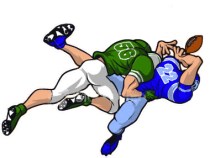
I played three years of high-school football. Many guys were much bigger than I was, and I was fortunate not to get hurt. It was my third year of driving when I had my accident. Throughout my recovery, I looked back at the grueling football practices, and they football-player-tackling-cartoon-football-playersinspired me to go forward. What a sport does is teach sportsmanship, pride, respect, and loyalty, and it inspires one to do better.

Should I never ride in a car or even drive again because somebody has gotten hurt in a car accident? A baseball player may get hit in the head by a pitch, but now players have helmets to protect them. (There isn’t protective headwear in basketball, volleyball, tennis, or soccer, but maybe there should be.) Thousands of people end up in Emergency football_-_helmet_5Rooms or even in morgues because they fall while walking and hit their head. Should every man, woman, and child wear a helmet simply to walk? It seems just as foolish to end all athletics.


So, Whaddya Think?

Let’s get a dialogue going. Post your comments in the Comment Section. Directions are below.

So . . . what do you think? Is there something you are passionate about in this Brain Injury (BI) world? Do you want to be heard? Your opinion matters! You can SPEAK OUT! on “So Whaddya Think?”

Simply send me your opinion, and I will format it for publication. Posts may be short, but please send no more than 500 words. Send to Neelyf@aol.com

I hope to HEAR from you soon.

As I say after each post:

Feel free to leave a comment by clicking the blue words “Leave a Comment” below this post.

Please follow my blog. Click on “Follow Me Via eMail” on the right sidebar of your screen.anim0014-1_e0-1

If you like my blog, click the “Like” button under this post.

If you REALLY like my blog, share it intact with your friends. It’s easy! Click the “Share” buttons below.

If you don’t like my blog, “Share” it intact with your enemies. That works for me too!

(Clip Art compliments of Bing.)

(Photos compliments of contributor)

SPEAK OUT! NewsBit . . . . . Mental Decline Causes a Hero of Super Bowl XL to Regret Playing Professional Football

Mental Decline Causes a Hero of Super Bowl XL to

Regret Playing Professional Football

presented

by

Donna O’Donnell Figurski


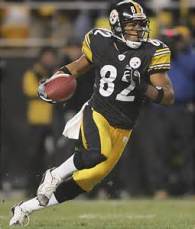
Newsboy thAmerican football wide receiver Antwaan Randle El, who played for the Pittsburgh Steelers, is fondly remembered for doing a reverse and then throwing a touchdown pass to ice the National Football League’s Super Bowl XL, played February 2006 against the Seattle Seahawks. The final score was 21-10.

th-1

Antwaan Randle El #82 former Pittsburgh Steeler

Randle El retired early in 2010. Now 36, he has trouble with his memory and has difficulty on stairs. He fears what the violence of football has done to his brain and regrets playing professionally. An all-around athlete, Randle El had been drafted by the Chicago Cubs, a U.S. professional team in Major League Baseball, but his life-path brought him to football. He said in an interview by the Pittsburgh Post-Gazette, “If I could go back, I wouldn’t (play football.) I would play baseball.”


antwaan-randle-el-0071-002

Antwaan Randle El – former Pittsburgh Steeler

Randle El wants to see his kids grow up and to know his grandkids. He is aware of recent brain research and the problems associated with playing football, so he is worried about his own neurological health. He said, “It’s a tough pill to swallow because I love the game of football. … It just comes down to it’s a physically violent game. … I wouldn’t be surprised if football isn’t around in 20, 25 years.” (Full story)


(Clip Art compliments of Bing.)

As I say after each post: Please leave a comment by clicking the blue words “Leave a Commentanim0014-1_e0-1 below this post.

Feel free to follow my blog. Click on “Follow” on the upper right sidebar.

If you like my blog, share it (intact) with your friends. It’s easy! Click the “Share” buttons below.

If you don’t like my blog, “Share” it (intact) with your enemies. I don’t care!

Feel free to “Like” my post.

So, Whaddya Think? . . . . . . . . . My Opinion: Football Is Safer With Kevlar Helmet Inserts

So, Whaddya Think?

My Opinion: Football Is Safer With Kevlar Helmet Inserts

by

Mike Doherty

presented

by

Donna O’Donnell FigurskiSo Whaddya Think Brain th-4

As a youth football coach, I am infuriated that more isn’t being done to spread the word about a great product out there that would greatly reduce the number of concussions. I came across it two years ago. It’s cheap, and you’d think the powers-that-be would jump all over it. Nope!

Southern Methodist University (SMU) did a study when their football players used this inexpensive piece of equipment in their helmets. The concussion rate dropped impressively.

American football is really a safe sport, considering the amount of contact involved. It’s just garnering the most attention because of the National Football League (NFL), where you have much bigger, stronger, and MUCH faster athletic men trying to hit each other. It’s controlled violence.

Mike doherty

Mike Doherty – TBI Survivor

Coaches now go through a lot of training on how to teach kids the proper way of tackling and how to recognize the possibility of a concussion. Trust me, it is probably the most important issue that’s been addressed on the field in the last few years. I’m glad concussions are finally being addressed. All in all, at the youth level, football is still pretty safe as compared with other sports. High school, college, and the pros are where you see concussions pick up. (The non-helmeted sports, like soccer and girls’ lacrosse, don’t get nearly the attention they should. For the life of me, I can’t understand why helmets are not worn in girls’ lacrosse.)

What’s the flip side of removing some of these sports for youths? The kids may then get into trouble doing crazy stuff. As kids, we did crazy stuff just being boys, and I played football.

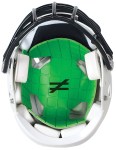
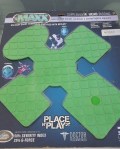
Unequal Gyro

Inside of helmet with Unequal Gyro

That equipment I mentioned above is a helmet insert from Unequal Technologies. It’s a pad lined with Kevlar, the same material used in military helmets. It inserts into each helmet and disperses the energy from an

Kevlar for Football

The Unequal Gyro

impact throughout the pad, reducing greatly the severity of the impact itself. Unequal Technologies also promotes a headband for helmetless sports.

(Disclaimer: The views or opinions in this post are solely that of the contributor.)

So, Whaddya Think?

Let’s get a dialogue going. Post your comments in the Comment Section. Directions are below.

So . . . what do you think? Is there something you are passionate about in this Brain Injury (BI) world? Do you want to be heard? Your opinion matters! You can SPEAK OUT! on “So Whaddya Think?”

Simply send me your opinion, and I will format it for publication. Posts may be short, but please send no more than 500 words. Send to Neelyf@aol.com

I hope to HEAR from you soon.

As I say after each post:

Feel free to leave a comment by clicking the blue words “Leave a Comment” below this post.

Please follow my blog. Click on “Follow Me Via eMail” on the right sidebar of your screen.anim0014-1_e0-1

If you like my blog, click the “Like” button under this post.

If you REALLY like my blog, share it intact with your friends. It’s easy! Click the “Share” buttons below.

If you don’t like my blog, “Share” it intact with your enemies. That works for me too!

(Clip Art compliments of Bing.)

(Photos compliments of contributor)


On The Air: . . . . . . . . . . . . . . Brain Injury Radio . . . . . . . . “Another Fork in the Road” with Ann Boriskie, Director of Brain Injury Peer Visitor Assn.

On The Air: Brain Injury Radio “Another Fork in the Road” 

with

Guest: Ann Boriskie, Director of Brain Injury Peer Visitor Assn.

presented

by

Donna O’Donnell Figurski

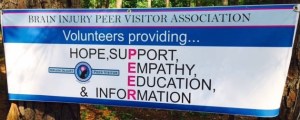
Boriskie, Ann Training in Florida Survivor 011116Ann Boriskie, a TBI survivor of more than 17-years says, “Get involved. Volunteer.” “By helping others with a brain injury, you truly help yourself in so many ways.” Ann is the Brain Injury Peer Visitor Association Director and her motto is “YOU CAN!”Peer Visitation BannerBoriskie, Ann Survivor 011116

 If you missed this show with Ann Boriskie on “Another Fork in the Road” on January 17th, 2016 don’t fret. You can listen to the archived show here. Click the link below.

See you “On the Air!”

On The Air: Brain Injury Radio “Another Fork in the Road” with Ann Boriskie, Director of Brain Injury Peer Visitor Assn.

(Clip Art compliments of Bing.)
As I say after each post: Please leave a comment by clicking the blue words “Leave a Comment” below this post.

Feel free to follow my blog. Click on “Follow” on the upper right sidebar.
 If you like my blog, share it intact with your friends. It’s easy! Click the “Share” buttons below.
 If you don’t like my blog, “Share” it intact with your enemies. I don’t care!
 Feel free to “Like” my post.


diemodi jewelry

uniquely hand-crafted jewelry by donna

Welcome to Harmony Kent Online

The home of all things books

Pete Springer

Passionate Teacher and Future Children's Author

HOPE TBI

Helping Other People Excel - To Be Independent

For the Love of Books, Old and New

Katie Fischer, Writer and Reader of Stories

Charlie Bown

Children's Author

Jessica Hinrichs

“We write to taste life twice, in the moment and in retrospect.” ― Anais Nin

VIVIAN KIRKFIELD - Writer for Children

Picture Books Help Kids Soar

Mindy’s Writing Wonderland

For authors, parents, teachers & everyone who loves children’s books.

Kaitlyn Leann Sanchez

Literary Agent

Surviving Traumatic Brain Injury

TBI - Survivors, Caregivers, Family, and Friends

The Care Factor

Loving someone with a Traumatic Brain Injury

Brain Injury Support Group of Duluth-Extension

Brain Injury Information and SUPPORT

Brain Aneurysm Global Insight

Brain Aneurysm, cerebral hemorrhaging, hemorrhage stroke