TBI – Survivors, Caregivers, Family, and Friends

Posts tagged ‘“Prisoner Without Bars: A Caregiver’s Story”’

Caregivers SPEAK OUT! Bob Millsap

Caregivers SPEAK OUT! Bob Millsap

presented

by

Donna O’Donnell Figurski
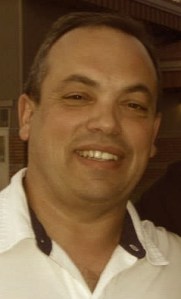
Bob Millsap - Caregiver

Bob Millsap – Caregiver

1. What is your name? (last name optional)

Bob Millsap

2. Where do you live? (city and/or state and/or country) 

Glendale, Arizona, USA

Email? (optional)

robertemillsap@gmail.com

3. What is the brain-injury survivor’s relationship to you? How old was the survivor when he/she had the brain injury? What caused your survivor’s brain injury?

My wife, Shelly, is the brain-injury survivor. She was 46. It happened because of a freak accident in our home – a bottle of homemade ginger-ale exploded just as Shelly walked by. It broke her nose and bruised her face, but the TBI (traumatic brain injury) symptoms did not become apparent for two weeks.

4. On what date did you begin care for your brain-injury survivor? Were you the main caregiver? Are you now? How old were you when you began care?

I began care on January 17, 2013. I was 45. I was then and am now Shelly’s main caregiver.

5. Were you caring for anyone else at that time (e.g., children, parents, etc.)?

Yes. Our boys were 12 and 18 at the time.

6. Were you employed at the time of your survivor’s brain injury? If so, were you able to continue working?

Yes. I worked many hours. I had an employer who was not very understanding. This was very challenging. It made me re-evaluate things career-wise.

7. Did you have any help? If so, what kind and for how long?

No. We lived at the time in Victor, Idaho (near Jackson Hole, Wyoming). We were in a very rural area. There was no family support near us.

8. When did your support of the survivor begin (e.g., immediately – in the hospital; when the survivor returned home; etc.)?

My support started once my wife’s TBI symptoms became apparent.

9. Was your survivor in a coma? If so, what did you do during that time?

Shelly was unconscious for twenty minutes.

10. Did your survivor have rehab? If so, what kind of rehab (i.e., inpatient and/or outpatient and occupational, physical, speech, and/or other)? How long was the rehab? Where were you when your survivor was getting therapy?

Shelly had to relearn to walk and talk. She worked with a couple of alternative
providers that we will always be thankful for. She continues to do home therapy.

11. What problems or disabilities of your brain-injury survivor required your care, if any?

Shelly has severe PTSD (post-traumatic stress disorder), so I help any way possible for this. I try to keep daily life as simple and consistent as possible, with constant support and advocacy. I do the driving and I manage her medications.

12. How has your life changed since you became a caregiver? Is it better? Is it worse?keep-calm

It hurts so much to witness Shelly live this every day. But I am more patient and understanding as a person. I don’t sweat the small things as I used to.

13. What do you miss the most from pre-brain-injury life?

I miss Shelly’s being able to live life without fear.

14. What do you enjoy most in post-brain-injury life?

I like that the deep bond in our immediate family has strengthened.

15. What do you like least about brain injury?

I dislike knowing that Shelly must face challenges every day.

16. Has anything helped you to accept your survivor’s brain injury?

Dealing with this has been made possible by our faith in God, our love for each other, and Shelly’s AMAZING outlook. I never see her feeling sorry for herself. It’s amazing and inspiring.

17. Has your survivor’s injury affected your home life and relationships and, if so, how?iloveuredflyingheartsgifanimatedimagesfreedownloadbannerlove-gifphotographicclipartmobileiphoneipadscreensaverbackgroundfreeclipartanimationgifmaniahd3diloveyou

Our relationship is stronger than ever. It has really given us perspective on what is important. Our two boys are very compassionate and understanding. I am very proud of how they handle this.

18. Has your social life been altered or changed and, if so, how?

We moved back to Arizona earlier this year, and that has been great for Shelly! It was lonely for her in rural Idaho, even before the accident. Some of her friends have been
GREAT once she got back here. Others … not so much. We try to make
sure to stay out of loud, chaotic, or unpredictable situations. We adjust to our new normal. Shelly’s TBI is truly an invisible injury, so some friends and family understand … some do not.
19. What are your plans? What do you expect/hope to be doing ten years from now?

I would love to see Shelly be able to have a rewarding, peaceful life outside of the home. She is such a kind and helpful person. I always believe there is a way that her experience with TBI and PTSD can greatly help others.

20. What advice would you offer other caregivers of brain-injury survivors? Do you have any other comments that you would like to add?

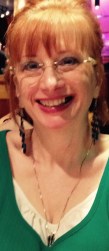
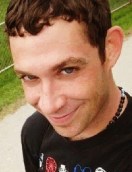
Shelly Millsap - Brain Injury Survivor Bob Millsap - Caregiver

Shelly Millsap – Brain Injury Survivor
Bob Millsap – Caregiver

Take one day at a time. Be patient. Ask questions of the medical and rehab communities. Search for answers. Try not to ask “Why me?” and feel sorry for yourself. Rid yourself of negative situations and negative people. Be flexible and have thick skin. Find support-groups to become involved with.

(Disclaimer: The views or opinions in this post are solely that of the interviewee.)

If you would like to be a part of the SPEAK OUT! project, please go to TBI SPEAK OUT! Caregiver Interview Questionnaire for a copy of the questions and the release form.

(Clip Art compliments of Bing.)

As I say after each post: Please leave a comment by clicking the blue words “Leave a Commentanim0014-1_e0-1 below this post.

Feel free to follow my blog. Click on “Follow” on the upper right sidebar.

If you like my blog, share it with your friends. It’s easy! Click the “Share” buttons below.

If you don’t like my blog, “Share” it with your enemies. I don’t care!

Feel free to “Like” my post.

SPEAK OUT! . . . . . . . . . . . . . Guest Blogger . . . . . . . . . . . . . . . Deb Angus – Just Blew Me Away

Just Blew Me Away …

by

Deb Angus

presented

by

Donna O’Donnell Figurski


Girl Blogger cartoon_picture_of_girl_writingMy husband and I used to be avid bicyclists all throughout the trail system here in Calgary (in Alberta, Canada). Sometimes we would be out and about for the whole day, putting on as much as 50 km (31 miles). Mostly this was back in ‘83 to ‘88. Then we bought a house. The trail system wasn’t as good in that neighbourhood. As a result, we only went sporadically over the following years.

Even that came to an end in 2001, when I sustained a TBI (traumatic brain injury) at the hands of a distracted driver who hit us while we were stopped at a red light. Because of ongoing balance issues, I no longer had the desire to ride my bike again. (So sad the things we lose because of TBI.)

Deb Angus - brain injury survivor and author of “Regaining Consciousness: My Encounter with Mild Brain Injury--the Silent Epidemic"

Deb Angus – brain injury survivor and author of “Regaining Consciousness: My Encounter with Mild Brain Injury–the Silent Epidemic”

Then in 2006, I had an idea about someday getting myself an adult tricycle. That way I would not have to worry about my lack of balancing skills – especially when you have to do a shoulder check (scanning over your shoulder without making the bike swerve). But because we were then living in apartments, storage was an issue. My dream of getting a trike never came to fruition … until this year!

My husband was diagnosed with stage IV colorectal cancer in March 2015. He died April 1, 2016. It has been pretty rough. We had been together for 37 years. I have also been dealing with my own kidney failure since August 2013, and I do peritoneal dialysis every night for 8-9 hours. The waiting list for a transplant in our province is 6-8 years, so I have a ways to go yet. With my husband’s passing, I wanted to start doing things that would get me outside more often and be more active. I also wanted to do something to keep me busy for our wedding anniversary and my birthday, which were coming up on June 30. So I came up with a grand idea that if I could find a “folding” trike, I could then store it in the back of my car. And that is exactly what I’ve done. I wasn’t able to find such a trike locally, so I had to mail-order one and put it together.

Deb Angus - Brain Injury Survivor and her Trike

Deb Angus – Brain Injury Survivor and her Trike

On my very first ride, I drove down to the area of the city where my husband and I used to live back in ‘86 and ‘87. Talk about a trip down memory lane! Within seconds of riding my trike, I felt like I was 32 years old again – whizzing down the tails we used to ride with wind blowing through my helmet and hearing the birds singing and chirping along the way. The freedom I felt at being able to ride again … was fantastic! Then tears came to my eyes because my husband wasn’t here to enjoy this with me …. But as I was heading back to the car after about an hour of riding, I noticed in big letters written in chalk on the asphalt trails the words Love U. I knew then that my husband was there in spirit. I felt that he was so proud and happy that I had finally managed to get my trike and that I will enjoy many more great rides.


Thank you, Deb Angus.

Disclaimer:
Any views and opinions of the Guest Blogger are purely his/her own.

(Clip Art compliments of Bing.)

(Photos compliments of Deb Angus.)

As I say after each post: Please leave a comment by clicking the blue words “Leave a Commentanim0014-1_e0-1 below this post.

Feel free to follow my blog. Click on “Follow” on the upper right sidebar.

If you like my blog, share it (intact) with your friends. It’s easy! Click the “Share” buttons below.

If you don’t like my blog, “Share” it (intact) with your enemies. I don’t care!

Feel free to “Like” my post.

SPEAK OUT! . . . . . . . . . . . . . Guest Blogger . . . . . . . . . . . . . . . Ed Steeves – Standing Still

Standing Still

by

Ed Steeves

presented

by

Donna O’Donnell Figurski


Boy Blogger thNo matter how great it sounds, we can’t go back. No matter how much we may want to, that bridge has burned. The past has passed for a reason. We need to accept that it is over. We can only take the lessons we’ve learned.

Now we have a choice, since we can’t change the past or return to it. We can’t get the past back and never will. So, the decision that we have to make is Will we move on into the future, or will we simply stand still?k20874676

I, for one, will go forward with my life. I have decided that, somewhere ahead, there is something better to find. Because, if we just stand there and stare at what’s dead and gone, we will surely lose our mind.

The thing we fail to notice at times is that, no matter how amazing the past was, the future is better. The past, sadly, is occupied only with our memories, and it’s our prison. Only in the future can we all be free.

Ed Steeves - Survivor

Ed Steeves – Survivor

It’s OK to take some time to reflect – to forgive and move on. I’ve finally given up on all that’s there in the past.

But remember that life is still alive in the future, and we are never certain how long it will last.

Thank you, Ed Steeves.

Disclaimer:
Any views and opinions of the Guest Blogger are purely his/her own.

(Clip Art compliments of Bing.)

(Photos compliments of Ed Steeves.)


As I say after each post: Please leave a comment by clicking the blue words “Leave a Commentanim0014-1_e0-1 below this post.

Feel free to follow my blog. Click on “Follow” on the upper right sidebar.

If you like my blog, share it (intact) with your friends. It’s easy! Click the “Share” buttons below.

If you don’t like my blog, “Share” it (intact) with your enemies. I don’t care!

Feel free to “Like” my post.


Caregivers SPEAK OUT! . . . Lynn Sandoval

Caregivers  SPEAK OUT!  Lynn Sandoval

presented by

Donna O’Donnell Figurski


Lynn Sandoval - Caregiver

Lynn Sandoval – Caregiver

1. What is your name? (last name optional)

Lynn Sandoval

2. Where do you live? (city and/or state and/or country) Email? (optional)

Brady, Texas, USA

3. What is the brain-injury survivor’s relationship to you? How old was the survivor when he/she had the brain injury? What caused your survivor’s brain injury?

The brain-injury survivor is my husband. He was 39 years old when he had the brain injury. He was in an automobile accident. His car was hit twice, once head-on. The first car hit my husband’s car at ~95 mph. This hit spun my husband’s car around, and a second car, following the first car, hit my husband’s car in the rear at ~85 mph. My husband’s car was spun back around and finally came to a rest in the middle of the road.

4. On what date did you begin care for your brain-injury survivor?

I began care the day after my husband’s accident – when I was able to get to the hospital where he had been flown.

Were you the main caregiver?

In the beginning, my husband had hospital care in addition to mine.

Are you now?

I have been my husband’s only caregiver since he came home from the hospital.

How old were you when you began care?

I was 52.

5. Were you caring for anyone else at that time (e.g., children, parents, etc.)?

No

6. Were you employed at the time of your survivor’s brain injury? If so, were you able to continue working?

Yes, I was employed. I have been able to utilize FMLA (Family and Medical Leave Act) and sick leave. I have continued working whenever I am able to.

7. Did you have any help? If so, what kind and for how long?

I have not had any help at home caring for my husband.

8. When did your support of the survivor begin (e.g., immediately – in the hospital; when the survivor returned home; etc.)?

My support began in the hospital, and it continues to this day.

9. Was your survivor in a coma? If so, what did you do during that time?

My husband was in a coma the first few days. While he was in a coma, I stayed by his bedside and talked to him. I touched him on the areas that weren’t bandaged to let him know I was there.

10. Did your survivor have rehab? If so, what kind of rehab (i.e., inpatient and/or outpatient and occupational, physical, speech, and/or other)?

My husband had physical, speech, and occupational therapies in the hospital. They continued when we got home, once I got him set up for evaluations.

How long was the rehab?

k20116138My husband is still in physical therapy, and he recently started occupational therapy again. (He had “graduated” from occupational therapy about a year ago, but his neurologist requested that he do it again.)

Where were you when your survivor was getting therapy?

I was there with my husband during the beginning therapies, but after some time, he went to the therapies alone. Now we work together on exercises at home.

 11. What problems or disabilities of your brain-injury survivor required your care, if any?

Now my husband is able to do things for himself, but I still have to get his medications together for him every day because he doesn’t remember if he’s taken them or not.diabetes_medications

12. How has your life changed since you became a caregiver? Is it better? Is it worse?

Since I’ve become a caregiver, I have discovered that people will withdraw from situations because they don’t understand TBI (traumatic brain injury). It has its ups and downs, but we are now seeing more positive steps and are hopeful for the future. I have found that I am more depressed and feel alone because I am more involved with making sure everything is OK for my husband, but I am learning to take time for me.

13. What do you miss the most from pre-brain-injury life?

Life before my husband’s TBI was a lot less stressful – being able to leave the house and not worry if he is OK. Now I keep my phone with me continuously so that, if he needs something, he can call and I’ll be there for him.

14. What do you enjoy most in post-brain-injury life?

I am grateful that I still have my husband with me.

15. What do you like least about brain injury?

I dislike the frustration and confusion that my husband feels when he is trying to remember something and he can’t.

16. Has anything helped you to accept your survivor’s brain injury?

Yes – support-groups and reading – and more reading – on anything and everything I can find about TBI and about what can and can’t be beneficial – not only for him, but for us and our relationship.

17. Has your survivor’s injury affected your home life and relationships and, if so, how?

Yes. I find I am hyper-aware of anything and everything my husband does in an effort to keep him safe. The relationships with his family and friends have become nonexistent. It hurts my husband so much to feel that no one cares about him.

18. Has your social life been altered or changed and, if so, how?

Yes. We don’t go out much anymore because my husband doesn’t like being in large, noisy crowds and because it is difficult for him to stand or walk for extended periods of time.

19. What are your plans? What do you expect/hope to be doing ten years from now?

My husband’s plans are to hopefully get approved for disability insurance and then to return to his job (that they are holding for him) part-time so that he can financially contribute to our family. My plans, if we are able to get some additional income instead of just mine (which has been our income for almost the last two years), would be to find a job to use my Master’s Degree. I just completed my degree program this past year in psychology. I’d like to work with other traumatic-brain-injury survivors and help advocate for them. Here in our small town, nothing is available.

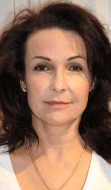
Lynn Sandoval - Caregiver

Lynn Sandoval – Caregiver

20. What advice would you offer other caregivers of brain-injury survivors? Do you have any other comments that you would like to add? 

I would say that, despite the difficulties in being a caregiver, caregiving can be rewarding – when together you see the progress your survivor is making because of his or her drive and determination and because of the support and love that you give him or her. It is tiring, it can be frustrating, and you may feel like screaming – these are all normal responses. The key is to remember to take a moment, to try to take care of yourself (this is the hardest thing), and to believe in each other.


(Disclaimer: The views or opinions in this post are solely that of the interviewee.)

If you would like to be a part of the SPEAK OUT! project, please go to TBI SPEAK OUT! Caregiver Interview Questionnaire for a copy of the questions and the release form.

(Clip Art compliments of Bing.)


As I say after each post: Please leave a comment by clicking the blue words “Leave a Commentanim0014-1_e0-1 below this post.

Feel free to follow my blog. Click on “Follow” on the upper right sidebar.

If you like my blog, share it with your friends. It’s easy! Click the “Share” buttons below.

If you don’t like my blog, “Share” it with your enemies. I don’t care!

Feel free to “Like” my post.

SPEAK OUT! . . . . . . . . . . . . . Faces of Brain Injury . . . . . . . . Lisa Wickenden, Survivor

SPEAK OUT! Faces of Brain Injury – Lisa Wickenden (survivor)

presented

by

Donna O’Donnell Figurski

Brain Injury is NOT Discriminating!

bigstock-cartoon-face-vector-people-25671746-e1348136261718It can happen to anyone, anytime, . . . and anywhere.

The Brain Trauma Foundation states that there are 5.3 million people in the United States living with some form of brain injury.

On “Faces of Brain Injury,” you will meet survivors living with brain injury. I hope that their stories will help you to understand the serious implications and complications of brain injury.

The stories on SPEAK OUT! Faces of Brain Injury are published with the permission of the survivor or designated caregiver.

If you would like your story to be published, please send a short account and two photos to me at neelyf@aol.com. I’d love to publish your story and raise awareness for Brain Injury.


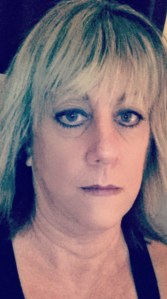
Lisa Wickenden (survivor)

Lisa Wickenden

Lisa Wickenden – Brain Injury Survivor

Three years ago, my life changed forever. I now have some challenges that no one can see, but I am reminded of them every day. Three years ago, I had my accident. I will forever have a TBI (traumatic brain injury). You cannot tell I have one by looking at me. Three years ago, relationships changed between friends and me. Some friends stuck around and are still a very, very big part of my life. Some friends faded away. gg66084897Three years ago, I had to start loving a new me. It’s still a struggle. But with all the support I have from family and friends, I know it’s possible.


Thank you Lisa Wickenden for sharing your story.


(Clip Art compliments of Bing.)

(Photos compliments of contributor.)

As I say after each post: Please leave a comment by clicking the blue words “Leave a Commentanim0014-1_e0-1 below this post.

Feel free to follow my blog. Click on “Follow” on the upper right sidebar.

If you like my blog, share it intact with your friends. It’s easy! Click the “Share” buttons below.

If you don’t like my blog, “Share” it intact with your enemies. I don’t care!

Feel free to “Like” my post.

SPEAK OUT! . . . . . . . . . . . . . . Itty-Bitty GIANT Steps

SPEAK OUT! Itty-Bitty GIANT Steps

presented by

Donna O’Donnell Figurski


Itty-Bitty GIant Steps for BlogSPEAK OUT! Itty-Bitty Giant Steps will provide a venue for brain-injury survivors and caregivers to shout out their accomplishments of the week.

If you have an Itty-Bitty Giant Step and you would like to share it, just send an email to me at neelyf@aol.com.

If you are on Facebook, you can simply send a Private Message to me. It need only be a sentence or two. I’ll gather the accomplishments and post them with your name on my blog approximately once a week. (If you do not want your last name to be posted, please tell me in your email or Private Message.)

I hope we have millions of Itty-Bitty Giant Steps.


Here is this week’s Itty-Bitty GIANT Steps


Janice Tindle - Survivor

Janice Tindle – Survivor

Janice Tindle (survivor)…My accomplishment is getting published after my TBI (traumatic brain injury). I have a blog (janicetindle.com), where you’ll find all my links. I’m on Facebook, Twitter, and LinkedIn. I’ve been published in Caregiver magazine, Fearless Caregiver, and TBI Hope and Inspiration magazine. I’m also a contributor to TheMighty.com. I raise awareness about TBI and dystonia (a neurological movement disorder). I recently won the 1pg. Short Screenplay Contest. My entry, entitled Galicia’s Granite, was performed at the Novel Writing Festival. It’s on YouTube. I just fought two spam sites and got them to remove my article, 7 Ways to Support a Loved One with a Traumatic Brain Injury, off their sites. kids-hand-writing-clip-art-hand_with_pencil_5CAnnie Ricketts has it posted (with my permission) on her site, biglobalpicnic.org. I’m very proud of that article. I’m working on a several books and hope to become a PAID writer very soon!


Raine Turner - Caregiver & Author

Raine Turner – Caregiver & Author

Raine Turner (caregiver)…I am going to brag – big huge momma brag! My son [my brain-injured son, who was not supposed to survive, never mind thrive; my drug-dealing son, with a federal criminal record; my son, who is now at the University of Calgary studying a dual degree in Business and Actuarial Science (I said I was going to brag) and getting 80s (yes, on a reduced course load and with tutors)] is thriving against all odds. congrats-you-did-itThis same young man was actually the KEYNOTE speaker at the Brain Injury conference in Ottawa, which is supported by the federal government! So, if you think you cannot achieve, cannot fight, or cannot rise up to be at a higher level than the one on which you are at, you should put on your “big boy” or “big girl” underpants and work hard. You WILL rise up to be at a level higher than the one you are at now. It will not be easy; it will not be fun; but you will improve your life. If you need, I can always “kick your ass” to achieve more, as I did for my son! I am so excited; I am so proud of him! He has worked so hard for so long. My son is my HERO!

Raine Turner, the author of “Only Son… Only Child,” will be a guest on my show, “Another Fork in the Road” on Sunday, August 21, 2016, at 5:30pm Pacific Time, with her son, Ryan. I hope you will join us.


Matthew Vickers - Survivor

Matthew Vickers – Survivor


Matthew Vickers (survivor)…A huge feat for a traumatic brain injury survivor tubshower11who can’t walk or stand and only has the use of his right arm and hand … For consecutive weeks, I have independently showered, and that includes completing all necessary transfers.


YOU did it!

Congratulations to contributors!

(Clip Art compliments of Bing.)

(Photos compliments of contributors.)


As I say after each post:anim0014-1_e0-1

Please leave a comment by clicking the blue words “Leave a Comment” below this post.

Feel free to follow my blog. Click on “Follow” on the upper right sidebar.

If you like my blog, share it intact with your friends. It’s easy! Click the “Share” buttons below.

If you don’t like my blog, “Share” it intact with your enemies. I don’t care!

Feel free to “Like” my post.

SPEAK OUT! NewsBit: . . . . . . Wanting A “Sound Mind,” 30-Year-Old Football Player Retires

Wanting A “Sound Mind,” 30-Year-Old Football Player Retires

presented

by

Donna O’Donnell Figurski


husain_abdullah

Husain Abdullah – NFL Player

For seven years, Husain Abdullah played football in the National Football League (NFL), the premier professional football league in the United States. For four years, Abdullah, a safety, played with the Minnesota Vikings, and, for three years, he played with the Kansas City Chiefs. He graciously thanked both teams for allowing him to play. In the 2015 season, he had the fifth concussion of his career. While he was recovering, he thought about his many life-goals. Husain realized that he would need a “sound mind” to achieve his goals.

The research showing a link between the head trauma of football and the neurodegenerative disease CTE (chronic traumatic encephalopathy) is thought-provoking, and it has several players concerned. Even the NFL has admitted that there is a link between playing football and CTE, although the league later tried to downplay its comment. (CTE, originally known as “dementia pugilistica,” had only been seen in the brains of some boxers.

Dr. Bennet Omalu -

Dr. Bennet Omalu –

Dr. Bennet Omalu was the first to find the disease elsewhere – in a football player. Dr. Omalu renamed the disease “CTE.” Dr. Omalu’s discovery is the subject of the December 2015 movie Concussion, starring Will Smith. The real-life story is told in the PBS Frontline documentary, League of Denial: The NFL’s Concussion Crisis – available free online.)

Abdullah’s retirement follows other early retirements, most notably that of San Francisco 49er star rookie linebacker, Chris Borland, who cited the high risk of brain disease as his reason for retiring after playing only one year. Another rookie, Green Bay Packer wide receiver Adrian Coxson, retired after getting a severe concussion in practice and being told that the next hit might seriously affect his brain function or kill him.

Abdullah Husain - NFL Player

Abdullah Husain – NFL Player

It remains to be seen if Husain Abdullah’s retirement will be the last early retirement in the NFL due to football’s risk to the brain. (Full story)


(Clip Art compliments of Bing.)

As I say after each post: Please leave a comment by clicking the blue words “Leave a Commentanim0014-1_e0-1 below this post.

Feel free to follow my blog. Click on “Follow” on the upper right sidebar.

If you like my blog, share it (intact) with your friends. It’s easy! Click the “Share” buttons below.

If you don’t like my blog, “Share” it (intact) with your enemies. I don’t care!

Feel free to “Like” my post.


Brain Injury Resources . . . . . HAPPY BIRTHDAY!!!! Surviving Traumatic Brain Injury

Happy Birthday to Surviving Traumatic Brain Injury

presented

by

Donna O’Donnell Figurski

happy-birthday.jpg

Happy Birthday to Surviving Traumatic Brain Injury Blog. We are two-years-old.

There are more than 400 articles published on Surviving Traumatic Brain Injury Blog, Happy-2nd-Birthdaywhich hopefully is helping brain injury survivors, their caregivers, families, and friends.

If you want to learn more “About Me and my Blog, click the link. Each category is described in a nutshell.

Surviving Traumatic Brain Injury Blog sends a million hugs to its participants, followers, and random readers. Everyone is invited to subscribe or drop in Million HUgs 184495anytime. Just click the “Follow Me” button in the right sidebar under the “Follow Me Via Email” category.


Contact me if:
You want to share an Itty-Bitty GIANT Step.
You want to share an Survivors SPEAK OUT! interview.
You want to share a Caregivers SPEAK OUT! interview.
You want to share a Faces of Brain Injury.

You want to share an “So, Whaddya Think?” opinion.
You want to write a Guest Blog article.
You want to share an ETC. ETC. etc. etc.

Please SHARE!

Survivingtraumaticbraininjury.com


As I say after each post:anim0014-1_e0-1

Please leave a comment by clicking the blue words “Leave a Comment” below this post.

Feel free to follow my blog. Click on “Follow” on the upper right sidebar.

If you like my blog, share it intact with your friends. It’s easy! Click the “Share” buttons below.

If you don’t like my blog, “Share” it intact with your enemies. I don’t care!

Feel free to “Like” my post.


(Clip Art compliments of Bing.)

(Photo compliments of contributor.)

On The Air: Brain Injury Radio “Another Fork in the Road” with Author, Jim Proebstle

On The Air: Brain Injury Radio “Another Fork in the Road”

with

Author, Jim Proebstle

presented

by

Donna O’Donnell Figurski

images-1


Jim Proebstle, author of “Unintended Impact: One Athlete’s Journey From Concussions in Amateur Football to CTE Dementia,” tells the story of his older brother, Dick Proebstle, who didn’t get the fame and fortune of some NFL Football players, but did get the repercussions as he received countless head injuries while playing high school and college football.

Dick’s life went from the stars to an abyss over the course of 50 years. He lost so much without his knowing or understanding why. In fact, his children and family didn’t understand his decline either. Jim Proebstle 1It wasn’t until CTE (Chronic Traumatic Encephalopathy) came to the forefront when neuropathologist, Dr. Bennet Omalu  discovered the disease in the autopsied brain of 50-year-old Mike Webster, a once-upon-a-time revered Pittsburgh Steeler whose life unexpectedly declined soon after retirement. This left Webster homeless and exhibiting abnormal behaviors. Soon after, the brains of many other deceased NFL players were examined and various degrees of (Chronic Traumatic Encephalopathy) were also found. Dr. Omalu’s discovery began to open eyes of many other scientists and Boston University began a study. 89 of the 93 donated NFL player brains, were found to have CTE, which explained to the families the many bizarre behaviors their loved ones were exhibiting before they died.

Jim Proebstle Unintended Impact BookJim wrote his book, “Unintended Impact” to not only honor his brother, but also to  raise awareness of the dangers of all head injuries. Jim also authored two other books, “Fatal Incident” and “In the Absence of Honor.” You can find any of Jims’ books at amazon.com

If you missed this show with Jim Proebstle, author of “Unintended Impact: One Athlete’s Journey from Concussions in Amateur Football to CTE Dementia” on “Another Fork in the Road” on March 20th, 2016, don’t fret. You can listen to the archived show here. Click the link below.

To learn more about Jim Proebstle, please visit his website.

See you “On the Air!”

On The Air: Brain Injury Radio “Another Fork in the Road” with author, Jim Proebstle


(Clip Art compliments of Bing.)

As I say after each post: Please leave a comment by clicking the blue words “Leave a Commentanim0014-1_e0-1 below this post.

Feel free to follow my blog. Click on “Follow” on the upper right sidebar.

If you like my blog, share it intact with your friends. It’s easy! Click the “Share” buttons below.

If you don’t like my blog, “Share” it intact with your enemies. I don’t care!

Feel free to “Like” my post.


TBI Tales . . . . . . . . . . . . . . . . . Don’t Let What You Survived Bring You Down by Karen Bradley Williams

Don’t Let What You Survived Bring You Down

by

Karen Bradley Williams

presented

by

Donna O’Donnell Figurski


Williams, Karen Bradley SurvivorI am a three-time traumatic brain injury (TBI) survivor (2007, 2010, and 2011). After my first one, I lost everything, including my husband, but I always had my mom. Now nine years post my first TBI, I am remarried to a wonderful man. He loves me, knows and understands my limitations, and treats me like a queen. I have gone back to college, and I am a nationwide certified pharmacy tech. I have real friends and a great life.

Don’t let what you have survived bring you down. Look at what you have made it through. Do not give up now. Your miracle is just around the corner.


(Disclaimer: The views or opinions in this post are solely that of the author.)

If you have a story to share and would like to be a part of the SPEAK OUT! project, please submit your TBI Tale to me at neelyf@aol.com. I will publish as many stories as I can.

As I say after each post:

Please leave a comment by clicking the blue words “Leave a Comment” below this post.anim0014-1_e0-1

Please follow my blog. Click on “Follow” on the top right sidebar. (It’s nice to know there are readers out there.)

If you like my blog, share it with your friends. It’s easy! Click the “Share” buttons below.

If you don’t like my blog, “Share” it with your enemies. I don’t care!

Feel free to “Like” my post.

(Clip Art compliments of Bing.)


diemodi jewelry

uniquely hand-crafted jewelry by donna

Welcome to Harmony Kent Online

The home of all things books

Pete Springer

Passionate Teacher and Future Children's Author

HOPE TBI

Helping Other People Excel - To Be Independent

For the Love of Books, Old and New

Katie Fischer, Writer and Reader of Stories

Charlie Bown

Children's Author

Jessica Hinrichs

“We write to taste life twice, in the moment and in retrospect.” ― Anais Nin

VIVIAN KIRKFIELD - Writer for Children

Picture Books Help Kids Soar

Mindy’s Writing Wonderland

For authors, parents, teachers & everyone who loves children’s books.

Kaitlyn Leann Sanchez

Literary Agent

Surviving Traumatic Brain Injury

TBI - Survivors, Caregivers, Family, and Friends

The Care Factor

Loving someone with a Traumatic Brain Injury

Brain Injury Support Group of Duluth-Extension

Brain Injury Information and SUPPORT

Brain Aneurysm Global Insight

Brain Aneurysm, cerebral hemorrhaging, hemorrhage stroke