TBI – Survivors, Caregivers, Family, and Friends

Posts tagged ‘Brain Injury’

SPEAK OUT! . . . . . . . . . . . . . . . . Itty-Bitty GIANT Steps

SPEAK OUT! Itty-Bitty GIANT Steps

presented by

Donna O’Donnell Figurski

Itty-Bitty GIant Steps for BlogSPEAK OUT! Itty-Bitty Giant Steps will provide a venue for brain-injury survivors and caregivers to shout out their accomplishments of the week.

If you have an Itty-Bitty Giant Step and you would like to share it, just send an email to me at neelyf@aol.com.

If you are on Facebook, you can simply send a Private Message to me. It need only be a sentence or two. I’ll gather the accomplishments and post them with your name on my blog approximately once a week. (If you do not want your last name to be posted, please tell me in your email or Private Message.)

I hope we have millions of Itty-Bitty Giant Steps.

Here are this week’s Itty-Bitty GIANT Steps

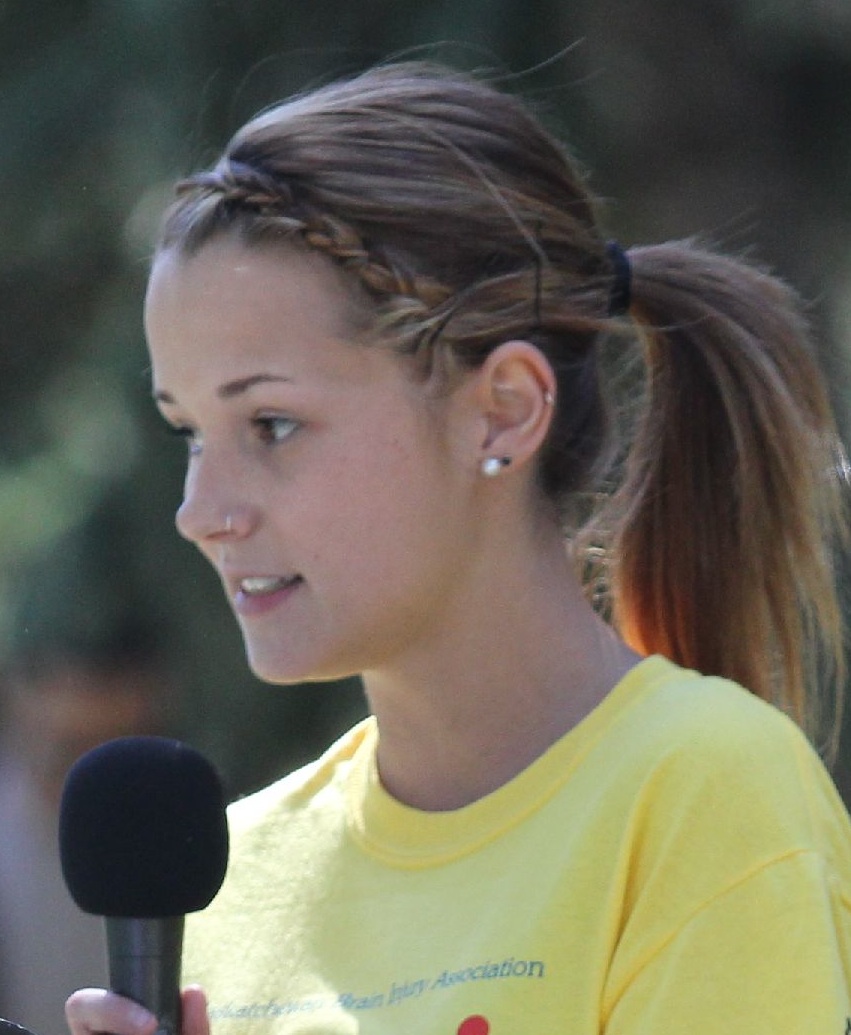
Runners+-+Cartoon+4Jeffrey Smallwood (survivor)…This month is Brain Injury Awareness Month in Canada. Last weekend, I ran my first 5K run. marathon_race_male_runner_5k_bumper_sticker-r9dbbd0f42d254ebb8b5c309ad75f5967_v9wht_8byvr_324I did it for brain injury awareness. My local organization raised over twelve thousand dollars, which will continue to fund our clubhouse. My running is not pretty, as I’m a fat guy. I still felt the burn two days later. This was big for me, as I’ve done something I’ve never done before. A shout-out to all my fellow Canadian brain injury survivors!

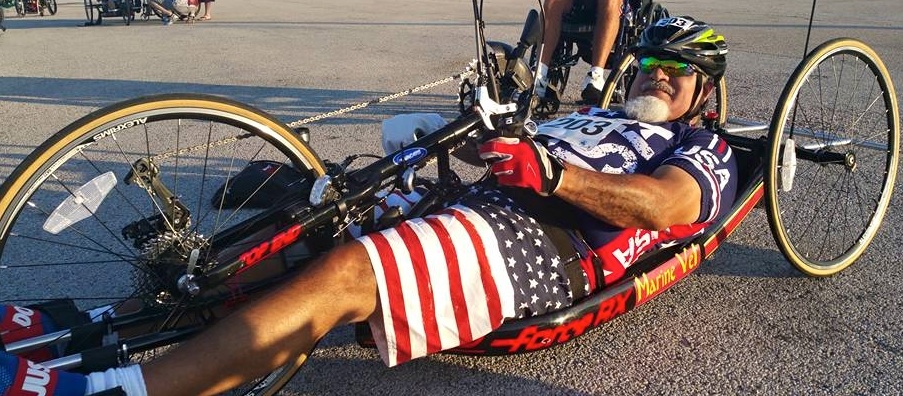
Dave Villarreal SurvivorDave Villarreal (survivor)…Dave Villarreal joined the competition at the National Veterans Wheelchair Games at the Kay Bailey Hutchison Convention Center in Dallas, Texas. 11252643_481277165373324_6491726304375694714_nIn this week-long event (June 21–26), Dave took part in many events, including shot put, javelin, handcycling, archery, and rifle shooting.

He is the proud recipient of two medals. He won a silver medal in shooting and a gold medal in archery!

And, he came in the top five for handcycling! Dave Villarreal Survivor 2He says, “That was my best race yet. What an awesome rush!” Dave’s advice: “Get out and LIVE your life. Have fun.”

YOU did it!

Congratulations to all contributors!

(Clip Art compliments of Bing.)

(Photos compliments of contributor.)

As I say after each post:anim0014-1_e0-1

Please leave a comment by clicking the blue words “Leave a Comment” below this post.

Feel free to follow my blog. Click on “Follow” on the upper right sidebar.

If you like my blog, share it with your friends. It’s easy! Click the “Share” buttons below.

If you don’t like my blog, “Share” it with your enemies. I don’t care!

Feel free to “Like” my post.

TBI Tales . . . . . . . . . . . . . . . . . Interview with Ann Boriskie – Teach Believe Inspire Award recipient

Interview with Ann Boriskie – Teach Believe Inspire Award recipient

by

Stephen Smith

(presented by Donna O’Donnell Figurski)

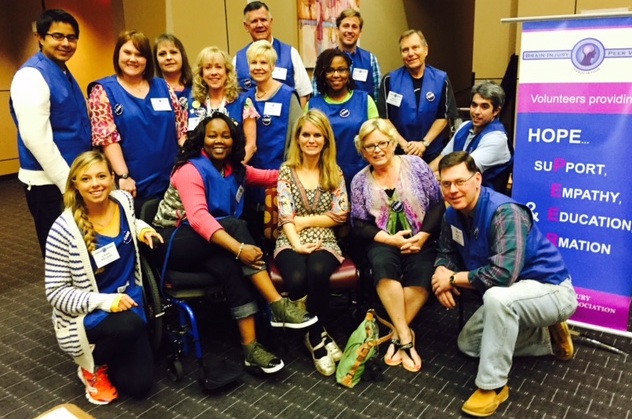
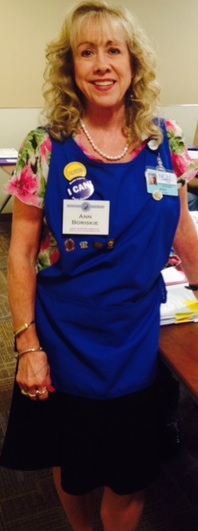
Ann Boriskie 1 Survivor 062915A traumatic brain injury survivor, wife and mother of three, Ann Boriskie has redefined each of these roles as she progressed physically and spiritually since her car accident. Along the way she also founded the Brain Injury Peer Visitor Association, which offers hope, support and education to brain injury survivors and their families.

Ann’s commitment to helping brain injury survivors has garnered her the Christopher & Dana Reeve Foundation Quality of Life Grant in 2013 and again this year in 2015. The Brain Injury Law Center is honored to recognize such a champion for traumatic brain injury survivors.

Ann, Teach Believe Inspire Award recipient, recently took the time to answer some questions from the Brain Injury Law Center.

Q: It wasn’t until a year after your auto accident that you found out you had sustained a traumatic brain injury. Had you suspected that your brain had been injured, or was it a shock to hear that was the case?

A: I had no idea that I had a brain injury. Not one doctor had said anything at all about my brain. I was told by one neurologist that I had “post-concussive syndrome.” That doctor acted like it would go away — go home and lead your life. He really never explained that my brain may be affected.

I truly thought that the wreck made me crazy. That’s why I had changed and could no longer do so many things that I could do previously.

Q: As you recovered from your accident, did you have physical and mental goals that motivated you through your rehabilitation?

A: I really did not think of my life after the car wreck in terms of goals, since I didn’t realize I had a problem. I knew I had multiple parts of my body that were injured and that hurt — and that I had to go see numerous doctors. I knew all of the “things” I could no longer do — but did not understand that these were linked to an injury to my brain.

I was a mother of three children (youngest fifth grade; oldest in the eleventh grade). I really had no choice but to try to continue my “normal” life. I was happily married. So my goals were to continue taking care of my husband and three children — cooking, cleaning, doing errands, grocery shopping, etc. (Of course, I had to modify how I now accomplished all of this.)

Physical: I have worked out since my early twenties. Thus I continued to do my weight lifting and treadmill walking as I had previously. I didn’t really know what I should or should not be doing. My current doctors tell me that had I not continued all of my workouts, I might be in a wheelchair today. I pushed through my pain and continued to keep my body’s core strong, even though my neck and back were both injured.

Q: How did counseling help your healing process? What kinds of people helped you?Ann Boriskie Survivor 4 Award 0629151394302_10202076860104199_1450531656_n

A: Doctors truly gave me my life back — both physically and mentally.

My psychiatrist (a doctor of physical medicine and rehabilitation) was the one to determine physically what problems that I had and how they all were interrelated (since I had 10 parts of my body injured in my car wreck). She tailored my medicine to help me live as normal of a life as possible.

I found several neuropsychiatrists who helped me better understand the different facets of brain injury, and helped teach me “compensatory strategies” to live my life somewhat normal.

The neuropsychiatrist and counselors explained that so many of my symptoms and changed behaviors were absolutely common with an injury to the brain.

It was so much better for me to realize that I had a brain injury — instead of labeling myself “crazy.”

I joined support groups where I could converse with others in my situation, again helping me understand that my symptoms were just like theirs — and normal for an injury to the brain.

Q: How did the accident change how you identify yourself as a person and as a mother and wife?

A: Previously I was extremely driven in my work and competitive. The job often came before my family. The person I was, was defined a lot by my work.

After my car wreck I couldn’t work — I tried numerous times. Thus I had to figure out who this “new me” was. I struggled with this for years. It took me wholly accepting the “new me” and my realization that I was still a very valuable person in life to become the helping person that I am today.

As a mother and wife, I became much more accessible to my family and their own problems and needs. I put them first. They taught me my value with each of them.

The master plan for my life was to give up a big chunk of who I was as a person to raise two doctors (a neonatologist and an internal medicine hospitalist) and one RN nurse. Because of my own struggles, my 3 children are devoting their own lives to help others.

What advice do you have for TBI survivors who become depressed about their new life?

  • “Push the envelope” — remember I CAN — don’t ever let others tell you all you can’t or should not do.
  • Identify all of the things that you now have and can do — do not focus on what you can’t do.
  • Help others. By helping others you will help yourself, and see yourself having self worth.

Ann Boriskie Group Survivor 062915Q: You founded the Brain Injury Peer Visitor Association. How did you realize the importance of visiting people who have suffered TBI?

A: My association does not just help TBI survivors. They also help all non-traumatic brain injury survivors (such as stroke, aneurysm, tumors, abscesses, bleeds, AVM, cancer, etc.). It’s so important for the world to understand that all of these causes make up a brain injury — and all are not TBIs.

I initially heard about the American Stroke Association’s Peer Visitor Program, which has been in existence for over 40 years. They only serve stroke patients in the inpatient rehab units of hospitals.

I thought that if the American Stroke Association was successfully helping stroke patients that I could help traumatic brain injury survivors as well as ALL of the non-traumatic brain injuries which exist, not just stroke.

I loved the idea of helping other people like myself. I had no one there to help me — I had no information on what a brain injury even means — I felt so very alone, isolated.

I also saw the need to talk to the patient and/or family from the very beginning of the brain injury event — to give them information immediately to help them understand.

Thus my program begins in the ICU unit and step-down units, the inpatient rehab units, then the day or outpatient program of the hospital. A person’s journey through their brain injury changes the questions they have and the type of information that they need.

Q: It’s easy to see that a person who has suffered a TBI needs help, therapy and education. How important is it to talk to the families and caregivers of the survivor?

A: Extremely important: “Knowledge is Power.” The more a survivor understands about their own brain injury, the easier time they will have of accepting the injury. When the family reads about and understands why their loved one has changed and why they are different, why they are exhibiting a large range of behaviors — then the family can better help and deal with their loved one.

With acceptance that they did indeed injure their brain, which changed their brain and changed the person they were, a survivor along with the family can move forward and actually work toward improvement.Ann Boriskie Survivor 2 062915

Without this knowledge, the survivor often hates himself/herself. The survivor will become suicidal, more emotional, reclusive, and not wanting to get better. The family without an understanding and acceptance often shuns their own loved one, often leaving them or deserting them emotionally or physically.

That is why my Brain Injury Peer Visitor Association’s program hands out a variety of packets of information full of book lists, website lists, resources, CDC information, newspaper and magazine articles, survivor and caregiver stories, etc.

Q: If someone wants to volunteer with the Brain Injury Peer Visitor Association, do they need to have first-hand experience with TBI?

A: To be a Brain Injury Peer Visitor they have to be a survivor of a stroke or some form of brain injury, or the caregiver of a brain injured survivor. (Otherwise a person cannot relate in a personal way — as a person “who has been there and done that.”)

thQ: What did it mean to the Brain Injury Peer Visitor Association to receive the Quality of Life grant from the Christopher & Dana Reeve Foundation both in 2013 and again this year?

A: It is a huge honor to receive the Quality of Life grants. I so respect all that Christopher Reeve and his wife Dana did to help others during their life-time. They represented the true selfless love and help that I so respect and hope to emulate.

Reading Christopher Reeve’s two books inspired me to get better and to actually do something with my life. I thought that if a man in a wheelchair who can do so little could help so many other disabled individuals, then I could get better and help brain injured survivors.

Reeve became the face of those that are disabled. He taught that a disability can be the beginning of your life — not the end.

The grants also assured the printing of the information then the continuation of providing a Packet of Information to every brain injured and often paralyzed survivor and their caregiver who are Peer Visited by the Brain Injury Peer Visitor Association.

Q: What goals do you have for the Brain Injury Peer Visitor Association going forward?

A:

  • To continue to serve all of the hospitals and their various units and all of the rehabilitation facilities where we currently have our Brain Injury Peer Visitor Program.
  • To continue to grow the program by establishing our program at more new hospitals and facilities.
  • To train more new volunteer survivors and/or caregivers in order to serve more individuals.
  • To help educate as many brain injury survivors and their families and loved ones.
  • To educate the public across the United States and throughout the world about all forms of brain injury through our website at braininjurypeervisitor.org.
  • To create a true understanding of what the word “brain injury” means — to make it a household word that is understood and accepted.
  • To help create a tolerance and loving understanding for a person with a brain injury.
  • To help develop a least one Brain Injury Peer Visitor Program in every state.

This interview by Stephen Smith was posted in Teach Believe Inspire Award on June 2, 2015. Stephen founded the Brain Injury Law Center to help brain injured victims, survivors and their families.

Ann Boriskie Survivor 3 062915To learn more about Ann Boriskie and her work with brain injury, please visit the following sites.

Video of Ann Boriskie and the Brain Injury Peer Visitor Association

Ann Boriskie’s blog – The Brain Fairy

The Brain Injury Peer Visitor Association

The Brain Injury Law Association

(Disclaimer: The views or opinions in this post are solely that of the author.)

If you have a story to share and would like to be a part of the SPEAK OUT! project, please submit your TBI Tale to me at neelyf@aol.com. I will publish as many stories as I can.

As I say after each post:

Please leave a comment by clicking the blue words “Leave a Comment” below this post.anim0014-1_e0-1

Please follow my blog. Click on “Follow” on the top right sidebar. (It’s nice to know there are readers out there.)

If you like my blog, share it with your friends. It’s easy! Click the “Share” buttons below.

If you don’t like my blog, “Share” it with your enemies. I don’t care!

Feel free to “Like” my post.

(Clip Art compliments of Bing.)

SPEAK OUT! . . . . . . . . . . . . . . . . . Itty-Bitty GIANT Steps

SPEAK OUT! Itty-Bitty GIANT Steps

presented by

Donna O’Donnell Figurski

Itty-Bitty GIant Steps for BlogSPEAK OUT! Itty-Bitty Giant Steps will provide a venue for brain-injury survivors and caregivers to shout out their accomplishments of the week.

If you have an Itty-Bitty Giant Step and you would like to share it, just send an email to me at neelyf@aol.com.

If you are on Facebook, you can simply send a Private Message to me. It need only be a sentence or two. I’ll gather the accomplishments and post them with your name on my blog approximately once a week. (If you do not want your last name to be posted, please tell me in your email or Private Message.)

I hope we have millions of Itty-Bitty Giant Steps.

Here are this week’s Itty-Bitty GIANT Steps

Gill Evans (caregiver)…Hubby informed me this afternoon that his world is a better place mitzvah-clipart-teapot-clip-art-free-retro-cup-o-tea-valentine-clip-art-old-design-shop-blogfor my being in it. And then, he offered to make me a cup of peppermint tea. Bonus! Unfortunately, he got distracted, and I got black coffee with a peppermint tea bag in it. Ah, well! It’s good that we can laugh, isn’t it?

Don't Ever Give Up 3Lee Staniland (survivor)…Man, oh man! I have been going around and around with Time Warner. The bill was way high, so I called and got it down a lot. Then, when I went to pay the bill, it wasn’t in the system yet. I was told to wait a few days. I did, and the bill still wasn’t in there. So, I bitched and bitched and went through at least three people. I finally got it down some, and I thought it was over. Well, they just called me. The bill was even lower, and I have all kinds of the stations, like HBO and all the good ones. IT PAYS NOT TO GIVE UP!

Linda Wells (survivor)…Exciting news! I will receive this year’s Survivor Honoree Award from the Brain Injury Center (BIC) of Ventura County. This means a lot to me. 1 Linda Wells 10847281_10203718509225374_5703501535919960786_oMy dear late husband, Rex, and I are two of the founders of the BIC. gold-award-ribbon-clipart-RIBBON_AWARDIt started in a living room with six other people. Rex looked and looked for a place for all of us to fit in. That is how it happened to go from a living room to now – “An Evening of Magical Memories.” I am honored that I have been chosen this year. I intend to continue to educate all. Thank you, BIC!

YOU did it!

Congratulations to all contributors!

(Clip Art compliments of Bing.

As I say after each post:anim0014-1_e0-1

Please leave a comment by clicking the blue words “Leave a Comment” below this post.

Feel free to follow my blog. Click on “Follow” on the upper right sidebar.

If you like my blog, share it with your friends. It’s easy! Click the “Share” buttons below.

If you don’t like my blog, “Share” it with your enemies. I don’t care!

Feel free to “Like” my post.

SPEAK OUT! Faces of Brain Injury William Jarvis

 SPEAK OUT! Faces of Brain Injury – William Jarvis

presented by

Donna O’Donnell Figurski

 Brain Injury is NOT Discriminating!


faces

I acquired a severe TBI (traumatic brain injury) from a car collision in 2000. It put me into a coma. I was in hospitals one and a half years. As with most survivors, there were challenges when I went home. I continued to have problems walking and with cognitiveJarvis, William 2 Survivor 050215 functions. It has been a long road, but life is good. I speak about how to improve after a TBI, I write inspirational books, and I engage with life as much as possible. I must pace myself because, after fifteen years, fatigue is still an issue. The good news is that, if a survivor never gives up setting goals for improvement, there is hope. I recently moved to Myrtle Beach, South Carolina, USA, and enjoy helping other survivors through a TBI support-group, doing community activities, and giving presentations on “Improvement Through Motivation.” My web site is http://billjarvis.org/.Jarvis, William Survivor 1 050215

Disclaimer: Any views and opinions of the Contributor are purely his/her own.

(Clip Art compliments of Bing.)

(Photos compliments of contributor.)

As I say after each post: Please leave a comment by clicking the blue words “Leave a Commentanim0014-1_e0-1 below this post.

Feel free to follow my blog. Click on “Follow” on the upper right sidebar.

If you like my blog, share it with your friends. It’s easy! Click the “Share” buttons below.

If you don’t like my blog, “Share” it with your enemies. I don’t care!

Feel free to “Like” my post.

SPEAK OUT! . . . . . . . . . . . . . . . . . Guest Blogger: Jennifer Stokley Transitioning and Brain Injury

Transitioning Can Work in Odd and Wonderful Ways

 by

Jennifer Stokley

presented

by
Donna O’Donnell Figurski

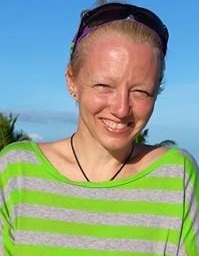
Girl Blogger cartoon_picture_of_girl_writingWhen I moved into my new home back in September, I was a stranger – scared and so alone. I had neighbors on either side, but they were strangers. Strangers terrify me.

Behind me was a family with three young children and a big floppy dog. I am not sure how it happened. (I forget these things – “TBI Memory” – LOL.) Maybe it was the doggie that made me go out and meet them, but who cares? I went. And, it totally changed my world forever!

Next thing I knew, I was playing with their dog almost every day and sitting on their bench out front to see the kids go off to school every morning so I could say hello and “Have a great day!” I went out again every day to greet them when they came home from school. I became good friends with the mother, who turned out to have been a nurse prior to being a stay-at-home momma.

The mother was very familiar with folks like me – with a TBI. What are the odds of that? She wrote me a beautiful poem about new starts in my life. While reading it to me, she started to cry. She had to regain her composure and begin again. At the end, we were both crying. We ended up hugging. Wow! I was so grateful for her huge heart and her understanding.

Her husband would mow my yard when he did his own and never asked for anything in return. I was amazed and so grateful that they understood I was completely unable. They did it because they cared.Jennifer Stokely 3 Survivor 052615

One day, I joined the kids in a leaf fight in their yard (in my PJs! – LOL), along with the parents’ autistic son – my best buddy, with whom I had a special connection for some reason. He came over, sat down with me, threw leaves into the air with me, and giggled. He even lay down and wanted me to cover him with leaves to his chest (none on is face or neck – sensation issues – I understood) so he could pop out of the leaves like the rest of the kids were doing. His parents’ chins were on the ground, I swear. I don’t think they had ever seen him connect and want to play like this before. Once he popped out and had a leaf in his hair that upset him. I asked him if I could remove it for him. He said yes, so I did, and the playing resumed.

The best part came at the end, though. I thought his parents’ heads were going to explode! I put my hand out and told him, “Give me a high five!” He slapped my hand as hard as he could. I don’t think his parents had ever seen him give physical contact by choice to anyone not family.

His parents got him a new puppy, all his own. One of the kids had let the puppy out by accident. No one knew it was gone. I was outside doing something, and the puppy ran around the other side of my house and straight to me! Yay! I was able to save the puppy, give it some loving, and carry it home – safe and sound.

This family brought me so many blessings by being my neighbors in a new, strange, and scary environment. They just sold their home and have begun moving into their new home. But, the blessings keep coming. My two nephews bought their place, so I will have family living behind me, after having pseudo family living there.

Jennifer Stokely Survivor 052615Miracles work in mysterious ways for sure! I will sure miss that family. But, I am grateful for the wonderful memories they gave me and for being there to help make my transition feel so safe and protected. I wish them well on their new journey.

***********

Thank you, Jennifer Stokely.

You can learn more about Jennifer on the following sites.

SSS (Semi-Support Sisterhood) for TBI Survivors

A New Me – BREAK THE SILENCE

Disclaimer:
Any views and opinions of the Guest Blogger are purely his/her own.

(Clip Art compliments of Bing.)

(Photos compliments of Jennifer Stokley.)

anim0014-1_e0-1

As I say after each post:

Please leave a comment by clicking the blue words “Leave a Comment” below this post.

Feel free to follow my blog. Click on “Follow” on the lower right corner of your screen.

If you like my blog, share it with your friends. It’s easy! Click the “Share” buttons below.

If you don’t like my blog, “Share” it with your enemies. I don’t care!

Feel free to “Like” my post.

SPEAK OUT! Faces of Brain Injury Nicole Wall

SPEAK OUT! Faces of Brain Injury – Nicole Wall

(family member of brain-injury survivors)

presented by

Donna O’Donnell Figurski

 Brain Injury is NOT Discriminating!

bigstock-cartoon-face-vector-people-25671746-e1348136261718My name is Nicole Wall. I am a 25-year-old resident of Regina, Saskatchewan, Canada. Brain injury has significantly affected my life four times. My journey with brain injury began in 1999. My grandma had a stroke and spent the next six years in a rehabilitation facility. She then passed away from a brain-bleed in the summer of 2006. My grandma was the first family member I had lost, and it impacted me quite a bit. In December 2002, I was singing Christmas carols in my school’s gym and got pulled into the office by the principal, who said my dad was on the phone. I thought that was odd. My dad had never called me at school before. He told me that my mom had been taken to the hospital and that my cousin was coming to pick us up. He said he loved us, and then he hung up. My brother and I found out late that night that my mom had had a brain aneurysm rupture and required emergency Nicole Wall Family Memeber of Survivors 061315brain surgery. My mom spent the next year in the ICU (intensive care unit), the hospital, and then Wascana Rehab Centre before she came home. It is eleven years later, and my mom still attends weekly support-group meetings and has never driven again or gone back to work.

My entire family changed that day. We still continue to deal with my mom’s injury every day. Brain injuries are life-long. In 2007, I had just graduated grade 12 and had a scholarship, and the most-unfair thing that has ever happened to me – happened. My high-school sweetheart was severely injured in highway auto collision. He ended up unconscious in the ICU with a brain injury. He died eight days later as a result of the injuries he incurred in the accident. My family and I were finally starting to settle and move forward, and then in 2010, like déjà vu, we got a call about my dad. He had been found dazed and barely conscious outside Regina and was being driven to the hospital. My family rushed to be with him. My dad needed a special type of brain surgery – coiling. He had to be transported by air-ambulance to Saskatoon, Saskatchewan, for surgery. My dad spent several weeks in Saskatoon and more weeks in a Regina Hospital recovering before he went home. Long-term my dad has been able to return to work almost full-time, and he has gone on to compete in mountain-bike races and championships.

Nicole Wall Family Member of Survivor 061315

Nicole’s Family 2011

Throughout the last sixteen years, brain injury has taken many things from me – my mom’s ability to be the same mom she was before (she stopped driving and she was not as involved with my activities as she had been), my high-school sweetheart, and my naiveté. I realize my dad’s daily struggles are much more than mine. I have become somewhat of a realist. However, brain injury has also given me many things, especially a unique perspective on life. I realize nothing is permanent – no matter how many plans we may make. Through my encounters with brain injury, I have learnt to be independent, considerate, and selfless. I’ve always put my family and others first. I now work at a child-development center and sit on the Board of Directors for the Saskatchewan Brain Injury Association. I encourage everyone to get involved in supporting brain-injury awareness and prevention (www.sbia.ca – check out events like the “Brain Boogie” in Saskatchewan).

Nicole Wall 2 Family Member of Survivor 061315“Never doubt that a small group of thoughtful, committed citizens can change the world; indeed, it’s the only thing that ever has”

Margaret Mead

Disclaimer: Any views and opinions of the Contributor are purely his/her own.

(Clip Art compliments of Bing.)

(Photos compliments of contributor.)

As I say after each post: Please leave a comment by clicking the blue words “Leave a Commentanim0014-1_e0-1 below this post.

Feel free to follow my blog. Click on “Follow” on the upper right sidebar.

If you like my blog, share it with your friends. It’s easy! Click the “Share” buttons below.

If you don’t like my blog, “Share” it with your enemies. I don’t care!

Feel free to “Like” my post

SPEAK OUT! Faces of Brain Injury Tony Giglio

SPEAK OUT! Faces of Brain Injury – Tony Giglio

presented by

Donna O’Donnell Figurski

 Brain Injury is NOT Discriminating!


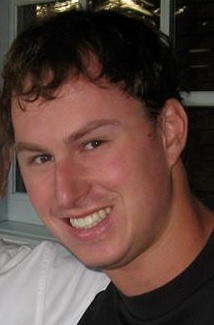
bigstock-cartoon-face-vector-people-25671746-e1348136261718I suffered my traumatic brain injury (TBI) in a near-fatal car accident back in 2004. I live in the eastern Pennsylvania region. I have come a long way throughout the course of my recovery. (I’ve always been in healthy-athletic shape; I played sports up until my second year of college in Florida; I had a few serious relationships in the past; I graduated high school, Prep school, and college on time; I picked up driving fast again, etc.) Giglio, Tony

I still find myself facing the following challenges: balancing money in the best way every so often and seeking romance relationships with women. I’m a truly caring gentleman, and I live independently – in my own apartment. In the coming years, I’m looking to get married, while living a great life. I have recovered well, but I have also made mistakes in the past where I lost certain friends. But, the fact is that I learn and always move forward in a positive direction. I’m always happy and carefree. I learn better from my mistakes, even with my having a brain injury, than do non-brain-injured people.

Giglio, Tony 2Disclaimer: Any views and opinions of the Contributor are purely his/her own.

(Clip Art compliments of Bing.)

(Photos compliments of contributor.)

As I say after each post: Please leave a comment by clicking the blue words “Leave a Commentanim0014-1_e0-1 below this post.

Feel free to follow my blog. Click on “Follow” on the upper right sidebar.

If you like my blog, share it with your friends. It’s easy! Click the “Share” buttons below.

If you don’t like my blog, “Share” it with your enemies. I don’t care!

Feel free to “Like” my post

SPEAK OUT! NewsBit . . . . . . . . . . . . Joe Namath – Football – Brain Injury

Joe Namath Speaks OUT About Brain Injury and Football

presented by

Donna O’Donnell Figurski

Newsboy thJoe Namath, former star quarterback for the New York Jets and football legend, said that, now knowing the sport’s likely danger to the brain, he wouldn’t have played football.joe namath large

Namath’s wake up call happened when he saw a problem with his brain in a brain scan. It revealed that the right side was not getting enough oxygen, whereas the left side was normal. He was worried about the several concussions he had had, but he thought his growing forgetfulness was caused by old age.

Fortunately, after several months of rigorous treatment alg-joe-namath-jpg(1-hour sessions, 5 days a week) in a hyperbaric chamber, in which he was subjected to a high pressure of oxygen, a new scan indicated that both sides of Namath’s brain were normal. (Full story 1 and Full story 2 – with video)

(Clip Art compliments of Bing.)

As I say after each post:

Please leave a comment by clicking the blue words “Leave a Comment” below this post.anim0014-1_e0-1

Feel free to follow my blog. Click on “Follow” on the upper right sidebar.

If you like my blog, share it with your friends. It’s easy! Click the “Share” buttons below.

If you don’t like my blog, “Share” it with your enemies. I don’t care!

Feel free to “Like” my post.

So, Whaddya Think? . . . . . . . . Tackle Football League for Young Girls – REALLY, Utah! What Are You Thinking?

Outrageous: A Tackle Football League for Young Girls

by

David Figurski

presented by

Donna O’Donnell Figurski

So Whaddya Think Brain th-4There is growing public concern, backed by scientific evidence, about the violence of football and the possibility of a life-altering brain injury, especially in children. Former professional players have spoken out about the risks inherent to the game of football. Evidence now exists that a concussion can be dangerous (1, 2), especially to the developing brain of a young player. Even the repetitive sub-concussive hits can be harmful. Legendary quarterback Joe Namath, who had a recent scare with his cognitive functioning, said that if he knew then what is known now, he wouldn’t have played. A talented rookie linebacker on the San Francisco 49ers has quit the game after one season, saying “…I don’t want to have any neurological diseases or die younger than I would otherwise.”

Utah organizers are excited to establish the first tackle football league for girls. A video of a nine-year-old girl, Sam Gordon – now twelve, playing tackle football in a boys’ league confirms that she is talented and shows what many of us have always believed – that girls can be as skilled as boys. The Utah Girls Tackle Football League has teams of fifth- and sixth-grade girls. To enhance its visibility, the league advertises Sam Gordon as a marquee player.

This is dangerous and a step in the wrong direction. At a time when some adults are calling for the abolishment of children’s football leagues, Utah has established a tackle football league for girls. It’s one thing when players are old enough to understand the risks and decide to play, but it’s another thing when children trust that their parents will protect them. I’m sure that every parent who allows a child to play football is well-meaning, but those parents are likely to be unaware of the risks. We have a lot of work to do to spread awareness about football’s risk of brain injury.

There is no doubt that the games in this new league will be exciting. But, how many girls will have their lives dramatically changed by a brain injury?

So, Whaddya Think?

Let’s get a dialogue going. Post your comments in the Comment Section. Directions are below.

So . . . what do you think? Is there something you are passionate about in this Brain Injury (BI) world? Do you want to be heard? Your opinion matters! You can SPEAK OUT! on “So Whaddya Think?”

Simply send me your opinion, and I will format it for publication. Posts may be short, but please send no more than 500 words. Send to Neelyf@aol.com

I hope to HEAR from you soon.

As I say after each post:

Feel free to leave a comment by clicking the blue words “Leave a Comment” below this post.

Please follow my blog. Click on “Follow Me Via eMail” on the right sidebar of your screen.anim0014-1_e0-1

If you like my blog, click the “Like” button under this post.

If you REALLY like my blog, share it with your friends. It’s easy! Click the “Share” buttons below.

If you don’t like my blog, “Share” it with your enemies. That works for me too!

(Clip Art compliments of Bing.)

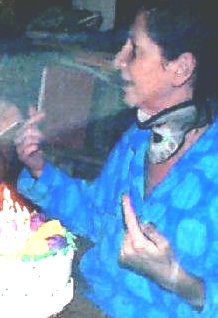
Survivors SPEAK OUT! Juliet Madsen

Survivors  SPEAK OUT!  Juliet Madsen

presented by

Donna O’Donnell Figurski

#4 Juliet Madsen 21. What is your name? (last name optional)

Juliet Madsen

2. Where do you live? (city and/or state and/or country) Email (optional)

Parker, Colorado, USA     juliet@strokeofluckquilting.com

3. On what date did you have your brain injury? At what age?

I had three strokes (2004, 2009, and 2010), and I have a traumatic brain injury (TBI). I was 33 in 2004.

4. How did your brain injury occur?

My brain injuries are complex: heat strokes complicated by a traumatic brain injury in Iraq in 2004. I was being moved to a secondary location because of a heat injury, when there was a series of explosions on the highway. So, I have the illustrious honor of having both a brain injury as a result of heat injury and then a traumatic brain injury. This creates a problem for the doctors because I do not fall into any one category. I have very complicated neurological issues.

5. When did you (or someone) first realize you had a problem?

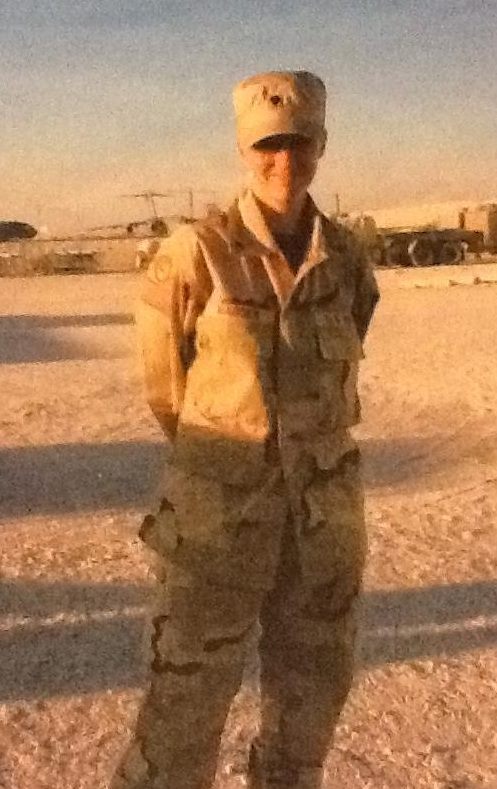
My family and the people I was stationed with in Iraq realized there was a problem. I was not making much sense when I wrote patient notes and when I wrote letters home. Then my speech was becoming garbled. I exhibited a halting speech pattern, in which I had trouble “spitting out” words. I also had tremors, which made even the simplest tasks difficult. #3 1454864_10200875275550279_968652467_n Manual dexterity issues, massive migraines, and balance problems caused my unit to put me on night shift and to adjust how and where I was living in Iraq. Then I was being transferred north where I could work in a more controlled environment when we were involved in a series of vehicle explosions. After that event, I was sitting with a few of the guys at the chow hall, and I said that “I didn’t feel well.” I suffered a seizure in the chow hall, and that started my slow trip home.

6. What kind of emergency treatment, if any, did you have?

I had emergency care to stabilize me in Iraq, then in a C-130 flying from Iraq to Kuwait, then again from Kuwait to Germany, and again to Walter Reed, and then to Ft. Bragg.  Although I know I had care to treat seizures and stroke, I only have very few bits and pieces of my memory from that time.

7. Were you in a coma? If so, how long?

No, I was not.

8. Did you do rehab? What kind of rehab (i.e., inpatient or outpatient and occupational and/or physical and/or speech and/or other)? How long were you in rehab?

I have had rehab both as an inpatient and as an outpatient. I am in and out of occupational, speech, physical, and recreational therapies even today. I have gone in and out of these therapies, as my TBI symptoms change over the years. I have often described my TBI as causing “rolling blackouts.” The polytrauma team that treats me has been really good about getting me in to see the appropriate team.

9. What problems or disabilities, if any, resulted from your brain injury
(e.g., balance, perception, personality, etc.)?

That is such a loaded question…. Initially I had left-sided weakness from the stroke, difficulty talking, balance issues, drop foot, short-term memory loss, major time perception problems, migraines all the time, and ringing in my ears. I was sound-sensitive. I have constant neck and head pain. I have hearing and vision changes (which the doctors tell me are a direct result of the TBI). I absolutely have personality changes. I was someone who always got along with people, worked as a paramedic, and did research. Now I have no concentration, I am angry with everyone, I am short with people, I cry easily, and I feel very defeated. Even with all of the incredible accomplishments in my life, I am disappointed in the perceived failures in my day-to-day life. I have had times since my brain injury when it is like I forgot who I was or what I have always stood for, and I hurt the ones who have always cared for me. I have major learning disabilities. I can’t do anything with numbers or time, and learning new information is extremely difficult – this from someone who graduated from college with honors. Concentration and accomplishing simple tasks are often very difficult.

10. How has your life changed? Is it better? Is it worse?

My life has changed 100%, but I can’t say that it is worse because I am still here. So, that is a good thing, but it is very different. I was a paramedic in the United States Army. I was always busy working, and now I am retired. I become tired and overwhelmed far too easily. I quilt for a living, and I make quilts for programs across the country. I am on the Board of Directors of a national non-profit organization that works with programs for the families of military and veteran personnel with TBI/PTSD (post-traumatic stress disorder). The organization provides other programs through recreational and activity-based services. This is a very different place from being a paramedic and saving lives.

11. What do you miss the most from your pre-brain-injury life?

I admit that I miss who I was before I was hurt. I miss being able to go to the store alone. I miss being able to be trusted with my own finances or being able to read a recipe and understand it the first time I read it. I had a very definite plan for my life, and my injuries changed all of those plans. I miss feeling like I really contribute to my family and to the world around me.

12. What do you enjoy most in your post-brain-injury life?

I try to enjoy simple things: butterflies, the pure joy of my dogs lying with me, my kids telling me that they love me, etc. I like learning new recipes, listening to music, or holding hands with my husband in case I can’t tomorrow. Basically, I try to enjoy this moment because I know that tomorrow isn’t promised.

13. What do you like least about your brain injury?

I would give anything to trust my memory and my body again. But, if I could have one wish, it would be to have my memory back. I have no memory of any of my kid’s proms, their birthdays, their graduations, etc. I wish I could just remember these events for their sakes.

14. Has anything helped you to accept your brain injury?
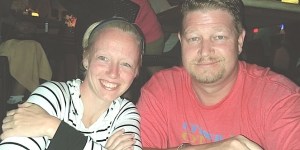
#8 Juliet & Peter MadsenMy family has helped me to accept my injuries because, although we joke around, they accept me for all that has happened. I was so angry and really emotionally crushed when I first came home. The only thing that I can always count on is my family, no matter what. The only other thing that has probably helped is time.

15. Has your injury affected your home life and relationships and, if so, how?

My husband, Peter, and I are so lucky to have each other. After twenty-three years together, I am thankful that this injury has not torn us apart, but it came very close. A TBI is exhausting for everyone involved, and I think that the first few years are spent in emergency mode – performing triage. Then as we started to get comfortable with how things were going, my brain “kicked us” – I suffered another stroke. We had a whole new series of issues and rules to learn. Peter and the kids have been incredible at supporting me. Although it has been a really rough road, we have been through it together. We are stronger because we are always together, and that part I am thankful for.

16. Has your social life been altered or changed and, if so, how?

Yes, I have actually lost friendships because of my TBI. I describe myself as a “golden retriever.” (I am excited to see you, but if you leave the room and come back in, I don’t know how long you were gone, but I am still really excited to see you.) It is because of this lack of the concept of time that I have lost friends. Also I wasn’t good enough at keeping in contact. I had a friend call me and tell me that I wasn’t an attentive enough friend. So now, I tell every potential friend this cautionary story. But to be honest, I don’t really try to make friends any more. Most people don’t understand me – or our family. Because of that, we are very private people. We don’t do a whole lot with others. It’s just easier that way. We would prefer to have lots of friends, but it just isn’t that easy.

17. Who is your main caregiver? Do you understand what it takes to be a caregiver?

My husband, Peter, is my main caregiver. I am so very thankful to him, in love with him, indebted to him, sorry, and every other adjective I can think of. I have moments of clarity when I see how terribly hard all of this is. It kills me that I have become a burden, and yet I am still his wife. I’d also like to say that I have had to watch my kids become my caregivers. They have taken care of me on too many occasions to count. It is incredibly hard on the entire family. They all suffer from PTSD as we go through this process. They all deserve so much more credit than they get for surviving this experience.

18. What are your plans? What do you expect/hope to be doing ten years from now?

I am ten years out from my injuries, but I am light years from my initial injuries. I hope to continue my physical improvements, and I would like to recover better in terms of my learning disabilities and mental health. I would like to go back to school and get a degree in Art Therapy to help other veterans and their families with TBI and PTSD. In ten years, I would really like to be working with military families through art in my own program. I would also like to have published my own quilting book.

19. Are you able to provide a helpful hint that may have taken you a long time to learn, but which you wished you had known earlier? If so, please state what it is to potentially help other survivors with your specific kind of brain injury.

There are so many setbacks during the recovery process. I never seem to be where I am supposed to be. But, I never stop because there are no set rules and no one is saying where you have to be. So, just keep going – never give up.

20. What advice would you offer to other brain-injury survivors? Do you have any other comments that you would like to add?

I think the worst thing I do to myself is to constantly beat myself up about what I could have or should have done to either prevent this or to change it now. It kills me to know where my family is and how my family has been changed forever because of all of the things that happened since 2004. I would give anything to change it, but I can’t. On good days, I can accept it and move past it, but on bad days, I can’t. It hangs over me and suffocates me. It is my wish that others out there like me hold on and cherish the life you have because no one can live it like you can.

Thank you, Juliet, for taking part in this interview. I hope that your experience will offer some hope, comfort, and #6 Juliet Madsen Snowinspiration to my readers.

(Disclaimer: The views or opinions in this post are solely that of the interviewee.)

If you would like to be a part of the SPEAK OUT! project, please go to TBI Survivor Interview Questionnaire for a copy of the questions and the release form.

(Photos compliments of Juliet.)

As I say after each post:

Please leave a comment by clicking the blue words “Leave a Comment” below this post.

Feel free to follow my blog. Click on “Follow” on the lower right corner of your screen.

If you like my blog, share it with your friends. It’s easy! Click the “Share” buttons below.

If you don’t like my blog, “Share” it with your enemies. I don’t care!

Feel free to “Like” my post.
 

diemodi jewelry

uniquely hand-crafted jewelry by donna

Welcome to Harmony Kent Online

The home of all things books

Pete Springer

Passionate Teacher and Future Children's Author

HOPE TBI

Helping Other People Excel - To Be Independent

For the Love of Books, Old and New

Katie Fischer, Writer and Reader of Stories

Charlie Bown

Children's Author

Jessica Hinrichs

“We write to taste life twice, in the moment and in retrospect.” ― Anais Nin

VIVIAN KIRKFIELD - Writer for Children

Picture Books Help Kids Soar

Mindy’s Writing Wonderland

For authors, parents, teachers & everyone who loves children’s books.

Kaitlyn Leann Sanchez

Literary Agent

Surviving Traumatic Brain Injury

TBI - Survivors, Caregivers, Family, and Friends

The Care Factor

Loving someone with a Traumatic Brain Injury

Brain Injury Support Group of Duluth-Extension

Brain Injury Information and SUPPORT

Brain Aneurysm Global Insight

Brain Aneurysm, cerebral hemorrhaging, hemorrhage stroke