TBI – Survivors, Caregivers, Family, and Friends

Posts tagged ‘Brain Injury Radio Network’

Survivors SPEAK OUT! . . . Alisa Marie

Survivors SPEAK OUT! . . . Alisa Marie

presented

by Donna O’Donnell Figurski

Survivor of Brain Injury
Alisa Marie

1. What is your name? (last name optional)

Alisa Marie

2. Where do you live? (city and/or state and/or country) Email (optional)

New Hampshire, USA

Truecolorsartist@gmail.com

3. On what date did you have your brain injury? At what age?

October and November 2012

But, my very first concussion was in 1998. I was 30 years old. 

4. How did your brain injury occur?

tenor

The event in October 2012 was a fall caused by vertigo. In November 2012, I was cleaning under the pool deck. I went to get up and banged my head, causing me to be knocked out. I don’t remember what happened in 1998.

5. When did you (or someone) first realize you had a problem?

My boyfriend at the time found me unconscious under the pool deck.

6. What kind of emergency treatment, if any, did you have?

I was taken to the Emergency Room, and I had rehab. I had to live with my parents for a while because they had to take care of me. I thought it was the year 2005 and my children were 5 and 10, but it was 2012 and they were 13 and 18. Also, I was going through a divorce, and my house was in foreclosure.

7. Were you in a coma? If so, how long?

No

8. Did you do rehab? What kind of rehab (i.e., inpatient or outpatient and occupational and/or physical and/or speech and/or other)?

I had occupational and physical therapies as an outpatient and speech therapy both as an outpatient and as an inpatient.

How long were you in rehab?

I’m not sure because I’ve been in a lot of rehabs for head injuries. I was in three in 2015. My last rehab was in 2018, as my last concussion was in 2017. (I slipped on clothes on my floor because my perception was off.)

9. What problems or disabilities, if any, resulted from your brain injury(e.g., balance, perception, personality, etc.)?

I struggle with many issues: balance, perception, personality, cognitive and executive functioning, memory, staying on task, aphasia, and impulsivity. It’s hard to make decisions and hard to be organized. I lost my independence. I lost my license for cognitive reasons back in December 2013.
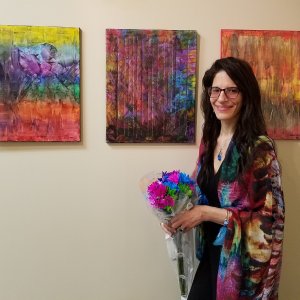
Alisa Marie – Brain Injury Survivor

10. How has your life changed? Is it better? Is it worse?

I’m an artist, designer, and poet. I am also trying to have my own business, Alisa’s True Colors. I began melting Crayola crayons in 2013 when Emily, my younger daughter, showed me how to apply wax to canvas using a blow dryer and a fork.

This was helping me as art therapy, where I could take physical and emotional pain and turn it into something colorful and bright. It was all I could focus on for a while. I didn’t know it then, but the seeds of Alisa’s True Colors were being planted. It helped me learn and adapt to the new me. I was creating my ability out of my disability.

11. What do you miss the most from your pre-brain-injury life?

Freedom and independence

12. What do you enjoy most in your post-brain-injury life?

I have come to realize that we hold within ourselves the power to heal. I have learned we don’t need a superhero to save us; we need to be our own hero in our own story. We need not to be afraid to chase after our dreams. And, if one door closes keep looking for the open ones.

I am learning happiness, calmness, and patience. I am accepting the new me, and, with my limitations, I am finding new ways to adapt. I have let go of the past and my old ways of thinking of what I believed of myself.

I have gained wisdom, knowledge, self-confidence, and the courage to look fear in the eyes – to truly know that being a survivor means being a fighter and not to give up no matter how dark my world gets.

I want to awaken others to their true colors by helping them accept their new life after trauma – to help them heal through art.

13. What do you like least about your brain injury?

I dislike that I can’t stay on task or stay organized. I am forgetful, and I talk strange sometimes because I can’t remember the right word. I regret the loss of close family and friends who don’t understand.

14. Has anything helped you to accept your brain injury?

Art and poetry 🙂 

15. Has your injury affected your home life and relationships and, if so, how?

For a few years, I lost what empathy was. My emotions were all over the place. I had a lot of anger and resentment in me. You find your own “True Colors” with a brain injury or from a trauma where it can get very confusing when you are trying to find your true self. Unfortunately, the sad truth is that sometimes you see the “True Colors” of your loved ones. We can look fine on the outside, but no one can see our brain on the inside all messed up trying to find a new way of living.

16. Has your social life been altered or changed and, if so, how?

Yes. I have social anxiety at times, and I’m embarrassed when I talk and can’t find the words or when I can’t stay on task.

17. Who is your main caregiver? Do you understand what it takes to be a caregiver?

Me, myself. and I

18. What are your plans? What do you expect/hope to be doing ten years from now?

I hope to travel around the world with my story and products and to teach my art. And, I hope to also donate money to the Brain Injury Association of New Hampshire and other non-profit organizations.

I had to lose everything from suffering traumatic brain injuries due to repeated head injuries. I also had to deal with being diagnosed with viral meningitis in March 2015. Then in the year 2016, I lost my home, and all my personal belongings were discarded because of toxic environmental illnesses. I’m surviving by designing.

19. Are you able to provide a helpful hint that may have taken you a long time to learn, but which you wished you had known earlier? If so, please state what it is to potentially help other survivors with your specific kind of brain injury.

This isn’t the ending to your life; it’s a new beginning. We all are creative. So, you just must keep trying new things, whether it be writing, poetry, drawing, photography, ceramics, embroidery, knitting, singing, or dancing. There is so much you can do – you are not your disability or a diagnosis a doctor gives you. I never gave up hope. I kept learning and reaching for my dreams when all I saw was darkness

20. What advice would you offer to other brain-injury survivors? Do you have any other comments that you would like to add?

Every struggle, every life-lesson is a gift because it makes you go deeper into yourself to find your “true colors” – your inner strength, courage, wisdom, and confidence.

I want others to see and know that there is beauty in the darkness, that there is beauty in your pain and tears and heartache. There is beauty in the ashes. There is a rainbow after the storm. I hope people see my True Colors as a message of hope and faith and love, to give them the hope and courage and strength to show it is possible to overcome the battles we endure in this lifetime.

I never went to art school. I have no degree – just education from repeated concussions and my life-situations. My art saved my life and is continuing to do. It helps with built-up resentment, emotions, grief, and physical pain. Art teaches that you are a new person after your injury, and it teaches how to adapt to your new life. Art is my therapy. I take the physical and emotional pain I feel and I turn it into something beautiful and bright on the canvas.
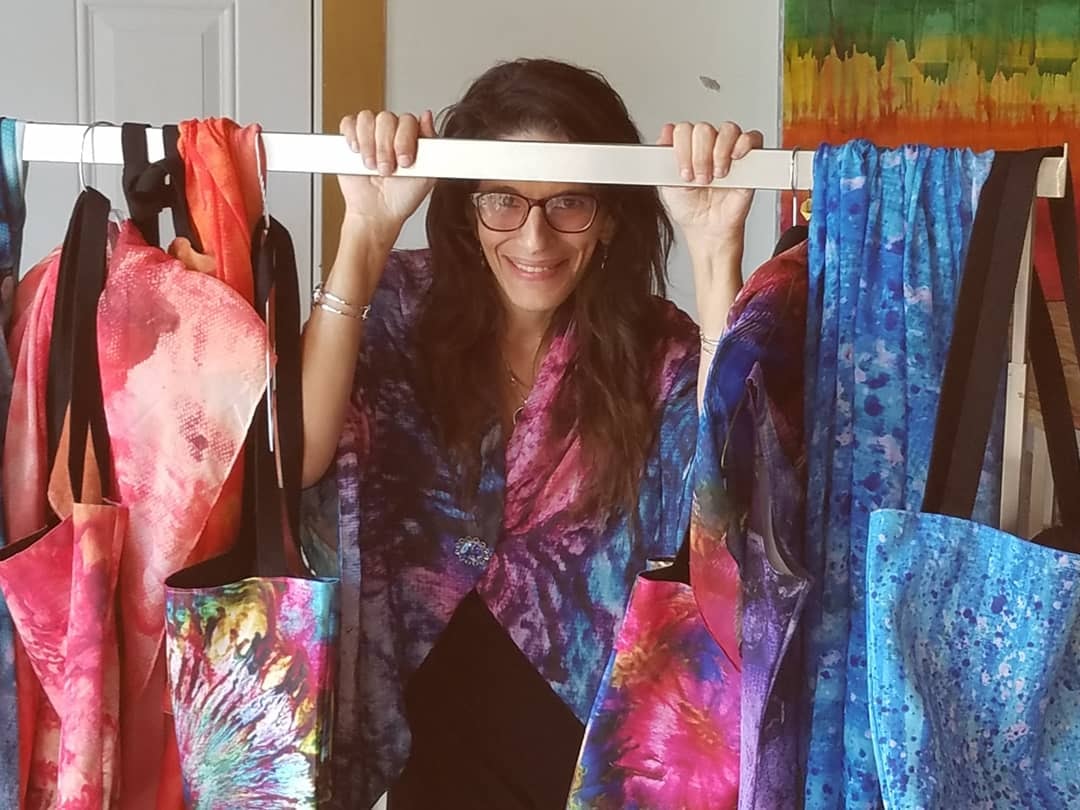
3 Alisa Marie

Never give up!

To learn more about Alisa Marie, check out her website at Alisa’s True Colors.

(Clip Art compliments of Bing.)

(Photos compliments of contributor.)

As I say after each post:

Please leave a comment by clicking the blue words “Leave a Comment” below this post.

anim0014-1_e0-1

Feel free to follow my blog. Click on “Follow” on the upper right sidebar.

If you like my blog, share it intact with your friends. It’s easy! Click the “Share” buttons below.
SPEAK OUT! Itty-Bitty GIANT Steps

SPEAK OUT! Itty-Bitty Giant Steps

presented by

Donna O’Donnell Figurski


Itty-Bitty GIant Steps for Blog

SPEAK OUT! Itty-Bitty Giant Steps will provide a venue for brain-injury survivors and caregivers to shout out their accomplishments of the week.

If you have an Itty-Bitty Giant Step and you would like to share it, just send an email to me at donnaodonnellfigurski@gmail.com.

If you are on Facebook, you can simply send a Private Message to me. It need only be a sentence or two. I’ll gather the accomplishments and post them with your name on my blog approximately once a week. (If you do not want your last name to be posted, please tell me in your email or Private Message.)

I hope we have millions of Itty-Bitty Giant Steps.


Sherrie Crusha – Brain Injury Survivor

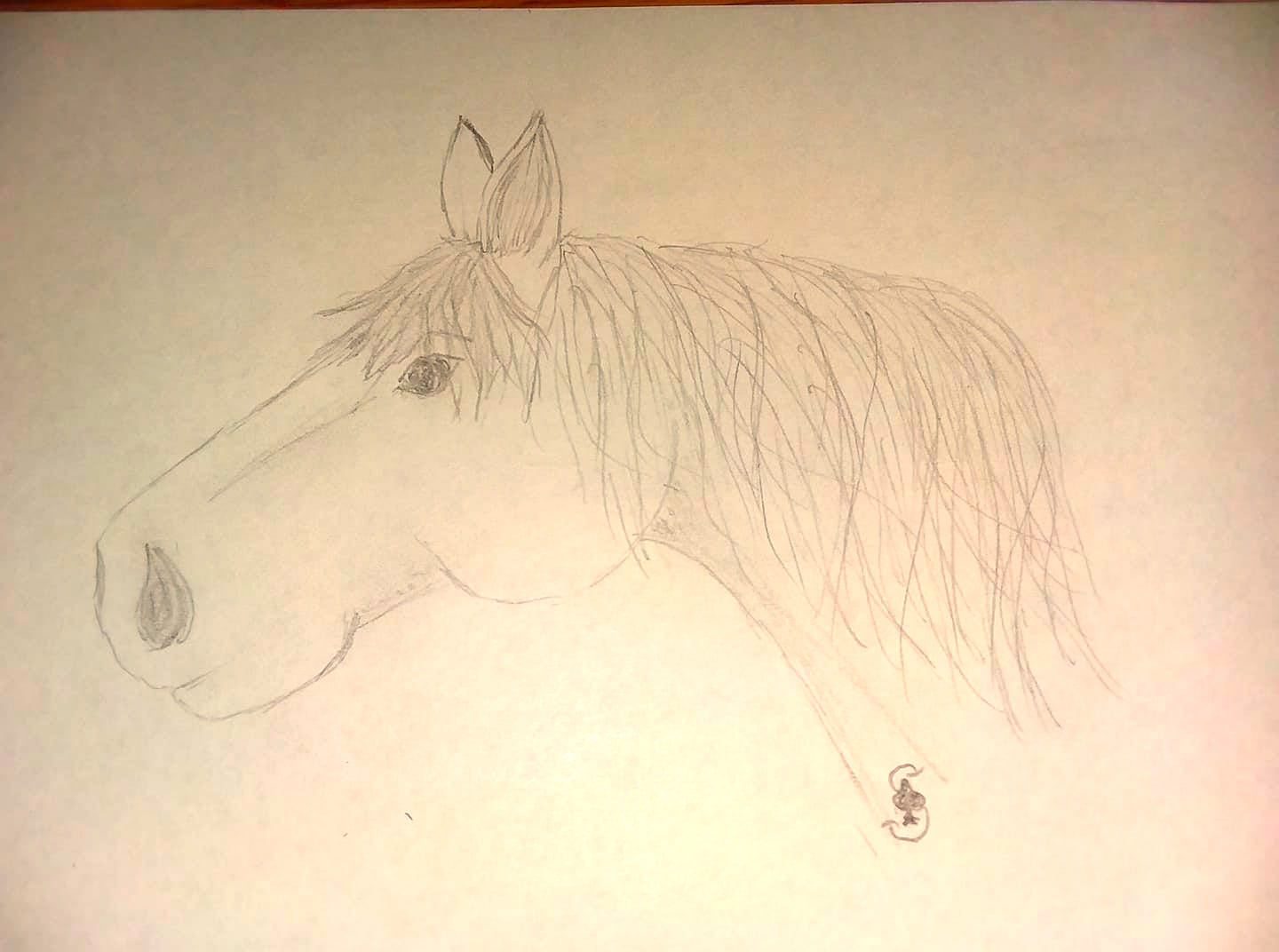
Sherrie Crusha (survivor) … I haven’t been able to draw a whole picture since my TBI (traumatic brain injury), 31 years ago. I did my best one yet a couple of days ago.

Drawing by Sherrie Crusha


(Clip Art compliments of Bing.)

(Photos compliments of contributor.)

As I say after each post:

Please leave a comment by clicking the blue words “Leave a Comment” below this post.

anim0014-1_e0-1

Feel free to follow my blog. Click on “Follow” on the upper right sidebar.

If you like my blog, share it intact with your friends. It’s easy! Click the “Share” buttons below.
 

TBI Tales . . . . . . . . . . . . . . . A Friend? The Need for Better Understanding of Brain Injury

A Friend?
The Need for Better Understanding of Brain Injury
by
Alan Gregory

presented
by
Donna O’Donnell Figurski

Alan Gregory 1

Alan Gregory Brain Injury Survivor


I was working at my minimum-wage, 3- to 4-hours-per-day job when an old friend came in. He asked why I was working there and not at my former job. (I had been an accountant at a large manufacturing firm – a job I held for more than 30 years.) I told him I lost my job after I suffered a traumatic brain injury (TBI).

Of course, my friend didn’t know what a TBI was, so I explained it to him. He then assumed I must have been in a car accident. But, when I explained to him that I had slipped on ice and landed on my head, he rolled his eyes and moved on.

I wanted to grab him and tell him, “Yes, it’s true, and it totally messed up my life!”clipart-of-person-slipping-on-ice-7

I deal with my brain injury every day. I struggle with the fact that I can no longer financially support my family. Some days, I have to force myself to get up, after I have bounced around the house all night with my head not allowing me to sleep. I used to have a great, salaried job, at which I usually worked ten hours per day. Now, I can barely work a total of ten hours in a week. Ugh!

I honestly wonder what my friend’s reaction would have been if I had told him that I had a heart attack or a stroke or even cancer. I am sure that his reaction would have been sympathetic and understanding with an offer of “If I can do anything …”

k23633524

A little understanding and compassion go a long way.

Well, I don’t want his sympathy. We have survived these past two years without his help. A simple dose of understanding would have been preferable, rather than the perplexed look, the sudden turn and walk away, or the “Yeah, right” head shake that we survivors of brain injury all too often get from others.


Clip Art compliments of Bing.)

(Photos compliments of contributor.)

As I say after each post:

Please leave a comment by clicking the blue words “Leave a Comment” below this post.

Feel free to follow my blog. Click on “Follow” on the upper right sidebar.anim0014-1_e0-1

If you like my blog, share it intact with your friends. It’s easy! Click the “Share” buttons below.
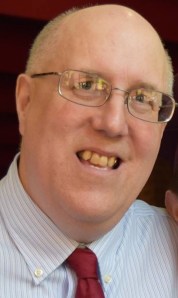


Caregivers SPEAK OUT! . . . . Malissa Mallett (caregiver for her son)

Caregivers SPEAK OUT!

Malissa Mallett (caregiver for her son)

presented by

Donna O’Donnell Figurski

“Malissa Mallett will be my guest tomorrow (Sunday, February 17) on my radio show (Another Fork in the Road) on the Brain Injury Radio Network. She has been caregiver for her son, who had an anoxic brain injury, since 1997, when he was an infant. Malissa is Program Director for the Brain Injury Alliance of Arizona (BIAAZ). We will discuss caring for her son and the effect of her expertise (opioid use on the brain.) My show broadcasts live at 5:30 PT (blogtalkradio.com/braininjuryradio), or it can be heard as a podcast anytime (https://survivingtraumaticbraininjury.com/category/on-the-air-show-menu/).”

Malissa Mallett

1. What is your name? (last name optional)

Malissa Mallett

2. Where do you live? (city and/or state and/or country) Email? (optional)

Laveen, Arizona, USA     Program@biaaz.org

3. What is the brain-injury survivor’s relationship to you? How old was the survivor when he/she had the brain injury? What caused your survivor’s brain injury?

The survivor is my son. He was 2 months old. His brain injury was caused by aspiration, causing him to stop breathing (anoxic brain injury).

4. On what date did you begin care for your brain-injury survivor? Were you the main caregiver? Are you now? How old were you when you began care?

My care began in April 1997. I was 22 years old. I was my son’s main caregiver then, but I’m not now.

th

Babies get brain injury too

5. Were you caring for anyone else at that time (e.g., children, parents, etc.)?

No

6. Were you employed at the time of your survivor’s brain injury? If so, were you able to continue working?

I had just returned to work after giving birth. I was not able to continue working, since my son required 24-hour supervision for his heart and lung monitor.

7. Did you have any help? If so, what kind and for how long?

Occasionally. My family, who were trained in CPR, would care for my son to give me a break or a night out.

cartoon-hospital8. When did your support of the survivor begin (e.g., immediately – in the hospital; when the survivor returned home; etc.)?

In the hospital

9. Was your survivor in a coma? If so, what did you do during that time?

No

10. Did your survivor have rehab? If so, what kind of rehab (i.e., inpatient and/or outpatient and occupational, physical, speech, and/or other)? How long was the rehab? Where were you when your survivor was getting therapy?

No

11. What problems or disabilities of your brain-injury survivor required your care, if any?

This is difficult to answer given my son’s age at the time of his brain injury.

12. How has your life changed since you became a caregiver? Is it better? Is it worse?

My life was challenging all throughout my son’s life.

13. What do you miss the most from pre-brain-injury life?

I will never know what could have been.

14. What do you enjoy most in post-brain-injury life?

Does not apply

15. What do you like least about brain injury?

shakilaramanwordpresscom

Learn about brain injury

The lack of understanding in the community

16. Has anything helped you to accept your survivor’s brain injury?

Yes. Education.

17. Has your survivor’s injury affected your home life and relationships and, if so, how?

Yes, it has. We can discuss this on your radio show. It’s too much to explain here.

18. Has your social life been altered or changed and, if so, how?

Not anymore

19. What are your plans? What do you expect/hope to be doing ten years from now?

I would love for my son to be successful and independent.

20. What advice would you offer other caregivers of brain-injury survivors? Do you have any other comments that you would like to add?

supportTake care of yourself.

Be surrounded by supportive people.

Educate yourself.


(Clip Art compliments of Bing.)

As I say after each post: Please leave a comment by clicking the blue words “Leave a Commentanim0014-1_e0-1 below this post.

Feel free to follow my blog. Click on “Follow” on the upper right sidebar.

If you like my blog, share it (intact) with your friends. It’s easy! Click the “Share” buttons below.

If you don’t like my blog, “Share” it (intact) with your enemies. I don’t care!

Feel free to “Like” my post.


Past Blast: Mansion Dancing Under the Stars

“TBI Tales: Mansion Dancing Under the Stars”

(originally published April 26, 2014)

presented by

Donna O’Donnell Figurski

mansion-at-westport

David and I met on the dance floor when I was 16 years old. He was 17. We fell in love under a strobe light. Through our married years, we danced at weddings and at parties, but when David’s Traumatic Brain Injury left his body as limp as Raggedy Andy, I never dreamed that David and I would ever dance again. But, during a recent trip to Westport, Massachusetts, to spend time with our son, Jared, his fiancé, Emily, and her family, we found ourselves staying in a mansion … only feet from the Atlantic Ocean. Our host, dancers-thSusan, was beyond gracious, concerned about our every comfort. On our second night there, she threw a big family party on her extensive patio and even more expansive grounds overlooking the ocean; and she invited us. We stopped in about midnight.

The partygoers were huddled around the fire-ring … music still blaring. Jared and Emily began to dance on the patio. I swayed. David sat in a tall patio chair. Then the unthinkable happened. David asked me to dance. I hadn’t expected that! David can barely walk – dancing had not been on his radar for more than seven years. I looked at him expectantly. Was he kidding, being facetious? ballroom_dancing_stars_swinging_lg_clrNo! With a huge grin, I answered, “Yes!”

We didn’t Cha-Cha or Swing, as we had learned in our Ballroom Dance classes. We didn’t attempt the Fox Trot, or even the Waltz, though Paula, our dance instructor after David had his TBI (another story), would have been proud of us if we had. But, we did our own dance. We swayed back and forth – never moving our feet. We call it the “TBI Sway.” We swayed with my head resting against David’s shoulder and his hand gently placed at the small of my back. We swayed with David holding on to me for dear life … for balance. We danced under the stars to an old favorite, “Unchained Melody” by The Righteous Brothers, with the sounds of ocean waves lapping the shore, with smiles on our lips, and remembrances of days gone by … and the promise of our days ahead.dance under stars

anim0014-1_e0-1As I say after each post:

Please leave a comment by clicking the blue words “Leave a Comment” below this post.

Feel free to follow my blog. Click on “Follow” on the lower right corner of your screen.

If you like my blog, share it with your friends. It’s easy! Click the “Share” buttons below.

If you don’t like my blog, “Share” it with your enemies. I don’t care!

Feel free to “Like” my post.

Permission granted to “Reblog” my post.

(Clip Art compliments of Bing.)

(Photos compliments of ME.)

If you have a story to tell, please contact me at donnaodonnellfigurski@gmail.com

Sneak Peeks for Prisoners

My book, Prisoners without Bars: A Caregiver’s Tale, will be released to the public on November 1, 2018 by WriteLife Publishing of Boutique of Quality Books Publishing Company.  Here are pre-order links for Amazon, Barnes & Noble, and IndieBound.

Excerpt 6

Chapter 15

Emotional Roller-coaster

presented by

Donna O’Donnell Figurski

nurse-clipart-2645bff0709e4cf23bcaff6690965816-1… A few days later, on January 26th, David gave his night nurse a scare, which in turn frightened me. When David’s night nurse Melody checked on David in the middle of the night, she found him sitting up in bed. That’s not so scary, except that David had no control over his body. He was unable to move, and his muscles were slack, but somehow he had found the bed controls that raise and lower the sick-clipart-sick-person-12mattress and fiddled with them enough to bring his upper mattress to a dangerously high, perpendicular position. He was seated precariously upright—nearly flopping over like a Raggedy Andy doll.

When Melody, whom I absolutely adored, told me of the incident the next morning, I detected a barely perceptible grin on David’s face. He had enjoyed his unwitting prank …


Please leave a comment/question. I will respond.

(Clip Art compliments of Bing.)

As I say after each post: Please leave a comment by clicking the blue words “Leave a Commentanim0014-1_e0-1 below this post.

Please follow my blog. Click on “Follow” on the upper right sidebar.

If you like my blog, share it (intact) with your friends. It’s easy! Click the “Share” buttons below.

If you don’t like my blog, “Share” it (intact) with your enemies. I don’t care!

Please “Like” my post.

SPEAK OUT! Itty-Bitty GIANT Steps

SPEAK OUT! Itty-Bitty GIANT Steps

Itty-Bitty GIant Steps for Blog


SPEAK OUT! Itty-Bitty Giant Steps will provide a venue for brain-injury survivors and caregivers to shout out their accomplishments of the week.

If you have an Itty-Bitty Giant Step and you would like to share it, just send an email to me at donnaodonnellfigurski@gmail.com.

If you are on Facebook, you can simply send a Private Message to me. It need only be a sentence or two. I’ll gather the accomplishments and post them with your name on my blog approximately once a week. (If you do not want your last name to be posted, please tell me in your email or Private Message.)

I hope we have millions of Itty-Bitty Giant Steps.


Lisa Parker


Lisa Parker (survivor) … I went to Al-Anon with my mom last night, and it was gr8!

FocusGroup-ridgetopvirtualsolutions


(Clip Art compliments of Bing.)

(Photos compliments of contributor.)

As I say after each post:

Please leave a comment by clicking the blue words “Leave a Comment” below this post.

Feel free to follow my blog. Click on “Follow” on the upper right sidebar.anim0014-1_e0-1

If you like my blog, share it intact with your friends. It’s easy! Click the “Share” buttons below.

Caregivers SPEAK OUT! . . . . Carol . . . (for her husband, Andy)

Caregivers SPEAK OUT!

Carol (caregiver for her husband, Andy)

presented by

Donna O’Donnell Figurski


Carol1. What is your name? (last name optional)

Carol

2. Where do you live? (city and/or state and/or country) Email? (optional)

Toronto, Ontario, Canada

3. What is the brain-injury survivor’s relationship to you? How old was the survivor when he/she had the brain injury? What caused your survivor’s brain injury?

Andy is my spouse. He was 53. He was in a motorcycle accident on his way to work.th

4. On what date did you begin care for your brain-injury survivor? Were you the main caregiver? Are you now? How old were you when you began care?

I began care the day of the accident. I was in the hospital every day for eight to ten hours waiting for Andy to wake up. We finally came home after five months. I became his full-time caregiver, and I still am. I was 50; I just turned 52.

5. Were you caring for anyone else at that time (e.g., children, parents, etc.)?

No

6. Were you employed at the time of your survivor’s brain injury? If so, were you able to continue working?

Yes. I was working full-time, but I resigned after the accident.

7. Did you have any help? If so, what kind and for how long?

We were lucky to have a full team of therapists. But, we had no support-workers because Andy felt that the people were invading his privacy.

8. When did your support of the survivor begin (e.g., immediately – in the hospital; when the survivor returned home; etc.)?

Immediately. I was in the hospital every day to give my husband moral support and the healing effect of touch.

9. Was your survivor in a coma? If so, what did you do during that time?

My husband’s coma was induced. I was in the ICU (intensive care unit) with him all day. Holding his hands. Playing his music.e799afda1f4dee4bd0c8c6e0606325b1

10. Did your survivor have rehab? If so, what kind of rehab (i.e., inpatient and/or outpatient and occupational, physical, speech, and/or other)? How long was the rehab? Where were you when your survivor was getting therapy?

My husband was admitted to rehab for almost three months. It was exceptionally long. But, he was not in a position to benefit from all the therapies. He suffered from seizures, and the medication made him tired. He slept most of the days. I was at rehab with him all day. I tiptoed out for coffee breaks, but I didn’t go far.

11. What problems or disabilities of your brain-injury survivor required your care, if any?

I help with Andy’s problems with gait, balance, cognitive functions, memory, and emotional lability (involuntary, sometimes inappropriate, emotional displays of mood, which are overly rapid and exaggerated). I take care of meals, finances, housekeeping, and Andy’s soiled beddings. After continuing physio three times a week, Andy found that his gait and balance improved. The problem with his urinary tract got better on its own. I still accompany him to all his therapy sessions because of his memory problem.

12. How has your life changed since you became a caregiver? Is it better? Is it worse?

Life has become simpler. No running after unnecessary things. This gave me the chance to notice more, and I realized that there all lots of kind and helpful people around the community. Our roles changed – I have to deal with the house and finances.

13. What do you miss the most from pre-brain-injury life?hotel-clipart-transparent-background-4.png

We travel together two or three times a year. Andy was the one who used to plan and book the trips and accommodations. I miss him sharing his ideas about everything.

14. What do you enjoy most in post-brain-injury life?

Being with him. Seeing the progress every day. Listening to his fears and seeing him happy.

15. What do you like least about brain injury?

A lot of people are not aware of TBI (traumatic brain injury). I myself never heard of it until my husband was diagnosed as having a TBI. It has drastically changed his life. I have to deal with all the house work and repairs. I have to make the final decisions.

16. Has anything helped you to accept your survivor’s brain injury?

Yes. Andy used to tell me that there are no regrets in life. Everything is done through our own decisions. We cannot say “What if … ?”No Excuses

17. Has your survivor’s injury affected your home life and relationships and, if so, how?

Yes. My role is now changed. My two children and I miss Andy’s ideas, suggestions, and guidance.

18. Has your social life been altered or changed and, if so, how?

Yes. I have become overprotective. I don’t want to leave my husband alone. My friends are all working, so not only is there no time to meet, but it’s also not easy for me to leave the house without him.

volunteers19. What are your plans? What do you expect/hope to be doing ten years from now?

I would love to volunteer and help other people.

20. What advice would you offer other caregivers of brain-injury survivors? Do you have any other comments that you would like to add?

Be patient; time heals. It’s a learning process to both the survivor and the caregiver. And, it’s absolutely worthwhile! It changed my perspectives in life.


(Clip Art compliments of Bing.)

As I say after each post: Please leave a comment by clicking the blue words “Leave a Commentanim0014-1_e0-1 below this post.

Feel free to follow my blog. Click on “Follow” on the upper right sidebar.

If you like my blog, share it (intact) with your friends. It’s easy! Click the “Share” buttons below.

If you don’t like my blog, “Share” it (intact) with your enemies. I don’t care!

Feel free to “Like” my post.


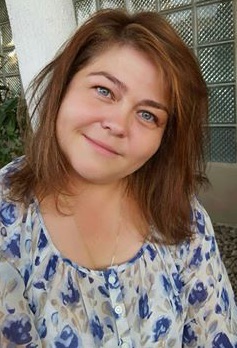
TBI Tales . . . . . . . . . . . . . . . Knitting through the Honeymoon

Knitting through the Honeymoon

by Liza Spears

presented

by

Donna O’Donnell Figurski


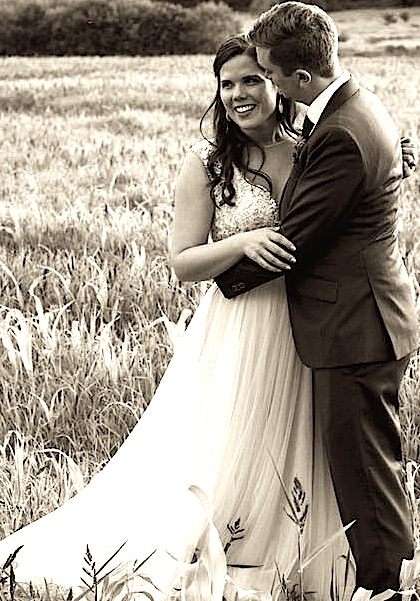
bride-and-groom-clipart-14I’ve been married for almost seven months. Since my wedding, I’ve knit twenty-five hats, five sweaters, three scarves, and one blanket.

I started my first “married life” knitting project on the third day of my honeymoon. It was a ribbed seed stitch hat in my wedding colors–deep reds and purples. I pretended that it was for my husband, even though I knew there was way no he’d wear such a feminine pattern.Liza Spears Wedding Photo

I started the hat over more times than I can count. I didn’t start over because of any mistakes–I hadn’t dropped a stitch or miscounted any rows. The pattern wasn’t complex. I just knew each time I finished that it wasn’t quite right. Every time I got to the last row of the hat, I’d finish as instructed–threading the yarn through the remaining stitches and pulling it tight. Instead of weaving in the ends, though, I’d just completely undo the whole thing and start from the beginning.

I knew how to knit before I got married, but I never trusted myself to do anythingclipart-knitting-DP2n1R-clipart more complex than a simple hat, knit in the round, just knit, purl, knit, purl. I’m happy to say that out of the twenty-five hats I’ve knit since my wedding day, not a single one is that old favorite of mine. Before the wedding, I avoided new patterns because I avoided counting as much as possible. How could an activity be fun if it involved math?

Liza Spears 062418

Liza Spears – Knitter Extraordinaire

It was that third day of my honeymoon and that brand-new hat pattern that taught me how much I needed to count stitches. I learned that if I was counting stitches, I wasn’t counting other things, like the number of the days my husband had been in the ICU (intensive care unit) or the number of nurses that cried when they saw me. If I focused on the 44 stitches I had to cast on to a pair of size 11 needles, I might not notice that his ICP (intracranial pressure) levels* kept creeping up. The number 44 isn’t so scary when it’s just the number of stitches in a row, but when it’s the number flashing on your husband’s monitor next to “ICP” as one of his nurses ushers you out and three doctors rush in, it is scary.

I wasn’t supposed to have time to knit on my honeymoon. I was supposed to be rappelling down waterfalls in the Azores and soaking in thermal baths, but you can’t do that when you wake up in the middle of your wedding night to the sound of your husband falling down the stairs. Going to the bathroom should be easy. It shouldn’t end with your husband lying in pool of his own blood. The first time you use the phrase “my husband” shouldn’t be when calling 911, and as much as you love your bridesmaid, she isn’t the person you should be sharing your bed with. I wasn’t supposed to spend the third day of my honeymoon in the waiting room of the ICU sobbing with my mom, not understanding why my husband wasn’t awake, and what it meant that his nurse had kicked me out.

In the waiting room, I just focused on the ribbing of the hat. Knit 3. Purl 2. Repeat. I was already switching to larger needles to begin the rest of the hat when my husband’s nurse came out and told me I should say goodnight. The pressures in my husband’s brain were just too high for any extra stimulation, even if I just sat next him counting my knits and purls.

The hospital called me at 4 am the next morning to tell me that they were rushing my husband in for an emergency decompressive craniotomy. They could no longer control the rising pressure in his brain with medication alone, so they removed half of his skull.

I realized I’d have to adjust my hat pattern if it was going to fit my husband’s new head, so I started over, knitting and counting the stitches until he woke up.

*Intracranial pressure levels between 7 and 15 are normal. Levels above 20 are dangerous and indicate brain swelling.

To read more posts by Liza Spears, click on Knit Neutrality.

(Disclaimer: The views or opinions in this post are solely that of the author.)

If you have a story to share and would like to be a part of the SPEAK OUT! project, please submit your TBI Tale to me at neelyf@aol.com. I will publish as many stories as I can.


As I say after each post:

Please leave a comment by clicking the blue words “Leave a Comment” below this post.anim0014-1_e0-1

Please follow my blog. Click on “Follow” on the top right sidebar. (It’s nice to know there are readers out there.)

If you like my blog, share it with your friends. It’s easy! Click the “Share” buttons below.
If you don’t like my blog, “Share” it with your enemies. I don’t care!

Feel free to “Like” my post.

(Clip Art compliments of Bing.)

Survivors SPEAK OUT! Geo Gosling

Survivors SPEAK OUT!  Geo Gosling

presented

by

Donna O’Donnell Figurski


Geo Gosing 1

Geo Gosling – Brain Injury Survivor

1. What is your name? (last name optional)

Geo Gosling

2. Where do you live? (city and/or state and/or country) Email (optional)

St. Helena, California, USA     goose3@wildblue.net

3. On what date did you have your brain injury? At what age?

In 1995 at the age of 25

4. How did your brain injury occur?

I was riding my bicycle 40-45 mph down a steep hill. (That’s pretty fast on a bicycle.) It was dusk, and I didn’t have a bike-light. A car going in the opposite direction was at the bottom of the hill, didn’t see me, and turned left onto a street. I hit her. In auto accidents, this would be referred to as a “T-bone.” So, while on my bicycle, I “T-boned” a car at about 40 mph.bike

5. When did you (or someone) first realize you had a problem?

Pretty soon thereafter

6. What kind of emergency treatment, if any, did you have?

I was transported by ambulance to Queen of the Valley Hospital in Napa. (It should be noted that my crash occurred only a few hundred feet from the St. Helena Hospital and Health Center, but the ambulance was routed to Napa – about 25 min. south of where I was – because “The Queen” is much better prepared for head trauma.) I had a tracheotomy, and my right shoulder was pretty smashed. I fractured two neck vertebrae, so I had a broken neck. Some ribs were broken also. That all pales in comparison to the TBI (traumatic brain injury), however.

7. Were you in a coma? If so, how long?

I was technically never in a coma, but I was unconscious for either six or eight days – I don’t remember which. (Funny story – I think: I was technically never in a coma because I would respond to outside stimuli. The doctor demonstrated this by talking loud at me or yelling or saying bad things or something, and I would just lie there in bed give him the finger. I just lay there and flipped him off. I later found out the doctors thought this to be rather amusing.)

Geo Gosling 1

Geo Gosling – Brain Injury Survivor

8. Did you do rehab? What kind of rehab (i.e., inpatient or outpatient and occupational and/or physical and/or speech and/or other)?

I had both inpatient and outpatient therapy. Both in- and outpatient therapy consisted of occupational therapy, physical therapy, speech therapy, and “thought” therapy. (I had to see a psychologist because I was rather … ah … depressed. I called it “thought therapy.”) I was in rehab for years. In fact, I still go to massage therapy because my muscles don’t seem to relax too well anymore. Speech therapy helped, but not much because, as a result of my TBI, I have dysarthria, which is basically paralyzed facial muscles. As a result, I have trouble speaking clearly, and I sound a wee-bit tipsy most of the time.

How long were you in rehab?

Years. I still go to massage therapy twice a month.

9. What problems or disabilities, if any, resulted from your brain injury
(e.g., balance, perception, personality, etc.)?

Let’s see … where to begin? I’m in constant pain. The part of my brain that is responsible for, or connected to, the gums on the left side of my mouth is injured or damaged or whatever. Anyhow, my brain thinks my gums on the left side of my mouth are telling it that they hurt because something is wrong. Well, something is wrong, but not with my gums. It’s my brain that is confused. My brain “thinks” my gums hurt. So, I just think my gums hurt, but they don’t. (Don’t think about that too long, or you will need to see a shrink.) I don’t like people anymore. I’m pissed off all the time. I haven’t had a date in 20+ years. That could also be why I’m pissed off and don’t like people. I can go from being “happy as a clam” to extremely furious in about ten nanoseconds. (I was never like that before.) My balance is terrible – I fall over very easily. (I couldn’t run to save my life – assuming I wanted to save it. I can’t even walk fast.) I have arthritis in my neck – hurts like hell. My lower back hurts often.

10. How has your life changed? Is it better? Is it worse?

Is this a trick question?

11. What do you miss the most from your pre-brain-injury life?

I miss a career I enjoyed, laughing, hope, feeling good, living, friends.

12. What do you enjoy most in your post-brain-injury life?

Is this another trick question?

13. What do you like least about your brain injury?

Let’s see … where to begin? I dislike my speech. I hate the constant pain. I’m unhappy with having no friends, no job, little money, and no hope. That about covers it.

dT76zBKac14. Has anything helped you to accept your brain injury?

Passage of time, but nothing really helped. I just realized shit happens, and you have to deal with it.

15. Has your injury affected your home life and relationships and, if so, how?

I live alone and always will. I can’t really deal with people anymore. I don’t trust anyone, the reason being that my psychologist lied to me. As a result, I ended up in the mental ward of St. Helena Hospital and Health Center for two nights and three days. I also had a therapist call the police after I had done what SHE SAID I SHOULD DO!

16. Has your social life been altered or changed and, if so, how?

I used to have somewhat of a social life, but now, the only person I do anything with is my mom. That’s a tad depressing.

17. Who is your main caregiver? Do you understand what it takes to be a caregiver?

I don’t really have one now.

18. What are your plans? What do you expect/hope to be doing ten years from now?

I have no future plans. I will probably be doing the exact same thing ten years from now – nothing.

Geo Gosling 3

Geo Gosling – Brain Injury Survivor

19. Are you able to provide a helpful hint that may have taken you a long time to learn, but which you wished you had known earlier? If so, please state what it is to potentially help other survivors with your specific kind of brain injury.

Just deal with it the best you can.

20. What advice would you offer to other brain-injury survivors? Do you have any other comments that you would like to add?

Do as much stuff for yourself as you can. Doing “everyday living” stuff is the best therapy. If you can walk, walk as much as you can.

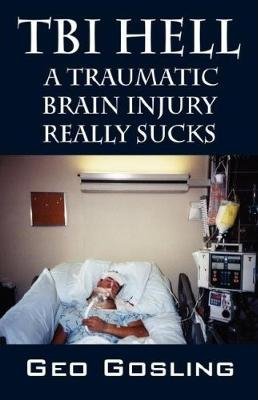
Check out these books by Geo Gosling.

 TBI Hell by Geo Gosling 4      TBI Purgatory by Geo Gosling 5


If you would like to be a part of the SPEAK OUT! project, please go to TBI SPEAK OUT! Survivors Interview Questionnaire for a copy of the questions and the release form.

(Clip Art compliments of Bing.)

As I say after each post: Please leave a comment by clicking the blue words “Leave a Commentanim0014-1_e0-1 below this post.

Feel free to follow my blog. Click on “Follow” on the upper right sidebar.

If you like my blog, share it with your friends. It’s easy! Click the “Share” buttons below.

If you don’t like my blog, “Share” it with your enemies. I don’t care!

Feel free to “Like” my post.

diemodi jewelry

uniquely hand-crafted jewelry by donna

Welcome to Harmony Kent Online

The home of all things books

Pete Springer

Passionate Teacher and Future Children's Author

HOPE TBI

Helping Other People Excel - To Be Independent

For the Love of Books, Old and New

Katie Fischer, Writer and Reader of Stories

Charlie Bown

Children's Author

Jessica Hinrichs

“We write to taste life twice, in the moment and in retrospect.” ― Anais Nin

VIVIAN KIRKFIELD - Writer for Children

Picture Books Help Kids Soar

Mindy’s Writing Wonderland

For authors, parents, teachers & everyone who loves children’s books.

Kaitlyn Leann Sanchez

Literary Agent

Surviving Traumatic Brain Injury

TBI - Survivors, Caregivers, Family, and Friends

The Care Factor

Loving someone with a Traumatic Brain Injury

Brain Injury Support Group of Duluth-Extension

Brain Injury Information and SUPPORT

Brain Aneurysm Global Insight

Brain Aneurysm, cerebral hemorrhaging, hemorrhage stroke