TBI – Survivors, Caregivers, Family, and Friends

Posts tagged ‘Brain Injury Radio Network’

SPEAK OUT! . . . . . . . . . . . . . . . . . . . Guest Blogger: Kristin Olliney . . . My Fight: The Reason to Advocate

My Fight: The Reason to Advocate

by

Kristin Olliney

(presented by Donna O’Donnell Figurski)

Girl Blogger cartoon_picture_of_girl_writingIsabella’s Acquired Brain Injury (ABI) is the result of sudden acute encephalitis. However, there was also medical error involved in her care. Given the many factors involved, it is difficult to prove which symptom caused what damage. Due to this, no one will ever be held accountable for what happened. As a result, there are four important reminders that everyone needs to know.

  1. It doesn’t matter where you live. Even in the best city, at the best hospital, with the best doctor, mistakes can happen. I am often told how lucky I am to live in the Boston area because we have access to so many medical facilities. While this is true, not all doctors and care are the same.
  1. Doctors are human. They are people who have studied medicine and, based on their knowledge, give you their opinion. It is not fact. It is opinion. Their opinion is their best guess. This is so important to remember, especially when given a prognosis. Isabella, like many other survivors, was not supposed to make it through the night, and yet she did.
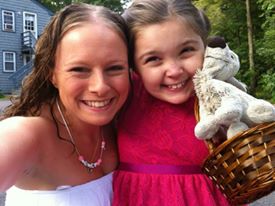
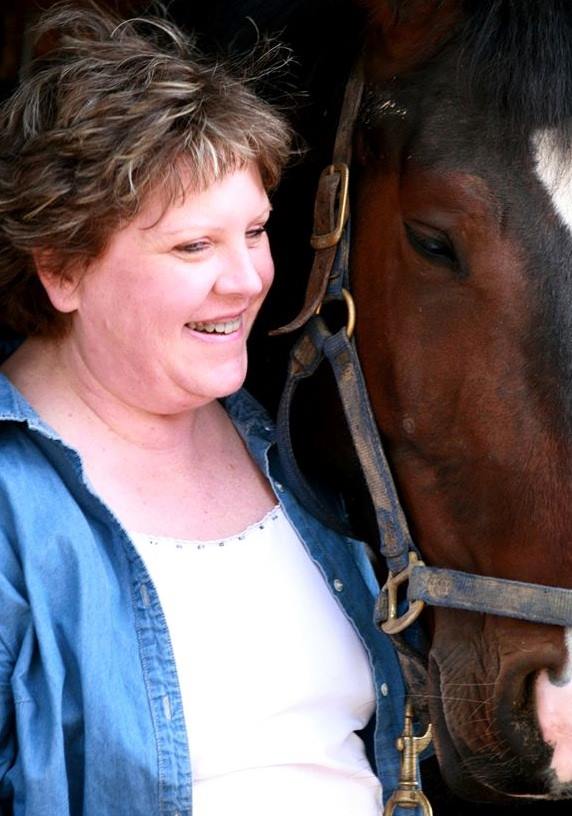
    Kristin Olliney with Isabella 2014

    Kristin Olliney with Isabella 2014

  1. Always follow your gut instinct, especially if something doesn’t seem right. Ask questions. When Isabella first got sick, the Emergency Department wanted to discharge her with a stomach bug. I knew that there was something seriously wrong. I can’t explain how I felt – only that I just knew. I fought and advocated to get Isabella admitted into the hospital. One of Isabella’s specialists was on call, and he trusted my gut instinct. Later in the PICU (pediatric intensive care unit), as I watched my child fighting for her life, I was told by him and other doctors that my fighting and advocating saved Isabella. If Isabella had been discharged, she would have died. Always fight and advocate for what you feel is right. You know your child/loved one better than anyone.
  1. Get another opinion. When you are in crisis, there isn’t always time. When things stabilize, seek out another opinion should you and the doctor have a difference of opinion. On this journey, things can change. Opinions differ, treatment options vary, and, if there are fundamental differences, another opinion can help.

    Kristin Olliney & daughter, Isabella  2015

    Kristin Olliney & daughter, Isabella
    2015

For me, it is hard knowing that the doctors who cared for my daughter made mistakes. Coming to terms with the fact that no one will ever be held accountable for what happened to Isabella is difficult. I know Isabella is here because I fought and advocated. It is still devastating to know that mistakes could have been prevented. I am sharing this part of our journey in hopes that it will encourage others to continue to fight and advocate for their child/loved one. Against all odds, my amazing miracle is here today, and, for that, I am forever grateful.

To learn more about Kristin and Isabella, please visit Kristin’s website/blog at In An Instant Your Life Can Change Forever – Brain Injury Association of Massachusetts Blog

Thank you, Kristin Olliney.

Disclaimer:
Any views and opinions of the Guest Blogger are purely his/her own.

(Clip Art compliments of Bing.)

(Photos compliments of Kristin Olliney.)

As I say after each post:

Please leave a comment by clicking the blue words “Leave a Comment” below this post.

Feel free to follow my blog. Click on “Follow” on the lower right corner of your screen.

If you like my blog, share it with your friends. It’s easy! Click the “Share” buttons below.

If you don’t like my blog, “Share” it with your enemies. I don’t care!

Feel free to “Like” my post.
TBI Tales . . . . . . . . . . . . . . . . . . Freedom and a Blue, Metallic Trike

FREEDOM and a Blue-Metallic Trike

(presented by Donna O’Donnell Figurski)


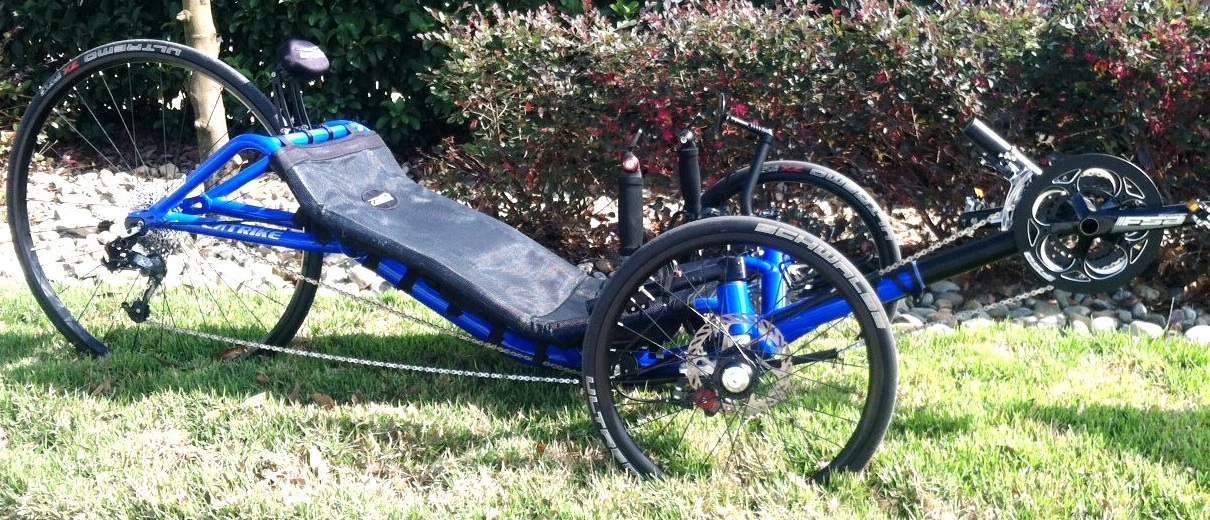
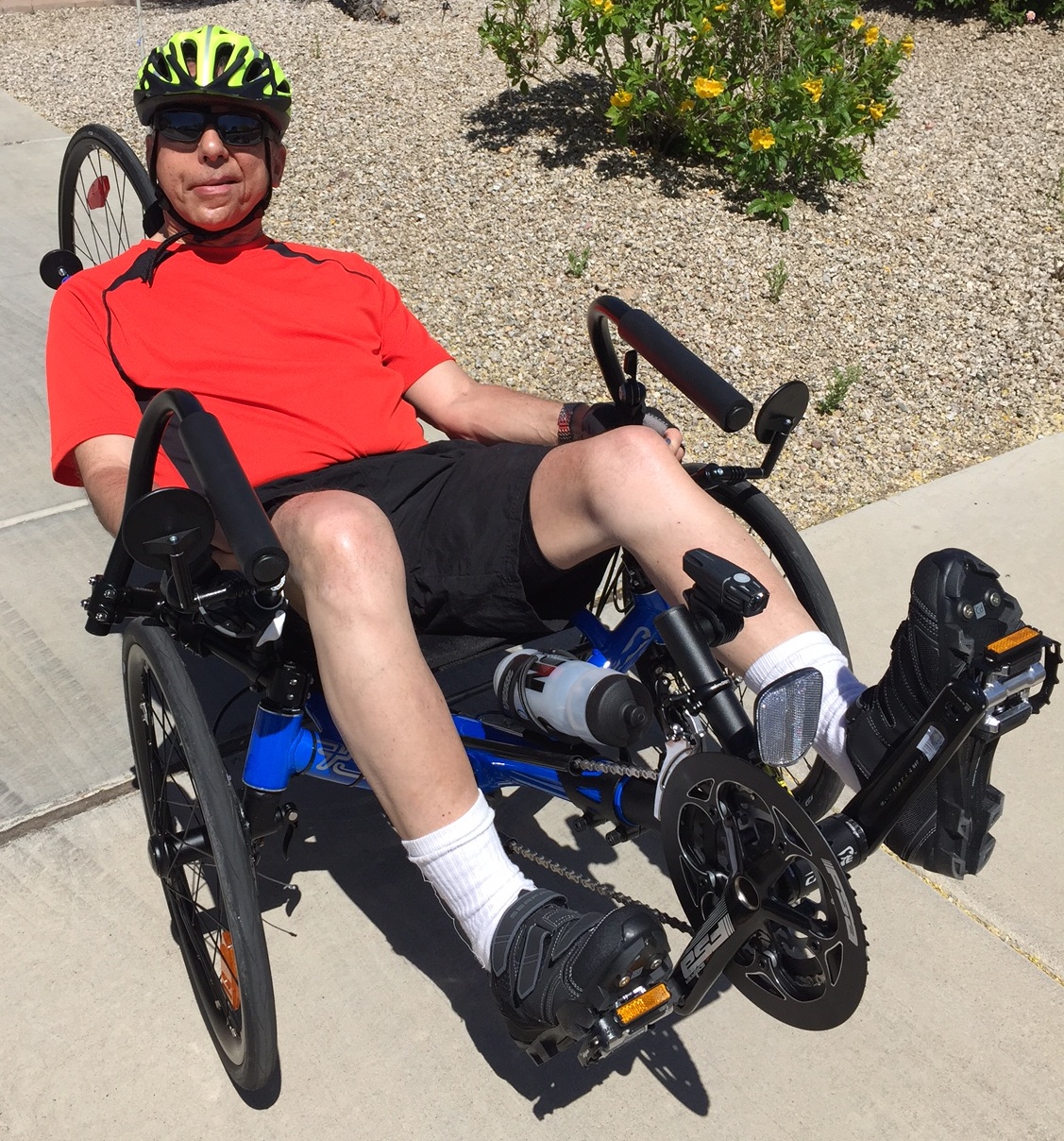
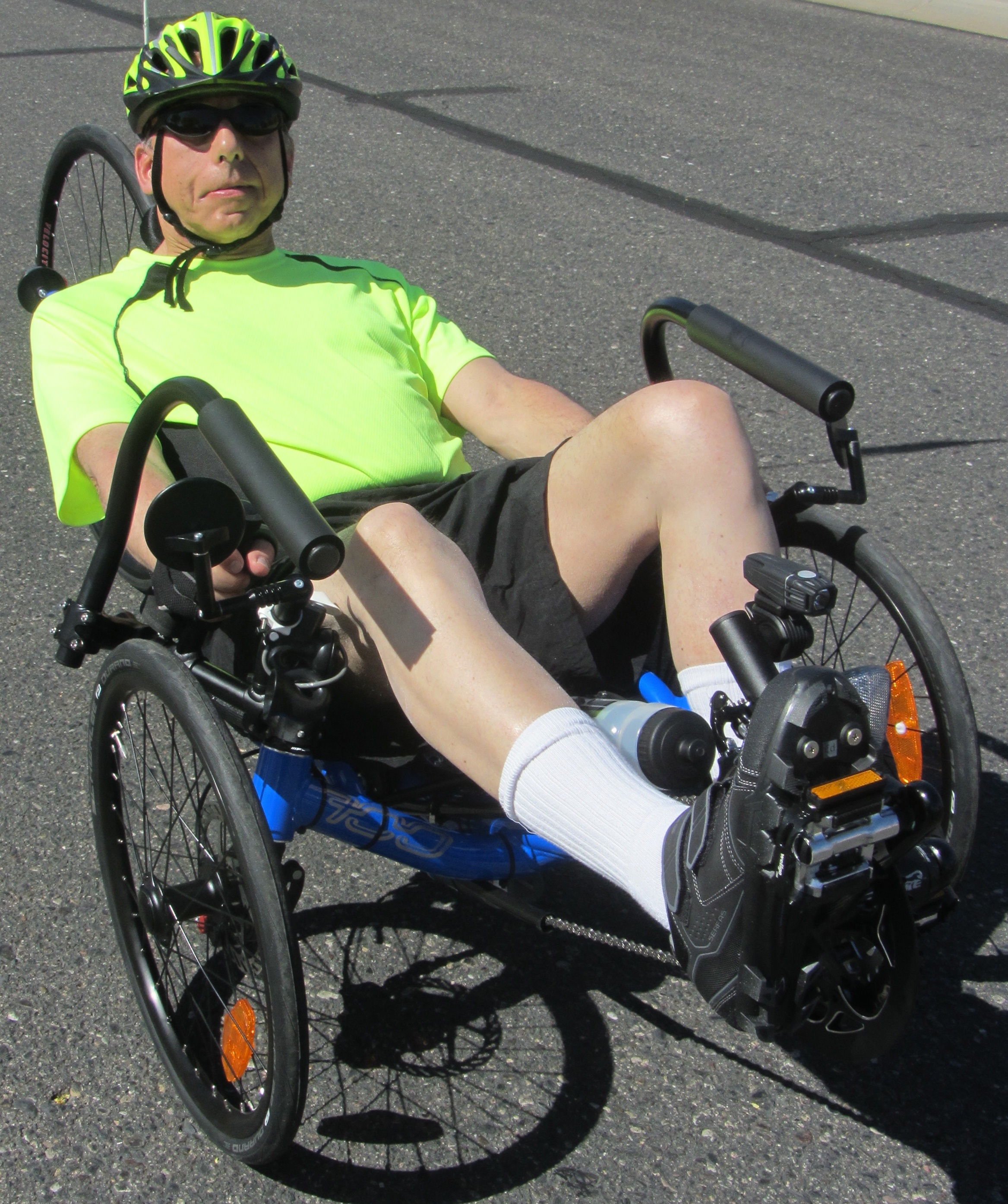
040915 David 1st Ride Catrike 700April 9, 2015 marks a pretty exciting day for us. It’s the first official day of David’s independence since his brain injury in 2005. David recently bought a Catrike 700 recumbent trike. This sleek, low-to-the-ground, metallic-blue machine will be his wheels and his freedom.

Because of severe balance issues due to his brain injury and the damage to his cerebellum, David has been unable to leave our home unattended for the past ten years. With his Catrike 700, he can hop on and and pedal away for hours and hours. (Well, not really hop on, but that sounded better than crawl or climb on.) Of course, his limitation of getting off the trike because he is unableFigurski, David Trike to walk anywhere on his own remains a problem. But, that won’t deter David.

David’s first excursion was a 5-mile trip around the winding, scenic roads in our neighborhood. Pedaling down streets lined with palm trees and a variety of cacti, many of which are in bloom right now, was liberating and fun, if the grin plastered on his face when he returned was any indication.

DonnaLater the same afternoon, David guided me on my first recumbent-trike trip. I have a yellow/mango Pocket Catrike, and I love it.

Today, David is riding with friends in a neighboring community. What fun! This is only the beginning.

Donna's Pocket 040915

As I say after each post:

Please leave a comment by clicking the blue words “Leave a Comment” below this post.anim0014-1_e0-1

Please follow my blog. Click on “Follow” on the top right sidebar. (It’s nice to know there are readers out there.)

If you like my blog, share it with your friends. It’s easy! Click the “Share” buttons below.

If you don’t like my blog, “Share” it with your enemies. I don’t care!

Feel free to “Like” my post.
 

(Clip Art compliments of Bing.)

(Photos compliments of Me.)

Speaking Engagement . . . . . . . “Prisoner Without Bars . . . . . . . . . . . A Caregiver’s Story”

YOU ARE INVITED!


putthis_on_calendar_clip_artWhen Donna’s spouse, David, did one chin-up too many, he had a brain injury (BI), and Donna became a caregiver. David had three brain surgeries within two weeks. Donna signed on the dotted line for each of them – probably the hardest thing she has ever done in her life. Donna will share her story, “Prisoner Without Bars: A Caregiver’s Story” about David’s unexpected recovery and how she and David are making this “new normal” work for them. She will also share tips and offer David Figurski 2004 Pre-Brain Injurysuggestions from what she learned along the way.

It’s been a long, bumpy road for both David and Donna, but they travel that road together.

Come One! Come ALL!

Donna and David Post-Brain Injury  2010

Post-Brain Injury 2010


What:        Donna will share her experiences with caregiving and will offer tips based on what worked for her. Donna  will also share snippets of her book, “Prisoners Without Bars: A Caregiver’s Memoir,” which is searching for a publisher.

Why:        Hopefully, Donna’s experiences with caregiving will help others who might find themselves in this position

When:       Monday, April 6, 2015

Time:         1:00 to 2:30pm

Where:      Desert Palms Presbyterian Church
13459 W. Stardust Boulevard
Sun City West, Arizona 85375-2548

(Clip Art compliments of Bing.)

(Photos compliments of Donna)

SPEAK OUT! . . . . . . . . . . . . . . . . . Faces of Brain Injury

Brain Injury is Not Discriminating

bigstock-cartoon-face-vector-people-25671746-e1348136261718It can happen to anyone, anytime, . . . and anywhere.

The Brain Trauma Foundation states that there are 5.3 million people in the United States living with some form of brain injury.

On “Faces of Brain Injury,” you will meet survivors living with brain injury. I hope that their stories will help you to understand the serious implications and complications of brain injury.

The stories on SPEAK OUT! Faces of Brain Injury are published with the permission of the survivor or designated caregiver.

If you would like your story to be published, please send a short account and two photos to me at neelyf@aol.com. I’d love to publish your story and raise awareness for Brain Injury – one view at a time.


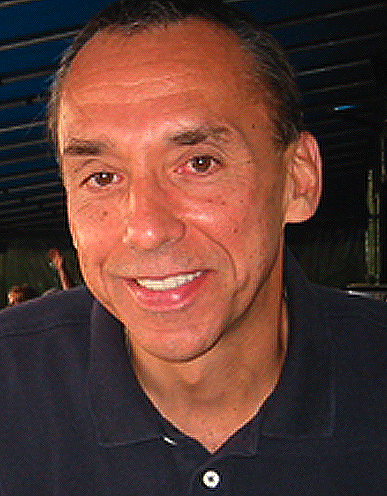
Cam Compton (survivor)

11056773_804796876222530_117254145_nOn March 21st, I celebrated my “strokaversary.” Three years ago, I suffered a stroke. It has changed my life dramatically. I am still “me” – still Cam – but at the same time, I am not. I have learned to live and to love this new me. I have had fun. Whatever I was before (like fun or nerdy), I am still that, but three times more so now. I have met many new friends. I have done things that I would never have done if I had not had my stroke: my billboards, the talks, facilitating a stroke support-group, the stroke walk (mark April 18th on your calendar), and my newest – Brain Injury Radio host. I will be hosting my own show on the second Friday of every month. I’m happy to be here alive and on this side of the dirt.


Lindsey Dunn (survivor)

Dumm, Lindsey Survivor 032015 10686800_10101531483831264_2468134818312325958_nYesterday was two years ago that I fell about sixty feet on a spiral staircase in Valencia, Spain. I hit my Dumm, Lindsey Survivor 032015 10407045_10101650526873054_7173077641176124389_nhead on the way down (on one of the metal spindles), causing me to get a traumatic brain injury. I am actually very happy that this happened to me. I’m lucky that people have Dumm, Lindsey Survivor 032015  11043033_10101641035463914_6164584326813463685_nstuck by my side through this trial. Maybe my story will give hope to people and God can use it to help others.


Marcel’s moms (caregivers)

10711_356648177855326_33065405394910668_nWhen our son, Marcel, was eleven months old, he suffered a severe TBI. The doctors told us that he would never eat, walk, see, or talk – basically that he would be a vegetable. It’s been eight months, and his vision is starting to come back, he’s smiling and laughing, and he’s getting neck strength back. His limbs are getting stronger and starting to move a lot. MarcelHe’s learning how to eat again. And he babbles like a baby. Marcel has come so far, but he still has a long way to go. Obviously, God has plans for Marcel because he is a fighter. He was so close to dying, but he fought to stay here. A lot of people, doctors, and nurses told us all the things that our son would never do. Our boy will continue to fight and prove to everyone that he can. He’s doing many of them already.


Daniel Wondercheck (survivor)

Wondercheck, Daniel Survivor 0311815On July 23, 1991, I was involved in a construction accident that was serious enough to smash my hardhat, crack my skull, and knock me out for six days. I spent 85 days in the hospital, 95 days as an inpatient in a rehabilitation hospital, and another 186 days in rehabilitation as an outpatient. Now – twenty-three years and nearly eight months later, I still use a wheelchair, I talk funny, I have involuntary movements in my extremities, my left eye moistens itself approximately half as much as it should, and my right eye does not moisten itself at all. For 26.5 hours per week, I have a personal assistant who helps me with daily-living activities. (My personal assistant is also my best friend and “guardian angel.”) But, I do have enough mental ability to be a top-rated Power Seller on eBay and to be an administrator for an online support-group for traumatic brain injury survivors (Traumatic Brain Injury – TBI – Terrific Beyond Injury).


(Clip art compliments of Bing.)

(Photos compliments of contributors.)

Survivors SPEAK OUT! Peter Corfield

Survivors  SPEAK OUT!  Peter Corfield

by

Donna O’Donnell Figurski

Peter Corfield - Brain Injury Survivor - 2010

Peter Corfield – Brain Injury Survivor – 2010

1. What is your name? (last name optional)

Peter Corfield

2. Where do you live? (city and/or state and/or country) Email (optional)

Marcilly En Bassigny, France      petercorfield3@gmail.com

3. When did you have your brain injury? At what age?

My brain injury happened on June 1, 2010. I was 55 years old.

4. How did your brain injury occur?

I had a stroke caused by bleeding of an AVM (arteriovenous malformation).

5. When did you (or someone) first realize you had a problem?

After returning from an art course, my wife found me on the floor.

6. What kind of emergency treatment, if any, did you have?

I was stabilized, and then I was helicoptered to Dijon Hospital. There they did a craniotomy and repaired the vein.

Peter Corfield - Brain Injury Survivor 2010

Peter Corfield – Brain Injury Survivor – 2010

7. Were you in a coma? If so, how long?

Yes. I was put into a coma for about two and a half weeks.

8. Did you do rehab? What kind of rehab (i.e., inpatient or outpatient and occupational and/or physical and/or speech and/or other)? How long were you in rehab?

I was sent to a rehab centre. There I had rehab for five and a half months.

9. What problems or disabilities, if any, resulted from your brain injury
(e.g., balance, perception, personality, etc.)?

I was hemiplegic (paralysis of one side of the body) with left-side paralysis, and I had an anxiety problem in the form of overactive bladder.

10. How has your life changed? Is it better? Is it worse?

My life has changed a great deal. In some ways, it is better; in others, much worse.

11. What do you miss the most from your pre-brain-injury life?

I miss being able to sleep in a normal bed with my wife. I also miss playing my guitar and driving.

12. What do you enjoy most in your post-brain-injury life?

I like being able to help others who have had the same experience.

13. What do you like least about your brain injury?

I dislike the lack of normality.

14. Has anything helped you to accept your brain injury?

My wife’s support has helped. Also my writing has been important.

15. Has your injury affected your home life and relationships and, if so, how?

It has. My wife and I sleep apart. But, my stroke has made me more thoughtful towards others. I think I am a better person.

16. Has your social life been altered or changed and, if so, how?

Yes. My anxiety affects our going out in the dark. The anxiety also makes it awkward to sit on chairs with no arms.

17. Who is your main caregiver? Do you understand what it takes to be a caregiver?

My wife is my caregiver. I fully understand how hard it is for her. It drives me on to recovery.

18. What are your future plans? What do you expect/hope to be doing ten years from now?

I am determined to be recovered enough to look after my wife and to be helping other stroke survivors

19. Are you able to provide a helpful hint that may have taken you a long time to learn, but which you wished you had known earlier? If so, please state what it is to potentially help other survivors with your specific kind of injury.

Keep a diary to realise just how much you have improved, as recovery is slow.

Corfield, Peter  Leg Push

Peter Corfield – Brain Injury Survivor – 2010

20. What advice would you offer to other survivors? Do you have any other comments that you would like to add?

I have written Kindle stroke-experience books. I donate all royalties to The ARNI (Action for Rehabilitation from Neurological Injury) Institute (http://www.arni.uk.com) to try to help other stroke-affected people.


Thank you, Peter, for taking part in this interview. I hope that your experience will offer some hope, comfort, and inspiration to my readers.

(Disclaimer: The views or opinions in this post are solely that of the interviewee.)

If you would like to be a part of the SPEAK OUT! project, please go to TBI Survivor Interview Questionnaire for a copy of the questions and the release form.

(Photos compliments of Peter.)


SPEAK OUT! NewsBit . . . . . . . . . . Chris Borland – Rookie Linebacker Retires Over Fear of Brain Trauma

Rookie Linebacker, Chris Borland,  Retires Over Fear of Brain Trauma


newsboy-thChris Borland, a promising rookie linebacker with the San Francisco 49ers, retired after one year of a four-year contact because the possibility of brain disease wasn’t “worth the risk.” (Full story 1; story and video 2)Borland, Chris

There is a growing body of evidence that repeated head trauma can lead to neurological problems and premature death. A NewsBit on this blog reported that a University of Tulsa study revealed changes to the brains of football players, even in the absence of a documented concussion. Last season, an Ohio State University football player apparently committed suicide. Concussions may have had a role in his death. The National Football League (NFL), the premier professional football organization in the United States, is in the middle of a multimillion-dollar lawsuit over concussions and neurological problems.

Chris Borland gave careful thought to his early and unexpected retirement. He talked with family, friends, teammates, and brain researchers before making his decision to retire from a game he was good at. He said the game is inherently dangerous, which is not necessarily a bad thing, but a player should make an informed decision. Borland also said, “There’s just too much unknown for me, and there have been too many tragedies for me to be comfortable playing…I just want to live a long, healthy life, and I don’t want to have any neurological diseases or die younger than I would otherwise.” He was asked about walking away from probable wealth. Borland answered that no amount of money could take the place of being there for his family. (Full story 3)

(Clip Art compliments of Bing.)

SPEAK OUT! Faces of Brain Injury Catherine (Cat) Brubaker

bigstock-cartoon-face-vector-people-25671746-e1348136261718

It can happen to anyone, anytime, . . . and anywhere.

The Brain Trauma Foundation states that there are 5.3 million people in the United States living with some form of brain injury.

On “Faces of Brain Injury,” you will meet survivors living with brain injury. I hope that their stories will help you to understand the serious implications and complications of brain injury.

The stories on SPEAK OUT! Faces of Brain Injury are published with the permission of the survivor or designated caregiver.

If you would like your story to be published, please send a short account and two photos to me at neelyf@aol.com. I’d love to publish your story and raise awareness for Brain Injury.

Catherine (Cat) Brubaker (survivor)

Catherine Cat Brubaker 031915Catherine Brubaker is a two-time traumatic brain injury (TBI) survivor. Using her walker, Catherine, who was determined to take back her life, walked into Sun Cyclery in Phoenix, Arizona, in September 2013 and purchased a recumbent trike.

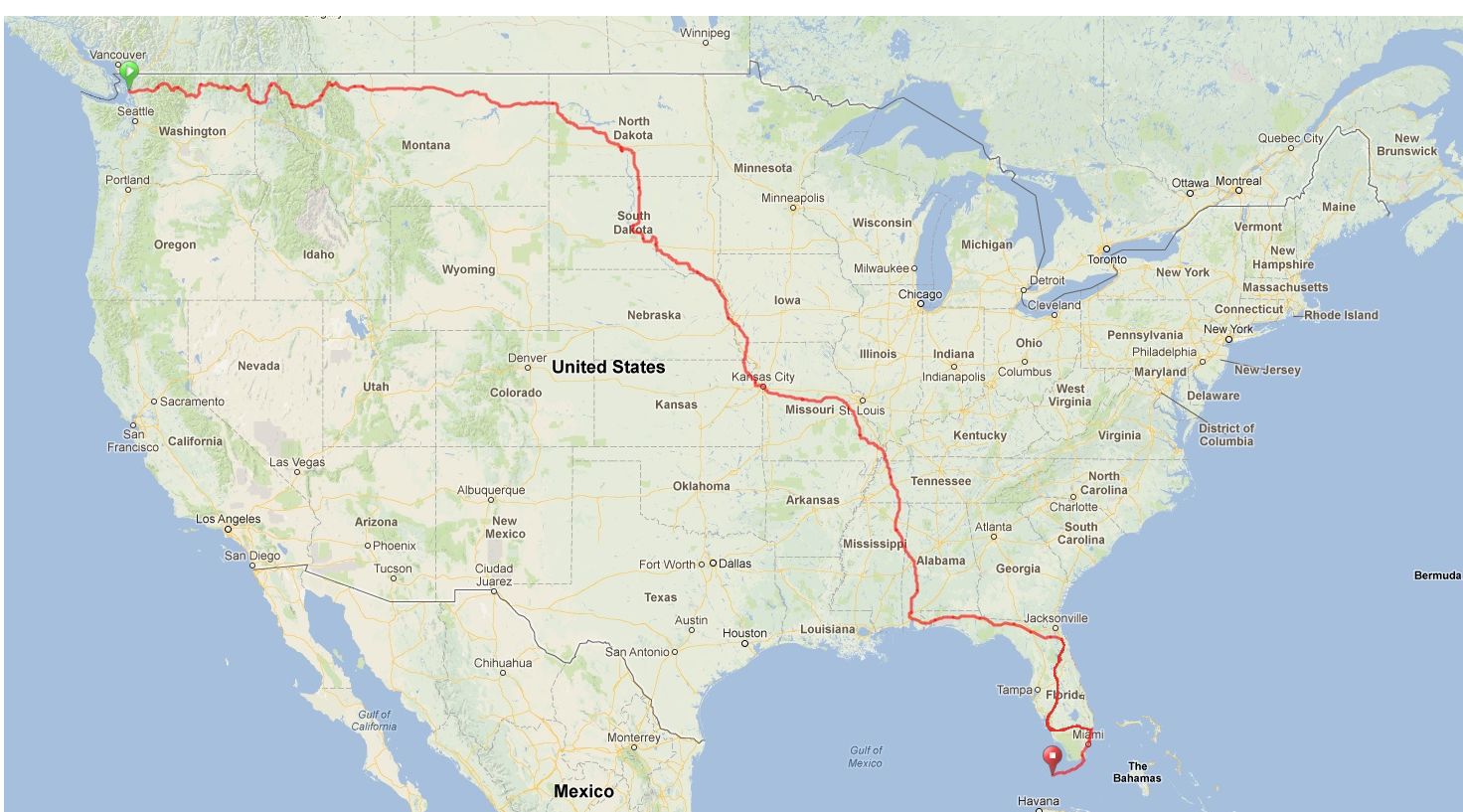
On June 29, 2014, she joined a stroke survivor and began what was to become the journey of her lifetime. Catherine and her new riding partner rode 5390 miles across America on their recumbent trikes. The trip took 5 1/2 months. It started in Anacortes, Washington, and concluded in Key West, Florida. Catherine pedaled over several high-altitude mountain passes and persevered through snow, rain, mud, and every imaginable obstacle. Through this experience, Catherine has been able to regain her freedom and confidence, find purpose, and rebuild her body as part of her recovery from undignified tragic circumstances.Catherine-journey-SFS MAP

Catherine actively reaches out to inspire brain injury survivors to help them reclaim their lives through recumbent trikes and art. She is scheduled for several speaking engagements across the nation in 2015.

Catherine has partnered with “Spokes Fighting Strokes” (SFS) in her grassroots effort to encourage a national conversation about brain injury, regardless of its cause. Together, SFS and Catherine will teach as many brain injury survivors as possible to ride recumbent trikes to aid in their recovery. Success stories can be found on Catherine’s website (www.irideforhope.org).

As part of her recovery, Catherine was enrolled in a special program called “Artists for Trauma,” which has brought her great joy. Catherine has recently been named the Brain Injury Ambassador for this foundation. She is honored to be a part of this effort, and she looks forward to contributing her art and collaborating with artists and trauma survivors. Her works of art and photography can be found at http://www.irideforhope.org. All proceeds go toward her foundation.

Brubaker, Catherine CAT Hope for TraumaCatherine is also in the process of launching a foundation called, “Hope for Trauma.” Its mission is to encourage a national conversation about brain injury, regardless of its cause. Her foundation will also be concerned with brain injury’s impact on survivors and their families and with the invisible challenges they face.

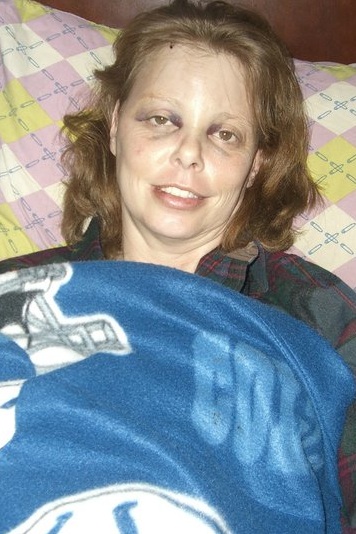
Catherine’s road to her newfound freedom has been long and filled with obstacles. After being assaulted in 2010, which caused Catherine’s initial TBI, she had to relearn how to walk, talk, and eat on her own. This involved many months and multiple physicians (often several in a day). In 2012, Catherine’s heart began to fail, and she was on the brink of death. She received a pacemaker and a new chance at life. Luck was not on her side, though, and she was in a collision with another vehicle shortly thereafter. Catherine had to once again relearn how to walk, talk, and do basic daily tasks.

Catherine can no longer drive or live by herself. She lost her career and her ability to be independent.Catrike 700 Blue Cognitively Catherine was set back to early grade school. Her primary relationship became strained, as her partner became her caregiver. Eventually the strain became too much for her partner. Faced with these losses, Catherine hit rock bottom. She tried to take her own life in March 2014. Shortly afterward, Catherine met her current riding partner. It was in that meeting that she learned of the ride across the US. That spark ignited her competitive spirit and gave her a new outlook on life.

Prior to her TBIs, Catherine was an accomplished professional. She went to Pacific Union College in Napa, California, and graduated with a B.S. degree in Psychology. She worked with military veterans and offered them financial, investment, and insurance services. She led a team of 12-15 associCuracaoMarriott_oates. During her career, Catherine decided to pursue a Master’s degree in Leadership, which she obtained in 2007. She accomplished this with a 4.0 GPA and while working full time! She was also an avid skier on black diamond runs, and she enjoyed running two miles daily, rain or shine.

To learn more about Catherine, check out these sites.

Survivors SPEAK OUT! Catherine (Cat) Brubaker

Catherine (Cat) Brubaker: Triking Across America

“Another Fork in the Road” Brain Injury Radio Network – “Triking Across America Diagonally” with Catherine (Cat) Brubaker

On the Air – Brain Injury Radio: Interview – Catherine Brubaker – Triking Across America

Catherine Brubaker’s Photo Journal (Part 1) Washington to Florida

“Another Fork in the Road” Brain Injury Radio Network – Catherine (Cat) Brubaker’s and Dan Zimmerman’s Reflections – Triking Across America

(Clip art compliments of Bing.)

(Photos compliments of contributor.)

“Another Fork in the Road” . . . Brain Injury Radio Network … Interview with Joshua Puckett

YOU ARE INVITED!

putthis_on_calendar_clip_art


Joshua Puckett was minding his own business in his own front yard when an unknown assailant attacked him. This attack resulted in a life-change for Joshua. Joshua, with his wife, Tatiana, will join me on my show, “Another Fork in the Road,” to share his story about how he … about how they … are adapting to life after TBI.

Come One! Come ALL!

What:        Interview with Joshua Puckett, brain injury survivor. Joshua’s wife, Tatiana, will join Joshua.

Why:        Joshua will talk about his brain injury and how his life is affected by it.

Where:     Brain Injury Radio Network

When:       Sunday, March  15th, 2015

Time:         5:00p PT (6:00p MT, 7:00p CT, and 8:00p ET) 90 minute show

How:         Click: Brain Injury Radio Network

Joshua Puckett - Survivor 2013

Joshua Puckett – Survivor 2013

Call In:    424-243-9540

Call In:     855-473-3711 toll free in USA

Call In:    202-559-7907 free outside USA

or SKYPE

If you miss the show, but would like to still hear the interview, you can access the archive on On Demand listening. The archived show will be available after the show both on the Brain Injury Radio Network site and on my blog in “On the Air.”

(Clip Art compliments of Bing.)

(Photo compliments of Joshua Puckett.)

SPEAK OUT! . . . . . . . . . . . . . . . . . Faces of Brain Injury

Brain Injury is Not Discriminating.

bigstock-cartoon-face-vector-people-25671746-e1348136261718

It can happen to anyone, anytime, . . . and anywhere.

The Brain Trauma Foundation states that there are 5.3 million people in the United States living with some form of brain injury.

On “Faces of Brain Injury,” you will meet survivors living with brain injury. I hope that their stories will help you to understand the serious implications and complications of brain injury.

The stories on SPEAK OUT! Faces of Brain Injury are published with the permission of the survivor or designated caregiver.

If you would like your story to be published, please send a short account and two photos to me at neelyf@aol.com. I’d love to publish your story and raise awareness for Brain Injury.

Michael Flusche (survivor)

I am who I am – a survivor of brain injury. Some say I am acting or I am forgetful, impulsive, weird, lame, FLushche, Michael Survivor 031015crazy, etc. I get lost easily. I have short attention at times.Flusche, Michael Survivor 030515 I run into things, stumble, spill food, trip, and do other stupid stuff, but I like me this way. I hope you can too.


Melinda Murphy (survivor)

Murphy, Melinda 1I am just over four years post injury. I was a home health nurse in my Murphy, Melinda 2autistic client’s home when it happened. I fell down the basement steps. Wood and concrete are not a good mix. Because it was a work injury, I was caught up in the workers’ comp system, and I was not treated for several months. Only then did I find out that I had a basilar skull fracture. Only 5% of those who suffer from them survive. I did! I’m still progressing. Don’t give up.

Ginger Pickering (caregiver of her son, Bob)

On July 1, 2014, my youngest son, Bob, who is eight, and I were in a car accident. He suffered a severe TBI and other injuries. He had a sucker in his mouth when we hit, and the air bag pushed it into his Pickering, Ginger & Son 1throat. He went a very long time without oxygen, which contributed to the severiPickering, Ginger Son 2ty of the TBI. Our lives changed in that moment, and they will never be the same. He was flown three hours to the primary children’s hospital in Salt Lake City, Utah, and put into a medically induced coma for fourteen days. We were told that, if he survived, we would have to place him into a home. He had no gag reflex, no responses – nothing. I was devastated and in shock. For three months, Bob was in a medical rehab hospital, where he received outstanding care and intense therapy daily. I can’t say enough about his progress. It’s an absolute miracle! We are just so grateful. It’s a struggle, but we’re doing whatever we need to do.

(Clip art compliments of Bing.)

(Photos compliments of contributors.)

Survivors SPEAK OUT! Lessia Malloy

Survivors  SPEAK OUT!  Lessia Malloy

by

Donna O’Donnell Figurski

Lessia Malloy - Survivor

Lessia Malloy – Survivor – Pre-Brain Injury

1. What is your name? (last name optional)

Lessia Malloy

2. Where do you live? (city and/or state and/or country) Email (optional)

Doyline, Louisiana, USA

3. When did you have your TBI? At what age?

Age 51

4. How did your TBI occur?

My TBI resulted from a motorcycle accident. I wasn’t wearing a helmet.

5. When did you (or someone) first realize you had a problem?

I don’t know. I was knocked unconscious upon impact.

6. What kind of emergency treatment, if any, did you have?

I had a tracheotomy. I was given CPR (cardiopulmonary resuscitation). Then I had surgery to remove my skull plate.

7. Were you in a coma? If so, how long?

Yes. I was in a coma thirty days.

8. Did you do rehab? What kind of rehab (i.e., inpatient or outpatient and occupational and/or physical and/or speech and/or other)? How long were you in rehab?

I had thirty days of rehab – both in- and outpatient.

9. What problems or disabilities, if any, resulted from your TBI
(e.g., balance, perception, personality, etc.)?

I have short-term memory issues.

10. How has your life changed? Is it better? Is it worse?

I’m no longer totally independent.

11. What do you miss the most from your pre-TBI life?

I miss being independent and working.

12. What do you enjoy most in your post-TBI life?

I have less stress, since I don’t take on more than I can handle.

13. What do you like least about your TBI?

I dislike that my TBI makes me second-guess myself.

14. Has anything helped you to accept your TBI?

I came to accept my TBI because I had to rebuild my life in every way.

15. Has your injury affected your home life and relationships and, if so, how?

My TBI put an end to an already rocky marriage. But, I came out a winner on that.

16. Has your social life been altered or changed and, if so, how?

My injury has made me very wary of people. I’m not as outgoing, and I watch and listen more.

17. Who is your main caregiver? Do you understand what it takes to be a caregiver?

My husband helps me.

18. What are your future plans? What do you expect/hope to be doing ten years from now?

Maybe I’ll be working in something that fulfills me.

19. Are you able to provide a helpful hint that may have taken you a long time to learn, but which you wished you had known earlier? If so, please state what it is to potentially help other TBI survivors with your specific kind of TBI.

Don’t push it. Let yourself heal. Accept what you went through. Then tackle the world. Learning stuff all over again is good for the soul in so many ways. Have fun.

Lessia Malloy - Survivor

Lessia Malloy – Survivor – Post-Brain Injury

20. What advice would you offer to other TBI survivors? Do you have any other comments that you would like to add?

Take it one day at a time. Do what you can with what you have. Work with that and build on it.


Thank you, Lessia, for taking part in this interview. I hope that your experience will offer some hope, comfort, and inspiration to my readers.

(Disclaimer: The views or opinions in this post are solely that of the interviewee.)

If you would like to be a part of the SPEAK OUT! project, please go to TBI Survivor Interview Questionnaire for a copy of the questions and the release form.

(Photos compliments of Lessia.)


diemodi jewelry

uniquely hand-crafted jewelry by donna

Welcome to Harmony Kent Online

The home of all things books

Pete Springer

Passionate Teacher and Future Children's Author

HOPE TBI

Helping Other People Excel - To Be Independent

For the Love of Books, Old and New

Katie Fischer, Writer and Reader of Stories

Charlie Bown

Children's Author

Jessica Hinrichs

“We write to taste life twice, in the moment and in retrospect.” ― Anais Nin

VIVIAN KIRKFIELD - Writer for Children

Picture Books Help Kids Soar

Mindy’s Writing Wonderland

For authors, parents, teachers & everyone who loves children’s books.

Kaitlyn Leann Sanchez

Literary Agent

Surviving Traumatic Brain Injury

TBI - Survivors, Caregivers, Family, and Friends

The Care Factor

Loving someone with a Traumatic Brain Injury

Brain Injury Support Group of Duluth-Extension

Brain Injury Information and SUPPORT

Brain Aneurysm Global Insight

Brain Aneurysm, cerebral hemorrhaging, hemorrhage stroke