TBI – Survivors, Caregivers, Family, and Friends

Posts tagged ‘Brain Injury Radio Network’

SPEAK OUT! . . . . . . . . . . . . . . . . . . Itty-Bitty GIANT Steps

SPEAK OUT! Itty-Bitty GIANT Steps

presented by

Donna O’Donnell Figurski

Itty-Bitty GIant Steps for BlogSPEAK OUT! Itty-Bitty Giant Steps will provide a venue for brain-injury survivors and caregivers to shout out their accomplishments of the week.

If you have an Itty-Bitty Giant Step and you would like to share it, just send an email to me at neelyf@aol.com.

If you are on Facebook, you can simply send a Private Message to me. It need only be a sentence or two. I’ll gather the accomplishments and post them with your name on my blog approximately once a week. (If you do not want your last name to be posted, please tell me in your email or Private Message.)

I hope we have millions of Itty-Bitty Giant Steps.

Here are this week’s Itty-Bitty GIANT Steps

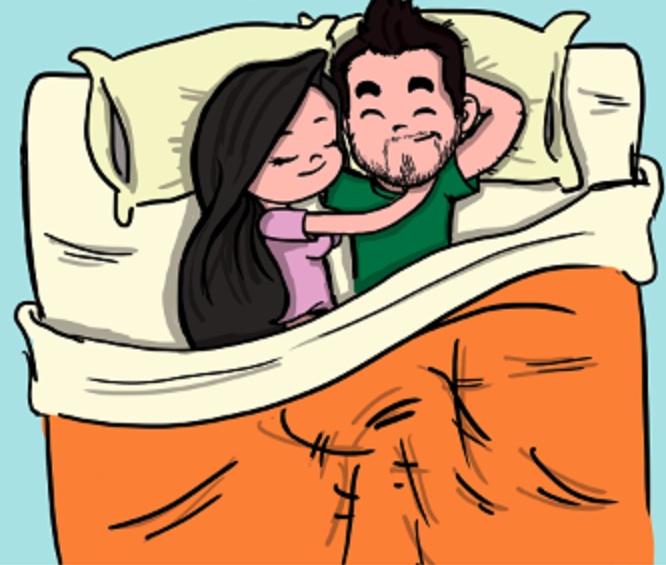
Robyn Hietala Bilyeu (survivor)…My Itty-Bitty Giant Step: I had a brain tumor removed Man & Woman Sleeping in BedMarch 17, 2015. I have been sleeping in our recliner since then because sleeping flat has resulted in severe head-pressure. I know my brain is still recovering, but I just wanted to sleep next to my husband again. Last night, I tried our bed. I slept through the night and didn’t have an ounce of pain when I woke up.

Krysta Harris GraduationKrysta Harris‎ (survivor)…Tonight, I graduated! I didn’t let my accident stop me. I told my family that my TBI counts as my honorary honor-tassel (Haha). My diploma wasn’t given to me – I worked for it! I’m lucky to have graduated with my class. I’m proud to have been able to strut across the field, knowing that I was in a hospital bed almost two years ago. Resilience is a great thing.

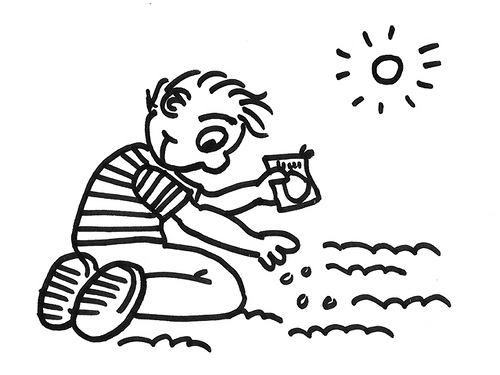
Man Planting seeds 3524898345_a5a3327405Stephen Mayfield, Jr. (survivor)…Hey. I got my garden. I finally finished sowing seeds. Now, let’s see what pops up.

Shelly Travis Owens (caregiver)…My husband and I went to dinner tonight with some friends. It was our first social situation since his TBI – and it went well. The guy is a coworker, so my husband got to catch up on what he’sDinner with Friends food-and-drinks-restaurant-dining-055638 missing at work, job news, and gossip. He forgot a few names, etc., but no one made a big deal of it, and the conversation went right on. My husband filled them in on his injury and his progress in therapy. I’m very encouraged, and my husband is thrilled. Baby steps.

Ballet Class  dexters-lab-dee-dee-dance-116

Diane Rasch (survivor)…I am so excited! I made it through ballet class without any problems two weeks in a row. Tonight, I even twirled across the floor.


YOU did it!

Congratulations to all contributors!

(Clip Art compliments of Bing.

As I say after each post:

Please leave a comment by clicking the blue words “Leave a Comment” below this post.

anim0014-1_e0-1

Feel free to follow my blog. Click on “Follow” on the upper right sidebar.

If you like my blog, share it with your friends. It’s easy! Click the “Share” buttons below.

If you don’t like my blog, “Share” it with your enemies. I don’t care!

Feel free to “Like” my post.

Caregivers SPEAK OUT! . . . . . Jeannette Davidson-Mayer

Caregivers SPEAK OUT! – Jeannette Davidson-Mayer

presented

by

Donna O’Donnell Figurski
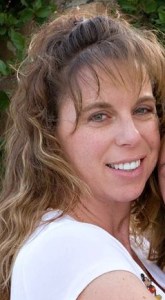
jeannette davidson-Mayer 0417151. What is your name? (last name optional)

Jeannette Davidson-Mayer

2. Where do you live? (city and/or state and/or country) Email? (optional)

New Plymouth, Idaho, USA     2004djmjdm@gmail.com

3. What is the brain-injury survivor’s relationship to you? How old was the survivor when he/she had the brain injury? What caused your survivor’s brain injury?

My husband, DeWayne, has a traumatic brain injury (TBI). He was 38 when it happened. While serving in Iraq, DeWayne survived one Humvee rollover, two close-range IEDs (improvised explosive devices), one helicopter explosion (They were guarding a downed helicopter when the remains were blown-up for disposal), and lastly an IED that went off right under the command seat, where DeWayne was sitting. All this happened in 2005 between May 23rd and October 3rd.

4. On what date did you begin care for your brain-injury survivor?

At the end of October 2004, DeWayne was flown to Madigan Air Force Base in Washington State on the advance plane from Iraq. I made a few trips there to see him. He was allowed occasional trips home. By February 2006, DeWayne was home for good. We didn’t know DeWayne had a TBI until mid-2007. We just knew something wasn’t connecting right in his daily mental functions.

Were you the main caregiver?

Yes. Our daughter as well has learned to be a caregiver over the years.486770_10200560183360321_1086965832_n

Are you now?

Yes

How old were you when you began care?

33

5. Were you caring for anyone else at that time (e.g., children, parents, etc.)?

No

6. Were you employed at the time of your survivor’s brain injury? If so, were you able to continue working?

Yes, I was employed. My employer helped above the call of duty. In mid-October 2014, I did have to quit working because DeWayne’s medical needs had increased. Also, I had gone to one of our smaller companies, which is a 10-minute drive vs. a 5-minute walk. DeWayne couldn’t comprehend this change, which created hardships for our daughter and for DeWayne and me as a couple.

7. Did you have any help? If so, what kind and for how long?

I couldn’t make it without the love and support of our family, friends, and church family. Help is from driving DeWayne to assisting with happenings at home. Most of all, help is providing an ear to listen.

8. When did your support of the survivor begin (e.g., immediately – in the hospital; when the survivor returned home; etc.)?

My quality of care has grown over the years. It took a while because I didn’t know how to ask for help. I was embarrassed to ask, and I didn’t understand how to ask either. I felt that if I couldn’t do it myself, I was failing my family.

9. Was your survivor in a coma? If so, what did you do during that time?

No, but DeWayne was knocked out several times.

10. Did your survivor have rehab?

Yes

If so, what kind of rehab (i.e., inpatient and/or outpatient and occupational, physical, speech, and/or other)?

DeWayne had occupational, physical, speech, and recreational therapies as an outpatient. He also had behavioral health therapy.

How long was the rehab?

Rehab started out three days a week, eight hours a day, for three months at Idaho Elks Rehab. DeWayne was then moved to the Boise VA (Veterans Administration) facility, where he went several days a week. DeWayne still has recreational therapy, physical therapy, and occasionally occupational therapy. And, monthly behavioral health therapy.

Where were you when your survivor was getting therapy?

Idaho Elk’s Rehab, Boise VA Medical Center, Tri-Cities Physical Therapy, St. Luke’s Spinal Care

11. What problems or disabilities of your brain-injury survivor required your care, if any?

DeWayne has many difficulties. He has fixations. He’s easily lost, confused, and disoriented. He tires easily. His short-term memory is a problem. DeWayne doesn’t always understand what is happening around him or what is being said to him. Also we don’t always understand what he is trying to say to us. He suffers from migraines/headaches. He has silent seizures, bi-lateral hearing loss, tremors, and sensitivity to light.

12. How has your life changed since you became a caregiver? Is it better? Is it worse?

I can’t really say if life is better or worse because of the TBI. We are both different from the deployment alone. I am the lucky wife because he came home alive, which is a celebration in itself.

13. What do you miss the most from pre-brain-injury life?

There is a lot I miss (for example, long hiking trips and long conversations). But, the trade-off is worth it.

14. What do you enjoy most in post-brain-injury life?Jeannette Davidson-Mayer & DeWayne

We have learned to depend on each other completely – as spouses and as a family. We tend to stand up for what we believe in. We hold on tighter. We often show each other how important we are. We travel off-season, which is nice because the crowds are less. Nicer indeed!

15. What do you like least about brain injury?

We never know what to expect from day to day, yet it is also a positive, for we never have a dull moment.

16. Has anything helped you to accept your survivor’s brain injury?

Through many trials and errors, we have finally discovered our saving grace. Our kitchen has become our “Central Command Post.” Our lives center around our kitchen. We were able to set up an atmosphere that can adapt to DeWayne’s ever-changing daily new normal. Post-it Notes and whiteboard markers saved our family.

17. Has your survivor’s injury affected your home life and relationships and, if so, how?

Of course, DeWayne’s TBI has affected home life, relationships, and so on. We have lost.

18. Has your social life been altered or changed and, if so, how?

Our social life has been cut. We don’t go out as much. We avoid crowds, noisy situations, and places that make DeWayne uncomfortable. I also have become uneasy about the same things that make DeWayne uneasy.

19. What are your plans? What do you expect/hope to be doing ten years from now?

Our plans for the future are to continue to live in joy and love together, to share our lives with our children as they continue to grow, to travel the world in an RV, and to reach out to others to show them that they have the inner strength needed to move forward. (How they move forward is unique to each family.)

20. What advice would you offer other caregivers of brain-injury survivors?

Never give up. Give in from time to time. Let it out – cry or scream. Then look back on what is happening to find ways to make adjustments or to find solutions to the challenges. Know that you are not alone. You yourself, along with your family, have so much to offer.

Do you have any other comments that you would like to add?

Military families are not alone in living with TBIs and/or PTSD (post-traumatic stress disorder) and in being caregivers. We didn’t sign up for this life, but we have it. Now let’s figure out how to keep moving forward, so we can reach higher, dream bigger, and hold on tighter.

To learn more about Jeannette Davidson-Mayer, you can listen to her interview with me on “Another Fork in the Road” on blogtalkradio.com or at R4 Alliance.


Jeannette Davidson-MayerThank you, Jeannette, for taking part in this interview. I hope that your experience will offer some hope, comfort, and inspiration to my readers.

If you would like to be a part of this project, please go to TBI Caregiver Interview Questionnaire for a copy of the questions and the release form.

(Photo compliments of Jeannette.)

Disclaimer: The views or opinions in this post are solely that of the interviewee.

As I say after each post: Please leave a comment by clicking the blue words “Leave a Comment” below this post.

Feel free to follow my blog. Click on “Follow” on the upper right sidebar.

If you like my blog, share it with your friends. It’s easy! Click the “Share” buttons below.

If you don’t like my blog, “Share” it with your enemies. I don’t care! Feel free to “Like” my post.
“Another Fork in the Road” . . . Brain Injury Radio Network . . . Interview: Juliet Madsen

 You Are Invited

Juliet Madsen – US Troop, TBI Survivor, Quilter, and Author

putthis_on_calendar_clip_art

Juliet Madsen has served in the US Army since she was 17-years old. She was involved in Operations Desert Storm and Desert Shield. While serving her country, Juliet suffered a Traumatic Brain Injury and at least one stroke, which changed her life forever.

Come One! Come ALL! 

What:        Interview with Juliet Madsen, US Troop, TBI Survivor, Wife, Mother, Quilter, and Author

Why:        Juliet will share her story of living with brain injury and how she is helping the brain-injured community.

#3 1454864_10200875275550279_968652467_n

Where:     Brain Injury Radio Network

When:       Sunday, May  17th, 2015

Time:         5:00p PT (6:00p MT, 7:00p CT, and 8:00p ET) 90 minute show

How:         Click: Brain Injury Radio Network

Call In:    424-243-9540

Call In:     855-473-3711 toll free in USA

Call In:    202-559-7907 free outside USA

or SKYPE

If you miss the show, but would like to still hear the interview, you can access the archive on On Demand listening. The archived show will be available after the show both on the Brain Injury Radio Network site and on my blog in “On the Air.”

(Clip Art compliments of Bing.)

(Photo compliments of Juliet Madsen.)

SPEAK OUT! Faces of Brain Injury Dale Christianson

SPEAK OUT! Faces of Brain Injury Dale Christianson

presented by

Donna O’Donnell Figurski

Brain Injury is NOT Discriminating!

bigstock-cartoon-face-vector-people-25671746-e1348136261718It can happen to anyone, anytime, . . . and anywhere. The Brain Trauma Foundation states that there are 5.3 million people in the United States living with some form of brain injury. On “Faces of Brain Injury,” you will meet survivors living with brain injury. I hope that their stories will help you to understand the serious implications and complications of brain injury. The stories on SPEAK OUT! Faces of Brain Injury are published with the permission of the survivor or designated caregiver. If you would like your story to be published, please send a short account and two photos to me at neelyf@aol.com. I’d love to publish your story and raise awareness for Brain Injury – one view at a time.

Dale Christianson (survivor) Christianson, Dale 1 050815Thirty years ago, my family was hit by a carload of drunken teens. My life slowly fell apart after that. I nearly gave up. For a long time, I thought that the guy who hit my car was the lucky one. He died in the accident, along with my stepdaughter. The only compensation that I got was $7,000. I have had a hard time holding a job or maintaining a relationship since then. My most successful relationship just ended. My fiancée of five years just gave up on me. She said it was too hard to live with me. My sisters and other family members won’t talk to me. They treat me like I don’t exist, or they wish that I didn’t. I am at another breach in my relationships, and I don’t have a job. I have anxiety and panic attacks. I take Paxil, and it helps tremendously. I understand that I’m difficult, but I haven’t given up on myself.

Disclaimer: Any views and opinions of the Contributor are purely his/her own.

(Clip Art compliments of Bing.)

(Photos compliments of contributor.)

As I say after each post: Please leave a comment by clicking the blue words “Leave a Comment” below this post.

Feel free to follow my blog. Click on “Follow” on the upper right sidebar.

If you like my blog, share it with your friends. It’s easy! Click the “Share” buttons below.

If you don’t like my blog, “Share” it with your enemies. I don’t care! Feel free to “Like” my post.

“Another Fork in the Road” . . . Brain Injury Radio Network . . . Interview: Lisabeth Mackall

You Are Invited

Lisabeth Mackall: Caregiver, Therapist, Author

putthis_on_calendar_clip_art

When Lisabeth Mackall opened her front door at 2:30am on January 2, 2012, it changed her life forever. She learned that her husband, Police Officer Frank Mackall, had been in a serious motor vehicle accident while on duty, and had been airlifted to a hospital. When Lisabeth opened her front door, she unknowingly entered the world of brain injury. She had to follow “Another Fork in the Road.” Lisabeth will share how she and her family picked up the remnants, pieced them together with patience, persistence, and love, and forged a new life.

Come One! Come ALL! 

What:        Interview with Lisabeth Mackall, caregiver to spouse, Frank Mackall

Why:        Lisabeth will take us on a harrowing journey of how her husband got a brain injury and how her family is coping with this new “normal.”Mackall, Lisabeth with Book

Where:     Brain Injury Radio Network

When:       Sunday, May  3rd, 2015

Time:         5:00p PT (6:00p MT, 7:00p CT, and 8:00p ET) 90 minute show

How:         Click: Brain Injury Radio Network

Call In:    424-243-9540

Call In:     855-473-3711 toll free in USA

Call In:    202-559-7907 free outside USA

or SKYPE

If you miss the show, but would like to still hear the interview, you can access the archive on On Demand listening. The archived show will be available after the show both on the Brain Injury Radio Network site and on my blog in “On the Air.”

(Clip Art compliments of Bing.)

(Photo compliments of Lisabeth Mackall.)

Survivors SPEAK OUT! Kristin Russo

Survivors  SPEAK OUT!  Kristin Russo

by

Donna O’Donnell Figurski

Russo, Kristin December 2014 After

Kristin Russo – Post-TBI Dec. 2014

1. What is your name? (last name optional)

Kristin Russo

2. Where do you live? (city and/or state and/or country) Email (optional)

Annandale, Virginia, USA

3. When did you have your TBI? At what age?

July 22, 2013 – I was 28.

4. How did your TBI occur?

My TBI was caused by a collision with a tractor-trailer. Read about it. “Kristin Russo accident.”

5. When did you (or someone) first realize you had a problem?

It was realized about 2-3 days into my stay in the ICU (Intensive Care Unit).

6. What kind of emergency treatment, if any, did you have?

I have no memory of the accident, the month in the hospital, and even the first 5-6 months at home under 24-hour care.

7. Were you in a coma? If so, how long?

Yes. My coma was induced.

8. Did you do rehab? What kind of rehab (i.e., inpatient or outpatient and occupational and/or physical and/or speech and/or other)? How long were you in rehab?

I had occupational, physical, speech, and recreational therapies for a month as an inpatient. I had therapy as an outpatient until May 2014 when all but physical therapy ended. I’m still in physical therapy for physical injuries.

9. What problems or disabilities, if any, resulted from your TBI
(e.g., balance, perception, personality, etc.)?

I have moderate to severe diminished visual memory, mild to moderate decreased attention span, diminished executive function, and mildly diminished speech and language function. Those are the significant findings as per my neurological addendum. It was also noted that I am likely to have significant permanent neurocognitive dysfunction due to the TBI. This problem with the physical brain injury is further complicated due the fact that I have significant PTSD (post-traumatic stress disorder). I have a college degree, yet I had to learn how to do things as simple as double-digit subtraction. My entire education has been wiped away. Since I graduated with honors, it was easy to get accepted to Liberty University. But, I can’t retain information anymore, so I’m not sure if I’m going to go back to try and learn everything all over again. My neurologist has diagnosed me with ADD (attention deficit disorder) due to the TBI. I’m not allowed to use anything hot without supervision, etc.

10. How has your life changed? Is it better? Is it worse?

Some things are better because I now have an excuse for being directionally challenged or for when I mess up (haha). 😉 Things are worse because I am dependent and I HATE IT! (I am an independent girl.) I was such an intelligent woman. I was still paying off my degree when the accident happened. Not being able to use ANY of the knowledge really made me unhappy. Not being able to work has been horrible because that is all I have ever known. I have been working since the day I turned 14. (My first day of work was on my 14th birthday). I worked at the same place until I graduated high school and went to college. I hate that I can no longer drive. I miss being able to do what I want to do when I want to do it. 😦 I live about eighty miles from where I grew up, so it’s not often that someone comes to visit me. The accident caused me to lose my family because my own father was stealing my pain pills for his sick addiction. I’ve lost some of my friends because I’m a totally different person personality-wise. I’m 100% honest, and I have dedicated my life to Jesus Christ. The girl in the accident died. She wasn’t the best wife. (I’d give more details, but those things are better kept between husband and wife. 😉 ) But, that’s why my accident happened, and I know it. God was showing me what was in front of me, and the same, for my husband. God was bringing us closer together, and that’s exactly what my accident did. So, that’s what I do like about the TBI. Another thing that I like about the TBI is that I don’t remember the accident or being in the hospital or even the 5-6 months after it. I also don’t remember my surgeries up to July. I remember the ones on Black Friday and December 1st. But, yeah, the girl I was before was a girl who drank a lot and went to clubs and acted like she was a single 21-year-old female. Since I’m not her anymore, I’ve lost a couple friends who were just like that girl. I don’t need those girls anyway!

11. What do you miss the most from your pre-TBI life?

I miss being able to drink alcohol sometimes – at least to drink socially. I miss being able to drive. I miss being able to do what I want when I want. I miss working. What I do now is to constantly go to appointments – it’s nuts! I am still in physical therapy – several months post accident. I just got yet another MRI scan (magnetic resonance imaging). I had surgery number eight on January 27th. I began speech therapy in January since insurance started paying again. I miss sleeping like a normal person. I miss being skinny. (I was a size 2 when I was married on July 7th, 2011, and I’m not that size anymore.) I hate being on so many damn medications. I loathe people’s not understanding invisible disabilities. I also have CRPS (complex regional pain syndrome) that was caused by the accident. It’s a chronic pain disease that has no cure.

12. What do you enjoy most in your post-TBI life?

I enjoy the fact that the Trauma Survivors Network Next Steps program taught me to find the positive in everything, so I do. When my legs hurt, I remind myself that I shouldn’t have any, so I thank God for letting me keep my legs! When I have my chronic headaches, I thank God for not making the swelling be so bad that I need to have surgery!

13. What do you like least about your TBI?

I don’t like that I sleep every other day sometimes. I dislike the chronic headaches and the fact that a headache is invisible. I don’t like having memory issues and being confused so often.

14. Has anything helped you to accept your TBI?

God

15. Has your injury affected your home life and relationships and, if so, how?

My husband gets rather upset when I forget that I’m not supposed to use a curling iron, and I fail to remember to turn it off. I no longer speak to my parents – my father makes fun of my TBI and acts like I’m making it up. (A*^#@~! ! I guess that’s what drugs do to ya.)

16. Has your social life been altered or changed and, if so, how?

I don’t really have a social life anymore. Things are so much louder now. People annoy me more. 😦 I have NO filter. I just want to be home with my husband or alone with my dogs. I haven’t watched TV since the accident.

17. Who is your main caregiver? Do you understand what it takes to be a caregiver?

My husband is my main caregiver.

18. What are your future plans? What do you expect/hope to be doing ten years from now?

I’ll be running a photography business. 🙂 And, I better be a mommy to more than just my fur babies!

Russo, Kristin Before Accident

Kristin Russo Pre-TBI

19. Are you able to provide a helpful hint that may have taken you a long time to learn, but which you wished you had known earlier? If so, please state what it is to potentially help other TBI survivors with your specific kind of TBI.

I urge people to try to make a positive out of everything. Depression is so ugly. I wish that I never hit that stage. Having a positive attitude has helped me SOOO much.

20. What advice would you offer to other TBI survivors? Do you have any other comments that you would like to add?

I give back now by volunteering at the hospital where I did my outpatient therapy. I got one of my dogs certified as a therapy dog, and we visit patients. I also visit patients in the trauma unit. My visits help others, and they also help me!


Thank you, Kristin, for taking part in this interview. I hope that your experience will offer some hope, comfort, and inspiration to my readers.

(Disclaimer: The views or opinions in this post are solely that of the interviewee.)

If you would like to be a part of the SPEAK OUT! project, please go to TBI Survivor Interview Questionnaire for a copy of the questions and the release form.

(Photos compliments of Kristin.)

As I say after each post:

Please leave a comment by clicking the blue words “Leave a Comment” below this post.

Feel free to follow my blog. Click on “Follow” on the lower right corner of your screen.

If you like my blog, share it with your friends. It’s easy! Click the “Share” buttons below.

If you don’t like my blog, “Share” it with your enemies. I don’t care!

Feel free to “Like” my post.


SPEAK OUT! Faces of Brain Injury Adam Pepiton

Brain Injury is Not Discriminatingbigstock-cartoon-face-vector-people-25671746-e1348136261718

It can happen to anyone, anytime, . . . and anywhere.

The Brain Trauma Foundation states that there are 5.3 million people in the United States living with some form of brain injury.

On “Faces of Brain Injury,” you will meet survivors living with brain injury. I hope that their stories will help you to understand the serious implications and complications of brain injury.

The stories on SPEAK OUT! Faces of Brain Injury are published with the permission of the survivor or designated caregiver.

If you would like your story to be published, please send a short account and two photos to me at neelyf@aol.com. I’d love to publish your story and raise awareness for Brain Injury – one view at a time.

Adam Pepiton (survivor) contributed by Tara Pepiton (mom and caregiver)

Pepiton, Adam 2Adam Pepiton, a graduate of Cesar Chavez High School, was living a full life as a college student studying Criminal Justice, working for Kmart, and spending time with family and friends. On September 5th, 2010, Adam’s life changed forever.  As he left a friend’s house after a barbecue, he became the victim of a drive-by shooting. He was shot in the head. The bullet entered on the right side and lodged in the skull on the left side. This type of injury has less than a 1% survival rate, so Adam’s surviving was a true miracle. After five weeks in ICU (Intensive Care Unit) and Acute Care, Adam spent eight weeks at an acute rehabilitation facility. On December 2nd, he was discharged. While Adam’s return home was a significant milestone in his recovery, we recognized that there was still a long road ahead. Adam was diagnosed as a quadriparetic due to the brain injury.  Pepiton, Adam 1This means Adam has feeling throughout his body, but he can’t control his legs, trunk, and most of his left arm.  Adam has a power-wheelchair that allows for mobility, but he still has the goal of walking again.  He is going back to college part-time, and he has participated in sports, such as archery and power-soccer. He volunteers two days a week for the Red Cross, Greater Phoenix Chapter, and does many activities with old and new friends.  Adam works daily on improvements to meet his ultimate goals of living an independent life and of speaking to youth on violence and the decisions they make. Through all of this, Adam has kept his unwavering faith in God and his quirky sense of humor. We thank amazing family, friends, doctors, and outstanding therapists for everything they have done to get him to where he is today and to where he still plans on going.

Disclaimer:
Any views and opinions of the Contributor are purely his/her own.

(Clip Art compliments of Bing.)

(Photos compliments of contributor.)

As I say after each post:

Please leave a comment by clicking the blue words “Leave a Comment” below this post.

Feel free to follow my blog. Click on “Follow” on the upper right sidebar.

If you like my blog, share it with your friends. It’s easy! Click the “Share” buttons below.

If you don’t like my blog, “Share” it with your enemies. I don’t care!

Feel free to “Like” my post.

SPEAK OUT! Faces of Brain Injury Faith Neaves

Brain Injury is Not Discriminatingbigstock-cartoon-face-vector-people-25671746-e1348136261718

It can happen to anyone, anytime, . . . and anywhere.

The Brain Trauma Foundation states that there are 5.3 million people in the United States living with some form of brain injury.

On “Faces of Brain Injury,” you will meet survivors living with brain injury. I hope that their stories will help you to understand the serious implications and complications of brain injury.

The stories on SPEAK OUT! Faces of Brain Injury are published with the permission of the survivor or designated caregiver.

If you would like your story to be published, please send a short account and two photos to me at neelyf@aol.com. I’d love to publish your story and raise awareness for Brain Injury – one view at a time.

Faith Neaves (survivor)

11104222_10153117046022976_1329541496_nAbout seven years ago, I suffered a traumatic brain injury from a domestic-violence incident. My ex-husband knocked me completely unconscious when I walked around a corner. I was eight months pregnant at the time. I remember opening my eyes and not being able to see. I was lying in a puddle of blood. I never got help. I was too afraid because he was in the military. As I went in and out of consciousness, I wrote my little girls goodbye letters and hoped for the best. After that night, things were never the same. I struggled with severe depression, anxiety, crying spells, memory loss, raging, etc. – you name it. My moods would switch quickly. On a daily basis, I would forget names of people I knew or directions to places I used to go to. For the past eight years, I have been wrongly diagnosed as bipolar. I struggle with suicide, and I almost succeeded, which ended up with my being hospitalized and having more meds. Finally, I was diagnosed with a very severe frontal lobe brain injury with no hope of recovering. The doctor told me that I have a “light switch,” where most people have “thermometers.” It affects my personality, emotions, speech, and sleep. My brain has trouble with cognitive abilities, problem-solving, and conversations. I interrupt people a lot due to my brain trying to get out a word. I struggle with fatigue. The worry, anxiety, and depression are a lot to deal with, but at least I know that it’s not my fault – that it’s not from my being bipolar. 11077229_10153117046027976_657824417_nI have been exhausted, and I have felt crazy and indecisive. I have to write everything down on sticky notes – I forget dates, my phone number, and my address. My in-laws and family have judged me as crazy, having red flags, etc. – you name it. I feel they have no empathy. I’m not a victim, but a SURVIVOR. I miss me. I am devastated at who I used to be and what I have lost. I thought this was temporary and due to stress. I’m only 35, and I’m scared for my future. I’m devastated to carry the ugly scar now on both the outside and the inside. I pray that I will find love and support somewhere.

Disclaimer:
Any views and opinions of the Contributor are purely his/her own.

(Clip art compliments of Bing.)

(Photos compliments of contributor.)

As I say after each post:

Please leave a comment by clicking the blue words “Leave a Comment” below this post.

Feel free to follow my blog. Click on “Follow” on the upper right sidebar.

If you like my blog, share it with your friends. It’s easy! Click the “Share” buttons below.

If you don’t like my blog, “Share” it with your enemies. I don’t care!

Feel free to “Like” my post.

Caregivers SPEAK OUT! . . . . . Christina WIlliams

Caregivers SPEAK OUT! – Christina Williams

by

Donna O’Donnell Figurski

Christina WIlliams1. What is your name? (last name optional)

Christina Williams

2. Where do you live? (city and/or state and/or country) Email? (optional)

Pine, Colorado, USA

3. What is the TBI survivor’s relationship to you? How old was the survivor when he/she had the TBI? What caused your survivor’s TBI?

The TBI survivor was my fiancé. His TBI was caused by a motor vehicle accident. He was 37. I want to add that it was in 2008, so it happened more than six years ago.

4. On what date did you begin care for your TBI survivor? Were you the main caregiver? Are you now? How old were you when you began care?

I was at the scene of the accident. I was his main caregiver; I still am now. I began care as soon as I could. I was 47 when the accident happened.

5. Were you caring for anyone else at that time (e.g., children, parents, etc.)?

No

6. Were you employed at the time of your survivor’s TBI? If so, were you able to continue working?

I worked with my fiancé in our own business – building custom homes, decks, basements, bars, etc. We also designed and created log furnishings on the side. When he got hurt, I was unable to continue working. I lost my job because I assisted him. We lost both businesses.

7. Did you have any help? If so, what kind and for how long?

No

8. When did your support of the survivor begin (e.g., immediately – in hospital, when the survivor returned home, etc.)?

Never.

9. Was your survivor in a coma? If so, what did you do at that time?

Yes, my fiancé was in a coma. I sat at his bedside, cried, and prayed a lot. I NEVER left the hospital for 72 days. I finally did after he was transferred to the rehab hospital.

10. Did your survivor have rehab? If so, what kind of rehab (i.e., inpatient and/or outpatient and occupational, physical, speech, and/or other)? How long was the rehab? Where were you when this was happening?

My fiancé was accepted to Craig Hospital in Denver, Colorado, (one of the top ten rehabilitation facilities in the US for spinal cord and brain injuries) for intensive physical, occupational, and speech therapies. He also had group therapy, recreational therapy, and swim therapy. I was with him every day. I had to be there before breakfast to help dress and feed him and to get him to his daily “classes.” He remained an inpatient for three and a half months. He then became an outpatient. I took him to therapy three times a week at first. Over time, it decreased to one or two times a week. After about sixteen months, we no longer went. We still continue to go back to Craig Hospital for specialized therapies for issues he has had since the accident. The last one was vestibular therapy for vertigo symptoms. But, they couldn’t treat it, so they worked on his balance issues.

11. What problems or disabilities of your TBI survivor required your care, if any?

He has epilepsy due to his TBI, so he requires supervision 24/7. He can never be left alone. Because of seizures and balance issues, he has frequent falls and injuries that require medical attention and trips to the Emergency Room. He can’t drive or work. He requires prompting for many of daily living skills, including hygiene, which is a huge issue.

12. How has your life changed since you became a caregiver? Is it better? Is it worse?

Both our lives have changed drastically. Our lives are worse, since we can’t have the “normal” life together that we expected. We now realize that we took our lives for granted. Buying a home or a new car and taking vacations are no longer possibilities in our lives.

13.  What do you miss the most from pre-TBI life?

I miss the freedom and having hope for the future.

14. What do you enjoy most in post-TBI life?

I enjoy spending time with him every day. Every day is NOT “sunshine and roses,” but we make the best that we can out of every day. He is simply amazing. I look at him and watch him in awe, as he does whatever he does. I have a saying: “Let’s just hope today is better than yesterday.” It helps us focus on the positives in every day.

15. What do you like least about TBI?

I dislike that the TBI has destroyed such a good person and his future. We also lack the money and the ability to do whatever we want.

16. Has anything helped you to accept your survivor’s TBI?

Yes. God.

17. Has your survivor’s injury affected your home life and relationships and, if so, how?

We were officially engaged two days before the accident. We were SO in love and excited to be planning our future. Since his injury, his emotions (or I should say “ his lack of emotions”) and his poor judgment have caused us many, many problems.

18. Has your social life been altered or changed and, if so, how?

We have no social life. ALL our “friends” vanished after he was hurt. Our social life is whatever we do in our day. When he has a doctor or therapy appointment, we plan a whole day in the city together.

19. What are your plans? What do you expect/hope to be doing ten years from now?

I don’t have any hopes or plans anymore. We just take it a day at a time. In ten years, I imagine that we will still be doing what we’re doing now, but perhaps in a different house.

20. What advice would you offer other TBI survivor caregivers? Do you have any other comments that you would like to add?

Turn to Facebook for support, especially the TBI pages. You may not know the people, but they have been a constant and great support not only to me, but also to so many others – survivors, caregivers, and their families and friends. It’s nice to read the stories of others and to share comments and advice. When my fiancé was hurt, I wasn’t using Facebook. It would have been so nice just to know that I wasn’t alone in my journey. Facebook is my “human” outlet for support. I have also come to find out that I can help others. That is more rewarding to me than I can say.

I think what I would want people to know that they aren’t prepared for is that it is VERY common for TBI survivors to start having seizures a year or so after the injury. It was something we weren’t prepared for, or even thought could happen. He was on anti-seizure meds while in rehab, but there was “no seizure activity.” So, they took him off the medication, and I thought it would never be a concern. Boy, was I wrong!Christina Williams 2012

Thank you, Christina, for taking part in this interview. I hope that your experience will offer some hope, comfort, and inspiration to my readers.

If you would like to be a part of this project, please go to TBI Caregiver Interview Questionnaire for a copy of the questions and the release form.

(Photo compliments of Christina.)

Disclaimer: The views or opinions in this post are solely that of the interviewee.


“Another Fork in the Road” . . . Brain Injury Radio Network . . . Interview: Jeannette Davidson-Mayer

putthis_on_calendar_clip_artYOU Are Invited!

When Jeannette Davidson-Mayer’s husband, DeWayne, had five brain injuries – the result of his active duty in Iraq – Jeannette became his caregiver. To combat this 24-hour job, Jeannette redesigned her kitchen to become the family’s ?Central Command Post.” Jeannette will discuss how she, DeWayne, and their daughter make this system work for them.

Come One! Come ALL!

What:        Interview with Jeannette Davidson-Mayer, caregiver to spouse, DeWayne Mayer

Why:        Jeannette will talk about how she and DeWayne and their daughter live on the TBI Trail.

Where:     Brain Injury Radio Network

When:       Sunday, April  19th, 2015

Time:         5:00p PT (6:00p MT, 7:00p CT, and 8:00p ET) 90 minute showjeannette davidson-Mayer 041715

How:         Click: Brain Injury Radio Network

Call In:    424-243-9540

Call In:     855-473-3711 toll free in USA

Call In:    202-559-7907 free outside USA

or SKYPE

If you miss the show, but would like to still hear the interview, you can access the archive on On Demand listening. The archived show will be available after the show both on the Brain Injury Radio Network site and on my blog in “On the Air.”

(Clip Art compliments of Bing.)

(Photo compliments of Jeannette Davidson-Mayer.)

diemodi jewelry

uniquely hand-crafted jewelry by donna

Welcome to Harmony Kent Online

The home of all things books

Pete Springer

Passionate Teacher and Future Children's Author

HOPE TBI

Helping Other People Excel - To Be Independent

For the Love of Books, Old and New

Katie Fischer, Writer and Reader of Stories

Charlie Bown

Children's Author

Jessica Hinrichs

“We write to taste life twice, in the moment and in retrospect.” ― Anais Nin

VIVIAN KIRKFIELD - Writer for Children

Picture Books Help Kids Soar

Mindy’s Writing Wonderland

For authors, parents, teachers & everyone who loves children’s books.

Kaitlyn Leann Sanchez

Literary Agent

Surviving Traumatic Brain Injury

TBI - Survivors, Caregivers, Family, and Friends

The Care Factor

Loving someone with a Traumatic Brain Injury

Brain Injury Support Group of Duluth-Extension

Brain Injury Information and SUPPORT

Brain Aneurysm Global Insight

Brain Aneurysm, cerebral hemorrhaging, hemorrhage stroke